

Insights into HEV Infrastructure Needs for 2030
AUG 14, 20259 MIN READ
Generate Your Research Report Instantly with AI Agent
PatSnap Eureka helps you evaluate technical feasibility & market potential.
HEV Technology Evolution and 2030 Goals
Hybrid Electric Vehicle (HEV) technology has undergone significant evolution since its inception in the late 20th century. The primary goal of HEV development has been to reduce fuel consumption and emissions while maintaining or improving vehicle performance. As we approach 2030, the objectives for HEV technology are becoming increasingly ambitious and multifaceted.
The evolution of HEV technology can be traced through several key milestones. Early HEVs focused on simple parallel hybrid systems, where an electric motor assisted the internal combustion engine. This progressed to more sophisticated power-split systems, allowing for greater flexibility in power distribution between the electric motor and the engine.
Recent advancements have seen the introduction of plug-in hybrid electric vehicles (PHEVs), which offer extended electric-only driving ranges. This development has been crucial in bridging the gap between conventional hybrids and fully electric vehicles, addressing range anxiety concerns while still providing significant emissions reductions.
Looking towards 2030, the goals for HEV technology are centered around further improving efficiency, reducing costs, and enhancing integration with smart grid systems. One key objective is to increase the electric-only driving range of PHEVs to 100 miles or more, making them suitable for most daily commutes without using the internal combustion engine.
Another important goal is the development of more efficient and compact power electronics and electric motors. This includes the use of wide-bandgap semiconductors, such as silicon carbide and gallium nitride, which can operate at higher temperatures and frequencies, leading to smaller, lighter, and more efficient power conversion systems.
Battery technology is also a critical focus area. The aim is to develop batteries with higher energy density, faster charging capabilities, and longer lifespans. Solid-state batteries are seen as a promising technology that could potentially meet these requirements, offering improved safety and performance over current lithium-ion batteries.
Integration with renewable energy sources and smart grid systems is another key objective for 2030. HEVs are expected to play a crucial role in grid stabilization through vehicle-to-grid (V2G) technology, allowing them to act as mobile energy storage units that can feed power back into the grid during peak demand periods.
Lastly, the automotive industry is working towards standardizing HEV components and architectures to reduce manufacturing costs and improve economies of scale. This standardization effort aims to make HEVs more affordable and accessible to a broader range of consumers, accelerating their adoption and environmental impact.
The evolution of HEV technology can be traced through several key milestones. Early HEVs focused on simple parallel hybrid systems, where an electric motor assisted the internal combustion engine. This progressed to more sophisticated power-split systems, allowing for greater flexibility in power distribution between the electric motor and the engine.
Recent advancements have seen the introduction of plug-in hybrid electric vehicles (PHEVs), which offer extended electric-only driving ranges. This development has been crucial in bridging the gap between conventional hybrids and fully electric vehicles, addressing range anxiety concerns while still providing significant emissions reductions.
Looking towards 2030, the goals for HEV technology are centered around further improving efficiency, reducing costs, and enhancing integration with smart grid systems. One key objective is to increase the electric-only driving range of PHEVs to 100 miles or more, making them suitable for most daily commutes without using the internal combustion engine.
Another important goal is the development of more efficient and compact power electronics and electric motors. This includes the use of wide-bandgap semiconductors, such as silicon carbide and gallium nitride, which can operate at higher temperatures and frequencies, leading to smaller, lighter, and more efficient power conversion systems.
Battery technology is also a critical focus area. The aim is to develop batteries with higher energy density, faster charging capabilities, and longer lifespans. Solid-state batteries are seen as a promising technology that could potentially meet these requirements, offering improved safety and performance over current lithium-ion batteries.
Integration with renewable energy sources and smart grid systems is another key objective for 2030. HEVs are expected to play a crucial role in grid stabilization through vehicle-to-grid (V2G) technology, allowing them to act as mobile energy storage units that can feed power back into the grid during peak demand periods.
Lastly, the automotive industry is working towards standardizing HEV components and architectures to reduce manufacturing costs and improve economies of scale. This standardization effort aims to make HEVs more affordable and accessible to a broader range of consumers, accelerating their adoption and environmental impact.
HEV Market Demand Forecast for 2030
The global market for Hybrid Electric Vehicles (HEVs) is poised for significant growth leading up to 2030, driven by increasing environmental concerns, stricter emissions regulations, and advancements in battery technology. As consumers become more environmentally conscious and governments worldwide implement policies to reduce carbon emissions, the demand for HEVs is expected to surge.
Market analysts project that the HEV market will experience a compound annual growth rate (CAGR) of 8.5% from 2023 to 2030. This growth trajectory is supported by the expanding middle class in emerging economies, rising fuel prices, and the gradual shift towards sustainable transportation options. By 2030, the global HEV market is forecasted to reach a value of $792 billion, with Asia-Pacific region leading the charge, followed by Europe and North America.
In terms of vehicle segments, the passenger car segment is expected to dominate the HEV market, accounting for over 70% of the total market share by 2030. However, the commercial vehicle segment, including buses and trucks, is anticipated to witness the fastest growth rate during this period, driven by increasing adoption in public transportation and logistics sectors.
The market demand for HEVs is also influenced by technological advancements in battery efficiency and charging infrastructure. As battery costs continue to decline and energy density improves, HEVs are becoming more affordable and practical for a wider range of consumers. This trend is expected to accelerate, with battery costs projected to decrease by 40% by 2030, further boosting HEV adoption.
Geographically, China is expected to remain the largest market for HEVs, with a projected market share of 35% by 2030. The Chinese government's aggressive push for new energy vehicles and substantial investments in charging infrastructure are key factors driving this growth. Japan and South Korea are also anticipated to be significant players in the Asian HEV market.
In Europe, countries like Germany, France, and the UK are forecasted to lead the HEV market, supported by stringent emissions regulations and government incentives. The European Union's target to reduce CO2 emissions from new cars by 37.5% by 2030 is expected to further boost HEV adoption in the region.
The North American market, particularly the United States, is projected to see steady growth in HEV demand, driven by increasing consumer awareness and the expansion of charging infrastructure. However, the rate of adoption is expected to be slower compared to Asia and Europe due to lower fuel prices and a preference for larger vehicles.
As we approach 2030, the HEV market is likely to see increased competition from fully electric vehicles (EVs). However, HEVs are expected to maintain a strong market position, particularly in regions with limited charging infrastructure or where consumers have range anxiety concerns. The flexibility offered by HEVs in terms of fuel options and driving range will continue to appeal to a significant segment of consumers, ensuring a robust market demand through 2030 and beyond.
Market analysts project that the HEV market will experience a compound annual growth rate (CAGR) of 8.5% from 2023 to 2030. This growth trajectory is supported by the expanding middle class in emerging economies, rising fuel prices, and the gradual shift towards sustainable transportation options. By 2030, the global HEV market is forecasted to reach a value of $792 billion, with Asia-Pacific region leading the charge, followed by Europe and North America.
In terms of vehicle segments, the passenger car segment is expected to dominate the HEV market, accounting for over 70% of the total market share by 2030. However, the commercial vehicle segment, including buses and trucks, is anticipated to witness the fastest growth rate during this period, driven by increasing adoption in public transportation and logistics sectors.
The market demand for HEVs is also influenced by technological advancements in battery efficiency and charging infrastructure. As battery costs continue to decline and energy density improves, HEVs are becoming more affordable and practical for a wider range of consumers. This trend is expected to accelerate, with battery costs projected to decrease by 40% by 2030, further boosting HEV adoption.
Geographically, China is expected to remain the largest market for HEVs, with a projected market share of 35% by 2030. The Chinese government's aggressive push for new energy vehicles and substantial investments in charging infrastructure are key factors driving this growth. Japan and South Korea are also anticipated to be significant players in the Asian HEV market.
In Europe, countries like Germany, France, and the UK are forecasted to lead the HEV market, supported by stringent emissions regulations and government incentives. The European Union's target to reduce CO2 emissions from new cars by 37.5% by 2030 is expected to further boost HEV adoption in the region.
The North American market, particularly the United States, is projected to see steady growth in HEV demand, driven by increasing consumer awareness and the expansion of charging infrastructure. However, the rate of adoption is expected to be slower compared to Asia and Europe due to lower fuel prices and a preference for larger vehicles.
As we approach 2030, the HEV market is likely to see increased competition from fully electric vehicles (EVs). However, HEVs are expected to maintain a strong market position, particularly in regions with limited charging infrastructure or where consumers have range anxiety concerns. The flexibility offered by HEVs in terms of fuel options and driving range will continue to appeal to a significant segment of consumers, ensuring a robust market demand through 2030 and beyond.
Current HEV Infrastructure Challenges
The current infrastructure for Hybrid Electric Vehicles (HEVs) faces several significant challenges as we approach 2030. One of the primary issues is the inadequate distribution of charging stations, particularly in rural and less populated areas. This uneven distribution creates "charging deserts," limiting the practicality of HEVs for long-distance travel and potentially discouraging adoption in these regions.
Another critical challenge is the aging electrical grid infrastructure in many countries. As HEV adoption increases, the demand for electricity will surge, potentially straining existing power systems. This raises concerns about grid stability, power quality, and the ability to meet peak charging demands, especially during high-usage periods.
The charging speed of current HEV infrastructure also presents a significant hurdle. While fast-charging technologies have improved, they still lag behind the convenience of traditional fuel pumps. This disparity in refueling time can be a deterrent for potential HEV buyers, particularly those who require quick turnaround times or frequently embark on long journeys.
Standardization issues across different HEV models and charging systems further complicate the infrastructure landscape. The lack of a universal charging standard leads to compatibility problems, requiring drivers to navigate multiple charging networks and connector types. This fragmentation not only inconveniences users but also increases the complexity and cost of infrastructure development.
The high initial cost of installing charging infrastructure, especially fast-charging stations, poses a significant barrier to rapid expansion. This financial hurdle is particularly challenging for small businesses and in areas with lower HEV adoption rates, creating a chicken-and-egg problem where lack of infrastructure hinders adoption, and low adoption rates discourage infrastructure investment.
Cybersecurity concerns also loom large over the HEV charging infrastructure. As these systems become more connected and reliant on digital technologies, they become potential targets for cyberattacks. Ensuring the security of charging networks, user data, and vehicle-to-grid communications is crucial but challenging in an increasingly complex digital ecosystem.
Lastly, the environmental impact of battery production and disposal remains a contentious issue. While HEVs offer reduced emissions during operation, the lifecycle environmental cost of battery manufacturing and end-of-life management presents challenges. Developing sustainable practices for battery production, recycling, and disposal is essential for the long-term viability and environmental credibility of HEV technology.
Another critical challenge is the aging electrical grid infrastructure in many countries. As HEV adoption increases, the demand for electricity will surge, potentially straining existing power systems. This raises concerns about grid stability, power quality, and the ability to meet peak charging demands, especially during high-usage periods.
The charging speed of current HEV infrastructure also presents a significant hurdle. While fast-charging technologies have improved, they still lag behind the convenience of traditional fuel pumps. This disparity in refueling time can be a deterrent for potential HEV buyers, particularly those who require quick turnaround times or frequently embark on long journeys.
Standardization issues across different HEV models and charging systems further complicate the infrastructure landscape. The lack of a universal charging standard leads to compatibility problems, requiring drivers to navigate multiple charging networks and connector types. This fragmentation not only inconveniences users but also increases the complexity and cost of infrastructure development.
The high initial cost of installing charging infrastructure, especially fast-charging stations, poses a significant barrier to rapid expansion. This financial hurdle is particularly challenging for small businesses and in areas with lower HEV adoption rates, creating a chicken-and-egg problem where lack of infrastructure hinders adoption, and low adoption rates discourage infrastructure investment.
Cybersecurity concerns also loom large over the HEV charging infrastructure. As these systems become more connected and reliant on digital technologies, they become potential targets for cyberattacks. Ensuring the security of charging networks, user data, and vehicle-to-grid communications is crucial but challenging in an increasingly complex digital ecosystem.
Lastly, the environmental impact of battery production and disposal remains a contentious issue. While HEVs offer reduced emissions during operation, the lifecycle environmental cost of battery manufacturing and end-of-life management presents challenges. Developing sustainable practices for battery production, recycling, and disposal is essential for the long-term viability and environmental credibility of HEV technology.
Existing HEV Charging Solutions
01 Charging infrastructure for electric vehicles
Development of charging stations and infrastructure to support the growing adoption of electric vehicles. This includes the design of charging points, payment systems, and integration with existing power grids to ensure efficient and widespread availability of charging facilities for electric vehicle users.- Charging infrastructure for electric vehicles: Development of charging stations and infrastructure to support the growing adoption of electric vehicles. This includes fast-charging technologies, smart grid integration, and efficient power distribution systems to enable widespread use of electric vehicles.
- Vehicle-to-grid (V2G) technology: Implementation of bidirectional charging systems that allow electric vehicles to not only receive power from the grid but also feed power back into it. This technology enables better grid stability, energy management, and potential cost savings for EV owners.
- Wireless charging for electric vehicles: Development of wireless charging technologies for electric vehicles, including inductive charging pads and dynamic wireless charging systems embedded in roads. This technology aims to make EV charging more convenient and efficient.
- Smart charging and load management: Implementation of intelligent charging systems that optimize power distribution, manage peak loads, and integrate renewable energy sources. These systems aim to improve the efficiency and reliability of EV charging infrastructure.
- Battery swapping stations: Development of infrastructure for quick battery swapping in electric vehicles. This technology allows for rapid exchange of depleted batteries with fully charged ones, reducing charging times and extending the range of electric vehicles.
02 Energy management systems for HEV infrastructure
Implementation of advanced energy management systems to optimize power distribution, load balancing, and energy efficiency in hybrid electric vehicle (HEV) infrastructure. These systems aim to improve the overall performance and sustainability of HEV charging networks.Expand Specific Solutions03 Communication protocols for HEV charging
Development of standardized communication protocols and interfaces for HEV charging infrastructure. These protocols enable seamless interaction between vehicles, charging stations, and grid operators, ensuring efficient charging processes and data exchange.Expand Specific Solutions04 Integration of renewable energy sources in HEV infrastructure
Incorporation of renewable energy sources, such as solar and wind power, into HEV charging infrastructure. This integration aims to reduce the carbon footprint of charging operations and promote sustainable transportation solutions.Expand Specific Solutions05 Smart grid technologies for HEV charging
Implementation of smart grid technologies to enhance the efficiency and reliability of HEV charging infrastructure. These technologies enable real-time monitoring, demand response, and dynamic pricing to optimize energy distribution and utilization in HEV charging networks.Expand Specific Solutions
Key Players in HEV Infrastructure
The competitive landscape for HEV infrastructure in 2030 is characterized by a rapidly evolving market in its growth phase. The global HEV infrastructure market is expected to expand significantly, driven by increasing adoption of hybrid electric vehicles and supportive government policies. Technologically, the field is advancing but not yet fully mature, with ongoing innovations in charging solutions and grid integration. Key players like SAIC Motor, Hyundai, and Geely are investing heavily in HEV technology, while energy companies such as State Grid Corp. of China and Sinopec are developing supporting infrastructure. Universities and research institutes, including Tsinghua University and Shanghai Jiao Tong University, are contributing to technological advancements, indicating a collaborative ecosystem of industry and academia pushing the boundaries of HEV infrastructure development.
SAIC Motor Corp. Ltd.
Technical Solution: SAIC Motor is developing a comprehensive HEV infrastructure strategy for 2030, focusing on advanced charging technologies and smart grid integration. Their approach includes deploying high-power DC fast charging stations capable of delivering up to 350 kW[1], which can significantly reduce charging times. SAIC is also investing in vehicle-to-grid (V2G) technology, allowing HEVs to act as mobile energy storage units, contributing to grid stability during peak demand periods[2]. Additionally, they are exploring wireless charging solutions for urban areas, potentially embedding charging pads in parking spots and even certain road sections to enable continuous charging while driving[3].
Strengths: Strong domestic market presence, advanced R&D capabilities. Weaknesses: Limited international experience in infrastructure deployment, potential over-reliance on government support.
Hyundai Motor Co., Ltd.
Technical Solution: Hyundai's HEV infrastructure strategy for 2030 centers on creating a seamless and efficient charging ecosystem. They are developing ultra-fast charging stations that can deliver up to 800V, potentially reducing charging times to less than 20 minutes for a substantial range increase[4]. Hyundai is also investing in smart charging solutions that optimize charging based on grid demand and renewable energy availability. Their infrastructure plan includes the integration of artificial intelligence to predict charging patterns and manage load balancing across their network[5]. Furthermore, Hyundai is partnering with various stakeholders to establish a standardized payment system across different charging networks, aiming to simplify the user experience[6].
Strengths: Global presence, strong brand recognition, diverse vehicle portfolio. Weaknesses: Potential challenges in adapting to varied international regulations, high investment costs for widespread infrastructure deployment.
Innovative HEV Charging Technologies
A day-ahead optimal scheduling method based on incentive-response charging decision estimation
PatentActiveCN113852073B
Innovation
- An electric-to-gas conversion system model based on reversible solid oxide fuel cells is used, combined with Weber-Fechner's law to establish an incentive-response charging decision estimation model, providing multiple charging modes, and establishing a HEVA optimal scheduling model by minimizing the operating cost target. Get the best all-day charging service fee discount sequence and optimal equipment operation strategy.


Hybrid electric vehicle
PatentInactiveUS7004273B1
Innovation
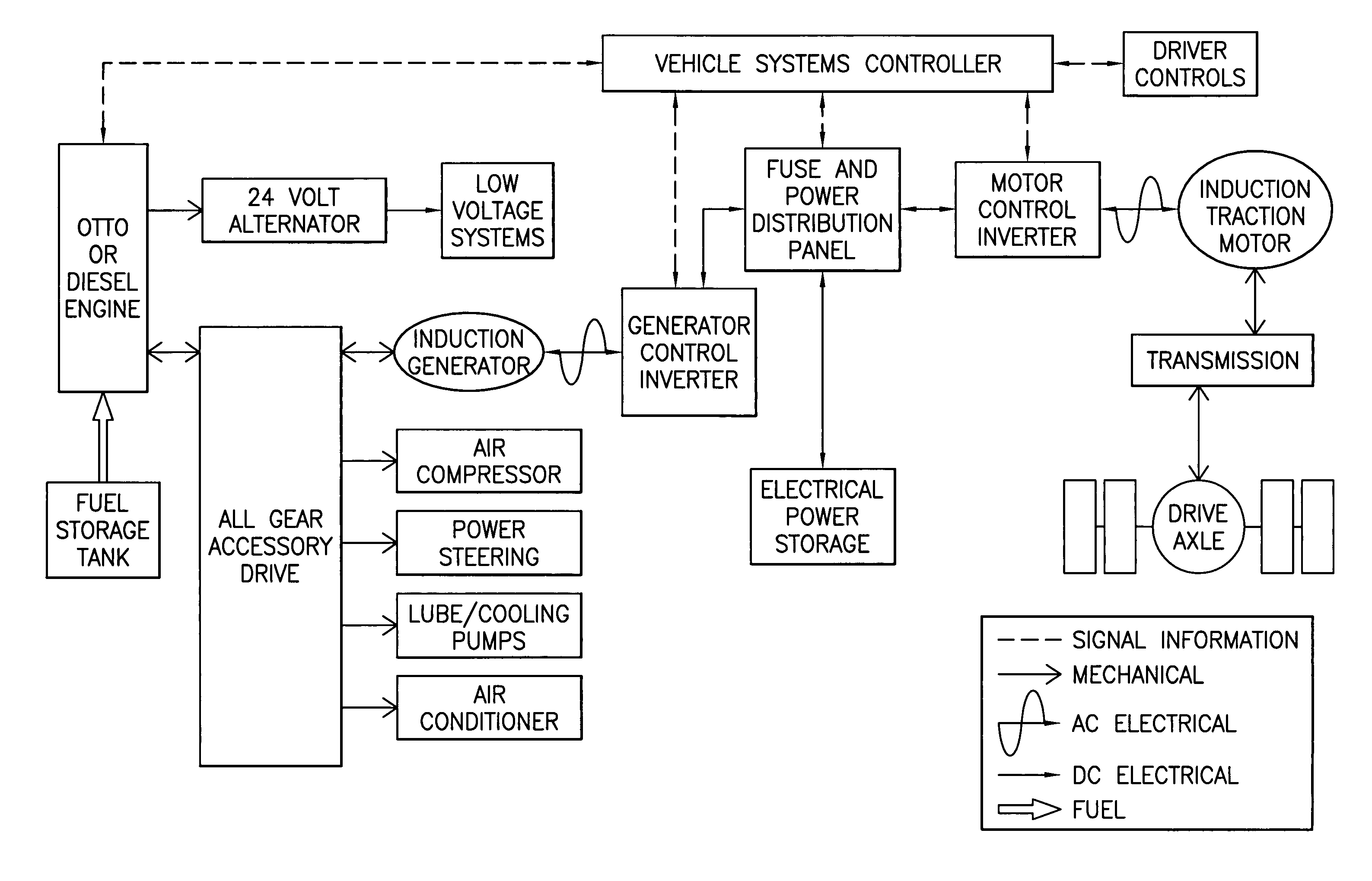
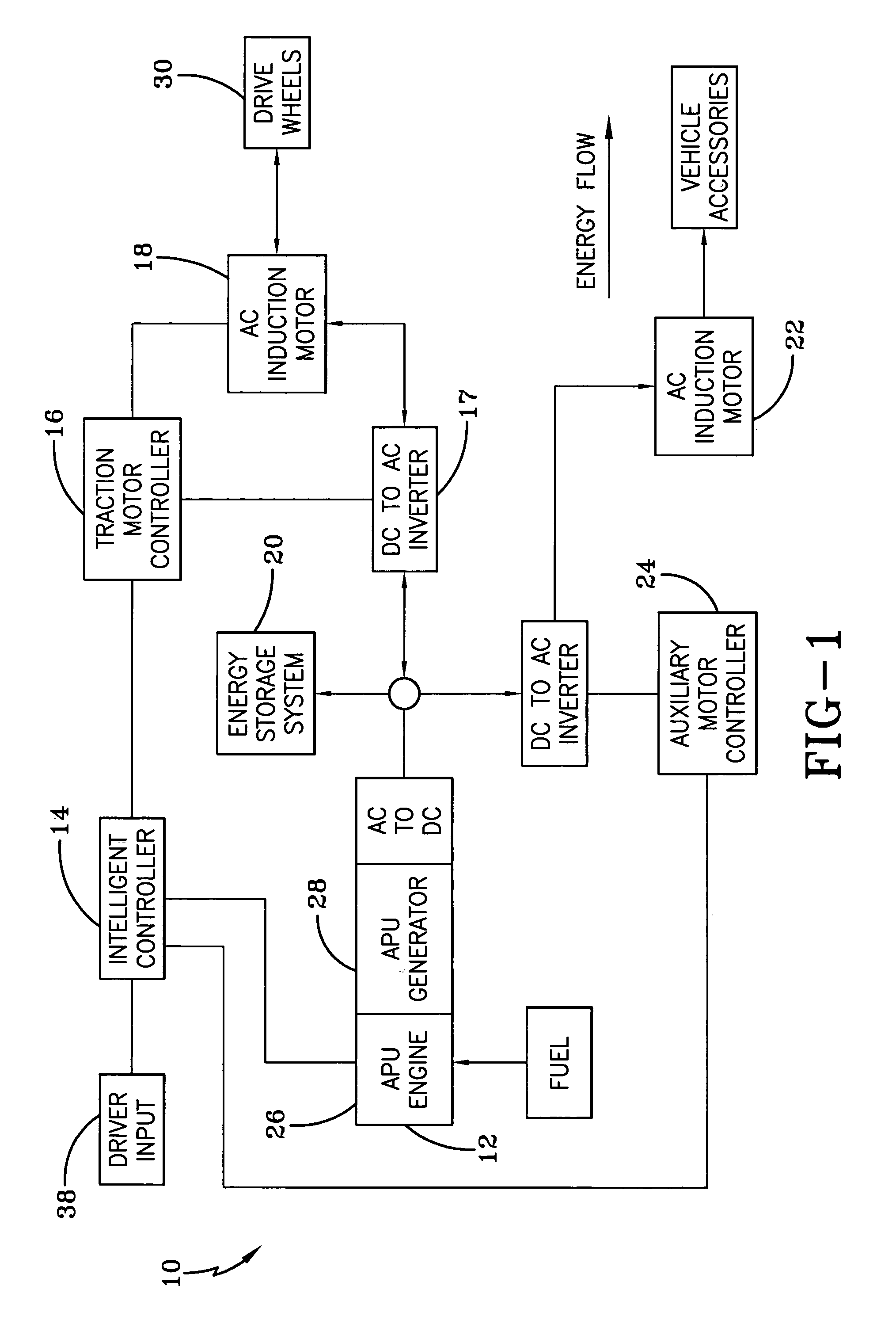
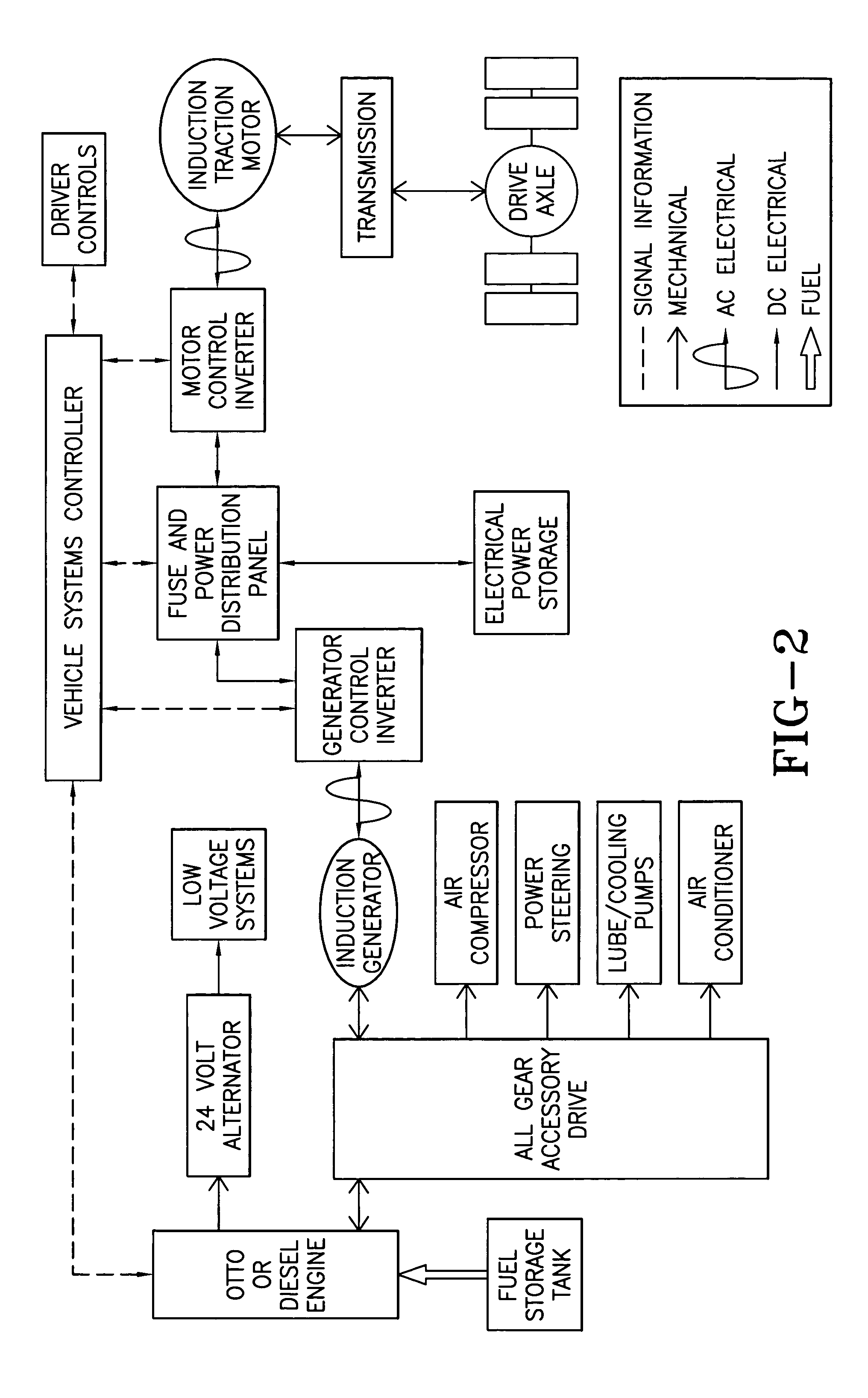
- The system employs a power management controller to maintain ultracapacitor voltage within a predetermined range, allowing for wide voltage fluctuations without performance loss, optimizing APU/PPU performance and reducing the need for additional conversion devices, by using low inductance motors, traction inverters, and a capacitor bank sized to deliver rated power and capture braking energy.
Policy and Regulatory Landscape
The policy and regulatory landscape for hybrid electric vehicle (HEV) infrastructure is rapidly evolving as governments worldwide recognize the critical role of electrification in achieving climate goals and reducing dependence on fossil fuels. By 2030, we can expect a more comprehensive and supportive policy framework to accelerate HEV adoption and infrastructure development.
At the national level, many countries are likely to implement stricter emissions standards and fuel economy regulations, effectively pushing automakers towards increased HEV production. These policies may include mandatory targets for HEV sales as a percentage of total vehicle sales, with penalties for non-compliance. Financial incentives, such as tax credits and rebates for HEV purchases, are expected to continue but may gradually phase out as the technology becomes more mainstream.
Infrastructure-specific policies will play a crucial role in shaping the HEV landscape. Governments are likely to mandate a minimum number of charging stations in public spaces, commercial buildings, and residential areas. Building codes may be updated to require new constructions to be "HEV-ready," with pre-installed wiring for charging equipment. Public-private partnerships will be encouraged to accelerate the deployment of charging infrastructure, particularly in areas where private investment alone may not be sufficient.
Regulatory frameworks for grid integration and smart charging will become more sophisticated. Utilities may be required to implement time-of-use pricing to incentivize off-peak charging, reducing strain on the electrical grid. Standards for vehicle-to-grid (V2G) technology will be established, allowing HEVs to serve as distributed energy resources and participate in grid services.
Local and regional policies will complement national efforts. Cities may implement low-emission zones or congestion charging schemes that favor HEVs. Urban planning policies could require new developments to include a certain percentage of HEV-ready parking spaces. Some municipalities may offer additional incentives, such as free parking or access to high-occupancy vehicle lanes for HEVs.
Internationally, we can expect increased cooperation on standardization of charging technologies and protocols. This will facilitate cross-border travel and reduce barriers to HEV adoption. Trade policies may evolve to support the growth of domestic HEV and battery industries while ensuring access to critical raw materials.
As the HEV market matures, regulations around battery recycling and second-life applications will become more prominent. Extended producer responsibility laws may require automakers to manage the entire lifecycle of HEV batteries, from production to recycling or repurposing.
At the national level, many countries are likely to implement stricter emissions standards and fuel economy regulations, effectively pushing automakers towards increased HEV production. These policies may include mandatory targets for HEV sales as a percentage of total vehicle sales, with penalties for non-compliance. Financial incentives, such as tax credits and rebates for HEV purchases, are expected to continue but may gradually phase out as the technology becomes more mainstream.
Infrastructure-specific policies will play a crucial role in shaping the HEV landscape. Governments are likely to mandate a minimum number of charging stations in public spaces, commercial buildings, and residential areas. Building codes may be updated to require new constructions to be "HEV-ready," with pre-installed wiring for charging equipment. Public-private partnerships will be encouraged to accelerate the deployment of charging infrastructure, particularly in areas where private investment alone may not be sufficient.
Regulatory frameworks for grid integration and smart charging will become more sophisticated. Utilities may be required to implement time-of-use pricing to incentivize off-peak charging, reducing strain on the electrical grid. Standards for vehicle-to-grid (V2G) technology will be established, allowing HEVs to serve as distributed energy resources and participate in grid services.
Local and regional policies will complement national efforts. Cities may implement low-emission zones or congestion charging schemes that favor HEVs. Urban planning policies could require new developments to include a certain percentage of HEV-ready parking spaces. Some municipalities may offer additional incentives, such as free parking or access to high-occupancy vehicle lanes for HEVs.
Internationally, we can expect increased cooperation on standardization of charging technologies and protocols. This will facilitate cross-border travel and reduce barriers to HEV adoption. Trade policies may evolve to support the growth of domestic HEV and battery industries while ensuring access to critical raw materials.
As the HEV market matures, regulations around battery recycling and second-life applications will become more prominent. Extended producer responsibility laws may require automakers to manage the entire lifecycle of HEV batteries, from production to recycling or repurposing.
Environmental Impact Assessment
The environmental impact of Hybrid Electric Vehicle (HEV) infrastructure development for 2030 is a critical consideration in the transition towards sustainable transportation. As HEV adoption increases, the expansion of charging infrastructure will have both positive and negative effects on the environment. On the positive side, the widespread availability of charging stations will encourage more consumers to switch to HEVs, reducing overall greenhouse gas emissions from the transportation sector. This shift could significantly contribute to meeting climate change mitigation goals and improving air quality in urban areas.
However, the construction and operation of HEV charging infrastructure also present environmental challenges. The production of charging equipment and the expansion of electrical grid capacity to support increased demand will result in short-term increases in carbon emissions and resource consumption. Additionally, the disposal of outdated or damaged charging equipment may contribute to electronic waste if not properly managed.
Land use changes associated with the installation of charging stations, particularly in urban areas, may impact local ecosystems and biodiversity. This could include the removal of green spaces or trees to accommodate new infrastructure. However, thoughtful urban planning and the integration of charging stations into existing structures can minimize these impacts.
The sourcing of materials for HEV infrastructure, such as copper for wiring and rare earth elements for electronic components, may lead to increased mining activities. This could potentially result in habitat destruction and water pollution in resource-rich regions if not carefully regulated and managed.
Energy production to meet the increased electricity demand from HEV charging will also have environmental implications. While the overall carbon footprint of HEVs is lower than traditional vehicles, the environmental benefits are maximized when charging is powered by renewable energy sources. Therefore, the development of HEV infrastructure should be closely aligned with the expansion of clean energy generation to ensure the most positive environmental outcomes.
Water consumption and pollution are additional factors to consider. The manufacturing processes for charging equipment and the cooling systems for high-power charging stations may increase water demand and potentially lead to water pollution if not properly managed. Implementing water-efficient technologies and strict wastewater treatment protocols will be essential to mitigate these impacts.
In conclusion, while the environmental impact of HEV infrastructure development for 2030 presents some challenges, the overall effect is expected to be positive when compared to the continued reliance on traditional fossil fuel-based transportation. Careful planning, sustainable design practices, and integration with renewable energy systems will be crucial in maximizing the environmental benefits of HEV adoption and infrastructure expansion.
However, the construction and operation of HEV charging infrastructure also present environmental challenges. The production of charging equipment and the expansion of electrical grid capacity to support increased demand will result in short-term increases in carbon emissions and resource consumption. Additionally, the disposal of outdated or damaged charging equipment may contribute to electronic waste if not properly managed.
Land use changes associated with the installation of charging stations, particularly in urban areas, may impact local ecosystems and biodiversity. This could include the removal of green spaces or trees to accommodate new infrastructure. However, thoughtful urban planning and the integration of charging stations into existing structures can minimize these impacts.
The sourcing of materials for HEV infrastructure, such as copper for wiring and rare earth elements for electronic components, may lead to increased mining activities. This could potentially result in habitat destruction and water pollution in resource-rich regions if not carefully regulated and managed.
Energy production to meet the increased electricity demand from HEV charging will also have environmental implications. While the overall carbon footprint of HEVs is lower than traditional vehicles, the environmental benefits are maximized when charging is powered by renewable energy sources. Therefore, the development of HEV infrastructure should be closely aligned with the expansion of clean energy generation to ensure the most positive environmental outcomes.
Water consumption and pollution are additional factors to consider. The manufacturing processes for charging equipment and the cooling systems for high-power charging stations may increase water demand and potentially lead to water pollution if not properly managed. Implementing water-efficient technologies and strict wastewater treatment protocols will be essential to mitigate these impacts.
In conclusion, while the environmental impact of HEV infrastructure development for 2030 presents some challenges, the overall effect is expected to be positive when compared to the continued reliance on traditional fossil fuel-based transportation. Careful planning, sustainable design practices, and integration with renewable energy systems will be crucial in maximizing the environmental benefits of HEV adoption and infrastructure expansion.
Unlock deeper insights with PatSnap Eureka Quick Research — get a full tech report to explore trends and direct your research. Try now!
Generate Your Research Report Instantly with AI Agent
Supercharge your innovation with PatSnap Eureka AI Agent Platform!