

Exploring HEV as a Catalyst for Climate Action
AUG 14, 20259 MIN READ
Generate Your Research Report Instantly with AI Agent
PatSnap Eureka helps you evaluate technical feasibility & market potential.
HEV Technology Evolution and Objectives
Hybrid Electric Vehicles (HEVs) have emerged as a pivotal technology in the automotive industry's quest to address climate change and reduce greenhouse gas emissions. The evolution of HEV technology can be traced back to the late 20th century, with significant advancements occurring in the past two decades. This progression has been driven by the urgent need to decrease reliance on fossil fuels and mitigate the environmental impact of transportation.
The primary objective of HEV technology is to combine the benefits of internal combustion engines with electric propulsion systems, thereby improving fuel efficiency and reducing emissions. This hybrid approach aims to bridge the gap between conventional vehicles and fully electric vehicles, offering a practical solution for consumers while the infrastructure for all-electric transportation continues to develop.
HEV technology has evolved through several generations, each marked by improvements in battery technology, power management systems, and overall vehicle design. Early HEVs focused on simple start-stop systems and regenerative braking, while more recent iterations incorporate advanced power-split devices, plug-in capabilities, and sophisticated energy management algorithms.
The technological trajectory of HEVs is closely aligned with broader climate action goals. As global initiatives like the Paris Agreement set ambitious targets for reducing carbon emissions, HEVs play a crucial role in the transition towards cleaner transportation. The technology serves as a stepping stone, allowing for gradual adoption of electrified vehicles while addressing range anxiety and infrastructure limitations associated with fully electric vehicles.
Looking forward, the objectives for HEV technology include further improvements in energy efficiency, increased electric-only driving range, and seamless integration with smart grid systems. Research and development efforts are focused on enhancing battery performance, optimizing power electronics, and developing more efficient electric motors. Additionally, there is a growing emphasis on incorporating renewable energy sources into the HEV ecosystem, such as solar-powered charging stations.
The evolution of HEV technology also encompasses advancements in manufacturing processes and materials science. Lightweight materials, improved aerodynamics, and innovative production techniques are being explored to enhance the overall efficiency and sustainability of HEVs. These developments aim not only to improve vehicle performance but also to reduce the carbon footprint associated with vehicle production and lifecycle.
As HEV technology continues to mature, its role in climate action is expected to expand. The integration of HEVs with emerging technologies such as vehicle-to-grid (V2G) systems and autonomous driving capabilities presents new opportunities for reducing emissions and optimizing energy use in transportation. By serving as a catalyst for broader adoption of electrified vehicles, HEVs are paving the way for a more sustainable automotive future, aligning technological progress with global climate objectives.
The primary objective of HEV technology is to combine the benefits of internal combustion engines with electric propulsion systems, thereby improving fuel efficiency and reducing emissions. This hybrid approach aims to bridge the gap between conventional vehicles and fully electric vehicles, offering a practical solution for consumers while the infrastructure for all-electric transportation continues to develop.
HEV technology has evolved through several generations, each marked by improvements in battery technology, power management systems, and overall vehicle design. Early HEVs focused on simple start-stop systems and regenerative braking, while more recent iterations incorporate advanced power-split devices, plug-in capabilities, and sophisticated energy management algorithms.
The technological trajectory of HEVs is closely aligned with broader climate action goals. As global initiatives like the Paris Agreement set ambitious targets for reducing carbon emissions, HEVs play a crucial role in the transition towards cleaner transportation. The technology serves as a stepping stone, allowing for gradual adoption of electrified vehicles while addressing range anxiety and infrastructure limitations associated with fully electric vehicles.
Looking forward, the objectives for HEV technology include further improvements in energy efficiency, increased electric-only driving range, and seamless integration with smart grid systems. Research and development efforts are focused on enhancing battery performance, optimizing power electronics, and developing more efficient electric motors. Additionally, there is a growing emphasis on incorporating renewable energy sources into the HEV ecosystem, such as solar-powered charging stations.
The evolution of HEV technology also encompasses advancements in manufacturing processes and materials science. Lightweight materials, improved aerodynamics, and innovative production techniques are being explored to enhance the overall efficiency and sustainability of HEVs. These developments aim not only to improve vehicle performance but also to reduce the carbon footprint associated with vehicle production and lifecycle.
As HEV technology continues to mature, its role in climate action is expected to expand. The integration of HEVs with emerging technologies such as vehicle-to-grid (V2G) systems and autonomous driving capabilities presents new opportunities for reducing emissions and optimizing energy use in transportation. By serving as a catalyst for broader adoption of electrified vehicles, HEVs are paving the way for a more sustainable automotive future, aligning technological progress with global climate objectives.
Market Demand for HEVs
The market demand for Hybrid Electric Vehicles (HEVs) has been steadily growing over the past decade, driven by increasing environmental awareness, stricter emissions regulations, and rising fuel costs. As a bridge technology between conventional internal combustion engine vehicles and fully electric vehicles, HEVs have gained significant traction in the automotive market.
Consumer interest in HEVs has been fueled by their ability to offer improved fuel efficiency and reduced emissions without the range anxiety associated with pure electric vehicles. This has made HEVs an attractive option for environmentally conscious consumers who are not yet ready to fully transition to electric vehicles.
The global HEV market has shown robust growth, with sales volumes increasing year-over-year. Major automotive markets such as North America, Europe, and Asia-Pacific have witnessed substantial adoption of HEVs. In particular, countries like Japan and the United States have been at the forefront of HEV adoption, with strong consumer demand and supportive government policies.
Government incentives and regulations have played a crucial role in stimulating market demand for HEVs. Many countries have implemented tax breaks, rebates, and other financial incentives to encourage the purchase of hybrid vehicles. Additionally, increasingly stringent emissions standards have pushed automakers to invest in hybrid technology, further expanding the available HEV options in the market.
The corporate fleet sector has also contributed significantly to the growing demand for HEVs. Many businesses are adopting hybrid vehicles as part of their sustainability initiatives and to reduce operational costs associated with fuel consumption. This trend has been particularly notable in industries with large vehicle fleets, such as taxi services, delivery companies, and car rental agencies.
Market research indicates that consumer preferences are shifting towards more fuel-efficient and environmentally friendly vehicles. HEVs are well-positioned to meet these evolving consumer demands, offering a balance between performance, efficiency, and environmental impact. The increasing variety of HEV models across different vehicle segments, from compact cars to SUVs and luxury vehicles, has further expanded their appeal to a broader range of consumers.
Looking ahead, the market demand for HEVs is expected to continue its upward trajectory. While fully electric vehicles are gaining market share, HEVs are likely to remain a popular choice for consumers in the medium term. Factors such as improving battery technology, decreasing production costs, and expanding charging infrastructure will influence the long-term market dynamics between HEVs and other alternative powertrain technologies.
Consumer interest in HEVs has been fueled by their ability to offer improved fuel efficiency and reduced emissions without the range anxiety associated with pure electric vehicles. This has made HEVs an attractive option for environmentally conscious consumers who are not yet ready to fully transition to electric vehicles.
The global HEV market has shown robust growth, with sales volumes increasing year-over-year. Major automotive markets such as North America, Europe, and Asia-Pacific have witnessed substantial adoption of HEVs. In particular, countries like Japan and the United States have been at the forefront of HEV adoption, with strong consumer demand and supportive government policies.
Government incentives and regulations have played a crucial role in stimulating market demand for HEVs. Many countries have implemented tax breaks, rebates, and other financial incentives to encourage the purchase of hybrid vehicles. Additionally, increasingly stringent emissions standards have pushed automakers to invest in hybrid technology, further expanding the available HEV options in the market.
The corporate fleet sector has also contributed significantly to the growing demand for HEVs. Many businesses are adopting hybrid vehicles as part of their sustainability initiatives and to reduce operational costs associated with fuel consumption. This trend has been particularly notable in industries with large vehicle fleets, such as taxi services, delivery companies, and car rental agencies.
Market research indicates that consumer preferences are shifting towards more fuel-efficient and environmentally friendly vehicles. HEVs are well-positioned to meet these evolving consumer demands, offering a balance between performance, efficiency, and environmental impact. The increasing variety of HEV models across different vehicle segments, from compact cars to SUVs and luxury vehicles, has further expanded their appeal to a broader range of consumers.
Looking ahead, the market demand for HEVs is expected to continue its upward trajectory. While fully electric vehicles are gaining market share, HEVs are likely to remain a popular choice for consumers in the medium term. Factors such as improving battery technology, decreasing production costs, and expanding charging infrastructure will influence the long-term market dynamics between HEVs and other alternative powertrain technologies.
HEV Technical Challenges
Hybrid Electric Vehicles (HEVs) face several technical challenges that need to be addressed to maximize their potential as a catalyst for climate action. One of the primary hurdles is battery technology. While significant advancements have been made, current batteries still struggle with energy density, charging speed, and longevity. This impacts the overall performance and practicality of HEVs, limiting their all-electric range and increasing reliance on the internal combustion engine.
Another critical challenge lies in the powertrain integration and control systems. Efficiently managing the interplay between the electric motor and the internal combustion engine requires sophisticated control algorithms. These systems must optimize power distribution, energy recuperation, and overall vehicle performance while maintaining a seamless driving experience. The complexity of these systems can lead to increased manufacturing costs and potential reliability issues.
Thermal management presents another significant hurdle for HEV technology. Both the battery pack and the electric motor generate heat during operation, which needs to be effectively dissipated to maintain optimal performance and longevity. Developing efficient cooling systems that don't compromise the vehicle's weight or aerodynamics remains a challenge for engineers.
Weight reduction is a constant battle in HEV design. The addition of electric components, particularly the battery pack, increases the overall vehicle weight. This added mass can negatively impact fuel efficiency and performance, partially offsetting the benefits of the hybrid system. Engineers must continually seek innovative materials and design solutions to minimize weight without compromising safety or functionality.
The cost of HEV technology remains a significant barrier to widespread adoption. While prices have decreased over time, the complex components and advanced materials used in HEVs still result in a higher purchase price compared to conventional vehicles. This price premium can deter potential buyers and slow the transition to more sustainable transportation options.
Lastly, the environmental impact of HEV production and end-of-life disposal presents ongoing challenges. The manufacturing of batteries and electric components often involves energy-intensive processes and the use of rare earth materials. Additionally, the recycling and disposal of these components, particularly lithium-ion batteries, require specialized processes to minimize environmental harm. Developing more sustainable production methods and establishing efficient recycling infrastructure are crucial steps in enhancing the overall environmental benefits of HEVs.
Another critical challenge lies in the powertrain integration and control systems. Efficiently managing the interplay between the electric motor and the internal combustion engine requires sophisticated control algorithms. These systems must optimize power distribution, energy recuperation, and overall vehicle performance while maintaining a seamless driving experience. The complexity of these systems can lead to increased manufacturing costs and potential reliability issues.
Thermal management presents another significant hurdle for HEV technology. Both the battery pack and the electric motor generate heat during operation, which needs to be effectively dissipated to maintain optimal performance and longevity. Developing efficient cooling systems that don't compromise the vehicle's weight or aerodynamics remains a challenge for engineers.
Weight reduction is a constant battle in HEV design. The addition of electric components, particularly the battery pack, increases the overall vehicle weight. This added mass can negatively impact fuel efficiency and performance, partially offsetting the benefits of the hybrid system. Engineers must continually seek innovative materials and design solutions to minimize weight without compromising safety or functionality.
The cost of HEV technology remains a significant barrier to widespread adoption. While prices have decreased over time, the complex components and advanced materials used in HEVs still result in a higher purchase price compared to conventional vehicles. This price premium can deter potential buyers and slow the transition to more sustainable transportation options.
Lastly, the environmental impact of HEV production and end-of-life disposal presents ongoing challenges. The manufacturing of batteries and electric components often involves energy-intensive processes and the use of rare earth materials. Additionally, the recycling and disposal of these components, particularly lithium-ion batteries, require specialized processes to minimize environmental harm. Developing more sustainable production methods and establishing efficient recycling infrastructure are crucial steps in enhancing the overall environmental benefits of HEVs.
Current HEV Solutions
01 Thermal management systems for HEVs
Advanced thermal management systems are crucial for maintaining optimal performance and efficiency in hybrid electric vehicles. These systems regulate the temperature of various components, including the battery, electric motor, and internal combustion engine, to ensure proper functioning and longevity. Innovative cooling solutions and heat exchange mechanisms are employed to manage the thermal loads generated during operation.- Powertrain and energy management systems for HEVs: Hybrid Electric Vehicles (HEVs) utilize advanced powertrain and energy management systems to optimize performance and efficiency. These systems integrate electric motors with internal combustion engines, manage power distribution, and control energy flow between various components. They often include regenerative braking systems to recover and store energy during deceleration.
- Battery and thermal management in HEVs: Effective battery and thermal management are crucial for HEV performance and longevity. This includes advanced battery technologies, cooling systems for batteries and power electronics, and strategies to optimize battery life and performance under various operating conditions. Thermal management systems help maintain optimal temperature ranges for batteries and other components.
- Electric drive systems and motor control for HEVs: HEVs employ sophisticated electric drive systems and motor control strategies. These include high-efficiency electric motors, power inverters, and control algorithms that optimize torque delivery and energy efficiency. Advanced motor designs and control techniques help improve overall vehicle performance and reduce energy consumption.
- Charging infrastructure and systems for HEVs: Charging infrastructure and systems play a vital role in HEV adoption and usability. This includes the development of efficient charging stations, fast-charging technologies, and integration with smart grid systems. Innovations in this area focus on reducing charging times, improving charging efficiency, and enhancing the overall user experience.
- Lightweight materials and aerodynamic designs for HEVs: HEV manufacturers are increasingly focusing on lightweight materials and aerodynamic designs to improve vehicle efficiency. This includes the use of advanced composites, high-strength steels, and innovative manufacturing techniques to reduce vehicle weight. Aerodynamic optimizations help reduce drag and improve overall energy efficiency.
02 Power control and distribution in HEVs
Efficient power control and distribution systems are essential for optimizing the performance of hybrid electric vehicles. These systems manage the flow of energy between the internal combustion engine, electric motor, and battery, ensuring seamless operation and maximizing fuel efficiency. Advanced control algorithms and power electronics are utilized to optimize power distribution based on driving conditions and vehicle demands.Expand Specific Solutions03 Battery technology for HEVs
Advancements in battery technology play a crucial role in improving the performance and range of hybrid electric vehicles. High-capacity, fast-charging batteries with improved energy density and longevity are being developed to enhance the electric driving range and overall efficiency of HEVs. Novel battery management systems and cell designs are implemented to optimize battery performance and lifespan.Expand Specific Solutions04 Regenerative braking systems for HEVs
Regenerative braking systems are a key feature in hybrid electric vehicles, allowing for the recovery and storage of kinetic energy during deceleration. These systems convert the vehicle's kinetic energy into electrical energy, which is then stored in the battery for later use. Advanced regenerative braking technologies aim to maximize energy recovery efficiency while maintaining smooth and consistent braking performance.Expand Specific Solutions05 Hybrid powertrain configurations
Various hybrid powertrain configurations are being developed to optimize the integration of internal combustion engines and electric motors in HEVs. These configurations include series, parallel, and power-split hybrid systems, each offering unique advantages in terms of efficiency, performance, and cost-effectiveness. Advanced transmission systems and coupling mechanisms are employed to seamlessly blend power from multiple sources.Expand Specific Solutions
Key HEV Manufacturers
The HEV (Hybrid Electric Vehicle) market is in a mature growth phase, with significant market size and technological advancements. The global HEV market is expected to reach substantial value in the coming years, driven by increasing environmental concerns and stringent emissions regulations. Major players like Toyota, Ford, Hyundai, and Kia have established strong positions in the HEV segment, with Toyota being a pioneer and market leader. The technology has reached a high level of maturity, with continuous improvements in battery efficiency, power management systems, and overall vehicle performance. Companies such as LG Energy Solution and LG Chem are contributing to advancements in battery technology, further enhancing HEV capabilities and driving market growth.
Hyundai Motor Co., Ltd.
Technical Solution: Hyundai's HEV strategy focuses on their Hybrid Blue Drive technology, which combines a gasoline engine with an electric motor powered by a lithium-polymer battery. The company has developed an advanced parallel hybrid system that allows for independent operation of the electric motor and gasoline engine, maximizing efficiency. Hyundai's latest HEVs feature a Continuously Variable Valve Duration (CVVD) engine technology, which can improve fuel efficiency by up to 4% and emissions performance by 12%[7]. The company has also implemented a predictive energy management system that uses route information and driving patterns to optimize the use of electric power. Hyundai is exploring the use of solar roof panels on their HEVs, which could potentially add up to 1,300 km of range annually under optimal conditions[8].
Strengths: Innovative engine technologies specific to HEVs, integration of renewable energy sources directly into vehicles. Weaknesses: Smaller global market share compared to some competitors, potentially limiting the overall impact on climate action.
Toyota Motor Corp.
Technical Solution: Toyota has been a pioneer in hybrid electric vehicle (HEV) technology, with their Hybrid Synergy Drive system being a cornerstone of their climate action strategy. The company's latest HEV systems incorporate advanced power split devices, allowing for seamless transitions between electric and gasoline power. Toyota's HEVs utilize regenerative braking systems that can recover up to 30% of the vehicle's kinetic energy[1]. Their latest models feature lithium-ion batteries with improved energy density, enabling longer electric-only driving ranges. Toyota has also developed a predictive efficiency operating system that uses GPS and traffic data to optimize the use of electric power, potentially improving fuel economy by up to 10%[2]. The company is exploring the use of solid-state batteries in future HEV models, which could significantly increase energy density and reduce charging times[3].
Strengths: Proven reliability, extensive experience in HEV technology, and a wide range of HEV models. Weaknesses: Slower adoption of full electric vehicles compared to some competitors, potentially limiting long-term climate impact.
HEV Core Innovations
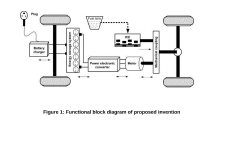
Hybrid electric vehicle with electric motor providing strategic power assist to load balance internal combustion engine
PatentPendingIN202441000035A
Innovation
- A Hybrid Electric Vehicle (HEV) system with an electric motor providing strategic power assist to the internal combustion engine, optimizing power distribution and energy management through advanced control algorithms.
Hybrid electric vehicle fuel conservation system
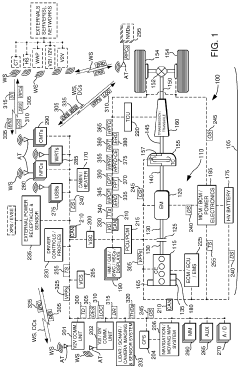
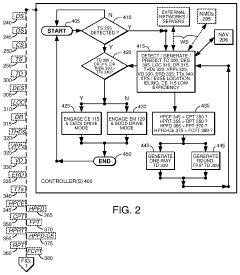
PatentActiveUS10793135B2
Innovation
- The implementation of advanced controller systems that estimate trip distances, detect thermal demands, and adjust drive modes based on real-time data from navigation systems, sensors, and historical probabilities to optimize the engagement of electric drive modes and combustion engine modes, ensuring efficient energy use and minimizing fuel consumption.
Environmental Impact
Hybrid Electric Vehicles (HEVs) have emerged as a significant technological advancement in the automotive industry, offering a promising solution to reduce greenhouse gas emissions and combat climate change. The environmental impact of HEVs is multifaceted, encompassing both positive and negative aspects that warrant careful consideration.
One of the primary environmental benefits of HEVs is their ability to significantly reduce carbon dioxide emissions compared to conventional internal combustion engine vehicles. By combining an electric motor with a gasoline engine, HEVs can achieve higher fuel efficiency and lower emissions, particularly in urban driving conditions where frequent stops and starts occur. Studies have shown that HEVs can reduce CO2 emissions by up to 30% compared to their conventional counterparts, contributing to improved air quality and reduced greenhouse gas concentrations in the atmosphere.
Furthermore, HEVs play a crucial role in reducing dependence on fossil fuels, which is a key factor in mitigating climate change. The improved fuel economy of HEVs translates to less petroleum consumption, helping to conserve finite resources and reduce the environmental impact associated with oil extraction and refining processes. This reduction in fossil fuel consumption also contributes to energy security and reduces the geopolitical tensions often associated with oil dependence.
However, the environmental impact of HEVs extends beyond their operational phase. The production of HEVs, particularly their batteries, involves energy-intensive processes and the extraction of rare earth elements. The mining and processing of these materials can have significant environmental consequences, including habitat destruction, water pollution, and increased carbon emissions. It is essential to consider the entire lifecycle of HEVs when assessing their environmental impact, from raw material extraction to vehicle disposal.
Battery disposal and recycling present another environmental challenge for HEVs. While advancements in battery technology have improved their lifespan and recyclability, the proper disposal and recycling of batteries at the end of their life cycle remain critical to minimizing environmental harm. Developing efficient and widespread recycling infrastructure for HEV batteries is crucial to maximize the environmental benefits of this technology.
Despite these challenges, the overall environmental impact of HEVs is generally positive when compared to conventional vehicles. As battery technology continues to improve and renewable energy sources become more prevalent in electricity generation, the environmental benefits of HEVs are expected to increase further. Additionally, HEVs serve as a transitional technology, paving the way for the adoption of fully electric vehicles and contributing to the development of charging infrastructure and public acceptance of alternative powertrains.
In conclusion, while HEVs present some environmental challenges, particularly in their production and end-of-life phases, their potential to reduce greenhouse gas emissions and fossil fuel consumption makes them a valuable tool in the fight against climate change. As technology advances and sustainable practices in manufacturing and recycling improve, the positive environmental impact of HEVs is likely to become even more pronounced, solidifying their role as a catalyst for climate action.
One of the primary environmental benefits of HEVs is their ability to significantly reduce carbon dioxide emissions compared to conventional internal combustion engine vehicles. By combining an electric motor with a gasoline engine, HEVs can achieve higher fuel efficiency and lower emissions, particularly in urban driving conditions where frequent stops and starts occur. Studies have shown that HEVs can reduce CO2 emissions by up to 30% compared to their conventional counterparts, contributing to improved air quality and reduced greenhouse gas concentrations in the atmosphere.
Furthermore, HEVs play a crucial role in reducing dependence on fossil fuels, which is a key factor in mitigating climate change. The improved fuel economy of HEVs translates to less petroleum consumption, helping to conserve finite resources and reduce the environmental impact associated with oil extraction and refining processes. This reduction in fossil fuel consumption also contributes to energy security and reduces the geopolitical tensions often associated with oil dependence.
However, the environmental impact of HEVs extends beyond their operational phase. The production of HEVs, particularly their batteries, involves energy-intensive processes and the extraction of rare earth elements. The mining and processing of these materials can have significant environmental consequences, including habitat destruction, water pollution, and increased carbon emissions. It is essential to consider the entire lifecycle of HEVs when assessing their environmental impact, from raw material extraction to vehicle disposal.
Battery disposal and recycling present another environmental challenge for HEVs. While advancements in battery technology have improved their lifespan and recyclability, the proper disposal and recycling of batteries at the end of their life cycle remain critical to minimizing environmental harm. Developing efficient and widespread recycling infrastructure for HEV batteries is crucial to maximize the environmental benefits of this technology.
Despite these challenges, the overall environmental impact of HEVs is generally positive when compared to conventional vehicles. As battery technology continues to improve and renewable energy sources become more prevalent in electricity generation, the environmental benefits of HEVs are expected to increase further. Additionally, HEVs serve as a transitional technology, paving the way for the adoption of fully electric vehicles and contributing to the development of charging infrastructure and public acceptance of alternative powertrains.
In conclusion, while HEVs present some environmental challenges, particularly in their production and end-of-life phases, their potential to reduce greenhouse gas emissions and fossil fuel consumption makes them a valuable tool in the fight against climate change. As technology advances and sustainable practices in manufacturing and recycling improve, the positive environmental impact of HEVs is likely to become even more pronounced, solidifying their role as a catalyst for climate action.
Policy and Incentives
Government policies and incentives play a crucial role in promoting the adoption of Hybrid Electric Vehicles (HEVs) as a catalyst for climate action. These measures are designed to accelerate the transition towards cleaner transportation and reduce greenhouse gas emissions in the automotive sector.
Financial incentives have been a key driver in encouraging consumers to choose HEVs over conventional vehicles. Many countries offer tax credits, rebates, or grants to offset the higher initial cost of HEVs. For instance, the United States provides federal tax credits of up to $7,500 for eligible plug-in hybrid vehicles, while several states offer additional incentives. Similarly, European countries like Norway and the Netherlands have implemented generous tax exemptions and subsidies for HEV purchases.
Non-financial incentives also contribute significantly to HEV adoption. These include preferential parking spaces, access to high-occupancy vehicle lanes, and exemptions from congestion charges in urban areas. Cities like London and Oslo have implemented such measures to make HEV ownership more attractive and convenient for drivers.
Regulatory policies have been instrumental in pushing automakers to invest in HEV technology. Stringent fuel efficiency standards and emissions regulations, such as the Corporate Average Fuel Economy (CAFE) standards in the United States and the European Union's CO2 emissions targets, have compelled manufacturers to develop and produce more efficient vehicles, including HEVs.
Government procurement policies have also played a role in promoting HEVs. Many countries and municipalities have set targets for electrifying their public vehicle fleets, including buses, taxis, and government-owned vehicles. These initiatives not only reduce emissions but also increase public awareness and acceptance of HEV technology.
Research and development support is another critical aspect of government policy. Funding for advanced battery technology, electric drivetrain systems, and charging infrastructure has accelerated technological progress in the HEV sector. Programs like the U.S. Department of Energy's Vehicle Technologies Office provide grants and partnerships to drive innovation in this field.
However, the effectiveness of these policies and incentives varies across regions and over time. As HEV technology matures and becomes more cost-competitive, some governments are gradually phasing out or redirecting incentives towards fully electric vehicles. This shift reflects the evolving landscape of clean transportation and the need for policies to adapt to technological advancements and market conditions.
Financial incentives have been a key driver in encouraging consumers to choose HEVs over conventional vehicles. Many countries offer tax credits, rebates, or grants to offset the higher initial cost of HEVs. For instance, the United States provides federal tax credits of up to $7,500 for eligible plug-in hybrid vehicles, while several states offer additional incentives. Similarly, European countries like Norway and the Netherlands have implemented generous tax exemptions and subsidies for HEV purchases.
Non-financial incentives also contribute significantly to HEV adoption. These include preferential parking spaces, access to high-occupancy vehicle lanes, and exemptions from congestion charges in urban areas. Cities like London and Oslo have implemented such measures to make HEV ownership more attractive and convenient for drivers.
Regulatory policies have been instrumental in pushing automakers to invest in HEV technology. Stringent fuel efficiency standards and emissions regulations, such as the Corporate Average Fuel Economy (CAFE) standards in the United States and the European Union's CO2 emissions targets, have compelled manufacturers to develop and produce more efficient vehicles, including HEVs.
Government procurement policies have also played a role in promoting HEVs. Many countries and municipalities have set targets for electrifying their public vehicle fleets, including buses, taxis, and government-owned vehicles. These initiatives not only reduce emissions but also increase public awareness and acceptance of HEV technology.
Research and development support is another critical aspect of government policy. Funding for advanced battery technology, electric drivetrain systems, and charging infrastructure has accelerated technological progress in the HEV sector. Programs like the U.S. Department of Energy's Vehicle Technologies Office provide grants and partnerships to drive innovation in this field.
However, the effectiveness of these policies and incentives varies across regions and over time. As HEV technology matures and becomes more cost-competitive, some governments are gradually phasing out or redirecting incentives towards fully electric vehicles. This shift reflects the evolving landscape of clean transportation and the need for policies to adapt to technological advancements and market conditions.
Unlock deeper insights with PatSnap Eureka Quick Research — get a full tech report to explore trends and direct your research. Try now!
Generate Your Research Report Instantly with AI Agent
Supercharge your innovation with PatSnap Eureka AI Agent Platform!