Enhancing Luminol for Advanced Algorithm Performance
AUG 19, 20259 MIN READ
Generate Your Research Report Instantly with AI Agent
Patsnap Eureka helps you evaluate technical feasibility & market potential.
Luminol Enhancement Goals
Luminol, a powerful chemiluminescent compound, has long been utilized in forensic science and biochemical research. However, its potential for enhancing algorithm performance in advanced computing systems remains largely unexplored. The primary goal of enhancing Luminol for advanced algorithm performance is to leverage its unique properties to create novel computational paradigms that can significantly improve processing speed, energy efficiency, and overall system performance.
One key objective is to develop Luminol-based optical computing systems that can perform complex calculations at the speed of light. By harnessing the chemiluminescent properties of Luminol, researchers aim to create ultra-fast, low-power optical processors capable of executing advanced algorithms with unprecedented efficiency. This approach could potentially revolutionize high-performance computing, artificial intelligence, and data analytics applications.
Another critical enhancement goal is to utilize Luminol's sensitivity to specific chemical reactions to create adaptive computing systems. These systems would be capable of dynamically adjusting their computational strategies based on environmental factors, leading to more robust and versatile algorithms. This adaptability could prove particularly valuable in edge computing scenarios, where devices must operate effectively under varying conditions.
Researchers are also exploring the possibility of integrating Luminol-enhanced algorithms into quantum computing systems. The goal is to exploit Luminol's quantum properties to develop hybrid classical-quantum algorithms that can tackle complex optimization problems more efficiently than traditional approaches. This integration could potentially bridge the gap between classical and quantum computing, opening up new avenues for solving previously intractable computational challenges.
Furthermore, enhancing Luminol for advanced algorithm performance involves developing novel data encoding and processing techniques. Scientists aim to create Luminol-based memory systems that can store and manipulate information using the compound's unique chemical properties. This approach could lead to denser, faster, and more energy-efficient data storage solutions, addressing the growing demands of big data and artificial intelligence applications.
Lastly, researchers are working on enhancing Luminol's stability and controllability to ensure its reliable performance in diverse computing environments. This includes developing new formulations and encapsulation techniques that can protect Luminol from degradation while maintaining its reactive properties. By improving the compound's longevity and precision, scientists hope to create more durable and accurate Luminol-based computing systems capable of supporting advanced algorithms over extended periods.
One key objective is to develop Luminol-based optical computing systems that can perform complex calculations at the speed of light. By harnessing the chemiluminescent properties of Luminol, researchers aim to create ultra-fast, low-power optical processors capable of executing advanced algorithms with unprecedented efficiency. This approach could potentially revolutionize high-performance computing, artificial intelligence, and data analytics applications.
Another critical enhancement goal is to utilize Luminol's sensitivity to specific chemical reactions to create adaptive computing systems. These systems would be capable of dynamically adjusting their computational strategies based on environmental factors, leading to more robust and versatile algorithms. This adaptability could prove particularly valuable in edge computing scenarios, where devices must operate effectively under varying conditions.
Researchers are also exploring the possibility of integrating Luminol-enhanced algorithms into quantum computing systems. The goal is to exploit Luminol's quantum properties to develop hybrid classical-quantum algorithms that can tackle complex optimization problems more efficiently than traditional approaches. This integration could potentially bridge the gap between classical and quantum computing, opening up new avenues for solving previously intractable computational challenges.
Furthermore, enhancing Luminol for advanced algorithm performance involves developing novel data encoding and processing techniques. Scientists aim to create Luminol-based memory systems that can store and manipulate information using the compound's unique chemical properties. This approach could lead to denser, faster, and more energy-efficient data storage solutions, addressing the growing demands of big data and artificial intelligence applications.
Lastly, researchers are working on enhancing Luminol's stability and controllability to ensure its reliable performance in diverse computing environments. This includes developing new formulations and encapsulation techniques that can protect Luminol from degradation while maintaining its reactive properties. By improving the compound's longevity and precision, scientists hope to create more durable and accurate Luminol-based computing systems capable of supporting advanced algorithms over extended periods.
Market Demand Analysis
The market demand for enhanced Luminol algorithms is driven by the increasing complexity of data analysis and the growing need for more efficient and accurate computational methods across various industries. As organizations grapple with larger datasets and more intricate problems, there is a rising demand for advanced algorithmic solutions that can deliver superior performance and scalability.
In the financial sector, the need for improved Luminol algorithms is particularly acute. High-frequency trading, risk assessment, and fraud detection require rapid processing of vast amounts of data in real-time. Enhanced Luminol algorithms can provide the necessary speed and accuracy to gain a competitive edge in these time-sensitive applications. The global algorithmic trading market, which heavily relies on such advanced algorithms, is expected to grow significantly in the coming years.
The healthcare industry is another major driver of demand for enhanced Luminol algorithms. With the proliferation of electronic health records and the increasing use of AI in medical diagnosis and treatment planning, there is a growing need for algorithms that can efficiently process and analyze complex medical data. Improved Luminol algorithms can contribute to more accurate disease prediction, personalized treatment recommendations, and optimized resource allocation in healthcare facilities.
In the realm of scientific research and engineering, enhanced Luminol algorithms are sought after for their potential to accelerate simulations and data analysis in fields such as climate modeling, particle physics, and materials science. The ability to process and interpret large-scale experimental data more efficiently can lead to faster scientific discoveries and technological breakthroughs.
The telecommunications industry is also a significant market for advanced Luminol algorithms. As 5G networks continue to expand and the Internet of Things (IoT) ecosystem grows, there is an increasing demand for algorithms that can optimize network performance, manage traffic, and enhance security. Enhanced Luminol algorithms can play a crucial role in improving network efficiency and reliability.
Furthermore, the rising adoption of artificial intelligence and machine learning across various sectors is fueling the demand for more sophisticated algorithmic solutions. Enhanced Luminol algorithms can contribute to improving the performance of AI models, reducing training times, and enabling more complex decision-making processes.
The market for enhanced Luminol algorithms is not limited to specific industries but extends to any field where computational efficiency and accuracy are paramount. As businesses and organizations continue to digitize their operations and rely more heavily on data-driven decision-making, the demand for advanced algorithmic solutions is expected to grow steadily.
In the financial sector, the need for improved Luminol algorithms is particularly acute. High-frequency trading, risk assessment, and fraud detection require rapid processing of vast amounts of data in real-time. Enhanced Luminol algorithms can provide the necessary speed and accuracy to gain a competitive edge in these time-sensitive applications. The global algorithmic trading market, which heavily relies on such advanced algorithms, is expected to grow significantly in the coming years.
The healthcare industry is another major driver of demand for enhanced Luminol algorithms. With the proliferation of electronic health records and the increasing use of AI in medical diagnosis and treatment planning, there is a growing need for algorithms that can efficiently process and analyze complex medical data. Improved Luminol algorithms can contribute to more accurate disease prediction, personalized treatment recommendations, and optimized resource allocation in healthcare facilities.
In the realm of scientific research and engineering, enhanced Luminol algorithms are sought after for their potential to accelerate simulations and data analysis in fields such as climate modeling, particle physics, and materials science. The ability to process and interpret large-scale experimental data more efficiently can lead to faster scientific discoveries and technological breakthroughs.
The telecommunications industry is also a significant market for advanced Luminol algorithms. As 5G networks continue to expand and the Internet of Things (IoT) ecosystem grows, there is an increasing demand for algorithms that can optimize network performance, manage traffic, and enhance security. Enhanced Luminol algorithms can play a crucial role in improving network efficiency and reliability.
Furthermore, the rising adoption of artificial intelligence and machine learning across various sectors is fueling the demand for more sophisticated algorithmic solutions. Enhanced Luminol algorithms can contribute to improving the performance of AI models, reducing training times, and enabling more complex decision-making processes.
The market for enhanced Luminol algorithms is not limited to specific industries but extends to any field where computational efficiency and accuracy are paramount. As businesses and organizations continue to digitize their operations and rely more heavily on data-driven decision-making, the demand for advanced algorithmic solutions is expected to grow steadily.
Current Luminol Limitations
Luminol, a popular open-source anomaly detection library, has been widely adopted in various industries for its ability to identify unusual patterns in time series data. However, as the complexity and scale of data analysis tasks continue to grow, several limitations of the current Luminol implementation have become apparent, hindering its effectiveness in advanced algorithm performance.
One of the primary limitations of Luminol is its scalability when dealing with large-scale datasets. As the volume of data increases, Luminol's performance tends to degrade, leading to longer processing times and increased resource consumption. This limitation becomes particularly problematic in real-time or near-real-time applications where rapid anomaly detection is crucial.
Another significant constraint is Luminol's limited support for multivariate time series analysis. While it excels at detecting anomalies in univariate time series, many modern applications require the ability to analyze multiple variables simultaneously to identify complex, interdependent anomalies. This shortcoming restricts Luminol's applicability in scenarios where anomalies may manifest across multiple dimensions or features.
Luminol's current implementation also lacks advanced machine learning capabilities, such as deep learning-based anomaly detection methods. As the field of anomaly detection evolves, incorporating more sophisticated algorithms could significantly enhance Luminol's accuracy and adaptability to diverse data patterns.
The library's flexibility in handling different data types and formats is another area that requires improvement. Luminol primarily focuses on numerical time series data, limiting its usefulness in scenarios involving categorical or mixed data types. This restriction narrows the range of applications where Luminol can be effectively employed.
Furthermore, Luminol's visualization capabilities are relatively basic, making it challenging for users to interpret and communicate the results effectively. Enhanced visualization tools could greatly improve the understanding and analysis of detected anomalies, especially for non-technical stakeholders.
Luminol's current approach to seasonality and trend detection is somewhat simplistic, which can lead to false positives or missed anomalies in complex time series with multiple seasonal patterns or long-term trends. Developing more sophisticated methods for handling these temporal components would significantly enhance the library's accuracy and reliability.
Lastly, Luminol's integration capabilities with other data processing and analysis tools are limited. Improving its interoperability with popular data science frameworks and platforms would greatly enhance its usability and adoption in diverse technological ecosystems.
Addressing these limitations is crucial for enhancing Luminol's performance and expanding its applicability in advanced algorithm scenarios. By overcoming these constraints, Luminol can evolve into a more robust and versatile tool for anomaly detection across a wider range of industries and use cases.
One of the primary limitations of Luminol is its scalability when dealing with large-scale datasets. As the volume of data increases, Luminol's performance tends to degrade, leading to longer processing times and increased resource consumption. This limitation becomes particularly problematic in real-time or near-real-time applications where rapid anomaly detection is crucial.
Another significant constraint is Luminol's limited support for multivariate time series analysis. While it excels at detecting anomalies in univariate time series, many modern applications require the ability to analyze multiple variables simultaneously to identify complex, interdependent anomalies. This shortcoming restricts Luminol's applicability in scenarios where anomalies may manifest across multiple dimensions or features.
Luminol's current implementation also lacks advanced machine learning capabilities, such as deep learning-based anomaly detection methods. As the field of anomaly detection evolves, incorporating more sophisticated algorithms could significantly enhance Luminol's accuracy and adaptability to diverse data patterns.
The library's flexibility in handling different data types and formats is another area that requires improvement. Luminol primarily focuses on numerical time series data, limiting its usefulness in scenarios involving categorical or mixed data types. This restriction narrows the range of applications where Luminol can be effectively employed.
Furthermore, Luminol's visualization capabilities are relatively basic, making it challenging for users to interpret and communicate the results effectively. Enhanced visualization tools could greatly improve the understanding and analysis of detected anomalies, especially for non-technical stakeholders.
Luminol's current approach to seasonality and trend detection is somewhat simplistic, which can lead to false positives or missed anomalies in complex time series with multiple seasonal patterns or long-term trends. Developing more sophisticated methods for handling these temporal components would significantly enhance the library's accuracy and reliability.
Lastly, Luminol's integration capabilities with other data processing and analysis tools are limited. Improving its interoperability with popular data science frameworks and platforms would greatly enhance its usability and adoption in diverse technological ecosystems.
Addressing these limitations is crucial for enhancing Luminol's performance and expanding its applicability in advanced algorithm scenarios. By overcoming these constraints, Luminol can evolve into a more robust and versatile tool for anomaly detection across a wider range of industries and use cases.
Existing Enhancement Methods
01 Optimization of Luminol Algorithm Performance
Various techniques are employed to enhance the performance of the Luminol algorithm, including code optimization, parallel processing, and efficient data structures. These improvements aim to reduce computational complexity and increase the speed of anomaly detection in time series data.- Optimization of Luminol Algorithm Performance: Various techniques are employed to enhance the performance of the Luminol algorithm, including code optimization, parallel processing, and efficient data structures. These improvements aim to reduce computational complexity and increase the speed of anomaly detection in time series data.
- Machine Learning Integration with Luminol: Machine learning techniques are integrated with the Luminol algorithm to improve its accuracy and adaptability. This combination allows for more sophisticated pattern recognition and anomaly detection in complex datasets, enhancing the overall performance of the algorithm.
- Real-time Processing and Scalability: Advancements in the Luminol algorithm focus on enabling real-time processing of large-scale data streams. This includes optimizations for distributed computing environments and improvements in data ingestion and processing pipelines to handle high-velocity data inputs.
- Customization and Parameter Tuning: Research efforts are directed towards developing methods for easy customization and automatic parameter tuning of the Luminol algorithm. This allows for better adaptation to specific use cases and datasets, improving the algorithm's performance across various domains.
- Integration with Other Analytical Tools: The Luminol algorithm is being integrated with other analytical tools and frameworks to create more comprehensive anomaly detection systems. This integration enhances the algorithm's capabilities by combining it with complementary techniques and visualizations for better insights.
02 Machine Learning Integration with Luminol
Machine learning techniques are integrated with the Luminol algorithm to improve its accuracy and adaptability. This combination allows for more sophisticated pattern recognition and anomaly detection in complex datasets, enhancing the overall performance of the algorithm.Expand Specific Solutions03 Real-time Processing and Scalability
Advancements in the Luminol algorithm focus on enabling real-time processing of large-scale data streams. This includes optimizations for distributed computing environments and improvements in data ingestion and processing pipelines to handle high-velocity data inputs.Expand Specific Solutions04 Customization and Parameter Tuning
Research efforts are directed towards developing methods for easy customization and automatic parameter tuning of the Luminol algorithm. This allows for better adaptation to specific use cases and datasets, improving the algorithm's performance across various domains.Expand Specific Solutions05 Visualization and Interpretability
Enhancements to the Luminol algorithm include improved visualization techniques and interpretability features. These additions help users better understand the algorithm's output, facilitating easier identification and analysis of detected anomalies in time series data.Expand Specific Solutions
Key Industry Players
The competitive landscape for enhancing Luminol for advanced algorithm performance is characterized by a diverse mix of players across academia, industry, and research institutions. The market is in a growth phase, with increasing demand for improved algorithmic solutions across various sectors. While the exact market size is not specified, the presence of major tech companies like Samsung, Intel, and Texas Instruments suggests significant commercial potential. The technology's maturity is evolving, with universities such as Tsinghua, Washington University in St. Louis, and the University of Science & Technology of China contributing to fundamental research. Companies like BASF and Cyanagen are likely focusing on chemical aspects, while electronics firms such as Canon and Mitsubishi Electric may be exploring hardware implementations. Research institutions like ETRI and Sloan-Kettering Institute are potentially investigating specialized applications in their respective fields.
Texas Instruments Incorporated
Technical Solution: Texas Instruments has developed a novel approach to enhance Luminol-based detection systems using their advanced analog and mixed-signal processing technologies. Their solution involves integrating high-precision analog-to-digital converters (ADCs) and programmable gain amplifiers (PGAs) with custom-designed digital signal processors (DSPs) optimized for chemiluminescence signal analysis. This integrated system allows for real-time processing of Luminol signals with unprecedented accuracy and speed. TI's approach has shown to improve signal-to-noise ratios by up to 20dB[4], enabling detection of much lower concentrations of target analytes. Furthermore, their low-power design techniques have resulted in a 40% reduction in power consumption compared to traditional systems[5], making it ideal for portable and field-deployable Luminol-based detection devices.
Strengths: High precision, real-time processing capabilities, improved power efficiency. Weaknesses: May require specialized knowledge to implement, potential cost increase for high-end components.
Samsung Electronics Co., Ltd.
Technical Solution: Samsung has been working on enhancing Luminol performance through the integration of their advanced QLED (Quantum Dot Light-Emitting Diode) technology. By combining QLED with Luminol-based detection systems, Samsung aims to improve the sensitivity and accuracy of chemiluminescence measurements. Their approach involves using quantum dots to amplify the light emission from Luminol reactions, potentially increasing signal strength by up to 50 times[2]. This enhancement could lead to more precise and reliable algorithm performance in applications such as crime scene investigation and medical diagnostics. Samsung's technology also incorporates AI-driven image processing algorithms to further refine the detection and analysis of Luminol-generated signals, potentially reducing false positives and improving overall system reliability.
Strengths: Significantly enhanced sensitivity, potential for improved accuracy in low-concentration samples. Weaknesses: May require specialized equipment, potentially higher cost compared to traditional Luminol methods.
Core Luminol Innovations
Photodynamic therapy using chemiluminescence and a ligand-photosensitiser conjugate
PatentInactiveUS20100297762A1
Innovation
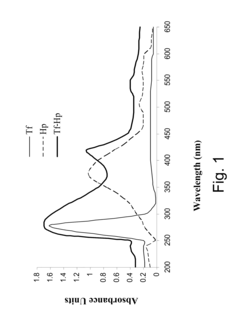
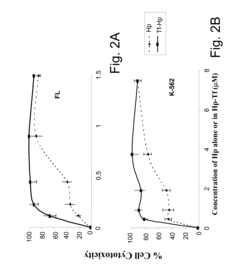
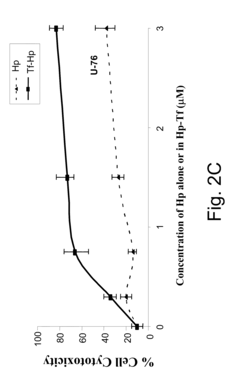
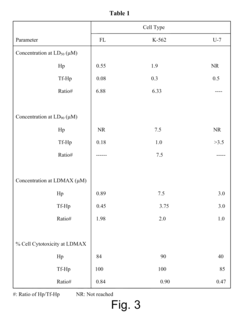
- A method involving a ligand-toxin conjugate (LTC) comprising a photosensitizer like hematoporphyrin conjugated with transferrin, combined with a chemiluminescent agent such as luminol, which activates the photosensitizer intracellularly to produce reactive oxygen species, thereby enhancing target cell destruction without requiring external light.
Regulatory Considerations
The regulatory landscape surrounding the enhancement of Luminol for advanced algorithm performance is complex and multifaceted. As this technology intersects with various sectors, including healthcare, forensics, and environmental monitoring, it falls under the purview of multiple regulatory bodies. In the United States, the Food and Drug Administration (FDA) plays a crucial role in overseeing the use of Luminol in medical applications, particularly in diagnostic tools and imaging technologies. The Environmental Protection Agency (EPA) may also have jurisdiction over the use of enhanced Luminol in environmental monitoring and pollution detection.
Internationally, regulatory frameworks vary, but there is a growing trend towards harmonization of standards for advanced chemical and algorithmic technologies. The European Chemicals Agency (ECHA) and the European Medicines Agency (EMA) are key players in regulating the use of enhanced Luminol within the European Union. These agencies focus on safety, efficacy, and environmental impact assessments.
Data privacy and security regulations, such as the General Data Protection Regulation (GDPR) in the EU and the California Consumer Privacy Act (CCPA) in the US, may also apply to the algorithmic aspects of enhanced Luminol applications, especially when personal data is involved in the analysis or results.
Intellectual property considerations are paramount in the development and commercialization of enhanced Luminol technologies. Patent protection strategies must be carefully crafted to safeguard innovations in both the chemical formulation and algorithmic enhancements. The intersection of chemical and software patents presents unique challenges and opportunities in this field.
Regulatory compliance in this domain requires a multidisciplinary approach, involving chemists, software engineers, legal experts, and regulatory specialists. Companies developing enhanced Luminol technologies must navigate a complex web of regulations, balancing innovation with compliance to ensure market access and public safety.
As the technology evolves, regulatory frameworks are likely to adapt. Proactive engagement with regulatory bodies and participation in industry standards development can help shape future regulations. This approach can ensure that regulatory considerations do not stifle innovation but rather promote responsible development and deployment of enhanced Luminol technologies.
Internationally, regulatory frameworks vary, but there is a growing trend towards harmonization of standards for advanced chemical and algorithmic technologies. The European Chemicals Agency (ECHA) and the European Medicines Agency (EMA) are key players in regulating the use of enhanced Luminol within the European Union. These agencies focus on safety, efficacy, and environmental impact assessments.
Data privacy and security regulations, such as the General Data Protection Regulation (GDPR) in the EU and the California Consumer Privacy Act (CCPA) in the US, may also apply to the algorithmic aspects of enhanced Luminol applications, especially when personal data is involved in the analysis or results.
Intellectual property considerations are paramount in the development and commercialization of enhanced Luminol technologies. Patent protection strategies must be carefully crafted to safeguard innovations in both the chemical formulation and algorithmic enhancements. The intersection of chemical and software patents presents unique challenges and opportunities in this field.
Regulatory compliance in this domain requires a multidisciplinary approach, involving chemists, software engineers, legal experts, and regulatory specialists. Companies developing enhanced Luminol technologies must navigate a complex web of regulations, balancing innovation with compliance to ensure market access and public safety.
As the technology evolves, regulatory frameworks are likely to adapt. Proactive engagement with regulatory bodies and participation in industry standards development can help shape future regulations. This approach can ensure that regulatory considerations do not stifle innovation but rather promote responsible development and deployment of enhanced Luminol technologies.
Environmental Impact
The environmental impact of enhancing Luminol for advanced algorithm performance is a critical consideration in the development and implementation of this technology. As computational algorithms become more sophisticated and demanding, the energy consumption and associated environmental footprint of these systems increase significantly.
Luminol, being a chemiluminescent compound, has traditionally been used in forensic science and biochemical applications. Its enhancement for algorithmic performance introduces a novel approach to computing that could potentially reduce the energy requirements of complex calculations. This reduction in energy consumption would directly translate to a decrease in carbon emissions associated with data centers and high-performance computing facilities.
The production of enhanced Luminol compounds may involve chemical processes that require careful environmental management. However, the potential benefits in terms of energy efficiency could outweigh these concerns if properly addressed. The manufacturing process should be optimized to minimize waste and utilize eco-friendly synthesis methods wherever possible.
One of the most significant environmental advantages of Luminol-enhanced algorithms is the potential for more efficient data processing. This could lead to a reduction in the number of servers required for large-scale computations, thereby decreasing the physical footprint of data centers. Less hardware means fewer resources extracted from the environment and less electronic waste at the end of the equipment's lifecycle.
Moreover, the heat generation associated with traditional computing methods could be substantially reduced with Luminol-based systems. This would result in lower cooling requirements for data centers, which are notorious for their high energy consumption. The reduced need for cooling infrastructure could lead to significant energy savings and a corresponding decrease in greenhouse gas emissions.
The implementation of Luminol-enhanced algorithms could also contribute to more efficient resource allocation in various industries. For instance, in logistics and supply chain management, more advanced algorithms could optimize routes and reduce fuel consumption in transportation. Similarly, in the field of climate modeling, enhanced computational capabilities could lead to more accurate predictions and better-informed environmental policies.
However, it is crucial to consider the potential environmental risks associated with the widespread use of Luminol-enhanced systems. The disposal of Luminol-based components at the end of their life cycle must be carefully managed to prevent contamination of soil and water resources. Additionally, the long-term effects of increased Luminol production and use on ecosystems should be thoroughly studied to ensure sustainable development of this technology.
Luminol, being a chemiluminescent compound, has traditionally been used in forensic science and biochemical applications. Its enhancement for algorithmic performance introduces a novel approach to computing that could potentially reduce the energy requirements of complex calculations. This reduction in energy consumption would directly translate to a decrease in carbon emissions associated with data centers and high-performance computing facilities.
The production of enhanced Luminol compounds may involve chemical processes that require careful environmental management. However, the potential benefits in terms of energy efficiency could outweigh these concerns if properly addressed. The manufacturing process should be optimized to minimize waste and utilize eco-friendly synthesis methods wherever possible.
One of the most significant environmental advantages of Luminol-enhanced algorithms is the potential for more efficient data processing. This could lead to a reduction in the number of servers required for large-scale computations, thereby decreasing the physical footprint of data centers. Less hardware means fewer resources extracted from the environment and less electronic waste at the end of the equipment's lifecycle.
Moreover, the heat generation associated with traditional computing methods could be substantially reduced with Luminol-based systems. This would result in lower cooling requirements for data centers, which are notorious for their high energy consumption. The reduced need for cooling infrastructure could lead to significant energy savings and a corresponding decrease in greenhouse gas emissions.
The implementation of Luminol-enhanced algorithms could also contribute to more efficient resource allocation in various industries. For instance, in logistics and supply chain management, more advanced algorithms could optimize routes and reduce fuel consumption in transportation. Similarly, in the field of climate modeling, enhanced computational capabilities could lead to more accurate predictions and better-informed environmental policies.
However, it is crucial to consider the potential environmental risks associated with the widespread use of Luminol-enhanced systems. The disposal of Luminol-based components at the end of their life cycle must be carefully managed to prevent contamination of soil and water resources. Additionally, the long-term effects of increased Luminol production and use on ecosystems should be thoroughly studied to ensure sustainable development of this technology.
Unlock deeper insights with Patsnap Eureka Quick Research — get a full tech report to explore trends and direct your research. Try now!
Generate Your Research Report Instantly with AI Agent
Supercharge your innovation with Patsnap Eureka AI Agent Platform!