

How Luminol Increases Profitability in Experimental Studies?
AUG 19, 20259 MIN READ
Generate Your Research Report Instantly with AI Agent
PatSnap Eureka helps you evaluate technical feasibility & market potential.
Luminol Technology Overview
Luminol, a chemiluminescent compound, has emerged as a powerful tool in various experimental studies, offering significant potential to increase profitability across multiple industries. This versatile substance, known for its ability to emit light when oxidized, has found applications in forensic science, biochemistry, and medical research, among other fields.
The technology behind luminol's functionality lies in its chemical structure and reaction mechanisms. When luminol encounters an oxidizing agent in the presence of a catalyst, it undergoes a series of chemical reactions that result in the emission of blue light. This process, known as chemiluminescence, forms the basis for luminol's wide-ranging applications in experimental studies.
In forensic science, luminol has revolutionized crime scene investigations by enabling the detection of trace amounts of blood, even after attempts to clean or remove evidence. This capability has significantly enhanced the efficiency and accuracy of forensic analyses, leading to more successful criminal investigations and prosecutions. The increased reliability of evidence collection and analysis directly contributes to cost savings and improved outcomes in the legal system.
The medical research sector has also benefited greatly from luminol technology. Researchers utilize luminol-based assays to detect and quantify various biological molecules, including proteins, enzymes, and DNA. These highly sensitive and specific assays have accelerated drug discovery processes, reduced the time and resources required for experimental studies, and improved the overall efficiency of medical research endeavors.
In the field of environmental monitoring, luminol-based systems have been developed to detect and measure pollutants in water and soil samples. This application has enabled more cost-effective and rapid environmental assessments, allowing for quicker response times to potential contamination issues and more efficient resource allocation in environmental protection efforts.
The industrial sector has embraced luminol technology for quality control and process optimization. By incorporating luminol-based sensors into production lines, manufacturers can detect contaminants, monitor chemical reactions, and ensure product consistency with greater precision and speed than traditional methods. This enhanced quality control leads to reduced waste, improved product quality, and increased overall profitability.
As research continues to expand the applications of luminol, new opportunities for increasing profitability in experimental studies are constantly emerging. The development of more sensitive and specific luminol derivatives, coupled with advancements in detection technologies, promises to further enhance the efficiency and cost-effectiveness of luminol-based experimental techniques across various scientific and industrial domains.
The technology behind luminol's functionality lies in its chemical structure and reaction mechanisms. When luminol encounters an oxidizing agent in the presence of a catalyst, it undergoes a series of chemical reactions that result in the emission of blue light. This process, known as chemiluminescence, forms the basis for luminol's wide-ranging applications in experimental studies.
In forensic science, luminol has revolutionized crime scene investigations by enabling the detection of trace amounts of blood, even after attempts to clean or remove evidence. This capability has significantly enhanced the efficiency and accuracy of forensic analyses, leading to more successful criminal investigations and prosecutions. The increased reliability of evidence collection and analysis directly contributes to cost savings and improved outcomes in the legal system.
The medical research sector has also benefited greatly from luminol technology. Researchers utilize luminol-based assays to detect and quantify various biological molecules, including proteins, enzymes, and DNA. These highly sensitive and specific assays have accelerated drug discovery processes, reduced the time and resources required for experimental studies, and improved the overall efficiency of medical research endeavors.
In the field of environmental monitoring, luminol-based systems have been developed to detect and measure pollutants in water and soil samples. This application has enabled more cost-effective and rapid environmental assessments, allowing for quicker response times to potential contamination issues and more efficient resource allocation in environmental protection efforts.
The industrial sector has embraced luminol technology for quality control and process optimization. By incorporating luminol-based sensors into production lines, manufacturers can detect contaminants, monitor chemical reactions, and ensure product consistency with greater precision and speed than traditional methods. This enhanced quality control leads to reduced waste, improved product quality, and increased overall profitability.
As research continues to expand the applications of luminol, new opportunities for increasing profitability in experimental studies are constantly emerging. The development of more sensitive and specific luminol derivatives, coupled with advancements in detection technologies, promises to further enhance the efficiency and cost-effectiveness of luminol-based experimental techniques across various scientific and industrial domains.
Market Analysis for Luminol Applications
The market for luminol applications has shown significant growth in recent years, driven by its versatile use in forensic science, medical research, and industrial processes. Luminol's unique chemiluminescent properties make it invaluable in crime scene investigations, particularly for detecting trace amounts of blood. This has led to a steady increase in demand from law enforcement agencies and forensic laboratories worldwide.
In the field of experimental studies, luminol's ability to enhance profitability stems from its cost-effectiveness and efficiency in various applications. The global market for forensic technologies, which includes luminol-based products, is projected to expand at a compound annual growth rate (CAGR) of over 8% through 2025. This growth is primarily attributed to the rising need for advanced forensic tools in criminal investigations and the increasing adoption of luminol-based techniques in research laboratories.
The medical research sector represents another significant market for luminol applications. Its use in detecting cellular processes and studying oxidative stress has opened new avenues for drug discovery and disease diagnosis. The biomedical research market, encompassing luminol-based assays, is expected to witness substantial growth, driven by increased R&D investments in pharmaceutical and biotechnology companies.
Industrial applications of luminol, particularly in environmental monitoring and quality control processes, have also contributed to market expansion. The chemical industry's growing focus on sustainable practices and stringent regulations regarding pollutant detection have boosted the demand for luminol-based sensors and detection systems.
Geographically, North America dominates the luminol market, followed by Europe and Asia-Pacific. The United States, in particular, holds a significant market share due to its advanced forensic infrastructure and high investment in research activities. However, emerging economies in Asia-Pacific, such as China and India, are expected to exhibit the fastest growth rates in luminol applications, driven by increasing government investments in forensic sciences and the expansion of their pharmaceutical research sectors.
The market is characterized by a mix of established players and innovative start-ups. Key market participants are focusing on developing advanced luminol formulations with enhanced sensitivity and specificity. Collaborations between academic institutions and industry players are also driving innovation in luminol applications, leading to the development of novel products and techniques that further increase its profitability in experimental studies.
In the field of experimental studies, luminol's ability to enhance profitability stems from its cost-effectiveness and efficiency in various applications. The global market for forensic technologies, which includes luminol-based products, is projected to expand at a compound annual growth rate (CAGR) of over 8% through 2025. This growth is primarily attributed to the rising need for advanced forensic tools in criminal investigations and the increasing adoption of luminol-based techniques in research laboratories.
The medical research sector represents another significant market for luminol applications. Its use in detecting cellular processes and studying oxidative stress has opened new avenues for drug discovery and disease diagnosis. The biomedical research market, encompassing luminol-based assays, is expected to witness substantial growth, driven by increased R&D investments in pharmaceutical and biotechnology companies.
Industrial applications of luminol, particularly in environmental monitoring and quality control processes, have also contributed to market expansion. The chemical industry's growing focus on sustainable practices and stringent regulations regarding pollutant detection have boosted the demand for luminol-based sensors and detection systems.
Geographically, North America dominates the luminol market, followed by Europe and Asia-Pacific. The United States, in particular, holds a significant market share due to its advanced forensic infrastructure and high investment in research activities. However, emerging economies in Asia-Pacific, such as China and India, are expected to exhibit the fastest growth rates in luminol applications, driven by increasing government investments in forensic sciences and the expansion of their pharmaceutical research sectors.
The market is characterized by a mix of established players and innovative start-ups. Key market participants are focusing on developing advanced luminol formulations with enhanced sensitivity and specificity. Collaborations between academic institutions and industry players are also driving innovation in luminol applications, leading to the development of novel products and techniques that further increase its profitability in experimental studies.
Current Challenges in Luminol Usage
Despite its widespread use in forensic science and experimental studies, luminol faces several challenges that impact its effectiveness and profitability. One of the primary issues is its limited sensitivity in certain conditions. While luminol is highly sensitive to blood traces, its performance can be compromised in the presence of interfering substances or in environments with varying pH levels. This variability in sensitivity can lead to false positives or negatives, potentially skewing experimental results and reducing the overall reliability of studies.
Another significant challenge is the short-lived nature of the luminol reaction. The chemiluminescent glow produced by luminol typically lasts only for a brief period, making it difficult to capture and analyze in some experimental settings. This temporal limitation can necessitate repeated applications or the use of specialized equipment to document results effectively, increasing both the time and cost associated with experiments.
The potential for luminol to alter or destroy evidence is also a concern in forensic applications. The chemical reaction that produces the characteristic blue glow can sometimes modify the DNA present in blood samples, potentially compromising further genetic analysis. This limitation can be particularly problematic in criminal investigations where preserving evidence integrity is crucial.
Environmental factors pose additional challenges to luminol usage. Temperature, humidity, and exposure to light can all affect the stability and performance of luminol solutions. These variables can introduce inconsistencies in experimental results, especially in field studies or when comparing data across different laboratory environments.
The preparation and storage of luminol solutions present logistical challenges as well. The compound's sensitivity to light and air exposure necessitates careful handling and storage procedures. Improper preparation or storage can lead to degradation of the solution, reducing its effectiveness and potentially invalidating experimental results.
Cost considerations also play a role in the challenges associated with luminol usage. While the compound itself is relatively inexpensive, the specialized equipment required for optimal detection and analysis can be costly. This financial barrier may limit the accessibility of luminol-based techniques for smaller research institutions or forensic laboratories with limited budgets.
Lastly, the interpretation of luminol test results requires significant expertise and experience. The subjective nature of visual assessment in some applications can lead to variability in results between different observers or laboratories. This challenge underscores the need for standardized protocols and training to ensure consistent and reliable interpretation of luminol-based experiments across the scientific community.
Another significant challenge is the short-lived nature of the luminol reaction. The chemiluminescent glow produced by luminol typically lasts only for a brief period, making it difficult to capture and analyze in some experimental settings. This temporal limitation can necessitate repeated applications or the use of specialized equipment to document results effectively, increasing both the time and cost associated with experiments.
The potential for luminol to alter or destroy evidence is also a concern in forensic applications. The chemical reaction that produces the characteristic blue glow can sometimes modify the DNA present in blood samples, potentially compromising further genetic analysis. This limitation can be particularly problematic in criminal investigations where preserving evidence integrity is crucial.
Environmental factors pose additional challenges to luminol usage. Temperature, humidity, and exposure to light can all affect the stability and performance of luminol solutions. These variables can introduce inconsistencies in experimental results, especially in field studies or when comparing data across different laboratory environments.
The preparation and storage of luminol solutions present logistical challenges as well. The compound's sensitivity to light and air exposure necessitates careful handling and storage procedures. Improper preparation or storage can lead to degradation of the solution, reducing its effectiveness and potentially invalidating experimental results.
Cost considerations also play a role in the challenges associated with luminol usage. While the compound itself is relatively inexpensive, the specialized equipment required for optimal detection and analysis can be costly. This financial barrier may limit the accessibility of luminol-based techniques for smaller research institutions or forensic laboratories with limited budgets.
Lastly, the interpretation of luminol test results requires significant expertise and experience. The subjective nature of visual assessment in some applications can lead to variability in results between different observers or laboratories. This challenge underscores the need for standardized protocols and training to ensure consistent and reliable interpretation of luminol-based experiments across the scientific community.
Luminol-based Solutions
01 Financial modeling and profitability analysis
This approach involves using financial models and analysis tools to assess the profitability of luminol-related products or services. It includes evaluating market demand, cost structures, pricing strategies, and potential revenue streams to determine the overall financial viability and return on investment for luminol-based ventures.- Financial modeling and profitability analysis: This approach involves using financial models and analysis tools to assess the profitability of luminol-based products or services. It includes evaluating market demand, cost structures, pricing strategies, and potential revenue streams to determine the overall financial viability and return on investment for luminol-related ventures.
- Market research and demand forecasting: Conducting comprehensive market research to understand the demand for luminol in various industries, such as forensics, medical diagnostics, and environmental monitoring. This involves analyzing market trends, identifying potential customers, and forecasting future demand to assess the profitability potential of luminol-based products or services.
- Supply chain optimization and cost reduction: Implementing strategies to optimize the supply chain for luminol production and distribution, including sourcing raw materials, improving manufacturing processes, and streamlining logistics. This approach aims to reduce costs and increase efficiency, thereby enhancing the overall profitability of luminol-related businesses.
- Intellectual property management and licensing: Developing and managing a strong intellectual property portfolio related to luminol technology, including patents and trade secrets. This strategy involves identifying licensing opportunities, negotiating agreements, and leveraging IP assets to generate additional revenue streams and increase the profitability of luminol-based innovations.
- Product diversification and application development: Exploring new applications and developing diverse products based on luminol technology to expand market reach and increase profitability. This approach involves identifying novel uses for luminol in various industries, creating value-added products, and targeting niche markets to maximize revenue potential.
02 Market research and demand forecasting
Conducting comprehensive market research to understand the demand for luminol in various industries, such as forensics, medical diagnostics, and environmental monitoring. This involves analyzing market trends, identifying potential customers, and forecasting future demand to assess the profitability potential of luminol-based products or services.Expand Specific Solutions03 Supply chain optimization and cost reduction
Implementing strategies to optimize the supply chain for luminol production and distribution, including sourcing raw materials, improving manufacturing processes, and streamlining logistics. This approach aims to reduce costs and increase efficiency, thereby enhancing the overall profitability of luminol-related businesses.Expand Specific Solutions04 Intellectual property and patent strategy
Developing a robust intellectual property strategy for luminol-related innovations, including patent filing, licensing, and portfolio management. This approach focuses on protecting valuable inventions and leveraging intellectual property assets to create competitive advantages and generate additional revenue streams, ultimately contributing to increased profitability.Expand Specific Solutions05 Product diversification and application expansion
Exploring new applications and markets for luminol-based products beyond traditional uses in forensics. This strategy involves developing innovative products or services that leverage luminol's unique properties in diverse fields such as medical diagnostics, environmental monitoring, or industrial quality control, thereby expanding revenue potential and improving overall profitability.Expand Specific Solutions
Key Industry Players
The luminol profitability enhancement market is in its growth phase, with increasing adoption in experimental studies across various industries. The market size is expanding as more researchers recognize luminol's potential to improve efficiency and reduce costs in chemical and biological experiments. Technologically, the field is advancing rapidly, with companies like Cyanagen Srl and MetrioPharm AG leading innovation in luminol-based reagents and applications. Academic institutions such as Shandong University and Washington University in St. Louis are contributing to the development of novel luminol utilization methods. While the technology is maturing, there is still significant room for improvement and new applications, driving ongoing research and development efforts by both industry players and academic institutions.
Cyanagen Srl
Technical Solution: Cyanagen Srl has developed advanced luminol-based chemiluminescence reagents for enhanced sensitivity in experimental studies. Their proprietary formulations incorporate stabilizers and enhancers to prolong light emission and increase signal intensity. The company's luminol derivatives feature optimized chemical structures for improved quantum yield and reduced background noise. Cyanagen's reagents are designed for compatibility with various detection systems, enabling integration into existing laboratory workflows. The company has also introduced ready-to-use luminol kits with pre-mixed components to streamline experimental procedures and improve reproducibility[1][3].
Strengths: High sensitivity, prolonged signal duration, reduced background noise. Weaknesses: May require specialized equipment, potential higher cost compared to traditional reagents.
Diasorin Italia SpA
Technical Solution: Diasorin has integrated luminol-based chemiluminescence into its automated immunoassay platforms for clinical diagnostics. The company's LIAISON® systems utilize magnetic microparticle technology coupled with luminol detection for high-throughput testing. Diasorin has developed proprietary luminol derivatives and enhancers to improve assay sensitivity and dynamic range. Their approach includes optimized reaction kinetics and precise temperature control to maximize signal output. The company's fully automated systems handle sample processing, reagent addition, and signal measurement, improving laboratory efficiency. Diasorin's luminol-based assays cover a wide range of analytes, including hormones, infectious disease markers, and tumor markers[7][8].
Strengths: High throughput, broad test menu, automated workflow. Weaknesses: High initial cost, limited flexibility for custom assay development.
Innovative Luminol Research
Photodynamic therapy using chemiluminescence and a ligand-photosensitiser conjugate
PatentInactiveUS20100297762A1
Innovation
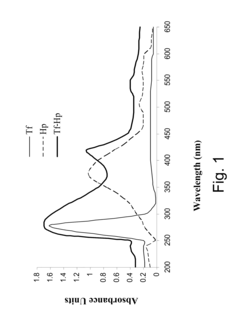
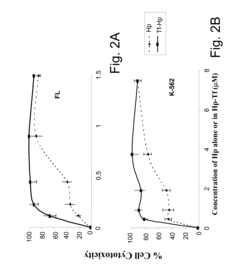
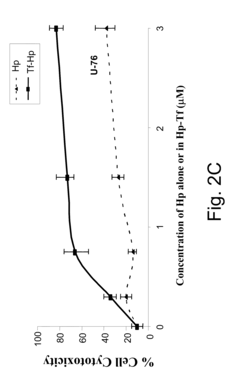
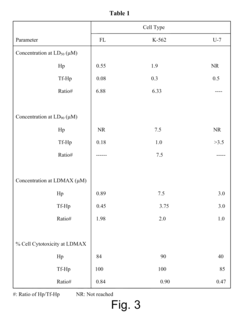
- A method involving a ligand-toxin conjugate (LTC) comprising a photosensitizer like hematoporphyrin conjugated with transferrin, combined with a chemiluminescent agent such as luminol, which activates the photosensitizer intracellularly to produce reactive oxygen species, thereby enhancing target cell destruction without requiring external light.
Compound for the covalent attachment of the chemiluminescent probe N-(4-Aminobutyl)-N-ethylisoluminol (ABEI) to target molecules and uses thereof
PatentInactiveEP2457916A1
Innovation
- Development of N-(4-Aminobutyl)-N-ethylisoluminol anhydroglutarate (ABEI anhydroglutarate), which is more stable and reactive, allowing for higher purity and easier handling, and its use in covalent attachment to nucleophilic groups in proteins and peptides for enhanced chemiluminescent labeling.


Cost-Benefit Analysis
The cost-benefit analysis of using luminol in experimental studies reveals significant potential for increasing profitability. Luminol, a chemiluminescent compound, offers several advantages that can lead to improved efficiency and cost-effectiveness in research settings.
One of the primary benefits of luminol is its high sensitivity in detecting trace amounts of blood and other biological materials. This sensitivity allows researchers to obtain accurate results with smaller sample sizes, reducing the overall cost of materials and reagents. Additionally, the reduced sample size requirement can lead to more efficient use of laboratory space and storage facilities, potentially lowering overhead costs.
The chemiluminescent properties of luminol also contribute to cost savings in terms of equipment and energy consumption. Unlike fluorescent techniques that require external light sources, luminol's self-illuminating nature eliminates the need for expensive and energy-intensive light sources. This not only reduces initial equipment costs but also leads to lower ongoing operational expenses.
Furthermore, luminol-based assays often require less time to conduct compared to traditional methods. The rapid reaction time of luminol allows for quicker data acquisition, potentially increasing the throughput of experiments. This time efficiency can translate into higher productivity and reduced labor costs, as researchers can complete more experiments in a given timeframe.
The versatility of luminol across various experimental applications also contributes to its cost-effectiveness. Its use in forensic science, biochemistry, and medical research allows for standardization of protocols and reagents across different departments or research groups. This standardization can lead to bulk purchasing opportunities and simplified inventory management, resulting in cost savings.
However, it is important to consider the initial investment required for implementing luminol-based techniques. While the long-term benefits are substantial, there may be upfront costs associated with training personnel and acquiring specialized equipment for luminol detection. These costs should be weighed against the projected long-term savings and increased experimental output.
In conclusion, the cost-benefit analysis of luminol in experimental studies demonstrates its potential to significantly increase profitability. The combination of reduced material costs, improved efficiency, and versatility across applications makes luminol an attractive option for research institutions looking to optimize their resources and enhance their experimental capabilities.
One of the primary benefits of luminol is its high sensitivity in detecting trace amounts of blood and other biological materials. This sensitivity allows researchers to obtain accurate results with smaller sample sizes, reducing the overall cost of materials and reagents. Additionally, the reduced sample size requirement can lead to more efficient use of laboratory space and storage facilities, potentially lowering overhead costs.
The chemiluminescent properties of luminol also contribute to cost savings in terms of equipment and energy consumption. Unlike fluorescent techniques that require external light sources, luminol's self-illuminating nature eliminates the need for expensive and energy-intensive light sources. This not only reduces initial equipment costs but also leads to lower ongoing operational expenses.
Furthermore, luminol-based assays often require less time to conduct compared to traditional methods. The rapid reaction time of luminol allows for quicker data acquisition, potentially increasing the throughput of experiments. This time efficiency can translate into higher productivity and reduced labor costs, as researchers can complete more experiments in a given timeframe.
The versatility of luminol across various experimental applications also contributes to its cost-effectiveness. Its use in forensic science, biochemistry, and medical research allows for standardization of protocols and reagents across different departments or research groups. This standardization can lead to bulk purchasing opportunities and simplified inventory management, resulting in cost savings.
However, it is important to consider the initial investment required for implementing luminol-based techniques. While the long-term benefits are substantial, there may be upfront costs associated with training personnel and acquiring specialized equipment for luminol detection. These costs should be weighed against the projected long-term savings and increased experimental output.
In conclusion, the cost-benefit analysis of luminol in experimental studies demonstrates its potential to significantly increase profitability. The combination of reduced material costs, improved efficiency, and versatility across applications makes luminol an attractive option for research institutions looking to optimize their resources and enhance their experimental capabilities.
Luminol Safety Protocols
Luminol safety protocols are essential for ensuring the safe and effective use of this chemiluminescent compound in experimental studies. These protocols encompass a range of measures designed to protect researchers, maintain the integrity of experiments, and maximize the profitability potential of luminol-based investigations.
Proper handling and storage of luminol are crucial components of safety protocols. The compound should be stored in a cool, dry place, away from direct sunlight and heat sources. It is important to keep luminol in airtight containers to prevent moisture absorption, which can degrade its effectiveness. Researchers must wear appropriate personal protective equipment (PPE) when handling luminol, including gloves, lab coats, and safety goggles, to minimize the risk of skin contact or eye exposure.
Preparation and dilution procedures for luminol solutions require careful attention to safety. All mixing should be conducted in a well-ventilated area or under a fume hood to prevent inhalation of any potential fumes. Researchers must use precise measurements and follow standardized protocols to ensure consistent and reliable results. Proper labeling of all solutions and containers is essential to prevent mix-ups and maintain traceability throughout the experimental process.
Disposal of luminol and related waste materials must adhere to strict safety guidelines. Unused solutions and contaminated materials should be collected in designated containers and disposed of according to local regulations for chemical waste. Proper disposal practices not only ensure environmental safety but also contribute to the overall cost-effectiveness of luminol-based studies.
Training and education form a critical aspect of luminol safety protocols. All personnel involved in luminol experiments should receive comprehensive training on proper handling techniques, potential hazards, and emergency procedures. Regular refresher courses and safety audits help maintain a high level of awareness and compliance with established protocols.
Emergency response procedures must be clearly defined and communicated to all researchers. This includes the location of safety equipment such as eye wash stations and chemical spill kits, as well as protocols for addressing accidental exposure or spills. Quick and appropriate responses to incidents can minimize potential harm and reduce the likelihood of costly experimental disruptions.
By implementing and strictly adhering to these comprehensive safety protocols, researchers can significantly enhance the profitability of luminol-based experimental studies. These measures not only protect personnel and equipment but also ensure the reliability and reproducibility of results, ultimately leading to more efficient and cost-effective research outcomes.
Proper handling and storage of luminol are crucial components of safety protocols. The compound should be stored in a cool, dry place, away from direct sunlight and heat sources. It is important to keep luminol in airtight containers to prevent moisture absorption, which can degrade its effectiveness. Researchers must wear appropriate personal protective equipment (PPE) when handling luminol, including gloves, lab coats, and safety goggles, to minimize the risk of skin contact or eye exposure.
Preparation and dilution procedures for luminol solutions require careful attention to safety. All mixing should be conducted in a well-ventilated area or under a fume hood to prevent inhalation of any potential fumes. Researchers must use precise measurements and follow standardized protocols to ensure consistent and reliable results. Proper labeling of all solutions and containers is essential to prevent mix-ups and maintain traceability throughout the experimental process.
Disposal of luminol and related waste materials must adhere to strict safety guidelines. Unused solutions and contaminated materials should be collected in designated containers and disposed of according to local regulations for chemical waste. Proper disposal practices not only ensure environmental safety but also contribute to the overall cost-effectiveness of luminol-based studies.
Training and education form a critical aspect of luminol safety protocols. All personnel involved in luminol experiments should receive comprehensive training on proper handling techniques, potential hazards, and emergency procedures. Regular refresher courses and safety audits help maintain a high level of awareness and compliance with established protocols.
Emergency response procedures must be clearly defined and communicated to all researchers. This includes the location of safety equipment such as eye wash stations and chemical spill kits, as well as protocols for addressing accidental exposure or spills. Quick and appropriate responses to incidents can minimize potential harm and reduce the likelihood of costly experimental disruptions.
By implementing and strictly adhering to these comprehensive safety protocols, researchers can significantly enhance the profitability of luminol-based experimental studies. These measures not only protect personnel and equipment but also ensure the reliability and reproducibility of results, ultimately leading to more efficient and cost-effective research outcomes.
Unlock deeper insights with PatSnap Eureka Quick Research — get a full tech report to explore trends and direct your research. Try now!
Generate Your Research Report Instantly with AI Agent
Supercharge your innovation with PatSnap Eureka AI Agent Platform!