
Evaluating Brain-Computer Interface Role in Personalized User Experiences
MAR 5, 20269 MIN READ
Generate Your Research Report Instantly with AI Agent
Patsnap Eureka helps you evaluate technical feasibility & market potential.
BCI Technology Background and Personalization Goals
Brain-Computer Interface technology represents a revolutionary paradigm in human-computer interaction, fundamentally transforming how users engage with digital systems through direct neural communication pathways. The field has evolved from early experimental frameworks in the 1970s to sophisticated real-time neural signal processing systems capable of interpreting complex cognitive states and intentions. This technological evolution encompasses multiple disciplines including neuroscience, signal processing, machine learning, and human factors engineering.
The historical trajectory of BCI development reveals distinct phases of advancement. Initial research focused primarily on medical applications, particularly assistive technologies for individuals with motor disabilities. However, recent developments have expanded the scope to include cognitive enhancement, entertainment applications, and most significantly, personalized user experience optimization. Modern BCI systems leverage advanced neural decoding algorithms and high-resolution signal acquisition techniques to capture subtle variations in brain activity patterns.
Contemporary BCI architectures integrate multiple signal modalities, including electroencephalography (EEG), functional near-infrared spectroscopy (fNIRS), and emerging hybrid approaches. These systems demonstrate unprecedented capability in real-time cognitive state monitoring, enabling dynamic adaptation of digital interfaces based on user mental states, attention levels, and emotional responses.
The convergence of BCI technology with personalization objectives represents a paradigm shift toward truly adaptive human-computer interfaces. Traditional personalization approaches rely on behavioral data analysis and explicit user preferences, while BCI-enabled systems access direct neural indicators of user engagement, cognitive load, and satisfaction levels. This direct neural feedback creates opportunities for unprecedented levels of interface customization and user experience optimization.
Primary personalization goals within BCI frameworks include adaptive interface complexity management, real-time cognitive load optimization, and predictive content delivery based on neural preference indicators. These objectives aim to create seamless, intuitive user experiences that automatically adjust to individual cognitive patterns and preferences without requiring explicit user input or configuration.
The integration of machine learning algorithms with neural signal processing enables continuous learning and adaptation of personalization models. These systems can identify individual neural signatures associated with optimal user states and automatically adjust interface parameters to maintain peak user engagement and satisfaction levels throughout extended interaction sessions.
The historical trajectory of BCI development reveals distinct phases of advancement. Initial research focused primarily on medical applications, particularly assistive technologies for individuals with motor disabilities. However, recent developments have expanded the scope to include cognitive enhancement, entertainment applications, and most significantly, personalized user experience optimization. Modern BCI systems leverage advanced neural decoding algorithms and high-resolution signal acquisition techniques to capture subtle variations in brain activity patterns.
Contemporary BCI architectures integrate multiple signal modalities, including electroencephalography (EEG), functional near-infrared spectroscopy (fNIRS), and emerging hybrid approaches. These systems demonstrate unprecedented capability in real-time cognitive state monitoring, enabling dynamic adaptation of digital interfaces based on user mental states, attention levels, and emotional responses.
The convergence of BCI technology with personalization objectives represents a paradigm shift toward truly adaptive human-computer interfaces. Traditional personalization approaches rely on behavioral data analysis and explicit user preferences, while BCI-enabled systems access direct neural indicators of user engagement, cognitive load, and satisfaction levels. This direct neural feedback creates opportunities for unprecedented levels of interface customization and user experience optimization.
Primary personalization goals within BCI frameworks include adaptive interface complexity management, real-time cognitive load optimization, and predictive content delivery based on neural preference indicators. These objectives aim to create seamless, intuitive user experiences that automatically adjust to individual cognitive patterns and preferences without requiring explicit user input or configuration.
The integration of machine learning algorithms with neural signal processing enables continuous learning and adaptation of personalization models. These systems can identify individual neural signatures associated with optimal user states and automatically adjust interface parameters to maintain peak user engagement and satisfaction levels throughout extended interaction sessions.
Market Demand for Personalized BCI Applications
The market demand for personalized Brain-Computer Interface applications is experiencing unprecedented growth driven by evolving consumer expectations for tailored digital experiences and technological convergence across multiple sectors. Healthcare represents the most mature segment, where personalized BCI solutions address individual neurological conditions, cognitive rehabilitation needs, and mental health monitoring requirements. The aging global population and increasing prevalence of neurological disorders create substantial demand for customized therapeutic interventions that adapt to each patient's unique neural patterns and recovery trajectories.
Gaming and entertainment industries demonstrate rapidly expanding interest in personalized BCI applications that enhance user immersion through individualized neural feedback mechanisms. Modern consumers increasingly expect digital experiences that adapt to their cognitive states, attention levels, and emotional responses in real-time. This trend extends beyond traditional gaming into virtual reality environments, interactive media, and educational platforms where personalized neural interfaces can optimize learning outcomes based on individual cognitive processing patterns.
Enterprise applications represent an emerging but significant demand driver, particularly in high-stakes environments requiring enhanced human-machine collaboration. Industries such as aviation, manufacturing, and financial services seek personalized BCI solutions that can monitor operator cognitive load, predict fatigue states, and provide customized interface adaptations to maintain optimal performance levels. The potential for reducing human error and improving operational efficiency creates compelling value propositions for enterprise adoption.
Consumer electronics manufacturers face growing pressure to integrate personalized BCI capabilities into mainstream devices. Smart home systems, wearable technology, and mobile platforms increasingly incorporate basic neural sensing capabilities to deliver customized user experiences. Market research indicates strong consumer interest in devices that can automatically adjust settings, content recommendations, and interface behaviors based on individual neural signatures and cognitive preferences.
The accessibility technology sector demonstrates particularly strong demand for personalized BCI applications that can adapt to diverse disability profiles and individual user capabilities. Traditional assistive technologies often require extensive customization processes, while personalized BCI solutions promise more intuitive adaptation to individual neural control patterns and communication preferences.
Educational technology represents another high-growth segment where personalized BCI applications can revolutionize learning experiences by adapting content delivery, pacing, and assessment methods to individual cognitive processing styles and attention patterns. The shift toward personalized learning methodologies creates natural alignment with BCI technologies that can provide objective measures of cognitive engagement and comprehension levels.
Gaming and entertainment industries demonstrate rapidly expanding interest in personalized BCI applications that enhance user immersion through individualized neural feedback mechanisms. Modern consumers increasingly expect digital experiences that adapt to their cognitive states, attention levels, and emotional responses in real-time. This trend extends beyond traditional gaming into virtual reality environments, interactive media, and educational platforms where personalized neural interfaces can optimize learning outcomes based on individual cognitive processing patterns.
Enterprise applications represent an emerging but significant demand driver, particularly in high-stakes environments requiring enhanced human-machine collaboration. Industries such as aviation, manufacturing, and financial services seek personalized BCI solutions that can monitor operator cognitive load, predict fatigue states, and provide customized interface adaptations to maintain optimal performance levels. The potential for reducing human error and improving operational efficiency creates compelling value propositions for enterprise adoption.
Consumer electronics manufacturers face growing pressure to integrate personalized BCI capabilities into mainstream devices. Smart home systems, wearable technology, and mobile platforms increasingly incorporate basic neural sensing capabilities to deliver customized user experiences. Market research indicates strong consumer interest in devices that can automatically adjust settings, content recommendations, and interface behaviors based on individual neural signatures and cognitive preferences.
The accessibility technology sector demonstrates particularly strong demand for personalized BCI applications that can adapt to diverse disability profiles and individual user capabilities. Traditional assistive technologies often require extensive customization processes, while personalized BCI solutions promise more intuitive adaptation to individual neural control patterns and communication preferences.
Educational technology represents another high-growth segment where personalized BCI applications can revolutionize learning experiences by adapting content delivery, pacing, and assessment methods to individual cognitive processing styles and attention patterns. The shift toward personalized learning methodologies creates natural alignment with BCI technologies that can provide objective measures of cognitive engagement and comprehension levels.
Current BCI State and User Experience Challenges
Brain-Computer Interface technology has reached a pivotal stage where invasive and non-invasive systems demonstrate varying degrees of maturity and practical application. Invasive BCIs, exemplified by Neuralink's neural implants and Blackrock Neurotech's Utah arrays, achieve high signal fidelity and precise control capabilities but remain limited by surgical risks and long-term biocompatibility concerns. Non-invasive solutions, including EEG-based systems from companies like Emotiv and NeuroSky, offer safer deployment but struggle with signal quality degradation and limited bandwidth for complex interactions.
Current BCI implementations face significant technical constraints that directly impact user experience quality. Signal acquisition remains inconsistent across different users due to anatomical variations, electrode placement sensitivity, and environmental interference. Processing latency typically ranges from 100-500 milliseconds, creating noticeable delays that disrupt natural interaction flows. Additionally, most systems require extensive calibration periods and frequent recalibration sessions, creating barriers to seamless user adoption.
User experience challenges manifest across multiple dimensions of BCI interaction paradigms. Mental fatigue emerges as users must maintain concentrated attention for extended periods to generate reliable control signals. The cognitive load associated with translating intentions into machine-readable patterns often exceeds comfortable thresholds for sustained use. Furthermore, current interfaces lack intuitive feedback mechanisms, forcing users to adapt their natural thought processes to accommodate system limitations rather than systems adapting to user preferences.
Personalization capabilities in existing BCI systems remain rudimentary and largely reactive rather than predictive. Most platforms employ basic machine learning algorithms that adapt to user-specific signal patterns but fail to anticipate individual preferences or contextual needs. The absence of comprehensive user modeling frameworks limits systems' ability to provide truly personalized experiences that evolve with user behavior and preferences over time.
Integration challenges persist between BCI hardware and software ecosystems, particularly regarding real-time processing requirements and cross-platform compatibility. Current solutions often operate as isolated systems rather than seamlessly integrating with existing digital environments that users inhabit daily. This fragmentation creates discontinuous experiences that fail to leverage the full potential of personalized brain-computer interaction for enhancing user engagement and satisfaction.
Current BCI implementations face significant technical constraints that directly impact user experience quality. Signal acquisition remains inconsistent across different users due to anatomical variations, electrode placement sensitivity, and environmental interference. Processing latency typically ranges from 100-500 milliseconds, creating noticeable delays that disrupt natural interaction flows. Additionally, most systems require extensive calibration periods and frequent recalibration sessions, creating barriers to seamless user adoption.
User experience challenges manifest across multiple dimensions of BCI interaction paradigms. Mental fatigue emerges as users must maintain concentrated attention for extended periods to generate reliable control signals. The cognitive load associated with translating intentions into machine-readable patterns often exceeds comfortable thresholds for sustained use. Furthermore, current interfaces lack intuitive feedback mechanisms, forcing users to adapt their natural thought processes to accommodate system limitations rather than systems adapting to user preferences.
Personalization capabilities in existing BCI systems remain rudimentary and largely reactive rather than predictive. Most platforms employ basic machine learning algorithms that adapt to user-specific signal patterns but fail to anticipate individual preferences or contextual needs. The absence of comprehensive user modeling frameworks limits systems' ability to provide truly personalized experiences that evolve with user behavior and preferences over time.
Integration challenges persist between BCI hardware and software ecosystems, particularly regarding real-time processing requirements and cross-platform compatibility. Current solutions often operate as isolated systems rather than seamlessly integrating with existing digital environments that users inhabit daily. This fragmentation creates discontinuous experiences that fail to leverage the full potential of personalized brain-computer interaction for enhancing user engagement and satisfaction.
Existing BCI Solutions for User Experience Enhancement
01 Adaptive interface control based on brain signals
Brain-computer interface systems can adapt user interfaces dynamically by interpreting neural signals to modify display elements, control parameters, and interaction modes. The system monitors brain activity patterns and adjusts interface components in real-time to match user cognitive states and preferences. This enables personalized experiences where the interface responds to mental commands, attention levels, and emotional states without requiring physical input.- Adaptive interface control based on brain signals: Brain-computer interface systems can adapt user interfaces dynamically by interpreting neural signals to modify display elements, control parameters, and interaction modes. The system monitors brain activity patterns and adjusts interface components in real-time to match user cognitive states and preferences. This enables personalized experiences where the interface responds to mental commands, attention levels, and emotional states without requiring physical input.
- User profile creation from neural data: Systems can build personalized user profiles by collecting and analyzing brain activity data over time. These profiles capture individual neural patterns, cognitive preferences, and behavioral tendencies to customize future interactions. Machine learning algorithms process the neural data to identify unique user characteristics and create adaptive models that improve personalization accuracy with continued use.
- Content recommendation using brain-computer interfaces: Brain-computer interface technology enables content recommendation systems that analyze neural responses to various stimuli. The system measures brain activity while users interact with different content types and uses these measurements to predict preferences and suggest relevant materials. This approach provides more accurate recommendations by directly assessing cognitive and emotional reactions rather than relying solely on behavioral data.
- Cognitive state-based experience optimization: Systems can optimize user experiences by continuously monitoring cognitive states such as attention, workload, and fatigue through brain signal analysis. The interface adjusts complexity, pacing, and information presentation based on detected mental states to maintain optimal engagement and performance. This real-time adaptation helps prevent cognitive overload and enhances user comfort during extended interactions.
- Multi-modal personalization combining neural and behavioral data: Advanced personalization systems integrate brain-computer interface data with traditional behavioral metrics to create comprehensive user models. These systems combine neural signals with eye tracking, gesture recognition, and interaction patterns to provide richer personalization. The fusion of multiple data sources enables more robust and accurate adaptation to individual user needs and preferences across different contexts.
02 User profile creation from neural data
Systems can build personalized user profiles by collecting and analyzing brain activity data over time. These profiles capture individual neural patterns, cognitive preferences, and behavioral tendencies to customize future interactions. Machine learning algorithms process the neural data to identify unique user characteristics and create adaptive models that improve personalization accuracy with continued use.Expand Specific Solutions03 Cognitive state detection for experience optimization
Brain-computer interfaces can detect various cognitive states such as attention, fatigue, stress, and engagement levels to optimize user experiences. The system analyzes neural signatures associated with different mental states and adjusts content delivery, task difficulty, or interaction timing accordingly. This enables applications to respond appropriately to user mental conditions and maintain optimal engagement.Expand Specific Solutions04 Neural feedback for personalized content delivery
Systems utilize brain signal feedback to personalize content presentation and delivery methods. By monitoring neural responses to different content types, formats, and presentation styles, the interface can determine user preferences and optimize content selection. This approach enables automatic adjustment of media, information density, and interaction patterns based on measured brain activity.Expand Specific Solutions05 Multi-modal integration for enhanced personalization
Brain-computer interfaces can combine neural data with other biometric and behavioral inputs to create comprehensive personalized experiences. The system integrates brain signals with eye tracking, physiological measurements, and user interaction history to build richer user models. This multi-modal approach enables more accurate personalization by correlating neural patterns with other user characteristics and contextual information.Expand Specific Solutions
Key Players in BCI and Personalization Industry
The brain-computer interface (BCI) field for personalized user experiences is in a rapidly evolving growth stage, with the global BCI market projected to reach billions in value driven by applications in healthcare, gaming, and AR/VR. Technology maturity varies significantly across players: established tech giants like Meta Platforms, Microsoft, and Adobe are integrating BCI capabilities into consumer platforms, while specialized companies such as Neurable, Precision Neuroscience, and MindPortal are developing cutting-edge neural interfaces. Academic institutions including Tsinghua University, University of Washington, and Seoul National University of Science & Technology are advancing fundamental research, particularly in non-invasive neural signal processing. Healthcare-focused entities like Koninklijke Philips and Siemens are exploring medical applications, while emerging companies like CereGate are pioneering direct neural communication systems, indicating a competitive landscape spanning from early-stage research to commercial deployment.
Koninklijke Philips NV
Technical Solution: Philips has developed brain-computer interface technologies primarily focused on healthcare applications with strong emphasis on personalized patient experiences and therapeutic interventions. Their BCI systems integrate advanced neuroimaging capabilities with real-time signal processing to monitor brain activity patterns and deliver personalized treatment protocols. The company's approach combines EEG monitoring with machine learning algorithms to detect individual neural signatures and cognitive states, enabling healthcare applications to automatically adjust treatment parameters, medication timing, and therapeutic interventions based on patient-specific brain activity patterns. Philips' BCI platform emphasizes clinical-grade reliability and regulatory compliance while providing personalized user experiences through continuous monitoring and adaptive response systems that learn from individual patient neural data over extended periods.
Strengths: Clinical-grade reliability, regulatory compliance expertise, established healthcare market presence and integration capabilities. Weaknesses: Limited to healthcare applications, slower innovation cycles due to regulatory requirements, higher cost structure for consumer applications.
Neurable, Inc.
Technical Solution: Neurable specializes in developing consumer-grade brain-computer interfaces that focus on creating personalized user experiences through EEG-based neural signal processing. Their technology platform combines advanced signal processing algorithms with machine learning models to interpret brain activity patterns and translate them into personalized digital interactions. The company's BCI system can detect cognitive states such as focus levels, mental fatigue, and attention patterns, enabling applications to automatically adjust content difficulty, interface complexity, and interaction timing based on individual neural responses. Neurable's approach emphasizes seamless integration into everyday devices like headphones and smart glasses, making BCI technology accessible for mainstream consumer applications while maintaining high levels of personalization through continuous neural pattern learning.
Strengths: Consumer-focused approach, seamless device integration, real-time cognitive state monitoring capabilities. Weaknesses: Limited signal resolution with EEG technology, susceptibility to environmental interference, requires extended calibration periods.
Core BCI Innovations in Personalized Computing
Brain-computer interface
PatentActiveUS12093456B2
Innovation
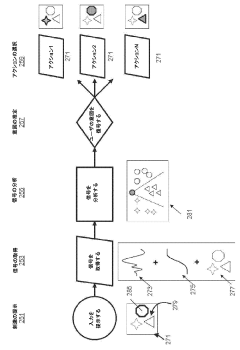
- A method that adaptively calibrates BCI systems by updating model weightings and sensory stimulus modulations in real-time using neural-signal filtering and neurofeedback, allowing for ongoing calibration during user interactions, thereby maintaining accurate associations between neural signals and system controls.


Brain-computer interface with adaptations for high-speed, accurate, and intuitive user interactions
PatentPendingJP2024075573A
Innovation
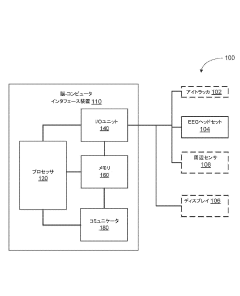
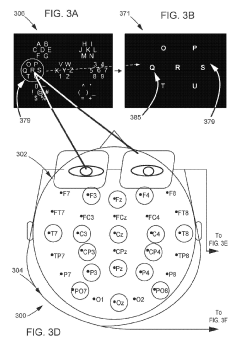
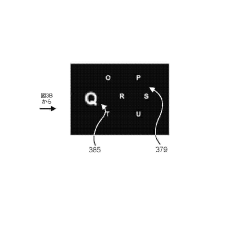
- A hybrid BCI system that integrates eye movement and brain activity tracking to enable real-time positioning of user gaze and action selection, using a combination of eye trackers and neural recording headsets to process signals for intuitive and accurate human-machine interaction, allowing for hardware-independent operation across various platforms.
Privacy and Ethical Considerations in BCI Systems
Brain-computer interfaces designed for personalized user experiences raise unprecedented privacy concerns due to their direct access to neural data. Unlike traditional biometric information, neural signals represent the most intimate form of personal data, potentially revealing thoughts, emotions, intentions, and cognitive states. The collection and processing of such sensitive information necessitate robust privacy frameworks that extend beyond conventional data protection measures.
The invasive nature of neural data collection presents unique challenges in maintaining user anonymity and preventing unauthorized access. Neural patterns can potentially be used to identify individuals with high accuracy, creating permanent biometric signatures that cannot be changed like passwords or tokens. This permanence raises concerns about long-term data security and the potential for neural data to be exploited for surveillance or discrimination purposes.
Informed consent becomes particularly complex in BCI systems due to the difficulty in fully explaining the implications of neural data sharing to users. The dynamic nature of brain signals and their potential for revealing unintended information makes it challenging to define the scope of consent comprehensively. Users may unknowingly consent to data collection that could later be analyzed to extract information they never intended to share.
Ethical considerations extend to the potential for neural manipulation and the blurring of boundaries between therapeutic intervention and enhancement. BCI systems capable of personalization may also possess the capability to influence user behavior or cognitive processes, raising questions about mental autonomy and free will. The risk of creating dependencies on BCI systems for optimal cognitive performance introduces concerns about digital inequality and coercion.
Data ownership and control represent critical ethical challenges, particularly regarding who has access to neural data and how it can be used. The potential for neural data to be shared with third parties, including healthcare providers, employers, or government agencies, creates risks of discrimination and social stratification. Establishing clear boundaries for data use and ensuring user control over their neural information becomes essential for maintaining ethical standards.
The development of BCI systems must incorporate privacy-by-design principles, implementing technical safeguards such as on-device processing, differential privacy, and secure multi-party computation to minimize privacy risks while enabling personalization benefits.
The invasive nature of neural data collection presents unique challenges in maintaining user anonymity and preventing unauthorized access. Neural patterns can potentially be used to identify individuals with high accuracy, creating permanent biometric signatures that cannot be changed like passwords or tokens. This permanence raises concerns about long-term data security and the potential for neural data to be exploited for surveillance or discrimination purposes.
Informed consent becomes particularly complex in BCI systems due to the difficulty in fully explaining the implications of neural data sharing to users. The dynamic nature of brain signals and their potential for revealing unintended information makes it challenging to define the scope of consent comprehensively. Users may unknowingly consent to data collection that could later be analyzed to extract information they never intended to share.
Ethical considerations extend to the potential for neural manipulation and the blurring of boundaries between therapeutic intervention and enhancement. BCI systems capable of personalization may also possess the capability to influence user behavior or cognitive processes, raising questions about mental autonomy and free will. The risk of creating dependencies on BCI systems for optimal cognitive performance introduces concerns about digital inequality and coercion.
Data ownership and control represent critical ethical challenges, particularly regarding who has access to neural data and how it can be used. The potential for neural data to be shared with third parties, including healthcare providers, employers, or government agencies, creates risks of discrimination and social stratification. Establishing clear boundaries for data use and ensuring user control over their neural information becomes essential for maintaining ethical standards.
The development of BCI systems must incorporate privacy-by-design principles, implementing technical safeguards such as on-device processing, differential privacy, and secure multi-party computation to minimize privacy risks while enabling personalization benefits.
Neurotechnology Standards and Safety Regulations
The development of brain-computer interfaces for personalized user experiences operates within a complex regulatory landscape that continues to evolve as the technology advances. Current neurotechnology standards primarily focus on safety protocols, data protection, and ethical considerations, though comprehensive frameworks specifically addressing BCI personalization remain in early stages of development.
International standards organizations, including the IEEE and ISO, have begun establishing foundational guidelines for neurotechnology devices. IEEE 2857 provides standards for privacy engineering in neural interfaces, while ISO/IEC 23053 addresses framework requirements for AI systems, which increasingly applies to adaptive BCI systems. These standards emphasize the critical importance of user consent, data minimization, and transparent algorithmic decision-making in personalized neural interfaces.
Safety regulations for BCI systems vary significantly across jurisdictions, with the FDA in the United States treating most brain-computer interfaces as medical devices requiring rigorous clinical validation. The European Union's Medical Device Regulation (MDR) similarly classifies invasive BCIs as high-risk devices, demanding extensive safety documentation and post-market surveillance. However, non-invasive consumer-grade BCIs often fall into regulatory gray areas, particularly when used for personalization rather than medical treatment.
Data protection represents a paramount concern in BCI personalization, as neural signals constitute highly sensitive biometric information. The General Data Protection Regulation (GDPR) in Europe and emerging state-level privacy laws in the United States impose strict requirements on neural data collection, processing, and storage. These regulations mandate explicit consent for biometric data processing and grant users rights to data portability and deletion, creating technical challenges for systems that rely on continuous learning from neural patterns.
Emerging regulatory frameworks specifically address neurotechnology ethics and human enhancement applications. The OECD has published recommendations on responsible innovation in neurotechnology, emphasizing the need for robust governance mechanisms in personalized neural interfaces. Several countries, including Chile and France, have introduced constitutional amendments or legislation specifically protecting neural rights and cognitive liberty.
The regulatory landscape continues to evolve rapidly, with proposed standards addressing algorithmic transparency, neural data interoperability, and long-term safety monitoring for adaptive BCI systems. Industry stakeholders increasingly advocate for harmonized international standards that balance innovation potential with user protection, recognizing that fragmented regulatory approaches could hinder the development of safe, effective personalized brain-computer interfaces.
International standards organizations, including the IEEE and ISO, have begun establishing foundational guidelines for neurotechnology devices. IEEE 2857 provides standards for privacy engineering in neural interfaces, while ISO/IEC 23053 addresses framework requirements for AI systems, which increasingly applies to adaptive BCI systems. These standards emphasize the critical importance of user consent, data minimization, and transparent algorithmic decision-making in personalized neural interfaces.
Safety regulations for BCI systems vary significantly across jurisdictions, with the FDA in the United States treating most brain-computer interfaces as medical devices requiring rigorous clinical validation. The European Union's Medical Device Regulation (MDR) similarly classifies invasive BCIs as high-risk devices, demanding extensive safety documentation and post-market surveillance. However, non-invasive consumer-grade BCIs often fall into regulatory gray areas, particularly when used for personalization rather than medical treatment.
Data protection represents a paramount concern in BCI personalization, as neural signals constitute highly sensitive biometric information. The General Data Protection Regulation (GDPR) in Europe and emerging state-level privacy laws in the United States impose strict requirements on neural data collection, processing, and storage. These regulations mandate explicit consent for biometric data processing and grant users rights to data portability and deletion, creating technical challenges for systems that rely on continuous learning from neural patterns.
Emerging regulatory frameworks specifically address neurotechnology ethics and human enhancement applications. The OECD has published recommendations on responsible innovation in neurotechnology, emphasizing the need for robust governance mechanisms in personalized neural interfaces. Several countries, including Chile and France, have introduced constitutional amendments or legislation specifically protecting neural rights and cognitive liberty.
The regulatory landscape continues to evolve rapidly, with proposed standards addressing algorithmic transparency, neural data interoperability, and long-term safety monitoring for adaptive BCI systems. Industry stakeholders increasingly advocate for harmonized international standards that balance innovation potential with user protection, recognizing that fragmented regulatory approaches could hinder the development of safe, effective personalized brain-computer interfaces.
Unlock deeper insights with Patsnap Eureka Quick Research — get a full tech report to explore trends and direct your research. Try now!
Generate Your Research Report Instantly with AI Agent
Supercharge your innovation with Patsnap Eureka AI Agent Platform!