
Optimizing Brain-Computer Interface Architecture for Rapid Data Access
MAR 5, 20269 MIN READ
Generate Your Research Report Instantly with AI Agent
Patsnap Eureka helps you evaluate technical feasibility & market potential.
BCI Architecture Optimization Background and Objectives
Brain-Computer Interface technology has emerged as one of the most transformative fields in neurotechnology, representing a convergence of neuroscience, computer science, and biomedical engineering. The evolution of BCI systems began in the 1970s with early experiments demonstrating the possibility of recording neural signals, progressing through decades of incremental advances in signal processing, machine learning algorithms, and hardware miniaturization.
The current landscape of BCI development is characterized by significant challenges in data throughput and processing latency. Traditional BCI architectures face fundamental bottlenecks in neural signal acquisition, real-time processing, and response generation. These limitations stem from the inherent complexity of neural data, which requires simultaneous handling of high-dimensional, noisy, and temporally dynamic signals while maintaining millisecond-level response times for effective human-machine interaction.
Contemporary BCI systems typically operate with data rates ranging from kilobits to megabits per second, depending on the number of recording channels and sampling frequencies. However, the growing demand for high-resolution neural interfaces, particularly in applications such as prosthetic control, cognitive enhancement, and therapeutic interventions, necessitates architectures capable of processing significantly higher data volumes with reduced latency.
The primary technical objectives for optimizing BCI architecture center on achieving rapid data access through enhanced parallel processing capabilities, improved signal-to-noise ratios, and streamlined data pathways. Key performance targets include reducing end-to-end latency below 100 milliseconds, increasing channel capacity to support thousands of simultaneous neural recordings, and implementing adaptive algorithms that can dynamically optimize data flow based on real-time requirements.
Advanced architectural approaches are focusing on distributed computing frameworks, edge processing capabilities, and novel memory hierarchies specifically designed for neural data characteristics. The integration of specialized hardware accelerators, including neuromorphic chips and field-programmable gate arrays, represents a critical pathway toward achieving the computational performance necessary for next-generation BCI applications.
The strategic importance of this optimization extends beyond technical performance metrics, encompassing broader implications for clinical translation, user experience, and the eventual commercialization of BCI technologies across diverse application domains.
The current landscape of BCI development is characterized by significant challenges in data throughput and processing latency. Traditional BCI architectures face fundamental bottlenecks in neural signal acquisition, real-time processing, and response generation. These limitations stem from the inherent complexity of neural data, which requires simultaneous handling of high-dimensional, noisy, and temporally dynamic signals while maintaining millisecond-level response times for effective human-machine interaction.
Contemporary BCI systems typically operate with data rates ranging from kilobits to megabits per second, depending on the number of recording channels and sampling frequencies. However, the growing demand for high-resolution neural interfaces, particularly in applications such as prosthetic control, cognitive enhancement, and therapeutic interventions, necessitates architectures capable of processing significantly higher data volumes with reduced latency.
The primary technical objectives for optimizing BCI architecture center on achieving rapid data access through enhanced parallel processing capabilities, improved signal-to-noise ratios, and streamlined data pathways. Key performance targets include reducing end-to-end latency below 100 milliseconds, increasing channel capacity to support thousands of simultaneous neural recordings, and implementing adaptive algorithms that can dynamically optimize data flow based on real-time requirements.
Advanced architectural approaches are focusing on distributed computing frameworks, edge processing capabilities, and novel memory hierarchies specifically designed for neural data characteristics. The integration of specialized hardware accelerators, including neuromorphic chips and field-programmable gate arrays, represents a critical pathway toward achieving the computational performance necessary for next-generation BCI applications.
The strategic importance of this optimization extends beyond technical performance metrics, encompassing broader implications for clinical translation, user experience, and the eventual commercialization of BCI technologies across diverse application domains.
Market Demand for High-Speed BCI Systems
The global brain-computer interface market is experiencing unprecedented growth driven by increasing demand for high-speed neural data processing systems across multiple sectors. Healthcare applications represent the largest market segment, with neurological rehabilitation centers and hospitals seeking BCI systems capable of real-time neural signal interpretation for stroke recovery, spinal cord injury treatment, and neurodegenerative disease management. The critical requirement for millisecond-level response times in therapeutic applications has created substantial demand for optimized BCI architectures that can process neural signals with minimal latency.
Military and defense sectors constitute another significant market driver, requiring ultra-fast BCI systems for pilot training, drone operation, and battlefield communication systems. These applications demand robust architectures capable of processing complex neural patterns while maintaining operational reliability under extreme conditions. The emphasis on rapid decision-making in defense scenarios has intensified the need for BCI systems with enhanced data throughput capabilities.
Consumer electronics markets are emerging as a major growth area, with gaming companies and technology manufacturers developing BCI-enabled devices for immersive entertainment experiences. Virtual reality and augmented reality applications require high-bandwidth neural interfaces capable of translating thought patterns into real-time digital interactions. The consumer market's expectation for seamless, instantaneous responses has pushed manufacturers to prioritize speed optimization in their BCI development strategies.
Research institutions and academic centers represent a specialized but influential market segment, driving demand for high-performance BCI systems capable of supporting advanced neuroscience research. These organizations require architectures that can handle massive datasets while providing researchers with rapid access to neural information for analysis and experimentation.
The industrial automation sector is increasingly adopting BCI technology for human-machine collaboration, particularly in manufacturing environments where workers need to control complex machinery through neural commands. These applications require BCI systems with exceptional reliability and speed to ensure operational safety and efficiency.
Market growth is further accelerated by aging populations worldwide, creating increased demand for assistive technologies that can restore communication and mobility functions. The urgency of these medical needs has intensified focus on developing BCI architectures that can deliver immediate, life-changing benefits to patients with neurological impairments.
Military and defense sectors constitute another significant market driver, requiring ultra-fast BCI systems for pilot training, drone operation, and battlefield communication systems. These applications demand robust architectures capable of processing complex neural patterns while maintaining operational reliability under extreme conditions. The emphasis on rapid decision-making in defense scenarios has intensified the need for BCI systems with enhanced data throughput capabilities.
Consumer electronics markets are emerging as a major growth area, with gaming companies and technology manufacturers developing BCI-enabled devices for immersive entertainment experiences. Virtual reality and augmented reality applications require high-bandwidth neural interfaces capable of translating thought patterns into real-time digital interactions. The consumer market's expectation for seamless, instantaneous responses has pushed manufacturers to prioritize speed optimization in their BCI development strategies.
Research institutions and academic centers represent a specialized but influential market segment, driving demand for high-performance BCI systems capable of supporting advanced neuroscience research. These organizations require architectures that can handle massive datasets while providing researchers with rapid access to neural information for analysis and experimentation.
The industrial automation sector is increasingly adopting BCI technology for human-machine collaboration, particularly in manufacturing environments where workers need to control complex machinery through neural commands. These applications require BCI systems with exceptional reliability and speed to ensure operational safety and efficiency.
Market growth is further accelerated by aging populations worldwide, creating increased demand for assistive technologies that can restore communication and mobility functions. The urgency of these medical needs has intensified focus on developing BCI architectures that can deliver immediate, life-changing benefits to patients with neurological impairments.
Current BCI Data Access Limitations and Challenges
Current brain-computer interface systems face significant bandwidth constraints that fundamentally limit their data processing capabilities. Traditional BCI architectures typically achieve data transfer rates of only 10-40 bits per minute for communication applications, while more advanced research systems reach several hundred bits per minute. This represents a substantial bottleneck compared to natural human communication rates of approximately 39 bits per second for typing or 125 bits per second for speech.
Signal acquisition hardware presents another critical limitation in contemporary BCI systems. Most current implementations rely on electroencephalography (EEG) or electrocorticography (ECoG) sensors that capture neural signals at relatively low spatial and temporal resolutions. EEG systems suffer from poor signal-to-noise ratios due to skull interference, while invasive approaches like microelectrode arrays face long-term stability issues and tissue response complications that degrade signal quality over time.
Real-time processing requirements create substantial computational challenges for existing BCI architectures. Current systems must simultaneously handle signal preprocessing, feature extraction, pattern classification, and output generation within strict latency constraints. The computational overhead of traditional machine learning algorithms, particularly when processing high-dimensional neural data, often results in processing delays that compromise user experience and system responsiveness.
Data storage and retrieval mechanisms in current BCI systems lack the sophistication needed for rapid access applications. Most existing architectures employ linear data processing pipelines that cannot efficiently handle the parallel processing demands of complex neural signal patterns. The absence of optimized data structures and indexing mechanisms further compounds access speed limitations.
Calibration and adaptation procedures represent ongoing operational challenges that impact data access efficiency. Current BCI systems require extensive user-specific training sessions and frequent recalibration to maintain performance levels. These requirements introduce significant delays and interrupt continuous operation, particularly problematic for applications demanding immediate neural signal interpretation.
Integration complexity between different system components creates additional bottlenecks in data flow. Current architectures often struggle with seamless communication between signal acquisition modules, processing units, and output devices. Protocol mismatches and interface incompatibilities result in data transfer delays and potential information loss during inter-component communication.
Power consumption constraints limit the computational resources available for rapid data processing in portable BCI systems. Current mobile implementations must balance processing speed against battery life, often resulting in reduced sampling rates or simplified algorithms that compromise data access performance.
Signal acquisition hardware presents another critical limitation in contemporary BCI systems. Most current implementations rely on electroencephalography (EEG) or electrocorticography (ECoG) sensors that capture neural signals at relatively low spatial and temporal resolutions. EEG systems suffer from poor signal-to-noise ratios due to skull interference, while invasive approaches like microelectrode arrays face long-term stability issues and tissue response complications that degrade signal quality over time.
Real-time processing requirements create substantial computational challenges for existing BCI architectures. Current systems must simultaneously handle signal preprocessing, feature extraction, pattern classification, and output generation within strict latency constraints. The computational overhead of traditional machine learning algorithms, particularly when processing high-dimensional neural data, often results in processing delays that compromise user experience and system responsiveness.
Data storage and retrieval mechanisms in current BCI systems lack the sophistication needed for rapid access applications. Most existing architectures employ linear data processing pipelines that cannot efficiently handle the parallel processing demands of complex neural signal patterns. The absence of optimized data structures and indexing mechanisms further compounds access speed limitations.
Calibration and adaptation procedures represent ongoing operational challenges that impact data access efficiency. Current BCI systems require extensive user-specific training sessions and frequent recalibration to maintain performance levels. These requirements introduce significant delays and interrupt continuous operation, particularly problematic for applications demanding immediate neural signal interpretation.
Integration complexity between different system components creates additional bottlenecks in data flow. Current architectures often struggle with seamless communication between signal acquisition modules, processing units, and output devices. Protocol mismatches and interface incompatibilities result in data transfer delays and potential information loss during inter-component communication.
Power consumption constraints limit the computational resources available for rapid data processing in portable BCI systems. Current mobile implementations must balance processing speed against battery life, often resulting in reduced sampling rates or simplified algorithms that compromise data access performance.
Existing High-Speed BCI Data Processing Solutions
01 High-speed data acquisition and processing architecture
Brain-computer interface systems employ specialized architectures to achieve high-speed data acquisition from neural signals. These architectures utilize advanced signal processing units, parallel processing capabilities, and optimized data pipelines to minimize latency in capturing and processing brain activity data. The systems incorporate dedicated hardware accelerators and efficient memory management to handle the high bandwidth requirements of multi-channel neural recordings.- High-speed parallel processing architecture for neural signal data: Brain-computer interface systems employ parallel processing architectures to handle multiple channels of neural data simultaneously. These architectures utilize multi-core processors, field-programmable gate arrays (FPGAs), or application-specific integrated circuits (ASICs) to achieve high-throughput data processing. The parallel architecture enables real-time processing of large volumes of neural signals by distributing computational tasks across multiple processing units, significantly reducing latency and improving overall system responsiveness.
- Optimized memory hierarchy and caching mechanisms: Advanced memory management strategies are implemented to accelerate data access in brain-computer interfaces. These include multi-level cache systems, direct memory access controllers, and optimized buffer management schemes. The memory hierarchy is designed to minimize access latency by storing frequently accessed neural data in high-speed cache memory while maintaining larger datasets in main memory. Predictive caching algorithms anticipate data requirements based on neural signal patterns to preload relevant information.
- Real-time data streaming and pipeline optimization: Brain-computer interface architectures incorporate streaming data pipelines that enable continuous flow of neural information from acquisition to processing stages. These pipelines utilize techniques such as data compression, efficient encoding schemes, and streamlined data paths to reduce transfer overhead. Pipeline optimization includes minimizing intermediate storage requirements and implementing zero-copy data transfer mechanisms to achieve low-latency communication between system components.
- Hardware-accelerated signal processing units: Dedicated hardware accelerators are integrated into brain-computer interface systems to perform computationally intensive signal processing tasks. These specialized units handle operations such as filtering, feature extraction, and pattern recognition at hardware speeds, offloading the main processor. The accelerators are optimized for specific neural signal processing algorithms and can execute multiple operations in parallel, dramatically improving data throughput and reducing processing time compared to software-only implementations.
- Distributed computing and cloud-based processing integration: Modern brain-computer interface architectures leverage distributed computing frameworks and cloud connectivity to enhance data processing capabilities. These systems partition computational tasks between edge devices and remote servers, enabling complex analyses that exceed local processing capacity. Network optimization techniques ensure efficient data transmission, while edge computing handles time-critical operations locally. This hybrid approach balances real-time performance requirements with the need for sophisticated processing algorithms.
02 Real-time data transmission protocols and interfaces
Implementation of high-speed communication protocols and interfaces specifically designed for brain-computer interface systems to ensure rapid data transfer between neural sensors and processing units. These solutions include wireless transmission technologies, low-latency bus architectures, and optimized data packet structures that maintain data integrity while maximizing throughput. The protocols are designed to handle continuous streaming of neural data with minimal delay.Expand Specific Solutions03 Memory architecture and caching strategies
Advanced memory hierarchies and caching mechanisms are employed to optimize data access speeds in brain-computer interface systems. These include multi-level cache systems, buffer management techniques, and intelligent data prefetching algorithms that predict and preload frequently accessed neural data patterns. The architecture minimizes memory access bottlenecks and reduces latency in retrieving stored brain signal information.Expand Specific Solutions04 Distributed computing and parallel processing frameworks
Brain-computer interface systems utilize distributed computing architectures and parallel processing frameworks to enhance data access and processing speeds. These frameworks distribute computational loads across multiple processing units, enabling simultaneous analysis of different neural signal channels. The architecture includes load balancing mechanisms and synchronized data access protocols to maintain coherent operation across distributed components.Expand Specific Solutions05 Data compression and encoding techniques
Implementation of specialized data compression and encoding algorithms to reduce the volume of neural data while maintaining signal fidelity, thereby improving effective data access speeds. These techniques include lossless compression methods optimized for neural signal characteristics, adaptive encoding schemes that adjust based on signal complexity, and efficient data representation formats that facilitate rapid decompression and access during real-time processing.Expand Specific Solutions
Major BCI Technology Companies and Research Institutions
The brain-computer interface (BCI) architecture optimization field is in a rapidly evolving growth stage, driven by significant technological breakthroughs and increasing investment. The market demonstrates substantial expansion potential, particularly in medical applications and human-computer interaction domains. Technology maturity varies considerably across different approaches, with established semiconductor companies like Intel, NVIDIA, and Huawei leveraging their processing capabilities, while specialized firms like Precision Neuroscience focus on minimally invasive neural interfaces. Academic institutions including Columbia University, Northwestern University, and various Chinese universities are advancing fundamental research in neural signal processing and data transmission optimization. The competitive landscape shows convergence between traditional tech giants, emerging biotech companies, and research institutions, indicating a maturing ecosystem where hardware acceleration, signal processing algorithms, and neural interface design are becoming increasingly sophisticated and commercially viable.
Huawei Technologies Co., Ltd.
Technical Solution: Huawei has developed edge computing architectures optimized for brain-computer interface applications, leveraging their Ascend AI processors and distributed computing frameworks. Their solution focuses on hierarchical data processing where initial neural signal filtering and feature extraction occur at edge nodes close to the neural sensors, while complex pattern recognition happens in cloud infrastructure. The architecture supports real-time processing of multi-channel neural data with adaptive compression algorithms that maintain signal fidelity while reducing bandwidth requirements by up to 90% for efficient data transmission.
Strengths: Strong edge computing capabilities, advanced AI processors, comprehensive networking infrastructure. Weaknesses: Limited direct BCI hardware experience, potential regulatory restrictions in some markets, focus more on general computing than specialized neural interfaces.
Intel Corp.
Technical Solution: Intel has developed neuromorphic computing architectures specifically designed for brain-computer interfaces, including their Loihi chip that mimics neural network structures for efficient data processing. Their approach focuses on low-power, event-driven computing that can process neural signals in real-time with minimal latency. The company's 3D XPoint memory technology and advanced packaging solutions enable high-speed data access patterns that match the temporal requirements of neural signal processing, supporting bandwidth requirements up to 1TB/s for multi-channel neural interfaces.
Strengths: Low-power neuromorphic designs, advanced memory technologies, strong semiconductor manufacturing capabilities. Weaknesses: Limited market presence in BCI-specific applications, neuromorphic technology still in early commercial stages.
Core Patents in Rapid Neural Data Access Technologies
Brain-computer interface system
PatentActiveUS12447349B2
Innovation
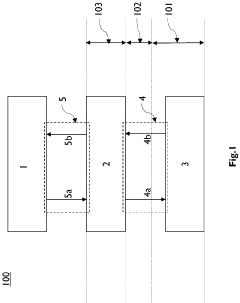
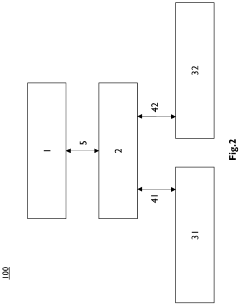
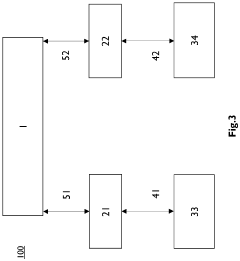
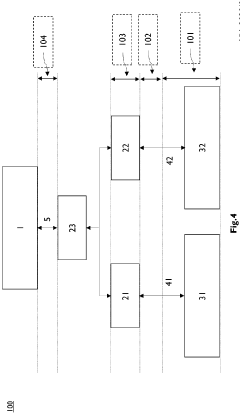
- A dual-layer communication path system with separate channels for power and data transmission, utilizing intrabody conductive coupling and electromagnetic-based impulse-radio ultra-wideband communication, along with a high spatial integration unit like a microelectrode array, implanted through small cranium openings to minimize tissue damage and enhance data throughput.


A brain-computer interface system
PatentPendingEP4193909A1
Innovation
- A dual-layer communication path system with a data transceiver unit implanted in the cranium and a sensing/stimulation unit under the dura mater, utilizing separate channels for downlink and uplink communication, including ultrasound and inductive/emergency IR-UWB methods, to enable efficient power and data transmission with reduced tissue damage and heat dissipation.
Regulatory Framework for Neural Interface Devices
The regulatory landscape for neural interface devices represents one of the most complex and evolving areas in medical device governance. Current frameworks primarily rely on existing medical device regulations, with the FDA's Class II and Class III classifications serving as the foundation for brain-computer interface oversight. The European Union's Medical Device Regulation (MDR) provides similar tiered approaches, though both systems struggle to address the unique challenges posed by neural interfaces that blur the lines between therapeutic devices and human enhancement technologies.
Safety standards for neural interface devices encompass multiple dimensions, including biocompatibility requirements for implanted components, electromagnetic compatibility standards, and cybersecurity protocols for wireless data transmission. The ISO 14155 standard for clinical investigation of medical devices provides the current framework, while emerging standards like ISO/IEC 27001 for information security management are being adapted for neural data protection. These standards must address the unprecedented challenge of protecting neural data, which represents the most intimate form of personal information.
Clinical trial regulations for brain-computer interfaces require specialized protocols that extend beyond traditional medical device testing. Current frameworks mandate extensive preclinical testing, including long-term biocompatibility studies and electromagnetic field exposure assessments. The unique nature of neural interfaces necessitates novel endpoints for clinical trials, focusing not only on safety and efficacy but also on cognitive impact, neural plasticity effects, and long-term brain tissue response.
Data privacy and security regulations present perhaps the most significant regulatory challenge for neural interface devices. Existing frameworks like GDPR and HIPAA provide foundational privacy protections, but neural data requires specialized handling protocols. The concept of "neural rights" is emerging in regulatory discussions, with some jurisdictions considering specific legislation to protect mental privacy and cognitive liberty.
International harmonization efforts are underway through organizations like the International Medical Device Regulators Forum (IMDRF), which is developing specific guidance documents for neural interface devices. However, significant regulatory gaps remain, particularly regarding long-term monitoring requirements, device upgrade protocols, and the ethical implications of neural enhancement applications. The regulatory framework continues to evolve rapidly as technology advances outpace traditional regulatory development timelines.
Safety standards for neural interface devices encompass multiple dimensions, including biocompatibility requirements for implanted components, electromagnetic compatibility standards, and cybersecurity protocols for wireless data transmission. The ISO 14155 standard for clinical investigation of medical devices provides the current framework, while emerging standards like ISO/IEC 27001 for information security management are being adapted for neural data protection. These standards must address the unprecedented challenge of protecting neural data, which represents the most intimate form of personal information.
Clinical trial regulations for brain-computer interfaces require specialized protocols that extend beyond traditional medical device testing. Current frameworks mandate extensive preclinical testing, including long-term biocompatibility studies and electromagnetic field exposure assessments. The unique nature of neural interfaces necessitates novel endpoints for clinical trials, focusing not only on safety and efficacy but also on cognitive impact, neural plasticity effects, and long-term brain tissue response.
Data privacy and security regulations present perhaps the most significant regulatory challenge for neural interface devices. Existing frameworks like GDPR and HIPAA provide foundational privacy protections, but neural data requires specialized handling protocols. The concept of "neural rights" is emerging in regulatory discussions, with some jurisdictions considering specific legislation to protect mental privacy and cognitive liberty.
International harmonization efforts are underway through organizations like the International Medical Device Regulators Forum (IMDRF), which is developing specific guidance documents for neural interface devices. However, significant regulatory gaps remain, particularly regarding long-term monitoring requirements, device upgrade protocols, and the ethical implications of neural enhancement applications. The regulatory framework continues to evolve rapidly as technology advances outpace traditional regulatory development timelines.
Ethical Implications of Advanced BCI Technologies
The rapid advancement of brain-computer interface technologies designed for optimized data access raises profound ethical considerations that demand immediate attention from researchers, policymakers, and society at large. These concerns extend far beyond traditional medical device regulations, encompassing fundamental questions about human autonomy, privacy, and the nature of consciousness itself.
Privacy and mental autonomy represent the most pressing ethical challenges in advanced BCI systems. Unlike conventional data collection methods, BCIs capable of rapid neural data access can potentially decode thoughts, emotions, and intentions in real-time. This capability raises unprecedented questions about mental privacy rights and the sanctity of inner consciousness. The risk of unauthorized access to neural data, whether through hacking or institutional overreach, could fundamentally alter the concept of private thought.
Informed consent becomes increasingly complex as BCI architectures grow more sophisticated. Traditional consent models may prove inadequate when dealing with technologies that can access and interpret neural signals at unprecedented speeds and granularity. Users may not fully comprehend the implications of granting access to their neural data, particularly regarding long-term data retention, secondary use, and the potential for reverse-engineering personal characteristics from brain patterns.
The enhancement versus treatment distinction presents another critical ethical dimension. While therapeutic applications of rapid-access BCIs may be ethically justified for treating neurological conditions, the use of such technologies for cognitive enhancement raises questions about fairness, equality, and human identity. The potential creation of cognitive disparities between enhanced and non-enhanced individuals could exacerbate existing social inequalities.
Data ownership and control mechanisms require careful ethical consideration. The question of who owns neural data and how it can be used remains largely unresolved. Unlike other forms of personal data, neural information is intimately connected to individual identity and consciousness, making traditional data governance frameworks potentially insufficient.
Security vulnerabilities in high-speed BCI systems pose unique ethical risks. The potential for malicious manipulation of neural interfaces could result in unprecedented forms of harm, including altered decision-making, false memory implantation, or cognitive disruption. These risks necessitate robust security frameworks and ethical guidelines for BCI development and deployment.
Human agency and free will considerations become paramount when BCIs can rapidly access and potentially influence neural processes. The technology's ability to decode intentions before conscious awareness raises philosophical questions about the nature of choice and responsibility, with significant implications for legal and social systems.
Privacy and mental autonomy represent the most pressing ethical challenges in advanced BCI systems. Unlike conventional data collection methods, BCIs capable of rapid neural data access can potentially decode thoughts, emotions, and intentions in real-time. This capability raises unprecedented questions about mental privacy rights and the sanctity of inner consciousness. The risk of unauthorized access to neural data, whether through hacking or institutional overreach, could fundamentally alter the concept of private thought.
Informed consent becomes increasingly complex as BCI architectures grow more sophisticated. Traditional consent models may prove inadequate when dealing with technologies that can access and interpret neural signals at unprecedented speeds and granularity. Users may not fully comprehend the implications of granting access to their neural data, particularly regarding long-term data retention, secondary use, and the potential for reverse-engineering personal characteristics from brain patterns.
The enhancement versus treatment distinction presents another critical ethical dimension. While therapeutic applications of rapid-access BCIs may be ethically justified for treating neurological conditions, the use of such technologies for cognitive enhancement raises questions about fairness, equality, and human identity. The potential creation of cognitive disparities between enhanced and non-enhanced individuals could exacerbate existing social inequalities.
Data ownership and control mechanisms require careful ethical consideration. The question of who owns neural data and how it can be used remains largely unresolved. Unlike other forms of personal data, neural information is intimately connected to individual identity and consciousness, making traditional data governance frameworks potentially insufficient.
Security vulnerabilities in high-speed BCI systems pose unique ethical risks. The potential for malicious manipulation of neural interfaces could result in unprecedented forms of harm, including altered decision-making, false memory implantation, or cognitive disruption. These risks necessitate robust security frameworks and ethical guidelines for BCI development and deployment.
Human agency and free will considerations become paramount when BCIs can rapidly access and potentially influence neural processes. The technology's ability to decode intentions before conscious awareness raises philosophical questions about the nature of choice and responsibility, with significant implications for legal and social systems.
Unlock deeper insights with Patsnap Eureka Quick Research — get a full tech report to explore trends and direct your research. Try now!
Generate Your Research Report Instantly with AI Agent
Supercharge your innovation with Patsnap Eureka AI Agent Platform!