

Optimizing Brain-Computer Interface Speed in Transaction Processing Systems
MAR 5, 20269 MIN READ
Generate Your Research Report Instantly with AI Agent
PatSnap Eureka helps you evaluate technical feasibility & market potential.
BCI Transaction Processing Background and Objectives
Brain-Computer Interface technology has emerged as a transformative force in human-computer interaction, evolving from experimental neuroscience research to practical applications across multiple domains. The integration of BCI systems with transaction processing represents a paradigm shift in how financial and commercial operations could be conducted, potentially eliminating traditional input methods and enabling direct neural control of complex computational processes.
The historical development of BCI technology began in the 1970s with basic neural signal detection and has progressed through decades of advancement in signal processing, machine learning, and miniaturized hardware. Early systems focused primarily on medical applications, particularly assisting patients with motor disabilities. However, recent breakthroughs in non-invasive neural sensing, real-time signal processing, and artificial intelligence have opened new possibilities for commercial applications.
Transaction processing systems currently face significant bottlenecks in speed and efficiency, particularly in high-frequency trading, real-time payment processing, and complex financial computations. Traditional interfaces require multiple steps of human input, authentication, and verification, creating latency that can result in substantial financial losses or missed opportunities. The average human reaction time for complex decision-making ranges from 200 to 500 milliseconds, while modern financial markets operate in microsecond timeframes.
The primary objective of integrating BCI technology with transaction processing systems is to achieve unprecedented speed in financial operations by bypassing conventional input mechanisms. This integration aims to reduce transaction latency from hundreds of milliseconds to potentially under 50 milliseconds, enabling real-time thought-to-execution capabilities for authorized financial operations.
Key technical objectives include developing robust neural signal classification algorithms capable of distinguishing between different transaction intentions with 99.9% accuracy, implementing secure authentication protocols that prevent unauthorized neural access, and creating adaptive systems that can learn individual neural patterns while maintaining consistent performance across diverse user populations.
The strategic goal extends beyond mere speed optimization to encompass the creation of entirely new transaction paradigms where complex multi-step financial operations can be executed through structured thought processes, potentially revolutionizing algorithmic trading, risk management, and real-time financial decision-making in institutional environments.
The historical development of BCI technology began in the 1970s with basic neural signal detection and has progressed through decades of advancement in signal processing, machine learning, and miniaturized hardware. Early systems focused primarily on medical applications, particularly assisting patients with motor disabilities. However, recent breakthroughs in non-invasive neural sensing, real-time signal processing, and artificial intelligence have opened new possibilities for commercial applications.
Transaction processing systems currently face significant bottlenecks in speed and efficiency, particularly in high-frequency trading, real-time payment processing, and complex financial computations. Traditional interfaces require multiple steps of human input, authentication, and verification, creating latency that can result in substantial financial losses or missed opportunities. The average human reaction time for complex decision-making ranges from 200 to 500 milliseconds, while modern financial markets operate in microsecond timeframes.
The primary objective of integrating BCI technology with transaction processing systems is to achieve unprecedented speed in financial operations by bypassing conventional input mechanisms. This integration aims to reduce transaction latency from hundreds of milliseconds to potentially under 50 milliseconds, enabling real-time thought-to-execution capabilities for authorized financial operations.
Key technical objectives include developing robust neural signal classification algorithms capable of distinguishing between different transaction intentions with 99.9% accuracy, implementing secure authentication protocols that prevent unauthorized neural access, and creating adaptive systems that can learn individual neural patterns while maintaining consistent performance across diverse user populations.
The strategic goal extends beyond mere speed optimization to encompass the creation of entirely new transaction paradigms where complex multi-step financial operations can be executed through structured thought processes, potentially revolutionizing algorithmic trading, risk management, and real-time financial decision-making in institutional environments.
Market Demand for High-Speed BCI Financial Systems
The financial services industry is experiencing unprecedented demand for ultra-low latency transaction processing systems, driven by the explosive growth of high-frequency trading, algorithmic trading, and real-time payment networks. Traditional input methods, including keyboard interfaces and voice commands, introduce significant delays that can result in substantial financial losses in microsecond-sensitive trading environments. This latency bottleneck has created a compelling market opportunity for brain-computer interface technologies that can bypass conventional input pathways entirely.
Major financial institutions are actively seeking solutions that can reduce transaction initiation times from milliseconds to microseconds. The proliferation of cryptocurrency markets, which operate continuously across global time zones, has intensified the need for instantaneous decision-making capabilities. Trading firms report that even marginal improvements in execution speed can translate to competitive advantages worth millions in revenue annually.
The regulatory landscape is simultaneously driving demand for enhanced transaction monitoring and compliance systems. Financial regulators worldwide are implementing stricter real-time reporting requirements, necessitating systems capable of processing and validating transactions at unprecedented speeds. Brain-computer interfaces offer the potential to streamline compliance workflows by enabling direct neural control of monitoring systems.
Institutional investors managing large portfolios face increasing pressure to execute complex multi-asset strategies within narrow time windows. Current market volatility and the rise of retail trading platforms have compressed profit margins, making speed optimization a critical differentiator. The ability to execute trades through direct neural commands could eliminate the cognitive-to-physical translation delay inherent in traditional interfaces.
The emergence of decentralized finance protocols and smart contract platforms has created additional demand for rapid transaction processing capabilities. These systems require split-second decision-making for arbitrage opportunities, liquidity provision, and risk management. Financial technology companies are investing heavily in infrastructure that can support these time-critical operations.
Payment processing companies serving global e-commerce platforms are experiencing similar pressures as transaction volumes continue to surge. The need to authenticate, process, and settle payments in real-time while maintaining security standards has created a substantial market for advanced interface technologies that can accelerate human-system interactions in financial workflows.
Major financial institutions are actively seeking solutions that can reduce transaction initiation times from milliseconds to microseconds. The proliferation of cryptocurrency markets, which operate continuously across global time zones, has intensified the need for instantaneous decision-making capabilities. Trading firms report that even marginal improvements in execution speed can translate to competitive advantages worth millions in revenue annually.
The regulatory landscape is simultaneously driving demand for enhanced transaction monitoring and compliance systems. Financial regulators worldwide are implementing stricter real-time reporting requirements, necessitating systems capable of processing and validating transactions at unprecedented speeds. Brain-computer interfaces offer the potential to streamline compliance workflows by enabling direct neural control of monitoring systems.
Institutional investors managing large portfolios face increasing pressure to execute complex multi-asset strategies within narrow time windows. Current market volatility and the rise of retail trading platforms have compressed profit margins, making speed optimization a critical differentiator. The ability to execute trades through direct neural commands could eliminate the cognitive-to-physical translation delay inherent in traditional interfaces.
The emergence of decentralized finance protocols and smart contract platforms has created additional demand for rapid transaction processing capabilities. These systems require split-second decision-making for arbitrage opportunities, liquidity provision, and risk management. Financial technology companies are investing heavily in infrastructure that can support these time-critical operations.
Payment processing companies serving global e-commerce platforms are experiencing similar pressures as transaction volumes continue to surge. The need to authenticate, process, and settle payments in real-time while maintaining security standards has created a substantial market for advanced interface technologies that can accelerate human-system interactions in financial workflows.
Current BCI Speed Limitations in Transaction Processing
Brain-Computer Interface systems currently face significant speed constraints when applied to transaction processing environments, primarily due to the inherent latency in neural signal acquisition and processing. The fundamental limitation stems from the biological nature of neural signals, which operate at frequencies ranging from 0.1 to 200 Hz, creating an immediate bottleneck compared to traditional electronic interfaces that operate at gigahertz frequencies.
Signal acquisition represents the first major bottleneck in BCI transaction processing. Current electroencephalography (EEG) systems typically sample at rates between 250-1000 Hz, while more invasive methods like electrocorticography (ECoG) can achieve higher sampling rates but still face constraints in real-time processing. The time required for signal stabilization and artifact removal adds approximately 100-300 milliseconds to each transaction initiation, making rapid sequential transactions practically unfeasible.
Processing pipeline delays constitute another critical limitation. Modern BCI systems require multiple processing stages including signal preprocessing, feature extraction, classification, and command translation. Each stage introduces computational overhead, with current systems experiencing total processing delays of 500-2000 milliseconds from neural signal detection to executable command output. This latency is particularly problematic in high-frequency trading environments where microsecond advantages determine profitability.
Classification accuracy versus speed trade-offs present ongoing challenges. Current machine learning algorithms used in BCI systems, including support vector machines and deep neural networks, require substantial computational resources to achieve acceptable accuracy rates above 85%. Attempts to reduce processing time by simplifying algorithms typically result in decreased accuracy, creating reliability issues in transaction processing where precision is paramount.
Hardware limitations further constrain BCI speed optimization. Existing amplification systems, analog-to-digital converters, and wireless transmission protocols introduce cumulative delays. Current wireless BCI systems experience additional latency of 50-150 milliseconds due to data transmission protocols, while wired systems, though faster, limit user mobility and practical application scenarios.
The integration complexity with existing transaction processing infrastructure creates additional speed bottlenecks. Legacy financial systems were not designed to accommodate the variable timing and probabilistic nature of BCI inputs, requiring additional middleware layers that introduce further processing delays and system complexity.
Signal acquisition represents the first major bottleneck in BCI transaction processing. Current electroencephalography (EEG) systems typically sample at rates between 250-1000 Hz, while more invasive methods like electrocorticography (ECoG) can achieve higher sampling rates but still face constraints in real-time processing. The time required for signal stabilization and artifact removal adds approximately 100-300 milliseconds to each transaction initiation, making rapid sequential transactions practically unfeasible.
Processing pipeline delays constitute another critical limitation. Modern BCI systems require multiple processing stages including signal preprocessing, feature extraction, classification, and command translation. Each stage introduces computational overhead, with current systems experiencing total processing delays of 500-2000 milliseconds from neural signal detection to executable command output. This latency is particularly problematic in high-frequency trading environments where microsecond advantages determine profitability.
Classification accuracy versus speed trade-offs present ongoing challenges. Current machine learning algorithms used in BCI systems, including support vector machines and deep neural networks, require substantial computational resources to achieve acceptable accuracy rates above 85%. Attempts to reduce processing time by simplifying algorithms typically result in decreased accuracy, creating reliability issues in transaction processing where precision is paramount.
Hardware limitations further constrain BCI speed optimization. Existing amplification systems, analog-to-digital converters, and wireless transmission protocols introduce cumulative delays. Current wireless BCI systems experience additional latency of 50-150 milliseconds due to data transmission protocols, while wired systems, though faster, limit user mobility and practical application scenarios.
The integration complexity with existing transaction processing infrastructure creates additional speed bottlenecks. Legacy financial systems were not designed to accommodate the variable timing and probabilistic nature of BCI inputs, requiring additional middleware layers that introduce further processing delays and system complexity.
Existing BCI Speed Optimization Solutions
01 Signal processing and decoding algorithms for enhanced BCI speed
Advanced signal processing techniques and machine learning algorithms are employed to decode brain signals more rapidly and accurately. These methods include feature extraction, pattern recognition, and real-time classification algorithms that reduce latency between neural signal acquisition and command execution. Optimization of computational efficiency and parallel processing architectures enable faster interpretation of brain activity patterns, significantly improving the response time of brain-computer interface systems.- Signal processing and decoding algorithms for enhanced BCI speed: Advanced signal processing techniques and machine learning algorithms are employed to decode brain signals more rapidly and accurately. These methods include feature extraction, pattern recognition, and real-time classification algorithms that reduce latency between neural signal acquisition and command execution. Optimization of computational efficiency and parallel processing architectures enable faster interpretation of brain activity patterns.
- Electrode design and signal acquisition optimization: Improvements in electrode configuration, materials, and placement strategies enhance the quality and speed of neural signal acquisition. High-density electrode arrays, dry electrodes, and optimized contact interfaces reduce signal noise and improve temporal resolution. These hardware innovations enable faster capture of brain activity with higher fidelity, directly contributing to increased BCI response speed.
- Adaptive training and calibration methods: Adaptive algorithms that personalize BCI systems to individual users through iterative training and calibration processes improve response speed over time. These methods employ feedback mechanisms and dynamic parameter adjustment to optimize the interface between user intent and system response. Reduced calibration time and improved user adaptation accelerate the overall BCI interaction speed.
- Hybrid BCI systems combining multiple input modalities: Integration of multiple brain signal types or combination of brain signals with other physiological inputs creates hybrid systems with enhanced speed and reliability. These approaches leverage complementary information sources such as EEG, EMG, or eye-tracking to provide faster and more robust command detection. Multi-modal fusion techniques reduce ambiguity and accelerate decision-making in BCI applications.
- Real-time feedback and closed-loop control systems: Implementation of closed-loop architectures with real-time feedback mechanisms enables dynamic adjustment of BCI parameters during operation. These systems continuously monitor performance metrics and adapt processing strategies to maintain optimal speed and accuracy. Neurofeedback training and adaptive interfaces create responsive systems that improve communication speed through iterative optimization.
02 High-density electrode arrays and sensor optimization
Implementation of high-density electrode configurations and optimized sensor designs allows for more comprehensive and faster acquisition of neural signals. These systems utilize multiple channels to capture brain activity with higher spatial resolution, enabling more precise and rapid detection of user intentions. Advanced electrode materials and placement strategies minimize signal noise and improve signal-to-noise ratio, contributing to faster and more reliable brain-computer communication.Expand Specific Solutions03 Adaptive training and calibration methods
Adaptive training protocols and dynamic calibration techniques are utilized to accelerate user proficiency and system responsiveness. These methods involve personalized learning algorithms that adjust to individual neural patterns over time, reducing the training period required for effective system use. Continuous calibration mechanisms automatically optimize system parameters based on real-time feedback, maintaining high-speed performance as user conditions change.Expand Specific Solutions04 Wireless transmission and low-latency communication protocols
Wireless communication technologies and optimized data transmission protocols minimize delays in transferring neural signals from acquisition devices to processing units. These systems employ high-bandwidth wireless standards and efficient data compression techniques to ensure rapid signal transmission without compromising data integrity. Low-latency communication architectures reduce the overall system delay, enabling near-instantaneous response to brain commands.Expand Specific Solutions05 Hybrid BCI systems and multimodal integration
Hybrid brain-computer interface systems combine multiple input modalities and signal types to enhance overall system speed and reliability. These approaches integrate different brain signal acquisition methods or combine brain signals with other physiological inputs to provide redundant pathways for command generation. Multimodal integration strategies leverage the strengths of various signal sources, resulting in faster and more robust user interaction with reduced error rates.Expand Specific Solutions
Key Players in BCI and Financial Technology Industry
The brain-computer interface (BCI) optimization for transaction processing represents an emerging technological frontier currently in its nascent development stage. The market remains relatively small but shows significant growth potential as financial institutions explore neural interface applications for high-frequency trading and secure transaction authentication. Technology maturity varies considerably across key players, with established semiconductor leaders like Intel Corp., NVIDIA Corp., and Micron Technology leveraging their processing and memory expertise, while specialized firms like Neurable focus exclusively on BCI development. Academic institutions including Columbia University, Tianjin University, and Beihang University contribute foundational research, though practical commercial implementations remain limited. The competitive landscape reflects early-stage fragmentation, with traditional tech giants exploring BCI applications alongside emerging specialists, indicating the technology's experimental nature and substantial development requirements before mainstream adoption.
Intel Corp.
Technical Solution: Intel approaches BCI optimization through their neuromorphic computing initiatives, particularly the Loihi chip architecture that mimics brain neural networks for ultra-low latency processing. Their solution integrates specialized hardware accelerators designed for neural signal processing with optimized instruction sets for BCI applications. Intel's approach focuses on edge computing solutions that can process neural signals locally, reducing transmission delays in transaction systems. They leverage their semiconductor expertise to create custom silicon solutions for high-speed neural data processing with power efficiency considerations.
Strengths: Advanced semiconductor technology, neuromorphic computing expertise, hardware-software integration. Weaknesses: Limited direct BCI market presence, focus more on underlying hardware than complete solutions.
International Business Machines Corp.
Technical Solution: IBM's approach combines their quantum computing research with neuromorphic computing principles to create hybrid processing systems for BCI applications. Their solution integrates Watson AI capabilities with specialized neural signal processing algorithms, utilizing cloud-edge computing architectures for distributed BCI processing. IBM focuses on enterprise-grade security and reliability for transaction processing systems, implementing blockchain-based verification for neural command authentication. Their technology includes adaptive learning systems that can optimize processing speed based on individual neural patterns and transaction complexity.
Strengths: Enterprise-grade reliability, quantum computing integration, comprehensive AI ecosystem. Weaknesses: Complex implementation, higher costs, less specialized in consumer BCI applications.
Core Patents in Fast BCI Signal Processing
Single trial detection in encephalography
PatentActiveUS20090326404A1
Innovation
- The system employs conventional linear discrimination to compute optimal spatial integration of brain activity sensors, exploiting timing information within a short time window relative to external events, allowing for single-trial discrimination and comparison to functional neuroanatomy for validation.
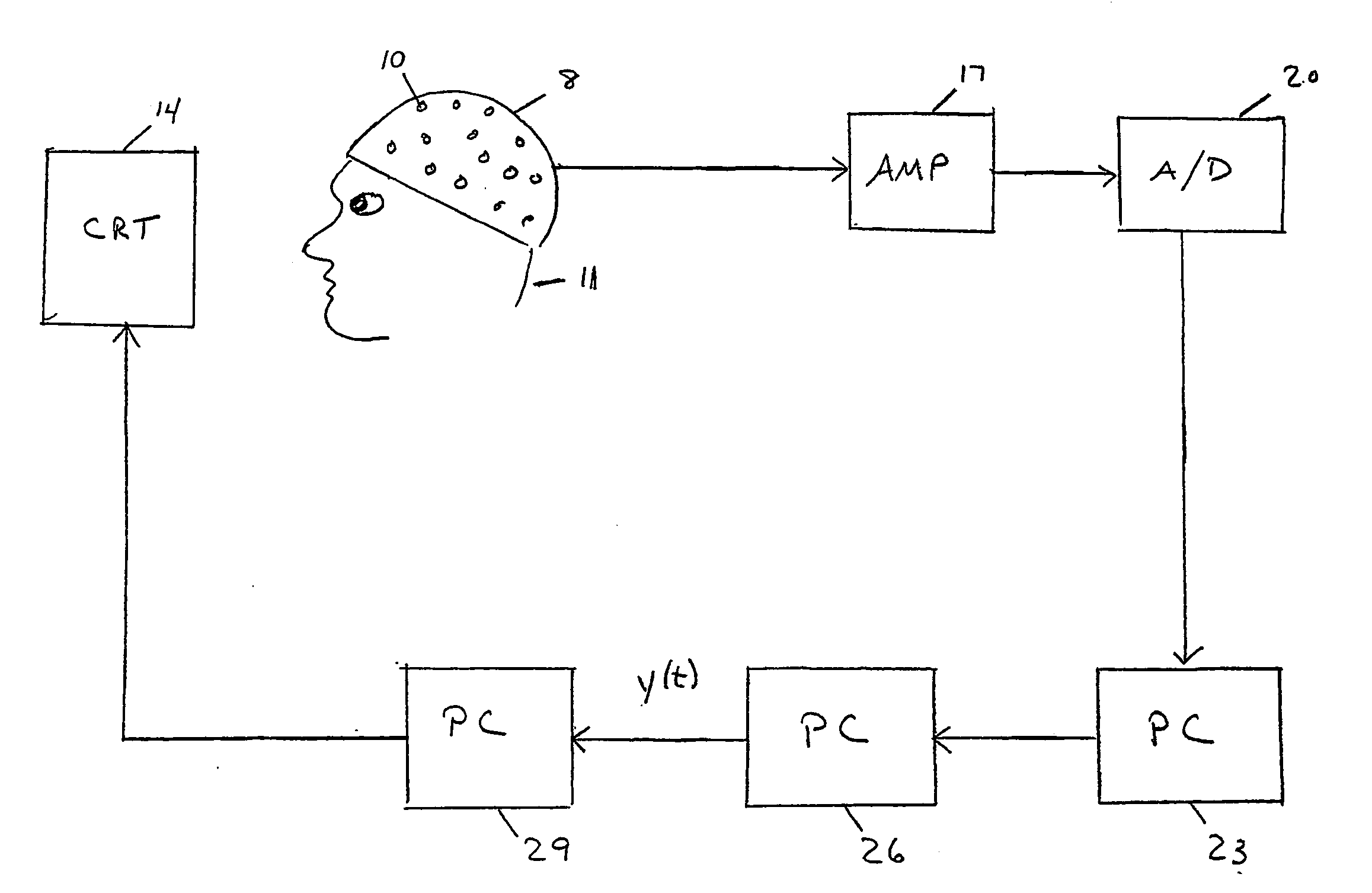
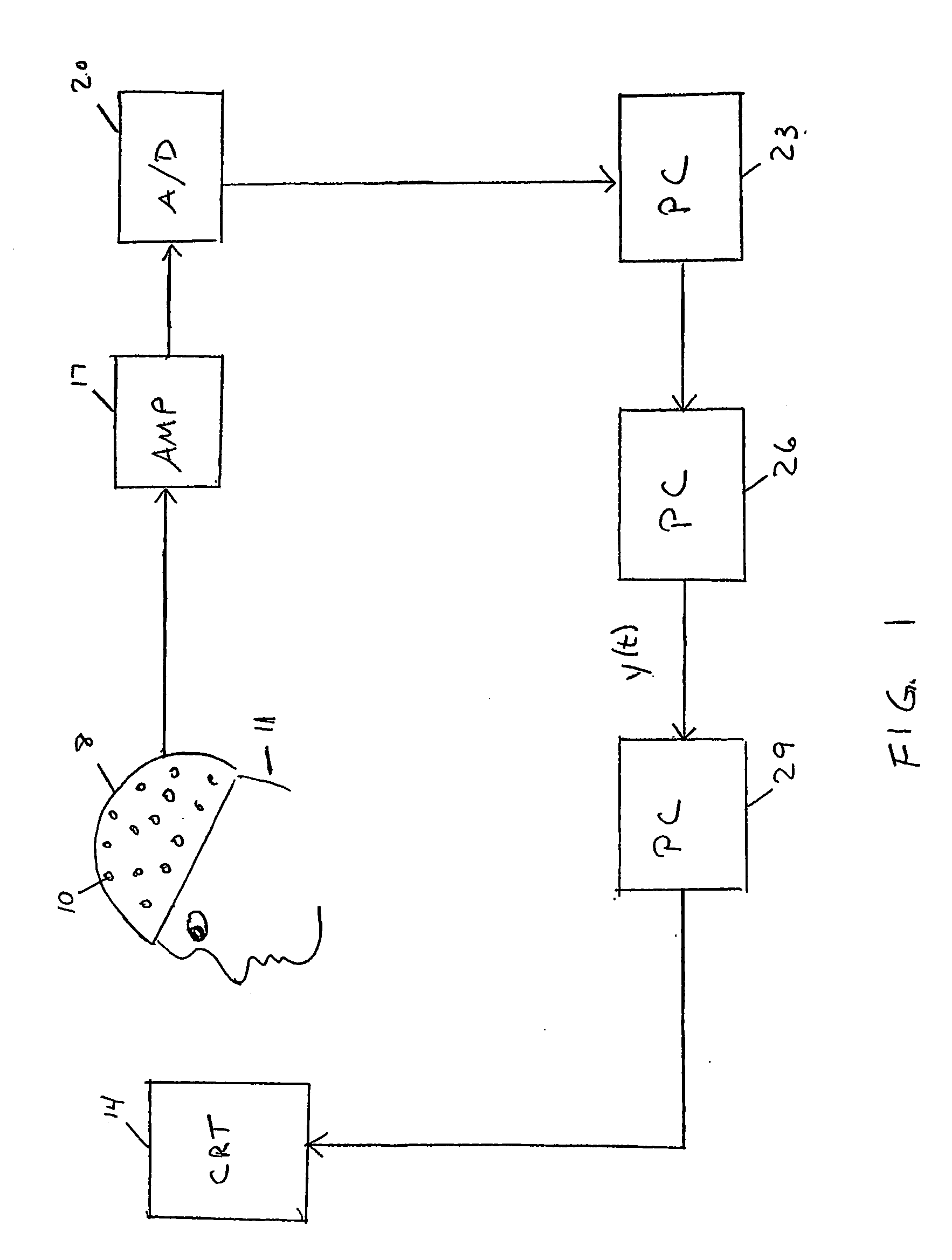
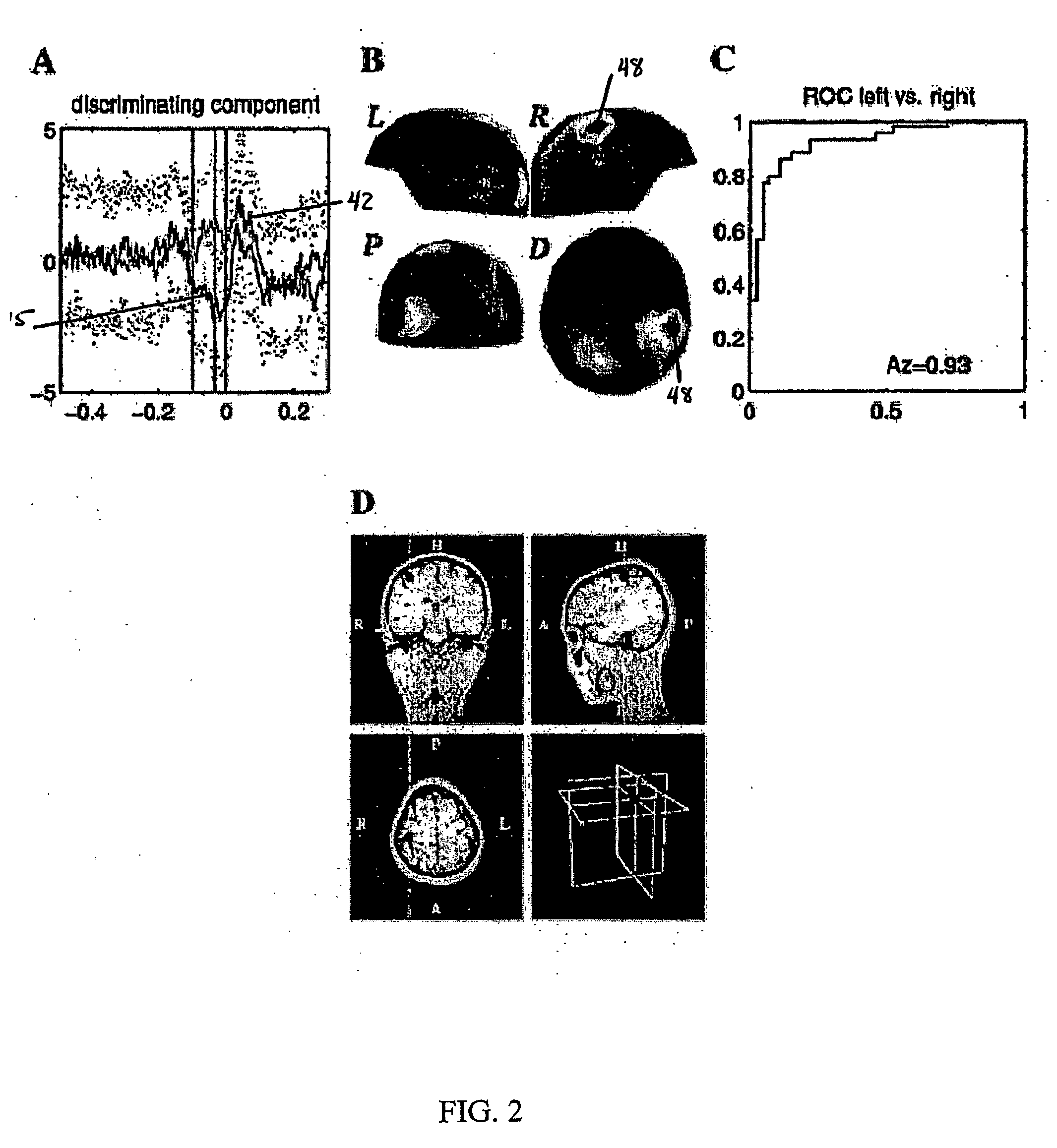

"Brain-computer interface system suitable for synchronizing one or more nonlinear dynamical systems with the brain activity of a person"
PatentWO2021019776A1
Innovation
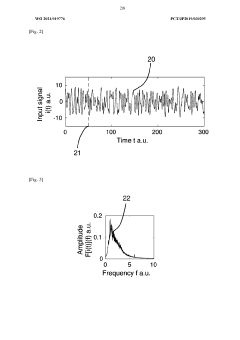
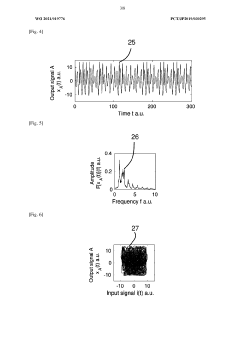
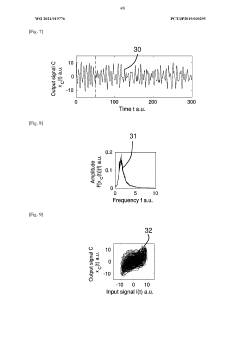
- Incorporating a nonlinear dynamical system that synchronizes with brain activity, using differential equations to process signals and enhance relevant characteristics, thereby improving signal correlation and aiding numerical classifiers in recognizing imaginary actions.
Data Privacy Regulations for BCI Financial Systems
The integration of brain-computer interfaces into financial transaction processing systems presents unprecedented challenges for data privacy regulation. Current regulatory frameworks, primarily designed for traditional digital systems, struggle to address the unique characteristics of neural data collection, processing, and storage inherent in BCI-enabled financial platforms.
Existing privacy regulations such as GDPR, CCPA, and PCI DSS provide foundational principles but lack specific provisions for biometric neural data. The European Union's GDPR offers the most comprehensive framework through its biometric data classifications, yet it fails to address the continuous, real-time nature of neural signal acquisition in BCI systems. The regulation's consent mechanisms become particularly complex when dealing with subconscious neural patterns that users cannot consciously control or fully understand.
Financial regulators worldwide are grappling with the classification of neural data within existing privacy taxonomies. The challenge lies in determining whether brainwave patterns constitute personal identifiable information, sensitive biometric data, or an entirely new category requiring specialized protection. Current interpretations vary significantly across jurisdictions, creating compliance uncertainties for multinational BCI financial service providers.
The temporal aspect of neural data collection poses additional regulatory complexities. Unlike traditional transaction data with discrete collection points, BCI systems continuously monitor neural activity, potentially capturing information beyond transaction-specific intent. This raises questions about data minimization principles and purpose limitation requirements embedded in current privacy frameworks.
Emerging regulatory proposals specifically targeting BCI applications in financial services focus on enhanced consent mechanisms, neural data anonymization standards, and mandatory algorithmic transparency. Several jurisdictions are developing specialized certification processes for BCI financial systems, requiring demonstration of privacy-by-design implementation and regular third-party audits of neural data handling procedures.
The cross-border nature of financial transactions further complicates BCI privacy regulation. Neural data processed across multiple jurisdictions must comply with varying privacy standards, creating potential conflicts between regulatory requirements. Industry stakeholders advocate for harmonized international standards specifically addressing BCI financial applications to ensure consistent privacy protection while enabling technological innovation.
Existing privacy regulations such as GDPR, CCPA, and PCI DSS provide foundational principles but lack specific provisions for biometric neural data. The European Union's GDPR offers the most comprehensive framework through its biometric data classifications, yet it fails to address the continuous, real-time nature of neural signal acquisition in BCI systems. The regulation's consent mechanisms become particularly complex when dealing with subconscious neural patterns that users cannot consciously control or fully understand.
Financial regulators worldwide are grappling with the classification of neural data within existing privacy taxonomies. The challenge lies in determining whether brainwave patterns constitute personal identifiable information, sensitive biometric data, or an entirely new category requiring specialized protection. Current interpretations vary significantly across jurisdictions, creating compliance uncertainties for multinational BCI financial service providers.
The temporal aspect of neural data collection poses additional regulatory complexities. Unlike traditional transaction data with discrete collection points, BCI systems continuously monitor neural activity, potentially capturing information beyond transaction-specific intent. This raises questions about data minimization principles and purpose limitation requirements embedded in current privacy frameworks.
Emerging regulatory proposals specifically targeting BCI applications in financial services focus on enhanced consent mechanisms, neural data anonymization standards, and mandatory algorithmic transparency. Several jurisdictions are developing specialized certification processes for BCI financial systems, requiring demonstration of privacy-by-design implementation and regular third-party audits of neural data handling procedures.
The cross-border nature of financial transactions further complicates BCI privacy regulation. Neural data processed across multiple jurisdictions must comply with varying privacy standards, creating potential conflicts between regulatory requirements. Industry stakeholders advocate for harmonized international standards specifically addressing BCI financial applications to ensure consistent privacy protection while enabling technological innovation.
Security Frameworks for Neural Transaction Processing
The security landscape for neural transaction processing systems presents unprecedented challenges that require comprehensive frameworks addressing both traditional cybersecurity concerns and novel neural-specific vulnerabilities. As brain-computer interfaces become integral to financial transaction processing, the attack surface expands beyond conventional network security to include neural signal manipulation, thought pattern interception, and cognitive state exploitation.
Multi-layered authentication protocols form the cornerstone of neural transaction security frameworks. These systems must verify not only the user's identity through traditional biometric markers but also authenticate the integrity of neural signals themselves. Advanced cryptographic techniques are being developed to create unique neural signatures that are nearly impossible to replicate, incorporating real-time brainwave patterns, cognitive response timing, and individual neural pathway characteristics.
Neural signal encryption represents a critical component requiring specialized approaches distinct from conventional data encryption. The framework must protect neural data both in transit and at rest, while maintaining the real-time processing capabilities essential for transaction speed optimization. Quantum-resistant encryption algorithms are being adapted specifically for neural data streams, ensuring long-term security against emerging computational threats.
Privacy preservation mechanisms within these frameworks must address the highly sensitive nature of neural data while enabling efficient transaction processing. Differential privacy techniques are being integrated to allow statistical analysis of transaction patterns without exposing individual neural signatures. Homomorphic encryption enables computation on encrypted neural data, maintaining privacy while supporting necessary processing operations.
Anomaly detection systems specifically designed for neural transaction processing monitor for unusual patterns that may indicate security breaches or unauthorized access attempts. These systems analyze neural signal consistency, transaction behavior patterns, and cognitive load indicators to identify potential threats in real-time.
Regulatory compliance frameworks are evolving to address the unique challenges of neural transaction processing, incorporating requirements for data sovereignty, user consent management, and audit trail maintenance. These frameworks must balance security requirements with performance optimization needs while ensuring adherence to emerging neural privacy legislation.
Multi-layered authentication protocols form the cornerstone of neural transaction security frameworks. These systems must verify not only the user's identity through traditional biometric markers but also authenticate the integrity of neural signals themselves. Advanced cryptographic techniques are being developed to create unique neural signatures that are nearly impossible to replicate, incorporating real-time brainwave patterns, cognitive response timing, and individual neural pathway characteristics.
Neural signal encryption represents a critical component requiring specialized approaches distinct from conventional data encryption. The framework must protect neural data both in transit and at rest, while maintaining the real-time processing capabilities essential for transaction speed optimization. Quantum-resistant encryption algorithms are being adapted specifically for neural data streams, ensuring long-term security against emerging computational threats.
Privacy preservation mechanisms within these frameworks must address the highly sensitive nature of neural data while enabling efficient transaction processing. Differential privacy techniques are being integrated to allow statistical analysis of transaction patterns without exposing individual neural signatures. Homomorphic encryption enables computation on encrypted neural data, maintaining privacy while supporting necessary processing operations.
Anomaly detection systems specifically designed for neural transaction processing monitor for unusual patterns that may indicate security breaches or unauthorized access attempts. These systems analyze neural signal consistency, transaction behavior patterns, and cognitive load indicators to identify potential threats in real-time.
Regulatory compliance frameworks are evolving to address the unique challenges of neural transaction processing, incorporating requirements for data sovereignty, user consent management, and audit trail maintenance. These frameworks must balance security requirements with performance optimization needs while ensuring adherence to emerging neural privacy legislation.
Unlock deeper insights with PatSnap Eureka Quick Research — get a full tech report to explore trends and direct your research. Try now!
Generate Your Research Report Instantly with AI Agent
Supercharge your innovation with PatSnap Eureka AI Agent Platform!