

How to Integrate Brain-Computer Interfaces into Hybrid Neural Systems
MAR 5, 20269 MIN READ
Generate Your Research Report Instantly with AI Agent
PatSnap Eureka helps you evaluate technical feasibility & market potential.
BCI Integration Background and Neural System Goals
Brain-computer interfaces represent a revolutionary convergence of neuroscience, engineering, and computational technologies that has evolved from experimental laboratory concepts to practical medical applications over the past five decades. The foundational work began in the 1970s with early experiments demonstrating the possibility of recording neural signals directly from the brain, progressing through decades of refinement in signal processing, electrode design, and computational algorithms.
The integration of BCIs into hybrid neural systems marks a significant paradigm shift from traditional standalone neural interfaces toward more sophisticated, interconnected architectures. These hybrid systems combine biological neural networks with artificial computational elements, creating symbiotic relationships that leverage the adaptive capabilities of biological systems alongside the precision and scalability of digital processing units.
Current technological trajectories indicate a clear evolution toward seamless neural integration, where BCIs serve as bidirectional communication bridges between organic neural tissue and synthetic neural networks. This evolution has been driven by advances in materials science, particularly the development of biocompatible electrodes and wireless transmission capabilities, alongside breakthroughs in machine learning algorithms capable of real-time neural signal interpretation.
The primary technical objectives for BCI integration into hybrid neural systems encompass several critical domains. Signal fidelity and bandwidth optimization remain paramount, requiring the development of high-resolution recording and stimulation capabilities that can interface with thousands of neurons simultaneously while maintaining long-term biocompatibility and stability.
Latency minimization represents another fundamental goal, as effective hybrid neural systems demand near-instantaneous communication between biological and artificial components. This necessitates advanced signal processing architectures capable of real-time neural decoding and encoding with sub-millisecond response times.
Adaptive learning integration constitutes a crucial objective, where hybrid systems must demonstrate the ability to learn and adapt alongside their biological counterparts. This requires sophisticated algorithms that can accommodate neural plasticity while maintaining system stability and predictable performance characteristics.
The ultimate vision encompasses the creation of augmented cognitive architectures that enhance human neural capabilities through seamless integration with artificial neural networks, potentially revolutionizing applications ranging from medical rehabilitation to cognitive enhancement and human-machine collaboration paradigms.
The integration of BCIs into hybrid neural systems marks a significant paradigm shift from traditional standalone neural interfaces toward more sophisticated, interconnected architectures. These hybrid systems combine biological neural networks with artificial computational elements, creating symbiotic relationships that leverage the adaptive capabilities of biological systems alongside the precision and scalability of digital processing units.
Current technological trajectories indicate a clear evolution toward seamless neural integration, where BCIs serve as bidirectional communication bridges between organic neural tissue and synthetic neural networks. This evolution has been driven by advances in materials science, particularly the development of biocompatible electrodes and wireless transmission capabilities, alongside breakthroughs in machine learning algorithms capable of real-time neural signal interpretation.
The primary technical objectives for BCI integration into hybrid neural systems encompass several critical domains. Signal fidelity and bandwidth optimization remain paramount, requiring the development of high-resolution recording and stimulation capabilities that can interface with thousands of neurons simultaneously while maintaining long-term biocompatibility and stability.
Latency minimization represents another fundamental goal, as effective hybrid neural systems demand near-instantaneous communication between biological and artificial components. This necessitates advanced signal processing architectures capable of real-time neural decoding and encoding with sub-millisecond response times.
Adaptive learning integration constitutes a crucial objective, where hybrid systems must demonstrate the ability to learn and adapt alongside their biological counterparts. This requires sophisticated algorithms that can accommodate neural plasticity while maintaining system stability and predictable performance characteristics.
The ultimate vision encompasses the creation of augmented cognitive architectures that enhance human neural capabilities through seamless integration with artificial neural networks, potentially revolutionizing applications ranging from medical rehabilitation to cognitive enhancement and human-machine collaboration paradigms.
Market Demand for Hybrid Neural Interface Systems
The global market for hybrid neural interface systems represents a rapidly expanding sector driven by convergent demands across multiple industries. Healthcare applications constitute the primary market driver, with neurological rehabilitation centers, hospitals, and specialized clinics seeking advanced solutions for treating conditions such as spinal cord injuries, stroke recovery, and neurodegenerative diseases. The aging population worldwide has intensified demand for assistive technologies that can restore motor function and cognitive capabilities through brain-computer interface integration.
Military and defense sectors demonstrate substantial interest in hybrid neural systems for enhancing soldier performance and developing next-generation human-machine interfaces. Defense contractors and government agencies are actively pursuing technologies that can improve situational awareness, reduce cognitive load, and enable direct neural control of complex systems. This market segment prioritizes reliability, security, and real-time performance capabilities.
Consumer electronics and gaming industries are emerging as significant demand generators, particularly for entertainment and productivity applications. Technology companies are exploring neural interfaces for immersive gaming experiences, hands-free device control, and augmented reality applications. The consumer market seeks user-friendly, non-invasive solutions that can seamlessly integrate with existing digital ecosystems.
Industrial automation and manufacturing sectors present growing opportunities for hybrid neural systems in human-robot collaboration scenarios. Manufacturing companies require technologies that can enhance worker safety, improve precision in complex assembly tasks, and enable intuitive control of robotic systems. The demand centers on solutions that can reduce training time while increasing operational efficiency.
Research institutions and academic centers represent a specialized but influential market segment, driving demand for flexible, research-grade hybrid neural interface platforms. These organizations require systems capable of supporting diverse experimental protocols and advancing fundamental understanding of brain-computer integration principles.
Market growth is further accelerated by increasing venture capital investment, government funding initiatives, and regulatory frameworks that support medical device innovation. The convergence of artificial intelligence, miniaturized electronics, and advanced signal processing technologies has created favorable conditions for market expansion across multiple application domains.
Military and defense sectors demonstrate substantial interest in hybrid neural systems for enhancing soldier performance and developing next-generation human-machine interfaces. Defense contractors and government agencies are actively pursuing technologies that can improve situational awareness, reduce cognitive load, and enable direct neural control of complex systems. This market segment prioritizes reliability, security, and real-time performance capabilities.
Consumer electronics and gaming industries are emerging as significant demand generators, particularly for entertainment and productivity applications. Technology companies are exploring neural interfaces for immersive gaming experiences, hands-free device control, and augmented reality applications. The consumer market seeks user-friendly, non-invasive solutions that can seamlessly integrate with existing digital ecosystems.
Industrial automation and manufacturing sectors present growing opportunities for hybrid neural systems in human-robot collaboration scenarios. Manufacturing companies require technologies that can enhance worker safety, improve precision in complex assembly tasks, and enable intuitive control of robotic systems. The demand centers on solutions that can reduce training time while increasing operational efficiency.
Research institutions and academic centers represent a specialized but influential market segment, driving demand for flexible, research-grade hybrid neural interface platforms. These organizations require systems capable of supporting diverse experimental protocols and advancing fundamental understanding of brain-computer integration principles.
Market growth is further accelerated by increasing venture capital investment, government funding initiatives, and regulatory frameworks that support medical device innovation. The convergence of artificial intelligence, miniaturized electronics, and advanced signal processing technologies has created favorable conditions for market expansion across multiple application domains.
Current BCI Integration Challenges and Technical Barriers
The integration of brain-computer interfaces into hybrid neural systems faces significant technical barriers that currently limit widespread implementation. Signal acquisition represents one of the most fundamental challenges, as neural signals are inherently noisy, low-amplitude, and susceptible to various forms of interference. The signal-to-noise ratio in recorded neural activity often falls below acceptable thresholds for reliable interpretation, particularly when using non-invasive recording methods such as electroencephalography.
Temporal synchronization between biological and artificial neural components presents another critical obstacle. Biological neural networks operate with millisecond-level precision, while current BCI systems typically exhibit processing delays ranging from tens to hundreds of milliseconds. This temporal mismatch creates significant challenges in achieving seamless bidirectional communication between brain tissue and artificial neural processors.
The biocompatibility of neural interfaces remains a persistent concern, particularly for invasive systems requiring direct contact with brain tissue. Chronic implantation often triggers inflammatory responses that degrade signal quality over time, while the mechanical mismatch between rigid electronic components and soft neural tissue can cause additional complications. Current materials and designs struggle to maintain stable interfaces for extended periods without compromising neural function.
Computational complexity poses substantial challenges in real-time processing of neural data. The vast amount of information generated by neural recording systems requires sophisticated algorithms capable of extracting meaningful patterns while operating within strict latency constraints. Current machine learning approaches, while promising, often lack the computational efficiency necessary for seamless integration with biological neural networks.
Cross-platform communication protocols between biological and artificial systems remain underdeveloped. Establishing standardized interfaces that can effectively translate between the electrochemical signals of biological neurons and the digital representations used in artificial neural networks requires significant advances in both hardware and software architectures.
Power consumption and heat generation in implantable BCI components create additional constraints, as excessive energy dissipation can damage surrounding neural tissue. Current wireless power transfer technologies and low-power circuit designs are insufficient to support the computational demands of sophisticated hybrid neural systems while maintaining safe operating parameters within biological environments.
Temporal synchronization between biological and artificial neural components presents another critical obstacle. Biological neural networks operate with millisecond-level precision, while current BCI systems typically exhibit processing delays ranging from tens to hundreds of milliseconds. This temporal mismatch creates significant challenges in achieving seamless bidirectional communication between brain tissue and artificial neural processors.
The biocompatibility of neural interfaces remains a persistent concern, particularly for invasive systems requiring direct contact with brain tissue. Chronic implantation often triggers inflammatory responses that degrade signal quality over time, while the mechanical mismatch between rigid electronic components and soft neural tissue can cause additional complications. Current materials and designs struggle to maintain stable interfaces for extended periods without compromising neural function.
Computational complexity poses substantial challenges in real-time processing of neural data. The vast amount of information generated by neural recording systems requires sophisticated algorithms capable of extracting meaningful patterns while operating within strict latency constraints. Current machine learning approaches, while promising, often lack the computational efficiency necessary for seamless integration with biological neural networks.
Cross-platform communication protocols between biological and artificial systems remain underdeveloped. Establishing standardized interfaces that can effectively translate between the electrochemical signals of biological neurons and the digital representations used in artificial neural networks requires significant advances in both hardware and software architectures.
Power consumption and heat generation in implantable BCI components create additional constraints, as excessive energy dissipation can damage surrounding neural tissue. Current wireless power transfer technologies and low-power circuit designs are insufficient to support the computational demands of sophisticated hybrid neural systems while maintaining safe operating parameters within biological environments.
Existing BCI Integration Solutions and Approaches
01 Signal acquisition and processing systems for brain-computer interfaces
Brain-computer interface systems utilize specialized signal acquisition hardware and processing algorithms to capture and interpret neural signals. These systems employ electrodes, sensors, and amplification circuits to detect brain activity patterns. Advanced signal processing techniques including filtering, feature extraction, and noise reduction are applied to enhance signal quality and extract meaningful information from raw neural data for subsequent interpretation and control applications.- Signal acquisition and processing systems for brain-computer interfaces: Brain-computer interface systems utilize specialized signal acquisition hardware and processing algorithms to capture and interpret neural signals. These systems employ electrodes, sensors, and amplification circuits to detect brain activity patterns. Advanced signal processing techniques including filtering, feature extraction, and noise reduction are applied to enhance signal quality and extract meaningful information from raw neural data for subsequent interpretation and control applications.
- Machine learning and artificial intelligence for neural signal decoding: Machine learning algorithms and artificial intelligence techniques are employed to decode neural signals and translate brain activity into control commands. These methods include deep learning networks, classification algorithms, and pattern recognition systems that learn to identify specific brain states or intentions. The AI-based approaches enable adaptive learning and improved accuracy in interpreting user intentions from complex neural data patterns.
- Non-invasive electrode and sensor technologies: Non-invasive brain-computer interfaces utilize external electrodes and sensors placed on the scalp or head to detect neural activity without surgical intervention. These technologies include dry electrodes, gel-based electrodes, and novel sensor designs that improve signal quality and user comfort. Advanced materials and electrode configurations enhance contact quality and reduce impedance for better signal acquisition in practical applications.
- Real-time feedback and control systems: Brain-computer interfaces incorporate real-time feedback mechanisms and control systems that enable immediate response to neural commands. These systems process brain signals with minimal latency and provide visual, auditory, or haptic feedback to users. The closed-loop architecture allows users to learn and refine their control strategies through continuous interaction, improving system performance and user experience over time.
- Application-specific interface designs and implementations: Brain-computer interfaces are designed for specific applications including assistive devices, rehabilitation systems, communication tools, and entertainment platforms. These implementations integrate neural control with external devices such as prosthetics, wheelchairs, computers, or virtual reality systems. Application-specific designs optimize the interface parameters, control paradigms, and user training protocols to meet the unique requirements of different use cases and user populations.
02 Machine learning and artificial intelligence for neural signal decoding
Machine learning algorithms and artificial intelligence techniques are employed to decode neural signals and translate brain activity into control commands. These methods include deep learning networks, classification algorithms, and pattern recognition systems that learn to identify specific brain states or intentions. The AI-based approaches enable more accurate interpretation of complex neural patterns and improve the reliability of brain-computer interface systems over time through adaptive learning mechanisms.Expand Specific Solutions03 Wearable and non-invasive electrode configurations
Non-invasive brain-computer interfaces utilize wearable electrode systems that can be comfortably positioned on the scalp or head without surgical intervention. These configurations include dry electrodes, gel-based electrodes, and flexible sensor arrays designed for extended wear. The electrode arrangements are optimized for signal quality while maintaining user comfort and ease of application, making the technology more accessible for daily use and various application scenarios.Expand Specific Solutions04 Real-time feedback and control mechanisms
Brain-computer interface systems incorporate real-time feedback mechanisms that allow users to monitor and adjust their neural control strategies. These systems provide immediate visual, auditory, or haptic feedback based on decoded brain signals, enabling users to learn and refine their control abilities. The feedback loops facilitate neurofeedback training and improve the overall performance and usability of the interface through continuous interaction and adaptation.Expand Specific Solutions05 Multi-modal integration and hybrid interface systems
Advanced brain-computer interfaces integrate multiple input modalities and sensing technologies to create hybrid systems with enhanced functionality. These systems combine neural signals with other physiological measurements, eye tracking, or conventional input methods to improve control accuracy and expand application possibilities. The multi-modal approach provides redundancy, increases robustness, and enables more natural and intuitive human-machine interaction across diverse use cases.Expand Specific Solutions
Key Players in BCI and Neural System Industry
The brain-computer interface (BCI) integration into hybrid neural systems represents an emerging technological frontier currently in the early-to-mid development stage. The market demonstrates significant growth potential, driven by both medical applications and consumer technology interests. Technology maturity varies considerably across players, with established companies like Neuralink Corp. and Precision Neuroscience Corp. leading commercial development of implantable systems, while Neurable Inc. focuses on non-invasive consumer applications. Academic institutions including MIT, Columbia University, University of Washington, and various Chinese universities (Tianjin University, Tongji University, Xi'an Jiaotong University) contribute fundamental research advancing neural interface technologies. Research organizations like Interuniversitair Micro-Electronica Centrum VZW and Commissariat à l'énergie atomique provide critical hardware and materials science innovations. The competitive landscape shows a hybrid ecosystem combining venture-backed startups pursuing rapid commercialization with academic research institutions developing foundational technologies, indicating the field's transition from pure research toward practical applications while facing significant technical and regulatory challenges.
Precision Neuroscience Corp.
Technical Solution: Precision Neuroscience has developed the Layer 7 Cortical Interface, a minimally invasive brain-computer interface that utilizes ultra-thin film electrodes placed on the brain's surface rather than penetrating deep into tissue. Their hybrid neural system integration approach focuses on high-density surface electrode arrays that can capture neural signals from cortical layers while minimizing tissue damage. The system employs advanced signal processing algorithms to decode motor and cognitive intentions from surface-level neural activity, integrating these signals with artificial neural networks for enhanced processing capabilities. Their technology emphasizes scalability and safety, using flexible electrode materials that conform to brain surface topology and wireless transmission systems for seamless integration with external computational devices and prosthetic systems.
Strengths: Minimally invasive approach reducing surgical risks, flexible electrode design conforming to brain surface, scalable architecture for various applications. Weaknesses: Limited signal depth compared to penetrating electrodes, potential signal quality degradation over time, dependency on surface-level neural activity patterns.
Neurable, Inc.
Technical Solution: Neurable specializes in non-invasive brain-computer interfaces using advanced EEG technology combined with machine learning algorithms for hybrid neural system integration. Their approach focuses on developing wearable BCI devices that can decode user intentions from brainwave patterns without requiring surgical implantation. The system integrates real-time signal processing with artificial neural networks to interpret complex cognitive states and motor intentions, enabling control of external devices through thought alone. Their hybrid architecture combines biological neural signal acquisition with cloud-based AI processing, allowing for continuous learning and adaptation to individual user patterns. The technology emphasizes practical applications in gaming, productivity software, and assistive technologies, utilizing advanced noise filtering and signal enhancement techniques to maintain performance in real-world environments.
Strengths: Non-invasive approach eliminating surgical risks, wearable form factor for practical daily use, cloud-based AI processing for continuous improvement. Weaknesses: Lower signal resolution compared to invasive methods, susceptibility to environmental noise interference, limited bandwidth for complex command interpretation.
Core Technologies for Hybrid Neural System Design
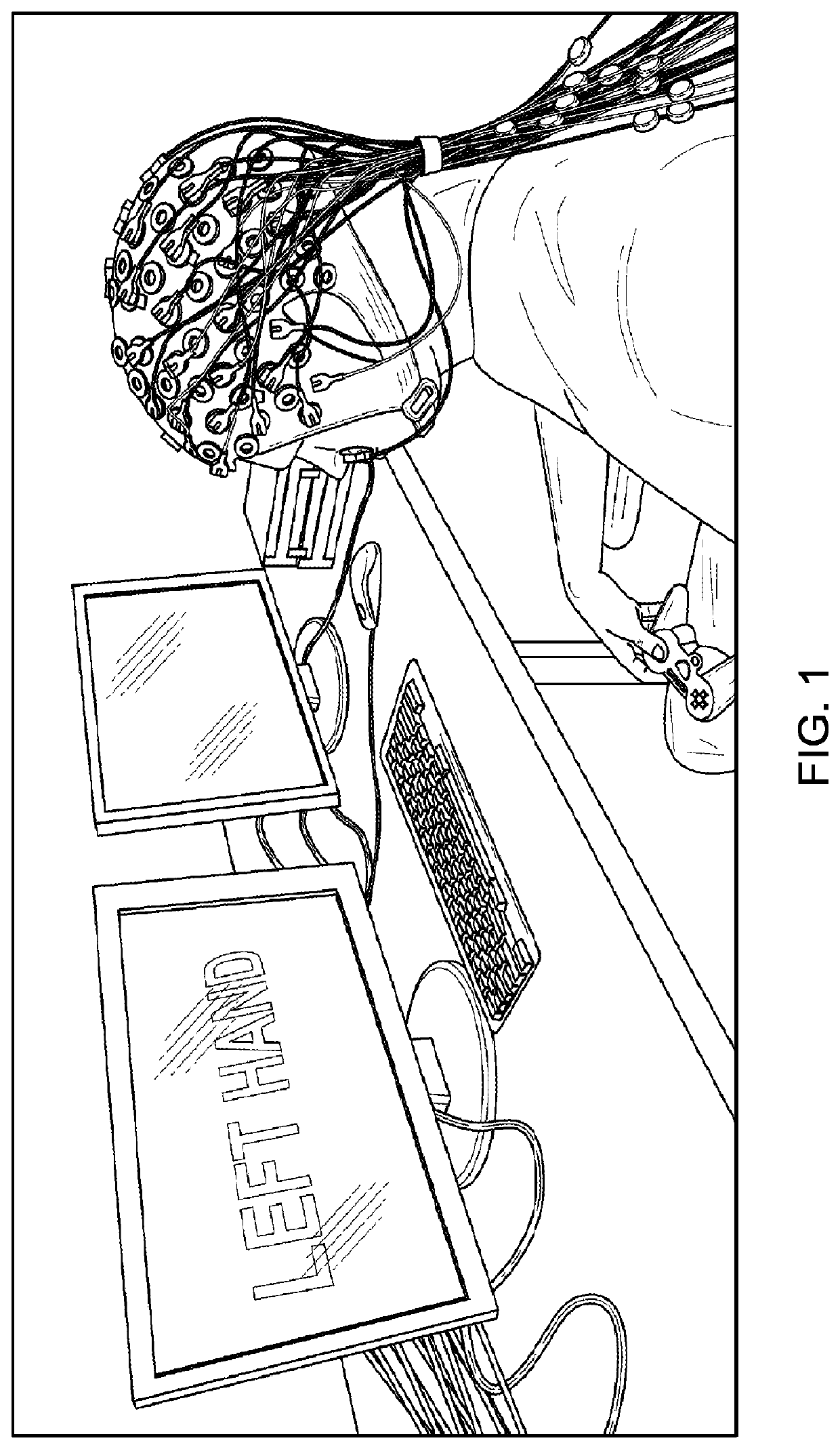
Systems and methods for a hybrid brain interface for robotic swarms using EEG signals and an input device
PatentActiveUS20200057498A1
Innovation
- A hybrid BCI system that combines EEG signals with joystick input, utilizing ERD/ERS phenomena and integrating Principal Component Analysis (PCA) with Hidden Markov Models (HMMs, to enhance control capabilities and reduce training requirements, allowing for more dexterous control of robotic systems, including swarms of quadrotors.


Regulatory Framework for Neural Interface Devices
The regulatory landscape for neural interface devices represents one of the most complex and evolving areas in medical device governance. Current frameworks primarily rely on existing medical device regulations, with the FDA's Class II and Class III classifications serving as the foundation for brain-computer interface oversight. The European Union's Medical Device Regulation (MDR) similarly addresses neural interfaces through traditional pathways, though both systems face significant challenges in adequately addressing the unique characteristics of hybrid neural systems.
Invasive neural interfaces currently undergo the most stringent regulatory scrutiny, requiring extensive preclinical testing, biocompatibility assessments, and long-term safety studies. The FDA's breakthrough device designation has accelerated some neural interface approvals, but the integration of multiple neural system components creates unprecedented regulatory complexity. Hybrid systems that combine biological and artificial neural elements challenge traditional device categorization, as they may simultaneously function as therapeutic devices, diagnostic tools, and data processing systems.
International harmonization efforts are emerging through organizations like the International Organization for Standardization (ISO), which is developing specific standards for neural interface safety and performance. The ISO/TC 150 committee has initiated work on neural implant standards, while the International Electrotechnical Commission addresses electrical safety aspects. However, these standards primarily focus on individual components rather than integrated hybrid systems.
Data privacy and cybersecurity regulations add another layer of complexity to neural interface governance. The General Data Protection Regulation (GDPR) in Europe and various national privacy laws treat neural data as highly sensitive personal information, requiring explicit consent mechanisms and robust data protection measures. The intersection of medical device regulations with data protection laws creates compliance challenges for manufacturers developing hybrid neural systems.
Ethical oversight mechanisms are increasingly integrated into regulatory frameworks, with institutional review boards and ethics committees playing expanded roles in neural interface approval processes. The dual-use nature of many neural technologies, which can serve both medical and enhancement purposes, requires careful regulatory consideration to prevent misuse while enabling beneficial applications.
Future regulatory evolution will likely require specialized neural interface pathways that address the unique characteristics of hybrid systems, including adaptive algorithms, learning capabilities, and bidirectional neural communication. Regulatory agencies are beginning to explore adaptive regulatory frameworks that can evolve alongside rapidly advancing neural interface technologies.
Invasive neural interfaces currently undergo the most stringent regulatory scrutiny, requiring extensive preclinical testing, biocompatibility assessments, and long-term safety studies. The FDA's breakthrough device designation has accelerated some neural interface approvals, but the integration of multiple neural system components creates unprecedented regulatory complexity. Hybrid systems that combine biological and artificial neural elements challenge traditional device categorization, as they may simultaneously function as therapeutic devices, diagnostic tools, and data processing systems.
International harmonization efforts are emerging through organizations like the International Organization for Standardization (ISO), which is developing specific standards for neural interface safety and performance. The ISO/TC 150 committee has initiated work on neural implant standards, while the International Electrotechnical Commission addresses electrical safety aspects. However, these standards primarily focus on individual components rather than integrated hybrid systems.
Data privacy and cybersecurity regulations add another layer of complexity to neural interface governance. The General Data Protection Regulation (GDPR) in Europe and various national privacy laws treat neural data as highly sensitive personal information, requiring explicit consent mechanisms and robust data protection measures. The intersection of medical device regulations with data protection laws creates compliance challenges for manufacturers developing hybrid neural systems.
Ethical oversight mechanisms are increasingly integrated into regulatory frameworks, with institutional review boards and ethics committees playing expanded roles in neural interface approval processes. The dual-use nature of many neural technologies, which can serve both medical and enhancement purposes, requires careful regulatory consideration to prevent misuse while enabling beneficial applications.
Future regulatory evolution will likely require specialized neural interface pathways that address the unique characteristics of hybrid systems, including adaptive algorithms, learning capabilities, and bidirectional neural communication. Regulatory agencies are beginning to explore adaptive regulatory frameworks that can evolve alongside rapidly advancing neural interface technologies.
Ethical Implications of Brain-Computer Integration
The integration of brain-computer interfaces into hybrid neural systems presents unprecedented ethical challenges that demand careful consideration across multiple dimensions. These concerns extend beyond traditional biomedical ethics to encompass fundamental questions about human identity, autonomy, and the nature of consciousness itself.
Privacy and mental autonomy represent the most immediate ethical concerns. Brain-computer interfaces capable of reading neural signals raise profound questions about cognitive liberty and mental privacy. The potential for unauthorized access to thoughts, emotions, and memories creates risks that far exceed conventional data breaches. Establishing robust frameworks for neural data protection becomes critical, particularly when considering the irreversible nature of neural information extraction and the potential for coercive applications.
Informed consent presents unique complexities in brain-computer integration scenarios. Traditional consent models may prove inadequate when dealing with technologies that can potentially alter cognitive processes, personality traits, or decision-making capabilities. The dynamic nature of neural plasticity means that individuals may experience changes in their capacity to provide ongoing consent, creating ethical dilemmas about long-term autonomy and self-determination.
Enhancement versus therapeutic applications introduces significant equity and justice considerations. While therapeutic uses for treating neurological disorders generally receive ethical support, enhancement applications raise questions about fairness, access, and societal stratification. The potential creation of cognitive classes based on technological augmentation could exacerbate existing inequalities and challenge fundamental principles of human equality.
Identity and authenticity concerns emerge when considering how brain-computer integration might alter personal identity. Questions arise about whether enhanced cognitive abilities, modified memories, or altered emotional responses represent authentic expressions of the self or technological artifacts. The boundary between human and machine intelligence becomes increasingly blurred, challenging traditional concepts of personal responsibility and moral agency.
Safety and reversibility considerations demand rigorous ethical oversight. The long-term effects of neural integration remain largely unknown, raising questions about acceptable risk levels and the precautionary principle. The potential irreversibility of certain neural modifications requires careful consideration of future autonomy and the rights of individuals to modify or remove integrated systems.
Regulatory frameworks must evolve to address these multifaceted ethical challenges while fostering beneficial innovation. International cooperation becomes essential to prevent regulatory arbitrage and ensure consistent ethical standards across jurisdictions.
Privacy and mental autonomy represent the most immediate ethical concerns. Brain-computer interfaces capable of reading neural signals raise profound questions about cognitive liberty and mental privacy. The potential for unauthorized access to thoughts, emotions, and memories creates risks that far exceed conventional data breaches. Establishing robust frameworks for neural data protection becomes critical, particularly when considering the irreversible nature of neural information extraction and the potential for coercive applications.
Informed consent presents unique complexities in brain-computer integration scenarios. Traditional consent models may prove inadequate when dealing with technologies that can potentially alter cognitive processes, personality traits, or decision-making capabilities. The dynamic nature of neural plasticity means that individuals may experience changes in their capacity to provide ongoing consent, creating ethical dilemmas about long-term autonomy and self-determination.
Enhancement versus therapeutic applications introduces significant equity and justice considerations. While therapeutic uses for treating neurological disorders generally receive ethical support, enhancement applications raise questions about fairness, access, and societal stratification. The potential creation of cognitive classes based on technological augmentation could exacerbate existing inequalities and challenge fundamental principles of human equality.
Identity and authenticity concerns emerge when considering how brain-computer integration might alter personal identity. Questions arise about whether enhanced cognitive abilities, modified memories, or altered emotional responses represent authentic expressions of the self or technological artifacts. The boundary between human and machine intelligence becomes increasingly blurred, challenging traditional concepts of personal responsibility and moral agency.
Safety and reversibility considerations demand rigorous ethical oversight. The long-term effects of neural integration remain largely unknown, raising questions about acceptable risk levels and the precautionary principle. The potential irreversibility of certain neural modifications requires careful consideration of future autonomy and the rights of individuals to modify or remove integrated systems.
Regulatory frameworks must evolve to address these multifaceted ethical challenges while fostering beneficial innovation. International cooperation becomes essential to prevent regulatory arbitrage and ensure consistent ethical standards across jurisdictions.
Unlock deeper insights with PatSnap Eureka Quick Research — get a full tech report to explore trends and direct your research. Try now!
Generate Your Research Report Instantly with AI Agent
Supercharge your innovation with PatSnap Eureka AI Agent Platform!