
Evaluating Lithium Bromide for Advanced Absorption Technologies
AUG 28, 20259 MIN READ
Generate Your Research Report Instantly with AI Agent
Patsnap Eureka helps you evaluate technical feasibility & market potential.
LiBr Absorption Technology Background and Objectives
Absorption cooling and heating technologies have evolved significantly since their inception in the early 19th century. Lithium bromide (LiBr) emerged as a prominent working fluid in absorption systems during the mid-20th century, revolutionizing the field with its superior thermodynamic properties. The historical trajectory shows a steady progression from simple single-effect systems to advanced multi-effect configurations that achieve higher coefficients of performance (COP) and energy efficiency ratios.
The fundamental principle behind LiBr absorption technology leverages the strong affinity between lithium bromide salt and water, where water serves as the refrigerant and LiBr as the absorbent. This chemical interaction enables the creation of cooling or heating effects without conventional vapor compression mechanisms, significantly reducing electricity consumption and mechanical complexity. The technology has matured through decades of refinement, addressing initial challenges such as crystallization risks and corrosion issues.
Current technological objectives for LiBr absorption systems focus on several key areas: enhancing energy efficiency to achieve COPs exceeding 1.8 for triple-effect systems, reducing physical footprint for broader application versatility, minimizing environmental impact through zero ozone depletion potential (ODP) and zero global warming potential (GWP) solutions, and decreasing initial capital costs to improve market competitiveness against conventional systems.
The evolution of LiBr absorption technology has been driven by both environmental regulations and energy efficiency demands. As global energy policies increasingly prioritize sustainable solutions, LiBr systems have gained renewed attention for their ability to utilize low-grade thermal energy sources, including industrial waste heat, solar thermal energy, and geothermal resources. This alignment with circular economy principles represents a significant advantage in contemporary energy landscapes.
Research and development efforts are currently concentrated on addressing the inherent limitations of traditional LiBr systems. These include crystallization prevention through advanced control algorithms and solution additives, corrosion mitigation through innovative material science approaches, heat and mass transfer enhancement via advanced heat exchanger designs, and system miniaturization to expand application potential in residential and small commercial settings.
The technological roadmap for LiBr absorption systems envisions integration with renewable energy sources, implementation in district energy networks, and hybridization with other heating and cooling technologies to create more resilient and efficient energy systems. The ultimate goal is to position LiBr absorption technology as a cornerstone of sustainable thermal management solutions that can significantly contribute to global decarbonization efforts while providing reliable heating and cooling services.
The fundamental principle behind LiBr absorption technology leverages the strong affinity between lithium bromide salt and water, where water serves as the refrigerant and LiBr as the absorbent. This chemical interaction enables the creation of cooling or heating effects without conventional vapor compression mechanisms, significantly reducing electricity consumption and mechanical complexity. The technology has matured through decades of refinement, addressing initial challenges such as crystallization risks and corrosion issues.
Current technological objectives for LiBr absorption systems focus on several key areas: enhancing energy efficiency to achieve COPs exceeding 1.8 for triple-effect systems, reducing physical footprint for broader application versatility, minimizing environmental impact through zero ozone depletion potential (ODP) and zero global warming potential (GWP) solutions, and decreasing initial capital costs to improve market competitiveness against conventional systems.
The evolution of LiBr absorption technology has been driven by both environmental regulations and energy efficiency demands. As global energy policies increasingly prioritize sustainable solutions, LiBr systems have gained renewed attention for their ability to utilize low-grade thermal energy sources, including industrial waste heat, solar thermal energy, and geothermal resources. This alignment with circular economy principles represents a significant advantage in contemporary energy landscapes.
Research and development efforts are currently concentrated on addressing the inherent limitations of traditional LiBr systems. These include crystallization prevention through advanced control algorithms and solution additives, corrosion mitigation through innovative material science approaches, heat and mass transfer enhancement via advanced heat exchanger designs, and system miniaturization to expand application potential in residential and small commercial settings.
The technological roadmap for LiBr absorption systems envisions integration with renewable energy sources, implementation in district energy networks, and hybridization with other heating and cooling technologies to create more resilient and efficient energy systems. The ultimate goal is to position LiBr absorption technology as a cornerstone of sustainable thermal management solutions that can significantly contribute to global decarbonization efforts while providing reliable heating and cooling services.
Market Analysis for LiBr Absorption Systems
The global market for Lithium Bromide (LiBr) absorption systems has been experiencing steady growth, primarily driven by increasing energy efficiency requirements and the rising demand for sustainable cooling solutions. The market size for LiBr absorption chillers was valued at approximately $1.2 billion in 2022 and is projected to reach $1.8 billion by 2028, representing a compound annual growth rate (CAGR) of 6.7%.
Asia-Pacific currently dominates the market with over 40% share, led by China, Japan, and South Korea, where government initiatives promoting energy-efficient technologies have significantly boosted adoption. North America and Europe follow with market shares of 25% and 22% respectively, with growth primarily driven by commercial and industrial applications seeking to reduce carbon footprints.
The commercial building sector represents the largest application segment for LiBr absorption systems, accounting for 45% of the total market. This includes hotels, hospitals, shopping malls, and office buildings where the simultaneous need for heating and cooling makes these systems particularly advantageous. Industrial applications constitute approximately 30% of the market, with food processing, pharmaceuticals, and chemical industries being key adopters.
Market analysis reveals several key demand drivers for LiBr absorption technologies. Rising energy costs worldwide have increased the appeal of these systems, which can utilize waste heat or solar energy to provide cooling, thereby reducing operational expenses. Environmental regulations targeting refrigerants with high global warming potential have also accelerated interest in absorption systems that use environmentally benign working fluids.
Customer segmentation shows distinct preferences across different markets. Large industrial facilities prioritize system reliability and waste heat recovery capabilities, while commercial buildings focus on space requirements and integration with existing HVAC systems. The residential segment, though currently small at 5% market share, shows promising growth potential, especially in regions with high cooling demands and access to district heating.
Pricing trends indicate a gradual decrease in the cost per ton of refrigeration capacity, dropping by approximately 15% over the past five years due to manufacturing improvements and increased competition. However, initial capital costs remain 30-40% higher than conventional vapor compression systems, presenting a market barrier despite the long-term operational savings.
Future market projections suggest accelerated growth in regions experiencing rapid urbanization and industrialization, particularly in Southeast Asia and the Middle East. The integration of smart controls and IoT capabilities is expected to create a premium segment within the market, offering enhanced performance monitoring and predictive maintenance features that could command 15-20% price premiums.
Asia-Pacific currently dominates the market with over 40% share, led by China, Japan, and South Korea, where government initiatives promoting energy-efficient technologies have significantly boosted adoption. North America and Europe follow with market shares of 25% and 22% respectively, with growth primarily driven by commercial and industrial applications seeking to reduce carbon footprints.
The commercial building sector represents the largest application segment for LiBr absorption systems, accounting for 45% of the total market. This includes hotels, hospitals, shopping malls, and office buildings where the simultaneous need for heating and cooling makes these systems particularly advantageous. Industrial applications constitute approximately 30% of the market, with food processing, pharmaceuticals, and chemical industries being key adopters.
Market analysis reveals several key demand drivers for LiBr absorption technologies. Rising energy costs worldwide have increased the appeal of these systems, which can utilize waste heat or solar energy to provide cooling, thereby reducing operational expenses. Environmental regulations targeting refrigerants with high global warming potential have also accelerated interest in absorption systems that use environmentally benign working fluids.
Customer segmentation shows distinct preferences across different markets. Large industrial facilities prioritize system reliability and waste heat recovery capabilities, while commercial buildings focus on space requirements and integration with existing HVAC systems. The residential segment, though currently small at 5% market share, shows promising growth potential, especially in regions with high cooling demands and access to district heating.
Pricing trends indicate a gradual decrease in the cost per ton of refrigeration capacity, dropping by approximately 15% over the past five years due to manufacturing improvements and increased competition. However, initial capital costs remain 30-40% higher than conventional vapor compression systems, presenting a market barrier despite the long-term operational savings.
Future market projections suggest accelerated growth in regions experiencing rapid urbanization and industrialization, particularly in Southeast Asia and the Middle East. The integration of smart controls and IoT capabilities is expected to create a premium segment within the market, offering enhanced performance monitoring and predictive maintenance features that could command 15-20% price premiums.
Current State and Technical Barriers of LiBr Technology
Lithium bromide (LiBr) absorption technology has established itself as a cornerstone in industrial refrigeration and air conditioning systems, with widespread implementation across commercial buildings, industrial processes, and district cooling networks. Currently, LiBr-water absorption chillers dominate the market for large-capacity cooling applications, particularly in regions with abundant waste heat resources. The technology has reached commercial maturity with coefficient of performance (COP) values typically ranging from 0.7 to 1.2 for single-effect systems and up to 1.8 for advanced double-effect configurations.
Despite its commercial success, LiBr technology faces several significant technical barriers that limit its broader adoption and efficiency improvements. Crystallization risk remains one of the most critical challenges, occurring when the LiBr solution concentration exceeds solubility limits at specific temperatures and pressures. This phenomenon can cause system blockages, reduced heat transfer efficiency, and potential equipment damage, necessitating complex control systems and operational constraints.
Corrosion presents another major obstacle, as LiBr solutions are inherently corrosive to many common metals used in heat exchange equipment. Current systems require expensive corrosion-resistant materials such as stainless steel, titanium alloys, or specialized coatings, significantly increasing manufacturing and maintenance costs. Industry standard practice includes adding corrosion inhibitors like lithium molybdate or lithium nitrate, which introduce additional complexity and environmental considerations.
Heat and mass transfer limitations constitute a substantial barrier to efficiency improvements. The relatively high viscosity of concentrated LiBr solutions impedes effective heat transfer in absorbers and generators. Additionally, the absorption process itself is limited by solution-side mass transfer resistance, creating a technological ceiling for current designs. Research indicates that these limitations restrict the practical COP to approximately 70-80% of the theoretical maximum.
Vacuum maintenance represents another persistent challenge, as LiBr systems operate under partial vacuum conditions (typically 0.6-1.0 kPa in the evaporator). Air leakage into the system degrades performance over time, necessitating periodic maintenance and vacuum restoration procedures. Current systems employ vacuum pumps and purge units that add complexity, cost, and energy consumption.
From a global perspective, LiBr technology development shows geographic concentration, with Japan, China, and the United States leading in patents and commercial applications. European research focuses primarily on system integration and renewable energy coupling, while emerging economies are beginning to develop manufacturing capabilities but remain largely dependent on imported technology and expertise.
Despite its commercial success, LiBr technology faces several significant technical barriers that limit its broader adoption and efficiency improvements. Crystallization risk remains one of the most critical challenges, occurring when the LiBr solution concentration exceeds solubility limits at specific temperatures and pressures. This phenomenon can cause system blockages, reduced heat transfer efficiency, and potential equipment damage, necessitating complex control systems and operational constraints.
Corrosion presents another major obstacle, as LiBr solutions are inherently corrosive to many common metals used in heat exchange equipment. Current systems require expensive corrosion-resistant materials such as stainless steel, titanium alloys, or specialized coatings, significantly increasing manufacturing and maintenance costs. Industry standard practice includes adding corrosion inhibitors like lithium molybdate or lithium nitrate, which introduce additional complexity and environmental considerations.
Heat and mass transfer limitations constitute a substantial barrier to efficiency improvements. The relatively high viscosity of concentrated LiBr solutions impedes effective heat transfer in absorbers and generators. Additionally, the absorption process itself is limited by solution-side mass transfer resistance, creating a technological ceiling for current designs. Research indicates that these limitations restrict the practical COP to approximately 70-80% of the theoretical maximum.
Vacuum maintenance represents another persistent challenge, as LiBr systems operate under partial vacuum conditions (typically 0.6-1.0 kPa in the evaporator). Air leakage into the system degrades performance over time, necessitating periodic maintenance and vacuum restoration procedures. Current systems employ vacuum pumps and purge units that add complexity, cost, and energy consumption.
From a global perspective, LiBr technology development shows geographic concentration, with Japan, China, and the United States leading in patents and commercial applications. European research focuses primarily on system integration and renewable energy coupling, while emerging economies are beginning to develop manufacturing capabilities but remain largely dependent on imported technology and expertise.
Current LiBr Absorption Solutions and Implementations
01 Lithium bromide in absorption refrigeration systems
Lithium bromide is widely used as an absorbent in absorption refrigeration and heat pump systems due to its excellent hygroscopic properties. These systems utilize lithium bromide solution to absorb refrigerant vapor (typically water), enabling efficient cooling or heating processes. The technology is particularly valuable in applications where waste heat can be utilized as the energy source, offering energy-efficient alternatives to conventional compression refrigeration systems.- Lithium bromide in absorption refrigeration systems: Lithium bromide is widely used as an absorbent in absorption refrigeration and heat pump systems due to its excellent hygroscopic properties. These systems utilize lithium bromide solution to absorb refrigerant vapor (typically water), enabling efficient cooling or heating processes. The technology includes various improvements in system design, solution circulation, and heat exchange efficiency to enhance the overall performance of lithium bromide-based absorption refrigeration systems.
- Lithium bromide solution regeneration and purification methods: Various techniques have been developed for the regeneration and purification of lithium bromide solutions used in absorption systems. These methods address issues such as crystallization, corrosion, and efficiency loss due to solution degradation. Purification processes may include filtration, chemical treatment, distillation, or specialized equipment designed to remove impurities and maintain optimal solution concentration, thereby extending the operational life and efficiency of lithium bromide-based systems.
- Lithium bromide as electrolyte in energy storage applications: Lithium bromide serves as an electrolyte component in various energy storage technologies, including batteries and capacitors. Its ionic properties make it suitable for facilitating charge transfer in electrochemical systems. Research focuses on optimizing electrolyte compositions containing lithium bromide to enhance energy density, cycling stability, and safety of energy storage devices, particularly in applications requiring high performance and reliability.
- Lithium bromide in heat transformation and thermal energy storage: Beyond conventional refrigeration, lithium bromide is utilized in advanced heat transformation applications and thermal energy storage systems. These technologies leverage the material's thermochemical properties to store and release thermal energy efficiently. Applications include solar thermal energy storage, waste heat recovery, and temperature-controlled environments where lithium bromide solutions facilitate energy-efficient heating and cooling processes through absorption and desorption cycles.
- Lithium bromide in chemical synthesis and pharmaceutical applications: Lithium bromide serves as a reagent or catalyst in various chemical synthesis processes and pharmaceutical applications. Its properties make it valuable for specific reactions, including bromination, dehydration, and certain organic transformations. In pharmaceutical contexts, lithium bromide may be used in the synthesis of active pharmaceutical ingredients or as a component in formulations. Research focuses on optimizing reaction conditions and exploring new applications for this versatile compound.
02 Lithium bromide in energy storage applications
Lithium bromide is employed in various energy storage technologies, particularly in thermal energy storage systems. Its unique thermochemical properties allow it to store and release energy efficiently through absorption and desorption processes. These systems can be integrated with renewable energy sources to address intermittency issues, providing stable energy output and improving overall system efficiency.Expand Specific Solutions03 Lithium bromide solution purification and regeneration methods
Various techniques have been developed for purifying and regenerating lithium bromide solutions to maintain optimal performance in absorption systems. These methods address issues such as crystallization, corrosion, and contamination that can reduce system efficiency. Purification processes may include filtration, chemical treatment, and thermal regeneration to remove impurities and restore the solution's absorption capacity.Expand Specific Solutions04 Lithium bromide in pharmaceutical and chemical applications
Lithium bromide serves as an important compound in pharmaceutical preparations and chemical synthesis processes. In pharmaceuticals, it can be used as a sedative agent or as a precursor in the synthesis of various medicinal compounds. In chemical applications, it functions as a catalyst, reagent, or intermediate in organic synthesis reactions, particularly in bromination processes and specialized chemical transformations.Expand Specific Solutions05 Enhanced lithium bromide systems with additives and modified configurations
Research has focused on improving lithium bromide-based systems through the addition of performance-enhancing additives and modified system configurations. These enhancements aim to address challenges such as crystallization, corrosion, and efficiency limitations. Additives may include corrosion inhibitors, surfactants, and heat transfer enhancers, while configuration modifications involve novel heat exchanger designs, advanced control systems, and hybrid approaches combining multiple technologies.Expand Specific Solutions
Leading Manufacturers and Research Institutions in LiBr Systems
The lithium bromide absorption technology market is currently in a growth phase, with increasing demand for energy-efficient cooling and heating solutions driving adoption. The global absorption chiller market is projected to expand significantly, fueled by industrial waste heat recovery applications and sustainable cooling initiatives. Technologically, companies like Shuangliang Eco-Energy Systems have achieved commercial maturity in LiBr absorption systems, while research institutions such as Dalian Maritime University and KIST are advancing next-generation applications. Major industrial players including POSCO Holdings, Osaka Gas, and Robert Bosch are investing in system optimization, while chemical specialists like Sunresin New Materials and Bromine Compounds Ltd. focus on improving LiBr solution properties. The competitive landscape shows a mix of established equipment manufacturers and emerging technology innovators collaborating with academic institutions to enhance efficiency and reduce costs.
Shuangliang Eco-Energy Systems Co., Ltd.
Technical Solution: Shuangliang Eco-Energy Systems has developed advanced lithium bromide (LiBr) absorption refrigeration systems that utilize waste heat recovery for cooling applications. Their technology incorporates a double-effect LiBr absorption chiller design that achieves a coefficient of performance (COP) of up to 1.45, significantly higher than traditional single-effect systems. The company has implemented proprietary crystallization prevention mechanisms that allow their systems to operate at higher LiBr concentrations (up to 65%) without the risk of solution crystallization that typically plagues LiBr systems. Their vacuum-sealed absorption units feature enhanced heat transfer surfaces with specialized coatings that minimize corrosion issues commonly associated with LiBr solutions. Shuangliang has also developed an intelligent control system that optimizes the absorption cycle based on varying thermal loads and ambient conditions, resulting in up to 30% energy savings compared to conventional cooling technologies.
Strengths: Superior energy efficiency with high COP values; advanced crystallization prevention allowing higher concentration operation; intelligent control systems for optimized performance across varying conditions. Weaknesses: Higher initial capital investment compared to conventional cooling systems; requires stable heat source for optimal operation; still faces challenges with corrosion management in long-term operation despite protective measures.
Chemetics, Inc.
Technical Solution: Chemetics has pioneered advanced LiBr recovery and purification technologies specifically designed for industrial absorption systems. Their proprietary process employs a multi-stage filtration and purification system that removes contaminants down to sub-micron levels, extending the operational life of LiBr solutions by up to 40%. The company has developed specialized corrosion-resistant materials and coatings for heat exchangers and other components that come in contact with LiBr solutions, significantly reducing maintenance requirements and system downtime. Chemetics' vacuum distillation technology enables the recovery of high-purity LiBr from degraded solutions, allowing for cost-effective recycling rather than disposal. Their innovative approach includes a closed-loop water treatment system that maintains optimal solution chemistry, preventing crystallization and improving overall system efficiency. The company has also developed advanced monitoring systems that continuously analyze LiBr solution properties to predict and prevent potential operational issues.
Strengths: Industry-leading purification technology extending LiBr solution lifespan; specialized corrosion-resistant materials reducing maintenance costs; closed-loop recycling capabilities improving sustainability profile. Weaknesses: Complex purification systems require specialized technical expertise for operation and maintenance; higher implementation costs compared to standard absorption systems; technology primarily focused on industrial-scale applications with limited scalability for smaller systems.
Key Technical Innovations in LiBr Absorption Cycles
Method for preparing lithium bromide
PatentWO2024038429A1
Innovation
- Contacting high-purity lithium carbonate with gaseous hydrogen bromide at elevated temperatures, typically above 200°C, to directly produce anhydrous lithium bromide, with the reaction conditions optimized by adjusting temperature and particle size distribution of lithium carbonate to achieve high yields and purity exceeding 97%.



Process for producing ethanol from the fermentation of sugar sources in a fermentation medium with high ethanol content
PatentInactiveIN4268DELNP2013A
Innovation
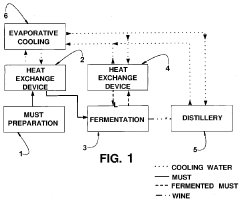
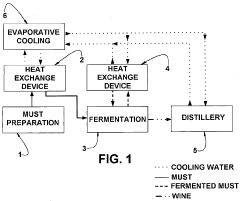
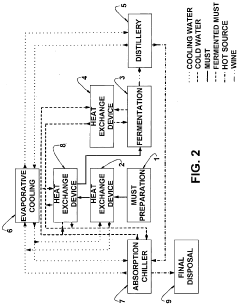
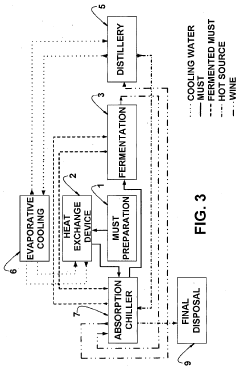
- A process involving the preparation of a must with high sugar content (18-35% TRS) cooled to 8-30°C, fed with Saccharomyces cerevisiae yeast, and fermented at controlled temperatures between 28-30°C, using a lithium bromide-based absorption chiller for efficient cooling, reducing heat exchange and vinasse production.
Environmental Impact and Sustainability Assessment
The environmental impact of lithium bromide (LiBr) in absorption technologies presents a complex sustainability profile that requires thorough assessment. LiBr-based absorption systems offer significant energy efficiency advantages compared to conventional vapor compression systems, potentially reducing primary energy consumption by 30-50% when coupled with waste heat recovery. This translates to substantial reductions in greenhouse gas emissions, particularly in regions where electricity generation relies heavily on fossil fuels.
However, the environmental benefits must be weighed against several concerning aspects of LiBr production and usage. The extraction of lithium for LiBr production contributes to habitat disruption, water depletion, and potential contamination in mining regions, particularly in the "Lithium Triangle" of South America where approximately 75% of global lithium reserves are located. Water consumption during lithium extraction is especially problematic, with estimates suggesting that producing one ton of lithium requires approximately 500,000 gallons of water.
Corrosion issues associated with LiBr solutions present additional environmental challenges. The highly corrosive nature of LiBr necessitates the use of corrosion inhibitors and specialized materials, some of which may introduce additional environmental burdens through their production processes or potential leakage into ecosystems. Recent studies indicate that certain corrosion inhibitors used with LiBr can persist in the environment and may have aquatic toxicity concerns.
The end-of-life management of LiBr absorption systems represents another critical sustainability consideration. Current recycling rates for lithium from various applications remain below 1% globally, indicating significant room for improvement in circular economy approaches. The development of effective recovery and recycling protocols for LiBr solutions could substantially improve the lifecycle environmental profile of these systems.
From a broader sustainability perspective, LiBr absorption technologies contribute positively to several United Nations Sustainable Development Goals, particularly SDG 7 (Affordable and Clean Energy) and SDG 13 (Climate Action). When powered by renewable thermal energy sources such as solar thermal or geothermal energy, these systems can operate with minimal carbon footprint, offering a pathway to sustainable cooling and heating solutions.
Life cycle assessment (LCA) studies comparing LiBr absorption systems to conventional alternatives show varying results depending on the energy source, operational parameters, and system lifespan. Generally, LiBr systems demonstrate 15-40% lower global warming potential when operated with waste heat or renewable energy sources, though this advantage diminishes significantly when powered by fossil fuel-generated heat. Future sustainability improvements will likely focus on developing less corrosive working pairs, enhancing system efficiency, and establishing closed-loop material cycles for critical components.
However, the environmental benefits must be weighed against several concerning aspects of LiBr production and usage. The extraction of lithium for LiBr production contributes to habitat disruption, water depletion, and potential contamination in mining regions, particularly in the "Lithium Triangle" of South America where approximately 75% of global lithium reserves are located. Water consumption during lithium extraction is especially problematic, with estimates suggesting that producing one ton of lithium requires approximately 500,000 gallons of water.
Corrosion issues associated with LiBr solutions present additional environmental challenges. The highly corrosive nature of LiBr necessitates the use of corrosion inhibitors and specialized materials, some of which may introduce additional environmental burdens through their production processes or potential leakage into ecosystems. Recent studies indicate that certain corrosion inhibitors used with LiBr can persist in the environment and may have aquatic toxicity concerns.
The end-of-life management of LiBr absorption systems represents another critical sustainability consideration. Current recycling rates for lithium from various applications remain below 1% globally, indicating significant room for improvement in circular economy approaches. The development of effective recovery and recycling protocols for LiBr solutions could substantially improve the lifecycle environmental profile of these systems.
From a broader sustainability perspective, LiBr absorption technologies contribute positively to several United Nations Sustainable Development Goals, particularly SDG 7 (Affordable and Clean Energy) and SDG 13 (Climate Action). When powered by renewable thermal energy sources such as solar thermal or geothermal energy, these systems can operate with minimal carbon footprint, offering a pathway to sustainable cooling and heating solutions.
Life cycle assessment (LCA) studies comparing LiBr absorption systems to conventional alternatives show varying results depending on the energy source, operational parameters, and system lifespan. Generally, LiBr systems demonstrate 15-40% lower global warming potential when operated with waste heat or renewable energy sources, though this advantage diminishes significantly when powered by fossil fuel-generated heat. Future sustainability improvements will likely focus on developing less corrosive working pairs, enhancing system efficiency, and establishing closed-loop material cycles for critical components.
Energy Efficiency Comparison with Alternative Technologies
When comparing lithium bromide (LiBr) absorption systems with alternative cooling and heating technologies, several key energy efficiency metrics must be considered. LiBr absorption chillers typically achieve a Coefficient of Performance (COP) ranging from 0.7 to 1.2 for single-effect systems, while double-effect systems can reach COPs of 1.2 to 1.5. In contrast, conventional vapor compression systems generally operate with COPs between 2.5 and 4.0, indicating superior electrical efficiency.
However, this direct comparison is misleading without considering the energy source. LiBr absorption systems primarily utilize thermal energy (often waste heat or solar energy) rather than high-grade electrical energy. When evaluating primary energy consumption, LiBr systems can demonstrate competitive or superior efficiency in applications where waste heat recovery is possible, reducing the need for additional energy generation.
Compared to alternative absorption technologies such as ammonia-water systems, LiBr solutions offer 10-15% higher efficiency in air conditioning applications due to better thermodynamic properties. However, ammonia-water systems maintain advantages in refrigeration applications requiring temperatures below 0°C, where LiBr systems cannot operate due to crystallization risks.
Adsorption cooling technologies using silica gel or zeolite materials show lower COPs (typically 0.3-0.6) than LiBr absorption systems but offer advantages in stability and operational simplicity. These systems require less maintenance and have fewer corrosion concerns, potentially offsetting their lower thermodynamic efficiency in certain applications.
From a lifecycle energy perspective, LiBr systems demonstrate significant advantages when integrated with renewable thermal sources. Solar-powered LiBr absorption cooling can reduce primary energy consumption by up to 60% compared to conventional electric cooling in suitable climates. Similarly, when coupled with district heating networks or industrial waste heat streams, these systems can achieve primary energy savings of 30-50% compared to standalone heating and cooling systems.
The part-load efficiency characteristics of LiBr systems also differ from alternatives. While vapor compression systems typically show reduced efficiency at partial loads, properly designed LiBr absorption systems can maintain relatively stable efficiency across varying load conditions, providing operational advantages in applications with fluctuating demand profiles.
However, this direct comparison is misleading without considering the energy source. LiBr absorption systems primarily utilize thermal energy (often waste heat or solar energy) rather than high-grade electrical energy. When evaluating primary energy consumption, LiBr systems can demonstrate competitive or superior efficiency in applications where waste heat recovery is possible, reducing the need for additional energy generation.
Compared to alternative absorption technologies such as ammonia-water systems, LiBr solutions offer 10-15% higher efficiency in air conditioning applications due to better thermodynamic properties. However, ammonia-water systems maintain advantages in refrigeration applications requiring temperatures below 0°C, where LiBr systems cannot operate due to crystallization risks.
Adsorption cooling technologies using silica gel or zeolite materials show lower COPs (typically 0.3-0.6) than LiBr absorption systems but offer advantages in stability and operational simplicity. These systems require less maintenance and have fewer corrosion concerns, potentially offsetting their lower thermodynamic efficiency in certain applications.
From a lifecycle energy perspective, LiBr systems demonstrate significant advantages when integrated with renewable thermal sources. Solar-powered LiBr absorption cooling can reduce primary energy consumption by up to 60% compared to conventional electric cooling in suitable climates. Similarly, when coupled with district heating networks or industrial waste heat streams, these systems can achieve primary energy savings of 30-50% compared to standalone heating and cooling systems.
The part-load efficiency characteristics of LiBr systems also differ from alternatives. While vapor compression systems typically show reduced efficiency at partial loads, properly designed LiBr absorption systems can maintain relatively stable efficiency across varying load conditions, providing operational advantages in applications with fluctuating demand profiles.
Unlock deeper insights with Patsnap Eureka Quick Research — get a full tech report to explore trends and direct your research. Try now!
Generate Your Research Report Instantly with AI Agent
Supercharge your innovation with Patsnap Eureka AI Agent Platform!