Exploring CMOS Battery Challenges in Electric Vehicles
JUL 22, 20259 MIN READ
Generate Your Research Report Instantly with AI Agent
Patsnap Eureka helps you evaluate technical feasibility & market potential.
EV CMOS Battery Overview
The CMOS (Complementary Metal-Oxide-Semiconductor) battery, also known as the RTC (Real-Time Clock) battery, plays a crucial role in maintaining system settings and timekeeping functions in electric vehicles (EVs). As the automotive industry shifts towards electrification, the importance of CMOS batteries in EVs has grown significantly, presenting both opportunities and challenges for manufacturers and engineers.
CMOS batteries in EVs serve multiple purposes beyond their traditional role in conventional vehicles. They provide power to the vehicle's memory systems when the main battery is disconnected or depleted, ensuring that critical information such as vehicle settings, security codes, and diagnostic data are retained. Additionally, these batteries support the functionality of various electronic control units (ECUs) and maintain the accuracy of the vehicle's internal clock.
The integration of CMOS batteries in EVs presents unique challenges due to the complex electrical architecture and demanding operating conditions of electric vehicles. Unlike traditional vehicles, EVs rely heavily on sophisticated electronic systems for power management, battery monitoring, and overall vehicle control. This increased reliance on electronics amplifies the importance of a reliable CMOS battery system.
One of the primary challenges faced by CMOS batteries in EVs is the need for extended lifespan and reliability. Electric vehicles are expected to have longer service lives compared to conventional vehicles, which puts additional strain on the CMOS battery. Engineers must develop solutions that can withstand the rigors of EV operation while maintaining consistent performance over an extended period.
Temperature management is another critical aspect of CMOS battery implementation in EVs. The battery must function reliably across a wide range of temperatures, from extreme cold to high heat, which can be particularly challenging in electric vehicles due to their unique thermal management requirements. Ensuring stable performance under these varied conditions is essential for maintaining the integrity of the vehicle's electronic systems.
The increasing complexity of EV electrical systems also poses challenges for CMOS battery integration. As vehicles incorporate more advanced features and connectivity options, the power demands on the CMOS battery may increase. Engineers must balance these growing power requirements with the need for compact, lightweight solutions that do not significantly impact the vehicle's overall energy efficiency.
Furthermore, the transition to electric powertrains has led to the development of new vehicle architectures, which may require innovative approaches to CMOS battery placement and integration. Designers must consider factors such as electromagnetic compatibility, vibration resistance, and ease of maintenance when determining the optimal location and configuration for these critical components.
CMOS batteries in EVs serve multiple purposes beyond their traditional role in conventional vehicles. They provide power to the vehicle's memory systems when the main battery is disconnected or depleted, ensuring that critical information such as vehicle settings, security codes, and diagnostic data are retained. Additionally, these batteries support the functionality of various electronic control units (ECUs) and maintain the accuracy of the vehicle's internal clock.
The integration of CMOS batteries in EVs presents unique challenges due to the complex electrical architecture and demanding operating conditions of electric vehicles. Unlike traditional vehicles, EVs rely heavily on sophisticated electronic systems for power management, battery monitoring, and overall vehicle control. This increased reliance on electronics amplifies the importance of a reliable CMOS battery system.
One of the primary challenges faced by CMOS batteries in EVs is the need for extended lifespan and reliability. Electric vehicles are expected to have longer service lives compared to conventional vehicles, which puts additional strain on the CMOS battery. Engineers must develop solutions that can withstand the rigors of EV operation while maintaining consistent performance over an extended period.
Temperature management is another critical aspect of CMOS battery implementation in EVs. The battery must function reliably across a wide range of temperatures, from extreme cold to high heat, which can be particularly challenging in electric vehicles due to their unique thermal management requirements. Ensuring stable performance under these varied conditions is essential for maintaining the integrity of the vehicle's electronic systems.
The increasing complexity of EV electrical systems also poses challenges for CMOS battery integration. As vehicles incorporate more advanced features and connectivity options, the power demands on the CMOS battery may increase. Engineers must balance these growing power requirements with the need for compact, lightweight solutions that do not significantly impact the vehicle's overall energy efficiency.
Furthermore, the transition to electric powertrains has led to the development of new vehicle architectures, which may require innovative approaches to CMOS battery placement and integration. Designers must consider factors such as electromagnetic compatibility, vibration resistance, and ease of maintenance when determining the optimal location and configuration for these critical components.
EV Market Battery Demand
The electric vehicle (EV) market has experienced significant growth in recent years, driving an unprecedented demand for advanced battery technologies. This surge in demand is primarily fueled by the global push towards sustainable transportation and the increasing consumer acceptance of EVs as viable alternatives to traditional internal combustion engine vehicles.
The battery demand in the EV market is characterized by several key factors. Firstly, there is a growing need for high-energy-density batteries that can provide longer driving ranges, addressing one of the primary concerns of potential EV adopters. This has led to intensive research and development efforts focused on improving lithium-ion battery chemistries and exploring alternative technologies such as solid-state batteries.
Secondly, the demand for faster charging capabilities has become a critical factor in EV battery development. Consumers are seeking batteries that can be charged rapidly, comparable to the time it takes to refuel a conventional vehicle. This has spurred innovations in battery management systems and charging infrastructure.
Another significant aspect of EV battery demand is the emphasis on safety and reliability. High-profile incidents involving battery fires have heightened awareness of the importance of robust safety features in EV batteries. Manufacturers are investing heavily in developing advanced thermal management systems and safer battery chemistries to address these concerns.
The EV battery market is also seeing a shift towards more sustainable and environmentally friendly production methods. There is an increasing demand for batteries with lower carbon footprints, both in terms of production and end-of-life recycling. This trend is driving research into alternative materials and more efficient manufacturing processes.
Cost reduction remains a crucial factor in EV battery demand. As the EV market expands, there is pressure to reduce battery costs to make electric vehicles more affordable for mass adoption. This has led to economies of scale in production and ongoing efforts to optimize battery design and manufacturing processes.
The demand for EV batteries is not limited to personal vehicles. There is a growing market for electric buses, trucks, and other commercial vehicles, each with its specific battery requirements. This diversification of the EV market is creating new opportunities and challenges for battery manufacturers.
Geographically, the demand for EV batteries varies significantly across regions. While China remains the largest market, there is rapid growth in Europe and North America, driven by supportive government policies and increasing consumer interest. This global demand is reshaping supply chains and prompting the establishment of new battery production facilities worldwide.
The battery demand in the EV market is characterized by several key factors. Firstly, there is a growing need for high-energy-density batteries that can provide longer driving ranges, addressing one of the primary concerns of potential EV adopters. This has led to intensive research and development efforts focused on improving lithium-ion battery chemistries and exploring alternative technologies such as solid-state batteries.
Secondly, the demand for faster charging capabilities has become a critical factor in EV battery development. Consumers are seeking batteries that can be charged rapidly, comparable to the time it takes to refuel a conventional vehicle. This has spurred innovations in battery management systems and charging infrastructure.
Another significant aspect of EV battery demand is the emphasis on safety and reliability. High-profile incidents involving battery fires have heightened awareness of the importance of robust safety features in EV batteries. Manufacturers are investing heavily in developing advanced thermal management systems and safer battery chemistries to address these concerns.
The EV battery market is also seeing a shift towards more sustainable and environmentally friendly production methods. There is an increasing demand for batteries with lower carbon footprints, both in terms of production and end-of-life recycling. This trend is driving research into alternative materials and more efficient manufacturing processes.
Cost reduction remains a crucial factor in EV battery demand. As the EV market expands, there is pressure to reduce battery costs to make electric vehicles more affordable for mass adoption. This has led to economies of scale in production and ongoing efforts to optimize battery design and manufacturing processes.
The demand for EV batteries is not limited to personal vehicles. There is a growing market for electric buses, trucks, and other commercial vehicles, each with its specific battery requirements. This diversification of the EV market is creating new opportunities and challenges for battery manufacturers.
Geographically, the demand for EV batteries varies significantly across regions. While China remains the largest market, there is rapid growth in Europe and North America, driven by supportive government policies and increasing consumer interest. This global demand is reshaping supply chains and prompting the establishment of new battery production facilities worldwide.
CMOS Battery Limitations
CMOS (Complementary Metal-Oxide-Semiconductor) batteries, while widely used in various electronic devices, face significant limitations when considered for electric vehicle (EV) applications. These limitations primarily stem from their inherent design and operational characteristics, which are not well-suited for the demanding requirements of EVs.
One of the most critical limitations of CMOS batteries is their low energy density. Compared to lithium-ion batteries, which are the current standard for EVs, CMOS batteries store significantly less energy per unit volume or weight. This limitation severely restricts the potential driving range of an EV equipped with CMOS batteries, making them impractical for long-distance travel without frequent recharging.
Another major drawback is the limited power output of CMOS batteries. Electric vehicles require high power delivery for acceleration and maintaining speed, especially at highway velocities. CMOS batteries struggle to provide the necessary power output, which would result in poor vehicle performance and reduced efficiency.
The charging speed of CMOS batteries also poses a significant challenge for EV applications. These batteries typically have slower charging rates compared to lithium-ion counterparts, which would lead to extended charging times. In an industry where fast charging is becoming increasingly important for consumer adoption, this limitation could be a major deterrent.
Durability and cycle life present additional concerns for CMOS batteries in EVs. The frequent deep discharge cycles typical in EV usage patterns would likely lead to rapid degradation of CMOS battery performance. This would result in a shorter overall lifespan for the battery pack, necessitating more frequent replacements and increasing the total cost of ownership for EV users.
Temperature sensitivity is another critical limitation of CMOS batteries. They tend to perform poorly in extreme temperatures, both hot and cold. This characteristic is particularly problematic for EVs, which must operate reliably across a wide range of environmental conditions. The reduced performance in non-optimal temperatures could lead to decreased range and power output, compromising vehicle reliability and safety.
Furthermore, the self-discharge rate of CMOS batteries is generally higher than that of lithium-ion batteries. This means that even when not in use, CMOS batteries in an EV would lose charge more rapidly, potentially leading to unexpected range reductions and increased anxiety for drivers.
Lastly, the manufacturing scalability of CMOS batteries for large-scale EV production presents significant challenges. The current production processes for CMOS batteries are not optimized for the high-volume, high-capacity cells required for EVs. This limitation could lead to increased production costs and potential supply chain issues if CMOS batteries were to be adopted for widespread use in electric vehicles.
One of the most critical limitations of CMOS batteries is their low energy density. Compared to lithium-ion batteries, which are the current standard for EVs, CMOS batteries store significantly less energy per unit volume or weight. This limitation severely restricts the potential driving range of an EV equipped with CMOS batteries, making them impractical for long-distance travel without frequent recharging.
Another major drawback is the limited power output of CMOS batteries. Electric vehicles require high power delivery for acceleration and maintaining speed, especially at highway velocities. CMOS batteries struggle to provide the necessary power output, which would result in poor vehicle performance and reduced efficiency.
The charging speed of CMOS batteries also poses a significant challenge for EV applications. These batteries typically have slower charging rates compared to lithium-ion counterparts, which would lead to extended charging times. In an industry where fast charging is becoming increasingly important for consumer adoption, this limitation could be a major deterrent.
Durability and cycle life present additional concerns for CMOS batteries in EVs. The frequent deep discharge cycles typical in EV usage patterns would likely lead to rapid degradation of CMOS battery performance. This would result in a shorter overall lifespan for the battery pack, necessitating more frequent replacements and increasing the total cost of ownership for EV users.
Temperature sensitivity is another critical limitation of CMOS batteries. They tend to perform poorly in extreme temperatures, both hot and cold. This characteristic is particularly problematic for EVs, which must operate reliably across a wide range of environmental conditions. The reduced performance in non-optimal temperatures could lead to decreased range and power output, compromising vehicle reliability and safety.
Furthermore, the self-discharge rate of CMOS batteries is generally higher than that of lithium-ion batteries. This means that even when not in use, CMOS batteries in an EV would lose charge more rapidly, potentially leading to unexpected range reductions and increased anxiety for drivers.
Lastly, the manufacturing scalability of CMOS batteries for large-scale EV production presents significant challenges. The current production processes for CMOS batteries are not optimized for the high-volume, high-capacity cells required for EVs. This limitation could lead to increased production costs and potential supply chain issues if CMOS batteries were to be adopted for widespread use in electric vehicles.
Current CMOS Solutions
01 CMOS battery power management
Systems and methods for managing power in CMOS batteries, including techniques for monitoring battery voltage, implementing power-saving modes, and extending battery life through efficient power distribution and consumption in electronic devices.- CMOS battery power management: CMOS batteries are used to maintain system settings and real-time clock information when the main power is off. Power management techniques are implemented to extend battery life and ensure proper functioning of the CMOS system. This includes monitoring battery voltage, implementing low-power modes, and providing backup power solutions.
- CMOS battery replacement and monitoring systems: Systems and methods for monitoring CMOS battery health, detecting low battery conditions, and facilitating battery replacement are developed. These systems may include voltage monitoring circuits, alert mechanisms, and easy-access battery compartments to simplify maintenance and prevent data loss due to battery failure.
- Integration of CMOS battery in semiconductor devices: CMOS batteries are integrated into semiconductor devices and integrated circuits to provide backup power. This integration involves designing compact battery structures, implementing charge pumps, and developing specialized packaging techniques to accommodate the battery within the semiconductor device.
- CMOS battery charging systems: Charging systems for CMOS batteries are designed to maintain optimal charge levels. These systems may include trickle charging mechanisms, charge regulation circuits, and methods for charging the CMOS battery using the main power supply or external sources while protecting against overcharging.
- CMOS battery applications in imaging devices: CMOS batteries are utilized in imaging devices such as digital cameras and image sensors to maintain settings and calibration data. Special considerations are given to power management, battery life optimization, and ensuring image quality is not affected by battery-related issues.
02 CMOS battery integration in semiconductor devices
Innovations in integrating CMOS batteries within semiconductor devices, focusing on compact designs, improved connectivity, and enhanced performance of integrated circuits that rely on CMOS battery power for maintaining critical functions.Expand Specific Solutions03 CMOS battery backup systems
Advancements in CMOS battery backup systems, including redundant power supplies, automatic switchover mechanisms, and fail-safe designs to ensure continuous operation of critical memory and clock functions in electronic devices.Expand Specific Solutions04 CMOS battery charging and replacement
Innovative approaches to CMOS battery charging and replacement, including in-situ charging mechanisms, easy-access battery compartments, and techniques for seamless battery swapping without data loss in various electronic devices.Expand Specific Solutions05 CMOS battery monitoring and diagnostics
Advanced systems for monitoring CMOS battery health, predicting battery life, and diagnosing potential issues. These include real-time voltage monitoring, predictive maintenance algorithms, and user notification systems for timely battery replacement.Expand Specific Solutions
EV Battery Manufacturers
The CMOS battery market in electric vehicles is in a growth phase, driven by increasing EV adoption and technological advancements. The market size is expanding rapidly, with major automotive players like Hyundai, Kia, BMW, and Audi investing heavily in this technology. Companies such as Robert Bosch GmbH and Lear Corp. are at the forefront of developing advanced CMOS battery solutions for EVs. The technology is maturing, with innovations from firms like Samsung SDI and BYD Co., Ltd. focusing on improving battery performance, longevity, and safety. Research institutions like Wuhan University of Technology and Jiangsu University are contributing to technological advancements, indicating a collaborative industry-academia approach to addressing CMOS battery challenges in electric vehicles.
BYD Co., Ltd.
Technical Solution: BYD has developed a comprehensive solution to address CMOS battery challenges in electric vehicles through their Blade Battery technology. This innovative design uses lithium iron phosphate (LFP) cells arranged in a unique long and thin format, significantly improving space utilization and thermal management[2]. The Blade Battery incorporates advanced safety features, including a highly stable chemistry that resists thermal runaway[4]. BYD's Battery Management System (BMS) utilizes AI algorithms for precise monitoring and control of each cell, optimizing performance and longevity[6]. Additionally, they have implemented a cell-to-pack technology that eliminates the need for module housings, further improving energy density and reducing weight[8].
Strengths: Innovative battery design, enhanced safety features, AI-driven BMS, and improved energy density. Weaknesses: Limited to LFP chemistry, which may have lower energy density compared to some other lithium-ion variants.
Bayerische Motoren Werke AG
Technical Solution: BMW has pioneered a comprehensive approach to CMOS battery challenges in electric vehicles. Their solution integrates a sophisticated Battery Management System (BMS) with innovative cell chemistry and packaging. BMW's BMS employs advanced sensors and control algorithms to monitor and regulate each battery cell individually, ensuring optimal performance and longevity[2]. They have also developed a unique cooling system that uses a refrigerant to maintain ideal battery temperature, crucial for CMOS battery stability[4]. Furthermore, BMW has implemented a modular battery design that allows for easier maintenance and potential cell replacement, addressing long-term reliability concerns[6].
Strengths: Sophisticated individual cell monitoring, innovative cooling system, and modular design for easier maintenance. Weaknesses: Potentially higher production costs and complexity in manufacturing.
CMOS Battery Innovations
System and method for integrated circuit usage tracking circuit with fast tracking time for hardware security and re-configurability
PatentActiveUS20160329897A1
Innovation
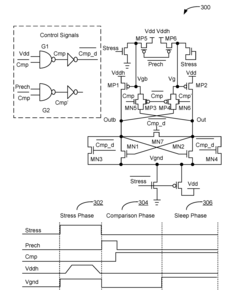
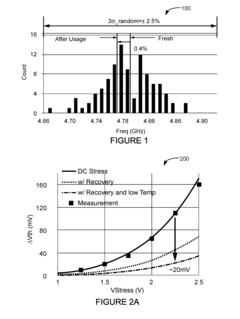
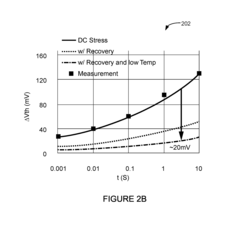
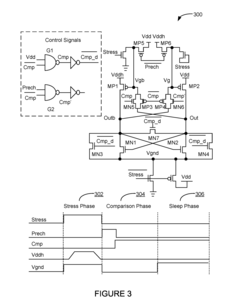
- A silicon marker technique using conventional CMOS devices with an accelerated aging circuit and stochastic processing methodology to create a reliable usage marker within seconds, leveraging NBTI effects and latch-based comparator circuits to enhance detection accuracy and tolerance to process variations.
Complementary metal-oxide-semiconductor (CMOS) image sensor
PatentActiveUS9859323B1
Innovation
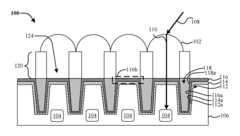
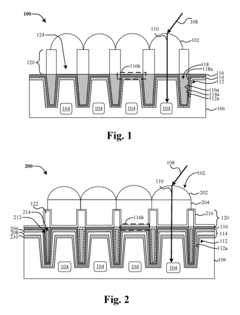
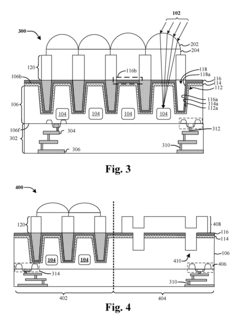
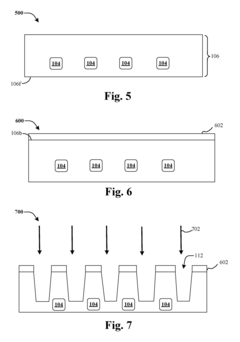
- A thinner passivation layer made of materials like silicon nitride is used to reduce the optical path length, supporting optical features while facilitating light reflection and preventing chemical mechanical planarization, thereby improving the CMOS image sensor's operation.
EV Battery Regulations
The regulatory landscape for electric vehicle (EV) batteries is rapidly evolving as governments worldwide seek to address safety concerns, environmental impact, and performance standards. In the United States, the National Highway Traffic Safety Administration (NHTSA) has established guidelines for EV battery safety, including requirements for thermal management, crash protection, and electrical isolation. These regulations aim to minimize the risk of battery fires and ensure passenger safety in the event of a collision.
The European Union has implemented the Battery Directive, which sets strict standards for battery recycling and disposal. This directive mandates that EV manufacturers establish collection and recycling programs for used batteries, promoting a circular economy approach. Additionally, the EU has proposed new regulations that would require battery manufacturers to disclose the carbon footprint of their products and adhere to minimum recycled content requirements.
China, as the world's largest EV market, has introduced its own set of regulations focusing on battery quality and safety. The country's Ministry of Industry and Information Technology (MIIT) has implemented a comprehensive battery traceability system, requiring manufacturers to track and report on the entire lifecycle of EV batteries. This system aims to improve quality control and facilitate more efficient recycling processes.
Global efforts to standardize EV battery regulations are also underway. The United Nations Economic Commission for Europe (UNECE) has developed the Global Technical Regulation on Electric Vehicle Safety (GTR 20), which provides a framework for harmonizing safety standards across different countries. This regulation addresses key aspects such as thermal propagation, battery management systems, and post-crash electrical safety.
As the EV industry continues to grow, regulators are increasingly focusing on the environmental impact of battery production and disposal. Many countries are implementing extended producer responsibility (EPR) programs, which hold manufacturers accountable for the entire lifecycle of their batteries. These programs incentivize the development of more sustainable battery technologies and encourage the establishment of robust recycling infrastructure.
The regulatory landscape also extends to the raw materials used in EV batteries. Concerns over the ethical sourcing of critical minerals like cobalt and lithium have led to the implementation of supply chain transparency regulations. The EU's proposed Battery Regulation, for instance, includes provisions for mandatory due diligence on the social and environmental risks in the battery supply chain.
The European Union has implemented the Battery Directive, which sets strict standards for battery recycling and disposal. This directive mandates that EV manufacturers establish collection and recycling programs for used batteries, promoting a circular economy approach. Additionally, the EU has proposed new regulations that would require battery manufacturers to disclose the carbon footprint of their products and adhere to minimum recycled content requirements.
China, as the world's largest EV market, has introduced its own set of regulations focusing on battery quality and safety. The country's Ministry of Industry and Information Technology (MIIT) has implemented a comprehensive battery traceability system, requiring manufacturers to track and report on the entire lifecycle of EV batteries. This system aims to improve quality control and facilitate more efficient recycling processes.
Global efforts to standardize EV battery regulations are also underway. The United Nations Economic Commission for Europe (UNECE) has developed the Global Technical Regulation on Electric Vehicle Safety (GTR 20), which provides a framework for harmonizing safety standards across different countries. This regulation addresses key aspects such as thermal propagation, battery management systems, and post-crash electrical safety.
As the EV industry continues to grow, regulators are increasingly focusing on the environmental impact of battery production and disposal. Many countries are implementing extended producer responsibility (EPR) programs, which hold manufacturers accountable for the entire lifecycle of their batteries. These programs incentivize the development of more sustainable battery technologies and encourage the establishment of robust recycling infrastructure.
The regulatory landscape also extends to the raw materials used in EV batteries. Concerns over the ethical sourcing of critical minerals like cobalt and lithium have led to the implementation of supply chain transparency regulations. The EU's proposed Battery Regulation, for instance, includes provisions for mandatory due diligence on the social and environmental risks in the battery supply chain.
CMOS Battery Recycling
CMOS battery recycling is a critical aspect of sustainable electric vehicle (EV) development. As the demand for EVs continues to grow, the need for efficient and environmentally friendly battery recycling processes becomes increasingly important. The recycling of CMOS batteries from EVs presents unique challenges and opportunities for the automotive industry.
One of the primary challenges in CMOS battery recycling is the complexity of the battery components. These batteries contain a variety of materials, including lithium, cobalt, nickel, and other valuable metals. Separating and recovering these materials efficiently requires advanced recycling technologies and processes. Current recycling methods often involve energy-intensive processes that may not be entirely environmentally friendly.
The development of more efficient recycling technologies is crucial for the long-term sustainability of the EV industry. Innovative approaches, such as hydrometallurgical and pyrometallurgical processes, are being explored to improve the recovery rates of valuable materials from CMOS batteries. These methods aim to reduce energy consumption and minimize waste generation during the recycling process.
Another significant aspect of CMOS battery recycling is the economic viability of the process. The cost of recycling must be balanced against the value of recovered materials to make it financially sustainable for recycling companies. As the demand for battery materials increases, the economic incentives for recycling are likely to improve, driving further innovation in recycling technologies.
The regulatory landscape surrounding CMOS battery recycling is also evolving. Many countries are implementing stricter regulations on battery disposal and recycling, encouraging manufacturers and recycling companies to develop more effective recycling solutions. These regulations aim to reduce the environmental impact of battery disposal and promote a circular economy in the EV industry.
Collaboration between EV manufacturers, battery producers, and recycling companies is essential for developing comprehensive recycling solutions. By working together, these stakeholders can design batteries with recycling in mind, implement efficient collection systems, and develop standardized recycling processes. This collaborative approach can lead to more sustainable and cost-effective recycling solutions for CMOS batteries.
As the EV market continues to expand, the importance of CMOS battery recycling will only increase. Addressing the challenges in this field will be crucial for ensuring the long-term sustainability of electric vehicles and minimizing their environmental impact. Continued research and development in recycling technologies, coupled with supportive policies and industry collaboration, will be key to overcoming these challenges and creating a more sustainable future for electric mobility.
One of the primary challenges in CMOS battery recycling is the complexity of the battery components. These batteries contain a variety of materials, including lithium, cobalt, nickel, and other valuable metals. Separating and recovering these materials efficiently requires advanced recycling technologies and processes. Current recycling methods often involve energy-intensive processes that may not be entirely environmentally friendly.
The development of more efficient recycling technologies is crucial for the long-term sustainability of the EV industry. Innovative approaches, such as hydrometallurgical and pyrometallurgical processes, are being explored to improve the recovery rates of valuable materials from CMOS batteries. These methods aim to reduce energy consumption and minimize waste generation during the recycling process.
Another significant aspect of CMOS battery recycling is the economic viability of the process. The cost of recycling must be balanced against the value of recovered materials to make it financially sustainable for recycling companies. As the demand for battery materials increases, the economic incentives for recycling are likely to improve, driving further innovation in recycling technologies.
The regulatory landscape surrounding CMOS battery recycling is also evolving. Many countries are implementing stricter regulations on battery disposal and recycling, encouraging manufacturers and recycling companies to develop more effective recycling solutions. These regulations aim to reduce the environmental impact of battery disposal and promote a circular economy in the EV industry.
Collaboration between EV manufacturers, battery producers, and recycling companies is essential for developing comprehensive recycling solutions. By working together, these stakeholders can design batteries with recycling in mind, implement efficient collection systems, and develop standardized recycling processes. This collaborative approach can lead to more sustainable and cost-effective recycling solutions for CMOS batteries.
As the EV market continues to expand, the importance of CMOS battery recycling will only increase. Addressing the challenges in this field will be crucial for ensuring the long-term sustainability of electric vehicles and minimizing their environmental impact. Continued research and development in recycling technologies, coupled with supportive policies and industry collaboration, will be key to overcoming these challenges and creating a more sustainable future for electric mobility.
Unlock deeper insights with Patsnap Eureka Quick Research — get a full tech report to explore trends and direct your research. Try now!
Generate Your Research Report Instantly with AI Agent
Supercharge your innovation with Patsnap Eureka AI Agent Platform!