

Exploring PMMA's Use in 3D Printing Technologies
AUG 7, 20259 MIN READ
Generate Your Research Report Instantly with AI Agent
PatSnap Eureka helps you evaluate technical feasibility & market potential.
PMMA in 3D Printing: Background and Objectives
Poly(methyl methacrylate) (PMMA), commonly known as acrylic or plexiglass, has emerged as a promising material in the realm of 3D printing technologies. This synthetic polymer, first developed in the 1930s, has found widespread use in various industries due to its unique properties, including optical clarity, weather resistance, and durability. The integration of PMMA into 3D printing processes represents a significant advancement in additive manufacturing, offering new possibilities for creating complex, transparent, and high-quality objects.
The evolution of 3D printing technologies has been marked by continuous innovation in materials and processes. While traditional 3D printing materials like ABS and PLA have dominated the market, the introduction of PMMA opens up new avenues for applications requiring optical clarity and improved mechanical properties. The use of PMMA in 3D printing addresses the growing demand for materials that can produce parts with enhanced aesthetics, functionality, and durability.
The primary objective of exploring PMMA's use in 3D printing technologies is to leverage its unique properties to expand the capabilities of additive manufacturing. Researchers and industry professionals aim to develop reliable and efficient methods for 3D printing with PMMA, overcoming challenges such as warping, shrinkage, and adhesion issues. By doing so, they seek to enable the production of complex, transparent structures that maintain the material's inherent properties throughout the printing process.
Another crucial goal is to optimize PMMA formulations specifically for 3D printing applications. This involves modifying the polymer's composition to enhance its printability while preserving its desirable characteristics. Researchers are investigating various additives and processing techniques to improve PMMA's flow properties, reduce thermal degradation during printing, and enhance layer adhesion.
Furthermore, the exploration of PMMA in 3D printing aims to broaden the range of applications across multiple industries. From medical devices and automotive components to architectural models and consumer products, the potential uses of 3D-printed PMMA parts are vast. The technology's development is driven by the need for customized, transparent, and durable objects that can be produced quickly and cost-effectively.
As the field progresses, there is a growing focus on sustainability and environmental considerations. Researchers are exploring ways to make PMMA 3D printing more eco-friendly, including the development of recycling processes for PMMA prints and the use of bio-based alternatives. This aligns with the broader trend towards sustainable manufacturing practices in the 3D printing industry.
The journey of integrating PMMA into 3D printing technologies represents a convergence of material science, engineering, and additive manufacturing. As research continues and new breakthroughs emerge, the potential for PMMA to revolutionize certain aspects of 3D printing becomes increasingly apparent, promising exciting developments in the field of advanced manufacturing.
The evolution of 3D printing technologies has been marked by continuous innovation in materials and processes. While traditional 3D printing materials like ABS and PLA have dominated the market, the introduction of PMMA opens up new avenues for applications requiring optical clarity and improved mechanical properties. The use of PMMA in 3D printing addresses the growing demand for materials that can produce parts with enhanced aesthetics, functionality, and durability.
The primary objective of exploring PMMA's use in 3D printing technologies is to leverage its unique properties to expand the capabilities of additive manufacturing. Researchers and industry professionals aim to develop reliable and efficient methods for 3D printing with PMMA, overcoming challenges such as warping, shrinkage, and adhesion issues. By doing so, they seek to enable the production of complex, transparent structures that maintain the material's inherent properties throughout the printing process.
Another crucial goal is to optimize PMMA formulations specifically for 3D printing applications. This involves modifying the polymer's composition to enhance its printability while preserving its desirable characteristics. Researchers are investigating various additives and processing techniques to improve PMMA's flow properties, reduce thermal degradation during printing, and enhance layer adhesion.
Furthermore, the exploration of PMMA in 3D printing aims to broaden the range of applications across multiple industries. From medical devices and automotive components to architectural models and consumer products, the potential uses of 3D-printed PMMA parts are vast. The technology's development is driven by the need for customized, transparent, and durable objects that can be produced quickly and cost-effectively.
As the field progresses, there is a growing focus on sustainability and environmental considerations. Researchers are exploring ways to make PMMA 3D printing more eco-friendly, including the development of recycling processes for PMMA prints and the use of bio-based alternatives. This aligns with the broader trend towards sustainable manufacturing practices in the 3D printing industry.
The journey of integrating PMMA into 3D printing technologies represents a convergence of material science, engineering, and additive manufacturing. As research continues and new breakthroughs emerge, the potential for PMMA to revolutionize certain aspects of 3D printing becomes increasingly apparent, promising exciting developments in the field of advanced manufacturing.
Market Analysis for PMMA-based 3D Printing
The market for PMMA-based 3D printing is experiencing significant growth, driven by the material's unique properties and expanding applications across various industries. PMMA, also known as acrylic, offers excellent optical clarity, weather resistance, and dimensional stability, making it an attractive choice for 3D printing applications.
In the automotive sector, PMMA-based 3D printing is gaining traction for producing lightweight, durable components such as headlight covers, interior trim pieces, and prototype parts. The aerospace industry is also adopting PMMA for manufacturing cabin interior components and small structural parts, benefiting from its flame-retardant properties and low weight.
The medical and dental fields represent a rapidly growing market segment for PMMA-based 3D printing. The material's biocompatibility and ability to be sterilized make it ideal for producing custom prosthetics, dental aligners, and surgical guides. The increasing demand for personalized medical devices is expected to drive further growth in this sector.
Consumer goods and electronics industries are leveraging PMMA's optical properties for creating transparent or translucent products, including smartphone cases, wearable devices, and decorative items. The material's ability to be colored and its resistance to scratching make it popular for these applications.
The architectural and construction sectors are exploring PMMA-based 3D printing for creating complex, customized lighting fixtures, signage, and decorative elements. The material's weather resistance and UV stability make it suitable for both indoor and outdoor applications.
Market analysis indicates that the global PMMA 3D printing market is expected to grow at a compound annual growth rate (CAGR) of over 20% in the next five years. This growth is attributed to increasing adoption in established markets like North America and Europe, as well as emerging markets in Asia-Pacific and Latin America.
Key factors driving market growth include advancements in PMMA formulations specifically designed for 3D printing, improved printer technologies capable of processing PMMA more efficiently, and a growing awareness of the material's benefits among end-users. Additionally, the trend towards sustainable manufacturing practices is favoring PMMA, as it is recyclable and can be reprocessed multiple times without significant loss of properties.
However, challenges remain in the widespread adoption of PMMA-based 3D printing. These include the need for specialized printing equipment capable of handling PMMA's high processing temperatures, competition from other engineering plastics in the 3D printing space, and the ongoing development of post-processing techniques to achieve desired surface finishes and mechanical properties.
In the automotive sector, PMMA-based 3D printing is gaining traction for producing lightweight, durable components such as headlight covers, interior trim pieces, and prototype parts. The aerospace industry is also adopting PMMA for manufacturing cabin interior components and small structural parts, benefiting from its flame-retardant properties and low weight.
The medical and dental fields represent a rapidly growing market segment for PMMA-based 3D printing. The material's biocompatibility and ability to be sterilized make it ideal for producing custom prosthetics, dental aligners, and surgical guides. The increasing demand for personalized medical devices is expected to drive further growth in this sector.
Consumer goods and electronics industries are leveraging PMMA's optical properties for creating transparent or translucent products, including smartphone cases, wearable devices, and decorative items. The material's ability to be colored and its resistance to scratching make it popular for these applications.
The architectural and construction sectors are exploring PMMA-based 3D printing for creating complex, customized lighting fixtures, signage, and decorative elements. The material's weather resistance and UV stability make it suitable for both indoor and outdoor applications.
Market analysis indicates that the global PMMA 3D printing market is expected to grow at a compound annual growth rate (CAGR) of over 20% in the next five years. This growth is attributed to increasing adoption in established markets like North America and Europe, as well as emerging markets in Asia-Pacific and Latin America.
Key factors driving market growth include advancements in PMMA formulations specifically designed for 3D printing, improved printer technologies capable of processing PMMA more efficiently, and a growing awareness of the material's benefits among end-users. Additionally, the trend towards sustainable manufacturing practices is favoring PMMA, as it is recyclable and can be reprocessed multiple times without significant loss of properties.
However, challenges remain in the widespread adoption of PMMA-based 3D printing. These include the need for specialized printing equipment capable of handling PMMA's high processing temperatures, competition from other engineering plastics in the 3D printing space, and the ongoing development of post-processing techniques to achieve desired surface finishes and mechanical properties.
Technical Challenges in PMMA 3D Printing
The integration of PMMA (Poly(methyl methacrylate)) into 3D printing technologies presents several significant technical challenges that researchers and manufacturers must overcome. One of the primary obstacles is the material's high viscosity when melted, which can lead to difficulties in extrusion and precise deposition during the printing process. This characteristic often results in poor layer adhesion and reduced print quality, particularly when attempting to create complex geometries or fine details.
Another major challenge lies in controlling the thermal properties of PMMA during the printing process. The material has a relatively high glass transition temperature and a narrow processing window, making it prone to warping and shrinkage as it cools. This can lead to dimensional inaccuracies and internal stresses in the printed parts, compromising their structural integrity and functionality.
The brittleness of PMMA poses additional difficulties in 3D printing applications. Printed parts may exhibit low impact resistance and be prone to cracking or shattering under stress. This limitation restricts the use of PMMA in applications requiring durability or flexibility, necessitating the development of modified formulations or composite materials to enhance its mechanical properties.
Adhesion to the print bed is another critical challenge when working with PMMA in 3D printing. The material often struggles to maintain proper adhesion throughout the printing process, leading to warping or detachment of the part from the build platform. This issue can result in failed prints and wasted material, requiring the implementation of specialized bed materials or adhesion promoters.
The optical properties of PMMA, while desirable in many applications, can also present challenges in 3D printing. Achieving consistent transparency and surface finish in printed parts can be difficult due to the layer-by-layer nature of the printing process. Variations in cooling rates and material flow can lead to inconsistencies in optical clarity and surface quality, necessitating post-processing techniques to achieve the desired aesthetic and functional properties.
Furthermore, the development of PMMA filaments suitable for 3D printing requires careful consideration of additives and processing conditions. Balancing the need for improved printability with the preservation of PMMA's inherent properties, such as optical clarity and weather resistance, remains a significant challenge. Researchers must explore various formulations and processing techniques to optimize the material for 3D printing applications while maintaining its desirable characteristics.
Lastly, the environmental impact and recyclability of PMMA in 3D printing contexts present ongoing challenges. While PMMA is theoretically recyclable, the presence of additives and potential contamination during the printing process can complicate recycling efforts. Developing sustainable practices for the use and disposal of PMMA in 3D printing applications is crucial for the long-term viability of this technology in environmentally conscious manufacturing environments.
Another major challenge lies in controlling the thermal properties of PMMA during the printing process. The material has a relatively high glass transition temperature and a narrow processing window, making it prone to warping and shrinkage as it cools. This can lead to dimensional inaccuracies and internal stresses in the printed parts, compromising their structural integrity and functionality.
The brittleness of PMMA poses additional difficulties in 3D printing applications. Printed parts may exhibit low impact resistance and be prone to cracking or shattering under stress. This limitation restricts the use of PMMA in applications requiring durability or flexibility, necessitating the development of modified formulations or composite materials to enhance its mechanical properties.
Adhesion to the print bed is another critical challenge when working with PMMA in 3D printing. The material often struggles to maintain proper adhesion throughout the printing process, leading to warping or detachment of the part from the build platform. This issue can result in failed prints and wasted material, requiring the implementation of specialized bed materials or adhesion promoters.
The optical properties of PMMA, while desirable in many applications, can also present challenges in 3D printing. Achieving consistent transparency and surface finish in printed parts can be difficult due to the layer-by-layer nature of the printing process. Variations in cooling rates and material flow can lead to inconsistencies in optical clarity and surface quality, necessitating post-processing techniques to achieve the desired aesthetic and functional properties.
Furthermore, the development of PMMA filaments suitable for 3D printing requires careful consideration of additives and processing conditions. Balancing the need for improved printability with the preservation of PMMA's inherent properties, such as optical clarity and weather resistance, remains a significant challenge. Researchers must explore various formulations and processing techniques to optimize the material for 3D printing applications while maintaining its desirable characteristics.
Lastly, the environmental impact and recyclability of PMMA in 3D printing contexts present ongoing challenges. While PMMA is theoretically recyclable, the presence of additives and potential contamination during the printing process can complicate recycling efforts. Developing sustainable practices for the use and disposal of PMMA in 3D printing applications is crucial for the long-term viability of this technology in environmentally conscious manufacturing environments.
Current PMMA 3D Printing Techniques
01 Composition and synthesis of PMMA
PMMA is a synthetic polymer of methyl methacrylate. Various methods and compositions for synthesizing PMMA are described, including different polymerization techniques and the use of specific catalysts or initiators to control the polymer properties.- Composition and synthesis of PMMA: PMMA is a synthetic polymer of methyl methacrylate. Various methods and compositions are used to synthesize PMMA with specific properties, including different polymerization techniques and the incorporation of additives or co-monomers to enhance its characteristics.
- Applications of PMMA in optical and electronic devices: PMMA is widely used in optical and electronic applications due to its transparency and light-transmitting properties. It is utilized in the production of lenses, displays, light guides, and other optical components for various devices and systems.
- PMMA-based composites and blends: PMMA is often combined with other materials to create composites or blends with enhanced properties. These combinations can improve mechanical strength, thermal stability, or introduce specific functionalities for diverse applications in industries such as automotive, construction, and healthcare.
- Surface modification and coating techniques for PMMA: Various surface modification and coating techniques are applied to PMMA to enhance its properties or functionalities. These methods can improve adhesion, wear resistance, hydrophobicity, or introduce specific surface characteristics for applications in biomedical devices, automotive parts, or consumer products.
- PMMA in 3D printing and additive manufacturing: PMMA is utilized in 3D printing and additive manufacturing processes. Its properties make it suitable for creating complex structures and prototypes. Research focuses on optimizing PMMA-based materials for improved printability, resolution, and post-processing characteristics in various 3D printing technologies.
02 PMMA applications in optical and electronic devices
PMMA is widely used in the production of optical and electronic components due to its excellent optical clarity and light transmission properties. Applications include lenses, light guides, displays, and protective coatings for electronic devices.Expand Specific Solutions03 PMMA-based composites and blends
Various composites and blends incorporating PMMA are developed to enhance specific properties such as mechanical strength, thermal stability, or chemical resistance. These materials find applications in automotive, construction, and medical industries.Expand Specific Solutions04 Surface modification and functionalization of PMMA
Techniques for modifying the surface properties of PMMA are described, including plasma treatment, chemical grafting, and the addition of functional groups. These modifications aim to improve adhesion, biocompatibility, or specific interactions with other materials.Expand Specific Solutions05 PMMA in 3D printing and additive manufacturing
PMMA-based materials are developed for use in 3D printing and additive manufacturing processes. These materials offer advantages in terms of printability, dimensional stability, and post-processing capabilities for various applications.Expand Specific Solutions
Key Players in PMMA 3D Printing Industry
The exploration of PMMA in 3D printing technologies is in a growth phase, with the market expanding as the technology matures. The global 3D printing materials market, including PMMA, is projected to reach significant value in the coming years. Technologically, PMMA use in 3D printing is advancing, with companies like Holo, Inc. and voxeljet AG leading innovations in hardware and materials. Established chemical companies such as Wanhua Chemical Group and Solvay Specialty Polymers are also contributing to material development. Research institutions like MIT and Fudan University are driving fundamental advancements, while companies like Kingfa Sci. & Tech. and Sinopec are exploring industrial applications, indicating a maturing ecosystem for PMMA in 3D printing.
Holo, Inc.
Technical Solution: Holo has developed a proprietary 3D printing technology called PureForm™ that utilizes PMMA (polymethyl methacrylate) as a key material. Their process combines high-resolution digital light processing (DLP) with a novel resin system to produce parts with exceptional surface quality and mechanical properties. The PureForm™ technology enables the creation of complex geometries with feature sizes as small as 50 microns, making it suitable for applications in microfluidics, optics, and medical devices[1]. Holo's approach addresses common challenges in PMMA 3D printing, such as shrinkage and warping, through careful control of the photopolymerization process and post-processing techniques[3].
Strengths: High resolution, excellent surface finish, and ability to produce complex geometries. Suitable for a wide range of applications requiring optical clarity and biocompatibility. Weaknesses: May be limited in terms of build volume and production speed compared to some other 3D printing technologies.
Solvay Specialty Polymers USA LLC
Technical Solution: Solvay has developed a range of high-performance PMMA materials specifically designed for 3D printing applications. Their KetaSpire® PEEK and Radel® PPSU filaments incorporate PMMA as a modifier to enhance printability and surface quality. Solvay's materials are engineered to provide excellent thermal stability, chemical resistance, and mechanical properties, making them suitable for demanding applications in aerospace, automotive, and healthcare industries[5]. The company has also focused on developing PMMA-based support materials that are easily removable, enabling the creation of complex geometries with minimal post-processing[6].
Strengths: High-performance materials with excellent thermal and chemical resistance, suitable for demanding applications. Weaknesses: May be more expensive than standard PMMA materials and require specialized printing equipment.
Innovations in PMMA 3D Printing
Method and apparatus for forming structures of polymer nanobeads
PatentActiveUS20110206839A1
Innovation
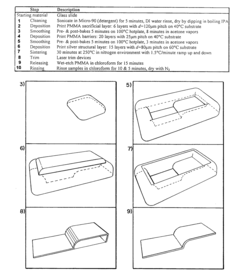
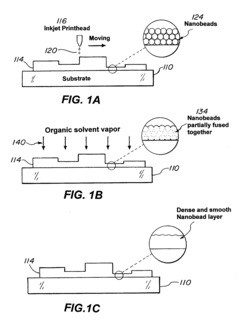
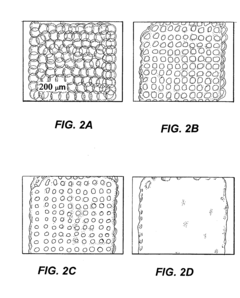
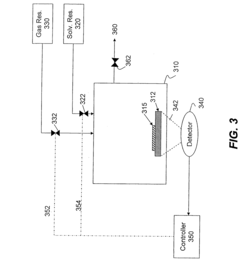
- A post-treatment process involving exposure to a solvent system that lowers the glass transition temperature of PMMA, allowing the polymer nanobeads to reflow and fuse at room temperature, creating a smooth and optically transparent film with improved surface morphology without altering the footprint, using an apparatus with a solvent reservoir and gas system to control the treatment.
Printable films
PatentWO2022108678A1
Innovation
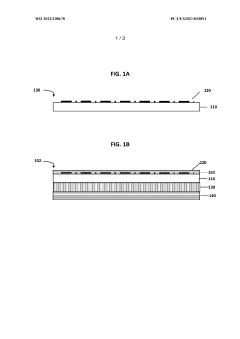
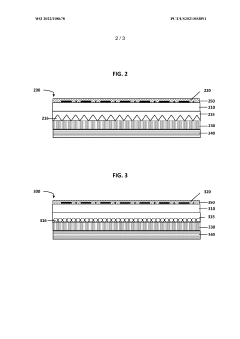
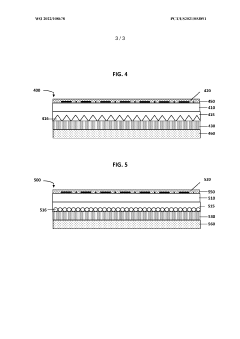
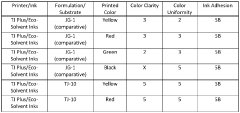
- A composition comprising PMMA and an acrylic copolymer with hard and soft segments, where the soft segments have a glass transition temperature less than 50°C, is used to enhance the print quality by improving ink adhesion and clarity, including the use of a pressure-sensitive adhesive and retroreflective elements in multilayer systems.
Environmental Impact of PMMA in 3D Printing
The environmental impact of PMMA (Polymethyl methacrylate) in 3D printing is a crucial aspect to consider as this technology continues to evolve and expand. PMMA, also known as acrylic, has gained popularity in 3D printing due to its optical clarity, durability, and versatility. However, its use raises several environmental concerns that need to be addressed.
One of the primary environmental issues associated with PMMA in 3D printing is its production process. The manufacturing of PMMA involves the use of petrochemicals, which contributes to carbon emissions and the depletion of non-renewable resources. Additionally, the energy-intensive nature of PMMA production further increases its carbon footprint.
In the context of 3D printing, PMMA waste generation is another significant environmental concern. Failed prints, support structures, and unused materials can accumulate quickly, leading to increased plastic waste. Unlike some other 3D printing materials, PMMA is not biodegradable, which means it persists in the environment for extended periods if not properly disposed of or recycled.
The recycling of PMMA presents both challenges and opportunities. While PMMA is theoretically recyclable, the process is not as straightforward as with some other plastics. Contamination from additives or other materials used in the 3D printing process can complicate recycling efforts. However, advancements in recycling technologies are gradually improving the recyclability of PMMA, potentially reducing its environmental impact.
Emissions during the 3D printing process itself are another environmental consideration. When heated, PMMA can release volatile organic compounds (VOCs) and ultrafine particles, which may have negative impacts on air quality and human health. Proper ventilation and filtration systems are essential to mitigate these risks in 3D printing environments.
On a positive note, the use of PMMA in 3D printing can contribute to more sustainable manufacturing practices in certain scenarios. For instance, the ability to produce complex, customized parts on-demand can reduce waste associated with traditional manufacturing methods and minimize transportation-related emissions.
As the 3D printing industry continues to grow, there is an increasing focus on developing more environmentally friendly alternatives to traditional PMMA. Bio-based acrylics and recyclable PMMA formulations are emerging as potential solutions to reduce the environmental footprint of this material in 3D printing applications.
In conclusion, while PMMA offers valuable properties for 3D printing, its environmental impact cannot be overlooked. Balancing the material's benefits with sustainable practices, such as improved recycling methods and the development of eco-friendly alternatives, will be crucial for the responsible use of PMMA in future 3D printing technologies.
One of the primary environmental issues associated with PMMA in 3D printing is its production process. The manufacturing of PMMA involves the use of petrochemicals, which contributes to carbon emissions and the depletion of non-renewable resources. Additionally, the energy-intensive nature of PMMA production further increases its carbon footprint.
In the context of 3D printing, PMMA waste generation is another significant environmental concern. Failed prints, support structures, and unused materials can accumulate quickly, leading to increased plastic waste. Unlike some other 3D printing materials, PMMA is not biodegradable, which means it persists in the environment for extended periods if not properly disposed of or recycled.
The recycling of PMMA presents both challenges and opportunities. While PMMA is theoretically recyclable, the process is not as straightforward as with some other plastics. Contamination from additives or other materials used in the 3D printing process can complicate recycling efforts. However, advancements in recycling technologies are gradually improving the recyclability of PMMA, potentially reducing its environmental impact.
Emissions during the 3D printing process itself are another environmental consideration. When heated, PMMA can release volatile organic compounds (VOCs) and ultrafine particles, which may have negative impacts on air quality and human health. Proper ventilation and filtration systems are essential to mitigate these risks in 3D printing environments.
On a positive note, the use of PMMA in 3D printing can contribute to more sustainable manufacturing practices in certain scenarios. For instance, the ability to produce complex, customized parts on-demand can reduce waste associated with traditional manufacturing methods and minimize transportation-related emissions.
As the 3D printing industry continues to grow, there is an increasing focus on developing more environmentally friendly alternatives to traditional PMMA. Bio-based acrylics and recyclable PMMA formulations are emerging as potential solutions to reduce the environmental footprint of this material in 3D printing applications.
In conclusion, while PMMA offers valuable properties for 3D printing, its environmental impact cannot be overlooked. Balancing the material's benefits with sustainable practices, such as improved recycling methods and the development of eco-friendly alternatives, will be crucial for the responsible use of PMMA in future 3D printing technologies.
PMMA 3D Printing Material Properties
Poly(methyl methacrylate) (PMMA), commonly known as acrylic, exhibits a unique set of properties that make it an attractive material for 3D printing applications. Its high optical clarity and light transmission capabilities are particularly noteworthy, allowing for the creation of transparent or translucent parts with excellent surface finish. This characteristic is especially valuable in industries such as automotive, where PMMA is used for producing headlight lenses and other transparent components.
PMMA's mechanical properties contribute significantly to its suitability for 3D printing. It offers a good balance of strength and flexibility, with a tensile strength ranging from 48 to 76 MPa and a flexural modulus of 2.4 to 3.3 GPa. These properties enable the production of durable parts that can withstand moderate stress and strain. Additionally, PMMA's low moisture absorption rate (0.3-0.4%) ensures dimensional stability and consistent performance of printed parts across various environmental conditions.
The thermal properties of PMMA are crucial for its behavior during the 3D printing process. With a glass transition temperature (Tg) of approximately 105°C and a melting point around 160°C, PMMA requires careful temperature control during printing to achieve optimal results. Its relatively low thermal conductivity (0.17-0.19 W/m·K) necessitates slower cooling rates to prevent warping and ensure proper layer adhesion.
One of PMMA's standout features is its excellent weather resistance and UV stability. This makes it ideal for outdoor applications or parts exposed to sunlight, as it maintains its optical and mechanical properties over time without significant yellowing or degradation. The material's chemical resistance to many common solvents and acids further expands its potential applications in various industrial settings.
In terms of processability, PMMA demonstrates good flowability when melted, which is advantageous for achieving fine details and smooth surfaces in 3D printed parts. However, its relatively high shrinkage rate (0.3-0.8%) compared to some other 3D printing materials requires careful consideration during the design and printing process to maintain dimensional accuracy.
PMMA's biocompatibility is another significant property that broadens its application scope. It is non-toxic and biologically inert, making it suitable for medical and dental applications, such as custom prosthetics or surgical guides. This property, combined with its optical clarity, also makes PMMA an excellent choice for microfluidic devices and lab-on-a-chip applications in the biomedical field.
PMMA's mechanical properties contribute significantly to its suitability for 3D printing. It offers a good balance of strength and flexibility, with a tensile strength ranging from 48 to 76 MPa and a flexural modulus of 2.4 to 3.3 GPa. These properties enable the production of durable parts that can withstand moderate stress and strain. Additionally, PMMA's low moisture absorption rate (0.3-0.4%) ensures dimensional stability and consistent performance of printed parts across various environmental conditions.
The thermal properties of PMMA are crucial for its behavior during the 3D printing process. With a glass transition temperature (Tg) of approximately 105°C and a melting point around 160°C, PMMA requires careful temperature control during printing to achieve optimal results. Its relatively low thermal conductivity (0.17-0.19 W/m·K) necessitates slower cooling rates to prevent warping and ensure proper layer adhesion.
One of PMMA's standout features is its excellent weather resistance and UV stability. This makes it ideal for outdoor applications or parts exposed to sunlight, as it maintains its optical and mechanical properties over time without significant yellowing or degradation. The material's chemical resistance to many common solvents and acids further expands its potential applications in various industrial settings.
In terms of processability, PMMA demonstrates good flowability when melted, which is advantageous for achieving fine details and smooth surfaces in 3D printed parts. However, its relatively high shrinkage rate (0.3-0.8%) compared to some other 3D printing materials requires careful consideration during the design and printing process to maintain dimensional accuracy.
PMMA's biocompatibility is another significant property that broadens its application scope. It is non-toxic and biologically inert, making it suitable for medical and dental applications, such as custom prosthetics or surgical guides. This property, combined with its optical clarity, also makes PMMA an excellent choice for microfluidic devices and lab-on-a-chip applications in the biomedical field.
Unlock deeper insights with PatSnap Eureka Quick Research — get a full tech report to explore trends and direct your research. Try now!
Generate Your Research Report Instantly with AI Agent
Supercharge your innovation with PatSnap Eureka AI Agent Platform!