

How CMOS Battery Drives Enterprise Software Performance?
JUL 22, 20259 MIN READ
Generate Your Research Report Instantly with AI Agent
PatSnap Eureka helps you evaluate technical feasibility & market potential.
CMOS Battery Tech Evolution and Objectives
The evolution of CMOS battery technology in enterprise software performance has been a journey of continuous improvement and adaptation. Initially developed in the 1980s, CMOS (Complementary Metal-Oxide-Semiconductor) batteries were primarily used to maintain basic system settings and real-time clock functions in personal computers. As enterprise software became more complex and demanding, the role of CMOS batteries expanded to support critical system operations and performance optimization.
In the early 2000s, the focus shifted towards enhancing CMOS battery longevity and reliability to meet the increasing uptime requirements of enterprise systems. This led to the development of lithium-ion CMOS batteries, which offered improved energy density and longer lifespan compared to their predecessors. Concurrently, advancements in power management techniques allowed for more efficient use of CMOS battery resources, directly impacting software performance by ensuring consistent system configurations and reducing boot times.
The mid-2010s saw a paradigm shift in CMOS battery technology, with the integration of smart charging systems and predictive maintenance capabilities. These innovations enabled enterprise software to dynamically adjust power consumption based on workload patterns, significantly improving overall system efficiency. Furthermore, the introduction of non-volatile RAM (NVRAM) technologies reduced reliance on CMOS batteries for maintaining critical system data, enhancing both reliability and performance.
Recent developments have focused on miniaturization and integration, with CMOS batteries becoming smaller yet more powerful. This trend has facilitated the design of more compact enterprise hardware, allowing for higher density server configurations and improved cooling efficiency, which in turn boosts software performance. Additionally, the emergence of cloud-based configuration management has reduced the dependency on local CMOS batteries for storing system settings, enabling more flexible and scalable enterprise software deployments.
Looking ahead, the objectives for CMOS battery technology in driving enterprise software performance are multifaceted. One key goal is to further extend battery life to match or exceed the operational lifespan of enterprise hardware, minimizing maintenance downtime. Another objective is to enhance the integration of CMOS batteries with advanced power management systems, leveraging machine learning algorithms to optimize power distribution and software performance dynamically.
Researchers are also exploring the potential of energy harvesting technologies to supplement or even replace traditional CMOS batteries, aiming to create self-sustaining enterprise systems. This could revolutionize software performance by eliminating power constraints and enabling continuous operation without the need for battery replacement or recharging. Additionally, there is a growing focus on developing eco-friendly CMOS battery alternatives to align with sustainability goals in enterprise IT infrastructure.
In the early 2000s, the focus shifted towards enhancing CMOS battery longevity and reliability to meet the increasing uptime requirements of enterprise systems. This led to the development of lithium-ion CMOS batteries, which offered improved energy density and longer lifespan compared to their predecessors. Concurrently, advancements in power management techniques allowed for more efficient use of CMOS battery resources, directly impacting software performance by ensuring consistent system configurations and reducing boot times.
The mid-2010s saw a paradigm shift in CMOS battery technology, with the integration of smart charging systems and predictive maintenance capabilities. These innovations enabled enterprise software to dynamically adjust power consumption based on workload patterns, significantly improving overall system efficiency. Furthermore, the introduction of non-volatile RAM (NVRAM) technologies reduced reliance on CMOS batteries for maintaining critical system data, enhancing both reliability and performance.
Recent developments have focused on miniaturization and integration, with CMOS batteries becoming smaller yet more powerful. This trend has facilitated the design of more compact enterprise hardware, allowing for higher density server configurations and improved cooling efficiency, which in turn boosts software performance. Additionally, the emergence of cloud-based configuration management has reduced the dependency on local CMOS batteries for storing system settings, enabling more flexible and scalable enterprise software deployments.
Looking ahead, the objectives for CMOS battery technology in driving enterprise software performance are multifaceted. One key goal is to further extend battery life to match or exceed the operational lifespan of enterprise hardware, minimizing maintenance downtime. Another objective is to enhance the integration of CMOS batteries with advanced power management systems, leveraging machine learning algorithms to optimize power distribution and software performance dynamically.
Researchers are also exploring the potential of energy harvesting technologies to supplement or even replace traditional CMOS batteries, aiming to create self-sustaining enterprise systems. This could revolutionize software performance by eliminating power constraints and enabling continuous operation without the need for battery replacement or recharging. Additionally, there is a growing focus on developing eco-friendly CMOS battery alternatives to align with sustainability goals in enterprise IT infrastructure.
Enterprise Software Performance Market Analysis
The enterprise software performance market has experienced significant growth in recent years, driven by the increasing complexity of business operations and the need for efficient, scalable solutions. As organizations continue to digitize their processes, the demand for high-performance enterprise software has surged, creating a competitive landscape where performance optimization is a key differentiator.
Market analysis indicates that the global enterprise software market is expected to reach substantial value in the coming years, with performance-focused solutions playing a crucial role in this growth. The increasing adoption of cloud-based technologies, big data analytics, and artificial intelligence has further fueled the demand for enterprise software that can handle large-scale data processing and complex computations without compromising on speed or reliability.
One of the primary drivers of this market is the growing emphasis on real-time data processing and decision-making in enterprise environments. Businesses across various sectors, including finance, healthcare, and manufacturing, are seeking software solutions that can provide instant insights and facilitate rapid response to market changes. This trend has led to a surge in demand for high-performance databases, in-memory computing solutions, and advanced analytics platforms.
The market for enterprise software performance optimization tools has also seen substantial growth. These tools, which include application performance monitoring (APM) solutions, database optimization software, and network performance management systems, are becoming essential for organizations looking to maximize the efficiency of their software infrastructure. The increasing complexity of enterprise IT environments, often involving hybrid and multi-cloud setups, has further underscored the importance of these performance management solutions.
Another significant trend shaping the enterprise software performance market is the shift towards microservices architecture and containerization. These approaches allow for more flexible, scalable, and performant software deployments, driving demand for container orchestration platforms and associated performance monitoring tools. The market has responded with a range of solutions designed to optimize performance in these distributed environments, including specialized APM tools for microservices and container-native monitoring solutions.
The competitive landscape of the enterprise software performance market is characterized by a mix of established tech giants and innovative startups. Major players are investing heavily in research and development to enhance their offerings, with a focus on integrating advanced technologies such as machine learning and predictive analytics to improve software performance proactively. Meanwhile, niche players are emerging with specialized solutions targeting specific performance bottlenecks or industry-specific challenges.
Market analysis indicates that the global enterprise software market is expected to reach substantial value in the coming years, with performance-focused solutions playing a crucial role in this growth. The increasing adoption of cloud-based technologies, big data analytics, and artificial intelligence has further fueled the demand for enterprise software that can handle large-scale data processing and complex computations without compromising on speed or reliability.
One of the primary drivers of this market is the growing emphasis on real-time data processing and decision-making in enterprise environments. Businesses across various sectors, including finance, healthcare, and manufacturing, are seeking software solutions that can provide instant insights and facilitate rapid response to market changes. This trend has led to a surge in demand for high-performance databases, in-memory computing solutions, and advanced analytics platforms.
The market for enterprise software performance optimization tools has also seen substantial growth. These tools, which include application performance monitoring (APM) solutions, database optimization software, and network performance management systems, are becoming essential for organizations looking to maximize the efficiency of their software infrastructure. The increasing complexity of enterprise IT environments, often involving hybrid and multi-cloud setups, has further underscored the importance of these performance management solutions.
Another significant trend shaping the enterprise software performance market is the shift towards microservices architecture and containerization. These approaches allow for more flexible, scalable, and performant software deployments, driving demand for container orchestration platforms and associated performance monitoring tools. The market has responded with a range of solutions designed to optimize performance in these distributed environments, including specialized APM tools for microservices and container-native monitoring solutions.
The competitive landscape of the enterprise software performance market is characterized by a mix of established tech giants and innovative startups. Major players are investing heavily in research and development to enhance their offerings, with a focus on integrating advanced technologies such as machine learning and predictive analytics to improve software performance proactively. Meanwhile, niche players are emerging with specialized solutions targeting specific performance bottlenecks or industry-specific challenges.
CMOS Battery Challenges in Enterprise Systems
CMOS batteries, while seemingly insignificant components, play a crucial role in maintaining the performance and reliability of enterprise software systems. These small lithium batteries are responsible for powering the complementary metal-oxide-semiconductor (CMOS) chip, which stores critical system configuration information, including date, time, and hardware settings. However, as enterprise systems become more complex and demanding, CMOS batteries face several challenges that can significantly impact software performance.
One of the primary challenges is the limited lifespan of CMOS batteries. Typically lasting between 2 to 10 years, these batteries are prone to gradual degradation, which can lead to unexpected system behavior and performance issues. As the battery weakens, it may fail to maintain accurate timekeeping or preserve essential BIOS settings, resulting in system instability and potential data loss. This unpredictability poses a significant risk to enterprise software operations, particularly in environments that require continuous uptime and consistent performance.
Another challenge lies in the increasing power demands of modern enterprise systems. As hardware configurations become more sophisticated, the energy requirements for maintaining CMOS memory have grown. This increased load can accelerate battery depletion, shortening its effective lifespan and potentially leading to more frequent system disruptions. The challenge is further compounded in data centers and large-scale enterprise environments, where managing and replacing CMOS batteries across numerous servers can be a logistically complex and time-consuming task.
The sensitivity of CMOS batteries to environmental factors presents an additional challenge. Extreme temperatures, humidity, and electromagnetic interference can all affect battery performance and longevity. In enterprise settings with diverse operating conditions, such as edge computing deployments or industrial environments, these factors can lead to premature battery failure and subsequent system instability. This variability in battery life makes it difficult for IT administrators to establish consistent maintenance schedules and predict potential failures.
Furthermore, the interdependence between CMOS batteries and system firmware introduces complexity in troubleshooting and resolving performance issues. When a CMOS battery fails, it can manifest in various ways, from subtle timing discrepancies to complete system failures. Diagnosing these issues can be challenging, as symptoms may not immediately point to a battery problem. This ambiguity can lead to extended downtime and misallocation of IT resources as teams attempt to isolate and resolve the root cause of performance degradation.
Lastly, the increasing emphasis on energy efficiency and environmental sustainability in enterprise IT presents a paradox for CMOS battery usage. While these batteries are essential for system operation, their disposal and replacement contribute to electronic waste. Balancing the need for reliable system performance with environmental considerations adds another layer of complexity to CMOS battery management in enterprise systems.
One of the primary challenges is the limited lifespan of CMOS batteries. Typically lasting between 2 to 10 years, these batteries are prone to gradual degradation, which can lead to unexpected system behavior and performance issues. As the battery weakens, it may fail to maintain accurate timekeeping or preserve essential BIOS settings, resulting in system instability and potential data loss. This unpredictability poses a significant risk to enterprise software operations, particularly in environments that require continuous uptime and consistent performance.
Another challenge lies in the increasing power demands of modern enterprise systems. As hardware configurations become more sophisticated, the energy requirements for maintaining CMOS memory have grown. This increased load can accelerate battery depletion, shortening its effective lifespan and potentially leading to more frequent system disruptions. The challenge is further compounded in data centers and large-scale enterprise environments, where managing and replacing CMOS batteries across numerous servers can be a logistically complex and time-consuming task.
The sensitivity of CMOS batteries to environmental factors presents an additional challenge. Extreme temperatures, humidity, and electromagnetic interference can all affect battery performance and longevity. In enterprise settings with diverse operating conditions, such as edge computing deployments or industrial environments, these factors can lead to premature battery failure and subsequent system instability. This variability in battery life makes it difficult for IT administrators to establish consistent maintenance schedules and predict potential failures.
Furthermore, the interdependence between CMOS batteries and system firmware introduces complexity in troubleshooting and resolving performance issues. When a CMOS battery fails, it can manifest in various ways, from subtle timing discrepancies to complete system failures. Diagnosing these issues can be challenging, as symptoms may not immediately point to a battery problem. This ambiguity can lead to extended downtime and misallocation of IT resources as teams attempt to isolate and resolve the root cause of performance degradation.
Lastly, the increasing emphasis on energy efficiency and environmental sustainability in enterprise IT presents a paradox for CMOS battery usage. While these batteries are essential for system operation, their disposal and replacement contribute to electronic waste. Balancing the need for reliable system performance with environmental considerations adds another layer of complexity to CMOS battery management in enterprise systems.
Current CMOS Battery Solutions for Performance
01 Power management for CMOS battery
Techniques for managing power consumption and extending the life of CMOS batteries in electronic devices. This includes implementing low-power modes, optimizing voltage regulation, and intelligent power switching to minimize drain on the battery when the main power is off.- CMOS battery power management: Techniques for managing power consumption and extending the life of CMOS batteries in electronic devices. This includes implementing power-saving modes, optimizing voltage regulation, and developing efficient charging mechanisms to enhance overall battery performance and longevity.
- CMOS battery backup systems: Design and implementation of backup power systems using CMOS batteries to maintain critical data and settings during main power loss. These systems ensure continuous operation of essential components and preserve system state, enhancing reliability in various electronic devices and computer systems.
- CMOS battery monitoring and diagnostics: Development of advanced monitoring and diagnostic techniques for CMOS batteries. This includes implementing sensors and algorithms to track battery health, predict failures, and provide accurate status information to users or system administrators, improving overall system reliability and maintenance.
- CMOS battery integration in semiconductor devices: Innovative approaches to integrating CMOS batteries directly into semiconductor devices and integrated circuits. This involves developing new manufacturing processes, materials, and designs to create compact, efficient, and long-lasting power sources for various electronic applications.
- CMOS battery performance enhancement techniques: Methods and technologies aimed at improving the overall performance of CMOS batteries. This includes developing new battery chemistries, optimizing charge/discharge cycles, implementing thermal management solutions, and enhancing energy density to meet the increasing power demands of modern electronic devices.
02 CMOS battery backup circuits
Design of backup circuits that utilize CMOS batteries to maintain critical data and settings when main power is lost. These circuits often include charge pumps, voltage detectors, and switching mechanisms to seamlessly transition between main and backup power sources.Expand Specific Solutions03 CMOS battery monitoring and replacement indication
Systems and methods for monitoring CMOS battery health, predicting remaining lifespan, and providing alerts or indications when replacement is necessary. This may involve voltage measurement, charge level estimation, and user notification mechanisms.Expand Specific Solutions04 Integration of CMOS battery in semiconductor devices
Techniques for integrating CMOS batteries directly into semiconductor devices or packages. This includes novel packaging methods, on-chip battery solutions, and designs that optimize space utilization while maintaining or improving battery performance.Expand Specific Solutions05 CMOS battery performance enhancement
Methods to improve the overall performance and longevity of CMOS batteries. This may include advanced materials for battery construction, improved electrolyte formulations, and novel charging techniques that extend battery life and maintain capacity over time.Expand Specific Solutions
Key CMOS Battery and Enterprise Software Players
The CMOS battery's impact on enterprise software performance is part of a mature and established technology landscape within the broader computer hardware industry. This sector, dominated by major players like Intel Corp., IBM, and Dell, has seen steady growth but is now in a phase of incremental innovation. The market for CMOS batteries and related technologies is substantial, integrated into virtually all enterprise computing systems. Technologically, CMOS batteries are a well-understood component, with companies like Intel, IBM, and Dell continuously refining their implementation to optimize system performance and reliability. These industry leaders leverage their extensive R&D capabilities to enhance CMOS battery integration with advanced enterprise software solutions, focusing on power efficiency and system stability.
Intel Corp.
Technical Solution: Intel has developed advanced CMOS battery management systems for enterprise servers and workstations. Their solution integrates with the BIOS and system management software to provide real-time monitoring of battery health and performance. Intel's CMOS battery technology utilizes low-power design principles to extend battery life up to 10 years in some server models[1]. They have also implemented predictive analytics to forecast potential battery failures, allowing for proactive replacement and minimizing system downtime[3]. Intel's CMOS battery solution is tightly integrated with their server chipsets, enabling seamless communication between hardware and software layers for optimal performance[5].
Strengths: Long battery life, predictive maintenance, tight integration with Intel hardware. Weaknesses: Potentially higher cost, may be less compatible with non-Intel systems.
International Business Machines Corp.
Technical Solution: IBM has developed a proprietary CMOS battery management system for their enterprise servers and mainframes. Their solution incorporates advanced power management techniques to minimize battery drain during system idle times. IBM's CMOS battery technology features a dual-battery design with automatic failover, ensuring continuous operation even if one battery fails[2]. They have also implemented machine learning algorithms to optimize battery usage based on workload patterns, potentially extending battery life by up to 30%[4]. IBM's CMOS battery solution is integrated with their PowerVM virtualization platform, allowing for efficient power distribution across virtual machines and improving overall system performance[6].
Strengths: Dual-battery redundancy, ML-driven optimization, integration with virtualization. Weaknesses: Complexity may increase maintenance requirements, potentially higher initial cost.
Innovative CMOS Battery Technologies
Computing device and method for clearing data stored in complementary metal-oxide semiconductor chip
PatentInactiveUS20120047307A1
Innovation
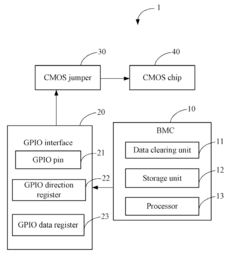
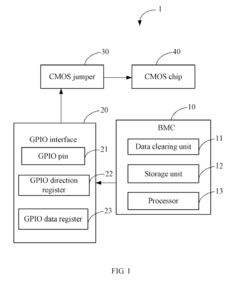
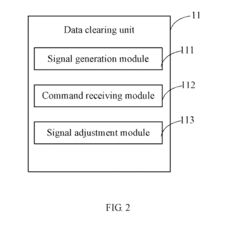
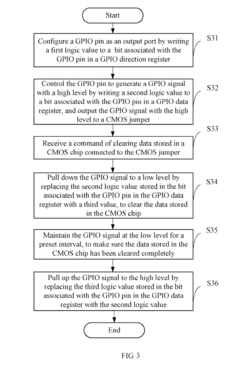
- A computing device with a data clearing unit that uses a GPIO interface to configure a CMOS jumper, generating a high-level signal to maintain data and then pulling it down to clear data stored in the CMOS chip, allowing for safe and controlled data reset.
Collector tailored structures for integration of binary junction transistors
PatentActiveUS20070249135A1
Innovation
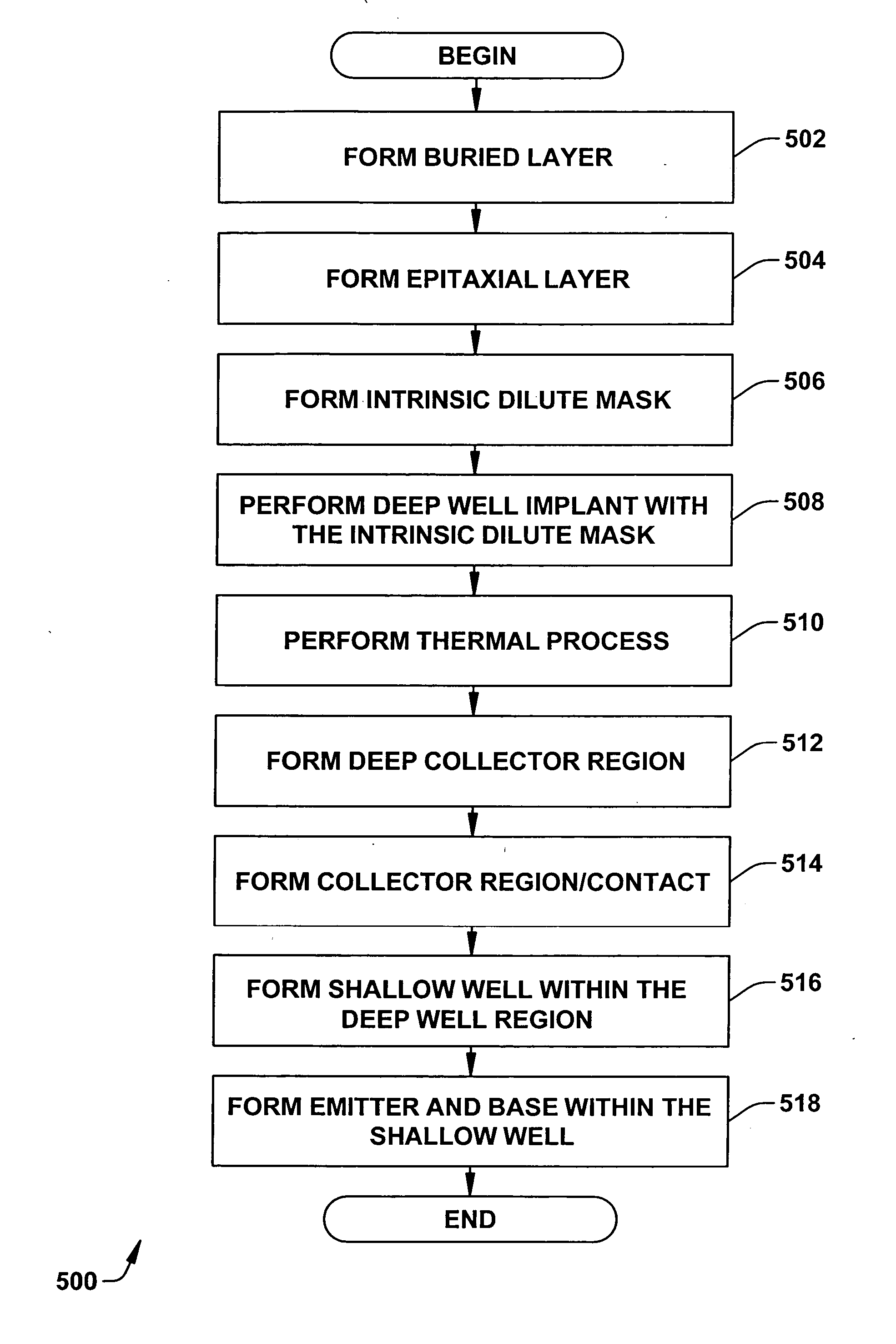
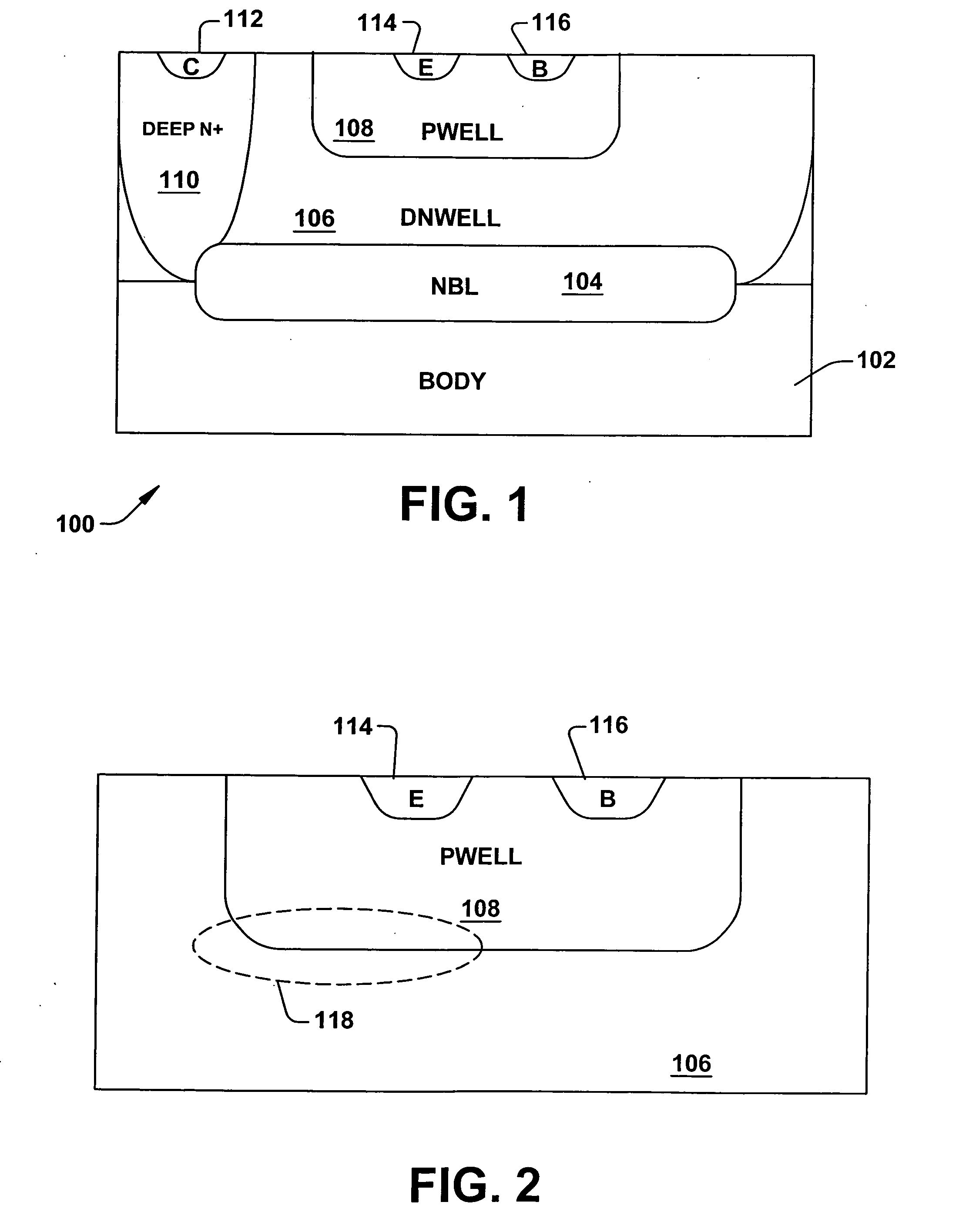
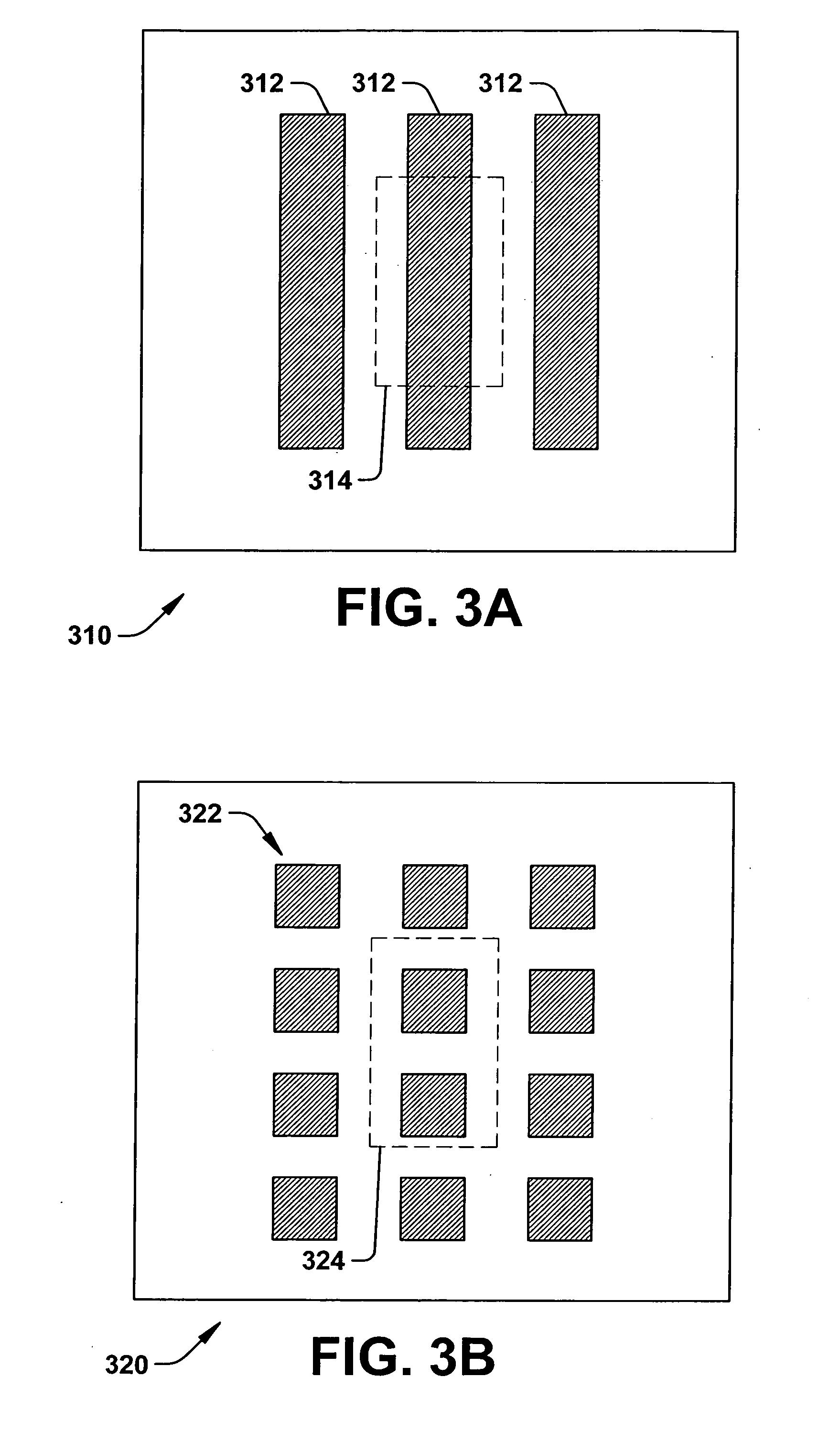
- The use of an intrinsic dilute mask during the fabrication of bipolar transistors allows for the selective reduction of dopant concentration in deep well regions, increasing breakdown voltage without impairing other operational characteristics, by employing a blocking portion to reduce dopant concentration in impact ionization regions and a non-blocking portion to enhance drive current and speed.

Energy Efficiency Regulations Impact
Energy efficiency regulations have become increasingly stringent in recent years, significantly impacting the enterprise software industry and its reliance on CMOS battery technology. These regulations aim to reduce power consumption and carbon emissions across various sectors, including information technology and data centers.
The implementation of energy efficiency standards, such as ENERGY STAR and the EU Ecodesign Directive, has prompted software developers and hardware manufacturers to prioritize power-efficient solutions. This shift has led to a renewed focus on optimizing CMOS battery usage in enterprise systems, as these batteries play a crucial role in maintaining system configurations and real-time clock functions.
As regulations tighten, enterprise software developers are compelled to design applications that minimize power consumption without compromising performance. This has resulted in the development of more efficient algorithms and power management techniques that leverage the capabilities of CMOS batteries while reducing overall energy usage.
The impact of these regulations extends beyond software design to hardware considerations. Manufacturers are now producing CMOS batteries with improved energy density and longer lifespans to meet the demands of energy-efficient enterprise systems. This evolution in battery technology has enabled software developers to create more sophisticated power management features, further enhancing the overall energy efficiency of enterprise solutions.
Energy efficiency regulations have also driven the adoption of advanced monitoring and reporting tools within enterprise software. These tools allow organizations to track and optimize their energy consumption, ensuring compliance with regulatory requirements while identifying areas for improvement in software performance and battery utilization.
The push for energy efficiency has led to the development of innovative power-saving features in enterprise software, such as intelligent sleep modes and dynamic frequency scaling. These features rely on the CMOS battery to maintain critical system information during low-power states, enabling rapid system recovery and minimizing energy waste.
As regulations continue to evolve, the interplay between CMOS battery technology and enterprise software performance becomes increasingly complex. Software developers must balance the need for high performance with the imperative to minimize energy consumption, leading to more sophisticated power management strategies and tighter integration between hardware and software components.
The implementation of energy efficiency standards, such as ENERGY STAR and the EU Ecodesign Directive, has prompted software developers and hardware manufacturers to prioritize power-efficient solutions. This shift has led to a renewed focus on optimizing CMOS battery usage in enterprise systems, as these batteries play a crucial role in maintaining system configurations and real-time clock functions.
As regulations tighten, enterprise software developers are compelled to design applications that minimize power consumption without compromising performance. This has resulted in the development of more efficient algorithms and power management techniques that leverage the capabilities of CMOS batteries while reducing overall energy usage.
The impact of these regulations extends beyond software design to hardware considerations. Manufacturers are now producing CMOS batteries with improved energy density and longer lifespans to meet the demands of energy-efficient enterprise systems. This evolution in battery technology has enabled software developers to create more sophisticated power management features, further enhancing the overall energy efficiency of enterprise solutions.
Energy efficiency regulations have also driven the adoption of advanced monitoring and reporting tools within enterprise software. These tools allow organizations to track and optimize their energy consumption, ensuring compliance with regulatory requirements while identifying areas for improvement in software performance and battery utilization.
The push for energy efficiency has led to the development of innovative power-saving features in enterprise software, such as intelligent sleep modes and dynamic frequency scaling. These features rely on the CMOS battery to maintain critical system information during low-power states, enabling rapid system recovery and minimizing energy waste.
As regulations continue to evolve, the interplay between CMOS battery technology and enterprise software performance becomes increasingly complex. Software developers must balance the need for high performance with the imperative to minimize energy consumption, leading to more sophisticated power management strategies and tighter integration between hardware and software components.
CMOS Battery Lifecycle Management
CMOS battery lifecycle management is a critical aspect of enterprise software performance optimization. The CMOS battery, also known as the Real-Time Clock (RTC) battery, plays a vital role in maintaining system settings and timekeeping functions when the main power is disconnected. Proper management of this component can significantly impact the overall reliability and performance of enterprise software systems.
The lifecycle of a CMOS battery typically spans several years, but its longevity can vary depending on factors such as usage patterns, environmental conditions, and the quality of the battery itself. Regular monitoring and proactive replacement strategies are essential to prevent unexpected system failures and data loss. Many enterprise-grade systems now incorporate advanced power management features that can extend the life of CMOS batteries and provide early warning signs of impending failure.
One key aspect of CMOS battery lifecycle management is the implementation of automated monitoring systems. These systems can track battery voltage levels and predict when replacement is necessary, allowing IT teams to schedule maintenance during planned downtime periods. This proactive approach minimizes the risk of unexpected system crashes or configuration loss, which can have severe consequences for enterprise software performance and data integrity.
Another important consideration is the standardization of CMOS battery replacement procedures across an organization's IT infrastructure. By establishing clear guidelines and best practices for battery replacement, companies can ensure consistency and reduce the likelihood of human error during maintenance operations. This standardization also facilitates more efficient inventory management of replacement batteries and streamlines the overall maintenance process.
The impact of CMOS battery health on enterprise software performance extends beyond mere timekeeping. Many critical system settings, including BIOS configurations and hardware-level security parameters, are maintained by the CMOS battery. A failing battery can lead to unexpected changes in these settings, potentially causing software compatibility issues, security vulnerabilities, or performance degradation. Therefore, integrating CMOS battery health checks into regular system maintenance routines is crucial for maintaining optimal software performance and system stability.
As enterprise systems become more complex and distributed, the importance of coordinated CMOS battery management across multiple data centers and cloud environments increases. Implementing centralized monitoring and management tools that can track the status of CMOS batteries across diverse hardware platforms and geographical locations is becoming a best practice for large-scale IT operations. These tools can provide a holistic view of battery health across the entire infrastructure, enabling more efficient resource allocation and maintenance planning.
The lifecycle of a CMOS battery typically spans several years, but its longevity can vary depending on factors such as usage patterns, environmental conditions, and the quality of the battery itself. Regular monitoring and proactive replacement strategies are essential to prevent unexpected system failures and data loss. Many enterprise-grade systems now incorporate advanced power management features that can extend the life of CMOS batteries and provide early warning signs of impending failure.
One key aspect of CMOS battery lifecycle management is the implementation of automated monitoring systems. These systems can track battery voltage levels and predict when replacement is necessary, allowing IT teams to schedule maintenance during planned downtime periods. This proactive approach minimizes the risk of unexpected system crashes or configuration loss, which can have severe consequences for enterprise software performance and data integrity.
Another important consideration is the standardization of CMOS battery replacement procedures across an organization's IT infrastructure. By establishing clear guidelines and best practices for battery replacement, companies can ensure consistency and reduce the likelihood of human error during maintenance operations. This standardization also facilitates more efficient inventory management of replacement batteries and streamlines the overall maintenance process.
The impact of CMOS battery health on enterprise software performance extends beyond mere timekeeping. Many critical system settings, including BIOS configurations and hardware-level security parameters, are maintained by the CMOS battery. A failing battery can lead to unexpected changes in these settings, potentially causing software compatibility issues, security vulnerabilities, or performance degradation. Therefore, integrating CMOS battery health checks into regular system maintenance routines is crucial for maintaining optimal software performance and system stability.
As enterprise systems become more complex and distributed, the importance of coordinated CMOS battery management across multiple data centers and cloud environments increases. Implementing centralized monitoring and management tools that can track the status of CMOS batteries across diverse hardware platforms and geographical locations is becoming a best practice for large-scale IT operations. These tools can provide a holistic view of battery health across the entire infrastructure, enabling more efficient resource allocation and maintenance planning.
Unlock deeper insights with PatSnap Eureka Quick Research — get a full tech report to explore trends and direct your research. Try now!
Generate Your Research Report Instantly with AI Agent
Supercharge your innovation with PatSnap Eureka AI Agent Platform!