

How CMOS Battery Elevates Interactive Technology Environments?
JUL 22, 20259 MIN READ
Generate Your Research Report Instantly with AI Agent
PatSnap Eureka helps you evaluate technical feasibility & market potential.
CMOS Battery Evolution
The evolution of CMOS battery technology has played a crucial role in shaping interactive technology environments. Initially developed in the 1980s, CMOS (Complementary Metal-Oxide-Semiconductor) batteries were primarily used to maintain basic system settings and real-time clock functions in personal computers. As technology advanced, these small but essential components have undergone significant improvements to meet the growing demands of modern interactive systems.
In the early stages, CMOS batteries were simple coin-cell lithium batteries with limited capacity and lifespan. They were designed to provide a constant low-power supply to maintain BIOS settings and system time when the main power was disconnected. However, as interactive technology environments became more complex, the role of CMOS batteries expanded beyond these basic functions.
The late 1990s and early 2000s saw a shift towards more energy-efficient CMOS designs, which reduced the power consumption of memory chips and extended battery life. This improvement allowed for the integration of CMOS batteries into a wider range of devices, including laptops, smartphones, and other portable electronics. The reduced power requirements also enabled the use of smaller, more compact battery designs without compromising functionality.
As interactive technologies continued to evolve, so did the demands placed on CMOS batteries. The rise of Internet of Things (IoT) devices and always-on connectivity necessitated further advancements in battery technology. Manufacturers began developing CMOS batteries with higher energy density and improved charge retention capabilities to support these new use cases.
Recent years have witnessed the emergence of rechargeable CMOS batteries, addressing the limitations of traditional non-rechargeable coin cells. These innovations have extended the lifespan of devices and reduced the need for battery replacements, making interactive technology environments more sustainable and user-friendly.
The integration of smart charging technologies and power management systems has further enhanced the role of CMOS batteries in interactive environments. These advancements allow for more efficient power distribution and enable devices to optimize battery usage based on user behavior and system requirements.
Looking ahead, the evolution of CMOS battery technology is likely to continue, with a focus on developing even more efficient, long-lasting, and environmentally friendly power solutions. As interactive technology environments become increasingly sophisticated and ubiquitous, the importance of reliable and adaptable CMOS battery systems will only grow, driving further innovation in this critical component of modern electronics.
In the early stages, CMOS batteries were simple coin-cell lithium batteries with limited capacity and lifespan. They were designed to provide a constant low-power supply to maintain BIOS settings and system time when the main power was disconnected. However, as interactive technology environments became more complex, the role of CMOS batteries expanded beyond these basic functions.
The late 1990s and early 2000s saw a shift towards more energy-efficient CMOS designs, which reduced the power consumption of memory chips and extended battery life. This improvement allowed for the integration of CMOS batteries into a wider range of devices, including laptops, smartphones, and other portable electronics. The reduced power requirements also enabled the use of smaller, more compact battery designs without compromising functionality.
As interactive technologies continued to evolve, so did the demands placed on CMOS batteries. The rise of Internet of Things (IoT) devices and always-on connectivity necessitated further advancements in battery technology. Manufacturers began developing CMOS batteries with higher energy density and improved charge retention capabilities to support these new use cases.
Recent years have witnessed the emergence of rechargeable CMOS batteries, addressing the limitations of traditional non-rechargeable coin cells. These innovations have extended the lifespan of devices and reduced the need for battery replacements, making interactive technology environments more sustainable and user-friendly.
The integration of smart charging technologies and power management systems has further enhanced the role of CMOS batteries in interactive environments. These advancements allow for more efficient power distribution and enable devices to optimize battery usage based on user behavior and system requirements.
Looking ahead, the evolution of CMOS battery technology is likely to continue, with a focus on developing even more efficient, long-lasting, and environmentally friendly power solutions. As interactive technology environments become increasingly sophisticated and ubiquitous, the importance of reliable and adaptable CMOS battery systems will only grow, driving further innovation in this critical component of modern electronics.
Interactive Tech Market
The interactive technology market has experienced significant growth and transformation in recent years, driven by advancements in CMOS battery technology. This market encompasses a wide range of products and services that enable seamless interaction between users and digital systems, including touchscreens, gesture recognition systems, voice-activated devices, and augmented reality interfaces.
The global interactive technology market is projected to reach substantial value in the coming years, with a compound annual growth rate (CAGR) outpacing many other technology sectors. This growth is fueled by increasing demand for intuitive and immersive user experiences across various industries, including consumer electronics, automotive, healthcare, and education.
CMOS battery technology has played a crucial role in elevating interactive technology environments by providing stable, long-lasting power sources for devices that require constant connectivity and real-time responsiveness. The improved energy efficiency and miniaturization capabilities of CMOS batteries have enabled the development of more compact, portable, and feature-rich interactive devices.
One of the key drivers of market demand is the growing consumer preference for smart home devices and Internet of Things (IoT) applications. These technologies rely heavily on interactive interfaces powered by CMOS batteries, allowing for seamless integration of various household systems and appliances. The automotive industry has also embraced interactive technology, with advanced infotainment systems and driver assistance features becoming standard in modern vehicles.
In the healthcare sector, interactive technology powered by CMOS batteries has revolutionized patient care and monitoring. Wearable devices, telemedicine platforms, and interactive diagnostic tools have improved the accessibility and efficiency of healthcare services. The education sector has similarly benefited from interactive learning environments, with smart boards, tablets, and virtual reality systems enhancing engagement and knowledge retention.
The COVID-19 pandemic has further accelerated the adoption of interactive technologies, particularly in remote work and distance learning applications. This shift has created new opportunities for market growth and innovation, with increased demand for collaborative platforms and virtual interaction tools.
Looking ahead, the interactive technology market is poised for continued expansion, with emerging technologies such as 5G, artificial intelligence, and edge computing set to enhance the capabilities and applications of interactive systems. As CMOS battery technology continues to evolve, we can expect to see even more sophisticated and energy-efficient interactive devices entering the market, further driving growth and innovation in this dynamic sector.
The global interactive technology market is projected to reach substantial value in the coming years, with a compound annual growth rate (CAGR) outpacing many other technology sectors. This growth is fueled by increasing demand for intuitive and immersive user experiences across various industries, including consumer electronics, automotive, healthcare, and education.
CMOS battery technology has played a crucial role in elevating interactive technology environments by providing stable, long-lasting power sources for devices that require constant connectivity and real-time responsiveness. The improved energy efficiency and miniaturization capabilities of CMOS batteries have enabled the development of more compact, portable, and feature-rich interactive devices.
One of the key drivers of market demand is the growing consumer preference for smart home devices and Internet of Things (IoT) applications. These technologies rely heavily on interactive interfaces powered by CMOS batteries, allowing for seamless integration of various household systems and appliances. The automotive industry has also embraced interactive technology, with advanced infotainment systems and driver assistance features becoming standard in modern vehicles.
In the healthcare sector, interactive technology powered by CMOS batteries has revolutionized patient care and monitoring. Wearable devices, telemedicine platforms, and interactive diagnostic tools have improved the accessibility and efficiency of healthcare services. The education sector has similarly benefited from interactive learning environments, with smart boards, tablets, and virtual reality systems enhancing engagement and knowledge retention.
The COVID-19 pandemic has further accelerated the adoption of interactive technologies, particularly in remote work and distance learning applications. This shift has created new opportunities for market growth and innovation, with increased demand for collaborative platforms and virtual interaction tools.
Looking ahead, the interactive technology market is poised for continued expansion, with emerging technologies such as 5G, artificial intelligence, and edge computing set to enhance the capabilities and applications of interactive systems. As CMOS battery technology continues to evolve, we can expect to see even more sophisticated and energy-efficient interactive devices entering the market, further driving growth and innovation in this dynamic sector.
CMOS Challenges
CMOS technology, while revolutionary in its impact on interactive technology environments, faces several significant challenges that hinder its full potential. One of the primary issues is power consumption. As CMOS devices continue to shrink in size and increase in complexity, managing power dissipation becomes increasingly difficult. This challenge is particularly acute in battery-powered devices, where energy efficiency is paramount.
Another major hurdle is the scaling limitations of CMOS technology. As transistors approach atomic dimensions, quantum effects begin to interfere with their operation, leading to issues such as electron tunneling and increased leakage currents. These phenomena not only affect the performance of CMOS devices but also pose significant reliability concerns.
Heat dissipation presents another formidable challenge. As more transistors are packed into smaller areas, the amount of heat generated per unit area increases dramatically. This thermal management issue can lead to reduced performance, shortened device lifespan, and even system failures if not adequately addressed.
The increasing complexity of CMOS designs also introduces challenges in manufacturing and testing. As circuit densities increase, ensuring proper fabrication and identifying defects become more difficult and costly. This complexity also extends to the design process itself, requiring more sophisticated tools and methodologies to manage the intricacies of modern CMOS systems.
Variability and reliability issues pose additional challenges. As transistor sizes shrink, the impact of process variations becomes more pronounced, leading to inconsistencies in device performance. This variability can result in yield losses and reliability concerns, particularly in high-performance applications.
Furthermore, the integration of CMOS technology with other emerging technologies, such as photonics or quantum computing, presents its own set of challenges. Ensuring compatibility and seamless integration while maintaining the benefits of CMOS technology requires significant research and development efforts.
Lastly, the economic challenges associated with CMOS technology cannot be overlooked. The increasing costs of research, development, and fabrication facilities for advanced CMOS processes are becoming prohibitive for many companies. This economic barrier could potentially slow down innovation and limit the widespread adoption of cutting-edge CMOS technologies.
Another major hurdle is the scaling limitations of CMOS technology. As transistors approach atomic dimensions, quantum effects begin to interfere with their operation, leading to issues such as electron tunneling and increased leakage currents. These phenomena not only affect the performance of CMOS devices but also pose significant reliability concerns.
Heat dissipation presents another formidable challenge. As more transistors are packed into smaller areas, the amount of heat generated per unit area increases dramatically. This thermal management issue can lead to reduced performance, shortened device lifespan, and even system failures if not adequately addressed.
The increasing complexity of CMOS designs also introduces challenges in manufacturing and testing. As circuit densities increase, ensuring proper fabrication and identifying defects become more difficult and costly. This complexity also extends to the design process itself, requiring more sophisticated tools and methodologies to manage the intricacies of modern CMOS systems.
Variability and reliability issues pose additional challenges. As transistor sizes shrink, the impact of process variations becomes more pronounced, leading to inconsistencies in device performance. This variability can result in yield losses and reliability concerns, particularly in high-performance applications.
Furthermore, the integration of CMOS technology with other emerging technologies, such as photonics or quantum computing, presents its own set of challenges. Ensuring compatibility and seamless integration while maintaining the benefits of CMOS technology requires significant research and development efforts.
Lastly, the economic challenges associated with CMOS technology cannot be overlooked. The increasing costs of research, development, and fabrication facilities for advanced CMOS processes are becoming prohibitive for many companies. This economic barrier could potentially slow down innovation and limit the widespread adoption of cutting-edge CMOS technologies.
Current CMOS Solutions
01 CMOS battery management in interactive environments
Systems and methods for managing CMOS batteries in interactive technology environments, focusing on power conservation, battery life extension, and seamless operation of devices. This includes intelligent charging algorithms, power state monitoring, and adaptive power management techniques to optimize battery performance in various interactive scenarios.- CMOS battery management in interactive environments: Systems and methods for managing CMOS batteries in interactive technology environments, focusing on power conservation, battery life extension, and seamless operation of devices. This includes intelligent charging algorithms, power state monitoring, and adaptive power management techniques to ensure optimal performance in various interactive scenarios.
- Integration of CMOS batteries with wearable devices: Incorporation of CMOS batteries into wearable technology, enabling enhanced interactivity and prolonged usage in dynamic environments. This involves miniaturization of battery components, efficient power distribution systems, and seamless integration with sensors and communication modules for improved user experience in interactive wearable applications.
- CMOS battery-powered interactive display technologies: Development of interactive display systems powered by CMOS batteries, focusing on energy-efficient screen technologies, touch-sensitive interfaces, and adaptive brightness control. These innovations aim to maximize battery life while maintaining high-quality visual interactions in various environmental conditions.
- CMOS battery optimization for IoT and smart environments: Techniques for optimizing CMOS battery performance in Internet of Things (IoT) devices and smart environment applications. This includes implementing low-power communication protocols, intelligent sleep modes, and context-aware power management strategies to enhance battery longevity in interconnected interactive systems.
- Adaptive CMOS battery systems for mixed reality applications: Advanced CMOS battery systems designed for mixed reality (MR) and augmented reality (AR) environments, focusing on dynamic power allocation based on user interactions and environmental factors. These systems incorporate real-time power requirement analysis, predictive energy management, and seamless switching between power modes to support immersive interactive experiences.
02 Integration of CMOS batteries with IoT and smart environments
Innovative approaches to integrating CMOS batteries with Internet of Things (IoT) devices and smart environment technologies. This involves developing low-power CMOS circuits, implementing energy harvesting techniques, and creating seamless communication protocols between battery-powered devices and smart environment systems.Expand Specific Solutions03 CMOS battery-powered wearable and mobile devices
Advancements in CMOS battery technology for wearable and mobile devices in interactive environments. This includes designing ultra-low power CMOS circuits, implementing efficient sleep modes, and developing context-aware power management systems to extend battery life while maintaining device functionality.Expand Specific Solutions04 CMOS battery monitoring and diagnostics
Development of sophisticated monitoring and diagnostic systems for CMOS batteries in interactive technology environments. This encompasses real-time battery health assessment, predictive maintenance algorithms, and intelligent charging systems to optimize battery performance and lifespan.Expand Specific Solutions05 Energy-efficient CMOS designs for interactive systems
Innovative CMOS circuit designs and architectures focused on energy efficiency in interactive technology environments. This includes developing low-leakage CMOS technologies, implementing dynamic voltage and frequency scaling techniques, and creating adaptive power gating strategies to minimize energy consumption while maintaining system responsiveness.Expand Specific Solutions
Key CMOS Manufacturers
The interactive technology environment enhanced by CMOS battery technology is in a growth phase, with increasing market size and evolving applications. The market is characterized by a mix of established tech giants and specialized manufacturers. Companies like Apple, Dell, and IBM are leveraging CMOS battery advancements to improve device performance and user experience. Semiconductor firms such as TSMC and GlobalFoundries play crucial roles in manufacturing advanced CMOS components. The technology's maturity varies across applications, with consumer electronics leading, while emerging fields like IoT and wearables present new opportunities for innovation and market expansion.
Apple, Inc.
Technical Solution: Apple has developed advanced CMOS battery technology for its interactive devices, particularly in its MacBooks and iPhones. Their approach integrates CMOS batteries with power management systems to extend device longevity and improve user experience. Apple's CMOS batteries are designed to maintain system settings and time-keeping functions even when the main battery is depleted or removed. They have implemented a smart charging algorithm that optimizes battery life by reducing chemical aging[1]. Additionally, Apple has introduced a feature called "Optimized Battery Charging" which uses machine learning to understand a user's daily charging habits to reduce battery aging[2].
Strengths: Seamless integration with Apple ecosystem, advanced power management, and extended device longevity. Weaknesses: Proprietary technology limiting third-party repairs and replacements.
International Business Machines Corp.
Technical Solution: IBM has made significant strides in CMOS battery technology for interactive environments, particularly in their server and mainframe systems. They have developed a patented CMOS battery monitoring system that predicts battery failure and allows for proactive replacement, reducing system downtime[3]. IBM's CMOS batteries are designed to maintain critical system information and settings in their enterprise-level hardware. They have also implemented a power-efficient design that extends the life of CMOS batteries in their systems, with some models lasting up to 10 years[4]. Furthermore, IBM has integrated CMOS battery technology with their cognitive systems, allowing for more efficient power management in complex computing environments.
Strengths: Long-lasting batteries, predictive maintenance capabilities, and integration with enterprise-level systems. Weaknesses: Primarily focused on large-scale systems, potentially less applicable to consumer electronics.
CMOS Battery Innovations
Complementary metal oxide semiconductor structure for battery protection circuit and battery protection circuit having the same
PatentInactiveUS20050052802A1
Innovation
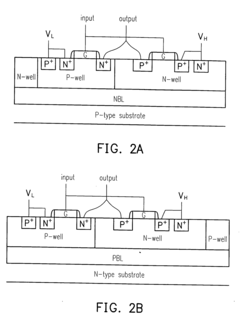
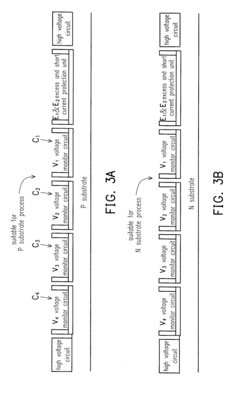
- The implementation of a CMOS structure using tri-well or buried layer techniques allows for a battery protection circuit that operates at relatively low voltage, isolates substrate noise, and includes overcharging and over-discharging units, excess current protection, and short circuit protection, utilizing NMOS and PMOS transistors with specific voltage configurations and a bandgap reference voltage-generating unit to monitor and regulate battery voltage and current.
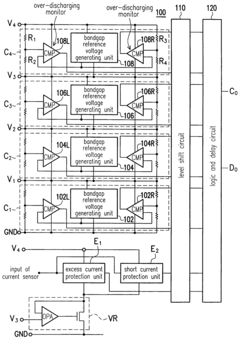
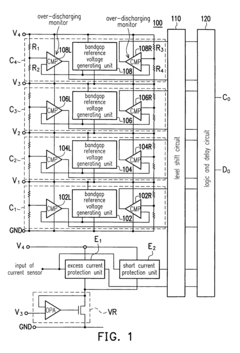
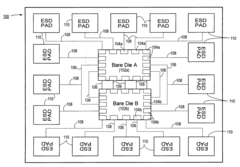
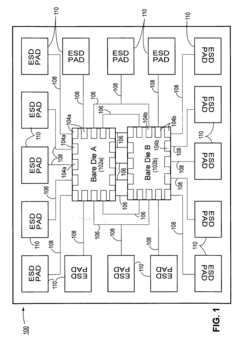
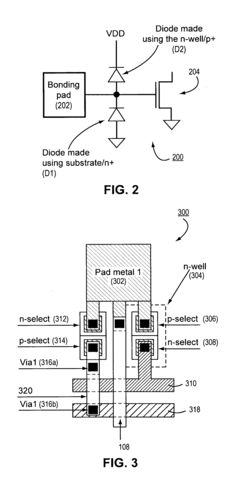
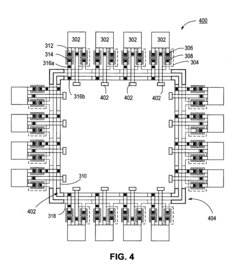
Multi-chip module package including external and internal electrostatic discharge protection circuits, and/or method of making the same
PatentInactiveUS20090290271A1
Innovation
- Implementing low-cost CMOS technology as a substrate for multi-chip module (MCM) packages with external and internal ESD protection circuits, where high-immunity ESD circuits are located under IO pads to protect against static charges, and internal ESD circuits are minimized in size to reduce their impact on the advanced ICs.
Power Management
Power management plays a crucial role in elevating interactive technology environments through the integration of CMOS battery technology. The Complementary Metal-Oxide-Semiconductor (CMOS) battery serves as a vital component in maintaining system configurations and real-time clock functions, even when the main power source is disconnected. This capability ensures seamless operation and enhances the overall user experience in interactive environments.
In the context of power management, CMOS batteries offer several advantages that contribute to the efficiency and reliability of interactive technology systems. These batteries provide a constant, low-power source of electricity to maintain critical system information, such as BIOS settings, system time, and hardware configurations. By preserving this data, CMOS batteries enable rapid system startup and consistent performance across power cycles, which is essential for maintaining the responsiveness and reliability of interactive environments.
The longevity and stability of CMOS batteries are key factors in their effectiveness for power management in interactive technology settings. Typically lasting between 2 to 10 years, depending on usage patterns and environmental conditions, these batteries provide a cost-effective and low-maintenance solution for sustaining system integrity. This extended lifespan reduces the frequency of battery replacements, minimizing downtime and maintenance costs associated with interactive technology installations.
Furthermore, CMOS batteries contribute to energy efficiency in interactive environments by allowing systems to enter low-power states when not in active use. By maintaining essential system information, these batteries enable quick wake-up times from sleep or hibernation modes, striking a balance between power conservation and rapid responsiveness. This capability is particularly valuable in public interactive displays or kiosks, where energy savings during idle periods can be substantial without compromising the user experience.
The integration of CMOS battery technology also supports advanced power management features in interactive systems. For instance, it enables scheduled power-on and power-off cycles, which can be utilized to automate the operation of interactive displays in public spaces or retail environments. This automation not only conserves energy but also extends the lifespan of display components and reduces the need for manual intervention in system management.
As interactive technology environments become more sophisticated, the role of CMOS batteries in power management continues to evolve. Modern systems are incorporating more intelligent power management techniques that leverage the stability provided by CMOS batteries. These advancements include adaptive power schemes that optimize energy consumption based on usage patterns and environmental factors, further enhancing the efficiency and sustainability of interactive installations.
In the context of power management, CMOS batteries offer several advantages that contribute to the efficiency and reliability of interactive technology systems. These batteries provide a constant, low-power source of electricity to maintain critical system information, such as BIOS settings, system time, and hardware configurations. By preserving this data, CMOS batteries enable rapid system startup and consistent performance across power cycles, which is essential for maintaining the responsiveness and reliability of interactive environments.
The longevity and stability of CMOS batteries are key factors in their effectiveness for power management in interactive technology settings. Typically lasting between 2 to 10 years, depending on usage patterns and environmental conditions, these batteries provide a cost-effective and low-maintenance solution for sustaining system integrity. This extended lifespan reduces the frequency of battery replacements, minimizing downtime and maintenance costs associated with interactive technology installations.
Furthermore, CMOS batteries contribute to energy efficiency in interactive environments by allowing systems to enter low-power states when not in active use. By maintaining essential system information, these batteries enable quick wake-up times from sleep or hibernation modes, striking a balance between power conservation and rapid responsiveness. This capability is particularly valuable in public interactive displays or kiosks, where energy savings during idle periods can be substantial without compromising the user experience.
The integration of CMOS battery technology also supports advanced power management features in interactive systems. For instance, it enables scheduled power-on and power-off cycles, which can be utilized to automate the operation of interactive displays in public spaces or retail environments. This automation not only conserves energy but also extends the lifespan of display components and reduces the need for manual intervention in system management.
As interactive technology environments become more sophisticated, the role of CMOS batteries in power management continues to evolve. Modern systems are incorporating more intelligent power management techniques that leverage the stability provided by CMOS batteries. These advancements include adaptive power schemes that optimize energy consumption based on usage patterns and environmental factors, further enhancing the efficiency and sustainability of interactive installations.
Environmental Impact
The environmental impact of CMOS batteries in interactive technology environments is a crucial aspect to consider as these devices become increasingly prevalent. CMOS batteries, while small in size, can have significant cumulative effects on the environment throughout their lifecycle.
The production of CMOS batteries involves the extraction and processing of raw materials, including lithium, which can lead to habitat destruction and water pollution in mining areas. The manufacturing process itself consumes energy and may release harmful chemicals into the environment if not properly managed. As the demand for interactive technology grows, the scale of these impacts is likely to increase.
During their operational life, CMOS batteries contribute to the overall energy consumption of devices. While their power draw is minimal, the sheer number of devices utilizing these batteries results in a substantial collective energy demand. This indirectly contributes to carbon emissions, particularly in regions where electricity generation relies heavily on fossil fuels.
The disposal of CMOS batteries presents another environmental challenge. Improper disposal can lead to soil and water contamination, as these batteries contain toxic materials that can leach into ecosystems. Many consumers are unaware of the proper recycling procedures for these small batteries, often discarding them with regular waste.
However, the use of CMOS batteries in interactive technology environments also has potential positive environmental impacts. By maintaining system settings and time-keeping functions, these batteries enable devices to operate more efficiently, potentially reducing overall energy consumption. They also extend the lifespan of electronic devices, which can decrease the frequency of hardware replacements and associated electronic waste.
Efforts are being made to mitigate the negative environmental impacts of CMOS batteries. Manufacturers are exploring more sustainable production methods and materials, such as using recycled lithium or developing alternative battery technologies. Additionally, improved recycling programs and consumer education initiatives are being implemented to address end-of-life issues.
As interactive technology environments continue to evolve, the role of CMOS batteries in supporting these systems must be balanced against their environmental impact. Future developments may focus on enhancing battery efficiency, exploring biodegradable materials, or designing systems that reduce reliance on constant power sources. The ongoing challenge lies in maximizing the benefits of CMOS batteries in interactive technologies while minimizing their ecological footprint.
The production of CMOS batteries involves the extraction and processing of raw materials, including lithium, which can lead to habitat destruction and water pollution in mining areas. The manufacturing process itself consumes energy and may release harmful chemicals into the environment if not properly managed. As the demand for interactive technology grows, the scale of these impacts is likely to increase.
During their operational life, CMOS batteries contribute to the overall energy consumption of devices. While their power draw is minimal, the sheer number of devices utilizing these batteries results in a substantial collective energy demand. This indirectly contributes to carbon emissions, particularly in regions where electricity generation relies heavily on fossil fuels.
The disposal of CMOS batteries presents another environmental challenge. Improper disposal can lead to soil and water contamination, as these batteries contain toxic materials that can leach into ecosystems. Many consumers are unaware of the proper recycling procedures for these small batteries, often discarding them with regular waste.
However, the use of CMOS batteries in interactive technology environments also has potential positive environmental impacts. By maintaining system settings and time-keeping functions, these batteries enable devices to operate more efficiently, potentially reducing overall energy consumption. They also extend the lifespan of electronic devices, which can decrease the frequency of hardware replacements and associated electronic waste.
Efforts are being made to mitigate the negative environmental impacts of CMOS batteries. Manufacturers are exploring more sustainable production methods and materials, such as using recycled lithium or developing alternative battery technologies. Additionally, improved recycling programs and consumer education initiatives are being implemented to address end-of-life issues.
As interactive technology environments continue to evolve, the role of CMOS batteries in supporting these systems must be balanced against their environmental impact. Future developments may focus on enhancing battery efficiency, exploring biodegradable materials, or designing systems that reduce reliance on constant power sources. The ongoing challenge lies in maximizing the benefits of CMOS batteries in interactive technologies while minimizing their ecological footprint.
Unlock deeper insights with PatSnap Eureka Quick Research — get a full tech report to explore trends and direct your research. Try now!
Generate Your Research Report Instantly with AI Agent
Supercharge your innovation with PatSnap Eureka AI Agent Platform!