

How CMOS Battery Enables Advanced Security Features?
JUL 22, 20259 MIN READ
Generate Your Research Report Instantly with AI Agent
PatSnap Eureka helps you evaluate technical feasibility & market potential.
CMOS Battery Security Evolution
The evolution of CMOS battery security features has been a significant aspect of computer system development over the past few decades. Initially, the CMOS battery's primary function was to maintain basic system settings and time information when the main power was disconnected. However, as security concerns grew in the digital age, the role of the CMOS battery expanded to include critical security features.
In the early stages, CMOS batteries simply preserved BIOS settings and system time. As cyber threats became more sophisticated, manufacturers began to leverage the persistent nature of CMOS-powered memory to store security-related information. This marked the beginning of the CMOS battery's involvement in system security.
The first major security application was the storage of BIOS passwords. By keeping these passwords in CMOS memory, systems could maintain access control even when powered off or disconnected from main power sources. This feature significantly enhanced physical security for computers in shared or potentially vulnerable environments.
As hardware-based security measures gained prominence, the CMOS battery's role further evolved. It began to support the storage of encryption keys and security tokens. These elements were crucial for features like full disk encryption and secure boot processes, which prevent unauthorized modifications to the system's boot sequence.
The introduction of Trusted Platform Modules (TPM) marked another milestone in CMOS battery security evolution. The battery ensured that TPM data, including cryptographic keys and integrity measurements, remained intact and tamper-resistant even when the system was powered down. This capability became fundamental for advanced security features like remote attestation and sealed storage.
In recent years, the CMOS battery has played a vital role in supporting more complex security architectures. It now helps maintain the integrity of security configurations for virtualization technologies, secure enclaves, and hardware-based isolation features. These advancements have been crucial in developing trusted computing environments for sensitive applications and data processing.
The latest developments in CMOS battery security involve its integration with machine learning-based anomaly detection systems. By preserving historical system behavior data, the CMOS-powered memory aids in identifying potential security breaches or unauthorized system modifications, even across power cycles.
As we look to the future, the CMOS battery's role in security is likely to expand further. Emerging technologies such as quantum-resistant cryptography and AI-driven security systems may rely on the persistent, tamper-resistant storage provided by CMOS batteries to maintain their effectiveness across system states.
In the early stages, CMOS batteries simply preserved BIOS settings and system time. As cyber threats became more sophisticated, manufacturers began to leverage the persistent nature of CMOS-powered memory to store security-related information. This marked the beginning of the CMOS battery's involvement in system security.
The first major security application was the storage of BIOS passwords. By keeping these passwords in CMOS memory, systems could maintain access control even when powered off or disconnected from main power sources. This feature significantly enhanced physical security for computers in shared or potentially vulnerable environments.
As hardware-based security measures gained prominence, the CMOS battery's role further evolved. It began to support the storage of encryption keys and security tokens. These elements were crucial for features like full disk encryption and secure boot processes, which prevent unauthorized modifications to the system's boot sequence.
The introduction of Trusted Platform Modules (TPM) marked another milestone in CMOS battery security evolution. The battery ensured that TPM data, including cryptographic keys and integrity measurements, remained intact and tamper-resistant even when the system was powered down. This capability became fundamental for advanced security features like remote attestation and sealed storage.
In recent years, the CMOS battery has played a vital role in supporting more complex security architectures. It now helps maintain the integrity of security configurations for virtualization technologies, secure enclaves, and hardware-based isolation features. These advancements have been crucial in developing trusted computing environments for sensitive applications and data processing.
The latest developments in CMOS battery security involve its integration with machine learning-based anomaly detection systems. By preserving historical system behavior data, the CMOS-powered memory aids in identifying potential security breaches or unauthorized system modifications, even across power cycles.
As we look to the future, the CMOS battery's role in security is likely to expand further. Emerging technologies such as quantum-resistant cryptography and AI-driven security systems may rely on the persistent, tamper-resistant storage provided by CMOS batteries to maintain their effectiveness across system states.
Market Demand Analysis
The market demand for advanced security features enabled by CMOS batteries has been steadily increasing in recent years, driven by the growing concerns over data protection and cybersecurity across various industries. As cyber threats become more sophisticated, organizations and individuals alike are seeking robust security solutions that can safeguard their sensitive information and digital assets.
CMOS batteries play a crucial role in enabling advanced security features by providing continuous power to the system's real-time clock (RTC) and BIOS settings, even when the main power is disconnected. This constant power supply ensures that security-critical information, such as encryption keys and access credentials, remains intact and protected from unauthorized access or tampering.
The financial sector has been at the forefront of adopting CMOS battery-enabled security features, particularly in banking systems and ATMs. These institutions require uninterrupted security measures to protect against fraud and maintain the integrity of financial transactions. The healthcare industry has also shown significant interest in these advanced security features, as the protection of patient data and compliance with regulations like HIPAA become increasingly critical.
Enterprise-level organizations across various sectors are investing heavily in cybersecurity solutions that incorporate CMOS battery-enabled features. This trend is driven by the need to protect intellectual property, maintain business continuity, and comply with data protection regulations such as GDPR and CCPA. The demand for these security features is particularly high in industries dealing with sensitive data, including government agencies, defense contractors, and research institutions.
The consumer electronics market has also witnessed a growing demand for devices with enhanced security features. As more personal and financial information is stored on smartphones, laptops, and other personal devices, consumers are becoming increasingly aware of the importance of robust security measures. This awareness has led to a higher willingness to pay for devices that offer advanced security features, including those enabled by CMOS batteries.
The Internet of Things (IoT) sector presents a significant growth opportunity for CMOS battery-enabled security features. As the number of connected devices continues to expand, the need for secure, always-on protection becomes paramount. Smart home devices, industrial IoT sensors, and connected vehicles are just a few examples of applications where CMOS battery-enabled security features can provide critical protection against potential vulnerabilities.
The market demand for these advanced security features is expected to continue its upward trajectory in the coming years. Factors such as the increasing frequency and sophistication of cyber attacks, stricter data protection regulations, and the growing adoption of cloud-based services are likely to fuel this demand further. As organizations and individuals become more aware of the importance of comprehensive security measures, the market for CMOS battery-enabled advanced security features is poised for substantial growth across various industries and applications.
CMOS batteries play a crucial role in enabling advanced security features by providing continuous power to the system's real-time clock (RTC) and BIOS settings, even when the main power is disconnected. This constant power supply ensures that security-critical information, such as encryption keys and access credentials, remains intact and protected from unauthorized access or tampering.
The financial sector has been at the forefront of adopting CMOS battery-enabled security features, particularly in banking systems and ATMs. These institutions require uninterrupted security measures to protect against fraud and maintain the integrity of financial transactions. The healthcare industry has also shown significant interest in these advanced security features, as the protection of patient data and compliance with regulations like HIPAA become increasingly critical.
Enterprise-level organizations across various sectors are investing heavily in cybersecurity solutions that incorporate CMOS battery-enabled features. This trend is driven by the need to protect intellectual property, maintain business continuity, and comply with data protection regulations such as GDPR and CCPA. The demand for these security features is particularly high in industries dealing with sensitive data, including government agencies, defense contractors, and research institutions.
The consumer electronics market has also witnessed a growing demand for devices with enhanced security features. As more personal and financial information is stored on smartphones, laptops, and other personal devices, consumers are becoming increasingly aware of the importance of robust security measures. This awareness has led to a higher willingness to pay for devices that offer advanced security features, including those enabled by CMOS batteries.
The Internet of Things (IoT) sector presents a significant growth opportunity for CMOS battery-enabled security features. As the number of connected devices continues to expand, the need for secure, always-on protection becomes paramount. Smart home devices, industrial IoT sensors, and connected vehicles are just a few examples of applications where CMOS battery-enabled security features can provide critical protection against potential vulnerabilities.
The market demand for these advanced security features is expected to continue its upward trajectory in the coming years. Factors such as the increasing frequency and sophistication of cyber attacks, stricter data protection regulations, and the growing adoption of cloud-based services are likely to fuel this demand further. As organizations and individuals become more aware of the importance of comprehensive security measures, the market for CMOS battery-enabled advanced security features is poised for substantial growth across various industries and applications.
Technical Challenges
The implementation of advanced security features through CMOS battery technology faces several significant technical challenges. One of the primary obstacles is the limited power capacity of CMOS batteries. These batteries are typically small and designed for low-power applications, which constrains the complexity and duration of security operations they can support.
Another challenge lies in the integration of security features with existing CMOS circuitry. Implementing advanced security measures often requires additional components and circuitry, which can increase power consumption and potentially compromise the battery's longevity. Balancing security functionality with power efficiency remains a critical concern for designers.
The vulnerability of CMOS batteries to physical tampering presents another technical hurdle. As these batteries are often accessible within computer systems, they are susceptible to removal or replacement, which could potentially bypass security measures. Developing tamper-resistant designs and mechanisms to detect unauthorized battery manipulation is crucial for maintaining system integrity.
Data retention and integrity pose additional challenges. CMOS batteries are responsible for maintaining critical system information, including security settings. Ensuring that this data remains uncorrupted and protected from unauthorized access or modification, especially during power loss or battery replacement, requires sophisticated error detection and correction mechanisms.
The need for real-time security features introduces timing and synchronization challenges. CMOS batteries must support precise timekeeping functions to enable time-based security protocols, such as time-stamping and certificate validation. Maintaining accurate time across power cycles and battery replacements demands innovative solutions.
Compatibility issues arise when implementing advanced security features across diverse hardware platforms. CMOS battery-enabled security must be designed to function consistently across various system architectures, BIOS versions, and operating systems, which can be technically complex and resource-intensive.
Environmental factors also present technical challenges. CMOS batteries and associated security circuits must operate reliably under varying temperature conditions, electromagnetic interference, and physical stress. Designing robust systems that maintain security integrity in diverse environments requires extensive testing and specialized components.
Lastly, the evolving landscape of security threats necessitates continuous adaptation of CMOS battery-enabled security features. Keeping pace with new attack vectors and encryption standards while working within the constraints of CMOS battery technology demands ongoing research and development efforts. This challenge is compounded by the need to maintain backward compatibility with existing systems while introducing more advanced security capabilities.
Another challenge lies in the integration of security features with existing CMOS circuitry. Implementing advanced security measures often requires additional components and circuitry, which can increase power consumption and potentially compromise the battery's longevity. Balancing security functionality with power efficiency remains a critical concern for designers.
The vulnerability of CMOS batteries to physical tampering presents another technical hurdle. As these batteries are often accessible within computer systems, they are susceptible to removal or replacement, which could potentially bypass security measures. Developing tamper-resistant designs and mechanisms to detect unauthorized battery manipulation is crucial for maintaining system integrity.
Data retention and integrity pose additional challenges. CMOS batteries are responsible for maintaining critical system information, including security settings. Ensuring that this data remains uncorrupted and protected from unauthorized access or modification, especially during power loss or battery replacement, requires sophisticated error detection and correction mechanisms.
The need for real-time security features introduces timing and synchronization challenges. CMOS batteries must support precise timekeeping functions to enable time-based security protocols, such as time-stamping and certificate validation. Maintaining accurate time across power cycles and battery replacements demands innovative solutions.
Compatibility issues arise when implementing advanced security features across diverse hardware platforms. CMOS battery-enabled security must be designed to function consistently across various system architectures, BIOS versions, and operating systems, which can be technically complex and resource-intensive.
Environmental factors also present technical challenges. CMOS batteries and associated security circuits must operate reliably under varying temperature conditions, electromagnetic interference, and physical stress. Designing robust systems that maintain security integrity in diverse environments requires extensive testing and specialized components.
Lastly, the evolving landscape of security threats necessitates continuous adaptation of CMOS battery-enabled security features. Keeping pace with new attack vectors and encryption standards while working within the constraints of CMOS battery technology demands ongoing research and development efforts. This challenge is compounded by the need to maintain backward compatibility with existing systems while introducing more advanced security capabilities.
Current Security Solutions
01 Secure CMOS battery management
Implementing security features for CMOS batteries in electronic devices to prevent unauthorized access and tampering. This includes encryption of battery data, secure communication protocols, and authentication mechanisms to ensure the integrity of power management systems.- Tamper-resistant CMOS battery systems: Security features for CMOS batteries include tamper-resistant designs that prevent unauthorized access or manipulation. These systems may incorporate physical barriers, encryption, or monitoring mechanisms to detect and prevent tampering attempts, ensuring the integrity of critical system data and settings.
- Power management and battery backup solutions: Advanced power management techniques are implemented to enhance CMOS battery security. These solutions may include intelligent power distribution, low-power modes, and backup power systems to maintain critical data during primary power loss or battery failure, ensuring continuous protection of sensitive information.
- Encryption and authentication mechanisms: Security features for CMOS batteries incorporate encryption and authentication protocols to protect stored data and prevent unauthorized access. These mechanisms may include secure key storage, cryptographic algorithms, and multi-factor authentication to ensure that only authorized users or systems can access or modify CMOS settings.
- Monitoring and alert systems: CMOS battery security is enhanced through real-time monitoring and alert systems. These features may include sensors to detect voltage fluctuations, temperature changes, or physical disturbances, coupled with notification systems to alert administrators of potential security breaches or battery failures.
- Integration with system-wide security measures: CMOS battery security features are integrated into broader system-wide security architectures. This approach may involve coordinating with BIOS/UEFI security, hardware-based security modules, and operating system-level protections to create a comprehensive security ecosystem that safeguards the entire computing environment.
02 Battery-backed security modules
Integrating dedicated security modules with CMOS batteries to provide continuous protection for sensitive data and settings. These modules maintain security features even when the main power is off, ensuring persistent protection against unauthorized access and data loss.Expand Specific Solutions03 Tamper-resistant CMOS battery systems
Designing tamper-resistant enclosures and circuits for CMOS batteries to prevent physical manipulation. This includes sensors to detect unauthorized access attempts and mechanisms to protect or erase sensitive data in case of tampering.Expand Specific Solutions04 Secure power management for CMOS batteries
Implementing advanced power management techniques to enhance the security of CMOS battery-powered systems. This includes intelligent power distribution, secure wake-up mechanisms, and protected sleep modes to prevent unauthorized system access or data extraction.Expand Specific Solutions05 Cryptographic key storage in CMOS battery-backed memory
Utilizing CMOS battery-backed memory for secure storage of cryptographic keys and other sensitive information. This ensures that critical security parameters are retained even when the main power is disconnected, enhancing overall system security.Expand Specific Solutions
Key Industry Players
The CMOS battery security feature market is in a growth phase, driven by increasing demand for advanced security solutions in electronic devices. The market size is expanding as more manufacturers integrate this technology into their products. While the technology is relatively mature, ongoing innovations are enhancing its capabilities. Key players like Hon Hai Precision Industry, Samsung SDI, and Dell Products LP are leading the development and implementation of CMOS battery-enabled security features. These companies are investing in R&D to improve the technology's effectiveness and reliability, focusing on areas such as data protection, device authentication, and tamper resistance. As the technology continues to evolve, we can expect to see more sophisticated security applications across various industries, particularly in enterprise computing and IoT devices.
International Business Machines Corp.
Technical Solution: IBM has developed advanced CMOS battery-enabled security features for their enterprise systems. Their approach integrates the CMOS battery with a dedicated security chip, creating a tamper-resistant environment for storing encryption keys and other sensitive data. This system utilizes the constant power supply from the CMOS battery to maintain the integrity of security parameters even when the main system is powered off[1]. IBM's implementation includes real-time clock functionality that's crucial for time-stamping secure transactions and maintaining accurate system logs[3]. Additionally, they've incorporated a unique power-on password protection mechanism that leverages the CMOS battery to retain password information, enhancing physical security of the device[5].
Strengths: Robust enterprise-level security, integration with existing IBM hardware ecosystem, and long-term data retention. Weaknesses: Potentially higher cost due to specialized hardware, and limited applicability to non-IBM systems.
HP Development Co. LP
Technical Solution: HP has implemented CMOS battery-powered security features in their business laptops and workstations. Their solution uses the CMOS battery to maintain BIOS settings and security configurations, including boot order and hardware-level passwords. HP's Sure Start technology, which relies on the CMOS battery, provides self-healing BIOS capabilities, automatically detecting and recovering from BIOS corruption[2]. The CMOS battery also powers HP's Embedded Security Chip, which stores cryptographic keys and performs secure boot operations[4]. HP has further enhanced this system by implementing runtime intrusion detection, which continuously monitors critical system firmware, even in low-power states, thanks to the constant power from the CMOS battery[6].
Strengths: Comprehensive security suite for business devices, self-healing capabilities, and continuous monitoring. Weaknesses: Primarily focused on HP devices, potential for increased power consumption in low-power states.
Core CMOS Innovations
Computing device and method for clearing data stored in complementary metal-oxide semiconductor chip
PatentInactiveUS20120047307A1
Innovation
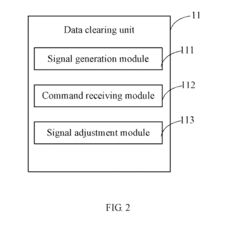
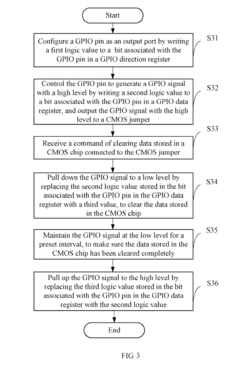
- A computing device with a data clearing unit that uses a GPIO interface to configure a CMOS jumper, generating a high-level signal to maintain data and then pulling it down to clear data stored in the CMOS chip, allowing for safe and controlled data reset.
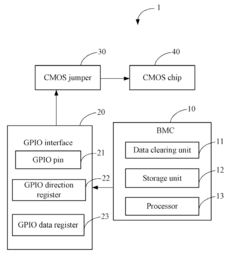
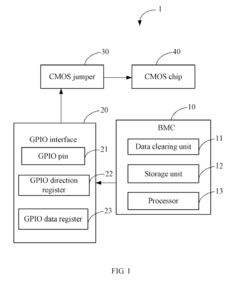
System and method for integrated circuit usage tracking circuit with fast tracking time for hardware security and re-configurability
PatentActiveUS20160329897A1
Innovation
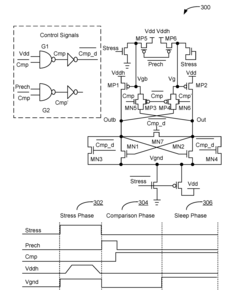
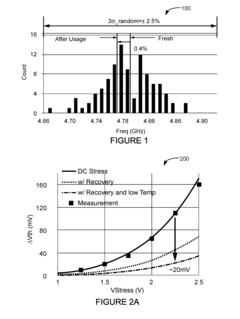
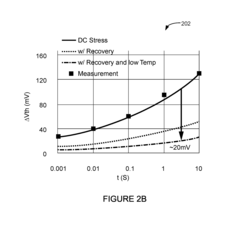
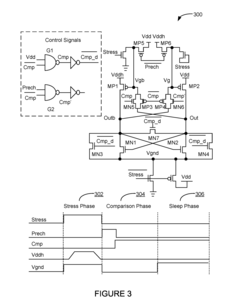
- A silicon marker technique using conventional CMOS devices with an accelerated aging circuit and stochastic processing methodology to create a reliable usage marker within seconds, leveraging NBTI effects and latch-based comparator circuits to enhance detection accuracy and tolerance to process variations.
Cybersecurity Regulations
The landscape of cybersecurity regulations has evolved significantly in response to the increasing sophistication of security threats and the growing importance of data protection. As CMOS battery technology enables advanced security features in modern computing systems, regulatory bodies have adapted their frameworks to address these new capabilities and potential vulnerabilities.
In recent years, several key regulations have emerged that directly impact the use of CMOS battery-enabled security features. The General Data Protection Regulation (GDPR) in the European Union, for instance, mandates strict data protection measures, including the secure storage of personal information. This has led to increased emphasis on hardware-level security features, such as those enabled by CMOS batteries, to ensure compliance with data protection requirements.
Similarly, the California Consumer Privacy Act (CCPA) in the United States has introduced stringent data privacy regulations that necessitate robust security measures. These regulations have prompted manufacturers to enhance their security implementations, leveraging CMOS battery-powered features to maintain system integrity and protect sensitive information.
The National Institute of Standards and Technology (NIST) has also updated its cybersecurity framework to include guidelines for hardware-based security measures. These guidelines specifically address the role of persistent storage elements, such as CMOS batteries, in maintaining security configurations and protecting against unauthorized access.
In the financial sector, regulations like the Payment Card Industry Data Security Standard (PCI DSS) have been updated to reflect the importance of hardware-level security. These updates include requirements for maintaining the integrity of system configurations, which are often preserved by CMOS battery-powered memory.
As cyber threats continue to evolve, regulatory bodies are increasingly focusing on supply chain security. This has led to new regulations and standards that address the security of hardware components, including CMOS batteries and associated circuitry. The aim is to prevent tampering and ensure the authenticity of security features throughout the product lifecycle.
Looking ahead, emerging regulations are expected to place even greater emphasis on hardware-based security measures. This trend is likely to drive further innovation in CMOS battery technology and its application in advanced security features, as manufacturers strive to meet increasingly stringent regulatory requirements while balancing performance and energy efficiency considerations.
In recent years, several key regulations have emerged that directly impact the use of CMOS battery-enabled security features. The General Data Protection Regulation (GDPR) in the European Union, for instance, mandates strict data protection measures, including the secure storage of personal information. This has led to increased emphasis on hardware-level security features, such as those enabled by CMOS batteries, to ensure compliance with data protection requirements.
Similarly, the California Consumer Privacy Act (CCPA) in the United States has introduced stringent data privacy regulations that necessitate robust security measures. These regulations have prompted manufacturers to enhance their security implementations, leveraging CMOS battery-powered features to maintain system integrity and protect sensitive information.
The National Institute of Standards and Technology (NIST) has also updated its cybersecurity framework to include guidelines for hardware-based security measures. These guidelines specifically address the role of persistent storage elements, such as CMOS batteries, in maintaining security configurations and protecting against unauthorized access.
In the financial sector, regulations like the Payment Card Industry Data Security Standard (PCI DSS) have been updated to reflect the importance of hardware-level security. These updates include requirements for maintaining the integrity of system configurations, which are often preserved by CMOS battery-powered memory.
As cyber threats continue to evolve, regulatory bodies are increasingly focusing on supply chain security. This has led to new regulations and standards that address the security of hardware components, including CMOS batteries and associated circuitry. The aim is to prevent tampering and ensure the authenticity of security features throughout the product lifecycle.
Looking ahead, emerging regulations are expected to place even greater emphasis on hardware-based security measures. This trend is likely to drive further innovation in CMOS battery technology and its application in advanced security features, as manufacturers strive to meet increasingly stringent regulatory requirements while balancing performance and energy efficiency considerations.
Power Management Impact
The CMOS battery plays a crucial role in enabling advanced security features in modern computing systems. Its impact on power management extends beyond simple timekeeping, influencing various aspects of system security and functionality.
The CMOS battery provides continuous power to the Real-Time Clock (RTC) and CMOS memory, ensuring that critical system settings and security parameters are maintained even when the main power is disconnected. This persistent power source enables the implementation of time-based security features, such as timed access controls and secure boot processes.
In terms of power management, the CMOS battery's low-power consumption characteristics allow for long-term retention of security settings without significantly impacting overall system power efficiency. This is particularly important for mobile devices and laptops, where battery life is a critical consideration.
The CMOS battery also supports the implementation of secure sleep and hibernation states. By maintaining power to essential security components, it enables rapid and secure system resume operations, reducing the vulnerability window during power state transitions.
Advanced security features like hardware-based encryption keys and Trusted Platform Module (TPM) functionality often rely on the CMOS battery for persistent storage of cryptographic seeds and security tokens. This ensures that encryption keys remain intact and tamper-resistant, even when the system is powered down.
The CMOS battery's role in power management extends to supporting secure firmware updates and BIOS protection mechanisms. By providing a stable power source for these critical system components, it helps maintain the integrity of low-level security features that are essential for overall system protection.
In enterprise environments, the CMOS battery facilitates remote management and security features. It enables wake-on-LAN functionality and scheduled system updates, allowing IT administrators to implement security policies and perform maintenance tasks even when systems are powered off.
The integration of CMOS battery-powered security features with modern power management techniques, such as Intel's Management Engine or AMD's Platform Security Processor, creates a synergistic relationship that enhances both security and energy efficiency. These technologies work together to provide a robust security foundation while optimizing power consumption.
As IoT devices and edge computing systems become more prevalent, the importance of CMOS battery-enabled security features in power-constrained environments is growing. These devices often require long-term, low-power security solutions that can operate reliably in diverse deployment scenarios.
The CMOS battery provides continuous power to the Real-Time Clock (RTC) and CMOS memory, ensuring that critical system settings and security parameters are maintained even when the main power is disconnected. This persistent power source enables the implementation of time-based security features, such as timed access controls and secure boot processes.
In terms of power management, the CMOS battery's low-power consumption characteristics allow for long-term retention of security settings without significantly impacting overall system power efficiency. This is particularly important for mobile devices and laptops, where battery life is a critical consideration.
The CMOS battery also supports the implementation of secure sleep and hibernation states. By maintaining power to essential security components, it enables rapid and secure system resume operations, reducing the vulnerability window during power state transitions.
Advanced security features like hardware-based encryption keys and Trusted Platform Module (TPM) functionality often rely on the CMOS battery for persistent storage of cryptographic seeds and security tokens. This ensures that encryption keys remain intact and tamper-resistant, even when the system is powered down.
The CMOS battery's role in power management extends to supporting secure firmware updates and BIOS protection mechanisms. By providing a stable power source for these critical system components, it helps maintain the integrity of low-level security features that are essential for overall system protection.
In enterprise environments, the CMOS battery facilitates remote management and security features. It enables wake-on-LAN functionality and scheduled system updates, allowing IT administrators to implement security policies and perform maintenance tasks even when systems are powered off.
The integration of CMOS battery-powered security features with modern power management techniques, such as Intel's Management Engine or AMD's Platform Security Processor, creates a synergistic relationship that enhances both security and energy efficiency. These technologies work together to provide a robust security foundation while optimizing power consumption.
As IoT devices and edge computing systems become more prevalent, the importance of CMOS battery-enabled security features in power-constrained environments is growing. These devices often require long-term, low-power security solutions that can operate reliably in diverse deployment scenarios.
Unlock deeper insights with PatSnap Eureka Quick Research — get a full tech report to explore trends and direct your research. Try now!
Generate Your Research Report Instantly with AI Agent
Supercharge your innovation with PatSnap Eureka AI Agent Platform!