How CMOS Battery Enhances Universal Communication Protocols?
JUL 22, 20259 MIN READ
Generate Your Research Report Instantly with AI Agent
PatSnap Eureka helps you evaluate technical feasibility & market potential.
CMOS Battery Evolution
The evolution of CMOS battery technology has played a crucial role in enhancing universal communication protocols. Initially developed in the 1960s, Complementary Metal-Oxide-Semiconductor (CMOS) technology has undergone significant advancements, particularly in its application to battery-powered devices and communication systems.
In the early stages, CMOS batteries were primarily used to maintain basic system settings and real-time clock functions in computers. However, as communication protocols became more sophisticated, the importance of CMOS batteries in maintaining system integrity and facilitating seamless communication grew exponentially.
The 1980s marked a turning point in CMOS battery evolution, with the introduction of lithium-based CMOS batteries. These batteries offered improved energy density and longer lifespan, enabling more reliable operation of communication devices. This advancement was particularly crucial for the emerging mobile communication technologies of the time.
As we entered the 1990s and 2000s, CMOS battery technology continued to evolve in parallel with the rapid development of wireless communication protocols. The miniaturization of CMOS batteries allowed for the creation of smaller, more portable communication devices, which in turn drove the adoption of universal communication standards.
One of the key milestones in CMOS battery evolution was the integration of power management circuits directly into CMOS chips. This innovation, which gained traction in the early 2000s, allowed for more efficient use of battery power and extended the operational life of communication devices. It also enabled the implementation of more complex communication protocols without significantly impacting battery life.
The advent of Internet of Things (IoT) technologies in the 2010s further accelerated the evolution of CMOS batteries. The need for long-lasting, low-power devices capable of maintaining constant communication led to the development of ultra-low-power CMOS technologies and associated battery solutions. These advancements have been instrumental in supporting the widespread adoption of IoT devices and the universal communication protocols they rely on.
Recent years have seen a focus on sustainability and environmental concerns, driving research into more eco-friendly CMOS battery technologies. This has led to the development of rechargeable CMOS batteries and exploration of alternative materials that offer improved performance while reducing environmental impact.
Looking ahead, the evolution of CMOS batteries continues to be closely tied to the advancement of universal communication protocols. Emerging technologies such as 5G and beyond are placing new demands on battery performance, driving innovation in areas such as energy harvesting and ultra-efficient power management systems integrated into CMOS designs.
In the early stages, CMOS batteries were primarily used to maintain basic system settings and real-time clock functions in computers. However, as communication protocols became more sophisticated, the importance of CMOS batteries in maintaining system integrity and facilitating seamless communication grew exponentially.
The 1980s marked a turning point in CMOS battery evolution, with the introduction of lithium-based CMOS batteries. These batteries offered improved energy density and longer lifespan, enabling more reliable operation of communication devices. This advancement was particularly crucial for the emerging mobile communication technologies of the time.
As we entered the 1990s and 2000s, CMOS battery technology continued to evolve in parallel with the rapid development of wireless communication protocols. The miniaturization of CMOS batteries allowed for the creation of smaller, more portable communication devices, which in turn drove the adoption of universal communication standards.
One of the key milestones in CMOS battery evolution was the integration of power management circuits directly into CMOS chips. This innovation, which gained traction in the early 2000s, allowed for more efficient use of battery power and extended the operational life of communication devices. It also enabled the implementation of more complex communication protocols without significantly impacting battery life.
The advent of Internet of Things (IoT) technologies in the 2010s further accelerated the evolution of CMOS batteries. The need for long-lasting, low-power devices capable of maintaining constant communication led to the development of ultra-low-power CMOS technologies and associated battery solutions. These advancements have been instrumental in supporting the widespread adoption of IoT devices and the universal communication protocols they rely on.
Recent years have seen a focus on sustainability and environmental concerns, driving research into more eco-friendly CMOS battery technologies. This has led to the development of rechargeable CMOS batteries and exploration of alternative materials that offer improved performance while reducing environmental impact.
Looking ahead, the evolution of CMOS batteries continues to be closely tied to the advancement of universal communication protocols. Emerging technologies such as 5G and beyond are placing new demands on battery performance, driving innovation in areas such as energy harvesting and ultra-efficient power management systems integrated into CMOS designs.
Market Demand Analysis
The market demand for CMOS battery-enhanced universal communication protocols has been steadily growing in recent years, driven by the increasing need for reliable and efficient communication systems across various industries. This technology plays a crucial role in maintaining system settings and real-time clock functions in electronic devices, which is essential for seamless communication protocols.
In the telecommunications sector, the demand for CMOS battery-enhanced systems has seen significant growth. As 5G networks continue to expand globally, there is an increasing need for devices that can maintain accurate timing and configuration settings, even during power outages or system resets. This is particularly important for network infrastructure equipment, where uninterrupted communication is critical.
The automotive industry has also emerged as a major market for this technology. With the rise of connected and autonomous vehicles, there is a growing demand for robust communication systems that can maintain settings and timing information reliably. CMOS battery-enhanced protocols ensure that vehicle systems can quickly reestablish connections and maintain critical functions, even after prolonged periods of inactivity.
In the Internet of Things (IoT) sector, the market for CMOS battery-enhanced communication protocols is experiencing rapid expansion. As the number of connected devices continues to grow exponentially, there is an increasing need for low-power, long-lasting solutions that can maintain connectivity and configuration settings. This technology is particularly valuable in remote or hard-to-reach IoT deployments, where frequent battery replacements are impractical.
The industrial automation sector has also shown strong demand for this technology. In manufacturing and process control environments, where system uptime and precise timing are critical, CMOS battery-enhanced protocols provide the reliability and consistency needed for seamless operations. This is especially important in Industry 4.0 applications, where real-time communication between machines and systems is essential.
Healthcare is another sector driving market demand for CMOS battery-enhanced communication protocols. Medical devices, particularly those used in critical care settings, require uninterrupted operation and accurate timekeeping. The ability to maintain settings and synchronization, even during power interruptions, is crucial for patient safety and data integrity.
Looking at market trends, there is a growing emphasis on energy efficiency and miniaturization in electronic devices. This trend aligns well with the capabilities of CMOS battery technology, which offers low power consumption and compact form factors. As a result, manufacturers are increasingly incorporating this technology into their products to meet consumer demands for longer-lasting, more reliable devices.
In conclusion, the market demand for CMOS battery-enhanced universal communication protocols is robust and diverse, spanning multiple industries and applications. As the need for reliable, efficient, and long-lasting communication systems continues to grow, this technology is well-positioned to play a critical role in shaping the future of interconnected devices and systems.
In the telecommunications sector, the demand for CMOS battery-enhanced systems has seen significant growth. As 5G networks continue to expand globally, there is an increasing need for devices that can maintain accurate timing and configuration settings, even during power outages or system resets. This is particularly important for network infrastructure equipment, where uninterrupted communication is critical.
The automotive industry has also emerged as a major market for this technology. With the rise of connected and autonomous vehicles, there is a growing demand for robust communication systems that can maintain settings and timing information reliably. CMOS battery-enhanced protocols ensure that vehicle systems can quickly reestablish connections and maintain critical functions, even after prolonged periods of inactivity.
In the Internet of Things (IoT) sector, the market for CMOS battery-enhanced communication protocols is experiencing rapid expansion. As the number of connected devices continues to grow exponentially, there is an increasing need for low-power, long-lasting solutions that can maintain connectivity and configuration settings. This technology is particularly valuable in remote or hard-to-reach IoT deployments, where frequent battery replacements are impractical.
The industrial automation sector has also shown strong demand for this technology. In manufacturing and process control environments, where system uptime and precise timing are critical, CMOS battery-enhanced protocols provide the reliability and consistency needed for seamless operations. This is especially important in Industry 4.0 applications, where real-time communication between machines and systems is essential.
Healthcare is another sector driving market demand for CMOS battery-enhanced communication protocols. Medical devices, particularly those used in critical care settings, require uninterrupted operation and accurate timekeeping. The ability to maintain settings and synchronization, even during power interruptions, is crucial for patient safety and data integrity.
Looking at market trends, there is a growing emphasis on energy efficiency and miniaturization in electronic devices. This trend aligns well with the capabilities of CMOS battery technology, which offers low power consumption and compact form factors. As a result, manufacturers are increasingly incorporating this technology into their products to meet consumer demands for longer-lasting, more reliable devices.
In conclusion, the market demand for CMOS battery-enhanced universal communication protocols is robust and diverse, spanning multiple industries and applications. As the need for reliable, efficient, and long-lasting communication systems continues to grow, this technology is well-positioned to play a critical role in shaping the future of interconnected devices and systems.
Technical Challenges
The integration of CMOS battery technology with universal communication protocols presents several significant technical challenges that require innovative solutions. One of the primary obstacles is the power management and energy efficiency of communication systems. CMOS batteries, while offering advantages in terms of low power consumption and high integration density, still face limitations in their energy storage capacity and discharge rates. This constraint necessitates the development of advanced power management techniques to optimize the battery's performance in supporting various communication protocols.
Another critical challenge lies in the synchronization and timing accuracy required for seamless communication across different protocols. CMOS batteries must maintain precise timekeeping capabilities to ensure proper synchronization between devices, especially in scenarios involving multiple communication standards. The stability of the battery's voltage output over time and under varying environmental conditions becomes crucial in maintaining the integrity of timing-sensitive operations.
Interference management poses a substantial hurdle in the implementation of CMOS battery-enhanced communication systems. The proximity of the battery to sensitive communication circuitry can introduce noise and electromagnetic interference, potentially degrading signal quality and reliability. Engineers must devise effective shielding and isolation techniques to mitigate these effects without compromising the compact form factor that CMOS technology enables.
The scalability and adaptability of CMOS battery solutions across diverse communication protocols present another set of challenges. As the landscape of communication standards continues to evolve, the battery system must be flexible enough to accommodate new protocols and changing power requirements. This demands the development of modular and reconfigurable battery architectures that can be easily adapted to support emerging communication technologies without necessitating complete system redesigns.
Temperature management is a critical concern in CMOS battery-enhanced communication systems. The performance and lifespan of CMOS batteries can be significantly affected by temperature fluctuations, which are common in various operating environments. Implementing effective thermal management solutions while maintaining the compact size and energy efficiency of the system requires innovative approaches in heat dissipation and temperature regulation.
Lastly, the integration of security features within CMOS battery-powered communication systems presents unique challenges. As these systems often handle sensitive data and are vulnerable to various cyber threats, incorporating robust security measures without significantly increasing power consumption or compromising performance becomes a complex balancing act. Developing energy-efficient encryption algorithms and secure boot processes that can operate within the constraints of CMOS battery technology is essential for ensuring the integrity and confidentiality of communications.
Another critical challenge lies in the synchronization and timing accuracy required for seamless communication across different protocols. CMOS batteries must maintain precise timekeeping capabilities to ensure proper synchronization between devices, especially in scenarios involving multiple communication standards. The stability of the battery's voltage output over time and under varying environmental conditions becomes crucial in maintaining the integrity of timing-sensitive operations.
Interference management poses a substantial hurdle in the implementation of CMOS battery-enhanced communication systems. The proximity of the battery to sensitive communication circuitry can introduce noise and electromagnetic interference, potentially degrading signal quality and reliability. Engineers must devise effective shielding and isolation techniques to mitigate these effects without compromising the compact form factor that CMOS technology enables.
The scalability and adaptability of CMOS battery solutions across diverse communication protocols present another set of challenges. As the landscape of communication standards continues to evolve, the battery system must be flexible enough to accommodate new protocols and changing power requirements. This demands the development of modular and reconfigurable battery architectures that can be easily adapted to support emerging communication technologies without necessitating complete system redesigns.
Temperature management is a critical concern in CMOS battery-enhanced communication systems. The performance and lifespan of CMOS batteries can be significantly affected by temperature fluctuations, which are common in various operating environments. Implementing effective thermal management solutions while maintaining the compact size and energy efficiency of the system requires innovative approaches in heat dissipation and temperature regulation.
Lastly, the integration of security features within CMOS battery-powered communication systems presents unique challenges. As these systems often handle sensitive data and are vulnerable to various cyber threats, incorporating robust security measures without significantly increasing power consumption or compromising performance becomes a complex balancing act. Developing energy-efficient encryption algorithms and secure boot processes that can operate within the constraints of CMOS battery technology is essential for ensuring the integrity and confidentiality of communications.
Current CMOS Solutions
01 Power management techniques for CMOS batteries
Various power management techniques are employed to enhance CMOS battery life. These include implementing low-power modes, optimizing voltage regulation, and utilizing power-gating techniques to reduce standby current consumption. Advanced power management circuits can dynamically adjust power delivery based on system requirements, significantly extending battery life in CMOS devices.- Power management techniques for CMOS batteries: Various power management techniques are employed to enhance CMOS battery life. These include implementing low-power modes, optimizing voltage regulation, and utilizing power-gating techniques to reduce standby current consumption. Advanced power management circuits can dynamically adjust power delivery based on system requirements, significantly extending battery life in CMOS devices.
- Battery backup systems for CMOS devices: Battery backup systems are designed to maintain critical CMOS data during main power loss. These systems often incorporate intelligent switching mechanisms, charge pumps, and voltage monitoring circuits to ensure seamless transition between primary and backup power sources. Some designs also feature redundant battery configurations to further enhance reliability and longevity.
- Enhanced battery chemistry and materials: Advancements in battery chemistry and materials contribute to improved CMOS battery performance. This includes the development of high-energy density materials, improved electrolytes for better ion conductivity, and novel electrode designs. These enhancements result in batteries with higher capacity, longer lifespan, and improved stability under various operating conditions.
- Integrated charging and monitoring systems: Sophisticated charging and monitoring systems are integrated into CMOS devices to optimize battery performance. These systems include smart charging algorithms, accurate state-of-charge estimation, and health monitoring features. Advanced monitoring circuits can detect battery degradation and adjust charging parameters accordingly, maximizing battery lifespan and reliability.
- Thermal management for CMOS batteries: Effective thermal management strategies are implemented to enhance CMOS battery performance and longevity. This includes the use of advanced heat dissipation materials, intelligent temperature monitoring systems, and adaptive power management based on thermal conditions. Some designs incorporate phase-change materials or micro-cooling systems to maintain optimal operating temperatures for the battery.
02 Battery backup systems for CMOS devices
Battery backup systems are designed to maintain critical data and settings in CMOS devices during main power loss. These systems often incorporate intelligent switching mechanisms, charge management circuits, and low-dropout regulators to ensure seamless transition between primary and backup power sources, thereby enhancing overall system reliability and data integrity.Expand Specific Solutions03 CMOS battery monitoring and replacement indication
Advanced monitoring circuits are implemented to track CMOS battery health and performance. These systems can provide early warnings for battery replacement, measure battery voltage and internal resistance, and even predict remaining battery life. Some designs incorporate visual or audible indicators to alert users when battery replacement is necessary.Expand Specific Solutions04 Energy harvesting for CMOS battery supplementation
Energy harvesting techniques are employed to supplement or recharge CMOS batteries. These methods may include harvesting energy from ambient light, thermal gradients, or mechanical vibrations. The harvested energy is then conditioned and used to extend the life of the CMOS battery or reduce its overall power consumption.Expand Specific Solutions05 CMOS battery technology improvements
Advancements in battery chemistry and construction are applied to CMOS batteries to improve their performance and longevity. These improvements may include the use of new electrode materials, enhanced electrolytes, or novel cell designs. Some approaches focus on increasing energy density, reducing self-discharge rates, or improving temperature stability to enhance overall battery performance in CMOS applications.Expand Specific Solutions
Key Industry Players
The competition landscape for CMOS battery technology in universal communication protocols is evolving rapidly. The market is in a growth phase, with increasing demand for efficient power management solutions in various electronic devices. The global market size for CMOS batteries is expanding, driven by the proliferation of IoT devices and smart technologies. Technologically, the field is advancing, with companies like Samsung Electronics, Huawei, and Intel leading innovation. These firms are developing more efficient, longer-lasting CMOS batteries and integrating them with advanced communication protocols. Other players such as Texas Instruments and Microchip Technology are also making significant contributions, focusing on specialized applications and improved energy efficiency in communication systems.
Huawei Technologies Co., Ltd.
Technical Solution: Huawei has developed innovative CMOS battery solutions to enhance universal communication protocols, focusing on 5G and IoT applications. Their approach combines high-capacity CMOS batteries with intelligent power management systems. Huawei's CMOS batteries feature nano-composite materials that increase energy density while maintaining a small form factor[6]. They have also implemented AI-driven power optimization algorithms that predict and adjust power consumption based on communication patterns. Huawei's solution includes temperature-resistant designs, ensuring stable performance across various environmental conditions. Additionally, they have integrated their CMOS battery technology with their 5G base stations, significantly reducing power consumption and improving network reliability[8].
Strengths: High energy density, AI-driven power optimization, temperature-resistant design. Weaknesses: Potential geopolitical challenges affecting global adoption, may require specialized manufacturing facilities.
Telefonaktiebolaget LM Ericsson
Technical Solution: Ericsson has developed CMOS battery technology to enhance universal communication protocols, particularly for telecom infrastructure. Their solution focuses on long-term reliability and scalability for large-scale network deployments. Ericsson's CMOS batteries feature advanced lithium-polymer technology with improved cycle life, crucial for maintaining uninterrupted communication in critical infrastructure. They have implemented smart grid integration, allowing their CMOS batteries to interact efficiently with renewable energy sources[7]. Ericsson's approach also includes predictive maintenance algorithms that forecast battery degradation and optimize replacement schedules. Furthermore, they have developed modular CMOS battery systems that can be easily scaled and upgraded, ensuring future-proofing of communication networks[9].
Strengths: Long-term reliability, scalability, smart grid integration. Weaknesses: Potentially higher initial investment, may require specialized training for maintenance personnel.
Innovative Battery Tech
System and method for integrated circuit usage tracking circuit with fast tracking time for hardware security and re-configurability
PatentActiveUS20160329897A1
Innovation
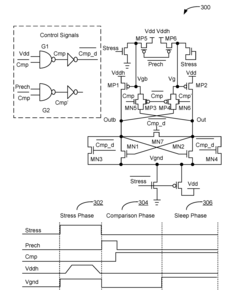
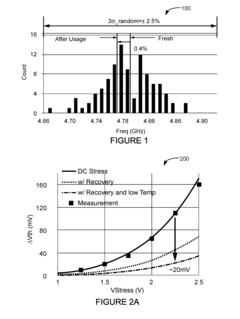
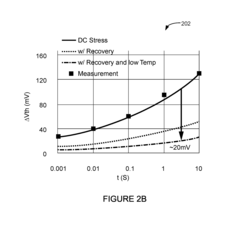
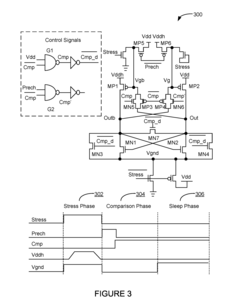
- A silicon marker technique using conventional CMOS devices with an accelerated aging circuit and stochastic processing methodology to create a reliable usage marker within seconds, leveraging NBTI effects and latch-based comparator circuits to enhance detection accuracy and tolerance to process variations.
Host computer
PatentInactiveUS20120043993A1
Innovation
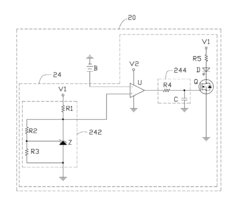
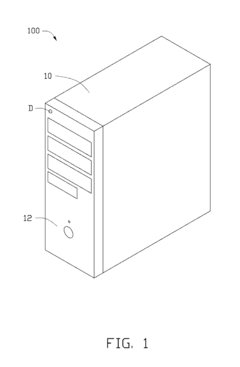
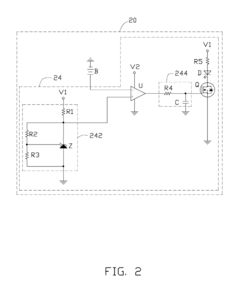
- Incorporating a voltage detection circuit within the host computer that includes a comparator, electronic switch, alarm unit, reference voltage generating circuit, and delay circuit to detect and alert the user when the battery voltage falls below a certain threshold, using a light emitting diode as an alarm unit.
Energy Efficiency Impact
The impact of CMOS battery on energy efficiency in universal communication protocols is significant and multifaceted. CMOS batteries play a crucial role in maintaining system settings and real-time clock functions in various electronic devices, including those used in communication systems. By providing a constant, low-power source of energy, CMOS batteries enable devices to retain critical information even when the main power is disconnected, thus reducing the need for frequent system reconfigurations and minimizing energy consumption during startup processes.
In the context of universal communication protocols, CMOS batteries contribute to energy efficiency by supporting power management features. These batteries allow devices to enter low-power states while maintaining essential timing and configuration data. This capability is particularly important in network devices and IoT sensors, where prolonged standby periods are common. By preserving critical information, CMOS batteries eliminate the need for energy-intensive full system initializations, resulting in substantial power savings over time.
Furthermore, CMOS batteries enhance the overall stability of communication systems. By ensuring consistent timekeeping and configuration retention, these batteries reduce the likelihood of synchronization errors and communication failures. This stability translates into fewer retransmissions and error correction processes, which are often energy-intensive operations in communication protocols. As a result, the presence of CMOS batteries indirectly contributes to improved energy efficiency across the entire communication network.
The longevity of CMOS batteries also plays a role in energy conservation. Modern CMOS batteries can last for several years, reducing the frequency of battery replacements and associated maintenance operations. This extended lifespan not only saves energy in terms of reduced manufacturing and disposal processes but also minimizes system downtime and reconfiguration efforts, which can be energy-intensive activities.
In the realm of mobile and portable devices, where power consumption is a critical concern, CMOS batteries help optimize energy usage by maintaining device states during power-off periods. This capability allows for quicker resume times and reduces the energy required to restore device settings, contributing to overall battery life extension in mobile communication devices.
As communication protocols evolve to become more complex and data-intensive, the role of CMOS batteries in energy efficiency becomes increasingly important. These batteries support advanced power management techniques, such as selective wake-up mechanisms and adaptive power scaling, which are essential for minimizing energy consumption in modern communication systems. By providing a reliable source of power for critical low-level functions, CMOS batteries enable more sophisticated energy-saving strategies to be implemented at the protocol and system levels.
In the context of universal communication protocols, CMOS batteries contribute to energy efficiency by supporting power management features. These batteries allow devices to enter low-power states while maintaining essential timing and configuration data. This capability is particularly important in network devices and IoT sensors, where prolonged standby periods are common. By preserving critical information, CMOS batteries eliminate the need for energy-intensive full system initializations, resulting in substantial power savings over time.
Furthermore, CMOS batteries enhance the overall stability of communication systems. By ensuring consistent timekeeping and configuration retention, these batteries reduce the likelihood of synchronization errors and communication failures. This stability translates into fewer retransmissions and error correction processes, which are often energy-intensive operations in communication protocols. As a result, the presence of CMOS batteries indirectly contributes to improved energy efficiency across the entire communication network.
The longevity of CMOS batteries also plays a role in energy conservation. Modern CMOS batteries can last for several years, reducing the frequency of battery replacements and associated maintenance operations. This extended lifespan not only saves energy in terms of reduced manufacturing and disposal processes but also minimizes system downtime and reconfiguration efforts, which can be energy-intensive activities.
In the realm of mobile and portable devices, where power consumption is a critical concern, CMOS batteries help optimize energy usage by maintaining device states during power-off periods. This capability allows for quicker resume times and reduces the energy required to restore device settings, contributing to overall battery life extension in mobile communication devices.
As communication protocols evolve to become more complex and data-intensive, the role of CMOS batteries in energy efficiency becomes increasingly important. These batteries support advanced power management techniques, such as selective wake-up mechanisms and adaptive power scaling, which are essential for minimizing energy consumption in modern communication systems. By providing a reliable source of power for critical low-level functions, CMOS batteries enable more sophisticated energy-saving strategies to be implemented at the protocol and system levels.
Standardization Efforts
The standardization efforts for CMOS battery-enhanced universal communication protocols have been gaining momentum in recent years. These efforts aim to establish a common framework for integrating CMOS battery technology with various communication protocols, ensuring interoperability and consistency across different devices and systems.
Several international organizations have been at the forefront of these standardization initiatives. The Institute of Electrical and Electronics Engineers (IEEE) has formed a working group dedicated to developing standards for CMOS battery-enhanced communication protocols. This group focuses on defining specifications for power management, data transmission, and interface requirements.
The International Telecommunication Union (ITU) has also recognized the importance of standardizing CMOS battery integration in communication protocols. They have initiated a study group to explore the potential impact on existing telecommunication standards and propose necessary amendments to accommodate this technology.
In parallel, the Internet Engineering Task Force (IETF) has been working on incorporating CMOS battery considerations into their protocol specifications. This effort aims to ensure that internet-based communication protocols can effectively leverage the benefits of CMOS battery technology while maintaining compatibility with existing infrastructure.
Industry consortia have also played a crucial role in driving standardization efforts. The CMOS Battery Communication Alliance (CBCA), a consortium of leading technology companies, has been actively developing reference designs and best practices for implementing CMOS battery-enhanced protocols. Their work has significantly contributed to the harmonization of different approaches across the industry.
Standardization efforts have focused on several key areas. Power efficiency standards have been developed to optimize the use of CMOS battery technology in communication protocols, ensuring longer battery life and reduced energy consumption. Data integrity and security standards have been established to address potential vulnerabilities introduced by the integration of CMOS batteries into communication systems.
Interoperability standards have been a primary focus, aiming to ensure that devices from different manufacturers can seamlessly communicate using CMOS battery-enhanced protocols. This includes defining standard interfaces, data formats, and communication handshakes.
Testing and certification procedures have also been developed as part of the standardization process. These procedures help verify compliance with the established standards and ensure consistent performance across different implementations.
The ongoing standardization efforts have faced challenges, particularly in balancing the needs of different stakeholders and addressing the rapid pace of technological advancements. However, the collaborative approach adopted by various organizations and industry players has been instrumental in overcoming these challenges and driving progress towards a unified set of standards for CMOS battery-enhanced universal communication protocols.
Several international organizations have been at the forefront of these standardization initiatives. The Institute of Electrical and Electronics Engineers (IEEE) has formed a working group dedicated to developing standards for CMOS battery-enhanced communication protocols. This group focuses on defining specifications for power management, data transmission, and interface requirements.
The International Telecommunication Union (ITU) has also recognized the importance of standardizing CMOS battery integration in communication protocols. They have initiated a study group to explore the potential impact on existing telecommunication standards and propose necessary amendments to accommodate this technology.
In parallel, the Internet Engineering Task Force (IETF) has been working on incorporating CMOS battery considerations into their protocol specifications. This effort aims to ensure that internet-based communication protocols can effectively leverage the benefits of CMOS battery technology while maintaining compatibility with existing infrastructure.
Industry consortia have also played a crucial role in driving standardization efforts. The CMOS Battery Communication Alliance (CBCA), a consortium of leading technology companies, has been actively developing reference designs and best practices for implementing CMOS battery-enhanced protocols. Their work has significantly contributed to the harmonization of different approaches across the industry.
Standardization efforts have focused on several key areas. Power efficiency standards have been developed to optimize the use of CMOS battery technology in communication protocols, ensuring longer battery life and reduced energy consumption. Data integrity and security standards have been established to address potential vulnerabilities introduced by the integration of CMOS batteries into communication systems.
Interoperability standards have been a primary focus, aiming to ensure that devices from different manufacturers can seamlessly communicate using CMOS battery-enhanced protocols. This includes defining standard interfaces, data formats, and communication handshakes.
Testing and certification procedures have also been developed as part of the standardization process. These procedures help verify compliance with the established standards and ensure consistent performance across different implementations.
The ongoing standardization efforts have faced challenges, particularly in balancing the needs of different stakeholders and addressing the rapid pace of technological advancements. However, the collaborative approach adopted by various organizations and industry players has been instrumental in overcoming these challenges and driving progress towards a unified set of standards for CMOS battery-enhanced universal communication protocols.
Unlock deeper insights with PatSnap Eureka Quick Research — get a full tech report to explore trends and direct your research. Try now!
Generate Your Research Report Instantly with AI Agent
Supercharge your innovation with PatSnap Eureka AI Agent Platform!