

How CMOS Battery Powers High-Performance Computing?
JUL 22, 20259 MIN READ
Generate Your Research Report Instantly with AI Agent
PatSnap Eureka helps you evaluate technical feasibility & market potential.
CMOS Battery Evolution
The evolution of CMOS battery technology in high-performance computing has been a critical factor in the advancement of modern computing systems. Initially developed in the 1980s, CMOS (Complementary Metal-Oxide-Semiconductor) batteries were primarily used to maintain basic system settings and clock functions in personal computers.
As computing power increased, the role of CMOS batteries expanded to support more complex operations. In the 1990s, these batteries became essential for maintaining BIOS settings, system configurations, and real-time clock functions in servers and workstations. This period saw improvements in battery chemistry, moving from nickel-cadmium to lithium-based technologies, which offered higher energy density and longer lifespan.
The early 2000s marked a significant shift in CMOS battery applications. With the rise of data centers and high-performance computing clusters, CMOS batteries began to play a crucial role in maintaining system integrity during power outages and transitions. This led to the development of more robust and reliable battery designs, capable of withstanding the demanding environments of large-scale computing facilities.
As computing systems became more power-hungry, CMOS battery technology evolved to meet these increased demands. The mid-2000s saw the introduction of smart battery management systems, which optimized battery performance and extended operational life. These systems incorporated advanced monitoring and charging algorithms, ensuring that CMOS batteries could reliably support critical system functions in high-performance environments.
The late 2000s and early 2010s brought about a new era in CMOS battery technology, with a focus on miniaturization and integration. As computing devices became smaller and more portable, CMOS batteries had to adapt. This led to the development of thin-film batteries and other compact designs that could be seamlessly integrated into increasingly dense circuit boards without compromising performance.
Recent years have seen a shift towards more environmentally friendly and sustainable CMOS battery solutions. Manufacturers have been exploring alternative materials and designs that reduce environmental impact while maintaining or improving performance. This includes the use of recyclable components and the development of batteries with longer operational lifespans, reducing electronic waste.
Looking towards the future, CMOS battery technology continues to evolve in response to the demands of high-performance computing. Current research focuses on developing batteries with even higher energy densities, faster charging capabilities, and improved thermal management. These advancements aim to support the next generation of computing systems, including quantum computers and advanced AI processors, which will require even more reliable and efficient power management solutions.
As computing power increased, the role of CMOS batteries expanded to support more complex operations. In the 1990s, these batteries became essential for maintaining BIOS settings, system configurations, and real-time clock functions in servers and workstations. This period saw improvements in battery chemistry, moving from nickel-cadmium to lithium-based technologies, which offered higher energy density and longer lifespan.
The early 2000s marked a significant shift in CMOS battery applications. With the rise of data centers and high-performance computing clusters, CMOS batteries began to play a crucial role in maintaining system integrity during power outages and transitions. This led to the development of more robust and reliable battery designs, capable of withstanding the demanding environments of large-scale computing facilities.
As computing systems became more power-hungry, CMOS battery technology evolved to meet these increased demands. The mid-2000s saw the introduction of smart battery management systems, which optimized battery performance and extended operational life. These systems incorporated advanced monitoring and charging algorithms, ensuring that CMOS batteries could reliably support critical system functions in high-performance environments.
The late 2000s and early 2010s brought about a new era in CMOS battery technology, with a focus on miniaturization and integration. As computing devices became smaller and more portable, CMOS batteries had to adapt. This led to the development of thin-film batteries and other compact designs that could be seamlessly integrated into increasingly dense circuit boards without compromising performance.
Recent years have seen a shift towards more environmentally friendly and sustainable CMOS battery solutions. Manufacturers have been exploring alternative materials and designs that reduce environmental impact while maintaining or improving performance. This includes the use of recyclable components and the development of batteries with longer operational lifespans, reducing electronic waste.
Looking towards the future, CMOS battery technology continues to evolve in response to the demands of high-performance computing. Current research focuses on developing batteries with even higher energy densities, faster charging capabilities, and improved thermal management. These advancements aim to support the next generation of computing systems, including quantum computers and advanced AI processors, which will require even more reliable and efficient power management solutions.
HPC Power Demand
High-performance computing (HPC) systems are at the forefront of technological advancement, pushing the boundaries of computational capabilities. These systems, designed to handle complex calculations and process vast amounts of data, have an insatiable appetite for power. The power demand of HPC systems has been steadily increasing, driven by the need for greater computational performance and the expansion of data-intensive applications across various industries.
The power consumption of HPC systems is a critical factor that impacts not only operational costs but also system design, cooling requirements, and overall efficiency. Modern supercomputers can consume tens of megawatts of power, equivalent to the energy needs of small towns. This substantial power demand presents significant challenges for data center operators and system designers, who must balance performance requirements with energy efficiency and sustainability goals.
Several factors contribute to the escalating power demand in HPC environments. The continuous increase in processor core counts and clock speeds, coupled with the integration of specialized accelerators like GPUs and FPGAs, has led to a surge in computational density. Additionally, the growing complexity of interconnects and memory subsystems, essential for handling massive datasets and facilitating rapid data movement, further amplifies power consumption.
The rise of artificial intelligence and machine learning workloads has introduced new dimensions to HPC power demands. These applications often require sustained high-performance computing over extended periods, pushing systems to their thermal and power limits. As a result, power management and energy efficiency have become paramount concerns in HPC system design and operation.
To address these challenges, the HPC community has been exploring innovative approaches to power management and energy efficiency. These include advanced cooling technologies, such as liquid cooling and immersion cooling, which allow for higher power densities while maintaining optimal operating temperatures. Dynamic voltage and frequency scaling (DVFS) techniques are being employed to adjust processor performance based on workload demands, optimizing power consumption without significantly compromising computational capabilities.
Furthermore, the integration of renewable energy sources and the implementation of smart grid technologies are becoming increasingly common in HPC facilities. These initiatives aim to reduce the carbon footprint of HPC operations and mitigate the environmental impact of their substantial power requirements. As the demand for HPC resources continues to grow across scientific, industrial, and commercial sectors, addressing power consumption remains a critical challenge for the sustainable development of high-performance computing technologies.
The power consumption of HPC systems is a critical factor that impacts not only operational costs but also system design, cooling requirements, and overall efficiency. Modern supercomputers can consume tens of megawatts of power, equivalent to the energy needs of small towns. This substantial power demand presents significant challenges for data center operators and system designers, who must balance performance requirements with energy efficiency and sustainability goals.
Several factors contribute to the escalating power demand in HPC environments. The continuous increase in processor core counts and clock speeds, coupled with the integration of specialized accelerators like GPUs and FPGAs, has led to a surge in computational density. Additionally, the growing complexity of interconnects and memory subsystems, essential for handling massive datasets and facilitating rapid data movement, further amplifies power consumption.
The rise of artificial intelligence and machine learning workloads has introduced new dimensions to HPC power demands. These applications often require sustained high-performance computing over extended periods, pushing systems to their thermal and power limits. As a result, power management and energy efficiency have become paramount concerns in HPC system design and operation.
To address these challenges, the HPC community has been exploring innovative approaches to power management and energy efficiency. These include advanced cooling technologies, such as liquid cooling and immersion cooling, which allow for higher power densities while maintaining optimal operating temperatures. Dynamic voltage and frequency scaling (DVFS) techniques are being employed to adjust processor performance based on workload demands, optimizing power consumption without significantly compromising computational capabilities.
Furthermore, the integration of renewable energy sources and the implementation of smart grid technologies are becoming increasingly common in HPC facilities. These initiatives aim to reduce the carbon footprint of HPC operations and mitigate the environmental impact of their substantial power requirements. As the demand for HPC resources continues to grow across scientific, industrial, and commercial sectors, addressing power consumption remains a critical challenge for the sustainable development of high-performance computing technologies.
CMOS Battery Challenges
CMOS (Complementary Metal-Oxide-Semiconductor) batteries play a crucial role in powering high-performance computing systems, yet they face several significant challenges that impact their effectiveness and longevity. One of the primary issues is the limited energy density of CMOS batteries, which constrains the amount of power they can provide to increasingly demanding computing components.
As processors and other hardware become more sophisticated and energy-intensive, CMOS batteries struggle to keep pace with these growing power requirements. This mismatch often results in reduced system performance or shorter battery life, compromising the overall efficiency of high-performance computing devices.
Another challenge lies in the self-discharge rate of CMOS batteries. Over time, these batteries gradually lose their charge even when not in use, which can lead to data loss and system instability if the battery fails to maintain critical settings and memory contents. This issue is particularly problematic for systems that remain inactive for extended periods.
Temperature sensitivity presents an additional hurdle for CMOS batteries in high-performance computing environments. These batteries are susceptible to performance degradation and accelerated aging when exposed to the high temperatures often generated by powerful processors and other components. This sensitivity can lead to reduced battery lifespan and potential system failures.
The size constraints of modern computing devices also pose a challenge for CMOS battery integration. As manufacturers strive to create more compact and portable high-performance systems, the space available for CMOS batteries becomes increasingly limited. This restriction can force compromises in battery capacity or require innovative design solutions to maintain adequate power supply.
Compatibility issues arise as computing technologies evolve. Newer hardware components may have different power requirements or voltage specifications that are not easily met by traditional CMOS battery designs. This incompatibility can necessitate frequent battery replacements or system upgrades, increasing maintenance costs and downtime.
Environmental concerns also present challenges for CMOS batteries in high-performance computing. The materials used in these batteries, such as lithium, can have significant environmental impacts if not properly disposed of or recycled. As sustainability becomes a greater focus in the tech industry, finding more eco-friendly alternatives or improving recycling processes for CMOS batteries becomes increasingly important.
Lastly, the reliability and longevity of CMOS batteries in high-stress computing environments remain ongoing challenges. Continuous charge-discharge cycles, coupled with the demands of powering critical system functions, can lead to premature battery failure. This issue is particularly critical in enterprise and data center settings where system downtime can have severe operational and financial consequences.
As processors and other hardware become more sophisticated and energy-intensive, CMOS batteries struggle to keep pace with these growing power requirements. This mismatch often results in reduced system performance or shorter battery life, compromising the overall efficiency of high-performance computing devices.
Another challenge lies in the self-discharge rate of CMOS batteries. Over time, these batteries gradually lose their charge even when not in use, which can lead to data loss and system instability if the battery fails to maintain critical settings and memory contents. This issue is particularly problematic for systems that remain inactive for extended periods.
Temperature sensitivity presents an additional hurdle for CMOS batteries in high-performance computing environments. These batteries are susceptible to performance degradation and accelerated aging when exposed to the high temperatures often generated by powerful processors and other components. This sensitivity can lead to reduced battery lifespan and potential system failures.
The size constraints of modern computing devices also pose a challenge for CMOS battery integration. As manufacturers strive to create more compact and portable high-performance systems, the space available for CMOS batteries becomes increasingly limited. This restriction can force compromises in battery capacity or require innovative design solutions to maintain adequate power supply.
Compatibility issues arise as computing technologies evolve. Newer hardware components may have different power requirements or voltage specifications that are not easily met by traditional CMOS battery designs. This incompatibility can necessitate frequent battery replacements or system upgrades, increasing maintenance costs and downtime.
Environmental concerns also present challenges for CMOS batteries in high-performance computing. The materials used in these batteries, such as lithium, can have significant environmental impacts if not properly disposed of or recycled. As sustainability becomes a greater focus in the tech industry, finding more eco-friendly alternatives or improving recycling processes for CMOS batteries becomes increasingly important.
Lastly, the reliability and longevity of CMOS batteries in high-stress computing environments remain ongoing challenges. Continuous charge-discharge cycles, coupled with the demands of powering critical system functions, can lead to premature battery failure. This issue is particularly critical in enterprise and data center settings where system downtime can have severe operational and financial consequences.
Current CMOS Solutions
01 CMOS battery power management
CMOS batteries are used to maintain system settings and real-time clock information when the main power is off. Power management techniques are implemented to extend battery life and ensure proper functioning of the CMOS system. This includes monitoring battery voltage, implementing low-power modes, and optimizing power consumption in standby states.- CMOS battery power management: Systems and methods for managing power in CMOS batteries, including techniques for monitoring battery voltage, implementing power-saving modes, and extending battery life through efficient power distribution and consumption in electronic devices.
- CMOS battery replacement and backup systems: Innovations in CMOS battery replacement procedures and backup power systems to ensure continuous operation of critical components during battery changes or failures, including hot-swappable designs and temporary power storage solutions.
- CMOS battery integration in semiconductor devices: Advancements in integrating CMOS batteries within semiconductor devices and integrated circuits, focusing on miniaturization, improved efficiency, and enhanced compatibility with various electronic components and systems.
- CMOS battery monitoring and diagnostics: Development of sophisticated monitoring and diagnostic systems for CMOS batteries, including real-time voltage tracking, predictive maintenance algorithms, and early warning systems for potential battery failures in electronic devices.
- CMOS battery environmental protection and safety: Innovations focused on improving the environmental impact and safety of CMOS batteries, including the development of eco-friendly materials, enhanced disposal methods, and safety mechanisms to prevent leakage or overheating in electronic devices.
02 CMOS battery replacement and backup systems
To prevent data loss during CMOS battery replacement or failure, backup systems are designed. These may include temporary power sources, capacitor-based backup, or secondary batteries. Some designs allow for hot-swapping of CMOS batteries without shutting down the system, ensuring continuous operation and data retention.Expand Specific Solutions03 Integration of CMOS battery in semiconductor devices
CMOS batteries are integrated into semiconductor devices to provide power for on-chip memory and clock functions. This integration involves designing compact battery structures, implementing charge pumps, and developing efficient power distribution networks within the chip to minimize power loss and extend battery life.Expand Specific Solutions04 CMOS battery monitoring and alert systems
Systems are developed to monitor CMOS battery health and provide alerts when replacement is needed. These may include voltage monitoring circuits, battery life prediction algorithms, and user notification systems. Some designs incorporate smart charging techniques to extend battery lifespan and improve overall system reliability.Expand Specific Solutions05 CMOS battery alternatives and energy harvesting
Research into alternatives to traditional CMOS batteries includes the use of supercapacitors, energy harvesting techniques, and non-volatile memory technologies. These approaches aim to reduce reliance on battery power, extend maintenance intervals, and improve the environmental sustainability of electronic devices that traditionally use CMOS batteries.Expand Specific Solutions
Key CMOS Battery Makers
The CMOS battery technology in high-performance computing is in a mature stage, with a stable market and established players. The global market for CMOS batteries in computing devices is substantial, driven by the increasing demand for high-performance systems. Key players like Intel, IBM, and Samsung have developed advanced CMOS battery technologies, focusing on power efficiency and longevity. Companies such as Apple, Dell, and Lenovo integrate these solutions into their products, while semiconductor manufacturers like TSMC and NXP contribute to the supply chain. The competition is intense, with firms investing in R&D to improve battery life, reduce power consumption, and enhance overall system performance in high-performance computing environments.
Intel Corp.
Technical Solution: Intel has developed advanced CMOS battery technologies for high-performance computing systems. Their approach includes integrating low-power CMOS circuits with high-capacity lithium-ion batteries, enabling extended standby times and improved system reliability. Intel's CMOS battery solutions incorporate smart power management features, such as adaptive voltage scaling and dynamic frequency adjustment, to optimize power consumption based on workload demands[1][3]. Additionally, they have implemented advanced thermal management techniques to ensure stable CMOS battery performance under varying computational loads, crucial for maintaining system integrity in data centers and enterprise environments[5].
Strengths: Industry-leading power efficiency, seamless integration with Intel processors, and advanced power management features. Weaknesses: Potentially higher cost compared to generic solutions, and may require specific hardware compatibility.
QUALCOMM, Inc.
Technical Solution: Qualcomm has innovated in CMOS battery technology for high-performance mobile computing. Their approach focuses on ultra-low-power CMOS designs coupled with advanced battery management systems. Qualcomm's solutions incorporate adaptive power domains, allowing for selective powering of critical components while others remain in low-power states[2]. They have also developed proprietary quick-charge technologies that can rapidly replenish CMOS batteries without compromising long-term reliability. Qualcomm's CMOS battery systems are designed to support intensive mobile computing tasks, such as AI processing and 5G connectivity, while maintaining extended battery life[4][6].
Strengths: Excellent power efficiency for mobile devices, fast-charging capabilities, and optimized for 5G and AI applications. Weaknesses: Primarily focused on mobile platforms, which may limit applicability in some high-performance computing scenarios.
CMOS Battery Innovations
Computing device and method for clearing data stored in complementary metal-oxide semiconductor chip
PatentInactiveUS20120047307A1
Innovation
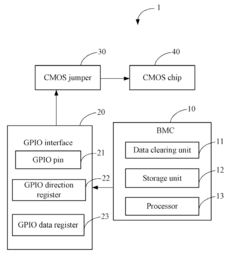
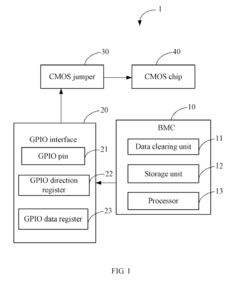
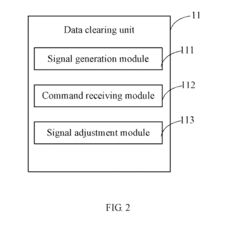
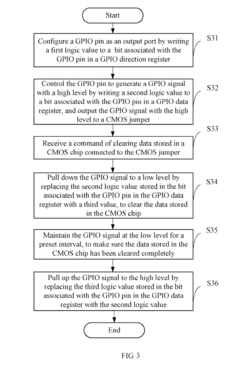
- A computing device with a data clearing unit that uses a GPIO interface to configure a CMOS jumper, generating a high-level signal to maintain data and then pulling it down to clear data stored in the CMOS chip, allowing for safe and controlled data reset.
Host computer
PatentInactiveUS20120043993A1
Innovation
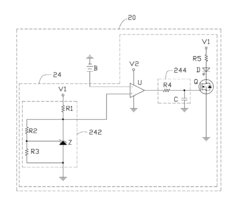
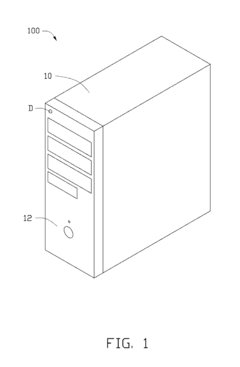
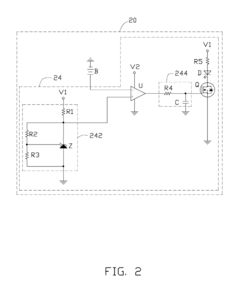
- Incorporating a voltage detection circuit within the host computer that includes a comparator, electronic switch, alarm unit, reference voltage generating circuit, and delay circuit to detect and alert the user when the battery voltage falls below a certain threshold, using a light emitting diode as an alarm unit.
Energy Efficiency Regs
Energy efficiency regulations have become increasingly stringent in the realm of high-performance computing, driven by the growing concern over power consumption and environmental impact. These regulations aim to promote the development and adoption of more energy-efficient technologies in data centers and supercomputing facilities.
The European Union's Ecodesign Directive, for instance, sets mandatory energy efficiency standards for various products, including servers and data storage equipment. This directive requires manufacturers to improve the energy efficiency of their products continuously, with specific targets for power supply efficiency, idle state power consumption, and overall system performance per watt.
In the United States, the Environmental Protection Agency's ENERGY STAR program has expanded to include enterprise servers and data center equipment. This voluntary program encourages the adoption of energy-efficient products by providing certification for those that meet specific energy performance criteria. The program has been instrumental in driving innovation in server design and power management technologies.
The emergence of these regulations has led to significant advancements in CMOS battery technology for high-performance computing. Manufacturers are now focusing on developing low-power CMOS batteries that can maintain system configurations and real-time clock functions while minimizing energy consumption. This has resulted in the creation of ultra-low-power CMOS batteries with extended lifespans and improved temperature tolerance.
Furthermore, energy efficiency regulations have spurred the development of more sophisticated power management systems in high-performance computing environments. These systems often incorporate intelligent CMOS battery monitoring and charging algorithms to optimize power usage and extend battery life. Advanced power gating techniques have also been implemented to reduce standby power consumption in CMOS circuits when not in active use.
The impact of these regulations extends beyond individual components to encompass entire data center designs. Many countries now have guidelines or mandatory requirements for data center energy efficiency, such as the Power Usage Effectiveness (PUE) metric. This has led to innovative cooling solutions and power distribution systems that work in tandem with energy-efficient CMOS technologies to reduce overall energy consumption.
As energy efficiency regulations continue to evolve, the role of CMOS batteries in high-performance computing is likely to become even more critical. Future regulations may focus on the recyclability and environmental impact of these batteries, potentially driving research into more sustainable materials and manufacturing processes. The ongoing push for energy efficiency is expected to foster continued innovation in CMOS battery technology, ultimately contributing to more sustainable and cost-effective high-performance computing solutions.
The European Union's Ecodesign Directive, for instance, sets mandatory energy efficiency standards for various products, including servers and data storage equipment. This directive requires manufacturers to improve the energy efficiency of their products continuously, with specific targets for power supply efficiency, idle state power consumption, and overall system performance per watt.
In the United States, the Environmental Protection Agency's ENERGY STAR program has expanded to include enterprise servers and data center equipment. This voluntary program encourages the adoption of energy-efficient products by providing certification for those that meet specific energy performance criteria. The program has been instrumental in driving innovation in server design and power management technologies.
The emergence of these regulations has led to significant advancements in CMOS battery technology for high-performance computing. Manufacturers are now focusing on developing low-power CMOS batteries that can maintain system configurations and real-time clock functions while minimizing energy consumption. This has resulted in the creation of ultra-low-power CMOS batteries with extended lifespans and improved temperature tolerance.
Furthermore, energy efficiency regulations have spurred the development of more sophisticated power management systems in high-performance computing environments. These systems often incorporate intelligent CMOS battery monitoring and charging algorithms to optimize power usage and extend battery life. Advanced power gating techniques have also been implemented to reduce standby power consumption in CMOS circuits when not in active use.
The impact of these regulations extends beyond individual components to encompass entire data center designs. Many countries now have guidelines or mandatory requirements for data center energy efficiency, such as the Power Usage Effectiveness (PUE) metric. This has led to innovative cooling solutions and power distribution systems that work in tandem with energy-efficient CMOS technologies to reduce overall energy consumption.
As energy efficiency regulations continue to evolve, the role of CMOS batteries in high-performance computing is likely to become even more critical. Future regulations may focus on the recyclability and environmental impact of these batteries, potentially driving research into more sustainable materials and manufacturing processes. The ongoing push for energy efficiency is expected to foster continued innovation in CMOS battery technology, ultimately contributing to more sustainable and cost-effective high-performance computing solutions.
Thermal Management
Thermal management is a critical aspect of high-performance computing systems powered by CMOS batteries. As these systems become more powerful and compact, the challenge of dissipating heat effectively becomes increasingly important. The thermal design of such systems must account for the heat generated by both the CMOS battery and the computing components.
CMOS batteries, while not typically major heat generators themselves, can be affected by the thermal environment within a high-performance computing system. Excessive heat can reduce the battery's lifespan and performance, potentially leading to data loss or system instability. Therefore, thermal management strategies must consider the CMOS battery's location and its proximity to heat-generating components.
One approach to thermal management in CMOS battery-powered high-performance computing systems is the use of advanced cooling technologies. These may include liquid cooling systems, which can efficiently remove heat from critical components. Heat pipes and vapor chambers are also employed to transfer heat away from sensitive areas, including the vicinity of the CMOS battery.
Airflow optimization is another key strategy in thermal management. Carefully designed ventilation systems ensure that cool air is directed to where it's needed most, while hot air is efficiently expelled. This may involve the use of multiple fans, strategically placed vents, and baffles to guide airflow. The placement of the CMOS battery within this airflow system is crucial to maintain its optimal operating temperature.
Thermal interface materials (TIMs) play a vital role in heat dissipation. High-quality TIMs are used between heat-generating components and heatsinks to maximize thermal conductivity. In some cases, specialized TIMs may be employed around the CMOS battery to help regulate its temperature and protect it from thermal spikes.
Advanced thermal monitoring and control systems are essential in high-performance computing environments. These systems use an array of temperature sensors, including those near the CMOS battery, to continuously monitor thermal conditions. Sophisticated algorithms adjust cooling mechanisms in real-time, ensuring that all components, including the CMOS battery, remain within safe temperature ranges.
Power management techniques also contribute to thermal management. By intelligently regulating power consumption across the system, heat generation can be minimized. This includes dynamic voltage and frequency scaling, as well as selectively powering down unused components. Such techniques not only reduce overall heat output but also help preserve the CMOS battery's charge.
As high-performance computing systems continue to evolve, thermal management strategies must adapt. Future developments may include more efficient cooling technologies, advanced materials with superior thermal properties, and increasingly sophisticated thermal modeling and simulation tools. These advancements will be crucial in maintaining the reliability and performance of CMOS battery-powered high-performance computing systems in the face of ever-increasing computational demands.
CMOS batteries, while not typically major heat generators themselves, can be affected by the thermal environment within a high-performance computing system. Excessive heat can reduce the battery's lifespan and performance, potentially leading to data loss or system instability. Therefore, thermal management strategies must consider the CMOS battery's location and its proximity to heat-generating components.
One approach to thermal management in CMOS battery-powered high-performance computing systems is the use of advanced cooling technologies. These may include liquid cooling systems, which can efficiently remove heat from critical components. Heat pipes and vapor chambers are also employed to transfer heat away from sensitive areas, including the vicinity of the CMOS battery.
Airflow optimization is another key strategy in thermal management. Carefully designed ventilation systems ensure that cool air is directed to where it's needed most, while hot air is efficiently expelled. This may involve the use of multiple fans, strategically placed vents, and baffles to guide airflow. The placement of the CMOS battery within this airflow system is crucial to maintain its optimal operating temperature.
Thermal interface materials (TIMs) play a vital role in heat dissipation. High-quality TIMs are used between heat-generating components and heatsinks to maximize thermal conductivity. In some cases, specialized TIMs may be employed around the CMOS battery to help regulate its temperature and protect it from thermal spikes.
Advanced thermal monitoring and control systems are essential in high-performance computing environments. These systems use an array of temperature sensors, including those near the CMOS battery, to continuously monitor thermal conditions. Sophisticated algorithms adjust cooling mechanisms in real-time, ensuring that all components, including the CMOS battery, remain within safe temperature ranges.
Power management techniques also contribute to thermal management. By intelligently regulating power consumption across the system, heat generation can be minimized. This includes dynamic voltage and frequency scaling, as well as selectively powering down unused components. Such techniques not only reduce overall heat output but also help preserve the CMOS battery's charge.
As high-performance computing systems continue to evolve, thermal management strategies must adapt. Future developments may include more efficient cooling technologies, advanced materials with superior thermal properties, and increasingly sophisticated thermal modeling and simulation tools. These advancements will be crucial in maintaining the reliability and performance of CMOS battery-powered high-performance computing systems in the face of ever-increasing computational demands.
Unlock deeper insights with PatSnap Eureka Quick Research — get a full tech report to explore trends and direct your research. Try now!
Generate Your Research Report Instantly with AI Agent
Supercharge your innovation with PatSnap Eureka AI Agent Platform!