How Luminol Supports Diverse Application Fields?
AUG 19, 20259 MIN READ
Generate Your Research Report Instantly with AI Agent
PatSnap Eureka helps you evaluate technical feasibility & market potential.
Luminol Technology Overview and Objectives
Luminol, a chemiluminescent compound, has been a subject of scientific interest and practical application for over a century. This versatile substance, first synthesized in 1928, has evolved from a laboratory curiosity to a powerful tool in various fields. The technology behind luminol has undergone significant advancements, particularly in the last few decades, driven by the growing demand for sensitive and non-invasive detection methods across multiple industries.
The primary objective of luminol technology is to provide a reliable, cost-effective, and highly sensitive method for detecting and visualizing specific substances or biological processes. This goal has been consistently pursued through ongoing research and development efforts, resulting in improved formulations, detection techniques, and applications. The evolution of luminol technology has been marked by a continuous expansion of its utility, from its initial use in forensic science to its current applications in diverse fields such as medical diagnostics, environmental monitoring, and industrial quality control.
One of the key technological objectives in luminol research has been to enhance its sensitivity and specificity. Scientists have worked on optimizing the chemical composition of luminol solutions, developing more efficient catalysts, and improving detection systems to achieve lower detection limits and reduce false positives. These efforts have led to the creation of advanced luminol-based assays capable of detecting trace amounts of target substances, making it an invaluable tool in fields where precision and reliability are paramount.
Another significant focus has been on expanding the range of detectable substances and biological processes. Researchers have explored various modifications to the luminol molecule and developed novel reaction protocols to broaden its applicability. This has resulted in the ability to detect a wide array of compounds, from blood and other biological fluids to specific proteins, enzymes, and even certain types of cancer cells. The versatility of luminol technology has thus become one of its most valuable attributes, supporting its adoption across diverse application fields.
The integration of luminol technology with other advanced analytical techniques has been a crucial aspect of its development. Combining luminol-based detection with chromatography, spectroscopy, and imaging technologies has led to more comprehensive and informative analytical methods. This synergistic approach has not only improved the accuracy and reliability of detection but has also opened up new possibilities for real-time monitoring and high-throughput screening in various scientific and industrial processes.
As we look towards the future, the objectives of luminol technology continue to evolve. Current research is focused on developing more environmentally friendly and sustainable luminol formulations, exploring novel applications in emerging fields such as nanotechnology and biosensors, and improving the portability and ease of use of luminol-based detection systems. These ongoing efforts aim to further enhance the versatility and accessibility of luminol technology, ensuring its continued relevance and impact across diverse application fields.
The primary objective of luminol technology is to provide a reliable, cost-effective, and highly sensitive method for detecting and visualizing specific substances or biological processes. This goal has been consistently pursued through ongoing research and development efforts, resulting in improved formulations, detection techniques, and applications. The evolution of luminol technology has been marked by a continuous expansion of its utility, from its initial use in forensic science to its current applications in diverse fields such as medical diagnostics, environmental monitoring, and industrial quality control.
One of the key technological objectives in luminol research has been to enhance its sensitivity and specificity. Scientists have worked on optimizing the chemical composition of luminol solutions, developing more efficient catalysts, and improving detection systems to achieve lower detection limits and reduce false positives. These efforts have led to the creation of advanced luminol-based assays capable of detecting trace amounts of target substances, making it an invaluable tool in fields where precision and reliability are paramount.
Another significant focus has been on expanding the range of detectable substances and biological processes. Researchers have explored various modifications to the luminol molecule and developed novel reaction protocols to broaden its applicability. This has resulted in the ability to detect a wide array of compounds, from blood and other biological fluids to specific proteins, enzymes, and even certain types of cancer cells. The versatility of luminol technology has thus become one of its most valuable attributes, supporting its adoption across diverse application fields.
The integration of luminol technology with other advanced analytical techniques has been a crucial aspect of its development. Combining luminol-based detection with chromatography, spectroscopy, and imaging technologies has led to more comprehensive and informative analytical methods. This synergistic approach has not only improved the accuracy and reliability of detection but has also opened up new possibilities for real-time monitoring and high-throughput screening in various scientific and industrial processes.
As we look towards the future, the objectives of luminol technology continue to evolve. Current research is focused on developing more environmentally friendly and sustainable luminol formulations, exploring novel applications in emerging fields such as nanotechnology and biosensors, and improving the portability and ease of use of luminol-based detection systems. These ongoing efforts aim to further enhance the versatility and accessibility of luminol technology, ensuring its continued relevance and impact across diverse application fields.
Market Analysis for Luminol Applications
The market for luminol applications has experienced significant growth and diversification in recent years, driven by its unique chemiluminescent properties and versatility across multiple industries. The global luminol market is primarily segmented into forensic science, medical diagnostics, and industrial applications, with each sector contributing to the overall market expansion.
In the forensic science sector, luminol remains a crucial tool for crime scene investigations, particularly in detecting trace amounts of blood. The increasing emphasis on advanced forensic techniques and the rising number of criminal cases worldwide have bolstered the demand for luminol in this field. Law enforcement agencies and forensic laboratories continue to be major consumers, with a steady growth trajectory expected in the coming years.
The medical diagnostics industry represents another substantial market for luminol applications. Its use in immunoassays, particularly in detecting various biomarkers and hormones, has gained traction. The growing prevalence of chronic diseases and the need for rapid, accurate diagnostic tools have fueled the adoption of luminol-based tests. Additionally, the ongoing research in developing new diagnostic applications for luminol in areas such as cancer detection and infectious diseases is expected to further expand its market potential in the healthcare sector.
Industrial applications of luminol, while smaller in market share compared to forensic and medical uses, show promising growth prospects. The chemical industry utilizes luminol in various processes, including quality control and contamination detection. Environmental monitoring applications, such as detecting pollutants in water bodies, have also emerged as a niche but growing segment for luminol-based technologies.
The market dynamics are influenced by factors such as technological advancements in luminol formulations, increasing R&D investments, and the development of more sensitive and specific detection methods. The push towards miniaturization and portability of testing equipment has also opened new avenues for luminol applications, particularly in point-of-care diagnostics and on-site forensic analysis.
Geographically, North America and Europe lead in luminol consumption, primarily due to their advanced forensic and healthcare infrastructure. However, the Asia-Pacific region is emerging as a rapidly growing market, driven by increasing investments in forensic sciences, expanding healthcare facilities, and growing industrial applications.
Despite its growth, the luminol market faces challenges such as the development of alternative technologies and stringent regulations in certain applications. However, ongoing research into novel applications and improvements in existing methodologies continue to sustain market growth and open new opportunities for luminol across diverse fields.
In the forensic science sector, luminol remains a crucial tool for crime scene investigations, particularly in detecting trace amounts of blood. The increasing emphasis on advanced forensic techniques and the rising number of criminal cases worldwide have bolstered the demand for luminol in this field. Law enforcement agencies and forensic laboratories continue to be major consumers, with a steady growth trajectory expected in the coming years.
The medical diagnostics industry represents another substantial market for luminol applications. Its use in immunoassays, particularly in detecting various biomarkers and hormones, has gained traction. The growing prevalence of chronic diseases and the need for rapid, accurate diagnostic tools have fueled the adoption of luminol-based tests. Additionally, the ongoing research in developing new diagnostic applications for luminol in areas such as cancer detection and infectious diseases is expected to further expand its market potential in the healthcare sector.
Industrial applications of luminol, while smaller in market share compared to forensic and medical uses, show promising growth prospects. The chemical industry utilizes luminol in various processes, including quality control and contamination detection. Environmental monitoring applications, such as detecting pollutants in water bodies, have also emerged as a niche but growing segment for luminol-based technologies.
The market dynamics are influenced by factors such as technological advancements in luminol formulations, increasing R&D investments, and the development of more sensitive and specific detection methods. The push towards miniaturization and portability of testing equipment has also opened new avenues for luminol applications, particularly in point-of-care diagnostics and on-site forensic analysis.
Geographically, North America and Europe lead in luminol consumption, primarily due to their advanced forensic and healthcare infrastructure. However, the Asia-Pacific region is emerging as a rapidly growing market, driven by increasing investments in forensic sciences, expanding healthcare facilities, and growing industrial applications.
Despite its growth, the luminol market faces challenges such as the development of alternative technologies and stringent regulations in certain applications. However, ongoing research into novel applications and improvements in existing methodologies continue to sustain market growth and open new opportunities for luminol across diverse fields.
Current Challenges in Luminol Technology
Despite its widespread use and proven effectiveness in various fields, luminol technology still faces several significant challenges that hinder its full potential and broader application. One of the primary issues is the sensitivity and specificity of luminol reactions. While luminol is known for its ability to detect trace amounts of blood, it can also produce false positives when reacting with other substances, such as certain plant materials or cleaning agents. This lack of absolute specificity can lead to misinterpretations in forensic investigations or medical diagnoses, potentially compromising the reliability of results.
Another challenge lies in the stability and longevity of luminol solutions. The chemical compound tends to degrade over time, especially when exposed to light or heat. This instability necessitates careful storage and handling procedures, as well as frequent preparation of fresh solutions, which can be time-consuming and resource-intensive for practitioners in various fields. The limited shelf life of luminol solutions also poses logistical challenges for its use in remote or resource-constrained environments.
The intensity and duration of luminol's chemiluminescence present additional hurdles. While the blue glow produced by luminol is visible in dark conditions, it may not be strong or long-lasting enough for certain applications, particularly in well-lit environments or when extended observation periods are required. This limitation can impact the effectiveness of luminol in real-time monitoring systems or in situations where continuous detection is necessary.
Furthermore, the potential interference of luminol with subsequent DNA analysis in forensic applications remains a concern. Although studies have shown that luminol does not significantly degrade DNA, there is still ongoing debate about its impact on the quality and quantity of recoverable genetic material. This uncertainty can complicate forensic procedures and may require additional steps to ensure the preservation of crucial evidence.
The environmental impact of luminol usage is another area of growing concern. As the application of luminol becomes more widespread, questions arise about its potential effects on ecosystems when released into the environment. The chemical's interaction with soil, water, and living organisms needs further investigation to ensure its sustainable and responsible use across different sectors.
Lastly, the cost-effectiveness of luminol technology, particularly in large-scale or frequent applications, poses economic challenges. While luminol itself is relatively inexpensive, the associated equipment, such as specialized cameras or light sources required for optimal detection and documentation, can be costly. This financial aspect may limit the adoption of luminol-based techniques in resource-limited settings or for routine use in certain industries.
Another challenge lies in the stability and longevity of luminol solutions. The chemical compound tends to degrade over time, especially when exposed to light or heat. This instability necessitates careful storage and handling procedures, as well as frequent preparation of fresh solutions, which can be time-consuming and resource-intensive for practitioners in various fields. The limited shelf life of luminol solutions also poses logistical challenges for its use in remote or resource-constrained environments.
The intensity and duration of luminol's chemiluminescence present additional hurdles. While the blue glow produced by luminol is visible in dark conditions, it may not be strong or long-lasting enough for certain applications, particularly in well-lit environments or when extended observation periods are required. This limitation can impact the effectiveness of luminol in real-time monitoring systems or in situations where continuous detection is necessary.
Furthermore, the potential interference of luminol with subsequent DNA analysis in forensic applications remains a concern. Although studies have shown that luminol does not significantly degrade DNA, there is still ongoing debate about its impact on the quality and quantity of recoverable genetic material. This uncertainty can complicate forensic procedures and may require additional steps to ensure the preservation of crucial evidence.
The environmental impact of luminol usage is another area of growing concern. As the application of luminol becomes more widespread, questions arise about its potential effects on ecosystems when released into the environment. The chemical's interaction with soil, water, and living organisms needs further investigation to ensure its sustainable and responsible use across different sectors.
Lastly, the cost-effectiveness of luminol technology, particularly in large-scale or frequent applications, poses economic challenges. While luminol itself is relatively inexpensive, the associated equipment, such as specialized cameras or light sources required for optimal detection and documentation, can be costly. This financial aspect may limit the adoption of luminol-based techniques in resource-limited settings or for routine use in certain industries.
Existing Luminol Application Methods
01 Luminol in forensic applications
Luminol is widely used in forensic science for detecting trace amounts of blood at crime scenes. When luminol comes into contact with the iron in hemoglobin, it produces a bright blue chemiluminescence. This reaction can reveal blood traces that are invisible to the naked eye, even if the area has been cleaned. The technique is highly sensitive and can detect blood diluted up to 1:1,000,000.- Luminol in chemiluminescence detection: Luminol is widely used in chemiluminescence detection methods for various applications. It produces a bright blue light when oxidized, making it useful for detecting blood traces in forensic investigations, as well as in analytical chemistry for detecting certain metals or oxidizing agents.
- Luminol-based biosensors and immunoassays: Luminol is incorporated into biosensors and immunoassays for detecting specific biological molecules or pathogens. These systems often combine luminol with enzymes or other reagents to create highly sensitive and selective detection methods for medical diagnostics and environmental monitoring.
- Enhanced luminol formulations: Researchers have developed enhanced luminol formulations by combining it with other compounds or modifying its structure. These improvements aim to increase sensitivity, stability, or specificity of luminol-based detection systems, leading to more efficient and reliable analytical methods.
- Luminol in imaging and visualization techniques: Luminol is utilized in various imaging and visualization techniques, particularly in biological and medical research. It can be used to visualize cellular processes, detect specific proteins or enzymes, and create contrast in microscopy applications.
- Industrial and environmental applications of luminol: Luminol finds applications in industrial processes and environmental monitoring. It is used in the detection of contaminants in water systems, monitoring of industrial effluents, and in the development of sensors for detecting specific chemicals or pollutants in various environments.
02 Luminol-based detection systems
Various detection systems incorporate luminol for its chemiluminescent properties. These systems are used in environmental monitoring, food safety testing, and medical diagnostics. The high sensitivity of luminol allows for the detection of minute quantities of target substances, making it valuable in analytical chemistry and biochemistry applications.Expand Specific Solutions03 Luminol synthesis and formulation
Research focuses on improving luminol synthesis methods and formulations to enhance its performance and stability. This includes developing new synthetic routes, optimizing reaction conditions, and creating novel luminol derivatives with improved properties. These advancements aim to increase the sensitivity, specificity, and durability of luminol-based detection systems.Expand Specific Solutions04 Luminol in biomedical research
Luminol finds applications in biomedical research, particularly in studying cellular processes and oxidative stress. It is used to detect reactive oxygen species and investigate inflammatory responses in living organisms. The non-invasive nature of luminol-based imaging techniques makes it valuable for in vivo studies of disease progression and treatment efficacy.Expand Specific Solutions05 Luminol in industrial and environmental monitoring
Luminol-based systems are employed in industrial and environmental monitoring to detect contaminants and assess water quality. These applications include testing for heavy metals, monitoring wastewater treatment processes, and detecting pollutants in natural water bodies. The high sensitivity of luminol allows for early detection of environmental hazards and ensures compliance with regulatory standards.Expand Specific Solutions
Key Players in Luminol Industry
The luminol technology market is in a growth phase, with increasing applications across diverse fields. The market size is expanding due to luminol's versatility in forensics, medical diagnostics, and environmental monitoring. While the technology is relatively mature, ongoing research by academic institutions like Washington University in St. Louis, Fudan University, and Central South University is driving innovation. Companies such as DSM IP Assets BV and MetrioPharm AG are exploring commercial applications, indicating a competitive landscape with both established players and new entrants. The technology's maturity varies across sectors, with forensic applications being more advanced compared to emerging biomedical uses.
DSM IP Assets BV
Technical Solution: DSM has developed advanced luminol formulations with enhanced stability and sensitivity for diverse applications. Their patented technology involves incorporating specific stabilizers and catalysts to improve luminol's chemiluminescent properties[1]. This allows for prolonged light emission and increased detection sensitivity in forensic, medical, and industrial settings. DSM's luminol derivatives feature optimized chemical structures that enable better penetration into biological samples and improved reactivity with target analytes[3]. The company has also created specialized luminol-based reagent kits tailored for specific application fields like crime scene investigation, clinical diagnostics, and environmental monitoring[5].
Strengths: Enhanced stability and sensitivity, versatile applications across multiple fields. Weaknesses: May require specialized equipment or training for optimal use.
Hangzhou Normal University
Technical Solution: Researchers at Hangzhou Normal University have developed novel luminol-based nanomaterials for biosensing and imaging applications. They have synthesized luminol-functionalized quantum dots that exhibit enhanced chemiluminescence properties[2]. These nanocomposites demonstrate improved quantum yield and longer emission lifetimes compared to traditional luminol. The team has also created luminol-doped silica nanoparticles with controllable size and surface properties, allowing for targeted delivery in biological systems[4]. Their work extends to developing luminol-based hydrogels for sustained release of chemiluminescent signals in tissue engineering and drug delivery applications[6].
Strengths: Innovative nanomaterial designs, improved sensitivity for biosensing. Weaknesses: May face challenges in scaling up production for commercial applications.
Innovative Luminol Research Breakthroughs
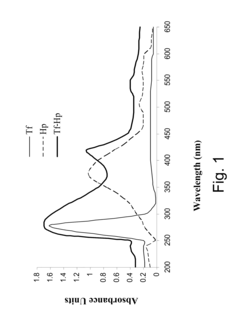
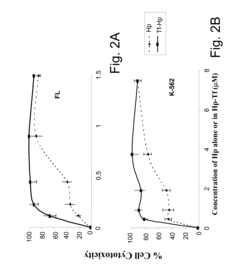
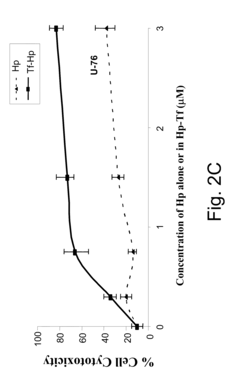
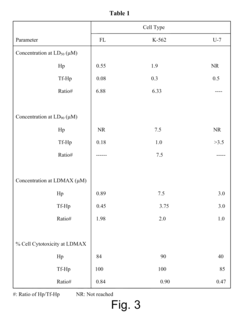
Photodynamic therapy using chemiluminescence and a ligand-photosensitiser conjugate
PatentInactiveUS20100297762A1
Innovation
- A method involving a ligand-toxin conjugate (LTC) comprising a photosensitizer like hematoporphyrin conjugated with transferrin, combined with a chemiluminescent agent such as luminol, which activates the photosensitizer intracellularly to produce reactive oxygen species, thereby enhancing target cell destruction without requiring external light.
Bioluminescence imaging of myeloperoxidase activity in vivo, methods, compositions and apparatuses therefor
PatentInactiveUS20110250145A1
Innovation
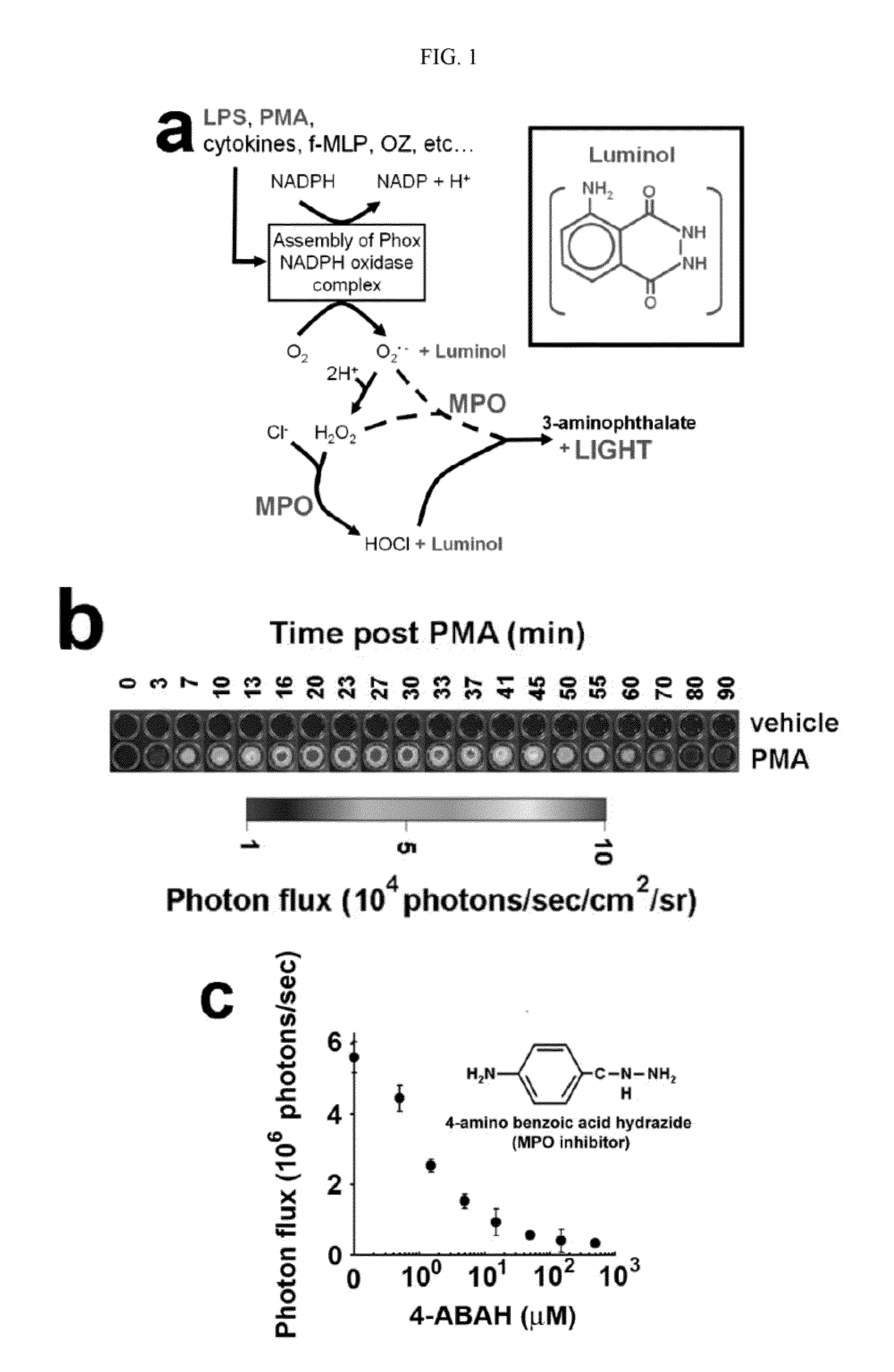
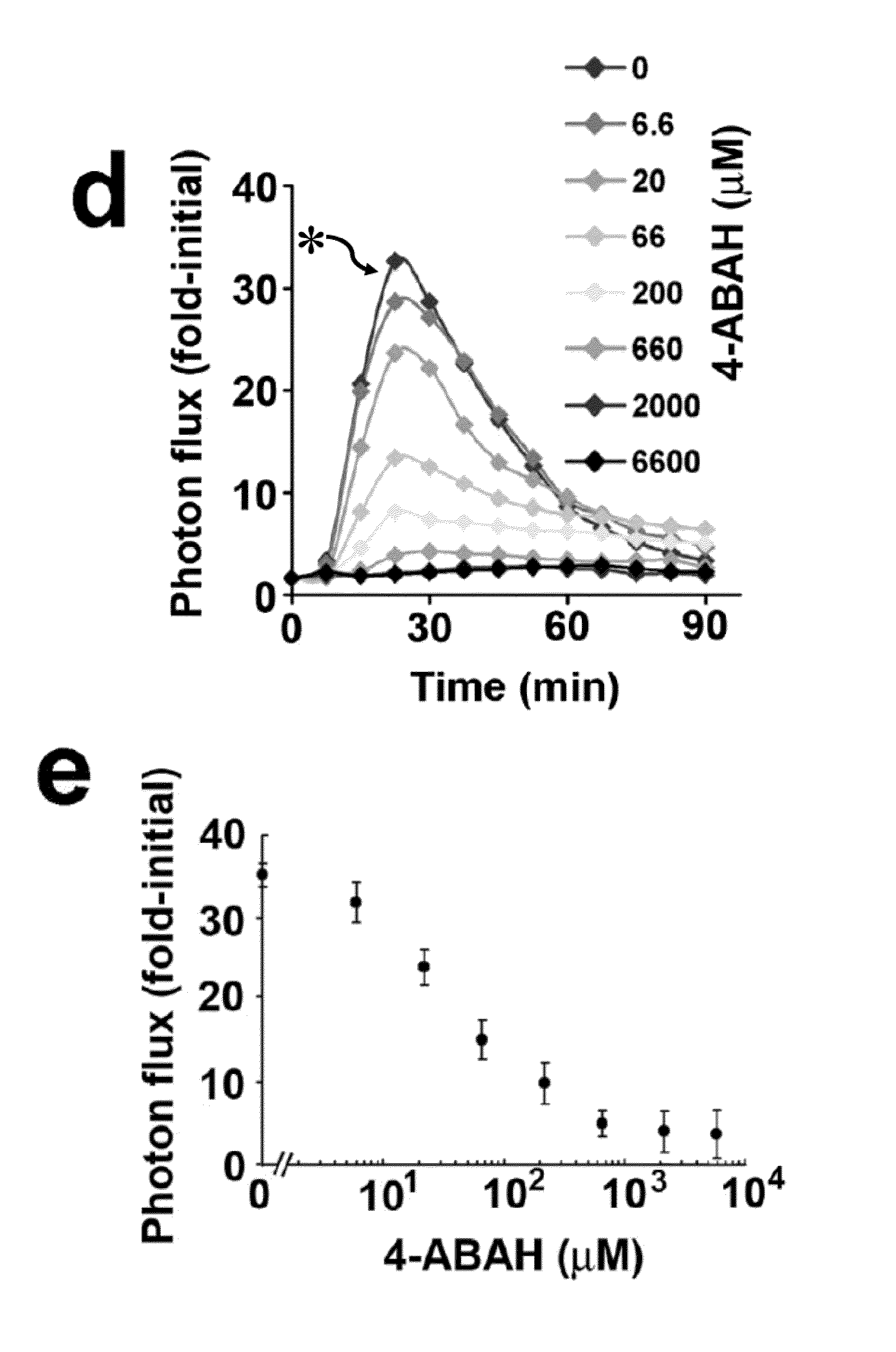
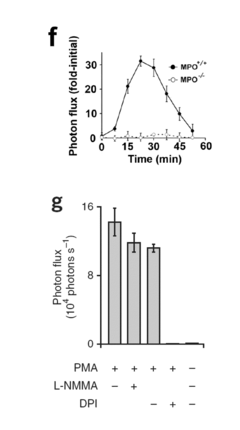
- The development of methods for non-invasive imaging of MPO activity using luminogenic-optical probes that emit light upon contact with oxidizing agents, allowing for the visualization of MPO activity in vivo, particularly through bioluminescence imaging (BLI) techniques.
Environmental Impact of Luminol Use
The use of luminol in various applications has raised concerns about its potential environmental impact. While luminol is widely recognized for its effectiveness in forensic investigations and medical diagnostics, its widespread use necessitates a careful examination of its ecological footprint.
One primary environmental consideration is the persistence of luminol in soil and water systems. Studies have shown that luminol can remain stable in aquatic environments for extended periods, potentially affecting local ecosystems. The compound's slow degradation rate may lead to accumulation in sediments, raising questions about long-term effects on aquatic flora and fauna.
Furthermore, the production process of luminol involves several chemical precursors, some of which may pose environmental risks if not properly managed. Industrial synthesis of luminol requires careful handling and disposal of byproducts to prevent contamination of water sources and soil.
The application of luminol in crime scene investigations also presents unique environmental challenges. When sprayed over large areas, luminol can potentially leach into surrounding soil and vegetation. While the concentrations used are generally low, repeated applications in sensitive ecosystems could lead to cumulative effects that warrant further study.
In medical and research settings, the disposal of luminol-containing waste requires specific protocols to prevent environmental contamination. Improper disposal could lead to the introduction of luminol into wastewater systems, potentially impacting water treatment processes and aquatic life downstream.
However, it's important to note that luminol's environmental impact is not uniformly negative. Its use in environmental monitoring, particularly in detecting pollutants in water systems, contributes to conservation efforts. By enabling the early detection of contaminants, luminol-based techniques can help prevent more severe environmental damage.
Efforts to mitigate the environmental impact of luminol are ongoing. Research into biodegradable alternatives and more efficient application methods aims to reduce the ecological footprint of luminol-based technologies. Additionally, improved waste management practices in laboratories and forensic settings are being developed to minimize environmental exposure.
As the applications of luminol continue to expand, it is crucial to maintain a balance between its beneficial uses and potential environmental risks. Ongoing research and regulatory oversight will play key roles in ensuring that luminol remains a valuable tool across diverse fields while minimizing its impact on the environment.
One primary environmental consideration is the persistence of luminol in soil and water systems. Studies have shown that luminol can remain stable in aquatic environments for extended periods, potentially affecting local ecosystems. The compound's slow degradation rate may lead to accumulation in sediments, raising questions about long-term effects on aquatic flora and fauna.
Furthermore, the production process of luminol involves several chemical precursors, some of which may pose environmental risks if not properly managed. Industrial synthesis of luminol requires careful handling and disposal of byproducts to prevent contamination of water sources and soil.
The application of luminol in crime scene investigations also presents unique environmental challenges. When sprayed over large areas, luminol can potentially leach into surrounding soil and vegetation. While the concentrations used are generally low, repeated applications in sensitive ecosystems could lead to cumulative effects that warrant further study.
In medical and research settings, the disposal of luminol-containing waste requires specific protocols to prevent environmental contamination. Improper disposal could lead to the introduction of luminol into wastewater systems, potentially impacting water treatment processes and aquatic life downstream.
However, it's important to note that luminol's environmental impact is not uniformly negative. Its use in environmental monitoring, particularly in detecting pollutants in water systems, contributes to conservation efforts. By enabling the early detection of contaminants, luminol-based techniques can help prevent more severe environmental damage.
Efforts to mitigate the environmental impact of luminol are ongoing. Research into biodegradable alternatives and more efficient application methods aims to reduce the ecological footprint of luminol-based technologies. Additionally, improved waste management practices in laboratories and forensic settings are being developed to minimize environmental exposure.
As the applications of luminol continue to expand, it is crucial to maintain a balance between its beneficial uses and potential environmental risks. Ongoing research and regulatory oversight will play key roles in ensuring that luminol remains a valuable tool across diverse fields while minimizing its impact on the environment.
Luminol Safety and Regulatory Compliance
Luminol's widespread use across various industries necessitates strict adherence to safety protocols and regulatory compliance. The chemical's potential hazards, including skin irritation and environmental concerns, have led to the development of comprehensive safety guidelines and regulations governing its handling, storage, and disposal.
In forensic applications, luminol is subject to stringent quality control measures to ensure its reliability in crime scene investigations. Forensic laboratories must follow standardized procedures for luminol preparation and application, as outlined by organizations such as the International Association for Identification (IAI) and the American Society of Crime Laboratory Directors (ASCLD).
The use of luminol in medical diagnostics and research is regulated by health authorities and institutional review boards. Researchers and medical professionals must comply with Good Laboratory Practice (GLP) and Good Clinical Practice (GCP) guidelines when utilizing luminol in their studies or diagnostic procedures.
In industrial settings, the Occupational Safety and Health Administration (OSHA) provides guidelines for the safe handling of luminol and other chemiluminescent compounds. These regulations cover aspects such as personal protective equipment (PPE), proper ventilation, and emergency response procedures in case of accidental exposure or spills.
Environmental regulations also play a crucial role in luminol's use and disposal. The Environmental Protection Agency (EPA) has established guidelines for the proper disposal of luminol-containing solutions to prevent environmental contamination. Companies and institutions using luminol must adhere to these regulations to minimize ecological impact.
Manufacturers of luminol-based products must comply with product safety regulations and labeling requirements. This includes providing Material Safety Data Sheets (MSDS) that detail the chemical's properties, potential hazards, and proper handling procedures. Additionally, products containing luminol may require specific packaging and transportation protocols to ensure safety during shipping and storage.
As luminol finds new applications in emerging fields such as biosensors and nanotechnology, regulatory bodies are continually updating guidelines to address potential risks associated with these novel uses. This ongoing process involves collaboration between researchers, industry experts, and regulatory agencies to develop appropriate safety measures and compliance standards.
In forensic applications, luminol is subject to stringent quality control measures to ensure its reliability in crime scene investigations. Forensic laboratories must follow standardized procedures for luminol preparation and application, as outlined by organizations such as the International Association for Identification (IAI) and the American Society of Crime Laboratory Directors (ASCLD).
The use of luminol in medical diagnostics and research is regulated by health authorities and institutional review boards. Researchers and medical professionals must comply with Good Laboratory Practice (GLP) and Good Clinical Practice (GCP) guidelines when utilizing luminol in their studies or diagnostic procedures.
In industrial settings, the Occupational Safety and Health Administration (OSHA) provides guidelines for the safe handling of luminol and other chemiluminescent compounds. These regulations cover aspects such as personal protective equipment (PPE), proper ventilation, and emergency response procedures in case of accidental exposure or spills.
Environmental regulations also play a crucial role in luminol's use and disposal. The Environmental Protection Agency (EPA) has established guidelines for the proper disposal of luminol-containing solutions to prevent environmental contamination. Companies and institutions using luminol must adhere to these regulations to minimize ecological impact.
Manufacturers of luminol-based products must comply with product safety regulations and labeling requirements. This includes providing Material Safety Data Sheets (MSDS) that detail the chemical's properties, potential hazards, and proper handling procedures. Additionally, products containing luminol may require specific packaging and transportation protocols to ensure safety during shipping and storage.
As luminol finds new applications in emerging fields such as biosensors and nanotechnology, regulatory bodies are continually updating guidelines to address potential risks associated with these novel uses. This ongoing process involves collaboration between researchers, industry experts, and regulatory agencies to develop appropriate safety measures and compliance standards.
Unlock deeper insights with PatSnap Eureka Quick Research — get a full tech report to explore trends and direct your research. Try now!
Generate Your Research Report Instantly with AI Agent
Supercharge your innovation with PatSnap Eureka AI Agent Platform!