How Luminol Transforms Scientific Visualization Techniques?
AUG 19, 20259 MIN READ
Generate Your Research Report Instantly with AI Agent
PatSnap Eureka helps you evaluate technical feasibility & market potential.
Luminol Background
Luminol, a chemiluminescent compound, has been a cornerstone in forensic science and biochemistry for decades. Its ability to emit light when oxidized has made it invaluable in crime scene investigations and various scientific applications. However, recent advancements have propelled luminol into the realm of scientific visualization, transforming how researchers perceive and analyze data across multiple disciplines.
The journey of luminol from a simple chemical reagent to a powerful visualization tool began in the early 20th century with its synthesis by German chemist Albrecht Schmidt. Initially used for detecting blood traces, luminol's unique properties soon caught the attention of researchers beyond forensic science. Its exceptional sensitivity and ability to produce a sustained glow under specific conditions opened up new possibilities in fields such as molecular biology, environmental science, and medical diagnostics.
The transformation of luminol into a scientific visualization technique was driven by the increasing demand for more sensitive and dynamic methods of data representation. Traditional visualization methods often struggled to capture subtle changes or low-concentration phenomena effectively. Luminol's chemiluminescent properties offered a solution, allowing for the detection and visualization of minute quantities of target molecules or cellular activities that were previously challenging to observe.
As researchers delved deeper into luminol's potential, they discovered its versatility in creating visual representations of complex biological processes. By coupling luminol with specific enzymes or antibodies, scientists developed sophisticated assays capable of tracking cellular signaling pathways, monitoring gene expression, and visualizing protein interactions in real-time. This breakthrough significantly enhanced our understanding of intricate biological systems and accelerated drug discovery processes.
The advent of advanced imaging technologies further amplified luminol's impact on scientific visualization. High-sensitivity cameras and spectrophotometers enabled the capture of luminol's faint light emissions with unprecedented precision. This technological synergy allowed for the development of dynamic, three-dimensional visualizations of chemical and biological processes, providing researchers with invaluable insights into spatiotemporal dynamics at the molecular level.
Moreover, the integration of luminol-based techniques with computational analysis and machine learning algorithms has revolutionized data interpretation in scientific research. These advanced analytical tools can now process the complex light patterns generated by luminol reactions, extracting meaningful patterns and correlations that might otherwise remain hidden to the human eye. This fusion of chemistry, optics, and data science has opened up new frontiers in scientific discovery and visualization.
The journey of luminol from a simple chemical reagent to a powerful visualization tool began in the early 20th century with its synthesis by German chemist Albrecht Schmidt. Initially used for detecting blood traces, luminol's unique properties soon caught the attention of researchers beyond forensic science. Its exceptional sensitivity and ability to produce a sustained glow under specific conditions opened up new possibilities in fields such as molecular biology, environmental science, and medical diagnostics.
The transformation of luminol into a scientific visualization technique was driven by the increasing demand for more sensitive and dynamic methods of data representation. Traditional visualization methods often struggled to capture subtle changes or low-concentration phenomena effectively. Luminol's chemiluminescent properties offered a solution, allowing for the detection and visualization of minute quantities of target molecules or cellular activities that were previously challenging to observe.
As researchers delved deeper into luminol's potential, they discovered its versatility in creating visual representations of complex biological processes. By coupling luminol with specific enzymes or antibodies, scientists developed sophisticated assays capable of tracking cellular signaling pathways, monitoring gene expression, and visualizing protein interactions in real-time. This breakthrough significantly enhanced our understanding of intricate biological systems and accelerated drug discovery processes.
The advent of advanced imaging technologies further amplified luminol's impact on scientific visualization. High-sensitivity cameras and spectrophotometers enabled the capture of luminol's faint light emissions with unprecedented precision. This technological synergy allowed for the development of dynamic, three-dimensional visualizations of chemical and biological processes, providing researchers with invaluable insights into spatiotemporal dynamics at the molecular level.
Moreover, the integration of luminol-based techniques with computational analysis and machine learning algorithms has revolutionized data interpretation in scientific research. These advanced analytical tools can now process the complex light patterns generated by luminol reactions, extracting meaningful patterns and correlations that might otherwise remain hidden to the human eye. This fusion of chemistry, optics, and data science has opened up new frontiers in scientific discovery and visualization.
Market Demand Analysis
The market demand for advanced scientific visualization techniques has been steadily growing, driven by the increasing complexity of scientific data and the need for more intuitive and informative visual representations. Luminol, as a transformative technology in this field, addresses several key market needs and opens up new possibilities for scientific visualization.
In the research and academic sector, there is a growing demand for tools that can handle large-scale, multidimensional datasets. Traditional visualization methods often struggle with the sheer volume and complexity of modern scientific data. Luminol's ability to enhance contrast and reveal subtle patterns in complex datasets makes it particularly valuable in fields such as astrophysics, molecular biology, and climate science, where researchers deal with vast amounts of intricate data.
The healthcare industry represents another significant market for Luminol-enhanced visualization techniques. Medical imaging, including MRI, CT scans, and microscopy, can benefit greatly from improved contrast and detail. This technology has the potential to aid in earlier and more accurate disease diagnosis, surgical planning, and medical research. The global medical imaging market, which is closely related to scientific visualization, is expected to continue its growth trajectory in the coming years.
In the industrial sector, there is an increasing need for advanced visualization techniques in areas such as materials science, fluid dynamics, and structural analysis. Luminol's ability to highlight subtle variations and enhance contrast can lead to improved quality control processes, more efficient product design, and better understanding of complex physical phenomena. This aligns with the growing trend of digital twins and simulation-based engineering, where accurate visualization is crucial.
The environmental monitoring and earth sciences sector also presents a significant market opportunity. As climate change and environmental issues become more pressing, there is a growing demand for tools that can effectively visualize and communicate complex environmental data. Luminol's capabilities in enhancing subtle patterns could be particularly useful in analyzing satellite imagery, ocean current data, and atmospheric models.
In the field of data science and analytics, where big data visualization is becoming increasingly important, Luminol-based techniques could find applications in revealing patterns and anomalies in large datasets. This aligns with the growing market for business intelligence and data analytics tools, where effective visualization is key to deriving actionable insights from complex data.
The education sector also represents a potential market, as Luminol-enhanced visualizations could be used to create more engaging and informative educational materials, particularly in STEM fields. This aligns with the growing trend of interactive and immersive learning experiences.
Overall, the market demand for Luminol-transformed scientific visualization techniques is driven by the need for more effective ways to analyze, interpret, and communicate complex scientific data across various sectors. As the volume and complexity of scientific data continue to grow, the demand for advanced visualization techniques is expected to increase, positioning Luminol as a potentially valuable technology in this evolving market landscape.
In the research and academic sector, there is a growing demand for tools that can handle large-scale, multidimensional datasets. Traditional visualization methods often struggle with the sheer volume and complexity of modern scientific data. Luminol's ability to enhance contrast and reveal subtle patterns in complex datasets makes it particularly valuable in fields such as astrophysics, molecular biology, and climate science, where researchers deal with vast amounts of intricate data.
The healthcare industry represents another significant market for Luminol-enhanced visualization techniques. Medical imaging, including MRI, CT scans, and microscopy, can benefit greatly from improved contrast and detail. This technology has the potential to aid in earlier and more accurate disease diagnosis, surgical planning, and medical research. The global medical imaging market, which is closely related to scientific visualization, is expected to continue its growth trajectory in the coming years.
In the industrial sector, there is an increasing need for advanced visualization techniques in areas such as materials science, fluid dynamics, and structural analysis. Luminol's ability to highlight subtle variations and enhance contrast can lead to improved quality control processes, more efficient product design, and better understanding of complex physical phenomena. This aligns with the growing trend of digital twins and simulation-based engineering, where accurate visualization is crucial.
The environmental monitoring and earth sciences sector also presents a significant market opportunity. As climate change and environmental issues become more pressing, there is a growing demand for tools that can effectively visualize and communicate complex environmental data. Luminol's capabilities in enhancing subtle patterns could be particularly useful in analyzing satellite imagery, ocean current data, and atmospheric models.
In the field of data science and analytics, where big data visualization is becoming increasingly important, Luminol-based techniques could find applications in revealing patterns and anomalies in large datasets. This aligns with the growing market for business intelligence and data analytics tools, where effective visualization is key to deriving actionable insights from complex data.
The education sector also represents a potential market, as Luminol-enhanced visualizations could be used to create more engaging and informative educational materials, particularly in STEM fields. This aligns with the growing trend of interactive and immersive learning experiences.
Overall, the market demand for Luminol-transformed scientific visualization techniques is driven by the need for more effective ways to analyze, interpret, and communicate complex scientific data across various sectors. As the volume and complexity of scientific data continue to grow, the demand for advanced visualization techniques is expected to increase, positioning Luminol as a potentially valuable technology in this evolving market landscape.
Current Challenges
Luminol, a chemiluminescent compound, has been revolutionizing scientific visualization techniques, yet it faces several challenges in its widespread adoption and optimal utilization. One of the primary obstacles is the limited sensitivity of luminol-based detection methods, particularly when dealing with trace amounts of target substances. This sensitivity issue can lead to false negatives in forensic applications or inaccurate results in biomedical research, potentially hampering the reliability of luminol-based visualization techniques.
Another significant challenge lies in the specificity of luminol reactions. While luminol is known for its ability to detect blood traces, it can also react with other substances, such as certain plant peroxidases or cleaning agents. This lack of absolute specificity can lead to false positives, complicating the interpretation of results in forensic investigations or scientific experiments. Researchers are actively working on developing more selective luminol formulations or complementary techniques to enhance the accuracy of detection.
The transient nature of luminol's chemiluminescence poses another hurdle in scientific visualization. The light emission from luminol reactions is typically short-lived, lasting only a few seconds to minutes. This brief duration can make it challenging to capture and analyze the luminescence, especially in complex or large-scale experiments. Scientists are exploring ways to prolong the luminescence or develop more sensitive imaging technologies to overcome this limitation.
Environmental factors also present challenges in luminol-based visualization techniques. The intensity and duration of luminol's chemiluminescence can be affected by various factors such as pH, temperature, and the presence of interfering substances. These variables can impact the reproducibility and reliability of results across different experimental conditions or field applications. Standardizing protocols and developing more robust luminol formulations are ongoing areas of research to address these environmental challenges.
Furthermore, the integration of luminol-based visualization with other analytical techniques remains a challenge. While luminol provides valuable visual information, combining it seamlessly with other spectroscopic or chromatographic methods could offer more comprehensive insights. Developing integrated systems that can simultaneously capture luminol-based visualization and perform other analytical measurements is an area of active research and development.
Lastly, the quantification of luminol-based signals presents a challenge in scientific visualization. While luminol can provide qualitative information about the presence of certain substances, accurately quantifying the amount of target molecules based on luminescence intensity is complex. Factors such as reaction kinetics, quenching effects, and variations in experimental conditions can affect the relationship between luminescence intensity and analyte concentration. Researchers are working on developing more sophisticated algorithms and calibration methods to improve the quantitative aspects of luminol-based visualization techniques.
Another significant challenge lies in the specificity of luminol reactions. While luminol is known for its ability to detect blood traces, it can also react with other substances, such as certain plant peroxidases or cleaning agents. This lack of absolute specificity can lead to false positives, complicating the interpretation of results in forensic investigations or scientific experiments. Researchers are actively working on developing more selective luminol formulations or complementary techniques to enhance the accuracy of detection.
The transient nature of luminol's chemiluminescence poses another hurdle in scientific visualization. The light emission from luminol reactions is typically short-lived, lasting only a few seconds to minutes. This brief duration can make it challenging to capture and analyze the luminescence, especially in complex or large-scale experiments. Scientists are exploring ways to prolong the luminescence or develop more sensitive imaging technologies to overcome this limitation.
Environmental factors also present challenges in luminol-based visualization techniques. The intensity and duration of luminol's chemiluminescence can be affected by various factors such as pH, temperature, and the presence of interfering substances. These variables can impact the reproducibility and reliability of results across different experimental conditions or field applications. Standardizing protocols and developing more robust luminol formulations are ongoing areas of research to address these environmental challenges.
Furthermore, the integration of luminol-based visualization with other analytical techniques remains a challenge. While luminol provides valuable visual information, combining it seamlessly with other spectroscopic or chromatographic methods could offer more comprehensive insights. Developing integrated systems that can simultaneously capture luminol-based visualization and perform other analytical measurements is an area of active research and development.
Lastly, the quantification of luminol-based signals presents a challenge in scientific visualization. While luminol can provide qualitative information about the presence of certain substances, accurately quantifying the amount of target molecules based on luminescence intensity is complex. Factors such as reaction kinetics, quenching effects, and variations in experimental conditions can affect the relationship between luminescence intensity and analyte concentration. Researchers are working on developing more sophisticated algorithms and calibration methods to improve the quantitative aspects of luminol-based visualization techniques.
Luminol Applications
01 Chemiluminescent detection and imaging
Luminol-based techniques are used for chemiluminescent detection and imaging in scientific applications. These methods involve the oxidation of luminol, resulting in light emission that can be captured and analyzed for various purposes, including forensic investigations, biological assays, and environmental monitoring.- Chemiluminescent detection techniques: Luminol-based chemiluminescence is widely used for scientific visualization, particularly in forensic science and biochemical analysis. This technique involves the oxidation of luminol in the presence of an appropriate catalyst, resulting in the emission of light. The intensity and duration of the light emission can be used to detect and visualize various substances, including blood traces and specific chemical compounds.
- Image processing and enhancement for luminol visualization: Advanced image processing techniques are employed to enhance the visibility and interpretation of luminol-based chemiluminescent reactions. These methods may include noise reduction, contrast enhancement, and color mapping to improve the clarity and detail of the visualized data. Such techniques are crucial for accurately analyzing faint or complex luminol reactions in various scientific applications.
- Integration with other visualization technologies: Luminol visualization techniques are often integrated with other imaging technologies to provide comprehensive scientific analysis. This may include combining chemiluminescence with fluorescence microscopy, spectroscopy, or 3D imaging techniques. The integration allows for multi-modal visualization, enhancing the overall understanding of complex biological or chemical systems.
- Automated systems for luminol-based analysis: Automated systems have been developed to streamline luminol-based scientific visualization processes. These systems may incorporate robotics, machine learning algorithms, and advanced sensors to automate sample preparation, reaction monitoring, and data analysis. Such automation enhances the efficiency, reproducibility, and accuracy of luminol-based scientific investigations.
- Novel applications of luminol visualization: Researchers are exploring new applications for luminol-based visualization techniques beyond traditional forensic and biochemical uses. These novel applications may include environmental monitoring, materials science, and medical diagnostics. The versatility of luminol chemistry allows for its adaptation to various scientific fields, opening up new avenues for research and analysis.
02 Digital image processing for luminol visualization
Advanced digital image processing techniques are applied to enhance and analyze luminol-based chemiluminescence images. These methods involve algorithms for noise reduction, contrast enhancement, and feature extraction to improve the visibility and interpretation of luminol-generated signals in scientific visualizations.Expand Specific Solutions03 3D visualization of luminol reactions
Three-dimensional visualization techniques are developed to represent luminol reactions in space and time. These methods allow for a more comprehensive understanding of the chemiluminescent process, enabling researchers to analyze the spatial distribution and temporal dynamics of the luminol reaction in various scientific applications.Expand Specific Solutions04 Integration of luminol techniques with other imaging modalities
Luminol-based visualization techniques are integrated with other imaging modalities, such as fluorescence microscopy or spectroscopy, to provide multi-modal scientific visualizations. This approach combines the strengths of different imaging techniques to obtain more comprehensive and informative results in various scientific fields.Expand Specific Solutions05 Machine learning for luminol image analysis
Machine learning algorithms are applied to analyze and interpret luminol-based scientific visualizations. These techniques involve the use of artificial intelligence to automatically detect patterns, classify features, and extract quantitative information from luminol-generated images, improving the efficiency and accuracy of data analysis in scientific research.Expand Specific Solutions
Key Industry Players
The field of scientific visualization techniques, as exemplified by Luminol's transformative impact, is in a dynamic growth phase. The market is expanding rapidly, driven by increasing demand for advanced data visualization across various scientific disciplines. While the technology is maturing, there's still significant room for innovation. Key players like Fudan University, Washington University in St. Louis, and Jiangnan University are leading academic research, while companies such as Idemitsu Kosan Co., Ltd. and QUALCOMM, Inc. are driving commercial applications. The competitive landscape is diverse, with a mix of educational institutions, research organizations, and technology companies contributing to the field's advancement.
Fudan University
Technical Solution: Fudan University has developed advanced luminol-based chemiluminescence imaging techniques for scientific visualization. Their approach combines luminol's chemiluminescent properties with high-sensitivity cameras and image processing algorithms to create detailed 2D and 3D visualizations of biological and chemical processes[1]. The university has also explored the use of luminol derivatives with enhanced quantum yield for improved visualization in low-light conditions[2]. Their research has led to the development of a portable luminol-based imaging system for on-site forensic analysis and environmental monitoring[3].
Strengths: High sensitivity, versatility in various scientific fields, potential for portable applications. Weaknesses: Requires specialized equipment, potential interference from other substances in complex samples.
Washington University in St. Louis
Technical Solution: Washington University in St. Louis has pioneered the use of luminol in advanced biomedical imaging techniques. Their research focuses on developing luminol-based contrast agents for in vivo imaging of inflammation and oxidative stress[4]. They have successfully demonstrated the use of luminol for real-time visualization of neutrophil activity in animal models of various diseases[5]. The university has also developed novel luminol derivatives with improved tissue penetration and longer emission wavelengths, enabling deeper tissue imaging[6]. Their work has led to the creation of a luminol-based molecular imaging platform for early disease detection and treatment monitoring.
Strengths: Non-invasive in vivo imaging, high specificity for certain biological processes, potential for clinical translation. Weaknesses: Limited depth penetration in some applications, potential toxicity concerns for in vivo use.
Core Luminol Research
Bioluminescence imaging of myeloperoxidase activity in VIVO, methods, compositions and apparatuses therefor
PatentWO2010062787A1
Innovation
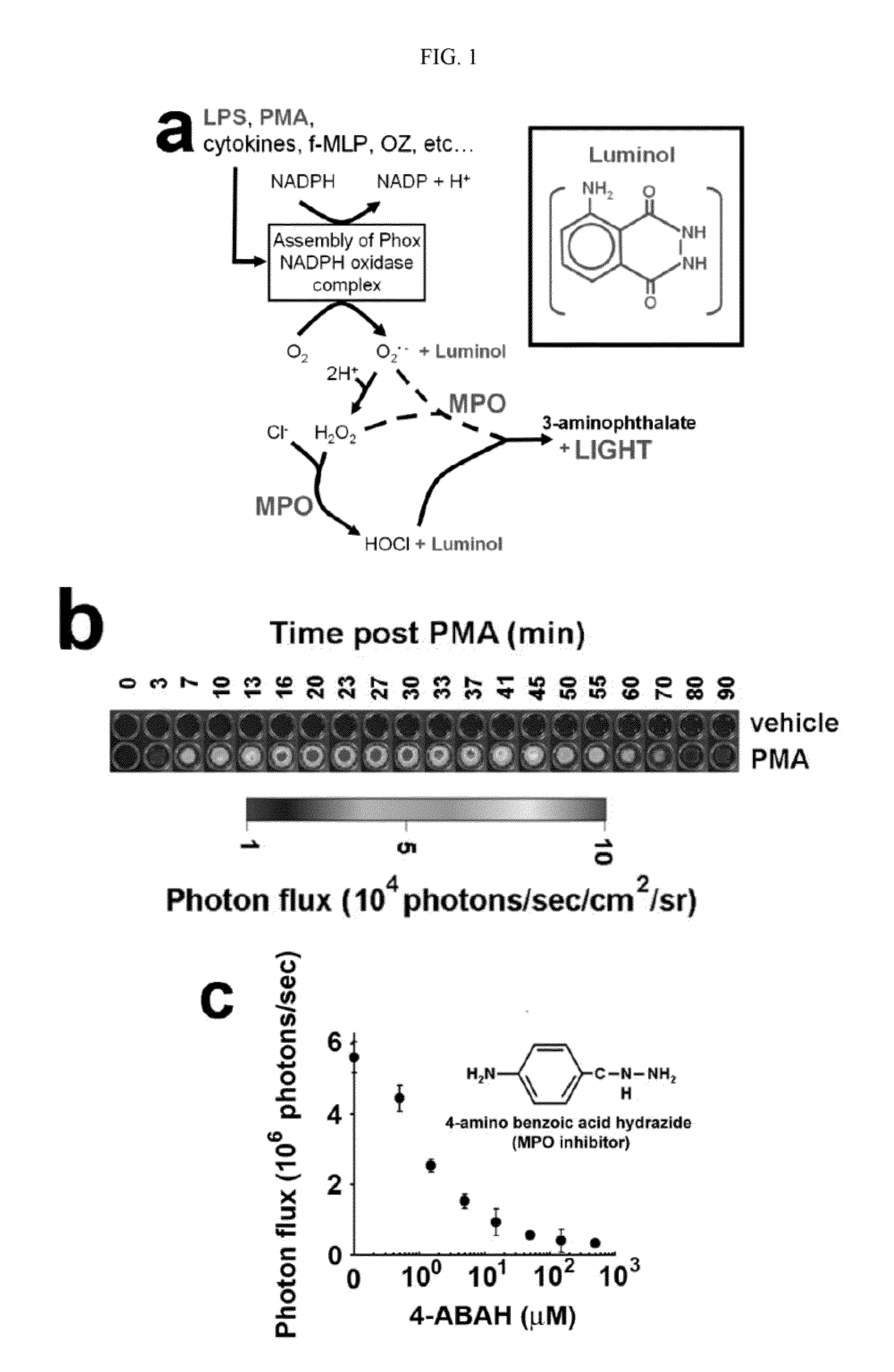
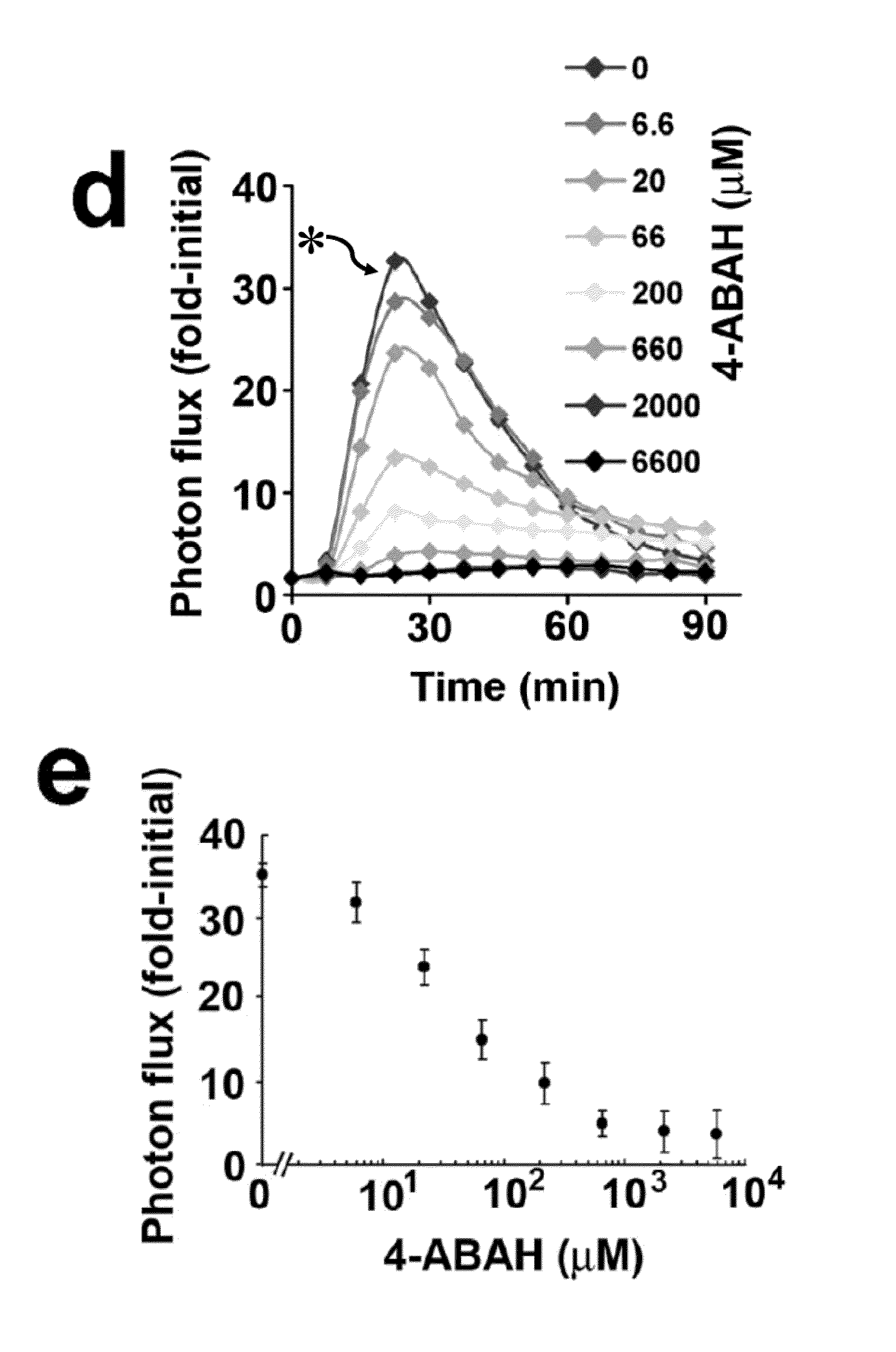
- The use of bioluminescent probes, like luminol and its derivatives, which emit light upon contact with oxidizing agents produced by MPO, allowing for non-invasive imaging of MPO activity through bioluminescence imaging (BLI) to visualize and quantify MPO activity in real-time, enabling diagnosis and monitoring of MPO-related diseases.
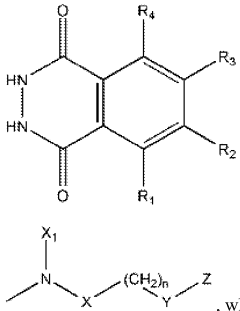
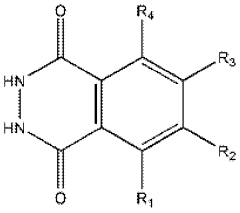
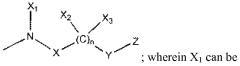
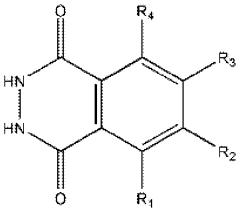
Bioluminescence imaging of myeloperoxidase activity in vivo, methods, compositions and apparatuses therefor
PatentInactiveUS20110250145A1
Innovation
- The development of methods for non-invasive imaging of MPO activity using luminogenic-optical probes that emit light upon contact with oxidizing agents, allowing for the visualization of MPO activity in vivo, particularly through bioluminescence imaging (BLI) techniques.
Regulatory Framework
The regulatory framework surrounding luminol and its application in scientific visualization techniques is a complex landscape that involves multiple agencies and considerations. At the federal level in the United States, the Environmental Protection Agency (EPA) plays a crucial role in regulating the use of luminol, particularly in forensic applications. The EPA's guidelines focus on the safe handling and disposal of luminol, as well as its potential environmental impact.
The Occupational Safety and Health Administration (OSHA) also provides regulations regarding the use of luminol in laboratory settings, emphasizing worker safety and proper handling procedures. These regulations include requirements for personal protective equipment and proper ventilation when working with luminol solutions.
In the context of scientific visualization, the Food and Drug Administration (FDA) has established guidelines for the use of luminol in medical imaging applications. These guidelines address issues such as dosage, exposure limits, and potential side effects when luminol is used in vivo for diagnostic purposes.
Internationally, the European Chemicals Agency (ECHA) regulates the use of luminol within the European Union, providing comprehensive safety data sheets and usage guidelines. The International Organization for Standardization (ISO) has also developed standards for luminol-based imaging techniques, ensuring consistency and reliability across different research institutions and laboratories.
Regulatory bodies in various countries have implemented specific protocols for the use of luminol in crime scene investigations. These protocols often include guidelines on evidence preservation, documentation, and the admissibility of luminol-enhanced evidence in court proceedings.
As luminol continues to transform scientific visualization techniques, regulatory frameworks are evolving to keep pace with new applications. For instance, the use of luminol in environmental monitoring has led to the development of new guidelines by environmental protection agencies worldwide. These guidelines address the potential ecological impact of luminol and its byproducts when used in large-scale environmental studies.
The regulatory landscape also extends to the commercial sector, where companies developing luminol-based products for scientific visualization must navigate a complex web of patents, licensing agreements, and quality control standards. This aspect of regulation ensures that innovations in luminol technology are properly protected and commercialized while maintaining high standards of safety and efficacy.
The Occupational Safety and Health Administration (OSHA) also provides regulations regarding the use of luminol in laboratory settings, emphasizing worker safety and proper handling procedures. These regulations include requirements for personal protective equipment and proper ventilation when working with luminol solutions.
In the context of scientific visualization, the Food and Drug Administration (FDA) has established guidelines for the use of luminol in medical imaging applications. These guidelines address issues such as dosage, exposure limits, and potential side effects when luminol is used in vivo for diagnostic purposes.
Internationally, the European Chemicals Agency (ECHA) regulates the use of luminol within the European Union, providing comprehensive safety data sheets and usage guidelines. The International Organization for Standardization (ISO) has also developed standards for luminol-based imaging techniques, ensuring consistency and reliability across different research institutions and laboratories.
Regulatory bodies in various countries have implemented specific protocols for the use of luminol in crime scene investigations. These protocols often include guidelines on evidence preservation, documentation, and the admissibility of luminol-enhanced evidence in court proceedings.
As luminol continues to transform scientific visualization techniques, regulatory frameworks are evolving to keep pace with new applications. For instance, the use of luminol in environmental monitoring has led to the development of new guidelines by environmental protection agencies worldwide. These guidelines address the potential ecological impact of luminol and its byproducts when used in large-scale environmental studies.
The regulatory landscape also extends to the commercial sector, where companies developing luminol-based products for scientific visualization must navigate a complex web of patents, licensing agreements, and quality control standards. This aspect of regulation ensures that innovations in luminol technology are properly protected and commercialized while maintaining high standards of safety and efficacy.
Environmental Impact
The environmental impact of luminol in scientific visualization techniques is a crucial aspect to consider as its usage becomes more widespread. Luminol, a chemiluminescent compound, has revolutionized various fields of scientific research and forensic investigations. However, its increasing application raises concerns about potential environmental consequences.
One of the primary environmental considerations is the disposal of luminol-containing solutions after use. These solutions, while not highly toxic, may contain trace amounts of chemicals that could accumulate in water systems if not properly managed. Research institutions and forensic laboratories must implement strict protocols for the safe disposal of luminol waste to prevent contamination of water sources and soil.
The production of luminol itself involves chemical processes that may have environmental implications. The synthesis of luminol requires various reagents and solvents, some of which could be harmful if released into the environment. Manufacturers must adhere to stringent environmental regulations to minimize the ecological footprint of luminol production.
Another aspect to consider is the potential impact on aquatic ecosystems. If luminol-containing solutions were to enter water bodies, they could affect the natural bioluminescence of certain marine organisms. This interference might disrupt ecological processes and communication among species that rely on bioluminescence for survival and reproduction.
The use of luminol in outdoor crime scene investigations also raises concerns about its effects on local flora and fauna. While the concentrations used are generally low, repeated applications in sensitive ecosystems could potentially impact soil microorganisms or plant life. Long-term studies are needed to fully understand these potential effects.
On a positive note, the high sensitivity of luminol-based techniques may lead to reduced use of more environmentally harmful chemicals in certain scientific and forensic applications. By enabling the detection of minute traces of substances, luminol could potentially decrease the overall chemical burden on the environment in some research and investigative processes.
As the application of luminol in scientific visualization expands, there is a growing need for eco-friendly formulations. Researchers are exploring biodegradable alternatives and environmentally benign catalysts to enhance the sustainability of luminol-based techniques. These efforts aim to maintain the effectiveness of luminol while minimizing its environmental impact.
In conclusion, while luminol has transformed scientific visualization techniques, its environmental impact must be carefully managed. Balancing the benefits of its application with responsible use and disposal practices is essential for ensuring sustainable scientific progress.
One of the primary environmental considerations is the disposal of luminol-containing solutions after use. These solutions, while not highly toxic, may contain trace amounts of chemicals that could accumulate in water systems if not properly managed. Research institutions and forensic laboratories must implement strict protocols for the safe disposal of luminol waste to prevent contamination of water sources and soil.
The production of luminol itself involves chemical processes that may have environmental implications. The synthesis of luminol requires various reagents and solvents, some of which could be harmful if released into the environment. Manufacturers must adhere to stringent environmental regulations to minimize the ecological footprint of luminol production.
Another aspect to consider is the potential impact on aquatic ecosystems. If luminol-containing solutions were to enter water bodies, they could affect the natural bioluminescence of certain marine organisms. This interference might disrupt ecological processes and communication among species that rely on bioluminescence for survival and reproduction.
The use of luminol in outdoor crime scene investigations also raises concerns about its effects on local flora and fauna. While the concentrations used are generally low, repeated applications in sensitive ecosystems could potentially impact soil microorganisms or plant life. Long-term studies are needed to fully understand these potential effects.
On a positive note, the high sensitivity of luminol-based techniques may lead to reduced use of more environmentally harmful chemicals in certain scientific and forensic applications. By enabling the detection of minute traces of substances, luminol could potentially decrease the overall chemical burden on the environment in some research and investigative processes.
As the application of luminol in scientific visualization expands, there is a growing need for eco-friendly formulations. Researchers are exploring biodegradable alternatives and environmentally benign catalysts to enhance the sustainability of luminol-based techniques. These efforts aim to maintain the effectiveness of luminol while minimizing its environmental impact.
In conclusion, while luminol has transformed scientific visualization techniques, its environmental impact must be carefully managed. Balancing the benefits of its application with responsible use and disposal practices is essential for ensuring sustainable scientific progress.
Unlock deeper insights with PatSnap Eureka Quick Research — get a full tech report to explore trends and direct your research. Try now!
Generate Your Research Report Instantly with AI Agent
Supercharge your innovation with PatSnap Eureka AI Agent Platform!