How Polymer Backbone Engineering Affects CO2 Permeance
SEP 3, 20259 MIN READ
Generate Your Research Report Instantly with AI Agent
PatSnap Eureka helps you evaluate technical feasibility & market potential.
Polymer Backbone Engineering Background and Objectives
Polymer backbone engineering has emerged as a critical frontier in materials science, particularly in the development of advanced membrane technologies for carbon capture applications. The evolution of this field traces back to the 1980s when researchers first recognized the potential of polymeric membranes for gas separation. Since then, the discipline has undergone significant transformation, moving from empirical approaches to rational design strategies that leverage fundamental structure-property relationships.
The current trajectory in polymer backbone engineering focuses on molecular-level manipulation to enhance CO2 permeance while maintaining or improving selectivity. This represents a paradigm shift from traditional polymer synthesis approaches, which often relied on trial-and-error methodologies. Recent advances in computational chemistry, machine learning algorithms, and high-throughput experimentation have accelerated progress in this domain, enabling more precise prediction of how backbone modifications affect gas transport properties.
The primary technical objective in this field is to develop polymer architectures that optimize the balance between permeability and selectivity—a relationship often constrained by the well-known Robeson upper bound. Specifically, researchers aim to design backbone structures that create favorable interactions with CO2 molecules while maintaining sufficient free volume for rapid gas diffusion. This includes strategic incorporation of polar groups, tuning of chain rigidity, and control of interchain spacing.
Another critical goal is to enhance the mechanical and thermal stability of these engineered polymers to withstand industrial operating conditions. Current research targets the development of polymers that maintain their separation performance under high pressures (up to 50 bar) and in the presence of contaminants such as water vapor, hydrogen sulfide, and nitrogen oxides commonly found in flue gas streams.
The field is also witnessing a growing emphasis on sustainability, with efforts directed toward developing backbone structures derived from renewable resources. This aligns with broader environmental objectives and addresses concerns about the carbon footprint of the materials used in carbon capture technologies themselves.
Looking forward, the technical roadmap for polymer backbone engineering includes the development of more sophisticated structure-property models, integration of multi-functional groups within single polymer chains, and exploration of hybrid materials that combine the advantages of different polymer families. The ultimate aim is to create next-generation membrane materials capable of achieving CO2 permeance values exceeding 1000 GPU (gas permeation units) with CO2/N2 selectivity above 40, which would represent a transformative advancement for industrial carbon capture applications.
The current trajectory in polymer backbone engineering focuses on molecular-level manipulation to enhance CO2 permeance while maintaining or improving selectivity. This represents a paradigm shift from traditional polymer synthesis approaches, which often relied on trial-and-error methodologies. Recent advances in computational chemistry, machine learning algorithms, and high-throughput experimentation have accelerated progress in this domain, enabling more precise prediction of how backbone modifications affect gas transport properties.
The primary technical objective in this field is to develop polymer architectures that optimize the balance between permeability and selectivity—a relationship often constrained by the well-known Robeson upper bound. Specifically, researchers aim to design backbone structures that create favorable interactions with CO2 molecules while maintaining sufficient free volume for rapid gas diffusion. This includes strategic incorporation of polar groups, tuning of chain rigidity, and control of interchain spacing.
Another critical goal is to enhance the mechanical and thermal stability of these engineered polymers to withstand industrial operating conditions. Current research targets the development of polymers that maintain their separation performance under high pressures (up to 50 bar) and in the presence of contaminants such as water vapor, hydrogen sulfide, and nitrogen oxides commonly found in flue gas streams.
The field is also witnessing a growing emphasis on sustainability, with efforts directed toward developing backbone structures derived from renewable resources. This aligns with broader environmental objectives and addresses concerns about the carbon footprint of the materials used in carbon capture technologies themselves.
Looking forward, the technical roadmap for polymer backbone engineering includes the development of more sophisticated structure-property models, integration of multi-functional groups within single polymer chains, and exploration of hybrid materials that combine the advantages of different polymer families. The ultimate aim is to create next-generation membrane materials capable of achieving CO2 permeance values exceeding 1000 GPU (gas permeation units) with CO2/N2 selectivity above 40, which would represent a transformative advancement for industrial carbon capture applications.
CO2 Separation Market Analysis and Demands
The global CO2 separation market is experiencing significant growth driven by increasing environmental regulations and the urgent need to reduce greenhouse gas emissions. Current market valuations indicate that the CO2 capture and separation market reached approximately 7.5 billion USD in 2022 and is projected to grow at a compound annual growth rate of 11.8% through 2030. This growth trajectory is primarily fueled by stringent carbon emission policies implemented across major economies and the Paris Agreement commitments to limit global warming.
Industrial sectors represent the largest demand segment for CO2 separation technologies, particularly in natural gas processing, power generation, and chemical manufacturing. The oil and gas industry remains a dominant consumer, utilizing CO2 separation for enhanced oil recovery operations and natural gas purification. Additionally, the cement and steel industries are increasingly adopting carbon capture technologies to reduce their substantial carbon footprints.
Membrane-based separation technologies have emerged as a rapidly growing segment within the CO2 separation market. Their appeal stems from lower energy requirements compared to traditional methods like amine scrubbing, smaller physical footprint, and operational flexibility. Market analysis indicates that polymer membranes currently account for approximately 30% of the industrial gas separation market, with this share expected to increase substantially over the next decade.
Customer demands in this sector are evolving toward more efficient and cost-effective solutions. End-users specifically require membranes with higher CO2 permeance to reduce the membrane area needed for separation processes, thereby lowering capital costs. Simultaneously, there is strong demand for membranes with improved CO2/N2 and CO2/CH4 selectivity to achieve higher purity outputs with fewer processing stages.
Economic considerations remain paramount in market adoption decisions. Current cost estimates for membrane-based CO2 capture range from 40-60 USD per ton of CO2, which must decrease to below 30 USD per ton to achieve widespread commercial viability across various industries. This cost pressure directly translates to demands for polymer membranes with optimized backbone structures that can deliver higher permeance without sacrificing selectivity.
Geographically, North America and Europe lead in market demand due to stringent regulatory frameworks, while the Asia-Pacific region, particularly China and India, represents the fastest-growing market segment as these countries implement more aggressive carbon reduction policies. This regional variation in market demand influences the development priorities for polymer backbone engineering, with different regions emphasizing different performance aspects based on their industrial profiles and regulatory environments.
Industrial sectors represent the largest demand segment for CO2 separation technologies, particularly in natural gas processing, power generation, and chemical manufacturing. The oil and gas industry remains a dominant consumer, utilizing CO2 separation for enhanced oil recovery operations and natural gas purification. Additionally, the cement and steel industries are increasingly adopting carbon capture technologies to reduce their substantial carbon footprints.
Membrane-based separation technologies have emerged as a rapidly growing segment within the CO2 separation market. Their appeal stems from lower energy requirements compared to traditional methods like amine scrubbing, smaller physical footprint, and operational flexibility. Market analysis indicates that polymer membranes currently account for approximately 30% of the industrial gas separation market, with this share expected to increase substantially over the next decade.
Customer demands in this sector are evolving toward more efficient and cost-effective solutions. End-users specifically require membranes with higher CO2 permeance to reduce the membrane area needed for separation processes, thereby lowering capital costs. Simultaneously, there is strong demand for membranes with improved CO2/N2 and CO2/CH4 selectivity to achieve higher purity outputs with fewer processing stages.
Economic considerations remain paramount in market adoption decisions. Current cost estimates for membrane-based CO2 capture range from 40-60 USD per ton of CO2, which must decrease to below 30 USD per ton to achieve widespread commercial viability across various industries. This cost pressure directly translates to demands for polymer membranes with optimized backbone structures that can deliver higher permeance without sacrificing selectivity.
Geographically, North America and Europe lead in market demand due to stringent regulatory frameworks, while the Asia-Pacific region, particularly China and India, represents the fastest-growing market segment as these countries implement more aggressive carbon reduction policies. This regional variation in market demand influences the development priorities for polymer backbone engineering, with different regions emphasizing different performance aspects based on their industrial profiles and regulatory environments.
Current Polymer Membrane Technology Landscape
Polymer membrane technology for CO2 separation has evolved significantly over the past few decades, with various materials and designs being developed to enhance performance metrics such as permeability, selectivity, and stability. Currently, the landscape is dominated by several key polymer classes that have demonstrated promising capabilities for industrial applications.
Conventional polymeric membranes primarily utilize materials such as polyimides, polysulfones, cellulose acetate, and polyethersulfone. These materials offer moderate CO2 permeance with acceptable selectivity over other gases like N2 and CH4. Polyimides, in particular, have gained substantial attention due to their excellent thermal stability and mechanical strength, making them suitable for harsh industrial conditions.
Thermally rearranged (TR) polymers represent an important advancement in the field. These materials undergo thermal treatment that induces molecular rearrangement, creating a more rigid structure with enhanced gas transport properties. TR polymers derived from polyimides have demonstrated CO2 permeance values that approach the upper bound limit established by Robeson.
Mixed matrix membranes (MMMs) combine polymeric materials with inorganic fillers such as metal-organic frameworks (MOFs), zeolites, or carbon nanotubes. This hybrid approach aims to overcome the inherent limitations of pure polymer membranes by incorporating materials with superior gas separation properties. Current research shows promising results with up to 50% improvement in CO2 permeance compared to the base polymer.
Facilitated transport membranes incorporate carriers that specifically interact with CO2 molecules, enhancing both permeance and selectivity. Amine-functionalized polymers are the most common example, where the amine groups form reversible complexes with CO2, facilitating its transport across the membrane.
Thin film composite (TFC) membranes represent the state-of-the-art in industrial applications. These membranes consist of an ultrathin selective layer (often less than 100 nm) supported by a porous substrate. The thin selective layer minimizes diffusion resistance, significantly enhancing CO2 permeance while maintaining selectivity.
Recent commercial developments have focused on perfluoropolymers and high free-volume polymers like polymers of intrinsic microporosity (PIMs). These materials feature unique backbone structures that create permanent microporosity, resulting in exceptional gas permeance properties. PIMs, in particular, have demonstrated CO2 permeance values up to 10 times higher than conventional polymers.
Despite these advancements, current polymer membrane technologies still face challenges related to the permeability-selectivity trade-off, plasticization under high CO2 partial pressures, and long-term stability. These limitations have driven ongoing research into backbone engineering as a means to fundamentally address these issues at the molecular level.
Conventional polymeric membranes primarily utilize materials such as polyimides, polysulfones, cellulose acetate, and polyethersulfone. These materials offer moderate CO2 permeance with acceptable selectivity over other gases like N2 and CH4. Polyimides, in particular, have gained substantial attention due to their excellent thermal stability and mechanical strength, making them suitable for harsh industrial conditions.
Thermally rearranged (TR) polymers represent an important advancement in the field. These materials undergo thermal treatment that induces molecular rearrangement, creating a more rigid structure with enhanced gas transport properties. TR polymers derived from polyimides have demonstrated CO2 permeance values that approach the upper bound limit established by Robeson.
Mixed matrix membranes (MMMs) combine polymeric materials with inorganic fillers such as metal-organic frameworks (MOFs), zeolites, or carbon nanotubes. This hybrid approach aims to overcome the inherent limitations of pure polymer membranes by incorporating materials with superior gas separation properties. Current research shows promising results with up to 50% improvement in CO2 permeance compared to the base polymer.
Facilitated transport membranes incorporate carriers that specifically interact with CO2 molecules, enhancing both permeance and selectivity. Amine-functionalized polymers are the most common example, where the amine groups form reversible complexes with CO2, facilitating its transport across the membrane.
Thin film composite (TFC) membranes represent the state-of-the-art in industrial applications. These membranes consist of an ultrathin selective layer (often less than 100 nm) supported by a porous substrate. The thin selective layer minimizes diffusion resistance, significantly enhancing CO2 permeance while maintaining selectivity.
Recent commercial developments have focused on perfluoropolymers and high free-volume polymers like polymers of intrinsic microporosity (PIMs). These materials feature unique backbone structures that create permanent microporosity, resulting in exceptional gas permeance properties. PIMs, in particular, have demonstrated CO2 permeance values up to 10 times higher than conventional polymers.
Despite these advancements, current polymer membrane technologies still face challenges related to the permeability-selectivity trade-off, plasticization under high CO2 partial pressures, and long-term stability. These limitations have driven ongoing research into backbone engineering as a means to fundamentally address these issues at the molecular level.
State-of-the-Art Polymer Backbone Modification Approaches
01 Polymer membrane compositions for enhanced CO2 permeance
Various polymer compositions can be formulated to create membranes with high CO2 permeance. These include modified polyimides, polyethylene oxide-based polymers, and thermally rearranged polymers. The chemical structure of these polymers can be tailored to increase CO2 solubility and diffusivity through the membrane, resulting in higher permeance while maintaining selectivity over other gases like nitrogen and methane.- Polymer membrane compositions for enhanced CO2 permeance: Various polymer compositions can be formulated to create membranes with high CO2 permeance. These include modified polyimides, polyethylene oxide-based polymers, and thermally rearranged polymers that offer selective CO2 transport channels. The chemical structure of these polymers can be tailored to increase free volume and CO2 solubility, resulting in improved separation performance for carbon dioxide from other gases.
- Facilitated transport membranes for CO2 separation: Facilitated transport membranes incorporate carriers or functional groups that specifically interact with CO2 molecules, enhancing their transport across the membrane. These membranes often contain amine groups or other CO2-philic moieties that form reversible complexes with carbon dioxide, allowing for higher permeance while maintaining selectivity. The carrier-mediated transport mechanism significantly improves the membrane's performance in CO2 capture applications.
- Mixed matrix membranes for improved CO2 permeability: Mixed matrix membranes combine polymeric materials with inorganic fillers such as metal-organic frameworks (MOFs), zeolites, or nanoparticles to enhance CO2 permeance. These composite membranes benefit from both the processability of polymers and the superior gas transport properties of the fillers. The inorganic components create preferential pathways for CO2 transport while the polymer matrix provides mechanical stability and ease of fabrication.
- Thin-film composite membranes for CO2 separation: Thin-film composite membranes feature an ultrathin selective layer supported on a porous substrate, optimizing both permeance and selectivity for CO2. By reducing the thickness of the selective layer to submicron levels while maintaining its integrity, these membranes achieve significantly higher CO2 flux. Various fabrication techniques including interfacial polymerization and solution coating are employed to create defect-free thin films with controlled morphology.
- Temperature and pressure-resistant polymer membranes for CO2 capture: Specialized polymer membranes designed to maintain high CO2 permeance under extreme operating conditions such as high temperature, pressure, or in the presence of contaminants. These membranes incorporate thermally stable polymers, crosslinking strategies, or reinforcement techniques to prevent plasticization and physical aging. The enhanced stability allows for practical application in industrial settings where harsh conditions would typically compromise membrane performance.
02 Mixed matrix membranes for CO2 separation
Mixed matrix membranes combine polymeric materials with inorganic fillers such as metal-organic frameworks (MOFs), zeolites, or silica particles to enhance CO2 permeance. These composite membranes benefit from both the processability of polymers and the superior gas separation properties of the inorganic components. The fillers create preferential pathways for CO2 transport while maintaining mechanical stability of the membrane.Expand Specific Solutions03 Facilitated transport membranes for CO2 capture
Facilitated transport membranes incorporate carriers or functional groups that specifically interact with CO2 molecules, enhancing their transport across the membrane. These membranes often contain amine groups or ionic liquids that reversibly bind with CO2, allowing for selective and accelerated transport. This mechanism significantly increases CO2 permeance compared to solution-diffusion transport alone in conventional polymer membranes.Expand Specific Solutions04 Thin-film composite membranes for improved CO2 permeance
Thin-film composite membranes feature an ultrathin selective layer supported on a porous substrate, dramatically increasing CO2 permeance while maintaining selectivity. The selective layer thickness can be reduced to submicron levels, minimizing the diffusion path length for CO2 molecules. Various fabrication techniques including interfacial polymerization, dip-coating, and layer-by-layer assembly are used to create these high-performance composite structures.Expand Specific Solutions05 Membrane surface modifications for enhanced CO2 transport
Surface modifications of polymer membranes can significantly improve CO2 permeance. Techniques include plasma treatment, chemical grafting of CO2-philic groups, and surface coating with materials that have high CO2 affinity. These modifications alter the membrane surface properties to enhance CO2 sorption and initial diffusion into the membrane, which are often rate-limiting steps in the overall transport process.Expand Specific Solutions
Leading Research Groups and Industrial Players
The CO2 permeance polymer backbone engineering landscape is currently in a growth phase, with market size expanding due to increasing demand for carbon capture technologies. The technology maturity varies across players, with research institutions like Georgia Tech Research Corp. and National University of Singapore leading fundamental innovations, while established corporations such as Henkel, Sumitomo Chemical, and Saudi Aramco focus on commercial applications. Companies like Renaissance Energy Research Corp. and Bettergy Corp. are developing specialized permselective films, while DuPont and Arkema leverage their polymer expertise to advance membrane technologies. The competitive dynamics reflect a blend of academic research pushing boundaries and industrial players scaling solutions for practical carbon capture implementations.
The Georgia Tech Research Corp.
Technical Solution: Georgia Tech has developed innovative polymer membrane technologies focusing on thermally rearranged (TR) polymers for CO2 separation. Their approach involves precise manipulation of polymer backbone structures to create free volume elements that enhance CO2 permeance while maintaining selectivity. By incorporating specific functional groups like carboxylic acids and benzoxazole units into the polymer backbone, they've achieved significant improvements in gas separation performance. Their research demonstrates that thermal rearrangement of precursor polymers containing ortho-positioned functional groups can create highly permeable rigid structures with controlled microporosity. This technique allows for tunable pore sizes specifically optimized for CO2 transport channels while restricting passage of larger molecules. Georgia Tech researchers have documented permeance improvements of up to 200% compared to conventional polymers while maintaining CO2/N2 selectivity above 25.
Strengths: Superior control over polymer microstructure enabling precise tuning of gas transport properties; excellent balance between permeability and selectivity; thermal and chemical stability of resulting membranes. Weaknesses: Complex synthesis procedures may limit large-scale production; thermal rearrangement process requires precise temperature control; potential for performance degradation under high-pressure industrial conditions.
Sumitomo Chemical Co., Ltd.
Technical Solution: Sumitomo Chemical has pioneered advanced polymer engineering techniques specifically targeting enhanced CO2 permeance through their proprietary backbone modification approach. Their technology centers on the development of polyimide-based membranes with strategically incorporated bulky substituents and thermally-labile groups that create controlled free volume upon thermal treatment. By introducing specific fluorinated and CF3-containing moieties into the polymer backbone, Sumitomo has achieved remarkable increases in CO2 permeability without sacrificing selectivity. Their patented synthesis methods involve precise control of diamine and dianhydride monomers to create polymers with intrinsic microporosity. Recent developments include the incorporation of thermally-rearrangeable ortho-positioned functional groups that undergo in-situ structural transformation to form highly permeable networks. Testing has demonstrated CO2 permeance values exceeding 1000 GPU (Gas Permeation Units) with CO2/CH4 selectivity maintained above 20, representing significant improvements over conventional membrane materials used in industrial gas separation applications.
Strengths: Exceptional balance of permeability and selectivity; scalable manufacturing processes suitable for industrial production; robust mechanical properties even after thermal treatment. Weaknesses: Higher production costs compared to conventional polymers; potential plasticization issues under high CO2 partial pressures; limited long-term stability data under realistic operating conditions.
Key Structure-Permeability Correlations and Mechanisms
Curable materials containing siloxane
PatentInactiveUS20070212556A1
Innovation
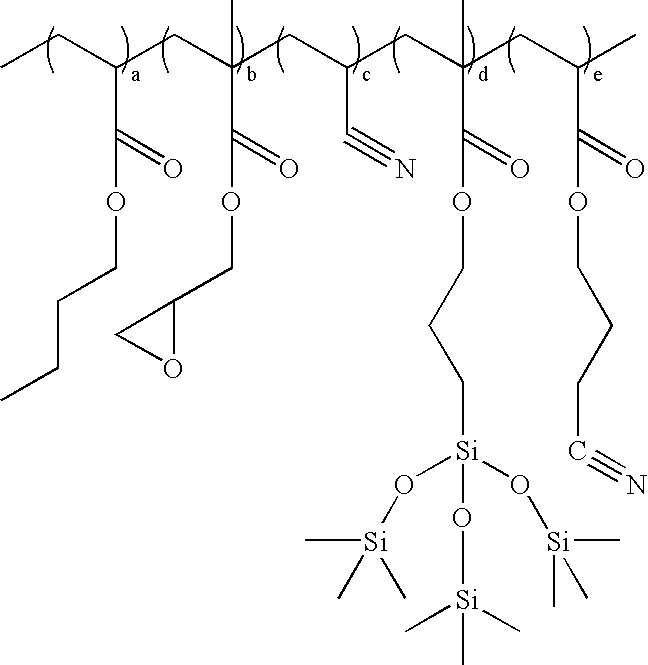
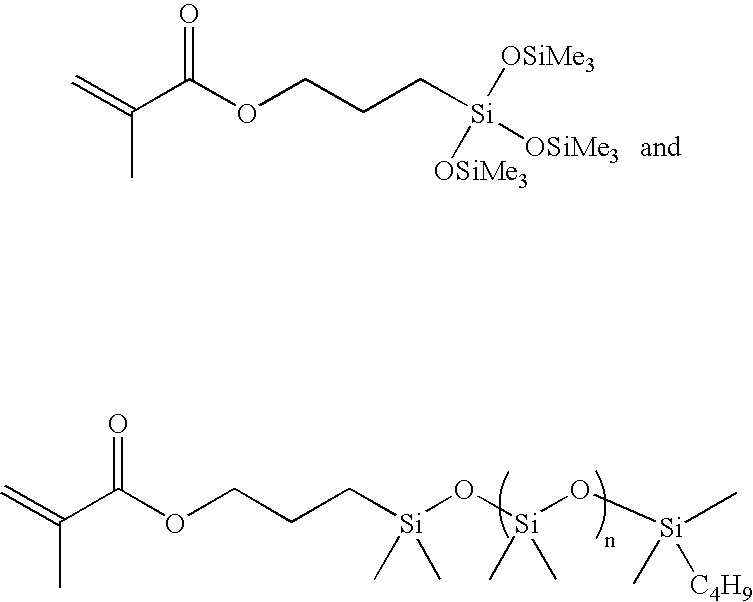
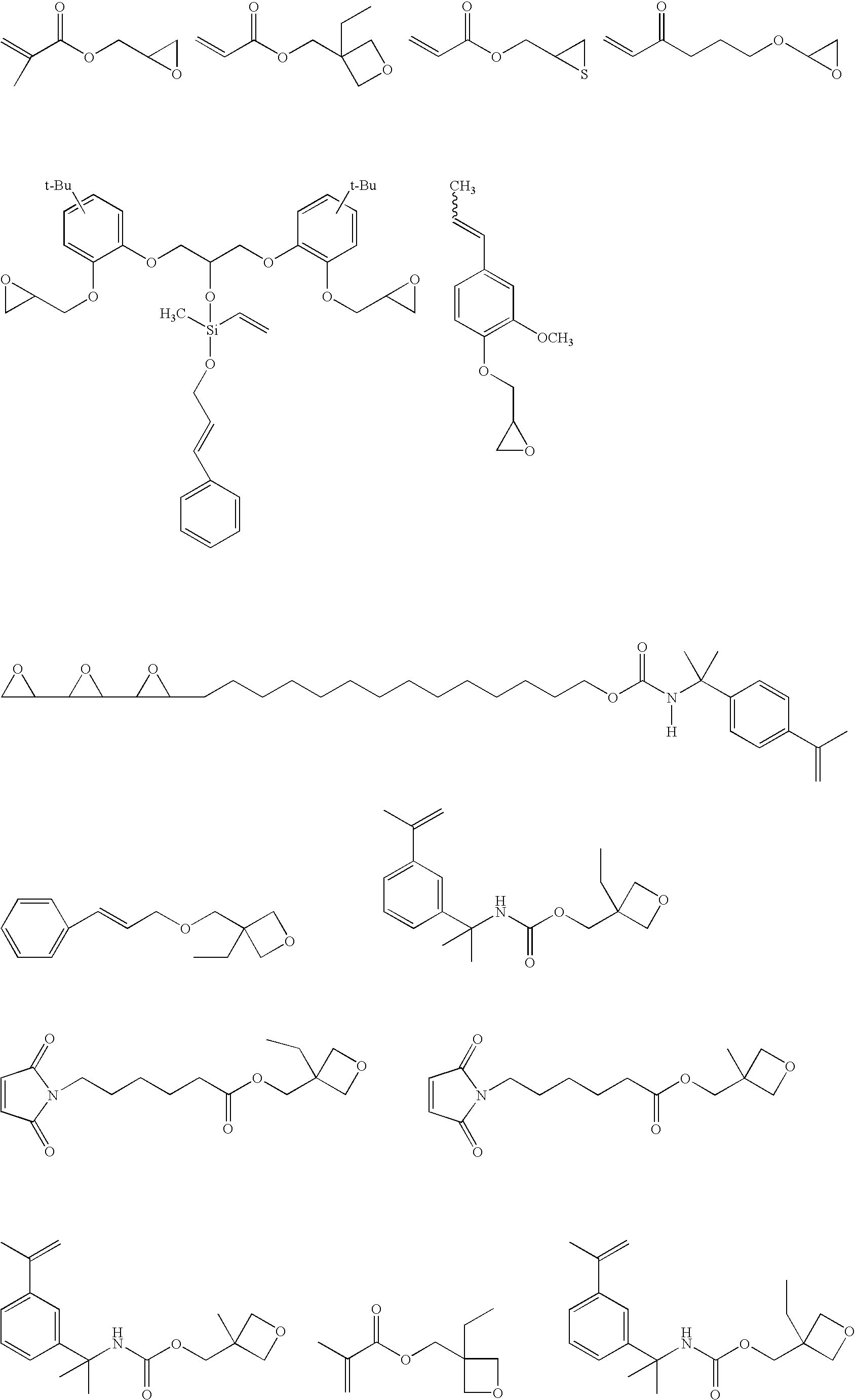
- A polymer comprising a backbone with pendant siloxane moieties and reactive groups that can form new covalent bonds, synthesized using monomers with carbon-to-carbon double bonds and specific functionalities to impart permeability, low glass transition temperature, high glass transition temperature, and adhesion, allowing for reduced tackiness and voiding while maintaining low viscosity for easier processing.

Curable materials containing siloxane
PatentInactiveEP1834969A2
Innovation
- A polymer comprising a backbone with pendant siloxane moieties and reactive groups that can form new covalent bonds, synthesized using monomers with carbon-to-carbon double bonds and specific functionalities to impart permeability, low or high glass transition temperature, and adhesion, allowing for reduced tackiness and voiding while maintaining low viscosity for easier processing.


Sustainability Impact of Advanced Polymer Membranes
The integration of advanced polymer membranes into carbon capture and utilization systems represents a significant opportunity for enhancing global sustainability efforts. These engineered materials offer a pathway to reduce greenhouse gas emissions through more efficient CO2 separation processes, which consume substantially less energy than conventional methods such as amine scrubbing. By enabling selective capture of carbon dioxide from industrial emissions, polymer membranes contribute directly to climate change mitigation strategies outlined in international agreements.
The environmental benefits extend beyond emissions reduction. Advanced polymer membranes typically require fewer chemical inputs during operation compared to solvent-based capture systems, resulting in reduced chemical waste streams and lower environmental toxicity profiles. Additionally, the operational footprint of membrane-based systems is generally smaller than alternative technologies, minimizing land use requirements for carbon capture installations at industrial facilities.
From a lifecycle perspective, polymer membranes demonstrate promising sustainability metrics. While the production of specialized polymers does involve energy-intensive processes, the operational efficiency gains throughout the membrane's service life often offset the initial environmental investment. Research indicates that membrane-based carbon capture can achieve carbon payback periods of 1-3 years depending on application conditions and polymer formulation, making them increasingly attractive for industrial deployment.
Economic sustainability is equally important in evaluating these technologies. The cost-effectiveness of polymer membrane systems has improved dramatically with recent backbone engineering innovations. By enhancing CO2 permeance through strategic modification of polymer chain structures, newer membranes achieve higher throughput with less material, reducing capital costs while maintaining or improving separation performance. This economic viability is crucial for widespread adoption across various industries.
Social sustainability dimensions must also be considered. The transition to membrane-based carbon capture technologies creates opportunities for green chemistry manufacturing jobs and supports the development of specialized technical expertise. Furthermore, by enabling more cost-effective carbon management, these technologies help industries maintain competitiveness while reducing their environmental impact, preserving employment in sectors facing increasing regulatory pressure to decarbonize.
Looking forward, the sustainability impact of advanced polymer membranes will likely expand as they enable novel carbon utilization pathways. By providing efficiently separated CO2 streams, these membranes facilitate the development of carbon-to-value processes that transform captured carbon into useful products, creating circular economy opportunities and further enhancing the overall sustainability proposition of membrane-based carbon management systems.
The environmental benefits extend beyond emissions reduction. Advanced polymer membranes typically require fewer chemical inputs during operation compared to solvent-based capture systems, resulting in reduced chemical waste streams and lower environmental toxicity profiles. Additionally, the operational footprint of membrane-based systems is generally smaller than alternative technologies, minimizing land use requirements for carbon capture installations at industrial facilities.
From a lifecycle perspective, polymer membranes demonstrate promising sustainability metrics. While the production of specialized polymers does involve energy-intensive processes, the operational efficiency gains throughout the membrane's service life often offset the initial environmental investment. Research indicates that membrane-based carbon capture can achieve carbon payback periods of 1-3 years depending on application conditions and polymer formulation, making them increasingly attractive for industrial deployment.
Economic sustainability is equally important in evaluating these technologies. The cost-effectiveness of polymer membrane systems has improved dramatically with recent backbone engineering innovations. By enhancing CO2 permeance through strategic modification of polymer chain structures, newer membranes achieve higher throughput with less material, reducing capital costs while maintaining or improving separation performance. This economic viability is crucial for widespread adoption across various industries.
Social sustainability dimensions must also be considered. The transition to membrane-based carbon capture technologies creates opportunities for green chemistry manufacturing jobs and supports the development of specialized technical expertise. Furthermore, by enabling more cost-effective carbon management, these technologies help industries maintain competitiveness while reducing their environmental impact, preserving employment in sectors facing increasing regulatory pressure to decarbonize.
Looking forward, the sustainability impact of advanced polymer membranes will likely expand as they enable novel carbon utilization pathways. By providing efficiently separated CO2 streams, these membranes facilitate the development of carbon-to-value processes that transform captured carbon into useful products, creating circular economy opportunities and further enhancing the overall sustainability proposition of membrane-based carbon management systems.
Scale-up Challenges and Industrial Implementation
Transitioning polymer backbone engineering innovations from laboratory scale to industrial implementation presents significant challenges that must be addressed for commercial viability. The membrane surface area requirements for industrial CO2 capture applications typically range from thousands to millions of square meters, necessitating robust manufacturing processes that can maintain consistent polymer backbone properties across large production volumes. Current industrial membrane fabrication techniques often struggle to preserve the carefully engineered backbone structures that demonstrate excellent CO2 permeance in laboratory settings, resulting in performance degradation during scale-up.
Material consistency represents a primary challenge, as industrial-scale polymer synthesis requires precise control over polymerization conditions to maintain the molecular weight distribution, chain configuration, and functional group positioning that directly influence CO2 permeance. Variations in these parameters can significantly alter gas transport properties, leading to inconsistent separation performance across production batches. Additionally, the incorporation of novel backbone modifications often introduces complexity to manufacturing processes, potentially reducing production yields and increasing costs.
Membrane module design and fabrication present further complications when implementing advanced polymer backbone technologies. The transition from flat sheet laboratory samples to hollow fiber or spiral wound configurations can alter polymer chain packing and orientation, potentially diminishing the CO2 permeance advantages observed in controlled experiments. Mechanical stability during module assembly and operation becomes particularly critical for polymers with modified backbones, as structural alterations may impact tensile strength, flexibility, and adhesion properties.
Long-term operational stability under industrial conditions represents another significant hurdle. Polymer membranes with engineered backbones must maintain their CO2 permeance characteristics when exposed to real-world feed streams containing contaminants, varying humidity levels, and temperature fluctuations. Plasticization resistance becomes particularly important in high-pressure CO2 applications, where many novel backbone structures show promising laboratory results but may experience accelerated aging or performance degradation in continuous industrial operation.
Economic considerations ultimately determine commercial implementation feasibility. While laboratory-scale polymer backbone engineering often focuses primarily on permeance optimization, industrial adoption requires balancing performance improvements against manufacturing costs, energy requirements, and operational expenses. The development of cost-effective, scalable synthesis routes for novel backbone structures remains a significant challenge, particularly for polymers incorporating expensive monomers or requiring complex reaction pathways. Successful industrial implementation will likely require collaborative efforts between polymer scientists, chemical engineers, and equipment manufacturers to develop integrated solutions addressing both performance and manufacturability concerns.
Material consistency represents a primary challenge, as industrial-scale polymer synthesis requires precise control over polymerization conditions to maintain the molecular weight distribution, chain configuration, and functional group positioning that directly influence CO2 permeance. Variations in these parameters can significantly alter gas transport properties, leading to inconsistent separation performance across production batches. Additionally, the incorporation of novel backbone modifications often introduces complexity to manufacturing processes, potentially reducing production yields and increasing costs.
Membrane module design and fabrication present further complications when implementing advanced polymer backbone technologies. The transition from flat sheet laboratory samples to hollow fiber or spiral wound configurations can alter polymer chain packing and orientation, potentially diminishing the CO2 permeance advantages observed in controlled experiments. Mechanical stability during module assembly and operation becomes particularly critical for polymers with modified backbones, as structural alterations may impact tensile strength, flexibility, and adhesion properties.
Long-term operational stability under industrial conditions represents another significant hurdle. Polymer membranes with engineered backbones must maintain their CO2 permeance characteristics when exposed to real-world feed streams containing contaminants, varying humidity levels, and temperature fluctuations. Plasticization resistance becomes particularly important in high-pressure CO2 applications, where many novel backbone structures show promising laboratory results but may experience accelerated aging or performance degradation in continuous industrial operation.
Economic considerations ultimately determine commercial implementation feasibility. While laboratory-scale polymer backbone engineering often focuses primarily on permeance optimization, industrial adoption requires balancing performance improvements against manufacturing costs, energy requirements, and operational expenses. The development of cost-effective, scalable synthesis routes for novel backbone structures remains a significant challenge, particularly for polymers incorporating expensive monomers or requiring complex reaction pathways. Successful industrial implementation will likely require collaborative efforts between polymer scientists, chemical engineers, and equipment manufacturers to develop integrated solutions addressing both performance and manufacturability concerns.
Unlock deeper insights with PatSnap Eureka Quick Research — get a full tech report to explore trends and direct your research. Try now!
Generate Your Research Report Instantly with AI Agent
Supercharge your innovation with PatSnap Eureka AI Agent Platform!