Membrane Capture For Decarbonizing Small Industrial Emitters
SEP 3, 202510 MIN READ
Generate Your Research Report Instantly with AI Agent
PatSnap Eureka helps you evaluate technical feasibility & market potential.
Membrane Capture Technology Background and Objectives
Membrane capture technology has emerged as a promising solution for carbon dioxide (CO2) separation and capture, particularly for small industrial emitters. The evolution of this technology can be traced back to the 1980s when membrane-based gas separation began gaining traction in industrial applications. Initially developed for natural gas sweetening and hydrogen recovery, membrane technology has gradually expanded its application scope to include CO2 capture from various emission sources.
The technological trajectory has been marked by significant advancements in membrane materials, from conventional polymeric membranes to more sophisticated mixed matrix membranes, facilitated transport membranes, and thermally rearranged polymers. Each generation has demonstrated improved selectivity, permeability, and stability characteristics, addressing the inherent trade-off between permeability and selectivity that has historically limited membrane performance.
Recent years have witnessed an accelerated development pace, driven by global decarbonization imperatives and the need for cost-effective carbon capture solutions for smaller emission sources. Unlike large point sources such as power plants, small industrial emitters present unique challenges due to their distributed nature, lower CO2 concentration in flue gases, and economic constraints that make conventional capture technologies financially prohibitive.
The primary objective of membrane capture technology for small industrial emitters is to develop high-performance, economically viable membrane systems capable of efficiently separating CO2 from dilute flue gas streams at a scale appropriate for facilities emitting less than 100,000 tons of CO2 annually. This includes developing membranes with enhanced CO2 selectivity over nitrogen and other flue gas components, while maintaining sufficient permeability to minimize the required membrane area and associated capital costs.
Secondary objectives include designing modular, scalable systems that can be easily retrofitted to existing industrial facilities with minimal disruption to operations; reducing the energy penalty associated with CO2 capture to less than 1 GJ/ton CO2; and ensuring membrane durability under real-world operating conditions, including resistance to contaminants commonly found in industrial flue gases.
The technology aims to achieve a capture cost below $100 per ton of CO2 for small industrial emitters, making it economically feasible for sectors such as cement production, glass manufacturing, food processing, and small-scale chemical production to implement carbon capture. This cost target represents a significant reduction compared to conventional amine-based absorption systems, which typically become prohibitively expensive when scaled down for smaller applications.
As global climate policies increasingly target industrial emissions beyond the power sector, membrane capture technology stands at a critical juncture, with the potential to enable widespread decarbonization across diverse industrial sectors that have historically lacked viable carbon capture options.
The technological trajectory has been marked by significant advancements in membrane materials, from conventional polymeric membranes to more sophisticated mixed matrix membranes, facilitated transport membranes, and thermally rearranged polymers. Each generation has demonstrated improved selectivity, permeability, and stability characteristics, addressing the inherent trade-off between permeability and selectivity that has historically limited membrane performance.
Recent years have witnessed an accelerated development pace, driven by global decarbonization imperatives and the need for cost-effective carbon capture solutions for smaller emission sources. Unlike large point sources such as power plants, small industrial emitters present unique challenges due to their distributed nature, lower CO2 concentration in flue gases, and economic constraints that make conventional capture technologies financially prohibitive.
The primary objective of membrane capture technology for small industrial emitters is to develop high-performance, economically viable membrane systems capable of efficiently separating CO2 from dilute flue gas streams at a scale appropriate for facilities emitting less than 100,000 tons of CO2 annually. This includes developing membranes with enhanced CO2 selectivity over nitrogen and other flue gas components, while maintaining sufficient permeability to minimize the required membrane area and associated capital costs.
Secondary objectives include designing modular, scalable systems that can be easily retrofitted to existing industrial facilities with minimal disruption to operations; reducing the energy penalty associated with CO2 capture to less than 1 GJ/ton CO2; and ensuring membrane durability under real-world operating conditions, including resistance to contaminants commonly found in industrial flue gases.
The technology aims to achieve a capture cost below $100 per ton of CO2 for small industrial emitters, making it economically feasible for sectors such as cement production, glass manufacturing, food processing, and small-scale chemical production to implement carbon capture. This cost target represents a significant reduction compared to conventional amine-based absorption systems, which typically become prohibitively expensive when scaled down for smaller applications.
As global climate policies increasingly target industrial emissions beyond the power sector, membrane capture technology stands at a critical juncture, with the potential to enable widespread decarbonization across diverse industrial sectors that have historically lacked viable carbon capture options.
Market Analysis for Small Industrial Decarbonization Solutions
The small industrial emissions sector represents a significant yet often overlooked contributor to global carbon emissions, accounting for approximately 30% of industrial CO2 output worldwide. These facilities—including small manufacturing plants, food processing operations, breweries, and commercial buildings—typically emit between 10,000 to 100,000 tons of CO2 annually. Unlike large industrial emitters, they face unique economic and spatial constraints that make traditional carbon capture solutions impractical.
Market projections indicate that the small industrial decarbonization solutions market is poised for substantial growth, with an estimated value of $15 billion by 2030, growing at a CAGR of 22% from 2023. This growth is driven by increasingly stringent emissions regulations across developed economies and voluntary corporate sustainability commitments that extend to smaller operational units.
Membrane capture technology specifically addresses this market segment with compelling advantages. The modular nature of membrane systems allows for scalable implementation that aligns with the capital expenditure capabilities of smaller industrial operators. Current market adoption remains in early stages, with membrane solutions representing only about 5% of the small industrial carbon capture market, presenting significant growth potential.
Regional market analysis reveals varying adoption patterns. Europe leads in implementation due to aggressive carbon pricing mechanisms and regulatory frameworks, with particularly strong uptake in Germany, the Netherlands, and Scandinavian countries. North America follows with growing interest driven by tax incentives like the 45Q credit in the United States, while the Asia-Pacific region shows accelerating demand particularly in Japan, South Korea, and coastal China.
Customer segmentation within this market reveals three primary buyer categories: compliance-driven adopters (responding to regulatory requirements), sustainability leaders (pursuing carbon neutrality goals), and cost-optimization seekers (looking for solutions that provide operational efficiency alongside emissions reduction). The membrane capture technology market must address these diverse motivations to maximize market penetration.
Competitive analysis shows an increasingly crowded landscape with both established industrial gas companies and specialized startups entering the space. Current pricing models indicate membrane capture solutions can achieve costs between $50-120 per ton of CO2 captured for small industrial applications, approaching economic viability in regions with carbon prices above $70 per ton.
Market barriers include limited awareness among potential end-users, uncertainty regarding long-term regulatory frameworks, and competition from alternative technologies such as small-scale solvent systems and direct air capture solutions targeting the same customer segments.
Market projections indicate that the small industrial decarbonization solutions market is poised for substantial growth, with an estimated value of $15 billion by 2030, growing at a CAGR of 22% from 2023. This growth is driven by increasingly stringent emissions regulations across developed economies and voluntary corporate sustainability commitments that extend to smaller operational units.
Membrane capture technology specifically addresses this market segment with compelling advantages. The modular nature of membrane systems allows for scalable implementation that aligns with the capital expenditure capabilities of smaller industrial operators. Current market adoption remains in early stages, with membrane solutions representing only about 5% of the small industrial carbon capture market, presenting significant growth potential.
Regional market analysis reveals varying adoption patterns. Europe leads in implementation due to aggressive carbon pricing mechanisms and regulatory frameworks, with particularly strong uptake in Germany, the Netherlands, and Scandinavian countries. North America follows with growing interest driven by tax incentives like the 45Q credit in the United States, while the Asia-Pacific region shows accelerating demand particularly in Japan, South Korea, and coastal China.
Customer segmentation within this market reveals three primary buyer categories: compliance-driven adopters (responding to regulatory requirements), sustainability leaders (pursuing carbon neutrality goals), and cost-optimization seekers (looking for solutions that provide operational efficiency alongside emissions reduction). The membrane capture technology market must address these diverse motivations to maximize market penetration.
Competitive analysis shows an increasingly crowded landscape with both established industrial gas companies and specialized startups entering the space. Current pricing models indicate membrane capture solutions can achieve costs between $50-120 per ton of CO2 captured for small industrial applications, approaching economic viability in regions with carbon prices above $70 per ton.
Market barriers include limited awareness among potential end-users, uncertainty regarding long-term regulatory frameworks, and competition from alternative technologies such as small-scale solvent systems and direct air capture solutions targeting the same customer segments.
Current Membrane Capture Technologies and Challenges
Membrane-based carbon capture technologies have emerged as promising solutions for decarbonizing small industrial emitters due to their modular design, scalability, and relatively low energy requirements. Currently, several membrane materials are being explored for CO2 separation, including polymeric, mixed matrix, facilitated transport, and inorganic membranes.
Polymeric membranes dominate the commercial landscape, offering advantages in processability and cost-effectiveness. These membranes typically operate based on the solution-diffusion mechanism, where CO2 dissolves into the membrane material and diffuses through it. Leading polymers include polyimides, polysulfones, and cellulose acetate, which demonstrate good CO2/N2 selectivity but often face a trade-off between permeability and selectivity.
Mixed matrix membranes (MMMs) represent an advancement that incorporates inorganic fillers into polymer matrices to enhance separation performance. Materials such as metal-organic frameworks (MOFs), zeolites, and carbon nanotubes are being integrated to create pathways for preferential CO2 transport while maintaining mechanical stability. These hybrid structures can potentially overcome the permeability-selectivity trade-off that limits pure polymeric membranes.
Facilitated transport membranes utilize carriers or functional groups that reversibly react with CO2, enabling selective transport across the membrane. These membranes can achieve significantly higher selectivity but often suffer from stability issues and performance degradation over time, particularly in the presence of water vapor and other contaminants in flue gas.
Despite progress, membrane technologies face several critical challenges for industrial implementation. The primary technical hurdle remains the permeability-selectivity trade-off, where increasing one property typically comes at the expense of the other. This fundamental limitation constrains the separation efficiency achievable with current materials.
Membrane stability presents another significant challenge, particularly for small industrial applications where operating conditions may fluctuate. Exposure to high temperatures, pressure variations, and contaminants like SOx, NOx, and particulate matter can cause membrane swelling, plasticization, and physical degradation, reducing both performance and lifespan.
Scalability and manufacturing consistency also pose challenges for widespread adoption. While membrane modules are inherently modular, producing high-quality membranes with consistent properties at industrial scale remains difficult. This is especially problematic for advanced membrane materials like MMMs, where uniform dispersion of fillers is critical but challenging to achieve in large-scale production.
Economic viability represents perhaps the most significant barrier to implementation for small industrial emitters. Current membrane systems often require multiple stages to achieve high CO2 purity, increasing both capital and operational costs. Additionally, the pressure differential required for efficient separation typically necessitates compression, which adds to the energy penalty and operational expenses.
Polymeric membranes dominate the commercial landscape, offering advantages in processability and cost-effectiveness. These membranes typically operate based on the solution-diffusion mechanism, where CO2 dissolves into the membrane material and diffuses through it. Leading polymers include polyimides, polysulfones, and cellulose acetate, which demonstrate good CO2/N2 selectivity but often face a trade-off between permeability and selectivity.
Mixed matrix membranes (MMMs) represent an advancement that incorporates inorganic fillers into polymer matrices to enhance separation performance. Materials such as metal-organic frameworks (MOFs), zeolites, and carbon nanotubes are being integrated to create pathways for preferential CO2 transport while maintaining mechanical stability. These hybrid structures can potentially overcome the permeability-selectivity trade-off that limits pure polymeric membranes.
Facilitated transport membranes utilize carriers or functional groups that reversibly react with CO2, enabling selective transport across the membrane. These membranes can achieve significantly higher selectivity but often suffer from stability issues and performance degradation over time, particularly in the presence of water vapor and other contaminants in flue gas.
Despite progress, membrane technologies face several critical challenges for industrial implementation. The primary technical hurdle remains the permeability-selectivity trade-off, where increasing one property typically comes at the expense of the other. This fundamental limitation constrains the separation efficiency achievable with current materials.
Membrane stability presents another significant challenge, particularly for small industrial applications where operating conditions may fluctuate. Exposure to high temperatures, pressure variations, and contaminants like SOx, NOx, and particulate matter can cause membrane swelling, plasticization, and physical degradation, reducing both performance and lifespan.
Scalability and manufacturing consistency also pose challenges for widespread adoption. While membrane modules are inherently modular, producing high-quality membranes with consistent properties at industrial scale remains difficult. This is especially problematic for advanced membrane materials like MMMs, where uniform dispersion of fillers is critical but challenging to achieve in large-scale production.
Economic viability represents perhaps the most significant barrier to implementation for small industrial emitters. Current membrane systems often require multiple stages to achieve high CO2 purity, increasing both capital and operational costs. Additionally, the pressure differential required for efficient separation typically necessitates compression, which adds to the energy penalty and operational expenses.
Existing Membrane Solutions for Small Industrial Emitters
01 Membrane-based carbon capture systems
Membrane technology offers an efficient approach for carbon dioxide capture from various gas streams. These systems utilize specialized membranes with high CO2 selectivity and permeability to separate carbon dioxide from other gases. The membranes can be designed with different materials and structures to optimize capture efficiency under various operating conditions. This technology provides advantages including lower energy requirements compared to traditional capture methods, scalability, and continuous operation capability.- Membrane-based carbon capture systems: Membrane technology offers an efficient approach for carbon dioxide capture from various gas streams. These systems utilize specialized membranes with high CO2 selectivity and permeability to separate carbon dioxide from other gases. The membranes can be designed with different materials and structures to optimize capture efficiency under various operating conditions. This technology provides advantages including lower energy requirements compared to traditional capture methods, scalability, and continuous operation capability.
- Advanced materials for membrane fabrication: Novel materials are being developed to enhance the performance of carbon capture membranes. These include composite materials, polymers with tailored properties, and nanomaterials that improve selectivity and permeability. Some innovations incorporate facilitated transport mechanisms where specific chemical components in the membrane structure actively bind with CO2 molecules. These advanced materials can withstand harsh industrial conditions while maintaining separation efficiency, leading to more durable and effective decarbonization solutions.
- Integrated membrane systems for industrial applications: Integrated membrane systems combine membrane technology with other processes to create comprehensive decarbonization solutions for industrial settings. These systems may incorporate pre-treatment units, multi-stage membrane configurations, and post-capture processing to maximize efficiency. The integration allows for adaptation to various industrial environments including power plants, cement factories, and chemical processing facilities. Such systems are designed to handle different gas compositions and flow rates while minimizing energy consumption and operational costs.
- Hybrid capture technologies combining membranes with other methods: Hybrid approaches combine membrane technology with other carbon capture methods such as absorption, adsorption, or cryogenic separation to overcome limitations of individual technologies. These systems leverage the strengths of each method while mitigating their weaknesses. For example, membranes might be used for initial separation followed by absorption for final purification. Hybrid systems can achieve higher capture rates and purity levels while potentially reducing energy requirements and operational costs compared to standalone technologies.
- Direct air capture membrane systems: Specialized membrane technologies are being developed specifically for direct air capture (DAC) of carbon dioxide from ambient air. These systems must overcome the challenge of extremely low CO2 concentration in atmospheric air compared to industrial point sources. Innovations include high-surface-area membrane configurations, novel material compositions with enhanced CO2 affinity, and energy-efficient regeneration methods. These direct air capture membrane systems represent an important approach for negative emissions technologies needed to address historical carbon emissions.
02 Advanced materials for CO2 selective membranes
Novel materials are being developed to enhance the performance of carbon capture membranes. These include modified polymers, mixed matrix membranes incorporating nanomaterials, and composite structures that combine the benefits of different materials. These advanced materials aim to increase CO2 selectivity, improve permeability, enhance mechanical stability, and provide resistance to harsh operating conditions. The development of these materials represents a significant advancement in membrane-based decarbonization technology.Expand Specific Solutions03 Integration of membrane systems with industrial processes
Membrane capture technologies can be integrated with various industrial processes to reduce carbon emissions. These integrated systems are designed to capture CO2 from flue gases, process streams, or ambient air. The integration approaches include pre-combustion capture, post-combustion capture, and direct air capture configurations. By incorporating membrane systems into existing industrial infrastructure, significant decarbonization can be achieved without complete process redesign, offering a practical pathway for emissions reduction in hard-to-abate sectors.Expand Specific Solutions04 Hybrid capture systems combining membranes with other technologies
Hybrid systems that combine membrane technology with other carbon capture methods offer enhanced performance and efficiency. These systems may integrate membranes with absorption, adsorption, cryogenic separation, or electrochemical processes. The hybrid approach leverages the strengths of each technology while mitigating their individual limitations. Such combinations can achieve higher capture rates, lower energy penalties, and better economics than single-technology approaches, representing an important advancement in decarbonization strategies.Expand Specific Solutions05 Process optimization and system control for membrane capture
Advanced process control and optimization strategies are critical for maximizing the efficiency of membrane-based carbon capture systems. These include innovative flow configurations, pressure and temperature management, membrane module design, and real-time monitoring systems. Optimization approaches may involve machine learning algorithms, predictive modeling, and automated control systems to maintain optimal operating conditions. These advancements help to reduce energy consumption, extend membrane lifetime, and improve the overall economics of decarbonization efforts.Expand Specific Solutions
Key Industry Players in Membrane-Based Carbon Capture
The membrane capture technology for decarbonizing small industrial emitters is in an early growth phase, with market size expanding as carbon reduction regulations intensify globally. The technology is approaching commercial maturity, with key players demonstrating varied levels of advancement. Chinese entities like Sinopec, DICP, and CHN Energy are investing heavily in membrane R&D, while specialized companies such as Airrane and Compact Membrane Systems are developing targeted solutions. International energy corporations including ExxonMobil, Air Liquide, and Praxair are leveraging their industrial scale to advance membrane technologies. Academic-industry partnerships, particularly in South Korea (KIER, Hanyang University) and Europe (EPFL, CNRS), are accelerating innovation in this field, focusing on improving membrane efficiency and cost-effectiveness for smaller emission sources.
Airrane Co., Ltd.
Technical Solution: Airrane has pioneered specialized hollow fiber membrane technology optimized for carbon capture from small industrial emission sources. Their proprietary membrane formulation utilizes thermally rearranged polymers that achieve exceptional CO2/N2 selectivity exceeding 40 while maintaining high permeance values. The company's membrane modules employ an innovative cross-flow configuration that minimizes concentration polarization effects, allowing sustained performance even with fluctuating emission compositions typical of small industrial sources. Airrane's system incorporates a patented module design that maximizes membrane packing density while ensuring uniform flow distribution, resulting in a compact footprint suitable for space-constrained industrial facilities. Their technology features a modular skid-mounted design that can be rapidly deployed with minimal site preparation, making it particularly suitable for retrofitting existing small industrial facilities. The system includes proprietary anti-fouling treatments that extend membrane lifetime in challenging industrial environments containing particulates and contaminants.
Strengths: Exceptional CO2 selectivity reduces energy requirements for downstream processing; compact modular design enables easy installation at small industrial sites; robust performance in the presence of common industrial contaminants. Weaknesses: Higher initial capital costs compared to conventional technologies; may require specialized maintenance expertise that smaller industrial operators lack.
ExxonMobil Technology & Engineering Co.
Technical Solution: ExxonMobil has developed advanced polymeric membrane technology specifically designed for carbon capture from small industrial emitters. Their approach utilizes proprietary hollow fiber membrane modules with enhanced CO2 selectivity and permeability characteristics. The technology employs a multi-stage membrane system that can achieve up to 90% CO2 capture efficiency while maintaining low energy penalties. ExxonMobil's membrane materials feature tailored polymer compositions with optimized free volume elements that facilitate rapid CO2 transport while restricting passage of other flue gas components. Their system integrates pre-treatment units to remove particulates and contaminants that could degrade membrane performance, extending operational lifetime in industrial environments. The modular design allows for scalability to match emissions volumes from various small industrial sources, with standardized units that can be deployed rapidly with minimal site preparation.
Strengths: High modularity and scalability make it ideal for diverse small industrial applications; lower energy requirements compared to traditional solvent-based capture; compact footprint suitable for space-constrained facilities. Weaknesses: Membrane performance may degrade over time when exposed to certain industrial contaminants; higher capital costs for initial installation compared to some competing technologies.
Critical Membrane Materials and Separation Mechanisms
Carbon dioxide capture process for combustion exhaust gas linked to dehumidification process by membrane dehumidifier
PatentWO2023277203A1
Innovation
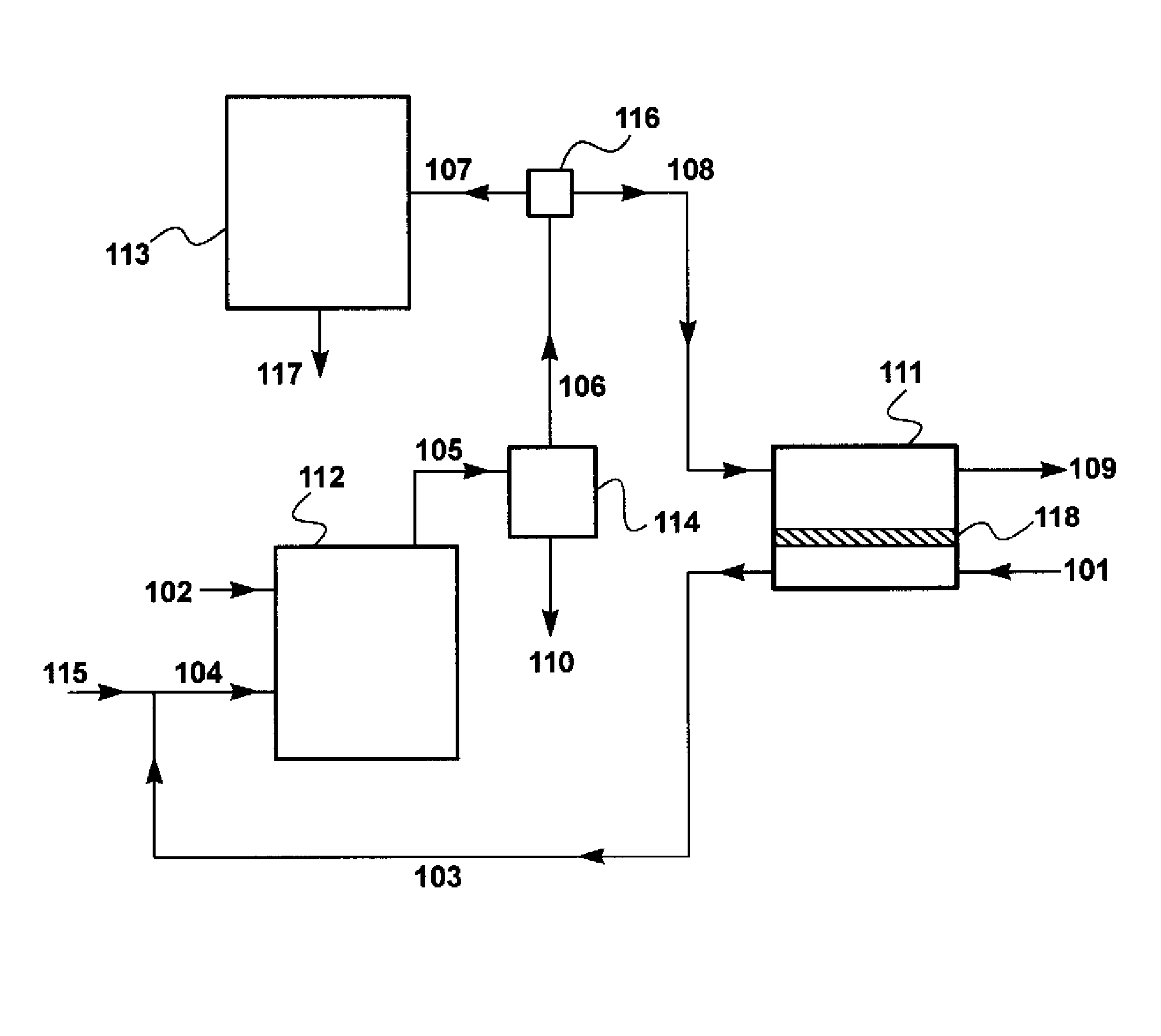
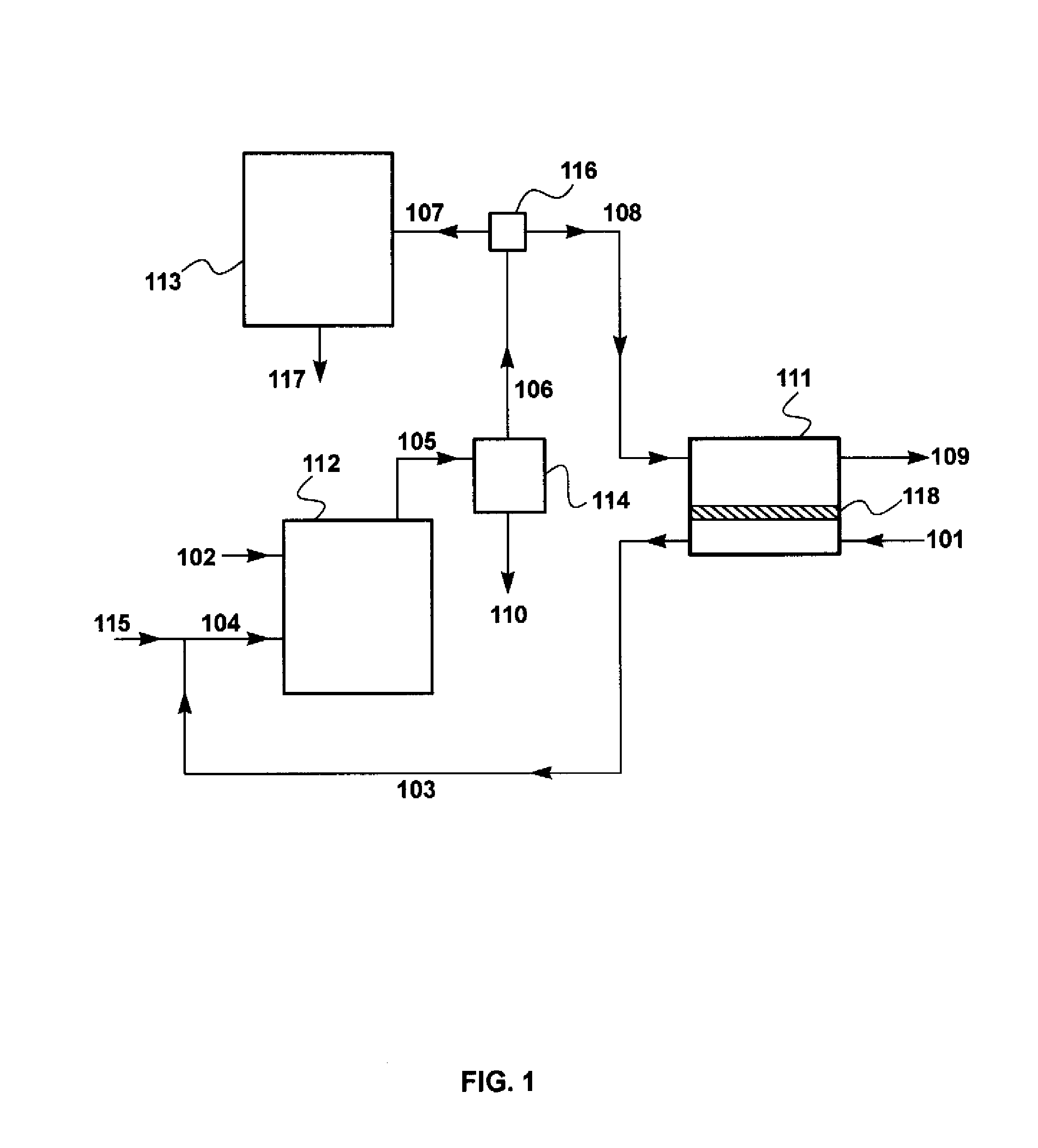
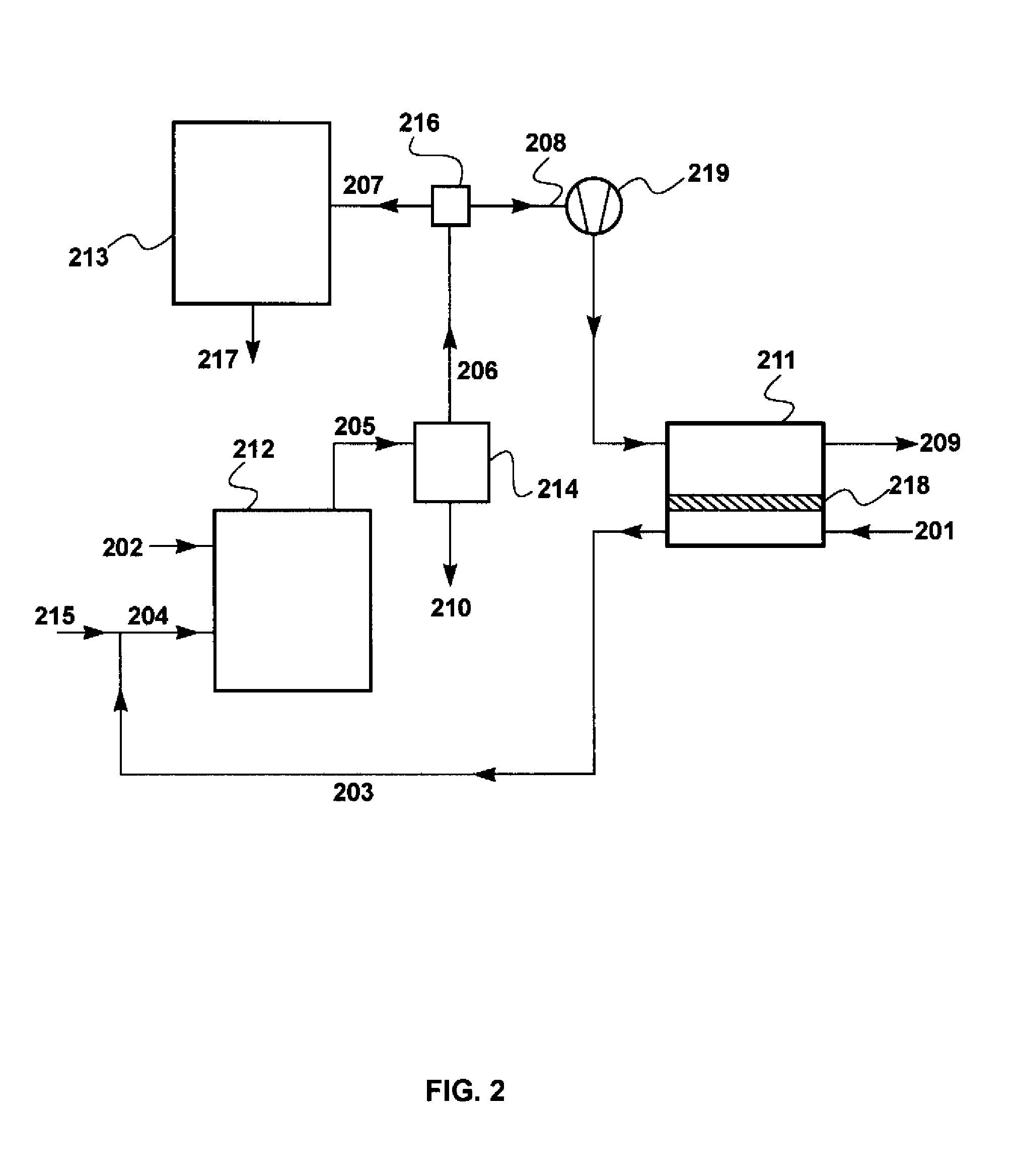
- Implementing a membrane dehumidifier instead of conventional dehumidifiers after the compressor, where dehumidified gas is reused for purging in the carbon dioxide capture process, minimizing gas loss and enhancing dehumidification efficiency by using a high nitrogen purge rate.


Combustion systems and power plants incorporating parallel carbon dioxide capture and sweep-based membrane separation units to remove carbon dioxide from combustion gases
PatentActiveUS8034168B2
Innovation
- Incorporating a sweep-based membrane separation unit into combustion systems to selectively remove carbon dioxide from exhaust gases, using membranes permeable to carbon dioxide over nitrogen and oxygen, with a sweep gas to enhance the separation process, allowing for recirculation of the permeate stream to increase carbon dioxide concentration and reduce emissions.

Economic Feasibility and Cost-Benefit Analysis
The economic feasibility of membrane capture technology for small industrial emitters represents a critical factor in its potential widespread adoption. Current cost estimates for membrane-based carbon capture systems range from $50-150 per ton of CO2 captured, positioning them competitively against alternative decarbonization technologies for small-scale applications. This cost advantage becomes particularly significant when compared to traditional amine-based capture systems, which typically exhibit higher capital expenditure requirements and operational complexity at smaller scales.
Investment analysis indicates that membrane systems require lower initial capital expenditure, with typical installation costs for small industrial facilities (emitting 1,000-50,000 tons CO2 annually) ranging from $0.5-3 million. This represents a 20-40% reduction in upfront costs compared to equivalent amine-based systems, making the technology more accessible to small and medium enterprises with limited investment capacity.
Operational expenditure considerations reveal further economic advantages. Membrane systems demonstrate 15-30% lower energy penalties compared to conventional capture technologies when applied to small emission sources. This translates to reduced operational costs over the system lifetime, with maintenance requirements estimated at 2-5% of capital costs annually, compared to 4-8% for alternative technologies.
Return on investment calculations suggest payback periods of 3-7 years for membrane capture systems in small industrial applications, depending on carbon pricing mechanisms, energy costs, and potential utilization pathways for captured CO2. This timeline aligns favorably with typical industrial equipment replacement cycles, enhancing adoption potential.
Sensitivity analysis reveals that membrane technology economics are particularly responsive to improvements in selectivity and permeability parameters. Each 10% improvement in these key performance indicators can reduce capture costs by approximately 7-12%, highlighting the importance of continued research and development in membrane materials science.
Cost-benefit considerations extend beyond direct economic factors to include regulatory compliance value, brand reputation enhancement, and potential revenue streams from carbon credit markets. When these factors are monetized, the net present value of membrane capture investments improves by an estimated 15-25% compared to base case scenarios that only consider direct operational savings.
Scale-dependent economic analysis demonstrates that membrane systems maintain relatively consistent cost efficiency across the small industrial emitter spectrum (1,000-50,000 tons CO2/year), unlike competing technologies that show significant cost penalties at lower capture volumes. This scale-independence represents a crucial advantage for the diverse and fragmented small industrial emitter market segment.
Investment analysis indicates that membrane systems require lower initial capital expenditure, with typical installation costs for small industrial facilities (emitting 1,000-50,000 tons CO2 annually) ranging from $0.5-3 million. This represents a 20-40% reduction in upfront costs compared to equivalent amine-based systems, making the technology more accessible to small and medium enterprises with limited investment capacity.
Operational expenditure considerations reveal further economic advantages. Membrane systems demonstrate 15-30% lower energy penalties compared to conventional capture technologies when applied to small emission sources. This translates to reduced operational costs over the system lifetime, with maintenance requirements estimated at 2-5% of capital costs annually, compared to 4-8% for alternative technologies.
Return on investment calculations suggest payback periods of 3-7 years for membrane capture systems in small industrial applications, depending on carbon pricing mechanisms, energy costs, and potential utilization pathways for captured CO2. This timeline aligns favorably with typical industrial equipment replacement cycles, enhancing adoption potential.
Sensitivity analysis reveals that membrane technology economics are particularly responsive to improvements in selectivity and permeability parameters. Each 10% improvement in these key performance indicators can reduce capture costs by approximately 7-12%, highlighting the importance of continued research and development in membrane materials science.
Cost-benefit considerations extend beyond direct economic factors to include regulatory compliance value, brand reputation enhancement, and potential revenue streams from carbon credit markets. When these factors are monetized, the net present value of membrane capture investments improves by an estimated 15-25% compared to base case scenarios that only consider direct operational savings.
Scale-dependent economic analysis demonstrates that membrane systems maintain relatively consistent cost efficiency across the small industrial emitter spectrum (1,000-50,000 tons CO2/year), unlike competing technologies that show significant cost penalties at lower capture volumes. This scale-independence represents a crucial advantage for the diverse and fragmented small industrial emitter market segment.
Regulatory Framework and Carbon Credit Opportunities
The regulatory landscape for carbon capture technologies, particularly membrane-based systems for small industrial emitters, is evolving rapidly across global jurisdictions. In the United States, the Inflation Reduction Act of 2022 has significantly enhanced the Section 45Q tax credit, offering up to $85 per metric ton of CO2 captured and sequestered for facilities that begin construction before 2033. This represents a substantial financial incentive for small industrial facilities to implement membrane capture technologies, especially considering the reduced minimum capture threshold of 12,500 tons annually for industrial facilities.
The European Union's Emissions Trading System (EU ETS) provides another regulatory framework supporting decarbonization efforts. The system's carbon price has reached record levels exceeding €90 per ton in 2023, creating a strong economic case for membrane capture technologies in small industrial settings. Additionally, the EU's Carbon Border Adjustment Mechanism (CBAM) will progressively impose carbon pricing on imported goods, further incentivizing global adoption of efficient carbon capture solutions.
In emerging economies, regulatory frameworks are developing at varying paces. China's national emissions trading scheme, launched in 2021, currently focuses on the power sector but is expected to expand to industrial sectors, potentially creating significant opportunities for membrane capture technologies. Similarly, India's Perform, Achieve, and Trade (PAT) scheme incentivizes energy efficiency improvements that could be complemented by carbon capture solutions.
Beyond compliance markets, voluntary carbon markets present growing opportunities for small industrial emitters. High-quality carbon removal credits from industrial carbon capture projects can command premium prices, often exceeding $100 per ton. The Science Based Targets initiative (SBTi) and other corporate climate commitments are driving demand for verifiable carbon reduction technologies, creating additional revenue streams for facilities implementing membrane capture systems.
Standardization of measurement, reporting, and verification (MRV) protocols specifically for membrane capture technologies remains a challenge but is advancing through initiatives like the International Organization for Standardization (ISO) standards for carbon management. These developments will be crucial for small industrial emitters seeking to monetize their carbon reduction efforts through credit mechanisms.
Regional carbon pricing mechanisms, such as California's Cap-and-Trade Program and the Regional Greenhouse Gas Initiative (RGGI) in the northeastern United States, provide additional frameworks where membrane capture technologies can generate value. As these programs evolve and potentially expand to include more industrial sectors, they will create further opportunities for small emitters to offset implementation costs through carbon credit generation.
The European Union's Emissions Trading System (EU ETS) provides another regulatory framework supporting decarbonization efforts. The system's carbon price has reached record levels exceeding €90 per ton in 2023, creating a strong economic case for membrane capture technologies in small industrial settings. Additionally, the EU's Carbon Border Adjustment Mechanism (CBAM) will progressively impose carbon pricing on imported goods, further incentivizing global adoption of efficient carbon capture solutions.
In emerging economies, regulatory frameworks are developing at varying paces. China's national emissions trading scheme, launched in 2021, currently focuses on the power sector but is expected to expand to industrial sectors, potentially creating significant opportunities for membrane capture technologies. Similarly, India's Perform, Achieve, and Trade (PAT) scheme incentivizes energy efficiency improvements that could be complemented by carbon capture solutions.
Beyond compliance markets, voluntary carbon markets present growing opportunities for small industrial emitters. High-quality carbon removal credits from industrial carbon capture projects can command premium prices, often exceeding $100 per ton. The Science Based Targets initiative (SBTi) and other corporate climate commitments are driving demand for verifiable carbon reduction technologies, creating additional revenue streams for facilities implementing membrane capture systems.
Standardization of measurement, reporting, and verification (MRV) protocols specifically for membrane capture technologies remains a challenge but is advancing through initiatives like the International Organization for Standardization (ISO) standards for carbon management. These developments will be crucial for small industrial emitters seeking to monetize their carbon reduction efforts through credit mechanisms.
Regional carbon pricing mechanisms, such as California's Cap-and-Trade Program and the Regional Greenhouse Gas Initiative (RGGI) in the northeastern United States, provide additional frameworks where membrane capture technologies can generate value. As these programs evolve and potentially expand to include more industrial sectors, they will create further opportunities for small emitters to offset implementation costs through carbon credit generation.
Unlock deeper insights with PatSnap Eureka Quick Research — get a full tech report to explore trends and direct your research. Try now!
Generate Your Research Report Instantly with AI Agent
Supercharge your innovation with PatSnap Eureka AI Agent Platform!