How to Develop Low-Loss Spintronics Components for RF Systems
APR 16, 20269 MIN READ
Generate Your Research Report Instantly with AI Agent
PatSnap Eureka helps you evaluate technical feasibility & market potential.
Spintronics RF Components Background and Objectives
Spintronics, or spin electronics, represents a revolutionary paradigm in electronic device design that exploits both the charge and spin properties of electrons. Unlike conventional electronics that relies solely on electron charge, spintronics harnesses the intrinsic angular momentum of electrons to create novel functionalities. This field emerged from fundamental discoveries in magnetoresistance phenomena and has evolved into a critical technology domain with applications spanning data storage, memory devices, and increasingly, radio frequency systems.
The historical development of spintronics traces back to the discovery of giant magnetoresistance in the late 1980s, which earned Albert Fert and Peter Grünberg the Nobel Prize in Physics. This breakthrough laid the foundation for modern hard disk drives and magnetic random-access memory. The field has since expanded to encompass spin-transfer torque devices, spin Hall effects, and topological insulators, each contributing unique properties for electronic applications.
In radio frequency applications, spintronics components offer unprecedented advantages over traditional semiconductor-based devices. The inherent magnetic properties enable non-volatile operation, reduced power consumption, and enhanced radiation hardness. These characteristics make spintronic RF components particularly attractive for aerospace, defense, and next-generation wireless communication systems where reliability and efficiency are paramount.
The primary objective of developing low-loss spintronics components for RF systems centers on overcoming the fundamental trade-offs between magnetic functionality and electrical performance. Traditional magnetic materials exhibit significant losses at RF frequencies due to eddy currents, magnetic damping, and interface scattering effects. The goal is to engineer materials and device architectures that maintain strong spintronic effects while minimizing these loss mechanisms.
Key technical objectives include achieving insertion losses below 1 dB across relevant frequency bands, maintaining high isolation ratios exceeding 20 dB, and ensuring stable operation across temperature ranges from -40°C to +85°C. Additionally, the components must demonstrate compatibility with standard semiconductor fabrication processes to enable cost-effective manufacturing and integration with existing RF circuits.
The strategic importance of this technology extends beyond immediate performance improvements. Low-loss spintronic RF components could enable entirely new system architectures, including reconfigurable antennas, adaptive filters, and ultra-low-power transceivers. These capabilities align with emerging requirements for 5G/6G networks, Internet of Things applications, and software-defined radio systems where dynamic reconfiguration and energy efficiency are critical success factors.
The historical development of spintronics traces back to the discovery of giant magnetoresistance in the late 1980s, which earned Albert Fert and Peter Grünberg the Nobel Prize in Physics. This breakthrough laid the foundation for modern hard disk drives and magnetic random-access memory. The field has since expanded to encompass spin-transfer torque devices, spin Hall effects, and topological insulators, each contributing unique properties for electronic applications.
In radio frequency applications, spintronics components offer unprecedented advantages over traditional semiconductor-based devices. The inherent magnetic properties enable non-volatile operation, reduced power consumption, and enhanced radiation hardness. These characteristics make spintronic RF components particularly attractive for aerospace, defense, and next-generation wireless communication systems where reliability and efficiency are paramount.
The primary objective of developing low-loss spintronics components for RF systems centers on overcoming the fundamental trade-offs between magnetic functionality and electrical performance. Traditional magnetic materials exhibit significant losses at RF frequencies due to eddy currents, magnetic damping, and interface scattering effects. The goal is to engineer materials and device architectures that maintain strong spintronic effects while minimizing these loss mechanisms.
Key technical objectives include achieving insertion losses below 1 dB across relevant frequency bands, maintaining high isolation ratios exceeding 20 dB, and ensuring stable operation across temperature ranges from -40°C to +85°C. Additionally, the components must demonstrate compatibility with standard semiconductor fabrication processes to enable cost-effective manufacturing and integration with existing RF circuits.
The strategic importance of this technology extends beyond immediate performance improvements. Low-loss spintronic RF components could enable entirely new system architectures, including reconfigurable antennas, adaptive filters, and ultra-low-power transceivers. These capabilities align with emerging requirements for 5G/6G networks, Internet of Things applications, and software-defined radio systems where dynamic reconfiguration and energy efficiency are critical success factors.
Market Demand for Low-Loss RF Spintronic Devices
The global RF components market is experiencing unprecedented growth driven by the proliferation of 5G networks, Internet of Things applications, and advanced wireless communication systems. Traditional RF components face significant challenges in meeting the stringent requirements for low power consumption, high frequency operation, and miniaturization demanded by next-generation wireless infrastructure. This creates a substantial market opportunity for innovative spintronic solutions that can address these limitations.
Telecommunications infrastructure represents the largest addressable market segment for low-loss RF spintronic devices. Network operators are investing heavily in 5G base stations and small cell deployments, where power efficiency directly impacts operational costs and thermal management requirements. The demand for components that can operate efficiently at millimeter-wave frequencies while maintaining low insertion loss is particularly acute in this sector.
The automotive industry presents another significant growth opportunity, particularly with the advancement of autonomous vehicles and vehicle-to-everything communication systems. These applications require RF components that can function reliably in harsh environments while consuming minimal power to preserve battery life in electric vehicles. Spintronic devices offer inherent advantages in terms of radiation hardness and temperature stability compared to conventional semiconductor solutions.
Consumer electronics manufacturers are increasingly seeking RF components that enable longer battery life and improved performance in smartphones, tablets, and wearable devices. The integration of multiple wireless standards within single devices creates complex RF front-end requirements where low-loss spintronic components could provide competitive advantages through reduced power consumption and enhanced signal integrity.
Aerospace and defense applications represent a specialized but high-value market segment where the unique properties of spintronic materials, including their resistance to radiation and extreme temperatures, align well with mission-critical requirements. Military communication systems and satellite applications particularly benefit from components that maintain performance across wide temperature ranges while offering low power operation.
The market demand is further amplified by regulatory pressures for energy efficiency and environmental sustainability. Government initiatives promoting green technology adoption and carbon footprint reduction are driving organizations to seek more efficient RF solutions, positioning spintronic components as attractive alternatives to conventional technologies.
Telecommunications infrastructure represents the largest addressable market segment for low-loss RF spintronic devices. Network operators are investing heavily in 5G base stations and small cell deployments, where power efficiency directly impacts operational costs and thermal management requirements. The demand for components that can operate efficiently at millimeter-wave frequencies while maintaining low insertion loss is particularly acute in this sector.
The automotive industry presents another significant growth opportunity, particularly with the advancement of autonomous vehicles and vehicle-to-everything communication systems. These applications require RF components that can function reliably in harsh environments while consuming minimal power to preserve battery life in electric vehicles. Spintronic devices offer inherent advantages in terms of radiation hardness and temperature stability compared to conventional semiconductor solutions.
Consumer electronics manufacturers are increasingly seeking RF components that enable longer battery life and improved performance in smartphones, tablets, and wearable devices. The integration of multiple wireless standards within single devices creates complex RF front-end requirements where low-loss spintronic components could provide competitive advantages through reduced power consumption and enhanced signal integrity.
Aerospace and defense applications represent a specialized but high-value market segment where the unique properties of spintronic materials, including their resistance to radiation and extreme temperatures, align well with mission-critical requirements. Military communication systems and satellite applications particularly benefit from components that maintain performance across wide temperature ranges while offering low power operation.
The market demand is further amplified by regulatory pressures for energy efficiency and environmental sustainability. Government initiatives promoting green technology adoption and carbon footprint reduction are driving organizations to seek more efficient RF solutions, positioning spintronic components as attractive alternatives to conventional technologies.
Current State and Loss Challenges in Spintronic RF Systems
Spintronic RF systems currently face significant challenges in achieving the low-loss performance required for next-generation wireless communications and radar applications. The fundamental issue stems from the inherent magnetic damping mechanisms present in ferromagnetic materials, which are essential components in spintronic devices. Gilbert damping, the primary loss mechanism, arises from spin-orbit coupling and magnon-phonon interactions, typically resulting in damping parameters ranging from 0.001 to 0.1 depending on the material composition and structural properties.
Contemporary spintronic RF components, including spin-wave filters, isolators, and phase shifters, exhibit insertion losses between 3-15 dB across the microwave frequency range. These losses primarily originate from magnetic anisotropy variations, interface roughness, and eddy current formation in metallic layers. The challenge is particularly acute in multilayer structures where spin-dependent scattering at interfaces contributes significantly to overall system losses.
Material-related constraints represent another critical bottleneck in current spintronic RF systems. Yttrium iron garnet (YIG), despite its relatively low damping characteristics, suffers from temperature sensitivity and limited frequency tunability. Metallic ferromagnets like Permalloy and CoFeB offer better integration capabilities but exhibit higher intrinsic losses due to increased conductivity and spin-orbit coupling effects.
Fabrication-induced defects further exacerbate loss mechanisms in spintronic components. Ion beam etching processes commonly used in device patterning introduce edge damage and magnetic dead layers, while thermal processing steps can lead to interdiffusion at critical interfaces. These manufacturing challenges result in significant device-to-device variations and reduced reproducibility in RF performance metrics.
Frequency-dependent loss characteristics pose additional complications for broadband applications. Spin-wave propagation losses increase substantially at higher frequencies due to enhanced magnon scattering rates and reduced group velocities. Current spintronic devices demonstrate acceptable performance below 10 GHz but face exponentially increasing losses in millimeter-wave frequency bands essential for 5G and beyond applications.
The integration of spintronic components with conventional semiconductor RF circuits presents impedance matching challenges that contribute to overall system losses. The magnetic permeability variations in spintronic materials create complex frequency-dependent impedance profiles that are difficult to compensate using traditional matching networks, resulting in reflection losses and reduced power transfer efficiency.
Contemporary spintronic RF components, including spin-wave filters, isolators, and phase shifters, exhibit insertion losses between 3-15 dB across the microwave frequency range. These losses primarily originate from magnetic anisotropy variations, interface roughness, and eddy current formation in metallic layers. The challenge is particularly acute in multilayer structures where spin-dependent scattering at interfaces contributes significantly to overall system losses.
Material-related constraints represent another critical bottleneck in current spintronic RF systems. Yttrium iron garnet (YIG), despite its relatively low damping characteristics, suffers from temperature sensitivity and limited frequency tunability. Metallic ferromagnets like Permalloy and CoFeB offer better integration capabilities but exhibit higher intrinsic losses due to increased conductivity and spin-orbit coupling effects.
Fabrication-induced defects further exacerbate loss mechanisms in spintronic components. Ion beam etching processes commonly used in device patterning introduce edge damage and magnetic dead layers, while thermal processing steps can lead to interdiffusion at critical interfaces. These manufacturing challenges result in significant device-to-device variations and reduced reproducibility in RF performance metrics.
Frequency-dependent loss characteristics pose additional complications for broadband applications. Spin-wave propagation losses increase substantially at higher frequencies due to enhanced magnon scattering rates and reduced group velocities. Current spintronic devices demonstrate acceptable performance below 10 GHz but face exponentially increasing losses in millimeter-wave frequency bands essential for 5G and beyond applications.
The integration of spintronic components with conventional semiconductor RF circuits presents impedance matching challenges that contribute to overall system losses. The magnetic permeability variations in spintronic materials create complex frequency-dependent impedance profiles that are difficult to compensate using traditional matching networks, resulting in reflection losses and reduced power transfer efficiency.
Existing Low-Loss Spintronic Component Solutions
01 Magnetic tunnel junction structures with reduced loss
Spintronic devices utilize magnetic tunnel junctions (MTJs) with optimized barrier layers and electrode configurations to minimize energy dissipation during spin-polarized electron transport. Advanced MTJ designs incorporate specific material compositions and layer thicknesses to reduce tunneling magnetoresistance loss and improve spin injection efficiency. These structures employ carefully selected ferromagnetic materials and insulating barriers to maintain high spin polarization while minimizing scattering losses.- Magnetic tunnel junction structures with reduced loss: Spintronic devices utilize magnetic tunnel junctions (MTJs) with optimized barrier layers and electrode configurations to minimize energy dissipation during spin-polarized electron transport. Advanced MTJ designs incorporate specific material compositions and layer thicknesses to reduce tunneling magnetoresistance loss and improve spin injection efficiency. These structures employ carefully selected ferromagnetic materials and insulating barriers to maintain high spin polarization while minimizing scattering losses.
- Spin-orbit torque devices with enhanced efficiency: Spin-orbit torque (SOT) based spintronic components utilize heavy metal layers and topological materials to generate efficient spin currents with reduced power consumption. These devices minimize damping losses through optimized material selection and interface engineering. The structures incorporate specific crystallographic orientations and material combinations to maximize spin Hall angle while reducing parasitic resistance and heat generation during switching operations.
- Low-loss spin wave propagation structures: Magnonic devices designed for spin wave transmission employ specialized waveguide geometries and magnetic materials with low Gilbert damping parameters. These structures minimize spin wave attenuation through careful control of material properties, surface conditions, and geometric parameters. Advanced designs incorporate periodic structures and metamaterials to reduce propagation losses and extend spin wave coherence lengths in spintronic circuits.
- Thermal management in spintronic devices: Spintronic components incorporate thermal dissipation structures and materials to minimize losses from Joule heating and spin Seebeck effects. These designs include heat sink integration, thermal interface optimization, and temperature-dependent compensation mechanisms. Advanced thermal management approaches utilize thermoelectric materials and active cooling strategies to maintain optimal operating temperatures and reduce thermally-induced spin decoherence and resistance increases.
- Interface engineering for reduced spin scattering: Spintronic devices employ advanced interface engineering techniques to minimize spin-flip scattering and maintain spin coherence across material boundaries. These approaches include atomic-level control of interface roughness, insertion of buffer layers, and selection of lattice-matched materials. The optimized interfaces reduce momentum scattering, preserve spin polarization during transport, and minimize reflection losses at heterojunction boundaries in multilayer spintronic structures.
02 Spin-orbit torque devices with enhanced efficiency
Spin-orbit torque (SOT) based spintronic components utilize heavy metal layers and topological materials to generate efficient spin currents with reduced power consumption. These devices employ optimized material stacks and interface engineering to minimize damping losses during spin-charge conversion. The structures are designed to maximize spin Hall angle while reducing resistive losses through careful selection of spin Hall materials and geometric configurations.Expand Specific Solutions03 Low-loss spin wave propagation structures
Magnonic devices are designed with specific waveguide geometries and magnetic material properties to enable long-distance spin wave propagation with minimal attenuation. These structures incorporate patterned magnetic films, optimized material compositions, and engineered boundary conditions to reduce magnon scattering and damping. The designs focus on maintaining coherent spin wave transmission through careful control of magnetic anisotropy and interface quality.Expand Specific Solutions04 Thermal management in spintronic devices
Advanced thermal design strategies are implemented to mitigate heat-induced losses in spintronic components, including heat sink integration, thermal interface optimization, and material selection for improved thermal conductivity. These approaches address Joule heating and spin Seebeck effects that can degrade device performance. Thermal management solutions incorporate novel cooling structures and thermally conductive pathways to maintain optimal operating temperatures and preserve spin coherence.Expand Specific Solutions05 Interface engineering for reduced spin scattering
Spintronic devices employ advanced interface engineering techniques to minimize spin-flip scattering at material boundaries and heterojunctions. These methods include surface treatment, insertion of buffer layers, and atomic-level control of interface roughness to preserve spin polarization during transport. The approaches focus on reducing interface-induced losses through crystallographic matching, chemical passivation, and optimized deposition processes that maintain sharp, defect-free interfaces.Expand Specific Solutions
Key Players in Spintronics and RF Component Industry
The spintronics RF components market is in its early commercialization stage, transitioning from research-intensive development to practical applications. The market shows significant growth potential driven by increasing demand for energy-efficient RF systems in telecommunications and IoT applications. Technology maturity varies considerably across the competitive landscape. Established semiconductor giants like Intel, Qualcomm, and IBM are leveraging their advanced fabrication capabilities to integrate spintronic elements into existing RF architectures. Specialized component manufacturers including Murata Manufacturing and Silicon Laboratories are developing targeted solutions for specific RF applications. Research institutions such as Georgia Tech Research Corp., Ohio State University, and Technical University of Denmark continue advancing fundamental spintronic materials and device physics. Emerging players like Atomera are focusing on novel semiconductor enhancement technologies that complement spintronic approaches. The fragmented competitive environment reflects the technology's nascent stage, with significant opportunities for breakthrough innovations in low-loss magnetic materials and hybrid spintronic-semiconductor integration techniques.
Huawei Technologies Co., Ltd.
Technical Solution: Huawei has invested significantly in spintronic research for 5G and 6G RF systems, developing low-loss magnetic tunnel junction-based components for frequency synthesis and signal processing. Their technology focuses on CoFeB/MgO/CoFeB structures optimized for high-frequency operation with tunnel magnetoresistance ratios exceeding 200%. Huawei's spintronic RF components utilize synthetic antiferromagnetic structures to reduce stray magnetic fields and minimize crosstalk in dense circuit layouts. They have developed spin-wave devices operating in the 1-10 GHz range with propagation losses below 1 dB/mm, enabling efficient signal routing in compact RF front-ends. The company's approach integrates spintronic oscillators with phase-locked loops to create low-phase-noise frequency sources for millimeter-wave applications, achieving phase noise levels competitive with traditional semiconductor oscillators while consuming significantly less power.
Strengths: Strong focus on telecommunications applications, substantial R&D investment, integration with 5G/6G system requirements. Weaknesses: Limited access to advanced fabrication facilities due to trade restrictions, primarily focused on system-level integration rather than fundamental device physics.
QUALCOMM, Inc.
Technical Solution: Qualcomm has developed spintronic-enhanced RF components targeting mobile communication systems, focusing on low-power magnetic sensors and tunable RF elements. Their technology integrates giant magnetoresistance (GMR) and tunnel magnetoresistance (TMR) sensors with CMOS RF circuits to create adaptive impedance matching networks and field-sensing antenna systems. Qualcomm's spintronic approach utilizes spin-transfer torque devices for creating voltage-controlled oscillators with frequency tuning ranges exceeding 20% while maintaining phase noise performance below -100 dBc/Hz at 1 MHz offset. They have implemented spintronic phase shifters using current-induced domain wall motion in magnetic strips, achieving continuous phase control over 360 degrees with insertion losses below 2 dB across 1-6 GHz frequency bands. The company's research extends to spin-wave based signal processing elements that can perform filtering and mixing functions with reduced power consumption compared to conventional semiconductor approaches.
Strengths: Deep understanding of mobile RF requirements, strong system integration capabilities, extensive patent portfolio in wireless communications. Weaknesses: Limited fundamental spintronic research capabilities, primarily focused on incremental improvements rather than breakthrough technologies, constrained by mobile power budgets.
Core Patents in Low-Loss Spintronic RF Technologies
Low-loss asymmetric switch-on-chip for 5g/6g radio frequency front-end chip
PatentWO2024239467A1
Innovation
- A low loss asymmetric on-chip switch for 5G/6G radio frequency front-end chip is designed, and a coupling resonance structure is formed by a parallel resonance unit in the first switching arm and a parallel resonance unit in the second switching arm, and high resistance is achieved by parallel resonance. In this way, the impact of the second switching arm on the loss of the first switching arm is reduced, and the compensation capacitance is added to the grounded transistor, and the bandwidth expansion is optimized to improve isolation.


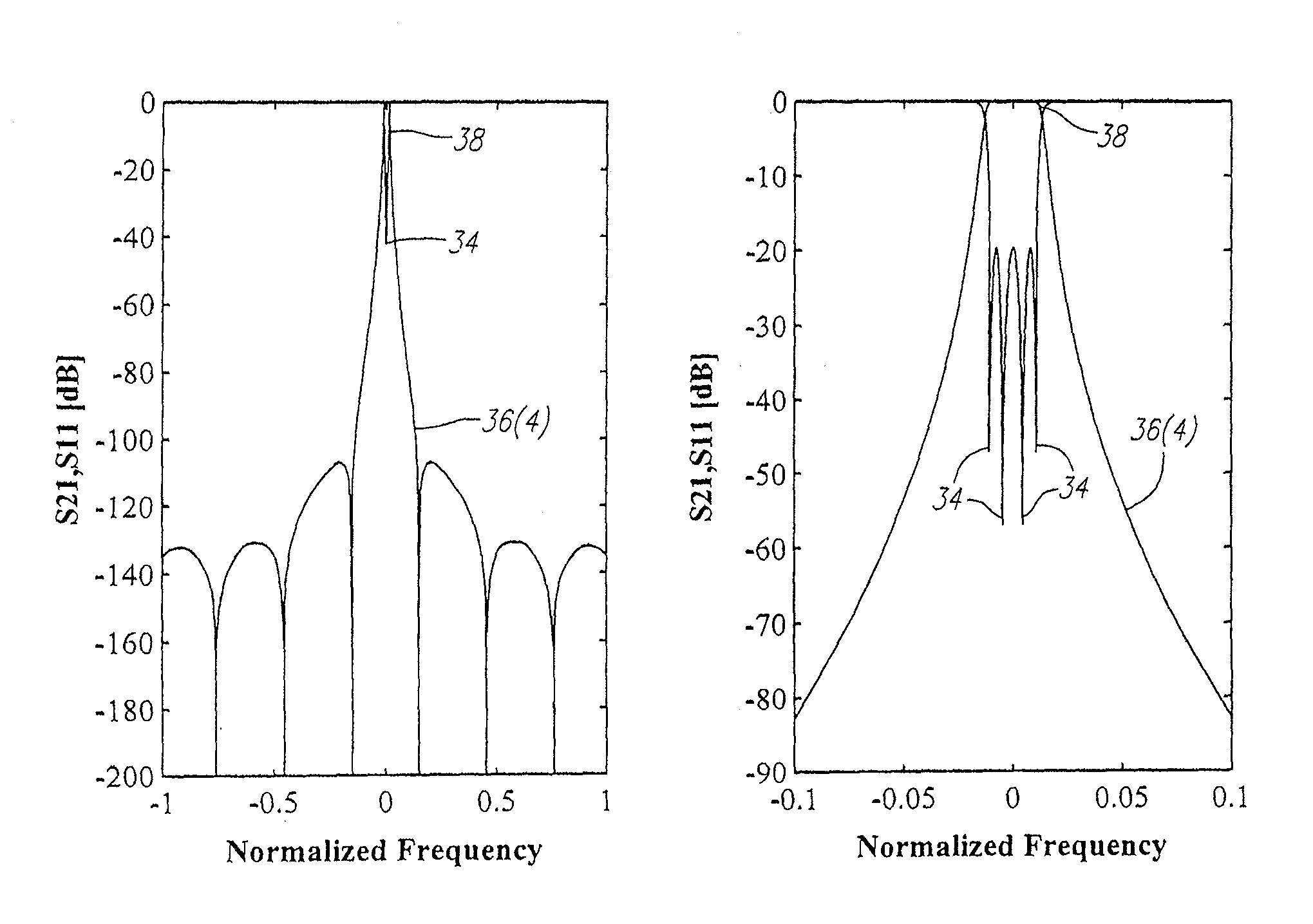
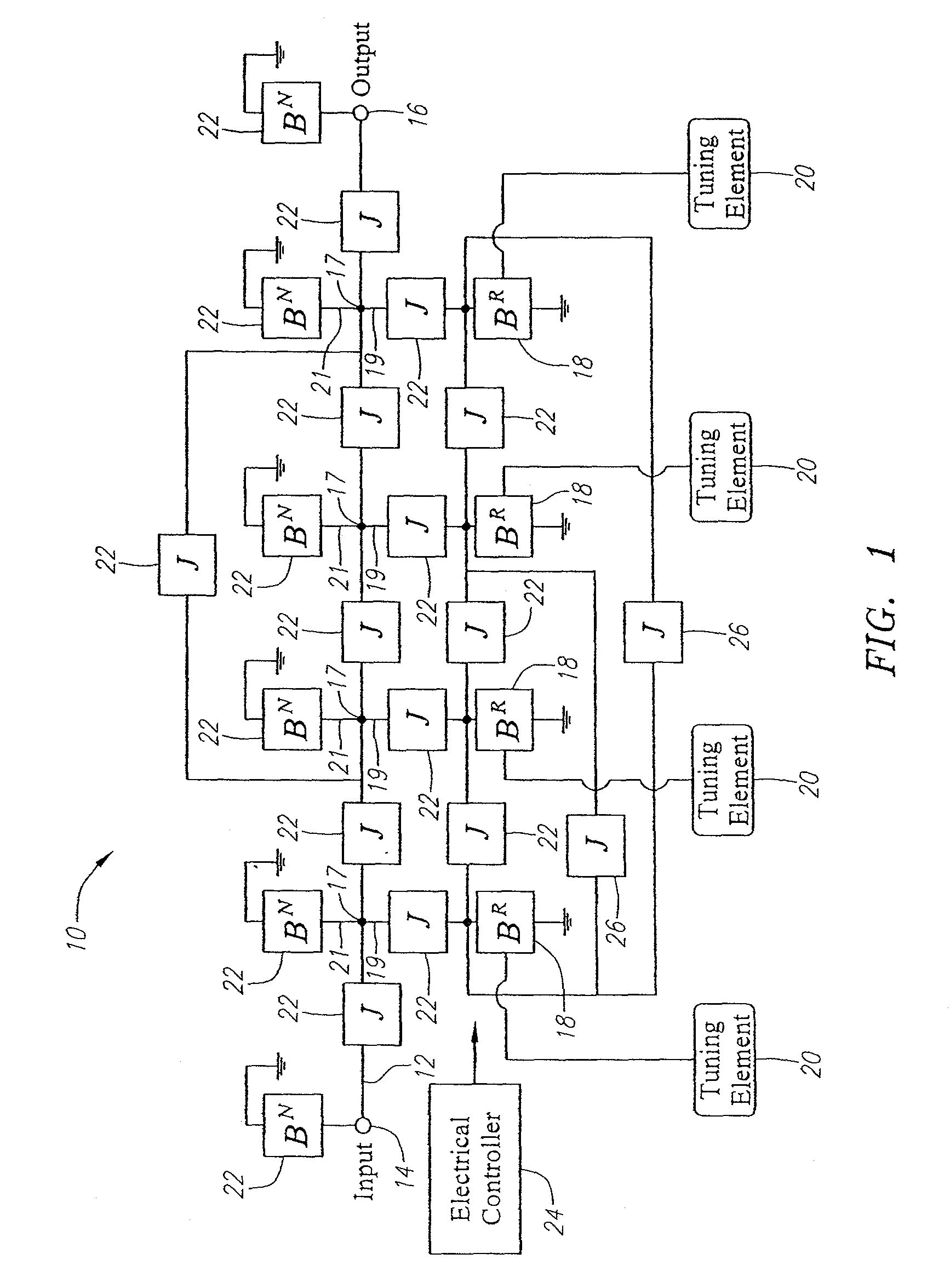
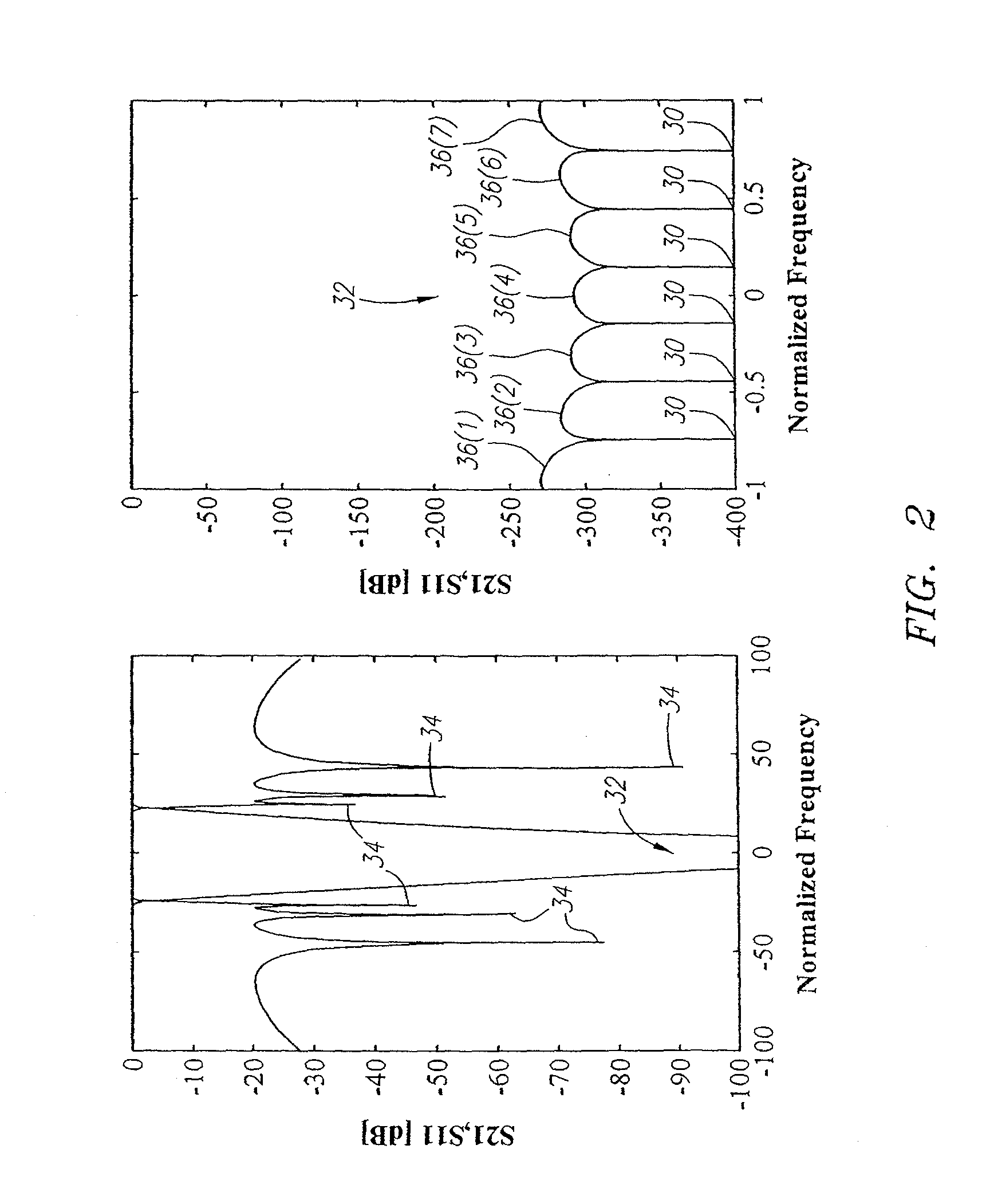
Low-loss tunable radio frequency filter
PatentActiveUS7719382B2
Innovation
- The design incorporates a signal transmission path with resonant and non-resonant elements, where non-resonant elements with adjustable susceptance values create transmission and reflection zeros to form pass bands within sub-bands, allowing for tunability without significantly adjusting resonant elements, thus minimizing insertion loss.

Material Engineering for Enhanced Spintronic Performance
Material engineering represents the foundational pillar for achieving enhanced spintronic performance in RF applications, where the intrinsic properties of magnetic and non-magnetic materials directly determine device efficiency and operational characteristics. The development of low-loss spintronic components necessitates precise control over material composition, crystal structure, and interfacial properties to minimize energy dissipation while maximizing spin transport efficiency.
Advanced ferromagnetic materials with tailored magnetic anisotropy have emerged as critical components for RF spintronic devices. Heusler alloys, particularly Co2FeAl and Co2MnSi, demonstrate exceptional spin polarization exceeding 90% while maintaining low Gilbert damping parameters essential for high-frequency operations. These materials exhibit reduced magnetization precession losses and enhanced spin coherence, directly translating to improved RF performance metrics.
Interface engineering between ferromagnetic and non-magnetic layers plays a pivotal role in optimizing spin injection and detection efficiency. The development of ultra-thin oxide barriers, such as MgO and Al2O3, with precisely controlled thickness and crystallographic orientation enables coherent tunneling while suppressing parasitic resistance. Advanced deposition techniques including molecular beam epitaxy and atomic layer deposition ensure atomic-scale control over interface quality and uniformity.
Novel two-dimensional materials including graphene, transition metal dichalcogenides, and topological insulators offer unprecedented opportunities for spintronic enhancement. These materials exhibit exceptional spin transport properties with extended spin diffusion lengths and reduced spin-orbit coupling effects. Graphene-based spin channels demonstrate spin relaxation times exceeding several nanoseconds, making them ideal candidates for high-frequency spintronic applications.
Antiferromagnetic materials have gained significant attention for their potential in ultrafast spintronic devices due to their intrinsic THz-frequency dynamics. Materials such as IrMn, PtMn, and synthetic antiferromagnets provide robust magnetic reference layers while offering superior thermal stability and reduced stray field effects compared to conventional ferromagnetic systems.
The integration of strain engineering and compositional tuning enables fine-scale optimization of magnetic properties for specific RF applications. Controlled lattice mismatch and epitaxial strain can modify magnetic anisotropy, coercivity, and damping parameters, allowing for application-specific material optimization without compromising fundamental spintronic transport properties.
Advanced ferromagnetic materials with tailored magnetic anisotropy have emerged as critical components for RF spintronic devices. Heusler alloys, particularly Co2FeAl and Co2MnSi, demonstrate exceptional spin polarization exceeding 90% while maintaining low Gilbert damping parameters essential for high-frequency operations. These materials exhibit reduced magnetization precession losses and enhanced spin coherence, directly translating to improved RF performance metrics.
Interface engineering between ferromagnetic and non-magnetic layers plays a pivotal role in optimizing spin injection and detection efficiency. The development of ultra-thin oxide barriers, such as MgO and Al2O3, with precisely controlled thickness and crystallographic orientation enables coherent tunneling while suppressing parasitic resistance. Advanced deposition techniques including molecular beam epitaxy and atomic layer deposition ensure atomic-scale control over interface quality and uniformity.
Novel two-dimensional materials including graphene, transition metal dichalcogenides, and topological insulators offer unprecedented opportunities for spintronic enhancement. These materials exhibit exceptional spin transport properties with extended spin diffusion lengths and reduced spin-orbit coupling effects. Graphene-based spin channels demonstrate spin relaxation times exceeding several nanoseconds, making them ideal candidates for high-frequency spintronic applications.
Antiferromagnetic materials have gained significant attention for their potential in ultrafast spintronic devices due to their intrinsic THz-frequency dynamics. Materials such as IrMn, PtMn, and synthetic antiferromagnets provide robust magnetic reference layers while offering superior thermal stability and reduced stray field effects compared to conventional ferromagnetic systems.
The integration of strain engineering and compositional tuning enables fine-scale optimization of magnetic properties for specific RF applications. Controlled lattice mismatch and epitaxial strain can modify magnetic anisotropy, coercivity, and damping parameters, allowing for application-specific material optimization without compromising fundamental spintronic transport properties.
Integration Challenges with Conventional RF Architectures
The integration of low-loss spintronics components into conventional RF architectures presents multifaceted challenges that stem from fundamental differences in operational principles and physical characteristics. Traditional RF systems rely on charge-based signal processing through silicon-based semiconductors, while spintronic devices manipulate electron spin states using magnetic materials and novel heterostructures. This paradigm shift necessitates comprehensive architectural modifications to accommodate the unique requirements of spintronic components.
Impedance matching represents a critical challenge when incorporating spintronic devices into existing RF chains. Conventional RF components typically operate with standardized impedance values of 50 or 75 ohms, whereas spintronic devices often exhibit complex impedance characteristics that vary with frequency, magnetic field strength, and temperature. The magnetic permeability and permittivity of spintronic materials introduce additional reactive components that complicate impedance matching networks, potentially degrading overall system performance and introducing unwanted reflections.
Thermal management poses another significant integration hurdle. Many spintronic devices require precise temperature control to maintain optimal spin coherence and minimize thermal fluctuations that can degrade performance. Conventional RF systems may not provide adequate thermal regulation for these sensitive components, necessitating additional cooling infrastructure or thermal isolation techniques that can impact system compactness and power efficiency.
Signal conversion and interface compatibility create substantial design complexities. Spintronic components often require specialized bias conditions, including magnetic field biasing and specific voltage or current drive requirements that differ significantly from conventional RF components. The integration process demands sophisticated control circuitry and potentially custom interface modules to bridge the gap between spintronic devices and standard RF signal processing chains.
Electromagnetic interference and isolation challenges emerge due to the magnetic sensitivity of spintronic components. Conventional RF systems may generate magnetic fields through inductors, transformers, and current-carrying conductors that can adversely affect nearby spintronic devices. Achieving adequate magnetic shielding while maintaining RF performance requires careful layout design and potentially expensive shielding materials, increasing system complexity and cost.
Manufacturing and assembly compatibility issues further complicate integration efforts. Spintronic devices often require specialized fabrication processes, exotic materials, and precise alignment tolerances that may not be compatible with standard RF manufacturing techniques. This incompatibility can lead to yield issues, increased production costs, and challenges in achieving consistent performance across production volumes.
Impedance matching represents a critical challenge when incorporating spintronic devices into existing RF chains. Conventional RF components typically operate with standardized impedance values of 50 or 75 ohms, whereas spintronic devices often exhibit complex impedance characteristics that vary with frequency, magnetic field strength, and temperature. The magnetic permeability and permittivity of spintronic materials introduce additional reactive components that complicate impedance matching networks, potentially degrading overall system performance and introducing unwanted reflections.
Thermal management poses another significant integration hurdle. Many spintronic devices require precise temperature control to maintain optimal spin coherence and minimize thermal fluctuations that can degrade performance. Conventional RF systems may not provide adequate thermal regulation for these sensitive components, necessitating additional cooling infrastructure or thermal isolation techniques that can impact system compactness and power efficiency.
Signal conversion and interface compatibility create substantial design complexities. Spintronic components often require specialized bias conditions, including magnetic field biasing and specific voltage or current drive requirements that differ significantly from conventional RF components. The integration process demands sophisticated control circuitry and potentially custom interface modules to bridge the gap between spintronic devices and standard RF signal processing chains.
Electromagnetic interference and isolation challenges emerge due to the magnetic sensitivity of spintronic components. Conventional RF systems may generate magnetic fields through inductors, transformers, and current-carrying conductors that can adversely affect nearby spintronic devices. Achieving adequate magnetic shielding while maintaining RF performance requires careful layout design and potentially expensive shielding materials, increasing system complexity and cost.
Manufacturing and assembly compatibility issues further complicate integration efforts. Spintronic devices often require specialized fabrication processes, exotic materials, and precise alignment tolerances that may not be compatible with standard RF manufacturing techniques. This incompatibility can lead to yield issues, increased production costs, and challenges in achieving consistent performance across production volumes.
Unlock deeper insights with PatSnap Eureka Quick Research — get a full tech report to explore trends and direct your research. Try now!
Generate Your Research Report Instantly with AI Agent
Supercharge your innovation with PatSnap Eureka AI Agent Platform!