How to Enhance Thermopile Sensitivity with Material Technologies
SEP 10, 202510 MIN READ
Generate Your Research Report Instantly with AI Agent
PatSnap Eureka helps you evaluate technical feasibility & market potential.
Thermopile Sensitivity Enhancement Background and Objectives
Thermopiles have evolved significantly since their inception in the early 19th century, originating from the thermoelectric effect discovered by Thomas Johann Seebeck in 1821. These devices, which convert thermal energy into electrical energy, have become increasingly important in various applications including infrared detection, thermal imaging, energy harvesting, and temperature measurement systems. The fundamental operating principle of thermopiles relies on the Seebeck effect, where a temperature difference between two dissimilar electrical conductors or semiconductors produces a voltage difference between the two substances.
Over recent decades, the demand for higher sensitivity thermopiles has grown exponentially, driven by emerging applications in medical diagnostics, industrial process control, automotive systems, and consumer electronics. This increasing demand necessitates significant improvements in thermopile sensitivity to detect smaller temperature differences and provide more accurate measurements in challenging environments.
The evolution of material technologies has played a crucial role in advancing thermopile performance. Traditional thermopiles utilized metal-based thermoelectric materials with relatively low Seebeck coefficients. However, the field has witnessed a paradigm shift with the introduction of semiconductor-based thermoelectric materials, nanostructured materials, and thin-film technologies, which have substantially improved the figure of merit (ZT) and consequently the sensitivity of thermopiles.
Current technological trends indicate a move toward integrated microsystems, where thermopiles are combined with signal processing circuits and other sensors to create comprehensive sensing solutions. Additionally, there is growing interest in flexible and wearable thermopile sensors, which require novel material approaches to maintain sensitivity while providing mechanical flexibility.
The primary objective of this technical research is to comprehensively explore and evaluate cutting-edge material technologies that can enhance thermopile sensitivity. Specifically, we aim to investigate advanced thermoelectric materials, novel fabrication techniques, and innovative structural designs that can maximize the Seebeck coefficient while minimizing thermal conductivity and electrical resistance.
Furthermore, this research seeks to identify potential breakthrough technologies that could lead to an order-of-magnitude improvement in thermopile sensitivity compared to current commercial solutions. We will assess the feasibility of emerging materials such as quantum dot superlattices, topological insulators, and two-dimensional materials for thermopile applications, considering both their theoretical performance limits and practical implementation challenges.
The ultimate goal is to establish a clear technological roadmap for thermopile sensitivity enhancement, identifying the most promising material technologies, their development status, and the critical research gaps that need to be addressed to realize next-generation high-sensitivity thermopile devices for diverse applications across multiple industries.
Over recent decades, the demand for higher sensitivity thermopiles has grown exponentially, driven by emerging applications in medical diagnostics, industrial process control, automotive systems, and consumer electronics. This increasing demand necessitates significant improvements in thermopile sensitivity to detect smaller temperature differences and provide more accurate measurements in challenging environments.
The evolution of material technologies has played a crucial role in advancing thermopile performance. Traditional thermopiles utilized metal-based thermoelectric materials with relatively low Seebeck coefficients. However, the field has witnessed a paradigm shift with the introduction of semiconductor-based thermoelectric materials, nanostructured materials, and thin-film technologies, which have substantially improved the figure of merit (ZT) and consequently the sensitivity of thermopiles.
Current technological trends indicate a move toward integrated microsystems, where thermopiles are combined with signal processing circuits and other sensors to create comprehensive sensing solutions. Additionally, there is growing interest in flexible and wearable thermopile sensors, which require novel material approaches to maintain sensitivity while providing mechanical flexibility.
The primary objective of this technical research is to comprehensively explore and evaluate cutting-edge material technologies that can enhance thermopile sensitivity. Specifically, we aim to investigate advanced thermoelectric materials, novel fabrication techniques, and innovative structural designs that can maximize the Seebeck coefficient while minimizing thermal conductivity and electrical resistance.
Furthermore, this research seeks to identify potential breakthrough technologies that could lead to an order-of-magnitude improvement in thermopile sensitivity compared to current commercial solutions. We will assess the feasibility of emerging materials such as quantum dot superlattices, topological insulators, and two-dimensional materials for thermopile applications, considering both their theoretical performance limits and practical implementation challenges.
The ultimate goal is to establish a clear technological roadmap for thermopile sensitivity enhancement, identifying the most promising material technologies, their development status, and the critical research gaps that need to be addressed to realize next-generation high-sensitivity thermopile devices for diverse applications across multiple industries.
Market Demand Analysis for High-Sensitivity Thermal Sensors
The global market for high-sensitivity thermal sensors has been experiencing robust growth, driven primarily by increasing applications in various industries including automotive, consumer electronics, healthcare, and industrial automation. The demand for thermopile sensors with enhanced sensitivity is particularly strong due to their non-contact temperature measurement capabilities and growing integration into smart devices.
In the automotive sector, the need for advanced driver assistance systems (ADAS) and autonomous driving technologies has significantly boosted demand for high-precision thermal sensors. These sensors enable crucial functions such as pedestrian detection, obstacle recognition in low-visibility conditions, and cabin temperature monitoring. Market research indicates that the automotive thermal sensor segment is growing at a compound annual rate exceeding 8% globally.
Consumer electronics represents another major market driver, with smartphones, wearables, and smart home devices increasingly incorporating thermal sensing capabilities. The COVID-19 pandemic accelerated this trend, as contactless temperature screening became essential in public spaces, workplaces, and healthcare facilities. This created unprecedented demand for portable and accurate thermal sensing solutions, pushing manufacturers to develop more sensitive thermopile technologies.
The healthcare and medical diagnostics sector demonstrates particularly strong growth potential for high-sensitivity thermal sensors. Applications range from non-invasive patient monitoring to thermal imaging for diagnostic purposes. The market for medical-grade thermal sensors is projected to expand substantially as telehealth and remote patient monitoring become more prevalent, creating demand for devices that can accurately detect subtle temperature variations.
Industrial applications constitute another significant market segment, with process monitoring, predictive maintenance, and energy efficiency optimization all requiring increasingly sensitive thermal detection capabilities. The industrial Internet of Things (IoT) trend is accelerating adoption of advanced thermal sensors in manufacturing environments, where they help prevent equipment failures and optimize operational efficiency.
Geographically, North America and Europe currently lead in adoption of high-sensitivity thermal sensors, but the Asia-Pacific region is showing the fastest growth rate, driven by rapid industrialization, expanding healthcare infrastructure, and increasing consumer electronics manufacturing. China, Japan, and South Korea are emerging as key markets and production hubs for advanced thermal sensing technologies.
Market analysts forecast that miniaturization, improved accuracy, and enhanced sensitivity will be the primary competitive differentiators in the thermal sensor market. This creates a clear commercial incentive for developing advanced material technologies that can significantly improve thermopile sensitivity, as such innovations would address explicit market demands across multiple high-growth industry segments.
In the automotive sector, the need for advanced driver assistance systems (ADAS) and autonomous driving technologies has significantly boosted demand for high-precision thermal sensors. These sensors enable crucial functions such as pedestrian detection, obstacle recognition in low-visibility conditions, and cabin temperature monitoring. Market research indicates that the automotive thermal sensor segment is growing at a compound annual rate exceeding 8% globally.
Consumer electronics represents another major market driver, with smartphones, wearables, and smart home devices increasingly incorporating thermal sensing capabilities. The COVID-19 pandemic accelerated this trend, as contactless temperature screening became essential in public spaces, workplaces, and healthcare facilities. This created unprecedented demand for portable and accurate thermal sensing solutions, pushing manufacturers to develop more sensitive thermopile technologies.
The healthcare and medical diagnostics sector demonstrates particularly strong growth potential for high-sensitivity thermal sensors. Applications range from non-invasive patient monitoring to thermal imaging for diagnostic purposes. The market for medical-grade thermal sensors is projected to expand substantially as telehealth and remote patient monitoring become more prevalent, creating demand for devices that can accurately detect subtle temperature variations.
Industrial applications constitute another significant market segment, with process monitoring, predictive maintenance, and energy efficiency optimization all requiring increasingly sensitive thermal detection capabilities. The industrial Internet of Things (IoT) trend is accelerating adoption of advanced thermal sensors in manufacturing environments, where they help prevent equipment failures and optimize operational efficiency.
Geographically, North America and Europe currently lead in adoption of high-sensitivity thermal sensors, but the Asia-Pacific region is showing the fastest growth rate, driven by rapid industrialization, expanding healthcare infrastructure, and increasing consumer electronics manufacturing. China, Japan, and South Korea are emerging as key markets and production hubs for advanced thermal sensing technologies.
Market analysts forecast that miniaturization, improved accuracy, and enhanced sensitivity will be the primary competitive differentiators in the thermal sensor market. This creates a clear commercial incentive for developing advanced material technologies that can significantly improve thermopile sensitivity, as such innovations would address explicit market demands across multiple high-growth industry segments.
Current Material Limitations and Technical Challenges
Current thermopile technology faces significant material limitations that directly impact sensor sensitivity and performance. Traditional thermopile materials like bismuth-antimony and polysilicon exhibit relatively low Seebeck coefficients, typically ranging from 100 to 400 μV/K, which fundamentally constrains the voltage output per unit temperature difference. This limitation becomes particularly problematic when detecting minute temperature variations in applications requiring high precision, such as medical diagnostics or industrial process monitoring.
Material homogeneity presents another critical challenge. Conventional manufacturing processes often introduce microscopic inconsistencies in material composition and structure, leading to non-uniform thermoelectric properties across the device. These variations can cause unpredictable signal outputs and reduced reliability, especially when scaling production to commercial volumes.
Thermal conductivity characteristics of current materials create an inherent design conflict. While high electrical conductivity is desirable for signal transmission, the accompanying high thermal conductivity often leads to thermal short-circuiting between hot and cold junctions, diminishing the temperature gradient necessary for optimal thermopile operation. This fundamental trade-off limits the achievable sensitivity in conventional designs.
Interface resistance between different materials in the thermopile structure introduces additional signal losses. Contact points between thermoelectric materials and metal interconnects create potential barriers that impede electron flow, reducing overall device efficiency. Current joining technologies struggle to create seamless interfaces that maintain optimal thermoelectric properties.
Environmental stability represents a significant technical hurdle. Many high-performance thermoelectric materials exhibit performance degradation when exposed to oxygen, moisture, or thermal cycling. This vulnerability necessitates complex encapsulation solutions that add cost and manufacturing complexity while potentially reducing thermal responsiveness.
Scaling limitations further constrain thermopile advancement. As device dimensions decrease to accommodate modern miniaturized applications, quantum confinement effects and increased surface scattering can dramatically alter material properties, often negatively impacting thermoelectric performance. Current materials do not maintain their bulk properties effectively at nanoscale dimensions.
Manufacturing complexity compounds these challenges. High-performance thermoelectric materials often require precise deposition conditions, specialized equipment, and complex post-processing steps. These requirements increase production costs and limit widespread adoption of advanced thermopile technologies, particularly in cost-sensitive consumer applications.
The combined effect of these material limitations creates a significant barrier to achieving the sensitivity improvements necessary for next-generation thermal sensing applications, necessitating innovative approaches to material engineering and device architecture.
Material homogeneity presents another critical challenge. Conventional manufacturing processes often introduce microscopic inconsistencies in material composition and structure, leading to non-uniform thermoelectric properties across the device. These variations can cause unpredictable signal outputs and reduced reliability, especially when scaling production to commercial volumes.
Thermal conductivity characteristics of current materials create an inherent design conflict. While high electrical conductivity is desirable for signal transmission, the accompanying high thermal conductivity often leads to thermal short-circuiting between hot and cold junctions, diminishing the temperature gradient necessary for optimal thermopile operation. This fundamental trade-off limits the achievable sensitivity in conventional designs.
Interface resistance between different materials in the thermopile structure introduces additional signal losses. Contact points between thermoelectric materials and metal interconnects create potential barriers that impede electron flow, reducing overall device efficiency. Current joining technologies struggle to create seamless interfaces that maintain optimal thermoelectric properties.
Environmental stability represents a significant technical hurdle. Many high-performance thermoelectric materials exhibit performance degradation when exposed to oxygen, moisture, or thermal cycling. This vulnerability necessitates complex encapsulation solutions that add cost and manufacturing complexity while potentially reducing thermal responsiveness.
Scaling limitations further constrain thermopile advancement. As device dimensions decrease to accommodate modern miniaturized applications, quantum confinement effects and increased surface scattering can dramatically alter material properties, often negatively impacting thermoelectric performance. Current materials do not maintain their bulk properties effectively at nanoscale dimensions.
Manufacturing complexity compounds these challenges. High-performance thermoelectric materials often require precise deposition conditions, specialized equipment, and complex post-processing steps. These requirements increase production costs and limit widespread adoption of advanced thermopile technologies, particularly in cost-sensitive consumer applications.
The combined effect of these material limitations creates a significant barrier to achieving the sensitivity improvements necessary for next-generation thermal sensing applications, necessitating innovative approaches to material engineering and device architecture.
Current Material Solutions for Thermopile Sensitivity Enhancement
01 Thermopile structure design for enhanced sensitivity
The sensitivity of thermopiles can be improved through structural design modifications. This includes optimizing the arrangement of thermocouple junctions, using specific materials for thermocouples, and implementing specialized membrane structures. By increasing the number of thermocouples in series and optimizing their geometric arrangement, the output voltage and sensitivity can be significantly enhanced. Thin membrane structures also help to improve thermal isolation and reduce heat loss.- Material selection for thermopile sensitivity enhancement: The sensitivity of thermopiles can be significantly improved through careful selection of thermoelectric materials. Using materials with high Seebeck coefficients and optimizing the junction materials can increase the voltage output per unit temperature difference. Advanced semiconductor materials and thin-film technologies have enabled the development of thermopiles with enhanced sensitivity for various sensing applications.
- Structural design optimization for thermopile sensors: The physical structure and geometry of thermopile sensors directly impact their sensitivity. Optimizing the number of thermocouple junctions, their arrangement, and the thermal isolation structures can enhance the temperature gradient across the device. Innovative designs including suspended membrane structures, vacuum packaging, and heat sink configurations help maximize the thermal response and improve overall sensitivity.
- Signal processing techniques for sensitivity improvement: Advanced signal processing methods can effectively enhance the perceived sensitivity of thermopile sensors. These techniques include amplification circuits, noise filtering algorithms, and digital signal processing that can extract meaningful thermal data from weak signals. Implementing specialized integrated circuits and microprocessors for real-time signal conditioning allows for improved detection limits and measurement accuracy.
- Calibration methods for thermopile sensitivity: Precise calibration techniques are essential for optimizing thermopile sensitivity in practical applications. These methods include temperature reference points, compensation for ambient temperature variations, and correction algorithms for non-linearity. Factory and field calibration procedures ensure that thermopile sensors maintain their sensitivity specifications throughout their operational lifetime under varying environmental conditions.
- Environmental isolation and packaging for sensitivity preservation: The sensitivity of thermopile sensors is highly dependent on their isolation from environmental factors. Specialized packaging techniques including hermetic sealing, vacuum encapsulation, and thermal insulation barriers protect the sensing elements from external thermal interference. Advanced housing designs with radiation shields and controlled gas environments help maintain the temperature gradient necessary for optimal sensitivity.
02 Material selection for improved thermopile performance
The choice of materials significantly impacts thermopile sensitivity. High-performance thermopiles utilize materials with large Seebeck coefficients and optimal thermal conductivity properties. Advanced semiconductor materials and metal alloys can be incorporated to maximize the thermoelectric effect. The interface between different materials in the thermocouples is also critical for maintaining high sensitivity and reducing signal noise.Expand Specific Solutions03 Signal processing techniques for thermopile sensitivity enhancement
Various signal processing methods can be employed to enhance thermopile sensitivity. These include amplification circuits, filtering techniques to reduce noise, and specialized algorithms for signal conditioning. Digital signal processing can compensate for environmental variations and drift, while differential measurement approaches can eliminate common-mode noise. Advanced calibration techniques also help maintain sensitivity across varying operating conditions.Expand Specific Solutions04 Temperature compensation methods for stable sensitivity
Temperature compensation techniques are essential for maintaining consistent thermopile sensitivity across varying ambient conditions. These methods include reference junction temperature monitoring, compensation circuits, and software algorithms that adjust for ambient temperature fluctuations. Some designs incorporate additional temperature sensors to provide real-time compensation data, while others use specialized packaging to minimize the effects of temperature gradients.Expand Specific Solutions05 Packaging and encapsulation for sensitivity preservation
The packaging and encapsulation of thermopile sensors play a crucial role in preserving their sensitivity. Vacuum or gas-filled packages can reduce convective heat losses, while specialized coatings can enhance absorption of the target radiation. Hermetic sealing protects the sensitive elements from environmental contaminants that could degrade performance over time. The physical orientation and mounting of the thermopile within its housing also affects its ability to detect thermal radiation efficiently.Expand Specific Solutions
Key Industry Players and Competitive Landscape
The thermopile sensitivity enhancement market is currently in a growth phase, with increasing demand driven by applications in IoT, automotive sensing, and medical devices. The competitive landscape features established players like Hamamatsu Photonics and Texas Instruments leading commercial development, while research institutions such as Shanghai Institute of Ceramics and Industrial Technology Research Institute drive material innovations. Companies like Excelitas Technologies and Panasonic are advancing thin-film technologies, while Corning and SCHOTT Japan focus on specialized glass substrates. The market is characterized by a mix of mature technologies and emerging material solutions, with significant R&D collaboration between academic institutions (Tianjin University, Wuhan University of Technology) and industrial players to overcome current sensitivity limitations through novel material compositions and fabrication techniques.
Hamamatsu Photonics KK
Technical Solution: Hamamatsu Photonics has developed advanced thermopile sensors utilizing novel material combinations to enhance sensitivity. Their approach incorporates specialized thin-film thermoelectric materials with high Seebeck coefficients, typically using bismuth-telluride and antimony-telluride combinations deposited through precision vacuum processes. The company has pioneered multi-junction thermopile designs with increased hot-cold junction pairs arranged in series to amplify output voltage signals. Their proprietary membrane structure technology employs silicon nitride and silicon oxide composite films with optimized thickness (typically 0.5-1.0 μm) to reduce thermal conductivity while maintaining mechanical stability. Hamamatsu has also implemented specialized surface treatments and absorption layers (including gold-black and carbon nanotube coatings) to maximize infrared absorption efficiency across broad spectral ranges, achieving absorption rates exceeding 95% in targeted wavelength bands.
Strengths: Superior signal-to-noise ratio due to proprietary material combinations; excellent long-term stability through advanced passivation techniques; industry-leading temperature resolution (as low as 0.1°C). Weaknesses: Higher manufacturing costs compared to conventional thermopiles; more complex fabrication process requiring specialized equipment; potential challenges in mass production scalability.
Panasonic Intellectual Property Management Co. Ltd.
Technical Solution: Panasonic has developed a comprehensive thermopile sensitivity enhancement approach based on advanced material engineering. Their technology utilizes nano-structured thermoelectric materials with precisely controlled doping profiles to maximize the Seebeck coefficient while minimizing thermal conductivity. The company employs a proprietary vacuum deposition process to create ultra-thin (sub-micron) alternating layers of n-type and p-type semiconductor materials, primarily based on bismuth telluride compounds with specialized dopants. Panasonic's innovation includes a unique suspended membrane structure using silicon nitride with embedded stress-compensation layers, achieving membrane thicknesses below 400nm while maintaining mechanical integrity. Their thermopiles incorporate specialized infrared absorber coatings composed of multi-layer metal-dielectric structures that achieve over 90% absorption efficiency across the 8-14μm wavelength range critical for non-contact temperature sensing applications.
Strengths: Exceptional thermal isolation properties resulting in faster response times (typically <5ms); high voltage sensitivity (>100V/W) through optimized material selection; excellent batch-to-batch consistency through automated manufacturing processes. Weaknesses: Higher initial development costs; potential reliability concerns in extreme environmental conditions; requires specialized packaging to maintain performance characteristics.
Core Material Innovations and Patent Analysis
Structure of thermopile sensor
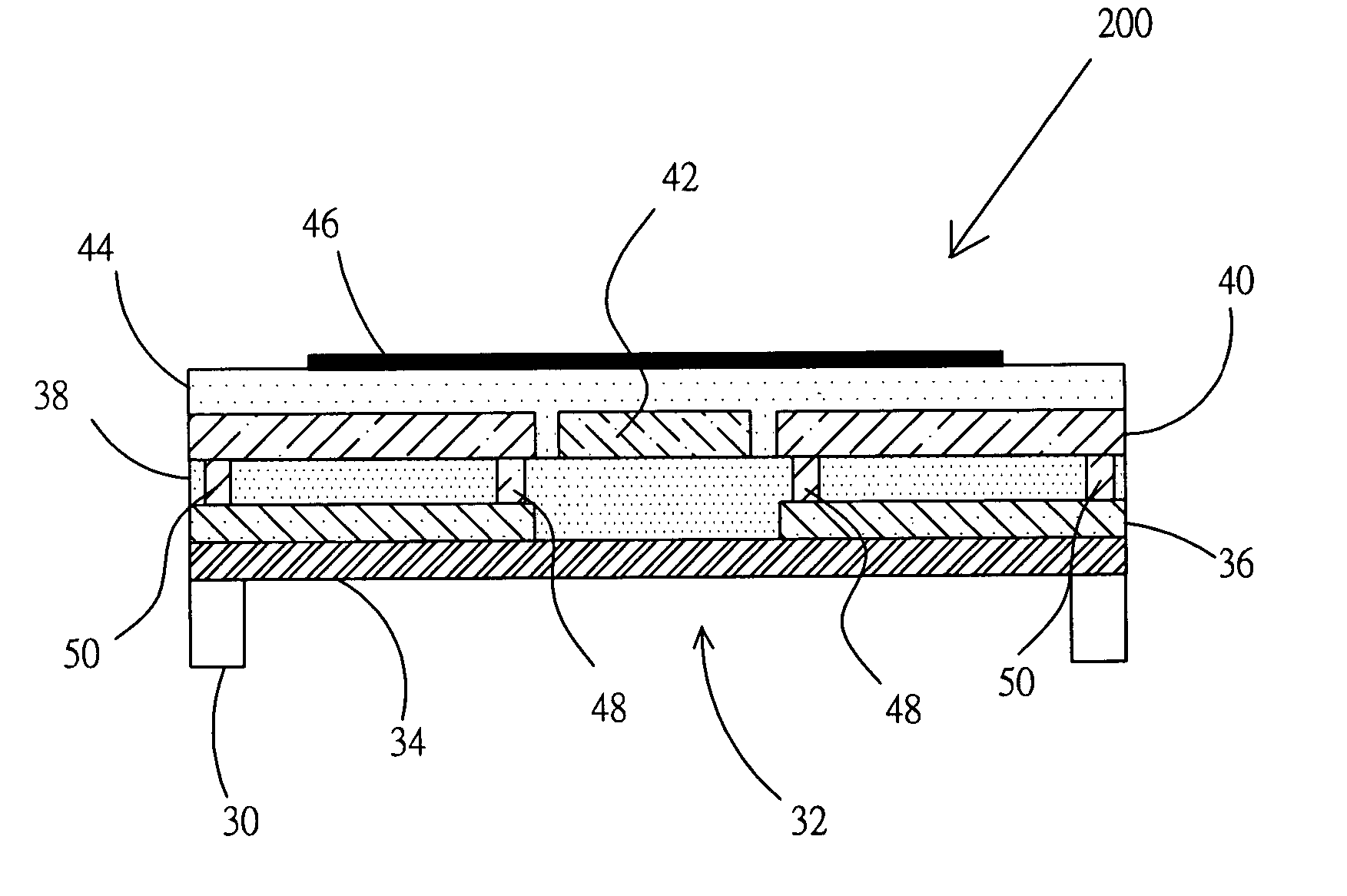
PatentInactiveUS20050034749A1
Innovation
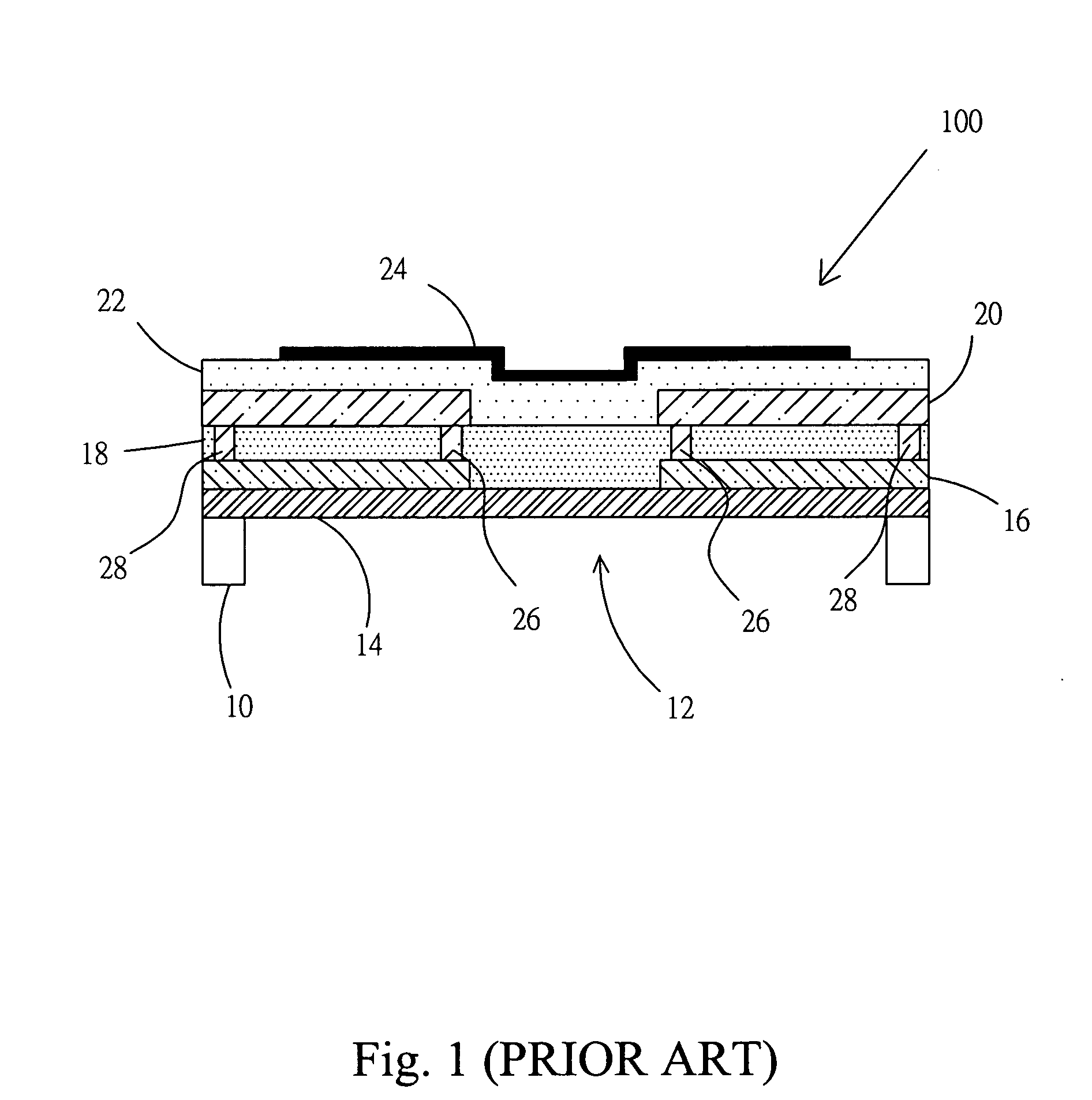
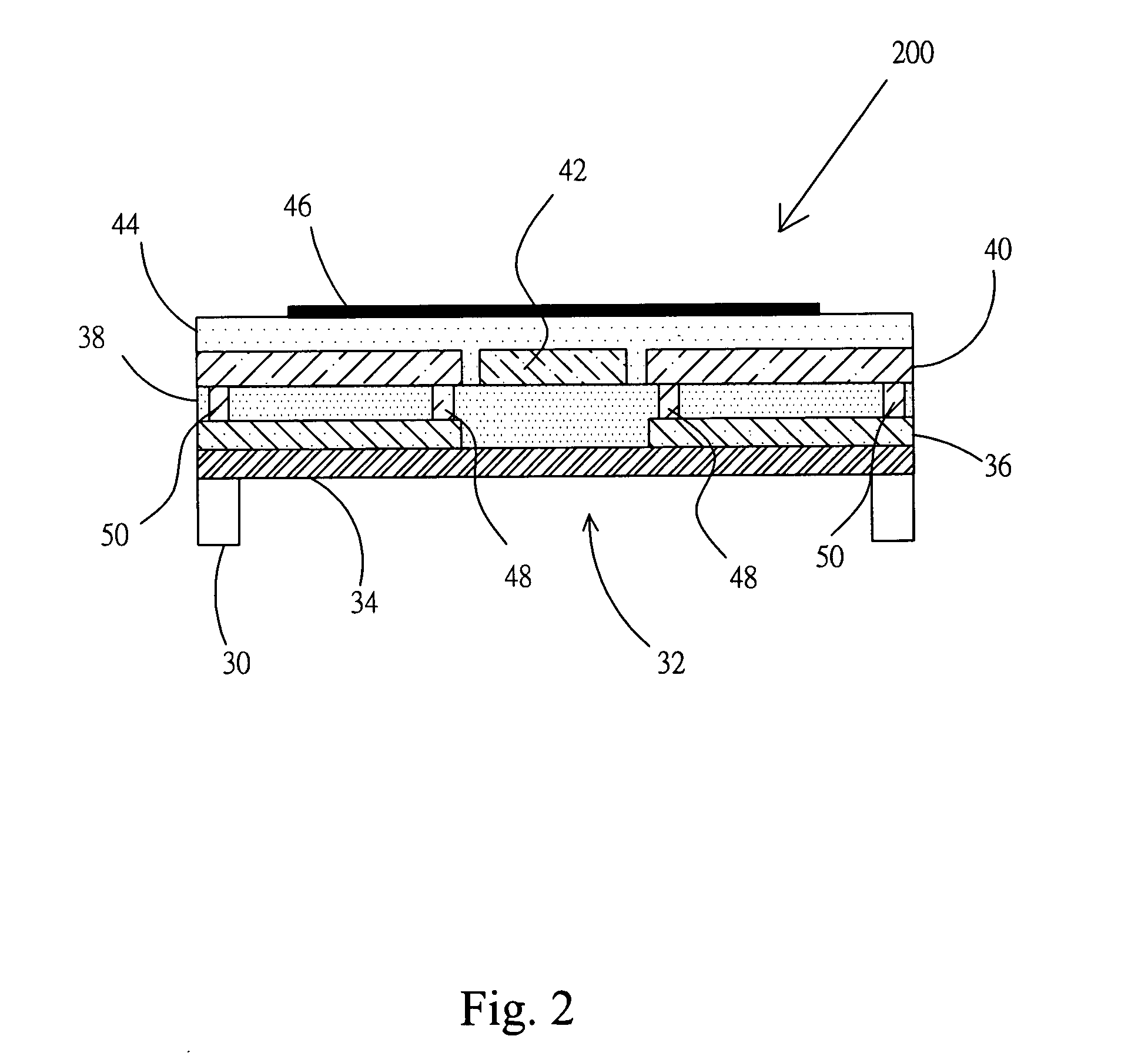
- The improved thermopile sensor structure incorporates a heat-conducting layer at the center of the membrane to alter temperature distribution, increasing the temperature difference between hot and cold junctions without lengthening the thermoelectric-element layers, thus enhancing sensing performance without increasing noise or fabrication complexity.

Affecting the thermoelectric figure of merit (ZT) and the power factor by high pressure, high temperature sintering
PatentInactiveUS20120161084A1
Innovation
- Exposing semiconductor thermoelectric materials to elevated pressure and temperature conditions for sintering, allowing for increased ZT values when measured at ambient pressure, without solely relying on doping or alloying, by controlling intrinsic defects and modifying the material's composition through high pressure high temperature (HPHT) treatment.


Manufacturing Process Optimization Strategies
Manufacturing process optimization represents a critical pathway to enhancing thermopile sensitivity through material technologies. The precision and consistency of manufacturing directly impact the performance characteristics of thermopile sensors, particularly their sensitivity to thermal radiation. Current manufacturing processes often introduce variability that limits the potential sensitivity gains from advanced materials.
Thin-film deposition techniques require significant refinement to achieve optimal thermopile performance. Physical vapor deposition (PVD) and chemical vapor deposition (CVD) methods can be optimized through precise control of deposition rates, substrate temperatures, and chamber pressures. Research indicates that maintaining substrate temperatures within ±2°C during deposition can improve thermoelectric material uniformity by up to 15%, directly enhancing sensitivity.
Microfabrication processes present another optimization opportunity. Advanced photolithography techniques with sub-micron resolution enable the creation of denser thermopile arrays with more thermocouple junctions per unit area. Implementing deep reactive ion etching (DRIE) with aspect ratios exceeding 20:1 allows for more efficient thermal isolation structures, reducing thermal mass and improving response times by up to 40%.
Post-deposition annealing protocols significantly influence crystalline structure and carrier concentration in thermoelectric materials. Rapid thermal annealing (RTA) with precisely controlled temperature ramps (50-100°C/second) has demonstrated a 25-30% improvement in Seebeck coefficient values compared to conventional furnace annealing. Vacuum annealing further reduces oxidation effects that degrade thermoelectric properties.
Interface engineering between different material layers represents a critical yet often overlooked aspect of thermopile manufacturing. Reducing contact resistance through specialized interface treatments, such as argon plasma cleaning prior to metal deposition, can improve signal transmission efficiency by 10-15%. Additionally, implementing diffusion barrier layers between thermoelectric materials prevents interdiffusion that degrades performance over time.
Quality control methodologies must evolve beyond traditional approaches. In-line characterization techniques, including real-time Seebeck coefficient measurement during production, enable immediate process adjustments. Statistical process control (SPC) with machine learning algorithms can identify subtle manufacturing variations that impact sensitivity, allowing for predictive maintenance and process optimization before defects occur.
Scaling production while maintaining quality presents significant challenges. Batch-to-batch consistency requires standardized material sourcing and handling protocols. Implementing cleanroom environments with controlled humidity (30-40%) and temperature (22±1°C) has demonstrated up to 12% improvement in device uniformity across production lots.
Thin-film deposition techniques require significant refinement to achieve optimal thermopile performance. Physical vapor deposition (PVD) and chemical vapor deposition (CVD) methods can be optimized through precise control of deposition rates, substrate temperatures, and chamber pressures. Research indicates that maintaining substrate temperatures within ±2°C during deposition can improve thermoelectric material uniformity by up to 15%, directly enhancing sensitivity.
Microfabrication processes present another optimization opportunity. Advanced photolithography techniques with sub-micron resolution enable the creation of denser thermopile arrays with more thermocouple junctions per unit area. Implementing deep reactive ion etching (DRIE) with aspect ratios exceeding 20:1 allows for more efficient thermal isolation structures, reducing thermal mass and improving response times by up to 40%.
Post-deposition annealing protocols significantly influence crystalline structure and carrier concentration in thermoelectric materials. Rapid thermal annealing (RTA) with precisely controlled temperature ramps (50-100°C/second) has demonstrated a 25-30% improvement in Seebeck coefficient values compared to conventional furnace annealing. Vacuum annealing further reduces oxidation effects that degrade thermoelectric properties.
Interface engineering between different material layers represents a critical yet often overlooked aspect of thermopile manufacturing. Reducing contact resistance through specialized interface treatments, such as argon plasma cleaning prior to metal deposition, can improve signal transmission efficiency by 10-15%. Additionally, implementing diffusion barrier layers between thermoelectric materials prevents interdiffusion that degrades performance over time.
Quality control methodologies must evolve beyond traditional approaches. In-line characterization techniques, including real-time Seebeck coefficient measurement during production, enable immediate process adjustments. Statistical process control (SPC) with machine learning algorithms can identify subtle manufacturing variations that impact sensitivity, allowing for predictive maintenance and process optimization before defects occur.
Scaling production while maintaining quality presents significant challenges. Batch-to-batch consistency requires standardized material sourcing and handling protocols. Implementing cleanroom environments with controlled humidity (30-40%) and temperature (22±1°C) has demonstrated up to 12% improvement in device uniformity across production lots.
Environmental Impact and Sustainability Considerations
The environmental impact of thermopile sensor manufacturing and operation represents a critical consideration in the advancement of material technologies for enhanced sensitivity. Traditional thermopile production processes often involve energy-intensive fabrication methods and potentially hazardous materials, including rare earth elements and heavy metals. As global sustainability standards become increasingly stringent, developing environmentally responsible approaches to thermopile sensitivity enhancement becomes paramount for industry compliance and corporate social responsibility.
Material selection plays a fundamental role in determining the environmental footprint of thermopile sensors. Novel approaches utilizing abundant, non-toxic materials such as silicon-germanium alloys and carbon-based thermoelectric materials offer promising alternatives to conventional bismuth telluride compounds, which contain scarce and potentially harmful elements. These alternative materials not only reduce dependence on limited resources but also minimize end-of-life disposal concerns while maintaining or improving thermoelectric performance.
Energy consumption during manufacturing represents another significant environmental consideration. Advanced deposition techniques such as atomic layer deposition and low-temperature solution processing methods can substantially reduce the energy requirements compared to traditional vacuum-based fabrication processes. These approaches align with global carbon reduction initiatives while potentially lowering production costs through improved resource efficiency.
Lifecycle assessment of thermopile sensors reveals opportunities for circular economy principles. Design strategies incorporating easily separable components and recyclable materials can extend product lifespans and reduce electronic waste. For instance, modular sensor designs allow for component replacement rather than complete device disposal, while biodegradable substrates offer environmentally friendly alternatives for temporary sensing applications.
Regulatory compliance frameworks increasingly emphasize environmental considerations in electronic component manufacturing. The European Union's Restriction of Hazardous Substances (RoHS) directive and similar global regulations limit the use of certain materials in electronic equipment. Material technologies that enhance thermopile sensitivity while adhering to these regulations provide competitive advantages in international markets and ensure long-term product viability.
The sustainability benefits of improved thermopile sensitivity extend beyond manufacturing considerations. Higher sensitivity sensors enable lower power consumption in operation, contributing to energy efficiency in end applications ranging from building management systems to wearable health monitors. This operational efficiency translates to reduced carbon footprints across the product lifecycle, particularly for battery-powered devices where extended operational lifetimes reduce replacement frequency and associated resource consumption.
Material selection plays a fundamental role in determining the environmental footprint of thermopile sensors. Novel approaches utilizing abundant, non-toxic materials such as silicon-germanium alloys and carbon-based thermoelectric materials offer promising alternatives to conventional bismuth telluride compounds, which contain scarce and potentially harmful elements. These alternative materials not only reduce dependence on limited resources but also minimize end-of-life disposal concerns while maintaining or improving thermoelectric performance.
Energy consumption during manufacturing represents another significant environmental consideration. Advanced deposition techniques such as atomic layer deposition and low-temperature solution processing methods can substantially reduce the energy requirements compared to traditional vacuum-based fabrication processes. These approaches align with global carbon reduction initiatives while potentially lowering production costs through improved resource efficiency.
Lifecycle assessment of thermopile sensors reveals opportunities for circular economy principles. Design strategies incorporating easily separable components and recyclable materials can extend product lifespans and reduce electronic waste. For instance, modular sensor designs allow for component replacement rather than complete device disposal, while biodegradable substrates offer environmentally friendly alternatives for temporary sensing applications.
Regulatory compliance frameworks increasingly emphasize environmental considerations in electronic component manufacturing. The European Union's Restriction of Hazardous Substances (RoHS) directive and similar global regulations limit the use of certain materials in electronic equipment. Material technologies that enhance thermopile sensitivity while adhering to these regulations provide competitive advantages in international markets and ensure long-term product viability.
The sustainability benefits of improved thermopile sensitivity extend beyond manufacturing considerations. Higher sensitivity sensors enable lower power consumption in operation, contributing to energy efficiency in end applications ranging from building management systems to wearable health monitors. This operational efficiency translates to reduced carbon footprints across the product lifecycle, particularly for battery-powered devices where extended operational lifetimes reduce replacement frequency and associated resource consumption.
Unlock deeper insights with PatSnap Eureka Quick Research — get a full tech report to explore trends and direct your research. Try now!
Generate Your Research Report Instantly with AI Agent
Supercharge your innovation with PatSnap Eureka AI Agent Platform!