

How to Implement CMOS Battery Firmware Updates?
JUL 22, 202510 MIN READ
Generate Your Research Report Instantly with AI Agent
PatSnap Eureka helps you evaluate technical feasibility & market potential.
CMOS Battery Update Background and Objectives
CMOS (Complementary Metal-Oxide-Semiconductor) batteries have been an integral part of computer systems for decades, serving as a critical component in maintaining system settings and real-time clock information. As technology has advanced, the need for updating CMOS battery firmware has become increasingly important to enhance system performance, security, and compatibility with modern hardware and software.
The evolution of CMOS battery technology can be traced back to the early days of personal computing in the 1980s. Initially, these batteries were primarily used to power the real-time clock and maintain BIOS settings when the main power was disconnected. Over time, their role has expanded to include supporting various low-power functions and storing crucial system configuration data.
In recent years, the complexity of computer systems has grown exponentially, leading to more sophisticated CMOS implementations. This increased complexity has necessitated the development of updateable firmware for CMOS batteries, allowing manufacturers to address issues, improve functionality, and adapt to new hardware requirements without replacing the physical battery.
The primary objective of implementing CMOS battery firmware updates is to enhance system reliability and performance. By enabling firmware updates, manufacturers can address potential vulnerabilities, optimize power management, and introduce new features that improve overall system functionality. This capability is particularly crucial in enterprise environments where system stability and security are paramount.
Another key goal of CMOS battery firmware updates is to extend the lifespan of existing hardware. As new technologies emerge and software requirements evolve, the ability to update CMOS firmware allows older systems to remain compatible with modern operating systems and applications. This not only reduces the need for hardware replacements but also contributes to sustainability efforts by prolonging the useful life of electronic devices.
Furthermore, implementing CMOS battery firmware updates aims to improve system security. As cyber threats become more sophisticated, updating CMOS firmware can help patch potential vulnerabilities at the hardware level, providing an additional layer of protection against malicious attacks targeting low-level system components.
The technical challenges associated with implementing CMOS battery firmware updates are significant. These include ensuring the update process is fail-safe to prevent system bricking, maintaining backward compatibility with existing hardware and software, and developing efficient update mechanisms that minimize system downtime. Additionally, there are considerations around power management during the update process to prevent data loss or corruption.
As we explore the implementation of CMOS battery firmware updates, it is essential to consider the broader implications for system design, manufacturing processes, and end-user experiences. The ability to update CMOS firmware represents a shift towards more flexible and adaptable computer architectures, aligning with the trend of software-defined hardware in modern computing environments.
The evolution of CMOS battery technology can be traced back to the early days of personal computing in the 1980s. Initially, these batteries were primarily used to power the real-time clock and maintain BIOS settings when the main power was disconnected. Over time, their role has expanded to include supporting various low-power functions and storing crucial system configuration data.
In recent years, the complexity of computer systems has grown exponentially, leading to more sophisticated CMOS implementations. This increased complexity has necessitated the development of updateable firmware for CMOS batteries, allowing manufacturers to address issues, improve functionality, and adapt to new hardware requirements without replacing the physical battery.
The primary objective of implementing CMOS battery firmware updates is to enhance system reliability and performance. By enabling firmware updates, manufacturers can address potential vulnerabilities, optimize power management, and introduce new features that improve overall system functionality. This capability is particularly crucial in enterprise environments where system stability and security are paramount.
Another key goal of CMOS battery firmware updates is to extend the lifespan of existing hardware. As new technologies emerge and software requirements evolve, the ability to update CMOS firmware allows older systems to remain compatible with modern operating systems and applications. This not only reduces the need for hardware replacements but also contributes to sustainability efforts by prolonging the useful life of electronic devices.
Furthermore, implementing CMOS battery firmware updates aims to improve system security. As cyber threats become more sophisticated, updating CMOS firmware can help patch potential vulnerabilities at the hardware level, providing an additional layer of protection against malicious attacks targeting low-level system components.
The technical challenges associated with implementing CMOS battery firmware updates are significant. These include ensuring the update process is fail-safe to prevent system bricking, maintaining backward compatibility with existing hardware and software, and developing efficient update mechanisms that minimize system downtime. Additionally, there are considerations around power management during the update process to prevent data loss or corruption.
As we explore the implementation of CMOS battery firmware updates, it is essential to consider the broader implications for system design, manufacturing processes, and end-user experiences. The ability to update CMOS firmware represents a shift towards more flexible and adaptable computer architectures, aligning with the trend of software-defined hardware in modern computing environments.
Market Demand for CMOS Battery Firmware Updates
The market demand for CMOS battery firmware updates has been steadily growing in recent years, driven by the increasing complexity and importance of computer systems across various industries. As organizations rely more heavily on technology for their operations, the need for reliable and secure BIOS and firmware management has become paramount.
One of the primary drivers of this demand is the growing concern over cybersecurity threats. With the rise of sophisticated cyberattacks targeting firmware vulnerabilities, businesses and institutions are recognizing the critical role that CMOS battery firmware plays in maintaining system integrity. Regular firmware updates have become essential in patching security vulnerabilities and protecting against potential exploits.
The enterprise sector, in particular, has shown a strong interest in CMOS battery firmware update solutions. Large corporations with extensive IT infrastructure require efficient methods to manage and update firmware across numerous devices. This demand has led to the development of remote management tools and automated update systems, allowing IT administrators to streamline the process and reduce downtime.
In the consumer market, there is an increasing awareness of the importance of keeping firmware up-to-date. As personal computers and smart devices become more integral to daily life, users are seeking ways to ensure their systems remain secure and perform optimally. This has created opportunities for user-friendly firmware update solutions and services catering to non-technical consumers.
The healthcare and financial sectors have emerged as significant markets for CMOS battery firmware update technologies. These industries handle sensitive data and require robust security measures to comply with stringent regulations. The demand for secure and verifiable firmware update processes in these sectors has driven innovation in cryptographic signing and verification methods for firmware updates.
The Internet of Things (IoT) revolution has further expanded the market for CMOS battery firmware updates. As more devices become connected and rely on embedded systems, the need for efficient and secure firmware management has grown exponentially. This has led to the development of specialized firmware update solutions for IoT devices, capable of handling diverse hardware configurations and operating environments.
The automotive industry has also contributed to the growing demand, as modern vehicles increasingly rely on complex electronic systems. Firmware updates for automotive systems, including those related to CMOS batteries, are crucial for maintaining vehicle performance, safety features, and compliance with evolving regulations.
As the market continues to evolve, there is a clear trend towards more sophisticated, automated, and secure CMOS battery firmware update solutions. The demand spans across various sectors, from enterprise IT to consumer electronics, healthcare, finance, IoT, and automotive industries. This diverse market landscape presents significant opportunities for innovation and growth in the field of firmware management and update technologies.
One of the primary drivers of this demand is the growing concern over cybersecurity threats. With the rise of sophisticated cyberattacks targeting firmware vulnerabilities, businesses and institutions are recognizing the critical role that CMOS battery firmware plays in maintaining system integrity. Regular firmware updates have become essential in patching security vulnerabilities and protecting against potential exploits.
The enterprise sector, in particular, has shown a strong interest in CMOS battery firmware update solutions. Large corporations with extensive IT infrastructure require efficient methods to manage and update firmware across numerous devices. This demand has led to the development of remote management tools and automated update systems, allowing IT administrators to streamline the process and reduce downtime.
In the consumer market, there is an increasing awareness of the importance of keeping firmware up-to-date. As personal computers and smart devices become more integral to daily life, users are seeking ways to ensure their systems remain secure and perform optimally. This has created opportunities for user-friendly firmware update solutions and services catering to non-technical consumers.
The healthcare and financial sectors have emerged as significant markets for CMOS battery firmware update technologies. These industries handle sensitive data and require robust security measures to comply with stringent regulations. The demand for secure and verifiable firmware update processes in these sectors has driven innovation in cryptographic signing and verification methods for firmware updates.
The Internet of Things (IoT) revolution has further expanded the market for CMOS battery firmware updates. As more devices become connected and rely on embedded systems, the need for efficient and secure firmware management has grown exponentially. This has led to the development of specialized firmware update solutions for IoT devices, capable of handling diverse hardware configurations and operating environments.
The automotive industry has also contributed to the growing demand, as modern vehicles increasingly rely on complex electronic systems. Firmware updates for automotive systems, including those related to CMOS batteries, are crucial for maintaining vehicle performance, safety features, and compliance with evolving regulations.
As the market continues to evolve, there is a clear trend towards more sophisticated, automated, and secure CMOS battery firmware update solutions. The demand spans across various sectors, from enterprise IT to consumer electronics, healthcare, finance, IoT, and automotive industries. This diverse market landscape presents significant opportunities for innovation and growth in the field of firmware management and update technologies.
Current Challenges in CMOS Battery Firmware Updates
CMOS battery firmware updates present several significant challenges that need to be addressed for successful implementation. One of the primary issues is the risk of data loss during the update process. The CMOS battery is responsible for maintaining critical system settings, including date, time, and hardware configurations. Any interruption or failure during the firmware update could result in the loss of these essential settings, potentially rendering the system inoperable or requiring extensive reconfiguration.
Another challenge is ensuring the integrity and authenticity of the firmware update. As CMOS batteries play a crucial role in system security, it is vital to implement robust verification mechanisms to prevent the installation of malicious or corrupted firmware. This requires the development of secure update protocols and cryptographic signing techniques to validate the firmware before installation.
Compatibility across different hardware platforms and BIOS versions poses an additional hurdle. CMOS battery firmware must be designed to work seamlessly with various motherboard configurations and BIOS implementations. This diversity in hardware ecosystems necessitates extensive testing and validation to ensure broad compatibility and prevent potential conflicts or system instability.
The limited storage capacity of CMOS batteries also presents a challenge for firmware updates. These batteries typically have minimal onboard memory, restricting the size and complexity of firmware that can be installed. This limitation requires careful optimization of the firmware code to maximize functionality within the available storage constraints.
Power management during the update process is another critical concern. CMOS batteries operate on very low power, and firmware updates must be designed to minimize power consumption to avoid draining the battery during installation. Additionally, safeguards must be implemented to handle unexpected power loss or system shutdowns during the update, ensuring that the CMOS battery can recover and maintain essential settings.
Lastly, the lack of standardization in CMOS battery firmware interfaces across different manufacturers complicates the development of universal update tools. This fragmentation in the industry requires the creation of manufacturer-specific update methods, increasing complexity for both developers and end-users.
Addressing these challenges requires a multifaceted approach, combining advanced firmware design techniques, robust security measures, and comprehensive testing methodologies. As the importance of CMOS batteries in system management continues to grow, overcoming these obstacles will be crucial for ensuring reliable and secure firmware updates in the future.
Another challenge is ensuring the integrity and authenticity of the firmware update. As CMOS batteries play a crucial role in system security, it is vital to implement robust verification mechanisms to prevent the installation of malicious or corrupted firmware. This requires the development of secure update protocols and cryptographic signing techniques to validate the firmware before installation.
Compatibility across different hardware platforms and BIOS versions poses an additional hurdle. CMOS battery firmware must be designed to work seamlessly with various motherboard configurations and BIOS implementations. This diversity in hardware ecosystems necessitates extensive testing and validation to ensure broad compatibility and prevent potential conflicts or system instability.
The limited storage capacity of CMOS batteries also presents a challenge for firmware updates. These batteries typically have minimal onboard memory, restricting the size and complexity of firmware that can be installed. This limitation requires careful optimization of the firmware code to maximize functionality within the available storage constraints.
Power management during the update process is another critical concern. CMOS batteries operate on very low power, and firmware updates must be designed to minimize power consumption to avoid draining the battery during installation. Additionally, safeguards must be implemented to handle unexpected power loss or system shutdowns during the update, ensuring that the CMOS battery can recover and maintain essential settings.
Lastly, the lack of standardization in CMOS battery firmware interfaces across different manufacturers complicates the development of universal update tools. This fragmentation in the industry requires the creation of manufacturer-specific update methods, increasing complexity for both developers and end-users.
Addressing these challenges requires a multifaceted approach, combining advanced firmware design techniques, robust security measures, and comprehensive testing methodologies. As the importance of CMOS batteries in system management continues to grow, overcoming these obstacles will be crucial for ensuring reliable and secure firmware updates in the future.
Existing CMOS Battery Firmware Update Methods
01 CMOS battery management in firmware
Firmware implementations for managing CMOS battery life and performance in computer systems. This includes monitoring battery voltage, predicting battery failure, and implementing power-saving features to extend battery life.- CMOS battery management in firmware: Firmware implementations for managing CMOS battery life and performance in computer systems. This includes monitoring battery voltage, predicting battery failure, and implementing power-saving features to extend battery life.
- Firmware updates and CMOS battery interaction: Methods for handling firmware updates while considering CMOS battery status. This involves techniques to preserve CMOS settings during updates, manage power during the update process, and ensure system stability when the battery is low or failing.
- CMOS battery-backed memory management: Firmware techniques for managing CMOS battery-backed memory, including data retention strategies, error checking and correction, and optimizing memory access to reduce battery drain.
- Power state management and CMOS battery: Firmware implementations for managing system power states in relation to CMOS battery health. This includes handling sleep, hibernate, and wake-up processes while minimizing battery usage and ensuring data integrity.
- CMOS battery failure detection and recovery: Firmware methods for detecting CMOS battery failures, implementing failsafe mechanisms, and recovering system settings after battery replacement or failure. This includes techniques for backing up CMOS data to non-volatile storage and restoring it when necessary.
02 Firmware updates and CMOS battery interaction
Methods for handling firmware updates while considering CMOS battery status. This involves techniques to preserve CMOS settings during updates, manage power during the update process, and ensure system stability when the battery is low or failing.Expand Specific Solutions03 CMOS battery backup and data retention
Firmware solutions for maintaining critical system data and settings when the CMOS battery fails or is removed. This includes implementing non-volatile storage alternatives and developing recovery mechanisms for BIOS settings.Expand Specific Solutions04 Power management and CMOS battery optimization
Firmware-based power management techniques that optimize CMOS battery usage. This involves implementing sleep modes, reducing power consumption of CMOS-dependent components, and intelligent charging algorithms.Expand Specific Solutions05 CMOS battery diagnostics and reporting
Firmware features for diagnosing CMOS battery health, predicting failure, and reporting status to users or system administrators. This includes implementing battery health checks during boot, periodic testing, and integration with system management interfaces.Expand Specific Solutions
Key Players in CMOS Battery Firmware Industry
The implementation of CMOS battery firmware updates is in a mature stage, with a competitive landscape dominated by established players in the computer hardware and electronics industry. The market size is substantial, given the widespread use of CMOS batteries in various devices. Technologically, the field is well-developed, with companies like Lenovo, Dell, and LG Electronics leading the way. Other significant players include Inventec, Quanta Computer, and Hon Hai Precision Industry, who contribute to the advancement of CMOS battery technology. The industry is characterized by ongoing incremental improvements rather than disruptive innovations, focusing on enhancing reliability, longevity, and compatibility across different device types.
Dell Products LP
Technical Solution: Dell has developed a comprehensive CMOS battery firmware update solution for their systems. Their approach involves a multi-stage process: 1) Secure Boot verification to ensure only authorized firmware is loaded[1]. 2) A dedicated firmware update utility that can be run from within the operating system or via the BIOS interface[2]. 3) Implementation of a failsafe mechanism that keeps a backup of the previous firmware version in case of update failure[3]. 4) Use of cryptographic signatures to verify the integrity of firmware updates before installation[4]. This method ensures system stability and security while allowing for necessary CMOS battery firmware updates.
Strengths: Robust security measures, user-friendly update process, failsafe mechanisms. Weaknesses: May require specific Dell hardware, potentially longer update times due to multiple verification steps.
VIA Technologies, Inc.
Technical Solution: VIA Technologies has implemented a hardware-assisted CMOS battery firmware update mechanism in their embedded systems solutions. Their approach utilizes a dedicated microcontroller for managing the update process, separate from the main system processor[1]. This method includes: 1) A secure bootloader that verifies firmware signatures before installation. 2) Real-time monitoring of system voltage and temperature during the update process to prevent corruption[2]. 3) Incremental update support to minimize data transfer and update time. 4) An emergency recovery mode that can restore functionality using a minimal firmware version stored in ROM[3]. By offloading the update process to a dedicated controller, VIA's solution enhances reliability and security while reducing the impact on system performance during updates.
Strengths: Enhanced security and reliability, minimal system performance impact, emergency recovery capability. Weaknesses: Increased hardware complexity and cost, may require specialized tools for updates.
Core Innovations in CMOS Battery Firmware Updates
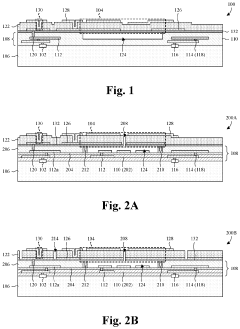
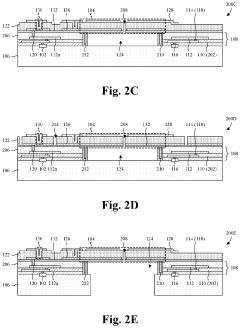
Method for integrating complementary metal-oxide-semiconductor (CMOS) devices with microelectromechanical systems (MEMS) devices using a flat surface above a sacrificial layer
PatentActiveUS20200346925A1
Innovation
- A method is developed to form MEMS structures on a planar surface using a sacrificial layer within the BEOL interconnect structure, allowing for cavity formation without wire bonding, which reduces parasitic capacitance and packaging complexity, and enables monolithic integration with low costs.
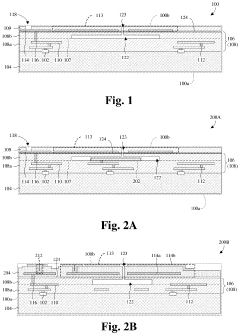
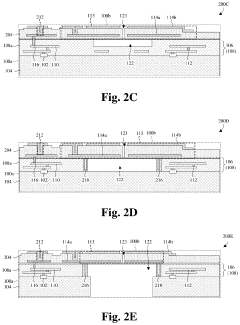
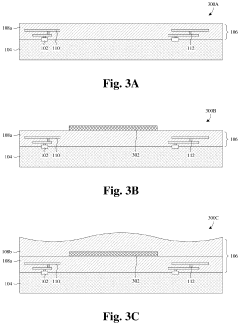
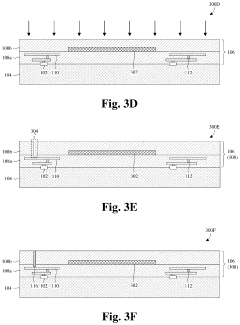
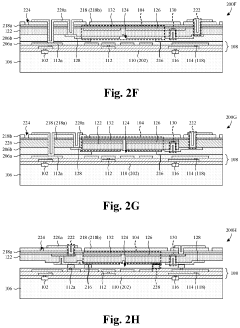
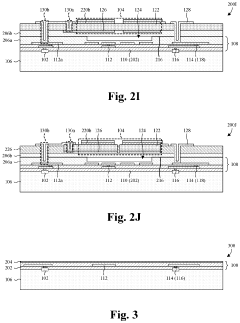
Integration scheme for microelectromechanical systems (MEMS) devices and complementary metal-oxide-semiconductor (CMOS) devices
PatentActiveUS11078074B2
Innovation
- A method involving the formation of a BEOL interconnect structure with a dielectric stack, a lateral etch to create a trench, and a piezoelectric layer over a semiconductor substrate, allowing for electrical coupling of MEMS devices to CMOS devices without wire bonding, performed at the wafer level to reduce packaging time and complexity.
Security Considerations in CMOS Battery Updates
Security considerations in CMOS battery firmware updates are paramount to ensure the integrity and reliability of computer systems. The CMOS battery, responsible for maintaining critical system settings, presents a unique attack surface that malicious actors could exploit. To mitigate these risks, a multi-layered security approach is essential.
Encryption plays a crucial role in protecting the firmware update process. Strong encryption algorithms should be employed to safeguard the update package during transmission and storage. This prevents unauthorized access and tampering with the firmware contents. Additionally, implementing digital signatures for firmware updates ensures their authenticity and integrity, allowing the system to verify that the update originates from a trusted source.
Access control mechanisms are vital to restrict firmware update capabilities to authorized personnel only. This can be achieved through robust authentication protocols, such as multi-factor authentication, to prevent unauthorized individuals from initiating or manipulating the update process. Furthermore, implementing role-based access control (RBAC) ensures that only users with appropriate privileges can perform firmware updates.
Secure boot processes are essential to maintain system integrity during and after firmware updates. By verifying the authenticity and integrity of firmware components before execution, secure boot prevents the loading of compromised or malicious firmware. This helps protect against attacks that attempt to replace legitimate firmware with malicious versions.
Implementing a secure update mechanism is crucial to prevent potential vulnerabilities during the update process. This includes measures such as atomic updates, where the entire update process is completed as a single, indivisible operation. Rollback protection should also be implemented to prevent downgrade attacks, ensuring that older, potentially vulnerable firmware versions cannot be reinstalled.
Logging and auditing capabilities are essential for maintaining a comprehensive security posture. All firmware update activities should be logged, including details such as the time, date, user, and specific actions performed. These logs should be securely stored and regularly reviewed to detect any suspicious activities or potential security breaches.
Regular security assessments and penetration testing of the firmware update process are crucial to identify and address potential vulnerabilities. This proactive approach helps ensure that the security measures in place remain effective against evolving threats and attack vectors.
Lastly, implementing a secure key management system is vital for protecting the cryptographic keys used in firmware encryption and signing processes. This includes secure key generation, storage, and rotation practices to minimize the risk of key compromise and unauthorized access to firmware update capabilities.
Encryption plays a crucial role in protecting the firmware update process. Strong encryption algorithms should be employed to safeguard the update package during transmission and storage. This prevents unauthorized access and tampering with the firmware contents. Additionally, implementing digital signatures for firmware updates ensures their authenticity and integrity, allowing the system to verify that the update originates from a trusted source.
Access control mechanisms are vital to restrict firmware update capabilities to authorized personnel only. This can be achieved through robust authentication protocols, such as multi-factor authentication, to prevent unauthorized individuals from initiating or manipulating the update process. Furthermore, implementing role-based access control (RBAC) ensures that only users with appropriate privileges can perform firmware updates.
Secure boot processes are essential to maintain system integrity during and after firmware updates. By verifying the authenticity and integrity of firmware components before execution, secure boot prevents the loading of compromised or malicious firmware. This helps protect against attacks that attempt to replace legitimate firmware with malicious versions.
Implementing a secure update mechanism is crucial to prevent potential vulnerabilities during the update process. This includes measures such as atomic updates, where the entire update process is completed as a single, indivisible operation. Rollback protection should also be implemented to prevent downgrade attacks, ensuring that older, potentially vulnerable firmware versions cannot be reinstalled.
Logging and auditing capabilities are essential for maintaining a comprehensive security posture. All firmware update activities should be logged, including details such as the time, date, user, and specific actions performed. These logs should be securely stored and regularly reviewed to detect any suspicious activities or potential security breaches.
Regular security assessments and penetration testing of the firmware update process are crucial to identify and address potential vulnerabilities. This proactive approach helps ensure that the security measures in place remain effective against evolving threats and attack vectors.
Lastly, implementing a secure key management system is vital for protecting the cryptographic keys used in firmware encryption and signing processes. This includes secure key generation, storage, and rotation practices to minimize the risk of key compromise and unauthorized access to firmware update capabilities.
Energy Efficiency in Firmware Update Processes
Energy efficiency in firmware update processes for CMOS battery-powered devices is a critical consideration in modern electronics design. As devices become increasingly complex and power-hungry, optimizing energy consumption during firmware updates is essential to prolong battery life and enhance overall system performance.
The firmware update process for CMOS batteries typically involves several energy-intensive steps, including data transfer, verification, and writing to non-volatile memory. Traditional update methods often require the device to remain in a high-power state throughout the entire process, which can significantly drain the battery. To address this challenge, researchers and engineers have developed various energy-efficient techniques and protocols.
One approach to improving energy efficiency is the implementation of incremental updates. This method involves transmitting and applying only the changes between the current and new firmware versions, rather than transferring the entire firmware image. By reducing the amount of data transferred and processed, incremental updates can substantially decrease energy consumption during the update process.
Another strategy focuses on optimizing the power states of different system components during the update. By selectively powering down non-essential components and utilizing low-power modes when possible, devices can minimize energy usage without compromising the integrity of the update process. This approach often involves careful scheduling and coordination of power management tasks with the firmware update procedure.
Advanced compression techniques also play a crucial role in enhancing energy efficiency. By compressing firmware images before transmission and decompressing them on the device, the amount of data transferred can be significantly reduced. This not only saves energy during data transfer but also minimizes the time required for the update process, further reducing overall power consumption.
The development of energy-aware update protocols has gained traction in recent years. These protocols take into account the device's current power state, remaining battery life, and the criticality of the update. By intelligently scheduling updates based on these factors, devices can ensure that firmware updates occur at optimal times, minimizing their impact on battery life and user experience.
Lastly, the integration of energy harvesting technologies with firmware update processes presents an innovative approach to energy efficiency. By leveraging ambient energy sources such as light, vibration, or thermal gradients, devices can potentially supplement or even replace battery power during firmware updates. This approach not only reduces the drain on the primary power source but also opens up possibilities for more frequent and comprehensive updates without compromising battery life.
As the Internet of Things (IoT) continues to expand and devices become more interconnected, the importance of energy-efficient firmware update processes for CMOS battery-powered devices will only grow. Continued research and development in this area are essential to meet the demands of future technologies while ensuring optimal performance and longevity of battery-powered devices.
The firmware update process for CMOS batteries typically involves several energy-intensive steps, including data transfer, verification, and writing to non-volatile memory. Traditional update methods often require the device to remain in a high-power state throughout the entire process, which can significantly drain the battery. To address this challenge, researchers and engineers have developed various energy-efficient techniques and protocols.
One approach to improving energy efficiency is the implementation of incremental updates. This method involves transmitting and applying only the changes between the current and new firmware versions, rather than transferring the entire firmware image. By reducing the amount of data transferred and processed, incremental updates can substantially decrease energy consumption during the update process.
Another strategy focuses on optimizing the power states of different system components during the update. By selectively powering down non-essential components and utilizing low-power modes when possible, devices can minimize energy usage without compromising the integrity of the update process. This approach often involves careful scheduling and coordination of power management tasks with the firmware update procedure.
Advanced compression techniques also play a crucial role in enhancing energy efficiency. By compressing firmware images before transmission and decompressing them on the device, the amount of data transferred can be significantly reduced. This not only saves energy during data transfer but also minimizes the time required for the update process, further reducing overall power consumption.
The development of energy-aware update protocols has gained traction in recent years. These protocols take into account the device's current power state, remaining battery life, and the criticality of the update. By intelligently scheduling updates based on these factors, devices can ensure that firmware updates occur at optimal times, minimizing their impact on battery life and user experience.
Lastly, the integration of energy harvesting technologies with firmware update processes presents an innovative approach to energy efficiency. By leveraging ambient energy sources such as light, vibration, or thermal gradients, devices can potentially supplement or even replace battery power during firmware updates. This approach not only reduces the drain on the primary power source but also opens up possibilities for more frequent and comprehensive updates without compromising battery life.
As the Internet of Things (IoT) continues to expand and devices become more interconnected, the importance of energy-efficient firmware update processes for CMOS battery-powered devices will only grow. Continued research and development in this area are essential to meet the demands of future technologies while ensuring optimal performance and longevity of battery-powered devices.
Unlock deeper insights with PatSnap Eureka Quick Research — get a full tech report to explore trends and direct your research. Try now!
Generate Your Research Report Instantly with AI Agent
Supercharge your innovation with PatSnap Eureka AI Agent Platform!