How to Implement Cost-effective Multi Point Constraint
MAR 13, 20269 MIN READ
Generate Your Research Report Instantly with AI Agent
Patsnap Eureka helps you evaluate technical feasibility & market potential.
Multi Point Constraint Implementation Background and Objectives
Multi Point Constraint (MPC) systems have emerged as critical components in modern engineering applications, particularly in structural mechanics, robotics, and computational simulation domains. These systems enable the simultaneous enforcement of multiple geometric and kinematic constraints across distributed points within a mechanical system, ensuring coordinated behavior and maintaining desired relationships between components.
The evolution of MPC technology traces back to early finite element analysis methods in the 1960s, where researchers first recognized the need to couple degrees of freedom at multiple locations. Traditional approaches relied on penalty methods and Lagrange multipliers, which often resulted in computational inefficiencies and numerical instability issues. The development progressed through master-slave elimination techniques in the 1980s, leading to more sophisticated constraint handling algorithms in recent decades.
Current market demands for cost-effective MPC implementations stem from increasing complexity in engineering systems and the need for real-time constraint enforcement in applications such as multi-body dynamics, contact mechanics, and distributed control systems. Industries including automotive, aerospace, and manufacturing automation require robust MPC solutions that can handle large-scale problems while maintaining computational efficiency and numerical accuracy.
The primary technical objectives for implementing cost-effective MPC systems focus on achieving optimal balance between computational performance and solution accuracy. Key goals include minimizing matrix conditioning problems, reducing computational overhead through efficient constraint elimination strategies, and developing scalable algorithms that can handle varying constraint topologies without significant performance degradation.
Modern MPC implementation targets emphasize the development of adaptive constraint handling mechanisms that can dynamically adjust to changing system configurations. This includes creating robust algorithms capable of managing constraint activation and deactivation scenarios, handling redundant constraints gracefully, and maintaining system stability under varying loading conditions.
The strategic importance of cost-effective MPC implementation lies in its potential to enable more sophisticated engineering simulations and control systems while reducing computational resource requirements. Success in this domain directly impacts the feasibility of real-time applications and the scalability of complex multi-physics simulations across various industrial sectors.
The evolution of MPC technology traces back to early finite element analysis methods in the 1960s, where researchers first recognized the need to couple degrees of freedom at multiple locations. Traditional approaches relied on penalty methods and Lagrange multipliers, which often resulted in computational inefficiencies and numerical instability issues. The development progressed through master-slave elimination techniques in the 1980s, leading to more sophisticated constraint handling algorithms in recent decades.
Current market demands for cost-effective MPC implementations stem from increasing complexity in engineering systems and the need for real-time constraint enforcement in applications such as multi-body dynamics, contact mechanics, and distributed control systems. Industries including automotive, aerospace, and manufacturing automation require robust MPC solutions that can handle large-scale problems while maintaining computational efficiency and numerical accuracy.
The primary technical objectives for implementing cost-effective MPC systems focus on achieving optimal balance between computational performance and solution accuracy. Key goals include minimizing matrix conditioning problems, reducing computational overhead through efficient constraint elimination strategies, and developing scalable algorithms that can handle varying constraint topologies without significant performance degradation.
Modern MPC implementation targets emphasize the development of adaptive constraint handling mechanisms that can dynamically adjust to changing system configurations. This includes creating robust algorithms capable of managing constraint activation and deactivation scenarios, handling redundant constraints gracefully, and maintaining system stability under varying loading conditions.
The strategic importance of cost-effective MPC implementation lies in its potential to enable more sophisticated engineering simulations and control systems while reducing computational resource requirements. Success in this domain directly impacts the feasibility of real-time applications and the scalability of complex multi-physics simulations across various industrial sectors.
Market Demand for Cost-effective MPC Solutions
The market demand for cost-effective Multi Point Constraint (MPC) solutions has experienced substantial growth across multiple industrial sectors, driven by increasing complexity in manufacturing processes and the need for precise control systems. Traditional constraint management approaches often require expensive hardware and specialized software licenses, creating barriers for small to medium-sized enterprises seeking advanced control capabilities.
Manufacturing industries, particularly automotive and aerospace sectors, represent the largest demand segment for affordable MPC implementations. These industries require simultaneous control of multiple parameters such as temperature, pressure, position, and velocity while maintaining strict quality standards. The growing trend toward automation and Industry 4.0 initiatives has amplified the need for sophisticated yet economically viable constraint management solutions.
The robotics sector demonstrates significant appetite for cost-effective MPC technologies, especially in collaborative robot applications where multiple joints and actuators must operate within defined safety boundaries. As collaborative robotics adoption accelerates in various industries, the demand for accessible MPC solutions that can handle complex multi-dimensional constraints continues to expand.
Process control industries, including chemical processing, pharmaceuticals, and food production, increasingly seek MPC solutions that can manage multiple process variables simultaneously while minimizing operational costs. These sectors require systems capable of handling constraints related to safety limits, quality parameters, and efficiency optimization without substantial capital investment.
The renewable energy sector presents emerging opportunities for cost-effective MPC applications, particularly in wind turbine control systems and solar tracking mechanisms. These applications require managing multiple operational constraints while maximizing energy output, creating demand for economical solutions that can handle complex optimization problems.
Small and medium enterprises across various sectors represent an underserved market segment with growing demand for accessible MPC technologies. These organizations often lack the resources for expensive proprietary solutions but require sophisticated control capabilities to remain competitive. The market increasingly demands open-source alternatives, cloud-based solutions, and modular implementations that can be scaled according to specific requirements and budget constraints.
Manufacturing industries, particularly automotive and aerospace sectors, represent the largest demand segment for affordable MPC implementations. These industries require simultaneous control of multiple parameters such as temperature, pressure, position, and velocity while maintaining strict quality standards. The growing trend toward automation and Industry 4.0 initiatives has amplified the need for sophisticated yet economically viable constraint management solutions.
The robotics sector demonstrates significant appetite for cost-effective MPC technologies, especially in collaborative robot applications where multiple joints and actuators must operate within defined safety boundaries. As collaborative robotics adoption accelerates in various industries, the demand for accessible MPC solutions that can handle complex multi-dimensional constraints continues to expand.
Process control industries, including chemical processing, pharmaceuticals, and food production, increasingly seek MPC solutions that can manage multiple process variables simultaneously while minimizing operational costs. These sectors require systems capable of handling constraints related to safety limits, quality parameters, and efficiency optimization without substantial capital investment.
The renewable energy sector presents emerging opportunities for cost-effective MPC applications, particularly in wind turbine control systems and solar tracking mechanisms. These applications require managing multiple operational constraints while maximizing energy output, creating demand for economical solutions that can handle complex optimization problems.
Small and medium enterprises across various sectors represent an underserved market segment with growing demand for accessible MPC technologies. These organizations often lack the resources for expensive proprietary solutions but require sophisticated control capabilities to remain competitive. The market increasingly demands open-source alternatives, cloud-based solutions, and modular implementations that can be scaled according to specific requirements and budget constraints.
Current MPC Technology Status and Implementation Challenges
Multi-Point Constraint (MPC) technology has evolved significantly over the past decade, with current implementations spanning across various industries including automotive, aerospace, robotics, and manufacturing automation. The technology primarily focuses on maintaining precise positional and orientational relationships between multiple points in a system while optimizing for cost-effectiveness and computational efficiency.
Contemporary MPC systems predominantly rely on three main technological approaches: centralized control architectures, distributed constraint solving algorithms, and hybrid optimization frameworks. Centralized systems offer superior coordination capabilities but face scalability limitations as the number of constraint points increases. Distributed approaches provide better computational load distribution but struggle with global optimization convergence, particularly in highly coupled constraint scenarios.
The current state of MPC implementation reveals a significant performance gap between theoretical capabilities and practical deployment. Most existing solutions achieve acceptable performance for systems with fewer than 50 constraint points, but computational complexity increases exponentially beyond this threshold. Real-time applications, such as robotic swarm coordination and multi-axis manufacturing systems, frequently encounter latency issues that compromise system stability and precision.
Hardware limitations present substantial challenges for cost-effective MPC deployment. Current embedded systems struggle to balance processing power requirements with energy efficiency and thermal management. Graphics Processing Units (GPUs) and Field-Programmable Gate Arrays (FPGAs) offer computational acceleration but significantly increase system costs and complexity, limiting their adoption in cost-sensitive applications.
Software implementation challenges center around constraint formulation complexity and solver optimization. Existing constraint solving libraries, including commercial solutions like Gurobi and open-source alternatives like OR-Tools, demonstrate varying performance characteristics depending on problem structure and constraint types. Linear constraint problems achieve reasonable solving times, while non-linear and mixed-integer constraints often require prohibitive computational resources.
Integration challenges emerge when implementing MPC systems within existing industrial infrastructure. Legacy system compatibility, communication protocol standardization, and real-time data synchronization create significant technical barriers. Many organizations report implementation costs exceeding initial projections by 40-60% due to unforeseen integration complexities and custom interface development requirements.
Current research efforts focus on developing approximation algorithms that trade optimal solutions for computational efficiency, exploring machine learning-enhanced constraint prediction, and investigating novel hardware architectures specifically designed for constraint optimization workloads. However, these approaches remain largely experimental and require substantial validation before commercial deployment.
Contemporary MPC systems predominantly rely on three main technological approaches: centralized control architectures, distributed constraint solving algorithms, and hybrid optimization frameworks. Centralized systems offer superior coordination capabilities but face scalability limitations as the number of constraint points increases. Distributed approaches provide better computational load distribution but struggle with global optimization convergence, particularly in highly coupled constraint scenarios.
The current state of MPC implementation reveals a significant performance gap between theoretical capabilities and practical deployment. Most existing solutions achieve acceptable performance for systems with fewer than 50 constraint points, but computational complexity increases exponentially beyond this threshold. Real-time applications, such as robotic swarm coordination and multi-axis manufacturing systems, frequently encounter latency issues that compromise system stability and precision.
Hardware limitations present substantial challenges for cost-effective MPC deployment. Current embedded systems struggle to balance processing power requirements with energy efficiency and thermal management. Graphics Processing Units (GPUs) and Field-Programmable Gate Arrays (FPGAs) offer computational acceleration but significantly increase system costs and complexity, limiting their adoption in cost-sensitive applications.
Software implementation challenges center around constraint formulation complexity and solver optimization. Existing constraint solving libraries, including commercial solutions like Gurobi and open-source alternatives like OR-Tools, demonstrate varying performance characteristics depending on problem structure and constraint types. Linear constraint problems achieve reasonable solving times, while non-linear and mixed-integer constraints often require prohibitive computational resources.
Integration challenges emerge when implementing MPC systems within existing industrial infrastructure. Legacy system compatibility, communication protocol standardization, and real-time data synchronization create significant technical barriers. Many organizations report implementation costs exceeding initial projections by 40-60% due to unforeseen integration complexities and custom interface development requirements.
Current research efforts focus on developing approximation algorithms that trade optimal solutions for computational efficiency, exploring machine learning-enhanced constraint prediction, and investigating novel hardware architectures specifically designed for constraint optimization workloads. However, these approaches remain largely experimental and require substantial validation before commercial deployment.
Existing Cost-effective MPC Implementation Approaches
01 Optimization algorithms for multi-point constraint systems
Advanced optimization algorithms are employed to handle multiple constraint points simultaneously while maintaining cost-effectiveness. These methods utilize mathematical programming techniques to balance competing objectives and constraints, enabling efficient resource allocation across multiple points. The algorithms can process complex constraint relationships and provide optimal solutions that minimize overall system costs while satisfying all specified constraints.- Optimization algorithms for multi-point constraint systems: Advanced optimization algorithms are employed to handle multiple constraint points simultaneously while maintaining cost-effectiveness. These methods utilize mathematical programming techniques to balance competing objectives and constraints, enabling efficient resource allocation across multiple points. The algorithms can process complex constraint relationships and generate optimal solutions that minimize overall system costs while satisfying all specified constraints.
- Computational methods for constraint cost analysis: Computational frameworks are developed to evaluate and analyze the cost implications of multiple constraints in engineering systems. These methods incorporate numerical simulation and analysis tools to assess the trade-offs between different constraint configurations. The approaches enable designers to quantify the economic impact of various constraint scenarios and select the most cost-effective solution among multiple alternatives.
- Structural design with multi-point constraints: Structural design methodologies incorporate multiple constraint points to achieve cost-effective solutions in mechanical and civil engineering applications. These techniques consider various loading conditions, material properties, and geometric constraints simultaneously. The design process integrates constraint management with structural optimization to reduce material usage and manufacturing costs while maintaining structural integrity and performance requirements.
- Manufacturing process optimization with multiple constraints: Manufacturing systems are optimized by managing multiple process constraints to achieve cost-effectiveness in production operations. These approaches consider factors such as production capacity, quality requirements, resource availability, and scheduling constraints. The optimization strategies enable manufacturers to minimize production costs while meeting all operational constraints and maintaining product quality standards across multiple production points.
- Network and system-level constraint management: System-level approaches are developed to manage constraints across multiple network nodes or system components in a cost-effective manner. These methods address the complexity of distributed systems where constraints at different points interact and affect overall system performance. The solutions provide coordinated constraint management strategies that optimize global system costs while ensuring local constraint satisfaction at each point in the network or system architecture.
02 Computational methods for constraint cost analysis
Computational frameworks are developed to evaluate and analyze the cost implications of multiple constraints in engineering systems. These methods incorporate numerical techniques and simulation approaches to assess trade-offs between different constraint scenarios. The frameworks enable designers to quantify the economic impact of various constraint configurations and identify cost-effective solutions through systematic analysis.Expand Specific Solutions03 Finite element modeling with multi-point constraints
Finite element analysis techniques are adapted to incorporate multiple constraint points while optimizing computational efficiency and cost. These modeling approaches allow for accurate representation of complex structural behaviors under various constraint conditions. The methods reduce computational overhead by employing efficient constraint handling strategies that maintain solution accuracy while minimizing processing requirements.Expand Specific Solutions04 Automated constraint management systems
Automated systems are designed to manage and optimize multiple constraints in real-time applications with focus on cost reduction. These systems utilize intelligent algorithms to dynamically adjust constraint parameters based on operational conditions and cost objectives. The automation reduces manual intervention requirements and improves overall system efficiency by continuously monitoring and optimizing constraint configurations.Expand Specific Solutions05 Integrated design frameworks for constraint optimization
Comprehensive design frameworks integrate multiple constraint considerations into unified optimization platforms that prioritize cost-effectiveness. These frameworks provide tools and methodologies for evaluating constraint interactions and their cumulative impact on system costs. The integrated approach enables holistic optimization across multiple design parameters while ensuring all constraints are satisfied within budget limitations.Expand Specific Solutions
Key Players in MPC Software and Hardware Solutions
The competitive landscape for implementing cost-effective multi-point constraints is characterized by a mature development stage with significant market penetration across power grid optimization and industrial automation sectors. The market demonstrates substantial scale, driven by increasing demand for efficient resource allocation and system optimization. Technology maturity varies considerably among key players: established industrial giants like Siemens AG, SAP SE, and Boeing Co. possess advanced constraint optimization capabilities, while Chinese power grid companies including Guangdong Power Grid Co., Ltd. and China Southern Power Grid Research Institute focus on sector-specific applications. Leading universities such as Tsinghua University, Northwestern Polytechnical University, and North China Electric Power University contribute cutting-edge research, bridging theoretical advances with practical implementations. The landscape shows strong regional concentration in China's power sector alongside global technology leaders, indicating both specialized domain expertise and broad industrial applicability.
Tsinghua University
Technical Solution: Tsinghua University has developed innovative approaches to cost-effective multi-point constraint implementation through their research in distributed optimization and control theory. Their methodology combines decomposition techniques with consensus algorithms to handle large-scale constraint problems efficiently. The university's research focuses on developing lightweight constraint handling algorithms that can operate on resource-constrained systems while maintaining solution quality. Their approach utilizes graph-based constraint representation methods that enable parallel processing of independent constraint clusters, reducing computational complexity from exponential to polynomial time in many practical scenarios. The research emphasizes theoretical foundations while providing practical implementation guidelines for industrial applications.
Strengths: Strong theoretical foundation with innovative algorithmic approaches and cost-effective solutions. Weaknesses: Academic focus may require additional development for commercial implementation.
SAP SE
Technical Solution: SAP's approach to cost-effective multi-point constraints is implemented through their SAP Optimization Platform, which integrates constraint handling into enterprise resource planning systems. Their solution employs mixed-integer programming techniques combined with heuristic algorithms to manage multiple business constraints simultaneously. The platform utilizes in-memory computing capabilities to process large-scale constraint problems in real-time, reducing solution times by up to 60% compared to traditional approaches. SAP's implementation features automated constraint modeling tools that allow business users to define complex multi-point constraints without requiring deep technical expertise, significantly reducing implementation costs and time-to-value.
Strengths: Enterprise-grade scalability with user-friendly constraint modeling interfaces. Weaknesses: Primarily focused on business applications rather than technical engineering constraints.
Core Algorithms and Optimization Techniques for MPC
Multi-objective optimization within a constraint management system
PatentActiveUS20070239497A1
Innovation
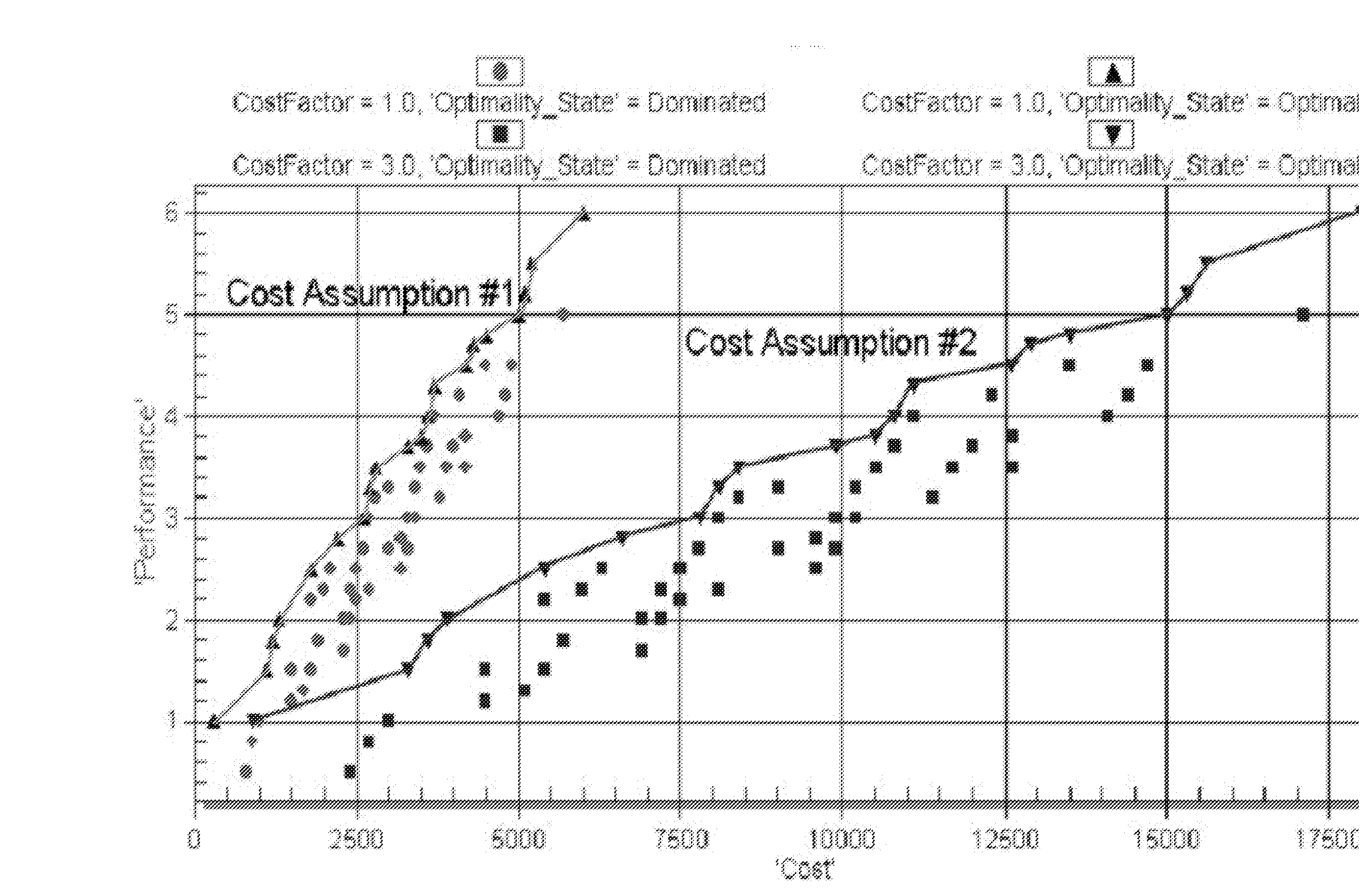
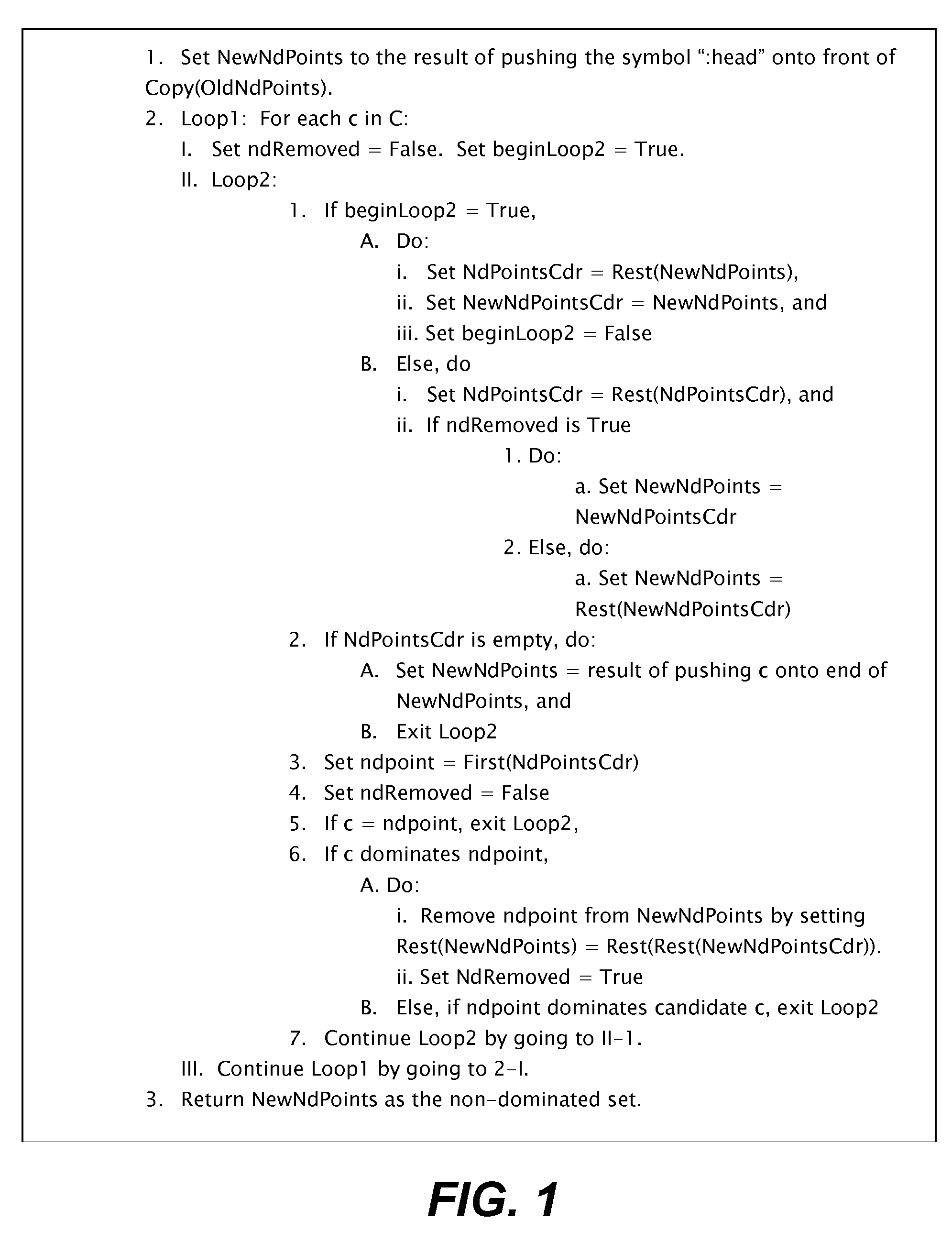
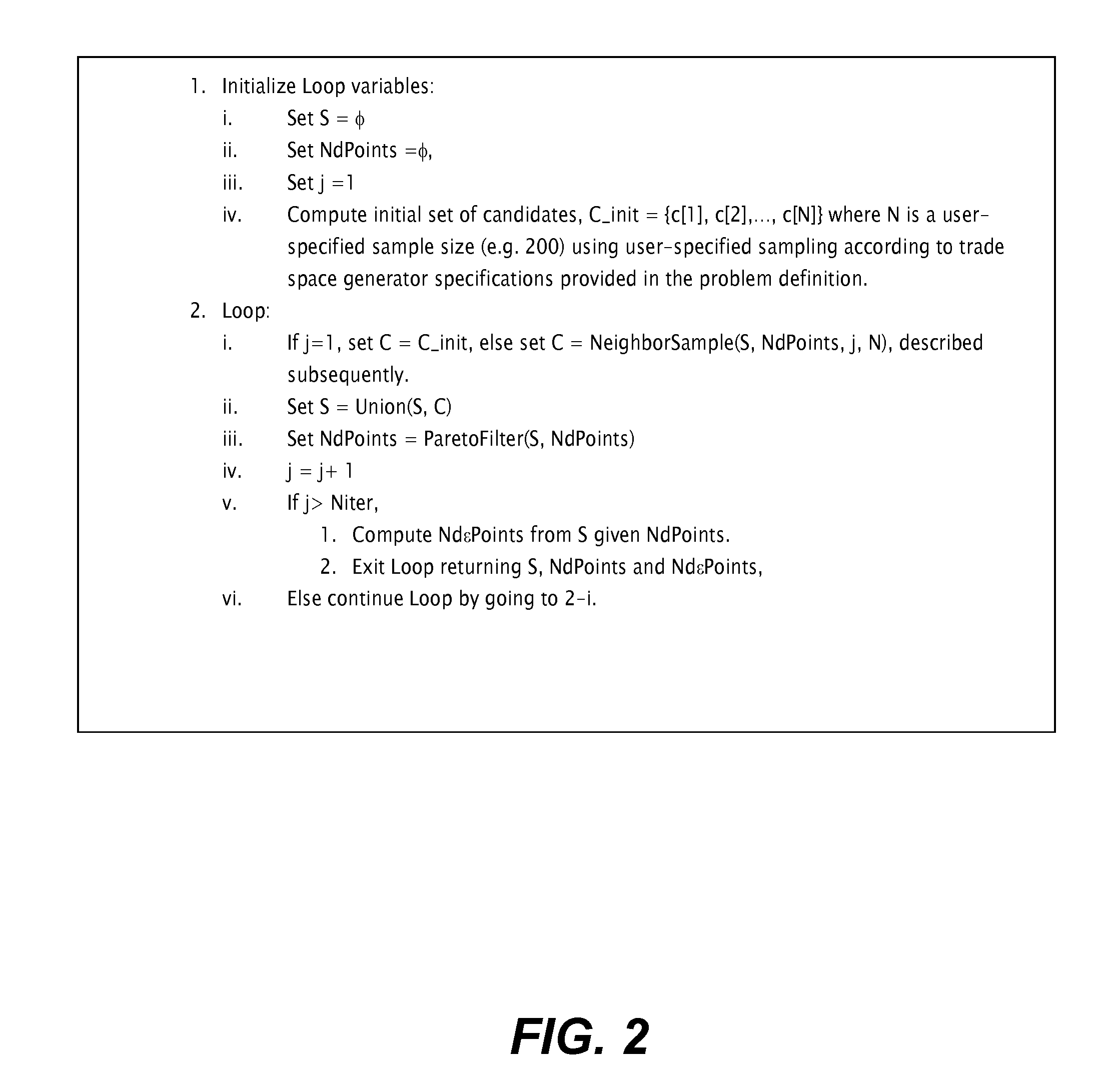
- Integration of Multi-Objective Optimization (MOO) with Constraint Management Systems (CMS) and robust nonlinear equation solvers, allowing users to switch input and output variables, decomposing equality constraints for efficient management and automating the search for 'interesting' designs within the trade space.

Computer-Implemented Systems And Methods For Efficiently Selecting Data In Multi-Dimensional Hierarchical Space With Multiple Constraints
PatentActiveUS20100325586A1
Innovation
- The system identifies common dimensions, generates compatible node pairs, computes greatest lower bounds (GLBs), and applies user-specific information to select a subset of options, reducing processing by comparing only partially compatible points and pre-computing intersections based on user permissions.


Performance Benchmarking and Validation Standards
Establishing comprehensive performance benchmarking and validation standards for cost-effective multi-point constraint implementations requires a systematic approach that addresses both computational efficiency and solution accuracy. The benchmarking framework must encompass standardized test cases that represent typical industrial scenarios, ranging from simple mechanical assemblies to complex multi-body systems with hundreds of constraint points.
Performance metrics should include computational time per constraint evaluation, memory consumption scaling, convergence rates, and solution stability under varying numerical conditions. Industry-standard benchmarks such as the SPEC CPU suite adaptations and custom constraint-solving test batteries provide baseline measurements for comparative analysis. These benchmarks must account for different constraint types including distance, angle, coincidence, and tangency constraints across various geometric configurations.
Validation standards require rigorous verification protocols that compare numerical solutions against analytical results for simplified cases and experimental data for complex scenarios. The validation process should incorporate tolerance analysis, ensuring that constraint violations remain within acceptable engineering limits typically ranging from 1e-6 to 1e-12 depending on application requirements. Cross-platform validation becomes essential when evaluating different solver implementations across various hardware architectures.
Scalability assessment forms a critical component of performance evaluation, measuring how constraint solvers perform as problem size increases from tens to thousands of constraint equations. Linear and nonlinear scaling characteristics must be documented, with particular attention to memory allocation patterns and computational bottlenecks that emerge at different problem scales.
Robustness testing involves subjecting constraint solvers to ill-conditioned problems, near-singular configurations, and edge cases that commonly occur in real-world applications. Statistical analysis of solver behavior across Monte Carlo simulations provides insights into reliability and failure modes. Quality assurance protocols should establish acceptance criteria for solver performance, including maximum allowable computation time, minimum accuracy thresholds, and failure rate limits under standard operating conditions.
Performance metrics should include computational time per constraint evaluation, memory consumption scaling, convergence rates, and solution stability under varying numerical conditions. Industry-standard benchmarks such as the SPEC CPU suite adaptations and custom constraint-solving test batteries provide baseline measurements for comparative analysis. These benchmarks must account for different constraint types including distance, angle, coincidence, and tangency constraints across various geometric configurations.
Validation standards require rigorous verification protocols that compare numerical solutions against analytical results for simplified cases and experimental data for complex scenarios. The validation process should incorporate tolerance analysis, ensuring that constraint violations remain within acceptable engineering limits typically ranging from 1e-6 to 1e-12 depending on application requirements. Cross-platform validation becomes essential when evaluating different solver implementations across various hardware architectures.
Scalability assessment forms a critical component of performance evaluation, measuring how constraint solvers perform as problem size increases from tens to thousands of constraint equations. Linear and nonlinear scaling characteristics must be documented, with particular attention to memory allocation patterns and computational bottlenecks that emerge at different problem scales.
Robustness testing involves subjecting constraint solvers to ill-conditioned problems, near-singular configurations, and edge cases that commonly occur in real-world applications. Statistical analysis of solver behavior across Monte Carlo simulations provides insights into reliability and failure modes. Quality assurance protocols should establish acceptance criteria for solver performance, including maximum allowable computation time, minimum accuracy thresholds, and failure rate limits under standard operating conditions.
Resource Optimization Strategies for MPC Deployment
Resource optimization strategies for Multi Point Constraint (MPC) deployment focus on maximizing computational efficiency while minimizing operational costs across distributed systems. The fundamental approach involves intelligent resource allocation that balances processing power, memory utilization, and network bandwidth to achieve optimal constraint satisfaction performance.
Dynamic resource scaling represents a cornerstone strategy for cost-effective MPC implementation. This approach involves real-time monitoring of constraint complexity and computational demand, automatically adjusting allocated resources based on workload patterns. By implementing elastic scaling mechanisms, organizations can avoid over-provisioning during low-demand periods while ensuring adequate capacity during peak constraint processing requirements.
Load balancing techniques play a crucial role in optimizing resource utilization across multiple constraint processing nodes. Advanced algorithms distribute constraint evaluation tasks based on node capacity, current utilization levels, and network latency considerations. This ensures uniform resource consumption and prevents bottlenecks that could compromise overall system performance while maintaining cost efficiency.
Memory optimization strategies focus on efficient constraint data structure management and caching mechanisms. Implementing intelligent memory hierarchies allows frequently accessed constraint parameters to remain in high-speed cache while less critical data utilizes lower-cost storage tiers. This approach significantly reduces memory costs without sacrificing constraint resolution speed.
Computational resource sharing through containerization and virtualization technologies enables multiple MPC instances to coexist on shared hardware infrastructure. This strategy maximizes hardware utilization rates while providing isolation between different constraint processing workloads, resulting in substantial cost reductions compared to dedicated hardware deployments.
Network resource optimization involves strategic placement of constraint processing nodes to minimize data transfer costs and latency. By analyzing constraint interdependencies and communication patterns, optimal node placement strategies can reduce bandwidth requirements and associated networking expenses while maintaining system responsiveness and reliability.
Dynamic resource scaling represents a cornerstone strategy for cost-effective MPC implementation. This approach involves real-time monitoring of constraint complexity and computational demand, automatically adjusting allocated resources based on workload patterns. By implementing elastic scaling mechanisms, organizations can avoid over-provisioning during low-demand periods while ensuring adequate capacity during peak constraint processing requirements.
Load balancing techniques play a crucial role in optimizing resource utilization across multiple constraint processing nodes. Advanced algorithms distribute constraint evaluation tasks based on node capacity, current utilization levels, and network latency considerations. This ensures uniform resource consumption and prevents bottlenecks that could compromise overall system performance while maintaining cost efficiency.
Memory optimization strategies focus on efficient constraint data structure management and caching mechanisms. Implementing intelligent memory hierarchies allows frequently accessed constraint parameters to remain in high-speed cache while less critical data utilizes lower-cost storage tiers. This approach significantly reduces memory costs without sacrificing constraint resolution speed.
Computational resource sharing through containerization and virtualization technologies enables multiple MPC instances to coexist on shared hardware infrastructure. This strategy maximizes hardware utilization rates while providing isolation between different constraint processing workloads, resulting in substantial cost reductions compared to dedicated hardware deployments.
Network resource optimization involves strategic placement of constraint processing nodes to minimize data transfer costs and latency. By analyzing constraint interdependencies and communication patterns, optimal node placement strategies can reduce bandwidth requirements and associated networking expenses while maintaining system responsiveness and reliability.
Unlock deeper insights with Patsnap Eureka Quick Research — get a full tech report to explore trends and direct your research. Try now!
Generate Your Research Report Instantly with AI Agent
Supercharge your innovation with Patsnap Eureka AI Agent Platform!