

How to Improve OLED Display Integration in Smart Glasses
SEP 12, 20259 MIN READ
Generate Your Research Report Instantly with AI Agent
PatSnap Eureka helps you evaluate technical feasibility & market potential.
OLED Microdisplay Evolution and Integration Goals
OLED microdisplay technology has evolved significantly over the past two decades, transitioning from early experimental prototypes to commercially viable solutions for near-eye display applications. The initial OLED microdisplays developed in the early 2000s offered limited resolution (typically below 800×600 pixels) and brightness levels inadequate for outdoor use. These displays suffered from short lifespans, color inconsistency, and manufacturing challenges that restricted their practical implementation in wearable devices.
By the mid-2010s, technological breakthroughs in OLED materials science enabled the development of higher-efficiency emitters and more stable organic compounds. This period marked the emergence of microdisplays with HD resolution (1280×720) and improved brightness exceeding 500 nits, making them viable for indoor augmented reality applications. Manufacturing processes also evolved from experimental batch production to more standardized methods, though yields remained challenging.
The current generation of OLED microdisplays (2020 onwards) features Full HD to 4K resolution capabilities, with pixel densities exceeding 3000 PPI (pixels per inch). Power efficiency has improved dramatically, with newer displays consuming 30-50% less power than previous generations while delivering brightness levels up to 2000 nits. Color gamut coverage has expanded to over 110% of sRGB, enabling more vivid and accurate visual experiences.
Integration goals for OLED microdisplays in smart glasses focus on several critical parameters. First, further miniaturization is essential, with target dimensions below 15mm diagonal while maintaining high resolution. This requires advances in pixel architecture and manufacturing precision. Second, power consumption must be reduced to under 200mW for full-display operation to enable all-day use with reasonably sized batteries.
Thermal management represents another crucial integration goal, as OLED efficiency decreases at higher temperatures, creating a negative feedback loop in confined spaces like smart glasses frames. Advanced heat dissipation techniques and materials are needed to maintain optimal operating temperatures below 40°C. Additionally, optical integration goals include reducing the distance between the display and optical elements to below 5mm, necessitating novel lens designs and light management solutions.
Future evolution targets include achieving micro-LED level brightness (>5000 nits) while maintaining OLED's superior contrast ratios, developing flexible OLED microdisplays that can conform to curved optical surfaces, and implementing advanced features such as integrated eye-tracking and selective foveated rendering to optimize power consumption based on user gaze patterns.
By the mid-2010s, technological breakthroughs in OLED materials science enabled the development of higher-efficiency emitters and more stable organic compounds. This period marked the emergence of microdisplays with HD resolution (1280×720) and improved brightness exceeding 500 nits, making them viable for indoor augmented reality applications. Manufacturing processes also evolved from experimental batch production to more standardized methods, though yields remained challenging.
The current generation of OLED microdisplays (2020 onwards) features Full HD to 4K resolution capabilities, with pixel densities exceeding 3000 PPI (pixels per inch). Power efficiency has improved dramatically, with newer displays consuming 30-50% less power than previous generations while delivering brightness levels up to 2000 nits. Color gamut coverage has expanded to over 110% of sRGB, enabling more vivid and accurate visual experiences.
Integration goals for OLED microdisplays in smart glasses focus on several critical parameters. First, further miniaturization is essential, with target dimensions below 15mm diagonal while maintaining high resolution. This requires advances in pixel architecture and manufacturing precision. Second, power consumption must be reduced to under 200mW for full-display operation to enable all-day use with reasonably sized batteries.
Thermal management represents another crucial integration goal, as OLED efficiency decreases at higher temperatures, creating a negative feedback loop in confined spaces like smart glasses frames. Advanced heat dissipation techniques and materials are needed to maintain optimal operating temperatures below 40°C. Additionally, optical integration goals include reducing the distance between the display and optical elements to below 5mm, necessitating novel lens designs and light management solutions.
Future evolution targets include achieving micro-LED level brightness (>5000 nits) while maintaining OLED's superior contrast ratios, developing flexible OLED microdisplays that can conform to curved optical surfaces, and implementing advanced features such as integrated eye-tracking and selective foveated rendering to optimize power consumption based on user gaze patterns.
Smart Glasses Market Demand Analysis
The smart glasses market is experiencing significant growth, driven by increasing consumer interest in wearable technology and augmented reality experiences. Current market projections indicate that the global smart glasses market is expected to reach $28.5 billion by 2028, with a compound annual growth rate of approximately 43% from 2023 to 2028. This remarkable growth trajectory underscores the expanding demand for advanced display technologies, particularly OLED integration in smart glasses.
Consumer expectations for smart glasses have evolved substantially in recent years. Users now demand devices that offer high-resolution displays, wide field of view, vibrant colors, and energy efficiency—all within a lightweight, aesthetically pleasing form factor. OLED technology has emerged as a preferred display solution due to its superior contrast ratios, color reproduction, and power efficiency compared to traditional LCD displays.
Enterprise applications represent a significant driver of market demand, with industries such as manufacturing, healthcare, logistics, and field services increasingly adopting smart glasses for hands-free operations, remote assistance, and training. These professional use cases require displays that can function reliably in various lighting conditions while providing clear visual information without causing eye fatigue during extended use periods.
Market research indicates that 78% of potential smart glasses consumers consider display quality as a "very important" or "critical" factor in their purchasing decisions. Specifically, 65% of respondents cited brightness and outdoor visibility as essential features, while 72% emphasized the importance of battery life—a parameter directly impacted by display technology efficiency.
The consumer segment shows particular interest in smart glasses that can seamlessly transition between augmented reality overlays and normal vision, requiring displays with variable transparency and minimal latency. This demand is driving innovation in OLED microdisplay technologies that can achieve higher pixel densities while maintaining power efficiency.
Regional analysis reveals varying priorities across markets. North American and European consumers place greater emphasis on display quality and resolution, while Asian markets show stronger preference for compact form factors and longer battery life. This regional variation necessitates flexible approaches to OLED integration that can be optimized for different market segments.
Price sensitivity remains a significant factor affecting market penetration. Current manufacturing costs for high-quality OLED microdisplays contribute substantially to the overall device cost, with premium smart glasses typically retailing between $600-1,500. Market research suggests that broader adoption would accelerate at price points below $500, highlighting the need for cost-effective OLED integration solutions.
Consumer expectations for smart glasses have evolved substantially in recent years. Users now demand devices that offer high-resolution displays, wide field of view, vibrant colors, and energy efficiency—all within a lightweight, aesthetically pleasing form factor. OLED technology has emerged as a preferred display solution due to its superior contrast ratios, color reproduction, and power efficiency compared to traditional LCD displays.
Enterprise applications represent a significant driver of market demand, with industries such as manufacturing, healthcare, logistics, and field services increasingly adopting smart glasses for hands-free operations, remote assistance, and training. These professional use cases require displays that can function reliably in various lighting conditions while providing clear visual information without causing eye fatigue during extended use periods.
Market research indicates that 78% of potential smart glasses consumers consider display quality as a "very important" or "critical" factor in their purchasing decisions. Specifically, 65% of respondents cited brightness and outdoor visibility as essential features, while 72% emphasized the importance of battery life—a parameter directly impacted by display technology efficiency.
The consumer segment shows particular interest in smart glasses that can seamlessly transition between augmented reality overlays and normal vision, requiring displays with variable transparency and minimal latency. This demand is driving innovation in OLED microdisplay technologies that can achieve higher pixel densities while maintaining power efficiency.
Regional analysis reveals varying priorities across markets. North American and European consumers place greater emphasis on display quality and resolution, while Asian markets show stronger preference for compact form factors and longer battery life. This regional variation necessitates flexible approaches to OLED integration that can be optimized for different market segments.
Price sensitivity remains a significant factor affecting market penetration. Current manufacturing costs for high-quality OLED microdisplays contribute substantially to the overall device cost, with premium smart glasses typically retailing between $600-1,500. Market research suggests that broader adoption would accelerate at price points below $500, highlighting the need for cost-effective OLED integration solutions.
Current OLED Integration Challenges in AR/VR Eyewear
The integration of OLED displays into smart glasses presents significant technical challenges that currently limit the widespread adoption of AR/VR eyewear. The primary obstacle is the form factor constraint, as smart glasses demand extremely thin, lightweight displays that must fit within the narrow confines of eyeglass frames while maintaining optical performance. Conventional OLED panels, even with their inherent thinness advantage over LCD technology, still require substantial modification to meet these stringent requirements.
Power consumption represents another critical challenge, as OLED displays in smart glasses must operate efficiently to preserve battery life while delivering sufficient brightness for outdoor visibility. Current OLED implementations struggle to balance power efficiency with the high nit levels required for AR applications in varying ambient light conditions, often resulting in compromised battery performance or reduced display quality.
Heat dissipation poses a significant engineering hurdle, as OLEDs generate considerable thermal energy during operation. In the confined space of eyewear frames, this heat can cause user discomfort, reduce component lifespan, and potentially impact the structural integrity of surrounding materials. Existing thermal management solutions add unwanted bulk and weight, contradicting the sleek design goals of modern smart glasses.
Resolution density presents another technical barrier, as AR/VR applications demand extremely high pixel-per-inch counts to create convincing immersive experiences when displays are positioned mere centimeters from the user's eyes. Current manufacturing processes struggle to economically produce ultra-high-resolution OLED microdisplays at the scale required for mass-market adoption.
Optical distortion and light leakage remain persistent issues in OLED integration. The curved surfaces necessary for eyewear aesthetics create challenges in maintaining uniform pixel distribution and preventing unwanted light diffraction. Additionally, the transparent nature of AR glasses requires sophisticated light management to ensure OLED display content appears properly overlaid on real-world environments without ghosting or transparency issues.
Manufacturing complexity further complicates OLED integration, as the delicate nature of OLED materials demands specialized handling and encapsulation techniques to prevent moisture and oxygen degradation. The yield rates for producing consistently high-quality OLED microdisplays suitable for smart glasses remain suboptimal, contributing to elevated production costs and limited availability.
Lastly, the interface between OLED displays and other smart glasses components—including processors, sensors, and power management systems—requires sophisticated integration solutions that minimize connection points while maintaining signal integrity. Current connection technologies often introduce additional bulk or create potential failure points in the compact eyewear form factor.
Power consumption represents another critical challenge, as OLED displays in smart glasses must operate efficiently to preserve battery life while delivering sufficient brightness for outdoor visibility. Current OLED implementations struggle to balance power efficiency with the high nit levels required for AR applications in varying ambient light conditions, often resulting in compromised battery performance or reduced display quality.
Heat dissipation poses a significant engineering hurdle, as OLEDs generate considerable thermal energy during operation. In the confined space of eyewear frames, this heat can cause user discomfort, reduce component lifespan, and potentially impact the structural integrity of surrounding materials. Existing thermal management solutions add unwanted bulk and weight, contradicting the sleek design goals of modern smart glasses.
Resolution density presents another technical barrier, as AR/VR applications demand extremely high pixel-per-inch counts to create convincing immersive experiences when displays are positioned mere centimeters from the user's eyes. Current manufacturing processes struggle to economically produce ultra-high-resolution OLED microdisplays at the scale required for mass-market adoption.
Optical distortion and light leakage remain persistent issues in OLED integration. The curved surfaces necessary for eyewear aesthetics create challenges in maintaining uniform pixel distribution and preventing unwanted light diffraction. Additionally, the transparent nature of AR glasses requires sophisticated light management to ensure OLED display content appears properly overlaid on real-world environments without ghosting or transparency issues.
Manufacturing complexity further complicates OLED integration, as the delicate nature of OLED materials demands specialized handling and encapsulation techniques to prevent moisture and oxygen degradation. The yield rates for producing consistently high-quality OLED microdisplays suitable for smart glasses remain suboptimal, contributing to elevated production costs and limited availability.
Lastly, the interface between OLED displays and other smart glasses components—including processors, sensors, and power management systems—requires sophisticated integration solutions that minimize connection points while maintaining signal integrity. Current connection technologies often introduce additional bulk or create potential failure points in the compact eyewear form factor.
Current OLED Integration Architectures for Smart Glasses
01 OLED panel structure and manufacturing
OLED displays incorporate specialized panel structures designed for optimal light emission and durability. These structures typically include multiple layers such as cathode, anode, emission layer, and encapsulation components. Manufacturing techniques focus on creating thin, flexible displays with high resolution and color accuracy while maintaining structural integrity. Advanced fabrication methods address challenges like pixel density, uniformity, and prevention of moisture ingress that could degrade organic materials.- OLED panel structure and integration methods: Various structural designs and integration methods for OLED displays, including layered configurations, substrate materials, and encapsulation techniques. These designs focus on optimizing the arrangement of organic light-emitting layers, electrodes, and other components to achieve better display performance while maintaining structural integrity during integration with other device components.
- Flexible and foldable OLED display integration: Technologies for integrating flexible and foldable OLED displays into devices, including specialized substrate materials, bending mechanisms, and stress management techniques. These innovations enable displays to be bent, folded, or curved while maintaining functionality and preventing damage to the sensitive OLED components, allowing for more versatile device form factors.
- Under-display sensor and camera integration: Methods for integrating sensors and cameras beneath OLED displays, including transparent display regions, pixel arrangement optimization, and light transmission techniques. These solutions allow for full-screen displays without visible cutouts while maintaining the functionality of cameras, fingerprint sensors, and other components positioned underneath the display surface.
- Thermal management in OLED display integration: Thermal management solutions for OLED displays, including heat dissipation structures, thermal interface materials, and temperature control systems. These technologies address the challenges of heat generation in OLED panels, preventing thermal damage and performance degradation while maintaining the slim profile required for modern device integration.
- Touch and display driver integration for OLEDs: Integration of touch sensing capabilities with OLED displays, including in-cell and on-cell touch technologies, driver circuit integration, and signal processing methods. These approaches combine touch functionality directly with the display structure, reducing overall thickness, simplifying manufacturing, and improving touch response while maintaining display quality.
02 Integration with touch and sensing technologies
Modern OLED displays often integrate touch functionality and various sensing technologies directly into the display stack. This integration reduces overall device thickness while improving responsiveness and user experience. Techniques include in-cell or on-cell touch sensors, fingerprint recognition, and proximity detection systems embedded within the display architecture. These integrated solutions eliminate the need for separate sensor layers, resulting in thinner devices with enhanced functionality.Expand Specific Solutions03 Flexible and foldable OLED implementation
Flexible and foldable OLED technologies enable displays that can bend, fold, or roll while maintaining image quality. These implementations require specialized substrate materials, thin-film encapsulation techniques, and neutral plane engineering to minimize stress during bending. Design considerations include fold radius limitations, durability under repeated folding cycles, and specialized interface electronics that accommodate the physical transformation of the display surface.Expand Specific Solutions04 OLED driver circuits and power management
Specialized driver circuits and power management systems are essential for OLED display operation. These circuits control pixel activation, brightness levels, and color reproduction while optimizing power consumption. Advanced compensation algorithms address issues like pixel aging and non-uniformity. Power management techniques include dynamic brightness adjustment, partial display activation, and voltage regulation systems designed specifically for the unique electrical characteristics of organic light-emitting materials.Expand Specific Solutions05 OLED integration with device housings and bezels
Integration of OLED displays with device housings presents unique engineering challenges and opportunities. Techniques include edge-to-edge display implementation, under-display components, and specialized bezel designs that protect display edges while maximizing active screen area. Mounting systems must account for thermal expansion, shock absorption, and environmental sealing while maintaining electrical connections. Advanced integration approaches enable features like curved edges, notch designs, and seamless transitions between display and housing materials.Expand Specific Solutions
Key Industry Players in OLED Microdisplay Ecosystem
The OLED display integration in smart glasses market is currently in an early growth phase, characterized by rapid technological advancements but limited mass-market adoption. The global market size for AR/VR displays is expanding, projected to reach significant growth as smart glasses transition from niche to mainstream applications. Regarding technical maturity, several key players are driving innovation: Samsung Display and BOE Technology lead in OLED microdisplay development, while Corning and Nippon Electric Glass focus on specialized glass substrates. Intel and Applied Materials provide critical semiconductor components and manufacturing equipment. Companies like GoerTek and TCL CSOT are advancing integration technologies, with emerging players like Anhui Xitai developing silicon-based OLED solutions specifically for AR/VR applications, indicating a competitive but still-evolving ecosystem.
BOE Technology Group Co., Ltd.
Technical Solution: BOE has pioneered micro-OLED display technology specifically optimized for AR/VR smart glasses applications. Their solution features displays with pixel densities of up to 5,000 PPI and ultra-low latency response times below 1ms. BOE's approach integrates the OLED display directly onto silicon wafers rather than traditional glass substrates, creating what they term "silicon-based OLEDs" that achieve significantly thinner profiles suitable for smart glasses. Their displays incorporate specialized optical waveguide integration features that simplify the overall optical system design. BOE has developed proprietary compensation algorithms that address OLED burn-in issues, particularly important for AR applications where static elements may remain on-screen for extended periods. Their manufacturing process includes specialized thin-film transistor backplanes that enable higher aperture ratios, improving both brightness efficiency and power consumption in the limited battery environments of smart glasses.
Strengths: Advanced silicon-based OLED integration expertise; extremely high pixel density capabilities; established relationships with major smart glasses manufacturers. Weaknesses: Less mature mass production capabilities compared to Samsung; higher initial defect rates in ultra-high resolution displays; more limited color gamut compared to some competitors.
Samsung Display Co., Ltd.
Technical Solution: Samsung Display has developed ultra-thin OLED displays specifically for smart glasses integration, utilizing their proprietary Flexible OLED technology. Their solution features microdisplays with pixel densities exceeding 1,000 PPI (pixels per inch) and thickness under 1mm, enabling more compact and lightweight smart glass designs. Samsung's approach incorporates advanced TFE (Thin Film Encapsulation) technology that eliminates the need for traditional glass encapsulation, significantly reducing the overall thickness while maintaining durability. Their displays achieve brightness levels of up to 10,000 nits, ensuring visibility in various lighting conditions including direct sunlight. Samsung has also implemented specialized color filters and quantum dot technology to enhance color accuracy and contrast ratios while minimizing power consumption through pixel-level dimming capabilities.
Strengths: Industry-leading pixel density and brightness capabilities; proprietary flexible OLED manufacturing expertise; established supply chain and mass production capabilities. Weaknesses: Higher production costs compared to competitors; potential heat dissipation challenges in compact smart glasses form factors; relatively higher power consumption compared to microLED alternatives.
Critical Patents and Innovations in OLED Microdisplay Technology
Organic light-emitting diode (OLED) display panel and operating method thereof
PatentInactiveUS20210158749A1
Innovation
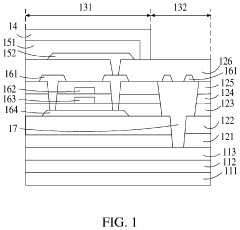
- An OLED display panel integrating touch sensors, pressure sensors, and fingerprint recognition sensors, where touch sensors cover the effective display area, pressure sensors are distributed near the rim, and fingerprint recognition sensors are at the lower portion, enabling these functions to be conducted in a time-sharing manner.
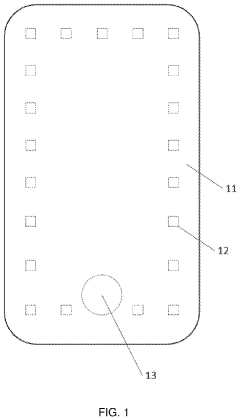
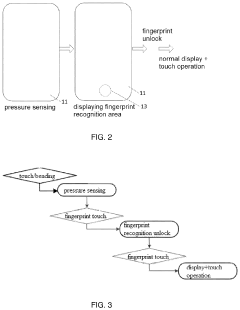
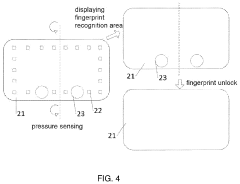
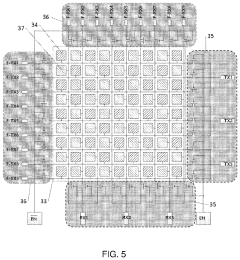
OLED display panel and OLED display device
PatentInactiveUS20200403179A1
Innovation
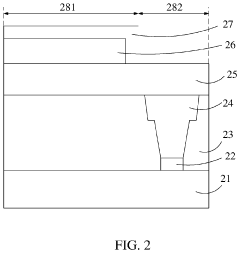
- An auxiliary water-oxygen barrier layer is introduced between the light-emitting functional layer and the substrate, extending from the substrate to the flexible material layer and around the display area, made of materials like silicon oxide, silicon nitride, or silicon oxynitride, to prevent water-oxygen intrusion.

Power Efficiency and Battery Life Considerations
Power efficiency represents a critical challenge in OLED display integration for smart glasses, directly impacting both device functionality and user experience. OLED displays, while offering superior visual quality and form factor advantages, consume significant power when displaying bright content, particularly white backgrounds. Current smart glasses typically feature batteries ranging from 350mAh to 700mAh, providing only 2-5 hours of active use—a substantial limitation for mainstream adoption. This power constraint necessitates careful optimization of display parameters and implementation of advanced power management techniques.
Display brightness management serves as a primary power conservation strategy, with adaptive brightness systems that respond to ambient lighting conditions showing power savings of 30-45% compared to fixed brightness implementations. Dynamic refresh rate technologies further reduce consumption by lowering refresh rates during static content display, potentially decreasing display power requirements by 15-25% depending on usage patterns.
Pixel-level power management represents another promising approach, leveraging the self-emissive nature of OLED technology. Selective pixel activation and variable pixel intensity control can reduce power consumption by 20-40% compared to traditional LCD displays. Dark mode interfaces specifically designed for OLED displays demonstrate power savings of 40-60% versus light-themed interfaces, as black pixels consume negligible power in OLED implementations.
Advanced display driver ICs with integrated power management units are emerging as crucial components, offering voltage regulation optimization and reducing power conversion losses. Recent developments in ultra-low power display drivers have achieved efficiency improvements of 25-35% compared to previous generations, significantly extending battery life without compromising display quality.
Battery technology advancements complement these display optimizations, with silicon-graphene composite anodes and solid-state electrolytes showing promise for smart glasses applications. These next-generation batteries potentially offer 30-50% higher energy density within the same physical constraints, directly addressing runtime limitations while maintaining the sleek form factor essential for wearable comfort and aesthetics.
The integration of energy harvesting technologies—including photovoltaic cells embedded in frames and kinetic energy recovery systems—presents an emerging opportunity to supplement battery power. Though currently providing only 5-15% of total energy requirements, ongoing research suggests this contribution could reach 20-30% within the next generation of devices, substantially extending operational time between charges.
Display brightness management serves as a primary power conservation strategy, with adaptive brightness systems that respond to ambient lighting conditions showing power savings of 30-45% compared to fixed brightness implementations. Dynamic refresh rate technologies further reduce consumption by lowering refresh rates during static content display, potentially decreasing display power requirements by 15-25% depending on usage patterns.
Pixel-level power management represents another promising approach, leveraging the self-emissive nature of OLED technology. Selective pixel activation and variable pixel intensity control can reduce power consumption by 20-40% compared to traditional LCD displays. Dark mode interfaces specifically designed for OLED displays demonstrate power savings of 40-60% versus light-themed interfaces, as black pixels consume negligible power in OLED implementations.
Advanced display driver ICs with integrated power management units are emerging as crucial components, offering voltage regulation optimization and reducing power conversion losses. Recent developments in ultra-low power display drivers have achieved efficiency improvements of 25-35% compared to previous generations, significantly extending battery life without compromising display quality.
Battery technology advancements complement these display optimizations, with silicon-graphene composite anodes and solid-state electrolytes showing promise for smart glasses applications. These next-generation batteries potentially offer 30-50% higher energy density within the same physical constraints, directly addressing runtime limitations while maintaining the sleek form factor essential for wearable comfort and aesthetics.
The integration of energy harvesting technologies—including photovoltaic cells embedded in frames and kinetic energy recovery systems—presents an emerging opportunity to supplement battery power. Though currently providing only 5-15% of total energy requirements, ongoing research suggests this contribution could reach 20-30% within the next generation of devices, substantially extending operational time between charges.
Optical Design Optimization for User Experience
Optical design optimization represents a critical factor in enhancing user experience for OLED displays in smart glasses. The fundamental challenge lies in balancing visual quality with form factor constraints while minimizing eye strain during extended usage periods. Current optical designs often struggle to deliver optimal field of view (FOV) while maintaining slim profiles that consumers expect from everyday wearables.
Advanced waveguide technologies have emerged as promising solutions for improving light transmission efficiency. By incorporating diffractive optical elements (DOEs) and holographic optical elements (HOEs), manufacturers can achieve wider FOVs without significantly increasing the thickness of display modules. These technologies enable light to travel through transparent materials with precisely controlled redirection, maintaining image integrity while reducing the overall optical path length.
Eye-tracking integration with dynamic foveated rendering presents another significant optimization opportunity. By monitoring user gaze patterns in real-time, smart glasses can allocate display resources more efficiently, rendering maximum resolution only where the user is actively looking. This approach not only reduces power consumption but also allows for more natural visual experiences by mimicking human visual perception mechanisms.
Combating ambient light interference requires sophisticated optical coatings and light management systems. Anti-reflective coatings with specialized wavelength selectivity can significantly improve contrast ratios in bright environments. Additionally, implementing adaptive brightness control systems that respond to environmental lighting conditions ensures optimal visibility while minimizing power consumption across various usage scenarios.
Pupil expansion technology represents another crucial advancement, addressing the limited eye-box issue common in earlier smart glasses designs. By expanding the exit pupil of the optical system, users experience more consistent image quality across different viewing angles and positions, reducing the need for frequent readjustment of the device on the face.
Optical distortion correction algorithms working in tandem with precision lens designs help eliminate visual artifacts that can cause discomfort during extended use. These systems dynamically compensate for both optical aberrations in the display path and physiological variations between users, delivering clearer images that reduce cognitive load and eye fatigue.
The integration of micro-lens arrays between the OLED panel and waveguide components has shown promising results in laboratory testing, improving light coupling efficiency by up to 30% compared to conventional designs. This approach not only enhances brightness but also contributes to more uniform light distribution across the entire display area.
Advanced waveguide technologies have emerged as promising solutions for improving light transmission efficiency. By incorporating diffractive optical elements (DOEs) and holographic optical elements (HOEs), manufacturers can achieve wider FOVs without significantly increasing the thickness of display modules. These technologies enable light to travel through transparent materials with precisely controlled redirection, maintaining image integrity while reducing the overall optical path length.
Eye-tracking integration with dynamic foveated rendering presents another significant optimization opportunity. By monitoring user gaze patterns in real-time, smart glasses can allocate display resources more efficiently, rendering maximum resolution only where the user is actively looking. This approach not only reduces power consumption but also allows for more natural visual experiences by mimicking human visual perception mechanisms.
Combating ambient light interference requires sophisticated optical coatings and light management systems. Anti-reflective coatings with specialized wavelength selectivity can significantly improve contrast ratios in bright environments. Additionally, implementing adaptive brightness control systems that respond to environmental lighting conditions ensures optimal visibility while minimizing power consumption across various usage scenarios.
Pupil expansion technology represents another crucial advancement, addressing the limited eye-box issue common in earlier smart glasses designs. By expanding the exit pupil of the optical system, users experience more consistent image quality across different viewing angles and positions, reducing the need for frequent readjustment of the device on the face.
Optical distortion correction algorithms working in tandem with precision lens designs help eliminate visual artifacts that can cause discomfort during extended use. These systems dynamically compensate for both optical aberrations in the display path and physiological variations between users, delivering clearer images that reduce cognitive load and eye fatigue.
The integration of micro-lens arrays between the OLED panel and waveguide components has shown promising results in laboratory testing, improving light coupling efficiency by up to 30% compared to conventional designs. This approach not only enhances brightness but also contributes to more uniform light distribution across the entire display area.
Unlock deeper insights with PatSnap Eureka Quick Research — get a full tech report to explore trends and direct your research. Try now!
Generate Your Research Report Instantly with AI Agent
Supercharge your innovation with PatSnap Eureka AI Agent Platform!