How to Predict Lithium Bromide System Failures — Methods
AUG 28, 20259 MIN READ
Generate Your Research Report Instantly with AI Agent
PatSnap Eureka helps you evaluate technical feasibility & market potential.
LiBr System Failure Prediction Background and Objectives
Lithium Bromide (LiBr) absorption refrigeration systems have been widely utilized in industrial cooling applications since the mid-20th century, offering energy-efficient alternatives to conventional vapor compression systems. These systems leverage the hygroscopic properties of LiBr solution to create a refrigeration effect through an absorption-desorption cycle. However, despite their advantages, LiBr systems face significant operational challenges, particularly related to system failures that can result in costly downtime and maintenance.
The evolution of LiBr system technology has progressed from basic single-effect cycles to advanced multi-effect configurations, with corresponding improvements in efficiency and reliability. Recent technological trends indicate a growing focus on predictive maintenance strategies and real-time monitoring solutions to address the persistent reliability issues that have historically limited wider adoption of these systems.
System failures in LiBr absorption chillers typically manifest as crystallization, corrosion, vacuum leaks, and performance degradation. Traditional reactive maintenance approaches have proven inadequate for preventing unexpected failures, highlighting the need for more sophisticated predictive methodologies. The industry has gradually shifted from scheduled maintenance to condition-based approaches, with predictive maintenance representing the current frontier of technological development.
The primary objective of this technical research is to comprehensively evaluate existing and emerging methods for predicting LiBr system failures before they occur. This includes assessing the efficacy of various sensor technologies, data analytics approaches, and machine learning algorithms in identifying early warning signs of potential system malfunctions. Additionally, we aim to establish a framework for implementing predictive maintenance strategies that can significantly reduce unplanned downtime and extend equipment lifespan.
Secondary objectives include quantifying the economic benefits of predictive maintenance for LiBr systems, identifying key performance indicators that serve as reliable predictors of impending failures, and developing standardized protocols for data collection and analysis that can be implemented across different system configurations and operational environments.
The scope of this research encompasses both hardware-based monitoring solutions (such as advanced sensor networks and IoT integration) and software-based analytical tools (including statistical models, machine learning algorithms, and digital twin simulations). By examining the intersection of these approaches, we seek to develop a comprehensive methodology for failure prediction that addresses the unique challenges posed by LiBr absorption systems.
This research is particularly timely given the increasing emphasis on energy efficiency and sustainable cooling solutions in industrial and commercial applications, which has renewed interest in absorption refrigeration technology. Effective prediction of system failures represents a critical enabler for broader adoption of LiBr systems in markets where reliability concerns have historically limited implementation.
The evolution of LiBr system technology has progressed from basic single-effect cycles to advanced multi-effect configurations, with corresponding improvements in efficiency and reliability. Recent technological trends indicate a growing focus on predictive maintenance strategies and real-time monitoring solutions to address the persistent reliability issues that have historically limited wider adoption of these systems.
System failures in LiBr absorption chillers typically manifest as crystallization, corrosion, vacuum leaks, and performance degradation. Traditional reactive maintenance approaches have proven inadequate for preventing unexpected failures, highlighting the need for more sophisticated predictive methodologies. The industry has gradually shifted from scheduled maintenance to condition-based approaches, with predictive maintenance representing the current frontier of technological development.
The primary objective of this technical research is to comprehensively evaluate existing and emerging methods for predicting LiBr system failures before they occur. This includes assessing the efficacy of various sensor technologies, data analytics approaches, and machine learning algorithms in identifying early warning signs of potential system malfunctions. Additionally, we aim to establish a framework for implementing predictive maintenance strategies that can significantly reduce unplanned downtime and extend equipment lifespan.
Secondary objectives include quantifying the economic benefits of predictive maintenance for LiBr systems, identifying key performance indicators that serve as reliable predictors of impending failures, and developing standardized protocols for data collection and analysis that can be implemented across different system configurations and operational environments.
The scope of this research encompasses both hardware-based monitoring solutions (such as advanced sensor networks and IoT integration) and software-based analytical tools (including statistical models, machine learning algorithms, and digital twin simulations). By examining the intersection of these approaches, we seek to develop a comprehensive methodology for failure prediction that addresses the unique challenges posed by LiBr absorption systems.
This research is particularly timely given the increasing emphasis on energy efficiency and sustainable cooling solutions in industrial and commercial applications, which has renewed interest in absorption refrigeration technology. Effective prediction of system failures represents a critical enabler for broader adoption of LiBr systems in markets where reliability concerns have historically limited implementation.
Market Demand Analysis for LiBr System Reliability Solutions
The global market for Lithium Bromide (LiBr) absorption systems has witnessed significant growth in recent years, driven primarily by increasing demand for energy-efficient cooling solutions in commercial and industrial applications. The market for LiBr system reliability solutions is projected to grow substantially as these systems become more widespread in data centers, hospitals, manufacturing facilities, and large commercial buildings.
Energy efficiency regulations and sustainability initiatives worldwide are creating strong market pull for absorption chillers that utilize waste heat, reducing primary energy consumption. This regulatory landscape has positioned LiBr systems as attractive alternatives to conventional vapor compression systems, especially in regions with high electricity costs or unreliable grid infrastructure.
Market research indicates that facility managers and building owners are increasingly concerned about unexpected system failures in LiBr absorption chillers, which can result in significant downtime and operational losses. A single critical failure in these systems can cost organizations between $50,000 and $200,000 in direct repair costs, not including business interruption expenses which often exceed the repair costs by several multiples.
The predictive maintenance segment for absorption chillers is currently underserved, with most maintenance still performed on fixed schedules or reactively after failures occur. This gap represents a substantial market opportunity for advanced prediction methods that can identify potential system failures before they happen.
Regional analysis shows particularly strong demand in Asia-Pacific, where rapid industrialization and commercial construction have led to widespread adoption of absorption chiller technology. North America and Europe follow with growing interest driven by sustainability goals and energy cost reduction initiatives.
End-user surveys reveal that reliability ranks as the top concern among LiBr system operators, with 78% of respondents indicating willingness to invest in predictive solutions that can demonstrably reduce unexpected failures. The highest value is placed on solutions that can predict crystallization issues, corrosion problems, and vacuum leaks—the three most common failure modes in LiBr systems.
The market is further segmented by implementation approach, with cloud-based monitoring solutions gaining traction due to their scalability and lower initial investment requirements compared to on-premises alternatives. Integration capabilities with existing building management systems represent another critical market requirement, with interoperability being a key decision factor for potential adopters.
Energy efficiency regulations and sustainability initiatives worldwide are creating strong market pull for absorption chillers that utilize waste heat, reducing primary energy consumption. This regulatory landscape has positioned LiBr systems as attractive alternatives to conventional vapor compression systems, especially in regions with high electricity costs or unreliable grid infrastructure.
Market research indicates that facility managers and building owners are increasingly concerned about unexpected system failures in LiBr absorption chillers, which can result in significant downtime and operational losses. A single critical failure in these systems can cost organizations between $50,000 and $200,000 in direct repair costs, not including business interruption expenses which often exceed the repair costs by several multiples.
The predictive maintenance segment for absorption chillers is currently underserved, with most maintenance still performed on fixed schedules or reactively after failures occur. This gap represents a substantial market opportunity for advanced prediction methods that can identify potential system failures before they happen.
Regional analysis shows particularly strong demand in Asia-Pacific, where rapid industrialization and commercial construction have led to widespread adoption of absorption chiller technology. North America and Europe follow with growing interest driven by sustainability goals and energy cost reduction initiatives.
End-user surveys reveal that reliability ranks as the top concern among LiBr system operators, with 78% of respondents indicating willingness to invest in predictive solutions that can demonstrably reduce unexpected failures. The highest value is placed on solutions that can predict crystallization issues, corrosion problems, and vacuum leaks—the three most common failure modes in LiBr systems.
The market is further segmented by implementation approach, with cloud-based monitoring solutions gaining traction due to their scalability and lower initial investment requirements compared to on-premises alternatives. Integration capabilities with existing building management systems represent another critical market requirement, with interoperability being a key decision factor for potential adopters.
Current Challenges in LiBr System Failure Detection
Despite significant advancements in absorption refrigeration technology, Lithium Bromide (LiBr) systems continue to face substantial challenges in failure detection and prediction. Current detection methods often rely on reactive approaches rather than proactive monitoring, resulting in system failures that could have been prevented with earlier intervention. The primary challenge lies in the complexity of LiBr solution chemistry and its interaction with system components under varying operational conditions.
Traditional monitoring techniques typically focus on basic parameters such as temperature, pressure, and flow rates, which provide limited insight into the actual condition of the LiBr solution. These methods fail to detect early signs of crystallization, corrosion, and solution degradation until significant damage has already occurred. The industry lacks standardized protocols for comprehensive condition monitoring that can reliably predict impending failures.
Data integration presents another significant hurdle. Most existing systems operate with isolated sensors that do not communicate effectively with central monitoring platforms. This fragmentation of data sources prevents the development of holistic system health assessments and limits the application of advanced predictive analytics. Without integrated data streams, patterns indicating potential failures remain hidden until problems manifest physically.
The sensitivity and accuracy of current sensor technologies represent a critical limitation. Many commercially available sensors struggle to perform reliably in the harsh chemical environment of LiBr systems, leading to frequent calibration issues and sensor failures. This unreliability creates significant gaps in monitoring data and undermines confidence in predictive maintenance programs.
Cost considerations further complicate implementation of advanced monitoring solutions. Many facility operators hesitate to invest in sophisticated detection systems due to unclear return on investment metrics and concerns about system complexity. This economic barrier has slowed industry-wide adoption of predictive technologies, particularly among smaller operations with limited technical resources.
Knowledge gaps among maintenance personnel represent another obstacle. Even when advanced monitoring systems are installed, technicians often lack the specialized training needed to interpret complex data patterns and implement appropriate preventive measures. This human factor significantly reduces the effectiveness of even the most sophisticated detection technologies.
Regulatory frameworks have not kept pace with technological capabilities, resulting in inconsistent standards for system monitoring and maintenance. Without clear guidelines, many operators default to minimum compliance approaches rather than implementing comprehensive predictive maintenance strategies that could substantially extend system life and improve efficiency.
Traditional monitoring techniques typically focus on basic parameters such as temperature, pressure, and flow rates, which provide limited insight into the actual condition of the LiBr solution. These methods fail to detect early signs of crystallization, corrosion, and solution degradation until significant damage has already occurred. The industry lacks standardized protocols for comprehensive condition monitoring that can reliably predict impending failures.
Data integration presents another significant hurdle. Most existing systems operate with isolated sensors that do not communicate effectively with central monitoring platforms. This fragmentation of data sources prevents the development of holistic system health assessments and limits the application of advanced predictive analytics. Without integrated data streams, patterns indicating potential failures remain hidden until problems manifest physically.
The sensitivity and accuracy of current sensor technologies represent a critical limitation. Many commercially available sensors struggle to perform reliably in the harsh chemical environment of LiBr systems, leading to frequent calibration issues and sensor failures. This unreliability creates significant gaps in monitoring data and undermines confidence in predictive maintenance programs.
Cost considerations further complicate implementation of advanced monitoring solutions. Many facility operators hesitate to invest in sophisticated detection systems due to unclear return on investment metrics and concerns about system complexity. This economic barrier has slowed industry-wide adoption of predictive technologies, particularly among smaller operations with limited technical resources.
Knowledge gaps among maintenance personnel represent another obstacle. Even when advanced monitoring systems are installed, technicians often lack the specialized training needed to interpret complex data patterns and implement appropriate preventive measures. This human factor significantly reduces the effectiveness of even the most sophisticated detection technologies.
Regulatory frameworks have not kept pace with technological capabilities, resulting in inconsistent standards for system monitoring and maintenance. Without clear guidelines, many operators default to minimum compliance approaches rather than implementing comprehensive predictive maintenance strategies that could substantially extend system life and improve efficiency.
Existing Predictive Maintenance Solutions for LiBr Systems
01 Corrosion prevention in lithium bromide absorption systems
Corrosion is a significant failure mode in lithium bromide absorption systems. Various methods have been developed to prevent corrosion, including the use of corrosion inhibitors, protective coatings, and material selection. These approaches help to extend the service life of the system components and prevent leaks or system failures caused by corrosion of metal parts in contact with the lithium bromide solution.- Corrosion prevention in lithium bromide absorption systems: Corrosion is a major failure mode in lithium bromide absorption systems. Various methods have been developed to prevent corrosion, including the use of corrosion inhibitors, protective coatings, and material selection. These approaches help extend the service life of absorption refrigeration systems by protecting metal components from the corrosive effects of lithium bromide solutions, particularly at high temperatures and concentrations.
- Crystallization and solidification prevention: Lithium bromide systems often fail due to crystallization or solidification of the solution, which can block flow passages and damage components. Prevention methods include maintaining proper solution concentrations, temperature control systems, specialized heat exchangers, and additives that inhibit crystal formation. These measures ensure continuous operation by preventing the formation of solid lithium bromide that could cause system shutdown.
- Vacuum maintenance and leak detection: Maintaining proper vacuum conditions is critical for lithium bromide absorption systems. System failures often occur due to air leakage that compromises the vacuum. Advanced leak detection methods, improved sealing technologies, and automated vacuum maintenance systems have been developed to address this issue. These innovations help identify and repair leaks quickly, preventing performance degradation and system failure.
- Heat exchanger efficiency and fouling prevention: Heat exchanger fouling and efficiency loss are common causes of lithium bromide system failures. Solutions include advanced heat exchanger designs, anti-fouling coatings, improved flow distribution, and regular maintenance procedures. These approaches maintain thermal efficiency by preventing scale formation and deposits that can reduce heat transfer and increase energy consumption in absorption refrigeration systems.
- Control system improvements and failure prediction: Advanced control systems and failure prediction technologies have been developed to prevent lithium bromide system failures. These include real-time monitoring of critical parameters, predictive maintenance algorithms, automated safety protocols, and intelligent control strategies. By detecting abnormal conditions early and implementing corrective actions, these systems can prevent catastrophic failures and extend equipment life while optimizing performance.
02 Crystallization and solidification prevention
Lithium bromide systems can fail due to crystallization or solidification of the solution, which blocks flow paths and reduces efficiency. Technologies to prevent crystallization include maintaining proper solution concentration, temperature control systems, and the addition of crystallization inhibitors. These methods help ensure continuous operation by preventing the formation of solid deposits that can damage pumps and heat exchangers.Expand Specific Solutions03 Vacuum maintenance and leak detection
Maintaining proper vacuum conditions is critical for lithium bromide absorption systems. System failures often occur due to air leakage into the vacuum system, reducing efficiency and potentially causing crystallization. Advanced leak detection methods and vacuum maintenance technologies have been developed to identify and address leaks promptly, including automated monitoring systems and specialized sealing techniques.Expand Specific Solutions04 Heat exchanger fouling and performance degradation
Heat exchanger fouling is a common cause of lithium bromide system failures, leading to reduced heat transfer efficiency and increased energy consumption. Solutions include improved heat exchanger designs, regular maintenance procedures, and the use of additives that reduce scaling and fouling. These approaches help maintain optimal system performance and prevent failures related to heat transfer inefficiency.Expand Specific Solutions05 Control system improvements for failure prevention
Advanced control systems play a crucial role in preventing lithium bromide system failures. These include automated monitoring of solution concentration, temperature, pressure, and flow rates. Smart control systems can detect abnormal operating conditions before they lead to system failure and implement corrective actions. Integration of IoT and AI technologies enables predictive maintenance and remote monitoring capabilities to further reduce system downtime.Expand Specific Solutions
Key Industry Players in LiBr System Diagnostics
The lithium bromide system failure prediction market is in its growth phase, characterized by increasing adoption across energy storage and nuclear power sectors. The market size is expanding due to rising demand for predictive maintenance solutions in critical infrastructure. Technologically, the field is advancing from reactive to proactive monitoring approaches, with varying maturity levels among key players. Shanghai Mek Sheng Energy Technology leads with its PSS battery pre-diagnosis system, while established institutions like Wuhan University and China Nuclear Power Research & Design Institute contribute significant research. Companies including Hefei Guoxuan High-Tech Power Energy and CGN Power are implementing advanced predictive analytics, while educational institutions such as Beihang University and Shandong University provide theoretical foundations through academic research.
Shanghai Mek Sheng Energy Technology Co. Ltd.
Technical Solution: Shanghai Mek Sheng Energy Technology has developed an integrated failure prediction system specifically for industrial-scale Lithium Bromide absorption chillers. Their methodology combines traditional parameter monitoring with advanced spectroscopic analysis of the working fluid. The system employs in-line refractometry to continuously monitor solution concentration with precision of ±0.1%, enabling early detection of concentration drift that often precedes crystallization failures. Their approach incorporates electrochemical corrosion monitoring using specialized probes that can detect corrosion rates as low as 0.1 mm/year, providing early warning of solution degradation issues. The predictive platform utilizes a hybrid model combining physics-based simulation with machine learning that can forecast system behavior under varying load conditions. Their methodology includes regular automated performance curve analysis that can detect heat exchanger fouling and efficiency degradation trends weeks before operational failures occur.
Strengths: Specialized focus on industrial refrigeration applications provides highly relevant prediction capabilities for commercial users. Non-invasive monitoring techniques minimize impact on system operation. Weaknesses: Limited validation in very large-scale applications compared to nuclear industry implementations.
Suzhou Nuclear Power Research Institute Co. Ltd.
Technical Solution: Suzhou Nuclear Power Research Institute has developed a comprehensive failure prediction methodology for Lithium Bromide systems used in nuclear power plant auxiliary cooling systems. Their approach combines traditional reliability engineering with advanced data analytics to create a multi-layered prediction framework. The system employs continuous monitoring of over 30 operational parameters including solution temperature, pressure, concentration, flow rates, and heat transfer coefficients. Their methodology incorporates spectroscopic analysis of solution samples to detect early signs of corrosion inhibitor depletion and contaminant introduction. The institute has developed specialized algorithms that can identify precursor patterns to crystallization events up to 72 hours before they would occur, allowing for preventive intervention. Their system utilizes thermal imaging and ultrasonic thickness measurement technologies to monitor heat exchanger surfaces for early signs of corrosion and scaling without system disassembly. The predictive platform integrates operational data with environmental factors such as ambient temperature and humidity to account for external influences on system performance.
Strengths: Extremely high reliability standards developed for nuclear applications ensure comprehensive failure coverage. Integration of multiple detection technologies provides redundant verification of potential issues. Weaknesses: Implementation costs may be prohibitive for smaller commercial applications with less critical operational requirements.
Core Predictive Analytics Technologies for LiBr Applications
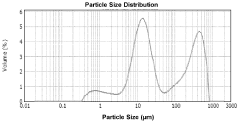
Method for preparing lithium bromide
PatentWO2024038429A1
Innovation
- Contacting high-purity lithium carbonate with gaseous hydrogen bromide at elevated temperatures, typically above 200°C, to directly produce anhydrous lithium bromide, with the reaction conditions optimized by adjusting temperature and particle size distribution of lithium carbonate to achieve high yields and purity exceeding 97%.



Hydraulic system fault prediction method based on PSO-BP neural network algorithm
PatentPendingCN119416007A
Innovation
- The hydraulic system fault prediction method based on the PSO-BP neural network algorithm is adopted, and the weight and threshold of the BP neural network are optimized through the particle swarm optimization algorithm, and a hydraulic system fault prediction model is established to realize real-time fault prediction of the operating status of hydraulic system components.


Economic Impact of LiBr System Failures
The economic implications of Lithium Bromide (LiBr) system failures extend far beyond the immediate repair costs, creating ripple effects throughout organizational operations and financial performance. When absorption chillers utilizing LiBr solutions experience unexpected failures, organizations face substantial direct costs including emergency repair services, replacement parts, and specialized technician labor—often at premium rates due to urgency.
Production facilities relying on LiBr cooling systems for process temperature control face particularly severe consequences. Manufacturing interruptions can result in product quality issues, batch rejections, and production delays that directly impact revenue streams. In pharmaceutical and food processing industries, these failures may necessitate discarding entire production batches worth millions of dollars due to temperature excursions beyond acceptable limits.
Energy efficiency degradation represents another significant economic burden. As LiBr systems begin to deteriorate prior to complete failure, they typically consume 15-30% more energy while delivering suboptimal cooling performance. This increased operational expenditure often goes undetected until comprehensive energy audits are conducted, resulting in months or years of unnecessary utility costs.
Building operations dependent on LiBr absorption chillers face tenant satisfaction challenges and potential contractual penalties when cooling capacity is compromised. Commercial property managers report that HVAC system reliability directly influences tenant retention rates, with cooling system failures frequently cited in non-renewal decisions. Studies indicate that a single major cooling outage can reduce tenant satisfaction metrics by up to 25% for the subsequent six-month period.
Maintenance strategy optimization presents a compelling economic case for predictive approaches. Organizations implementing comprehensive LiBr system monitoring and predictive maintenance protocols report average reductions of 42% in unplanned downtime and 37% in emergency repair costs. The return on investment for advanced monitoring systems typically ranges from 3:1 to 5:1 over a three-year period, with payback periods averaging 14-18 months for facilities with cooling capacities exceeding 500 tons.
Insurance considerations further compound the economic equation, as carriers increasingly scrutinize maintenance practices when determining coverage terms and premiums. Facilities demonstrating proactive failure prediction capabilities for critical systems like LiBr chillers can secure premium reductions of 5-12% on equipment breakdown policies, representing significant operational savings for large installations.
Production facilities relying on LiBr cooling systems for process temperature control face particularly severe consequences. Manufacturing interruptions can result in product quality issues, batch rejections, and production delays that directly impact revenue streams. In pharmaceutical and food processing industries, these failures may necessitate discarding entire production batches worth millions of dollars due to temperature excursions beyond acceptable limits.
Energy efficiency degradation represents another significant economic burden. As LiBr systems begin to deteriorate prior to complete failure, they typically consume 15-30% more energy while delivering suboptimal cooling performance. This increased operational expenditure often goes undetected until comprehensive energy audits are conducted, resulting in months or years of unnecessary utility costs.
Building operations dependent on LiBr absorption chillers face tenant satisfaction challenges and potential contractual penalties when cooling capacity is compromised. Commercial property managers report that HVAC system reliability directly influences tenant retention rates, with cooling system failures frequently cited in non-renewal decisions. Studies indicate that a single major cooling outage can reduce tenant satisfaction metrics by up to 25% for the subsequent six-month period.
Maintenance strategy optimization presents a compelling economic case for predictive approaches. Organizations implementing comprehensive LiBr system monitoring and predictive maintenance protocols report average reductions of 42% in unplanned downtime and 37% in emergency repair costs. The return on investment for advanced monitoring systems typically ranges from 3:1 to 5:1 over a three-year period, with payback periods averaging 14-18 months for facilities with cooling capacities exceeding 500 tons.
Insurance considerations further compound the economic equation, as carriers increasingly scrutinize maintenance practices when determining coverage terms and premiums. Facilities demonstrating proactive failure prediction capabilities for critical systems like LiBr chillers can secure premium reductions of 5-12% on equipment breakdown policies, representing significant operational savings for large installations.
Environmental Considerations in LiBr System Management
Environmental management in Lithium Bromide (LiBr) absorption systems represents a critical aspect of operational sustainability and regulatory compliance. These systems, while efficient for cooling applications, pose unique environmental challenges that must be addressed through comprehensive management strategies. The environmental impact of LiBr systems primarily stems from potential leakage of the solution, which can cause soil and water contamination due to its corrosive nature and high alkalinity.
Climate considerations significantly influence LiBr system performance and environmental footprint. In high-humidity environments, these systems require additional energy for operation, increasing their carbon footprint. Conversely, in arid regions, water conservation becomes paramount as these systems can consume substantial amounts of water for cooling towers. Implementing climate-adaptive control algorithms can optimize system efficiency across varying environmental conditions while minimizing resource consumption.
Waste management protocols for LiBr systems must address the proper handling and disposal of spent solution, which contains bromide compounds that can be environmentally harmful if improperly managed. Advanced recycling technologies now enable the recovery and purification of LiBr from decommissioned systems, significantly reducing waste volume and environmental impact. These closed-loop approaches align with circular economy principles and are increasingly becoming industry standard practice.
Regulatory compliance frameworks for LiBr systems vary globally but generally focus on preventing environmental contamination and ensuring worker safety. The Montreal Protocol and subsequent amendments have implications for absorption chillers, particularly regarding the auxiliary systems that may use controlled substances. Organizations must maintain comprehensive environmental monitoring programs to detect potential leaks or emissions, with automated sensors increasingly deployed for real-time detection of LiBr in surrounding environments.
Energy efficiency considerations represent another critical environmental dimension. Modern LiBr system designs incorporate heat recovery mechanisms, variable flow controls, and advanced insulation materials to minimize energy consumption. Predictive maintenance algorithms can identify efficiency degradations before they significantly impact energy usage, thereby reducing the system's overall carbon footprint throughout its operational lifecycle.
Water conservation strategies have become increasingly important in LiBr system management, particularly in water-stressed regions. Technologies such as air-cooled condensers, hybrid cooling systems, and treated wastewater utilization can substantially reduce freshwater consumption. Predictive analytics can optimize water usage based on cooling demand forecasts and ambient conditions, ensuring minimal environmental impact while maintaining system performance.
Climate considerations significantly influence LiBr system performance and environmental footprint. In high-humidity environments, these systems require additional energy for operation, increasing their carbon footprint. Conversely, in arid regions, water conservation becomes paramount as these systems can consume substantial amounts of water for cooling towers. Implementing climate-adaptive control algorithms can optimize system efficiency across varying environmental conditions while minimizing resource consumption.
Waste management protocols for LiBr systems must address the proper handling and disposal of spent solution, which contains bromide compounds that can be environmentally harmful if improperly managed. Advanced recycling technologies now enable the recovery and purification of LiBr from decommissioned systems, significantly reducing waste volume and environmental impact. These closed-loop approaches align with circular economy principles and are increasingly becoming industry standard practice.
Regulatory compliance frameworks for LiBr systems vary globally but generally focus on preventing environmental contamination and ensuring worker safety. The Montreal Protocol and subsequent amendments have implications for absorption chillers, particularly regarding the auxiliary systems that may use controlled substances. Organizations must maintain comprehensive environmental monitoring programs to detect potential leaks or emissions, with automated sensors increasingly deployed for real-time detection of LiBr in surrounding environments.
Energy efficiency considerations represent another critical environmental dimension. Modern LiBr system designs incorporate heat recovery mechanisms, variable flow controls, and advanced insulation materials to minimize energy consumption. Predictive maintenance algorithms can identify efficiency degradations before they significantly impact energy usage, thereby reducing the system's overall carbon footprint throughout its operational lifecycle.
Water conservation strategies have become increasingly important in LiBr system management, particularly in water-stressed regions. Technologies such as air-cooled condensers, hybrid cooling systems, and treated wastewater utilization can substantially reduce freshwater consumption. Predictive analytics can optimize water usage based on cooling demand forecasts and ambient conditions, ensuring minimal environmental impact while maintaining system performance.
Unlock deeper insights with PatSnap Eureka Quick Research — get a full tech report to explore trends and direct your research. Try now!
Generate Your Research Report Instantly with AI Agent
Supercharge your innovation with PatSnap Eureka AI Agent Platform!