How to Simulate Multi Point Constraint in Ansys
MAR 13, 20269 MIN READ
Generate Your Research Report Instantly with AI Agent
Patsnap Eureka helps you evaluate technical feasibility & market potential.
Multi Point Constraint Simulation Background and Objectives
Multi Point Constraint (MPC) simulation represents a critical computational methodology in finite element analysis, enabling engineers to establish complex kinematic relationships between multiple nodes or degrees of freedom within structural systems. This technology has evolved from fundamental constraint theory in classical mechanics to become an indispensable tool for modeling sophisticated engineering assemblies, joints, and contact interfaces in modern CAE environments.
The historical development of MPC simulation traces back to the early days of finite element method implementation in the 1960s, when researchers recognized the need to couple disparate mesh regions and enforce specific displacement relationships. Over the subsequent decades, the methodology has undergone significant refinement, transitioning from simple rigid body connections to advanced formulations capable of handling complex multi-physics interactions and nonlinear behaviors.
Contemporary MPC simulation technology addresses the fundamental challenge of connecting non-conforming meshes, modeling mechanical joints, and implementing specialized boundary conditions that cannot be adequately represented through conventional nodal constraints. The evolution has been driven by increasing demands for accurate representation of bolted connections, welded joints, bearing interfaces, and other critical structural details in aerospace, automotive, and civil engineering applications.
The primary technical objective of MPC simulation in Ansys environments focuses on achieving robust and computationally efficient constraint enforcement while maintaining solution accuracy and numerical stability. This involves developing methodologies that can seamlessly integrate with existing solver architectures, minimize computational overhead, and provide reliable convergence characteristics across diverse loading scenarios and material behaviors.
Current technological trends emphasize the integration of MPC capabilities with advanced meshing algorithms, automated contact detection systems, and multi-scale modeling frameworks. The objective extends beyond simple constraint implementation to encompass intelligent constraint generation, adaptive refinement strategies, and seamless integration with optimization and uncertainty quantification workflows.
The strategic importance of MPC simulation technology lies in its ability to bridge the gap between idealized analytical models and realistic engineering systems, enabling more accurate prediction of structural behavior while maintaining computational tractability for large-scale industrial applications.
The historical development of MPC simulation traces back to the early days of finite element method implementation in the 1960s, when researchers recognized the need to couple disparate mesh regions and enforce specific displacement relationships. Over the subsequent decades, the methodology has undergone significant refinement, transitioning from simple rigid body connections to advanced formulations capable of handling complex multi-physics interactions and nonlinear behaviors.
Contemporary MPC simulation technology addresses the fundamental challenge of connecting non-conforming meshes, modeling mechanical joints, and implementing specialized boundary conditions that cannot be adequately represented through conventional nodal constraints. The evolution has been driven by increasing demands for accurate representation of bolted connections, welded joints, bearing interfaces, and other critical structural details in aerospace, automotive, and civil engineering applications.
The primary technical objective of MPC simulation in Ansys environments focuses on achieving robust and computationally efficient constraint enforcement while maintaining solution accuracy and numerical stability. This involves developing methodologies that can seamlessly integrate with existing solver architectures, minimize computational overhead, and provide reliable convergence characteristics across diverse loading scenarios and material behaviors.
Current technological trends emphasize the integration of MPC capabilities with advanced meshing algorithms, automated contact detection systems, and multi-scale modeling frameworks. The objective extends beyond simple constraint implementation to encompass intelligent constraint generation, adaptive refinement strategies, and seamless integration with optimization and uncertainty quantification workflows.
The strategic importance of MPC simulation technology lies in its ability to bridge the gap between idealized analytical models and realistic engineering systems, enabling more accurate prediction of structural behavior while maintaining computational tractability for large-scale industrial applications.
Market Demand for Advanced FEA Constraint Solutions
The finite element analysis (FEA) software market has experienced substantial growth driven by increasing complexity in engineering simulations and the need for more sophisticated constraint modeling capabilities. Multi-point constraints (MPCs) represent a critical functionality within this ecosystem, enabling engineers to define complex relationships between multiple nodes or degrees of freedom in structural analysis. The demand for advanced MPC solutions stems from industries requiring high-precision simulations where traditional single-point constraints prove insufficient.
Aerospace and automotive sectors constitute primary drivers for advanced FEA constraint solutions, particularly for applications involving complex assemblies, contact interfaces, and multi-body dynamics. These industries require sophisticated constraint modeling to accurately represent bolted joints, welded connections, and flexible coupling mechanisms. The growing emphasis on lightweight design optimization and material efficiency has intensified the need for precise constraint simulation capabilities that can capture real-world boundary conditions.
Manufacturing industries increasingly demand advanced constraint solutions for process simulation, including metal forming, additive manufacturing, and composite material processing. These applications require specialized constraint formulations to model tool-workpiece interactions, thermal expansion effects, and progressive material deformation. The rise of digital twin technologies has further amplified market demand for constraint solutions that can accurately replicate physical system behaviors in virtual environments.
The renewable energy sector presents emerging opportunities for advanced FEA constraint solutions, particularly in wind turbine blade analysis, solar panel mounting systems, and energy storage device simulations. These applications require sophisticated constraint modeling to capture dynamic loading conditions, fatigue behavior, and multi-physics interactions. The transition toward sustainable energy technologies has created new market segments demanding specialized constraint simulation capabilities.
Academic and research institutions represent a significant market segment driving demand for advanced constraint solutions, particularly for fundamental research in computational mechanics and method development. Educational licensing models and research collaborations have expanded market reach while fostering innovation in constraint formulation techniques. The integration of machine learning and artificial intelligence into FEA workflows has created additional demand for adaptive constraint solutions that can automatically optimize simulation parameters based on analysis requirements.
Aerospace and automotive sectors constitute primary drivers for advanced FEA constraint solutions, particularly for applications involving complex assemblies, contact interfaces, and multi-body dynamics. These industries require sophisticated constraint modeling to accurately represent bolted joints, welded connections, and flexible coupling mechanisms. The growing emphasis on lightweight design optimization and material efficiency has intensified the need for precise constraint simulation capabilities that can capture real-world boundary conditions.
Manufacturing industries increasingly demand advanced constraint solutions for process simulation, including metal forming, additive manufacturing, and composite material processing. These applications require specialized constraint formulations to model tool-workpiece interactions, thermal expansion effects, and progressive material deformation. The rise of digital twin technologies has further amplified market demand for constraint solutions that can accurately replicate physical system behaviors in virtual environments.
The renewable energy sector presents emerging opportunities for advanced FEA constraint solutions, particularly in wind turbine blade analysis, solar panel mounting systems, and energy storage device simulations. These applications require sophisticated constraint modeling to capture dynamic loading conditions, fatigue behavior, and multi-physics interactions. The transition toward sustainable energy technologies has created new market segments demanding specialized constraint simulation capabilities.
Academic and research institutions represent a significant market segment driving demand for advanced constraint solutions, particularly for fundamental research in computational mechanics and method development. Educational licensing models and research collaborations have expanded market reach while fostering innovation in constraint formulation techniques. The integration of machine learning and artificial intelligence into FEA workflows has created additional demand for adaptive constraint solutions that can automatically optimize simulation parameters based on analysis requirements.
Current State and Challenges of MPC Implementation in Ansys
Multi-Point Constraint (MPC) implementation in Ansys represents a sophisticated approach to modeling complex mechanical connections and interactions between non-coincident nodes or surfaces. Currently, Ansys offers several pathways for MPC implementation, primarily through the MPC184 element and various constraint equations within its finite element framework. The technology enables engineers to establish kinematic relationships between degrees of freedom at different locations, facilitating the simulation of rigid connections, flexible joints, and complex coupling behaviors.
The present state of MPC technology in Ansys demonstrates considerable maturity in handling linear constraint relationships. The software successfully manages common scenarios such as rigid body connections, beam-to-solid interfaces, and multi-physics coupling applications. Advanced users can leverage APDL scripting capabilities to create custom constraint equations, while the Workbench environment provides streamlined interfaces for standard MPC applications. Recent developments have enhanced the integration of MPC functionality with contact algorithms and nonlinear analysis capabilities.
Despite these advances, significant technical challenges persist in MPC implementation. Computational efficiency remains a primary concern, particularly when dealing with large-scale models containing numerous constraint equations. The assembly and solution of constrained systems often require specialized numerical techniques, leading to increased memory requirements and extended solution times. Matrix conditioning issues frequently arise when constraint equations are poorly formulated or when redundant constraints are inadvertently introduced.
Convergence difficulties represent another substantial challenge, especially in nonlinear analyses where MPC equations interact with material nonlinearities, large deformations, or contact conditions. The iterative solution process can become unstable when constraint forces exhibit rapid variations or when the constraint definitions conflict with physical boundary conditions. These issues are particularly pronounced in dynamic analyses where constraint enforcement must maintain stability across multiple time steps.
User accessibility and implementation complexity constitute additional barriers to widespread MPC adoption. The current workflow often requires deep understanding of finite element theory and constraint mechanics, limiting its application among general engineering users. Documentation and educational resources remain fragmented, making it challenging for practitioners to develop proficiency in advanced MPC techniques. Furthermore, debugging constraint-related issues typically demands extensive expertise in numerical methods and finite element formulations.
The geographical distribution of MPC expertise shows concentration in regions with strong aerospace, automotive, and advanced manufacturing industries, where complex multi-body simulations are commonplace. This uneven distribution creates knowledge gaps that hinder broader technology adoption and development of best practices across different engineering disciplines.
The present state of MPC technology in Ansys demonstrates considerable maturity in handling linear constraint relationships. The software successfully manages common scenarios such as rigid body connections, beam-to-solid interfaces, and multi-physics coupling applications. Advanced users can leverage APDL scripting capabilities to create custom constraint equations, while the Workbench environment provides streamlined interfaces for standard MPC applications. Recent developments have enhanced the integration of MPC functionality with contact algorithms and nonlinear analysis capabilities.
Despite these advances, significant technical challenges persist in MPC implementation. Computational efficiency remains a primary concern, particularly when dealing with large-scale models containing numerous constraint equations. The assembly and solution of constrained systems often require specialized numerical techniques, leading to increased memory requirements and extended solution times. Matrix conditioning issues frequently arise when constraint equations are poorly formulated or when redundant constraints are inadvertently introduced.
Convergence difficulties represent another substantial challenge, especially in nonlinear analyses where MPC equations interact with material nonlinearities, large deformations, or contact conditions. The iterative solution process can become unstable when constraint forces exhibit rapid variations or when the constraint definitions conflict with physical boundary conditions. These issues are particularly pronounced in dynamic analyses where constraint enforcement must maintain stability across multiple time steps.
User accessibility and implementation complexity constitute additional barriers to widespread MPC adoption. The current workflow often requires deep understanding of finite element theory and constraint mechanics, limiting its application among general engineering users. Documentation and educational resources remain fragmented, making it challenging for practitioners to develop proficiency in advanced MPC techniques. Furthermore, debugging constraint-related issues typically demands extensive expertise in numerical methods and finite element formulations.
The geographical distribution of MPC expertise shows concentration in regions with strong aerospace, automotive, and advanced manufacturing industries, where complex multi-body simulations are commonplace. This uneven distribution creates knowledge gaps that hinder broader technology adoption and development of best practices across different engineering disciplines.
Existing MPC Solutions and Implementation Methods in Ansys
01 Multi-point constraint methods in finite element analysis
Multi-point constraint (MPC) techniques are widely used in finite element analysis to establish kinematic relationships between multiple nodes or degrees of freedom. These methods enable the coupling of different mesh regions, connection of dissimilar elements, and enforcement of specific boundary conditions. The constraints can be linear or nonlinear and are typically implemented through Lagrange multipliers or penalty methods to ensure compatibility between connected components in structural simulations.- Multi-point constraint methods in finite element analysis: Multi-point constraint (MPC) techniques are widely used in finite element analysis to establish kinematic relationships between multiple nodes or degrees of freedom. These methods enable the coupling of different mesh regions, connection of dissimilar elements, and enforcement of specific boundary conditions. The constraints can be linear or nonlinear and are typically implemented through Lagrange multipliers or penalty methods to ensure compatibility and continuity in structural simulations.
- Application of multi-point constraints in mesh connection and assembly: Multi-point constraints are employed to connect different mesh regions in complex assemblies, particularly when dealing with non-matching meshes or interfaces between components. This approach facilitates the modeling of bolted joints, welded connections, and contact interfaces by establishing mathematical relationships that tie the motion of slave nodes to master nodes. The technique improves computational efficiency while maintaining accuracy in representing mechanical interactions between parts.
- Multi-point constraint optimization in structural design: In structural optimization problems, multi-point constraints are utilized to satisfy multiple design requirements simultaneously across different load cases or operating conditions. These constraints ensure that the optimized structure meets performance criteria at various critical points, such as stress limits, displacement bounds, or frequency requirements. The optimization algorithms incorporate these constraints to achieve robust designs that perform well under diverse conditions.
- Implementation of multi-point constraints in dynamic analysis: Multi-point constraints play a crucial role in dynamic analysis by coupling the motion of multiple points in time-dependent simulations. These constraints are essential for modeling rigid body connections, flexible joints, and kinematic pairs in multibody dynamics. The implementation ensures proper energy conservation and numerical stability while accurately representing the physical behavior of interconnected components under dynamic loading conditions.
- Multi-point constraint formulations for contact and interface problems: Specialized multi-point constraint formulations are developed for handling contact mechanics and interface problems in computational simulations. These formulations address challenges such as friction, separation, and sliding between surfaces by establishing appropriate constraint equations. The methods enable accurate prediction of contact forces, stress distributions, and relative displacements at interfaces while maintaining computational efficiency in large-scale problems.
02 Application of multi-point constraints in mesh generation and optimization
Multi-point constraint techniques are employed in mesh generation and optimization processes to maintain geometric consistency and improve computational efficiency. These methods facilitate the connection of refined and coarse mesh regions, enable adaptive mesh refinement, and ensure proper load transfer across mesh boundaries. The constraints help preserve the accuracy of numerical solutions while reducing computational costs in complex geometric models.Expand Specific Solutions03 Multi-point constraint implementation in contact and interface problems
In contact mechanics and interface simulations, multi-point constraints are utilized to model interactions between different bodies or components. These constraints handle contact conditions, friction effects, and interface compatibility requirements. The implementation allows for accurate representation of mechanical behavior at interfaces, including sliding, separation, and bonding conditions in various engineering applications such as assembly analysis and impact simulations.Expand Specific Solutions04 Multi-point constraints for modeling rigid body connections and joints
Multi-point constraint formulations are applied to simulate rigid body connections, hinges, and various types of mechanical joints in structural systems. These techniques enforce kinematic relationships that represent physical connections while allowing specified degrees of freedom. The methods are particularly useful in modeling mechanisms, linkages, and assemblies where relative motion between components must be accurately captured while maintaining specific geometric or kinematic constraints.Expand Specific Solutions05 Advanced multi-point constraint algorithms for parallel computing and large-scale simulations
Advanced algorithms for multi-point constraints have been developed to enhance performance in parallel computing environments and large-scale finite element simulations. These methods incorporate domain decomposition techniques, efficient matrix assembly procedures, and scalable solution strategies. The implementations focus on reducing computational overhead, improving convergence rates, and enabling the analysis of complex systems with millions of degrees of freedom across distributed computing platforms.Expand Specific Solutions
Key Players in FEA Software and Constraint Simulation Industry
The competitive landscape for simulating multi-point constraints in Ansys reflects a mature technology sector with significant academic and industrial participation. The market demonstrates strong growth potential, driven by increasing demand for advanced simulation capabilities across automotive, aerospace, and energy sectors. Leading academic institutions including Tsinghua University, Harbin Institute of Technology, and Zhejiang University are advancing fundamental research, while industrial players like SAP SE, Schlumberger, Toyota Motor Corp., and Robert Bosch GmbH are implementing practical applications. The technology has reached commercial maturity, evidenced by widespread adoption across diverse industries from State Grid Corp. of China's power systems to Mitsubishi Heavy Industries' manufacturing applications, indicating a well-established ecosystem with continued innovation opportunities.
Harbin Institute of Technology
Technical Solution: Harbin Institute of Technology has developed specialized techniques for Multi Point Constraint simulation in Ansys focusing on aerospace and mechanical engineering applications. Their approach utilizes master-slave node relationships combined with penalty method formulations to enforce constraint conditions. The institute's methodology incorporates adaptive constraint scaling techniques to improve convergence behavior and numerical accuracy. Their research includes development of custom APDL scripts and user-defined elements that can handle complex constraint scenarios including thermal-structural coupling and dynamic analysis with time-varying constraints. The solution emphasizes robust handling of over-constrained systems and automatic constraint validation procedures.
Strengths: Specialized expertise in aerospace applications and robust constraint validation. Weaknesses: Limited to specific engineering domains and may require custom scripting knowledge.
Dalian University of Technology
Technical Solution: Dalian University of Technology has established comprehensive methodologies for Multi Point Constraint implementation in Ansys through advanced finite element formulations. Their technical approach focuses on developing efficient constraint matrix assembly procedures and solution algorithms that minimize computational overhead while maintaining accuracy. The university's research includes development of specialized constraint elements that can handle both linear and nonlinear constraint relationships. Their solution incorporates automatic constraint detection and validation systems that can identify potential constraint conflicts and provide recommendations for model optimization. The methodology extends to multi-physics simulations where constraints must be maintained across different physical domains.
Strengths: Efficient computational algorithms and multi-physics constraint handling capabilities. Weaknesses: Complex implementation requirements and potential learning curve for users.
Core Innovations in Multi Point Constraint Algorithms
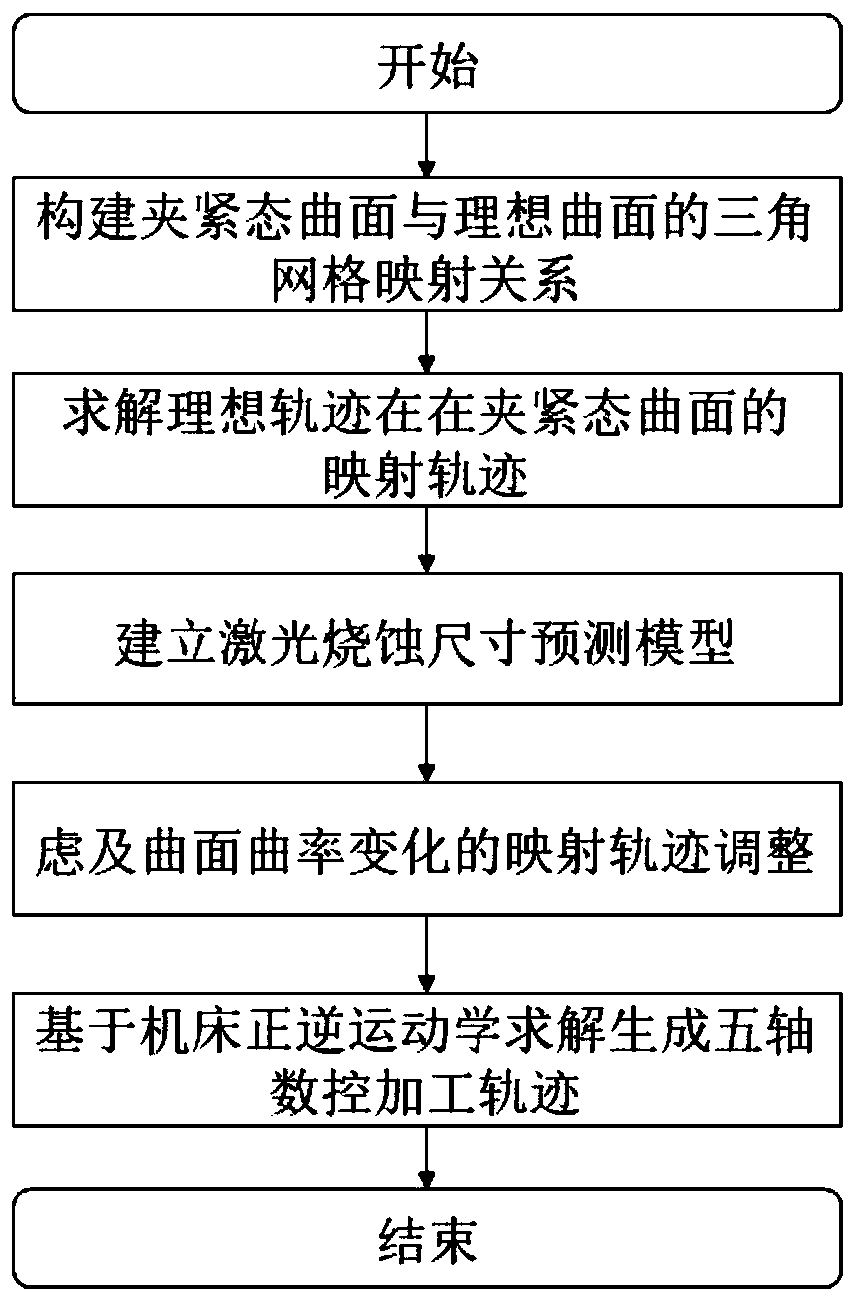
Thin-wall curved surface surface pattern laser processing track solving method
PatentActiveCN111581874A
Innovation
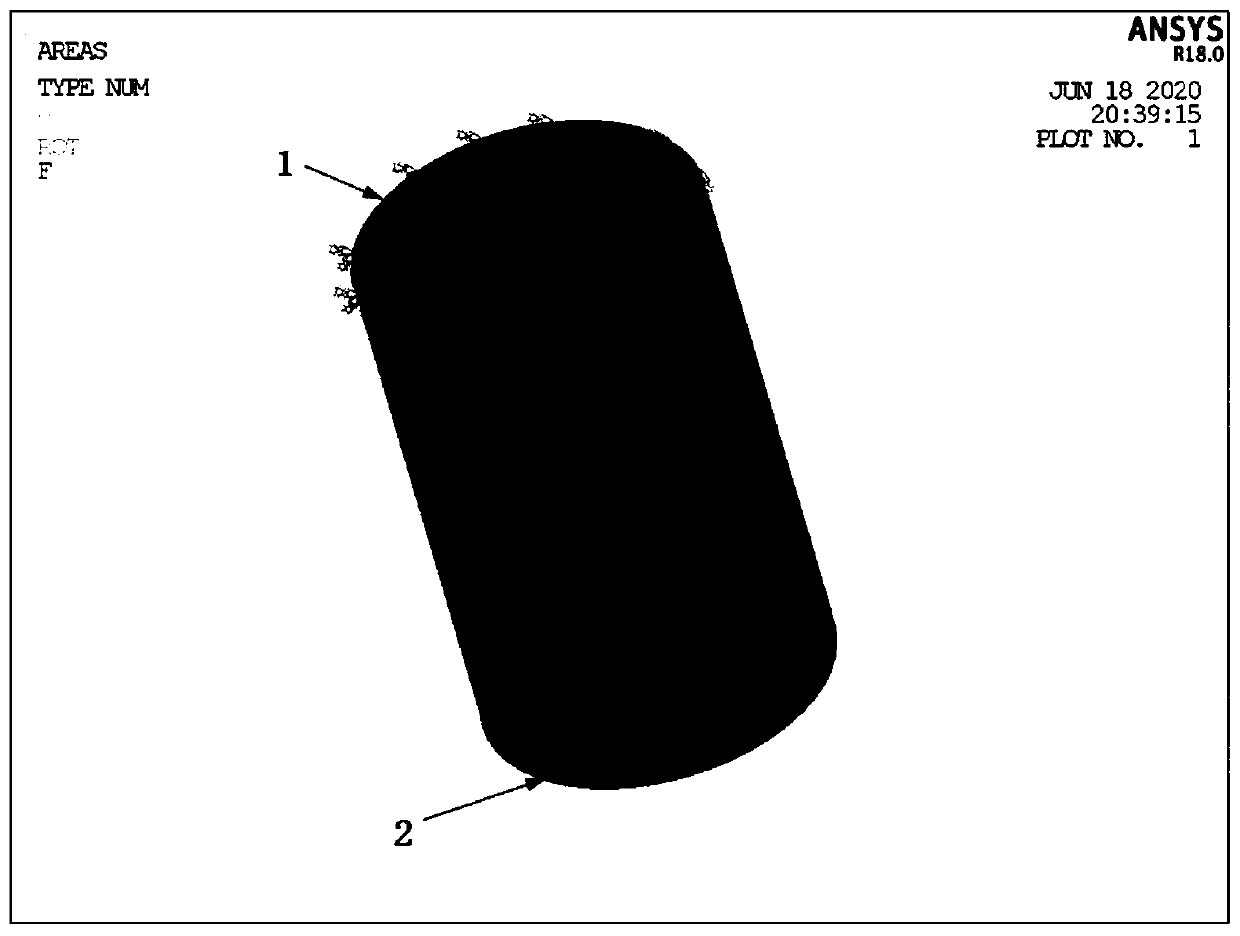
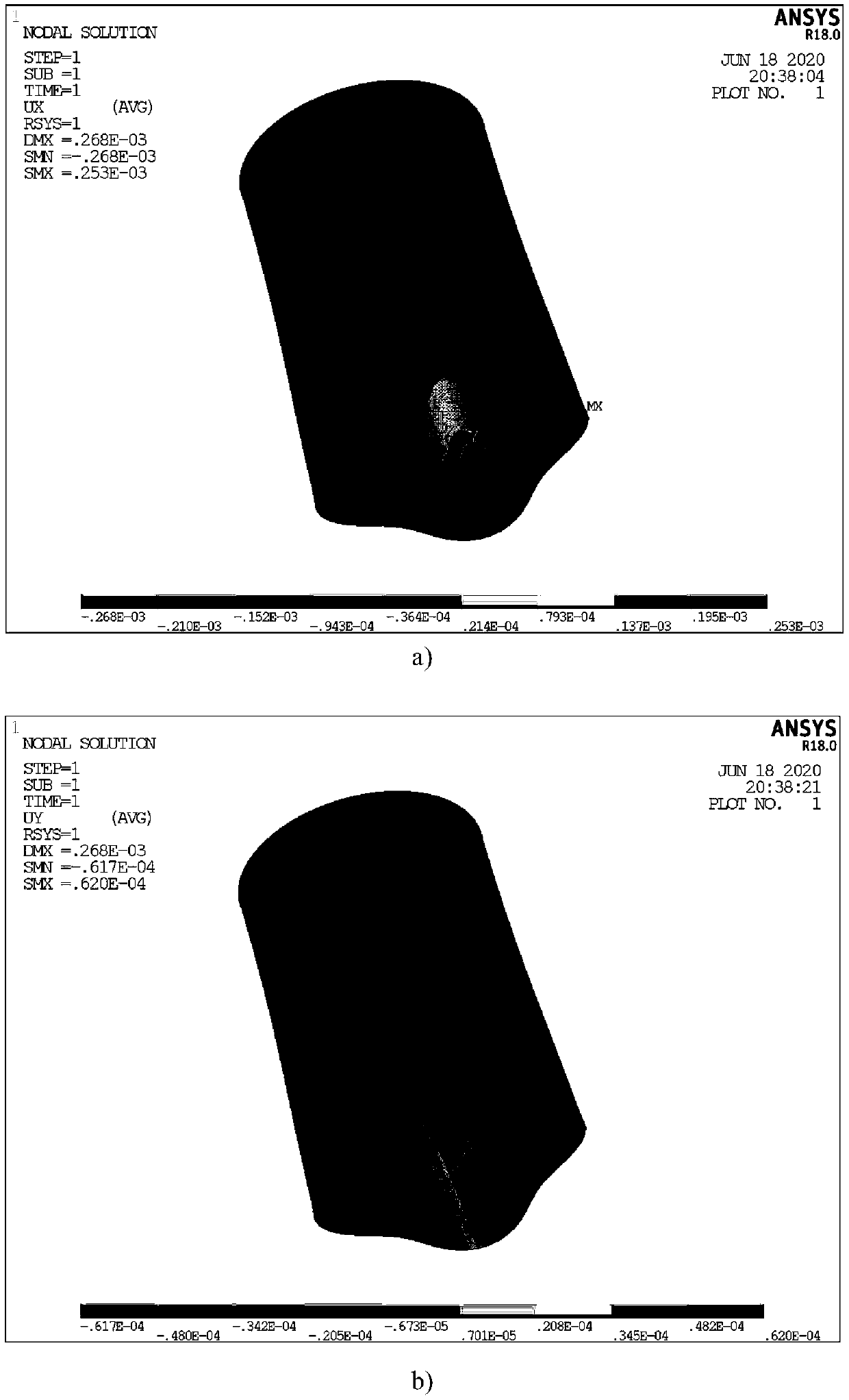
- By establishing the mapping relationship between the clamped surface and the ideal surface, combined with the laser ablation size prediction model, the processing trajectory is adjusted to adapt to the change in curvature, and a five-axis CNC processing trajectory that meets the accuracy requirements is generated.

Method for evaluating influence of vibration on MTF of multi-aperture optical system
PatentActiveCN112507593A
Innovation
- Use optical design software to establish a multi-aperture optical system model, conduct vibration simulation analysis through finite element software, and combine it with experimental verification. Use Zernike polynomials to fit the lens displacement data, update the MTF of the optical system, calculate the MTF of the entire system through the superposition method, and compare vibrations. The difference in MTF curves before and after was used to evaluate the impact.


Software Licensing and Computational Resource Requirements
The implementation of multi-point constraints in ANSYS requires careful consideration of software licensing and computational resource requirements, as these factors significantly impact project feasibility and execution efficiency. Understanding these requirements is essential for organizations planning to deploy MPC-based simulation workflows.
ANSYS licensing for multi-point constraint simulations primarily depends on the specific solver modules required. The ANSYS Mechanical solver, which handles most MPC implementations, requires either ANSYS Mechanical Pro or Premium licenses. Advanced MPC applications involving nonlinear contact, large deformation analysis, or coupled physics may necessitate additional solver licenses such as ANSYS Nonlinear or ANSYS Multiphysics. Organizations utilizing distributed computing environments must also consider High Performance Computing (HPC) licenses, which enable parallel processing capabilities essential for large-scale MPC simulations.
Computational resource requirements for MPC simulations vary significantly based on model complexity and constraint configurations. Memory requirements typically range from 8GB for basic MPC models to over 64GB for complex assemblies with thousands of constraint equations. The matrix assembly and solution phases are particularly memory-intensive, as MPC equations increase the bandwidth of the global stiffness matrix.
Processing power demands depend heavily on the number of degrees of freedom and constraint equations. Multi-core processors with at least 8 cores are recommended for moderate-scale simulations, while large industrial applications may require 32 or more cores. The iterative solution process for nonlinear MPC problems can extend computation times significantly, making high-frequency processors advantageous.
Storage requirements encompass both input model files and result databases. Complex MPC simulations can generate result files exceeding several gigabytes, particularly when storing detailed contact and constraint force histories. Solid-state drives are recommended for improved I/O performance during solution phases.
Network infrastructure becomes critical in distributed computing environments where MPC simulations leverage multiple compute nodes. High-bandwidth, low-latency connections ensure efficient communication between parallel processes, preventing bottlenecks that could severely impact solution performance and accuracy.
ANSYS licensing for multi-point constraint simulations primarily depends on the specific solver modules required. The ANSYS Mechanical solver, which handles most MPC implementations, requires either ANSYS Mechanical Pro or Premium licenses. Advanced MPC applications involving nonlinear contact, large deformation analysis, or coupled physics may necessitate additional solver licenses such as ANSYS Nonlinear or ANSYS Multiphysics. Organizations utilizing distributed computing environments must also consider High Performance Computing (HPC) licenses, which enable parallel processing capabilities essential for large-scale MPC simulations.
Computational resource requirements for MPC simulations vary significantly based on model complexity and constraint configurations. Memory requirements typically range from 8GB for basic MPC models to over 64GB for complex assemblies with thousands of constraint equations. The matrix assembly and solution phases are particularly memory-intensive, as MPC equations increase the bandwidth of the global stiffness matrix.
Processing power demands depend heavily on the number of degrees of freedom and constraint equations. Multi-core processors with at least 8 cores are recommended for moderate-scale simulations, while large industrial applications may require 32 or more cores. The iterative solution process for nonlinear MPC problems can extend computation times significantly, making high-frequency processors advantageous.
Storage requirements encompass both input model files and result databases. Complex MPC simulations can generate result files exceeding several gigabytes, particularly when storing detailed contact and constraint force histories. Solid-state drives are recommended for improved I/O performance during solution phases.
Network infrastructure becomes critical in distributed computing environments where MPC simulations leverage multiple compute nodes. High-bandwidth, low-latency connections ensure efficient communication between parallel processes, preventing bottlenecks that could severely impact solution performance and accuracy.
Validation Standards for Multi Point Constraint Simulations
Establishing robust validation standards for Multi Point Constraint (MPC) simulations in Ansys requires a comprehensive framework that ensures accuracy, reliability, and consistency across different analysis scenarios. These standards serve as critical benchmarks for verifying that MPC implementations correctly represent physical constraints and produce trustworthy results in finite element analysis.
The primary validation approach involves comparison with analytical solutions for simplified geometric configurations where closed-form solutions exist. Beam-to-beam connections, rigid body constraints, and symmetry conditions provide excellent test cases for initial validation. These fundamental scenarios allow engineers to verify that MPC formulations correctly transfer loads and maintain kinematic relationships between connected nodes.
Experimental validation represents the gold standard for MPC verification, requiring correlation between simulation results and physical test data. This process involves designing specific test fixtures that isolate MPC behavior, such as bolted joint assemblies or welded connections under controlled loading conditions. Material properties, boundary conditions, and loading scenarios must be precisely replicated in the simulation environment to achieve meaningful correlation.
Convergence studies form another essential component of validation standards, examining mesh sensitivity and solution stability as element sizes decrease. MPC implementations should demonstrate consistent behavior across different mesh densities while maintaining computational efficiency. These studies help establish optimal mesh requirements and identify potential numerical instabilities in constraint formulations.
Cross-verification with alternative simulation tools provides additional confidence in MPC implementations. Comparing Ansys results with other established finite element codes using identical problem definitions helps identify potential software-specific issues and validates the underlying mathematical formulations. This approach is particularly valuable for complex constraint scenarios where analytical solutions are unavailable.
Documentation standards require comprehensive reporting of validation test cases, including problem setup, material properties, boundary conditions, and acceptance criteria. Each validation case should specify allowable tolerances for displacement, stress, and reaction force comparisons. These documented standards enable consistent application across different projects and facilitate knowledge transfer within engineering teams.
Regular validation updates ensure that MPC standards remain current with software developments and emerging application requirements. As Ansys introduces new constraint formulations or solver improvements, validation test suites must be updated to verify continued accuracy and identify any behavioral changes that might affect existing simulation workflows.
The primary validation approach involves comparison with analytical solutions for simplified geometric configurations where closed-form solutions exist. Beam-to-beam connections, rigid body constraints, and symmetry conditions provide excellent test cases for initial validation. These fundamental scenarios allow engineers to verify that MPC formulations correctly transfer loads and maintain kinematic relationships between connected nodes.
Experimental validation represents the gold standard for MPC verification, requiring correlation between simulation results and physical test data. This process involves designing specific test fixtures that isolate MPC behavior, such as bolted joint assemblies or welded connections under controlled loading conditions. Material properties, boundary conditions, and loading scenarios must be precisely replicated in the simulation environment to achieve meaningful correlation.
Convergence studies form another essential component of validation standards, examining mesh sensitivity and solution stability as element sizes decrease. MPC implementations should demonstrate consistent behavior across different mesh densities while maintaining computational efficiency. These studies help establish optimal mesh requirements and identify potential numerical instabilities in constraint formulations.
Cross-verification with alternative simulation tools provides additional confidence in MPC implementations. Comparing Ansys results with other established finite element codes using identical problem definitions helps identify potential software-specific issues and validates the underlying mathematical formulations. This approach is particularly valuable for complex constraint scenarios where analytical solutions are unavailable.
Documentation standards require comprehensive reporting of validation test cases, including problem setup, material properties, boundary conditions, and acceptance criteria. Each validation case should specify allowable tolerances for displacement, stress, and reaction force comparisons. These documented standards enable consistent application across different projects and facilitate knowledge transfer within engineering teams.
Regular validation updates ensure that MPC standards remain current with software developments and emerging application requirements. As Ansys introduces new constraint formulations or solver improvements, validation test suites must be updated to verify continued accuracy and identify any behavioral changes that might affect existing simulation workflows.
Unlock deeper insights with Patsnap Eureka Quick Research — get a full tech report to explore trends and direct your research. Try now!
Generate Your Research Report Instantly with AI Agent
Supercharge your innovation with Patsnap Eureka AI Agent Platform!