

Hydrochloric Acid: Key Applications in Emerging Tech
JUL 2, 20259 MIN READ
Generate Your Research Report Instantly with AI Agent
PatSnap Eureka helps you evaluate technical feasibility & market potential.
HCl Tech Background
Hydrochloric acid (HCl) has been a cornerstone in industrial chemistry for over a century, with its origins tracing back to the early days of the chemical revolution. Initially discovered in the 16th century by alchemists, it wasn't until the industrial revolution that HCl production was scaled up for widespread use. The Leblanc process, developed in the late 18th century, marked the first large-scale production method for HCl, albeit as a byproduct of soda ash manufacturing.
The evolution of HCl technology has been closely tied to advancements in chemical engineering and industrial processes. The Solvay process, introduced in the 1860s, revolutionized alkali production and indirectly impacted HCl manufacturing. However, it was the chlor-alkali process, developed in the early 20th century, that became the primary source of HCl, producing it as a byproduct of chlorine and sodium hydroxide production through electrolysis.
In recent decades, the focus has shifted towards more efficient and environmentally friendly production methods. The oxychlorination process, which converts hydrogen chloride gas back into chlorine, has gained prominence, allowing for a more circular approach to chlorine chemistry. Additionally, membrane cell technology in chlor-alkali production has improved the purity and efficiency of HCl generation.
The applications of HCl have expanded significantly beyond traditional uses in metal processing and chemical synthesis. In the semiconductor industry, high-purity HCl plays a crucial role in the etching and cleaning of silicon wafers. The pharmaceutical sector relies on HCl for drug synthesis and pH adjustment. In the field of water treatment, HCl is used for pH control and regeneration of ion exchange resins.
Emerging technologies are opening new frontiers for HCl applications. In the realm of advanced materials, HCl is being explored for its potential in synthesizing graphene and other 2D materials. The growing hydrogen economy has also sparked interest in HCl's role in hydrogen production and storage systems. Furthermore, in the field of renewable energy, HCl is being investigated for its use in flow batteries and other energy storage solutions.
As we look towards the future, the technological goals for HCl are multifaceted. There is a push for greener production methods, aiming to minimize environmental impact and improve energy efficiency. Research is ongoing to develop novel catalysts and processes that can utilize HCl more effectively in chemical transformations. Additionally, there is a focus on enhancing the purity of HCl for ultra-high-tech applications, particularly in the electronics and pharmaceutical industries.
The evolution of HCl technology has been closely tied to advancements in chemical engineering and industrial processes. The Solvay process, introduced in the 1860s, revolutionized alkali production and indirectly impacted HCl manufacturing. However, it was the chlor-alkali process, developed in the early 20th century, that became the primary source of HCl, producing it as a byproduct of chlorine and sodium hydroxide production through electrolysis.
In recent decades, the focus has shifted towards more efficient and environmentally friendly production methods. The oxychlorination process, which converts hydrogen chloride gas back into chlorine, has gained prominence, allowing for a more circular approach to chlorine chemistry. Additionally, membrane cell technology in chlor-alkali production has improved the purity and efficiency of HCl generation.
The applications of HCl have expanded significantly beyond traditional uses in metal processing and chemical synthesis. In the semiconductor industry, high-purity HCl plays a crucial role in the etching and cleaning of silicon wafers. The pharmaceutical sector relies on HCl for drug synthesis and pH adjustment. In the field of water treatment, HCl is used for pH control and regeneration of ion exchange resins.
Emerging technologies are opening new frontiers for HCl applications. In the realm of advanced materials, HCl is being explored for its potential in synthesizing graphene and other 2D materials. The growing hydrogen economy has also sparked interest in HCl's role in hydrogen production and storage systems. Furthermore, in the field of renewable energy, HCl is being investigated for its use in flow batteries and other energy storage solutions.
As we look towards the future, the technological goals for HCl are multifaceted. There is a push for greener production methods, aiming to minimize environmental impact and improve energy efficiency. Research is ongoing to develop novel catalysts and processes that can utilize HCl more effectively in chemical transformations. Additionally, there is a focus on enhancing the purity of HCl for ultra-high-tech applications, particularly in the electronics and pharmaceutical industries.
Market Demand Analysis
The market demand for hydrochloric acid in emerging technologies has been experiencing significant growth, driven by its versatile applications across various industries. The semiconductor industry, in particular, has become a major consumer of high-purity hydrochloric acid for cleaning and etching silicon wafers. As the demand for advanced electronic devices continues to surge, the market for hydrochloric acid in this sector is expected to expand further.
In the renewable energy sector, hydrochloric acid plays a crucial role in the production of solar panels and wind turbines. The increasing global focus on sustainable energy solutions has led to a rise in demand for these technologies, consequently boosting the market for hydrochloric acid. Additionally, the growing adoption of electric vehicles has created a new avenue for hydrochloric acid usage in battery manufacturing processes.
The pharmaceutical industry represents another significant market for hydrochloric acid, particularly in the synthesis of various drugs and active pharmaceutical ingredients. With the ongoing development of novel therapies and the expansion of healthcare services worldwide, the demand for hydrochloric acid in this sector is projected to maintain steady growth.
Emerging applications in nanotechnology and advanced materials have also contributed to the increasing market demand for hydrochloric acid. Its use in the production of carbon nanotubes, graphene, and other nanomaterials has opened up new opportunities in fields such as aerospace, electronics, and energy storage.
The water treatment industry continues to be a substantial consumer of hydrochloric acid, with its applications in pH adjustment, scale removal, and disinfection. As water scarcity becomes a global concern and regulations on water quality tighten, the demand for hydrochloric acid in this sector is expected to rise.
In the oil and gas industry, hydrochloric acid is widely used for well stimulation and scale removal in hydraulic fracturing operations. Despite fluctuations in oil prices, the long-term outlook for hydrochloric acid demand in this sector remains positive, driven by the ongoing exploration and production activities in unconventional oil and gas reserves.
The global market for hydrochloric acid in emerging technologies is characterized by regional variations, with Asia-Pacific leading in terms of consumption due to its robust manufacturing sector and rapid industrialization. North America and Europe follow, with strong demand from high-tech industries and environmental applications.
In the renewable energy sector, hydrochloric acid plays a crucial role in the production of solar panels and wind turbines. The increasing global focus on sustainable energy solutions has led to a rise in demand for these technologies, consequently boosting the market for hydrochloric acid. Additionally, the growing adoption of electric vehicles has created a new avenue for hydrochloric acid usage in battery manufacturing processes.
The pharmaceutical industry represents another significant market for hydrochloric acid, particularly in the synthesis of various drugs and active pharmaceutical ingredients. With the ongoing development of novel therapies and the expansion of healthcare services worldwide, the demand for hydrochloric acid in this sector is projected to maintain steady growth.
Emerging applications in nanotechnology and advanced materials have also contributed to the increasing market demand for hydrochloric acid. Its use in the production of carbon nanotubes, graphene, and other nanomaterials has opened up new opportunities in fields such as aerospace, electronics, and energy storage.
The water treatment industry continues to be a substantial consumer of hydrochloric acid, with its applications in pH adjustment, scale removal, and disinfection. As water scarcity becomes a global concern and regulations on water quality tighten, the demand for hydrochloric acid in this sector is expected to rise.
In the oil and gas industry, hydrochloric acid is widely used for well stimulation and scale removal in hydraulic fracturing operations. Despite fluctuations in oil prices, the long-term outlook for hydrochloric acid demand in this sector remains positive, driven by the ongoing exploration and production activities in unconventional oil and gas reserves.
The global market for hydrochloric acid in emerging technologies is characterized by regional variations, with Asia-Pacific leading in terms of consumption due to its robust manufacturing sector and rapid industrialization. North America and Europe follow, with strong demand from high-tech industries and environmental applications.
HCl Tech Challenges
The development and application of hydrochloric acid (HCl) in emerging technologies face several significant challenges. One of the primary concerns is the corrosive nature of HCl, which poses risks to both equipment and personnel. This necessitates the development of advanced materials and protective measures to ensure safe handling and storage.
Environmental impact is another critical challenge. As industries strive for sustainability, the production and use of HCl must be optimized to minimize ecological footprints. This includes reducing emissions, improving waste management, and developing more environmentally friendly production methods.
The purity of HCl is crucial for many high-tech applications, particularly in the semiconductor industry. Achieving and maintaining ultra-high purity levels presents ongoing technical difficulties. Contaminants at even parts-per-trillion levels can significantly affect product quality, necessitating advanced purification techniques and stringent quality control measures.
Scale-up and cost-effectiveness pose challenges in emerging applications. As new technologies move from laboratory to industrial scale, maintaining consistent quality and efficiency while managing production costs becomes increasingly complex. This is particularly evident in areas such as hydrogen fuel cell technology, where HCl plays a role in membrane production.
The transportation and storage of HCl present logistical challenges due to its hazardous nature. Developing safer, more efficient transportation methods and storage solutions is an ongoing area of research and development.
In the realm of green chemistry, there is a push to find alternatives to HCl in certain applications or to develop processes that use HCl more efficiently. This involves exploring new catalytic processes, recycling methods, and alternative synthesis routes that reduce the overall consumption of HCl.
The integration of HCl in advanced manufacturing processes, such as 3D printing of specialized materials or in the production of next-generation batteries, presents unique challenges. These applications often require precise control of HCl concentration and reactivity, pushing the boundaries of current handling and application technologies.
Regulatory compliance is an evolving challenge, particularly as HCl finds new applications in emerging technologies. Keeping pace with changing environmental and safety regulations across different global markets requires ongoing adaptation of production, handling, and application methods.
Environmental impact is another critical challenge. As industries strive for sustainability, the production and use of HCl must be optimized to minimize ecological footprints. This includes reducing emissions, improving waste management, and developing more environmentally friendly production methods.
The purity of HCl is crucial for many high-tech applications, particularly in the semiconductor industry. Achieving and maintaining ultra-high purity levels presents ongoing technical difficulties. Contaminants at even parts-per-trillion levels can significantly affect product quality, necessitating advanced purification techniques and stringent quality control measures.
Scale-up and cost-effectiveness pose challenges in emerging applications. As new technologies move from laboratory to industrial scale, maintaining consistent quality and efficiency while managing production costs becomes increasingly complex. This is particularly evident in areas such as hydrogen fuel cell technology, where HCl plays a role in membrane production.
The transportation and storage of HCl present logistical challenges due to its hazardous nature. Developing safer, more efficient transportation methods and storage solutions is an ongoing area of research and development.
In the realm of green chemistry, there is a push to find alternatives to HCl in certain applications or to develop processes that use HCl more efficiently. This involves exploring new catalytic processes, recycling methods, and alternative synthesis routes that reduce the overall consumption of HCl.
The integration of HCl in advanced manufacturing processes, such as 3D printing of specialized materials or in the production of next-generation batteries, presents unique challenges. These applications often require precise control of HCl concentration and reactivity, pushing the boundaries of current handling and application technologies.
Regulatory compliance is an evolving challenge, particularly as HCl finds new applications in emerging technologies. Keeping pace with changing environmental and safety regulations across different global markets requires ongoing adaptation of production, handling, and application methods.
Current HCl Solutions
01 Production methods of hydrochloric acid
Various methods are employed to produce hydrochloric acid, including direct synthesis from hydrogen and chlorine, as a byproduct in chlorination processes, and through the reaction of sulfuric acid with sodium chloride. These production methods are optimized for efficiency and purity in industrial settings.- Production and purification of hydrochloric acid: Various methods and systems for producing and purifying hydrochloric acid are described. These include processes for manufacturing high-purity hydrochloric acid, as well as techniques for removing impurities and contaminants from the acid. The methods aim to improve the quality and efficiency of hydrochloric acid production for industrial applications.
- Applications of hydrochloric acid in chemical processes: Hydrochloric acid is widely used in various chemical processes and industrial applications. It serves as a key reagent in reactions, pH adjustment, and as a catalyst in many manufacturing processes. The acid's versatility makes it essential in industries such as petrochemicals, pharmaceuticals, and water treatment.
- Handling and storage of hydrochloric acid: Specialized equipment and methods for handling and storing hydrochloric acid are crucial due to its corrosive nature. This includes the design of storage tanks, transportation containers, and safety measures to prevent leaks and protect workers. Proper handling techniques are essential to maintain the acid's quality and ensure workplace safety.
- Recovery and recycling of hydrochloric acid: Processes for recovering and recycling hydrochloric acid from industrial waste streams are developed to improve sustainability and reduce environmental impact. These methods involve separating the acid from other compounds, purifying it, and reusing it in various applications, thereby minimizing waste and improving resource efficiency.
- Environmental and safety considerations in hydrochloric acid use: The use of hydrochloric acid requires careful consideration of environmental and safety factors. This includes developing methods for neutralizing acid spills, treating acid-containing wastewater, and implementing safety protocols for handling and disposal. Innovations in this area focus on reducing the environmental impact of hydrochloric acid use and enhancing worker safety in industrial settings.
02 Purification and concentration techniques
Hydrochloric acid purification and concentration techniques involve distillation, membrane separation, and adsorption processes. These methods aim to remove impurities and adjust the acid concentration to meet specific industrial requirements.Expand Specific Solutions03 Applications in chemical processing
Hydrochloric acid is widely used in various chemical processes, including metal treatment, pH regulation, and as a reagent in organic synthesis. Its versatility makes it a crucial component in many industrial applications.Expand Specific Solutions04 Safety and handling considerations
Proper safety measures and handling procedures are essential when working with hydrochloric acid due to its corrosive nature. This includes the use of specialized storage containers, personal protective equipment, and neutralization techniques for spills.Expand Specific Solutions05 Environmental impact and waste management
Managing the environmental impact of hydrochloric acid involves proper disposal methods, recycling techniques, and the development of eco-friendly alternatives. Efforts are made to minimize emissions and neutralize waste streams to comply with environmental regulations.Expand Specific Solutions
Key Industry Players
The hydrochloric acid market is in a mature stage, with established applications across various industries. The global market size is substantial, driven by diverse uses in chemical processing, metal treatment, and emerging technologies. Technological maturity is high, with companies like BASF Corp. and Akzo Nobel Chemicals International BV leading in production and innovation. However, there's ongoing research and development, particularly in specialized applications and environmental sustainability. Firms such as Fluid Energy Group Ltd. and Enlighten Innovations, Inc. are focusing on developing eco-friendly alternatives and novel applications in sectors like energy and electronics, indicating potential for market expansion and technological advancements in niche areas.
Fluid Energy Group Ltd.
Technical Solution: Fluid Energy Group has focused on developing environmentally friendly applications of hydrochloric acid in the energy sector. They have created a proprietary blend of hydrochloric acid and organic compounds for use in enhanced oil recovery, significantly improving extraction efficiency while reducing environmental impact[13]. The company has also pioneered the use of hydrochloric acid in geothermal energy production, developing specialized formulations that can dissolve mineral deposits in geothermal wells, increasing energy output and extending well life[14]. Additionally, Fluid Energy Group has innovated in the field of hydraulic fracturing, creating a safer, more biodegradable hydrochloric acid-based fluid system that reduces water consumption and improves well productivity[15].
Strengths: Strong focus on environmentally friendly solutions for the energy sector, innovative formulations for challenging applications. Weaknesses: Heavy reliance on fossil fuel industries may pose challenges in a transition to renewable energy.
Akzo Nobel Chemicals International BV
Technical Solution: Akzo Nobel has focused on developing sustainable applications for hydrochloric acid in emerging technologies. They have created a patented process using hydrochloric acid for the recycling of rare earth elements from electronic waste, addressing the growing need for sustainable sourcing of these critical materials[4]. In the field of water treatment, Akzo Nobel has developed advanced membrane technologies that utilize hydrochloric acid for precise pH control and membrane cleaning in desalination plants, improving efficiency and reducing energy consumption[5]. The company has also innovated in the area of smart materials, using hydrochloric acid in the production of self-healing coatings that can repair minor damage autonomously, extending the lifespan of various products and infrastructure[6].
Strengths: Focus on sustainability and circular economy applications, innovative use in water treatment and smart materials. Weaknesses: May face challenges in scaling up some of the more novel applications to industrial levels.
HCl Innovations
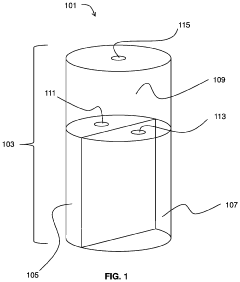
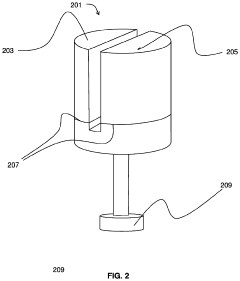
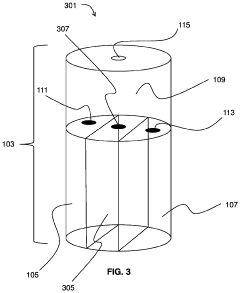
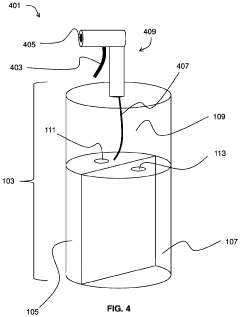
Multi-chamber hypochlorous acid dispenser
PatentActiveUS20230399228A1
Innovation
- A multi-chambered container system that separates and stabilizes the components for producing hypochlorous acid, using one-way valves and buffering agents to maintain a stable pH range, allowing for on-site preparation and long-term storage by controlling pH, ion concentration, and air exposure, thereby preventing degradation.
Synthetic acid compositions and uses thereof
PatentActiveCA2925142A1
Innovation
- A synthetic acid composition comprising urea and hydrogen chloride in a specific molar ratio, combined with metal iodides, alcohols, and phosphonic acids, which reduces corrosion rates, is non-fuming, non-toxic, and biodegradable, offering improved safety and environmental compatibility.
Environmental Impact
The environmental impact of hydrochloric acid (HCl) in emerging technologies is a critical consideration for sustainable development. While HCl plays a crucial role in various industrial processes, its production, use, and disposal can have significant environmental consequences.
HCl production often involves energy-intensive processes, contributing to greenhouse gas emissions. The chlor-alkali process, a primary method for HCl production, requires substantial electrical energy, potentially leading to indirect carbon emissions if the energy source is not renewable. Additionally, the transportation of HCl poses risks of accidental spills, which can cause severe environmental damage to soil and water ecosystems.
In emerging technologies, HCl is extensively used in semiconductor manufacturing and battery production. These industries are experiencing rapid growth, potentially increasing the demand for HCl and its associated environmental footprint. However, advancements in these sectors also present opportunities for more efficient use of HCl and improved waste management practices.
The disposal of HCl-containing waste is a significant environmental concern. Improper handling can lead to soil and water contamination, affecting both terrestrial and aquatic ecosystems. Acidification of water bodies can disrupt aquatic life and alter entire food chains. Moreover, HCl can react with metals in the environment, potentially releasing toxic compounds and heavy metals into ecosystems.
On the positive side, emerging technologies are developing more sustainable approaches to HCl use. Closed-loop systems in semiconductor manufacturing aim to recycle and reuse HCl, reducing waste and environmental impact. Additionally, research into alternative acids and acid-free processes in some applications may decrease reliance on HCl in the future.
The environmental impact of HCl also extends to air quality. While not a direct greenhouse gas, HCl emissions can contribute to the formation of acid rain, impacting forests, soils, and water bodies. Stringent regulations and improved scrubbing technologies in industrial settings have helped mitigate these emissions, but continued vigilance is necessary as HCl use expands in emerging technologies.
As industries adopting HCl in emerging technologies continue to grow, there is an increasing focus on life cycle assessments to comprehensively evaluate the environmental impact from production to disposal. This holistic approach is driving innovations in green chemistry, aiming to develop more environmentally friendly alternatives or processes that minimize HCl use and its associated impacts.
HCl production often involves energy-intensive processes, contributing to greenhouse gas emissions. The chlor-alkali process, a primary method for HCl production, requires substantial electrical energy, potentially leading to indirect carbon emissions if the energy source is not renewable. Additionally, the transportation of HCl poses risks of accidental spills, which can cause severe environmental damage to soil and water ecosystems.
In emerging technologies, HCl is extensively used in semiconductor manufacturing and battery production. These industries are experiencing rapid growth, potentially increasing the demand for HCl and its associated environmental footprint. However, advancements in these sectors also present opportunities for more efficient use of HCl and improved waste management practices.
The disposal of HCl-containing waste is a significant environmental concern. Improper handling can lead to soil and water contamination, affecting both terrestrial and aquatic ecosystems. Acidification of water bodies can disrupt aquatic life and alter entire food chains. Moreover, HCl can react with metals in the environment, potentially releasing toxic compounds and heavy metals into ecosystems.
On the positive side, emerging technologies are developing more sustainable approaches to HCl use. Closed-loop systems in semiconductor manufacturing aim to recycle and reuse HCl, reducing waste and environmental impact. Additionally, research into alternative acids and acid-free processes in some applications may decrease reliance on HCl in the future.
The environmental impact of HCl also extends to air quality. While not a direct greenhouse gas, HCl emissions can contribute to the formation of acid rain, impacting forests, soils, and water bodies. Stringent regulations and improved scrubbing technologies in industrial settings have helped mitigate these emissions, but continued vigilance is necessary as HCl use expands in emerging technologies.
As industries adopting HCl in emerging technologies continue to grow, there is an increasing focus on life cycle assessments to comprehensively evaluate the environmental impact from production to disposal. This holistic approach is driving innovations in green chemistry, aiming to develop more environmentally friendly alternatives or processes that minimize HCl use and its associated impacts.
Safety Regulations
The safe handling and use of hydrochloric acid in emerging technologies are governed by stringent safety regulations across various jurisdictions. These regulations aim to protect workers, the environment, and the general public from the potential hazards associated with this corrosive substance.
In the United States, the Occupational Safety and Health Administration (OSHA) has established comprehensive guidelines for the use of hydrochloric acid in industrial settings. These regulations mandate the use of personal protective equipment (PPE), including chemical-resistant gloves, goggles, and face shields when handling the acid. Additionally, OSHA requires proper labeling of containers, adequate ventilation in work areas, and the implementation of emergency eyewash stations and safety showers.
The Environmental Protection Agency (EPA) regulates the storage, transportation, and disposal of hydrochloric acid under the Resource Conservation and Recovery Act (RCRA). This legislation classifies hydrochloric acid as a hazardous waste when discarded and sets forth strict guidelines for its proper disposal to prevent environmental contamination.
In the European Union, the Registration, Evaluation, Authorization, and Restriction of Chemicals (REACH) regulation governs the use of hydrochloric acid. REACH requires manufacturers and importers to register substances and provide safety data sheets detailing proper handling procedures and potential risks. The Classification, Labeling, and Packaging (CLP) regulation further ensures that hazards are clearly communicated to workers and consumers through standardized labels and safety data sheets.
Emerging technologies utilizing hydrochloric acid must also comply with industry-specific regulations. For instance, in the semiconductor industry, the Semiconductor Equipment and Materials International (SEMI) organization has developed standards for the safe use of hydrochloric acid in wafer cleaning and etching processes. These standards address issues such as material compatibility, process control, and waste management.
Transportation of hydrochloric acid is regulated by international agreements such as the European Agreement concerning the International Carriage of Dangerous Goods by Road (ADR) and the International Maritime Dangerous Goods (IMDG) Code. These regulations specify requirements for packaging, labeling, and documentation during transport to minimize the risk of accidents and spills.
As new applications for hydrochloric acid emerge in fields such as renewable energy and advanced materials, regulatory bodies are continuously updating their guidelines to address novel safety concerns. For example, the use of hydrochloric acid in carbon capture technologies has prompted the development of new safety protocols specific to this application.
Compliance with these safety regulations is crucial for companies developing and implementing emerging technologies that utilize hydrochloric acid. Failure to adhere to these standards can result in severe penalties, legal liabilities, and reputational damage. As such, organizations must invest in comprehensive training programs, regular safety audits, and robust risk management strategies to ensure full compliance and maintain a safe working environment.
In the United States, the Occupational Safety and Health Administration (OSHA) has established comprehensive guidelines for the use of hydrochloric acid in industrial settings. These regulations mandate the use of personal protective equipment (PPE), including chemical-resistant gloves, goggles, and face shields when handling the acid. Additionally, OSHA requires proper labeling of containers, adequate ventilation in work areas, and the implementation of emergency eyewash stations and safety showers.
The Environmental Protection Agency (EPA) regulates the storage, transportation, and disposal of hydrochloric acid under the Resource Conservation and Recovery Act (RCRA). This legislation classifies hydrochloric acid as a hazardous waste when discarded and sets forth strict guidelines for its proper disposal to prevent environmental contamination.
In the European Union, the Registration, Evaluation, Authorization, and Restriction of Chemicals (REACH) regulation governs the use of hydrochloric acid. REACH requires manufacturers and importers to register substances and provide safety data sheets detailing proper handling procedures and potential risks. The Classification, Labeling, and Packaging (CLP) regulation further ensures that hazards are clearly communicated to workers and consumers through standardized labels and safety data sheets.
Emerging technologies utilizing hydrochloric acid must also comply with industry-specific regulations. For instance, in the semiconductor industry, the Semiconductor Equipment and Materials International (SEMI) organization has developed standards for the safe use of hydrochloric acid in wafer cleaning and etching processes. These standards address issues such as material compatibility, process control, and waste management.
Transportation of hydrochloric acid is regulated by international agreements such as the European Agreement concerning the International Carriage of Dangerous Goods by Road (ADR) and the International Maritime Dangerous Goods (IMDG) Code. These regulations specify requirements for packaging, labeling, and documentation during transport to minimize the risk of accidents and spills.
As new applications for hydrochloric acid emerge in fields such as renewable energy and advanced materials, regulatory bodies are continuously updating their guidelines to address novel safety concerns. For example, the use of hydrochloric acid in carbon capture technologies has prompted the development of new safety protocols specific to this application.
Compliance with these safety regulations is crucial for companies developing and implementing emerging technologies that utilize hydrochloric acid. Failure to adhere to these standards can result in severe penalties, legal liabilities, and reputational damage. As such, organizations must invest in comprehensive training programs, regular safety audits, and robust risk management strategies to ensure full compliance and maintain a safe working environment.
Unlock deeper insights with PatSnap Eureka Quick Research — get a full tech report to explore trends and direct your research. Try now!
Generate Your Research Report Instantly with AI Agent
Supercharge your innovation with PatSnap Eureka AI Agent Platform!