

Improving CMOS Battery Safety: Methods and Practices
JUL 22, 20259 MIN READ
Generate Your Research Report Instantly with AI Agent
PatSnap Eureka helps you evaluate technical feasibility & market potential.
CMOS Battery Safety Evolution and Objectives
CMOS (Complementary Metal-Oxide-Semiconductor) battery technology has undergone significant evolution since its inception, driven by the increasing demand for safer and more reliable power sources in electronic devices. The primary objective in improving CMOS battery safety is to mitigate risks associated with thermal runaway, electrolyte leakage, and short circuits, while maintaining or enhancing performance characteristics.
The development of CMOS battery safety can be traced back to the early 1990s when the first commercial lithium-ion batteries were introduced. Initially, safety concerns were primarily addressed through basic protection circuits and rudimentary cell design. As the technology matured, more sophisticated safety mechanisms were implemented, including improved separator materials, advanced thermal management systems, and enhanced battery management systems (BMS).
In recent years, the focus has shifted towards developing inherently safer battery chemistries and structures. This includes the exploration of solid-state electrolytes, which eliminate the risk of liquid electrolyte leakage and reduce the likelihood of internal short circuits. Additionally, researchers have been investigating novel cathode and anode materials that offer improved thermal stability and reduced reactivity.
The current objectives in CMOS battery safety improvement encompass several key areas. Firstly, there is a push to develop more accurate and responsive sensing technologies that can detect potential safety issues before they escalate. This includes the integration of advanced temperature sensors, pressure monitors, and gas detection systems within battery packs.
Secondly, there is a growing emphasis on improving the overall robustness of battery systems to withstand mechanical stress, extreme temperatures, and other environmental factors. This involves the development of more durable cell casings, enhanced thermal insulation, and improved structural designs that can better distribute mechanical forces.
Another critical objective is the advancement of fail-safe mechanisms that can quickly isolate and neutralize potential hazards. This includes the development of smart disconnects, self-extinguishing materials, and rapid depressurization systems that can prevent catastrophic failures in the event of a thermal runaway.
Furthermore, there is an ongoing effort to standardize safety testing protocols and certification processes across the industry. This aims to ensure consistent safety standards and facilitate the adoption of best practices in battery design and manufacturing.
Lastly, researchers are exploring the potential of artificial intelligence and machine learning algorithms to predict and prevent battery failures. By analyzing vast amounts of operational data, these systems could potentially identify early warning signs of degradation or impending failures, allowing for preemptive maintenance or replacement.
The development of CMOS battery safety can be traced back to the early 1990s when the first commercial lithium-ion batteries were introduced. Initially, safety concerns were primarily addressed through basic protection circuits and rudimentary cell design. As the technology matured, more sophisticated safety mechanisms were implemented, including improved separator materials, advanced thermal management systems, and enhanced battery management systems (BMS).
In recent years, the focus has shifted towards developing inherently safer battery chemistries and structures. This includes the exploration of solid-state electrolytes, which eliminate the risk of liquid electrolyte leakage and reduce the likelihood of internal short circuits. Additionally, researchers have been investigating novel cathode and anode materials that offer improved thermal stability and reduced reactivity.
The current objectives in CMOS battery safety improvement encompass several key areas. Firstly, there is a push to develop more accurate and responsive sensing technologies that can detect potential safety issues before they escalate. This includes the integration of advanced temperature sensors, pressure monitors, and gas detection systems within battery packs.
Secondly, there is a growing emphasis on improving the overall robustness of battery systems to withstand mechanical stress, extreme temperatures, and other environmental factors. This involves the development of more durable cell casings, enhanced thermal insulation, and improved structural designs that can better distribute mechanical forces.
Another critical objective is the advancement of fail-safe mechanisms that can quickly isolate and neutralize potential hazards. This includes the development of smart disconnects, self-extinguishing materials, and rapid depressurization systems that can prevent catastrophic failures in the event of a thermal runaway.
Furthermore, there is an ongoing effort to standardize safety testing protocols and certification processes across the industry. This aims to ensure consistent safety standards and facilitate the adoption of best practices in battery design and manufacturing.
Lastly, researchers are exploring the potential of artificial intelligence and machine learning algorithms to predict and prevent battery failures. By analyzing vast amounts of operational data, these systems could potentially identify early warning signs of degradation or impending failures, allowing for preemptive maintenance or replacement.
Market Demand for Enhanced CMOS Battery Safety
The market demand for enhanced CMOS battery safety has been steadily increasing in recent years, driven by the growing adoption of portable electronic devices and the rising concerns over battery-related incidents. As consumers become more aware of the potential risks associated with lithium-ion batteries, there is a heightened expectation for safer and more reliable power sources in their devices.
The global lithium-ion battery market, which includes CMOS batteries, is projected to reach significant growth in the coming years. This expansion is largely attributed to the increasing use of these batteries in smartphones, laptops, tablets, and other portable electronic devices. With the proliferation of Internet of Things (IoT) devices and wearable technology, the demand for compact, long-lasting, and safe power sources has further intensified.
In the consumer electronics sector, manufacturers are facing pressure to improve battery safety without compromising on performance or increasing costs significantly. This has led to a surge in research and development activities focused on enhancing CMOS battery safety. The automotive industry, particularly in the electric vehicle (EV) segment, is also contributing to the demand for safer battery technologies, as CMOS batteries play a crucial role in various vehicle systems.
The industrial and medical sectors represent another significant market for enhanced CMOS battery safety. In industrial applications, where reliability and safety are paramount, there is a growing need for batteries that can withstand harsh environments while maintaining optimal performance. The medical device industry, with its stringent safety requirements, is driving demand for CMOS batteries with improved safety features, especially in implantable and wearable medical devices.
Regulatory bodies and safety standards organizations are also influencing market demand by implementing stricter guidelines for battery safety. This has prompted manufacturers to invest in developing and implementing advanced safety mechanisms in their CMOS batteries. Consumers are becoming more informed about battery safety issues, leading to a preference for devices with enhanced safety features.
The market is also seeing a trend towards sustainable and environmentally friendly battery solutions. This has created an opportunity for manufacturers to develop safer CMOS batteries that are also more eco-friendly, aligning with the growing consumer preference for sustainable products. As a result, there is an increasing demand for batteries with improved safety profiles that also address environmental concerns.
In conclusion, the market demand for enhanced CMOS battery safety is robust and multifaceted, driven by factors such as consumer awareness, regulatory pressures, technological advancements, and the expanding applications of portable electronic devices across various industries. This demand is expected to continue growing, presenting significant opportunities for innovation and market growth in the CMOS battery safety sector.
The global lithium-ion battery market, which includes CMOS batteries, is projected to reach significant growth in the coming years. This expansion is largely attributed to the increasing use of these batteries in smartphones, laptops, tablets, and other portable electronic devices. With the proliferation of Internet of Things (IoT) devices and wearable technology, the demand for compact, long-lasting, and safe power sources has further intensified.
In the consumer electronics sector, manufacturers are facing pressure to improve battery safety without compromising on performance or increasing costs significantly. This has led to a surge in research and development activities focused on enhancing CMOS battery safety. The automotive industry, particularly in the electric vehicle (EV) segment, is also contributing to the demand for safer battery technologies, as CMOS batteries play a crucial role in various vehicle systems.
The industrial and medical sectors represent another significant market for enhanced CMOS battery safety. In industrial applications, where reliability and safety are paramount, there is a growing need for batteries that can withstand harsh environments while maintaining optimal performance. The medical device industry, with its stringent safety requirements, is driving demand for CMOS batteries with improved safety features, especially in implantable and wearable medical devices.
Regulatory bodies and safety standards organizations are also influencing market demand by implementing stricter guidelines for battery safety. This has prompted manufacturers to invest in developing and implementing advanced safety mechanisms in their CMOS batteries. Consumers are becoming more informed about battery safety issues, leading to a preference for devices with enhanced safety features.
The market is also seeing a trend towards sustainable and environmentally friendly battery solutions. This has created an opportunity for manufacturers to develop safer CMOS batteries that are also more eco-friendly, aligning with the growing consumer preference for sustainable products. As a result, there is an increasing demand for batteries with improved safety profiles that also address environmental concerns.
In conclusion, the market demand for enhanced CMOS battery safety is robust and multifaceted, driven by factors such as consumer awareness, regulatory pressures, technological advancements, and the expanding applications of portable electronic devices across various industries. This demand is expected to continue growing, presenting significant opportunities for innovation and market growth in the CMOS battery safety sector.
Current Challenges in CMOS Battery Safety
The current landscape of CMOS battery safety presents several significant challenges that require immediate attention and innovative solutions. One of the primary concerns is the risk of thermal runaway, a phenomenon where the battery's internal temperature rises uncontrollably, potentially leading to fire or explosion. This issue is particularly critical in compact electronic devices where space constraints limit the implementation of robust thermal management systems.
Another pressing challenge is the degradation of battery performance over time, which not only affects device longevity but also poses safety risks as aged batteries become more susceptible to failures. The industry is grappling with finding effective ways to monitor and predict battery health accurately, as current methods often lack precision or real-time capabilities.
Electrolyte stability remains a persistent issue, with many CMOS batteries using liquid electrolytes that are prone to leakage and flammability. The search for stable, non-flammable alternatives that maintain high energy density and performance is ongoing but has yet to yield a universally applicable solution.
The increasing demand for fast-charging capabilities introduces additional stress on battery components, potentially compromising safety. Balancing rapid charging with thermal management and long-term battery health is a complex challenge that requires advanced control systems and materials engineering.
Environmental factors, such as extreme temperatures and humidity, continue to pose threats to CMOS battery safety. Ensuring consistent performance and safety across a wide range of operating conditions is crucial, especially as devices are used in diverse environments worldwide.
Manufacturing inconsistencies and quality control issues represent another significant challenge. Even minor defects in battery construction can lead to severe safety hazards, necessitating stringent quality assurance processes throughout the production chain.
Lastly, the regulatory landscape for battery safety is evolving rapidly, with new standards and certifications being introduced. Keeping pace with these changes while maintaining innovation and cost-effectiveness is a substantial challenge for manufacturers and researchers alike.
Addressing these challenges requires a multidisciplinary approach, combining advancements in materials science, electrical engineering, thermal management, and predictive analytics. The industry must focus on developing safer battery chemistries, more robust battery management systems, and improved manufacturing processes to enhance overall CMOS battery safety.
Another pressing challenge is the degradation of battery performance over time, which not only affects device longevity but also poses safety risks as aged batteries become more susceptible to failures. The industry is grappling with finding effective ways to monitor and predict battery health accurately, as current methods often lack precision or real-time capabilities.
Electrolyte stability remains a persistent issue, with many CMOS batteries using liquid electrolytes that are prone to leakage and flammability. The search for stable, non-flammable alternatives that maintain high energy density and performance is ongoing but has yet to yield a universally applicable solution.
The increasing demand for fast-charging capabilities introduces additional stress on battery components, potentially compromising safety. Balancing rapid charging with thermal management and long-term battery health is a complex challenge that requires advanced control systems and materials engineering.
Environmental factors, such as extreme temperatures and humidity, continue to pose threats to CMOS battery safety. Ensuring consistent performance and safety across a wide range of operating conditions is crucial, especially as devices are used in diverse environments worldwide.
Manufacturing inconsistencies and quality control issues represent another significant challenge. Even minor defects in battery construction can lead to severe safety hazards, necessitating stringent quality assurance processes throughout the production chain.
Lastly, the regulatory landscape for battery safety is evolving rapidly, with new standards and certifications being introduced. Keeping pace with these changes while maintaining innovation and cost-effectiveness is a substantial challenge for manufacturers and researchers alike.
Addressing these challenges requires a multidisciplinary approach, combining advancements in materials science, electrical engineering, thermal management, and predictive analytics. The industry must focus on developing safer battery chemistries, more robust battery management systems, and improved manufacturing processes to enhance overall CMOS battery safety.
Existing CMOS Battery Safety Solutions
01 Battery protection circuits for CMOS devices
Implementation of protection circuits in CMOS devices to ensure battery safety. These circuits monitor battery voltage, current, and temperature to prevent overcharging, over-discharging, and overheating. They can also include features like short-circuit protection and automatic shutdown mechanisms to prevent battery damage and potential safety hazards.- Battery protection circuits: Implementation of protection circuits in CMOS battery systems to prevent overcharging, over-discharging, and short circuits. These circuits monitor battery voltage and current, disconnecting the battery when unsafe conditions are detected, thereby enhancing overall safety and longevity of the CMOS battery.
- Thermal management systems: Integration of thermal management systems to regulate CMOS battery temperature. This includes heat dissipation mechanisms, temperature sensors, and cooling systems to prevent overheating and maintain optimal operating conditions, reducing the risk of thermal runaway and enhancing battery safety.
- Battery enclosure design: Development of specialized enclosures for CMOS batteries to provide physical protection against external damage, moisture, and contaminants. These designs incorporate shock-absorbing materials, sealed compartments, and reinforced structures to enhance the overall safety and durability of the battery system.
- Smart battery management systems: Implementation of intelligent battery management systems that utilize microcontrollers and advanced algorithms to monitor and control various aspects of CMOS battery operation. These systems can predict potential issues, optimize charging cycles, and provide real-time diagnostics to ensure safe and efficient battery performance.
- Safety standards and certifications: Adherence to stringent safety standards and obtaining relevant certifications for CMOS batteries. This includes compliance with international safety regulations, undergoing rigorous testing procedures, and implementing quality control measures throughout the manufacturing process to ensure the highest level of safety for end-users.
02 Safe battery management systems for CMOS applications
Development of advanced battery management systems specifically designed for CMOS applications. These systems incorporate intelligent charging algorithms, real-time monitoring, and predictive maintenance features to optimize battery performance and longevity while maintaining safety standards. They may also include communication interfaces for remote monitoring and control.Expand Specific Solutions03 Thermal management solutions for CMOS batteries
Implementation of thermal management techniques to ensure safe operation of CMOS batteries. This includes the use of heat-dissipating materials, thermal sensors, and cooling systems to prevent overheating. Advanced thermal management solutions may incorporate phase-change materials or active cooling mechanisms to maintain optimal battery temperature under various operating conditions.Expand Specific Solutions04 Safe battery enclosure designs for CMOS devices
Development of specialized battery enclosures and packaging solutions for CMOS devices to enhance safety. These designs focus on protecting the battery from physical damage, moisture ingress, and electromagnetic interference. They may incorporate flame-retardant materials, pressure relief mechanisms, and isolation features to contain potential battery failures and prevent cascading effects.Expand Specific Solutions05 Safety standards and testing protocols for CMOS batteries
Establishment and implementation of rigorous safety standards and testing protocols specific to CMOS batteries. These include standardized procedures for assessing battery performance, reliability, and safety under various conditions. Compliance with these standards ensures that CMOS batteries meet minimum safety requirements and are suitable for use in electronic devices.Expand Specific Solutions
Key Players in CMOS Battery Safety Industry
The CMOS battery safety improvement market is in a growth phase, driven by increasing demand for safer and more efficient energy storage solutions across various industries. The market size is expanding rapidly, with major players like Contemporary Amperex Technology Co., Ltd., Samsung SDI Co., Ltd., and LG Energy Solution Ltd. leading the charge. These companies are investing heavily in research and development to enhance battery safety technologies. The technical maturity of CMOS battery safety solutions is advancing, with innovations in materials, design, and management systems. Companies such as Robert Bosch GmbH and American Battery Solutions, Inc. are contributing to this progress by developing advanced safety features and intelligent battery management systems. As the market evolves, collaboration between automotive manufacturers like BMW and battery technology providers is becoming increasingly crucial for driving innovation and ensuring safer CMOS battery implementations.
Contemporary Amperex Technology Co., Ltd.
Technical Solution: CATL has developed advanced battery management systems (BMS) and cell-to-pack (CTP) technology to enhance CMOS battery safety. Their CTP 3.0 Qilin Battery achieves a volume utilization efficiency of 72% and an energy density of up to 255 Wh/kg for ternary battery systems[1]. The company employs multi-layer safety protection mechanisms, including improved electrolyte formulations, advanced separators, and thermal management systems. CATL's batteries incorporate real-time monitoring and predictive algorithms to detect potential safety issues before they escalate[2]. Additionally, they have introduced novel materials and structural designs to mitigate risks associated with thermal runaway and short circuits[3].
Strengths: Industry-leading energy density, advanced safety features, and innovative cell-to-pack technology. Weaknesses: Higher production costs and potential supply chain dependencies for specialized materials.
Samsung SDI Co., Ltd.
Technical Solution: Samsung SDI focuses on improving CMOS battery safety through their "Safety Reinforced Separator" (SRS) technology and advanced battery management systems. The SRS technology incorporates a ceramic coating on the separator, which helps prevent internal short circuits and enhances thermal stability[4]. Their batteries also feature multi-layered safety mechanisms, including overcharge protection, temperature control, and pressure relief systems. Samsung SDI has developed a "z-folding" technique for battery design, which improves energy density while maintaining safety standards[5]. Furthermore, they have implemented AI-driven predictive maintenance algorithms to identify potential safety issues in real-time, allowing for proactive interventions[6].
Strengths: Proprietary separator technology, comprehensive safety systems, and AI-driven monitoring. Weaknesses: Potential for higher manufacturing costs and complexity in mass production.
Innovative CMOS Battery Safety Technologies
Complementary Metal-Oxide-Semiconductor (CMOS) X-Ray Detector With A Repaired CMOS Pixel Array
PatentInactiveUS20140183607A1
Innovation
- The CMOS pixel array is repaired by isolating defective pixels from common column data lines, row select scan lines, or reset lines, effectively cutting traces between defective pixels and these lines to prevent image artifacts.


Complementary metal-oxide-semiconductor (CMOS) image sensor
PatentActiveUS9859323B1
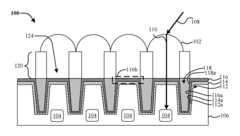
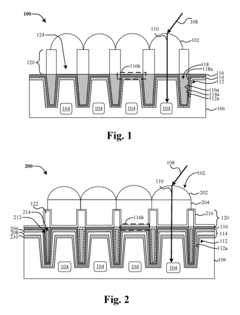
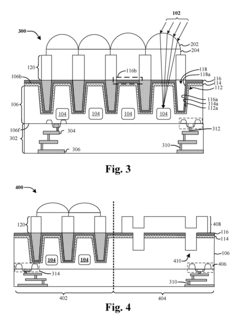
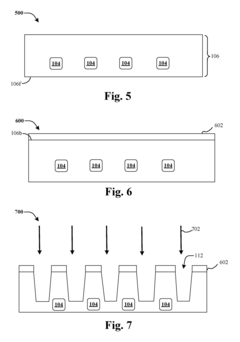
Innovation
- A thinner passivation layer made of materials like silicon nitride is used to reduce the optical path length, supporting optical features while facilitating light reflection and preventing chemical mechanical planarization, thereby improving the CMOS image sensor's operation.
Regulatory Framework for CMOS Battery Safety
The regulatory framework for CMOS battery safety encompasses a comprehensive set of standards, guidelines, and legal requirements designed to ensure the safe manufacture, use, and disposal of CMOS batteries. These regulations are established by various national and international bodies, including government agencies and industry organizations.
At the forefront of CMOS battery safety regulations is the International Electrotechnical Commission (IEC). The IEC has developed several standards specifically addressing battery safety, such as IEC 62133 for secondary cells and batteries containing alkaline or other non-acid electrolytes. This standard outlines safety requirements for portable sealed secondary cells and batteries, including those used in CMOS applications.
In the United States, the Consumer Product Safety Commission (CPSC) plays a crucial role in enforcing battery safety regulations. The CPSC has implemented strict guidelines for battery manufacturers and device makers to prevent hazards such as overheating, fire, and explosion. Additionally, the Occupational Safety and Health Administration (OSHA) provides regulations for workplace safety related to battery handling and storage.
The European Union has established the Battery Directive (2006/66/EC), which sets requirements for battery collection, recycling, and disposal. This directive also addresses the use of hazardous substances in batteries, promoting the development of safer CMOS battery technologies. Furthermore, the EU's REACH (Registration, Evaluation, Authorization, and Restriction of Chemicals) regulation impacts the materials used in CMOS battery production.
In Asia, countries like Japan and South Korea have implemented their own stringent safety standards for batteries. The Japanese Industrial Standards (JIS) and Korean Agency for Technology and Standards (KATS) have developed specifications that align with international norms while addressing specific regional concerns.
The United Nations has established recommendations for the transport of dangerous goods, including lithium batteries, which are often used in CMOS applications. These recommendations form the basis for international air and sea transport regulations, ensuring the safe handling of batteries during shipping.
Industry associations, such as the Portable Rechargeable Battery Association (PRBA) and the Battery Association of Japan (BAJ), also contribute to the regulatory framework by developing best practices and advocating for consistent safety standards across the globe.
As CMOS battery technology continues to evolve, regulatory bodies are adapting their frameworks to address new challenges and emerging risks. This ongoing process involves collaboration between government agencies, industry stakeholders, and research institutions to develop and refine safety standards that keep pace with technological advancements.
At the forefront of CMOS battery safety regulations is the International Electrotechnical Commission (IEC). The IEC has developed several standards specifically addressing battery safety, such as IEC 62133 for secondary cells and batteries containing alkaline or other non-acid electrolytes. This standard outlines safety requirements for portable sealed secondary cells and batteries, including those used in CMOS applications.
In the United States, the Consumer Product Safety Commission (CPSC) plays a crucial role in enforcing battery safety regulations. The CPSC has implemented strict guidelines for battery manufacturers and device makers to prevent hazards such as overheating, fire, and explosion. Additionally, the Occupational Safety and Health Administration (OSHA) provides regulations for workplace safety related to battery handling and storage.
The European Union has established the Battery Directive (2006/66/EC), which sets requirements for battery collection, recycling, and disposal. This directive also addresses the use of hazardous substances in batteries, promoting the development of safer CMOS battery technologies. Furthermore, the EU's REACH (Registration, Evaluation, Authorization, and Restriction of Chemicals) regulation impacts the materials used in CMOS battery production.
In Asia, countries like Japan and South Korea have implemented their own stringent safety standards for batteries. The Japanese Industrial Standards (JIS) and Korean Agency for Technology and Standards (KATS) have developed specifications that align with international norms while addressing specific regional concerns.
The United Nations has established recommendations for the transport of dangerous goods, including lithium batteries, which are often used in CMOS applications. These recommendations form the basis for international air and sea transport regulations, ensuring the safe handling of batteries during shipping.
Industry associations, such as the Portable Rechargeable Battery Association (PRBA) and the Battery Association of Japan (BAJ), also contribute to the regulatory framework by developing best practices and advocating for consistent safety standards across the globe.
As CMOS battery technology continues to evolve, regulatory bodies are adapting their frameworks to address new challenges and emerging risks. This ongoing process involves collaboration between government agencies, industry stakeholders, and research institutions to develop and refine safety standards that keep pace with technological advancements.
Environmental Impact of CMOS Battery Safety Measures
The environmental impact of CMOS battery safety measures is a critical consideration in the ongoing efforts to improve battery technology. As manufacturers and researchers strive to enhance the safety of CMOS batteries, it is essential to evaluate the ecological consequences of these improvements. One significant aspect is the reduction of hazardous materials used in battery production. By implementing safer designs and materials, the potential for environmental contamination from battery disposal or accidents is minimized.
Advanced safety measures often involve the use of more sophisticated materials and manufacturing processes. While these may lead to improved battery performance and longevity, they can also result in increased energy consumption during production. This trade-off necessitates a careful balance between safety enhancements and energy efficiency in manufacturing. Additionally, the development of more robust battery casings and protective components may require the use of materials that are less biodegradable, potentially increasing the environmental burden at the end of the battery's life cycle.
However, improved safety measures can also yield positive environmental outcomes. Enhanced thermal management systems and more stable electrolytes reduce the risk of battery fires or explosions, which can release harmful chemicals into the environment. Furthermore, safer batteries are likely to have longer operational lifespans, reducing the frequency of replacement and, consequently, the overall environmental impact of battery production and disposal.
The recycling and disposal of CMOS batteries with advanced safety features present both challenges and opportunities. While some safety components may complicate the recycling process, the increased stability of these batteries can make handling and transportation for recycling safer and more efficient. This could potentially lead to higher recycling rates and better recovery of valuable materials, reducing the need for new raw material extraction.
As the industry moves towards more environmentally friendly battery technologies, safety measures are being integrated with sustainability goals. This includes the development of non-toxic, naturally derived electrolytes and the use of recyclable materials in battery construction. These innovations not only enhance safety but also align with circular economy principles, minimizing waste and reducing the overall environmental footprint of CMOS batteries throughout their lifecycle.
Advanced safety measures often involve the use of more sophisticated materials and manufacturing processes. While these may lead to improved battery performance and longevity, they can also result in increased energy consumption during production. This trade-off necessitates a careful balance between safety enhancements and energy efficiency in manufacturing. Additionally, the development of more robust battery casings and protective components may require the use of materials that are less biodegradable, potentially increasing the environmental burden at the end of the battery's life cycle.
However, improved safety measures can also yield positive environmental outcomes. Enhanced thermal management systems and more stable electrolytes reduce the risk of battery fires or explosions, which can release harmful chemicals into the environment. Furthermore, safer batteries are likely to have longer operational lifespans, reducing the frequency of replacement and, consequently, the overall environmental impact of battery production and disposal.
The recycling and disposal of CMOS batteries with advanced safety features present both challenges and opportunities. While some safety components may complicate the recycling process, the increased stability of these batteries can make handling and transportation for recycling safer and more efficient. This could potentially lead to higher recycling rates and better recovery of valuable materials, reducing the need for new raw material extraction.
As the industry moves towards more environmentally friendly battery technologies, safety measures are being integrated with sustainability goals. This includes the development of non-toxic, naturally derived electrolytes and the use of recyclable materials in battery construction. These innovations not only enhance safety but also align with circular economy principles, minimizing waste and reducing the overall environmental footprint of CMOS batteries throughout their lifecycle.
Unlock deeper insights with PatSnap Eureka Quick Research — get a full tech report to explore trends and direct your research. Try now!
Generate Your Research Report Instantly with AI Agent
Supercharge your innovation with PatSnap Eureka AI Agent Platform!