

Graphene Oxide: Key Insights on Reducing E-Waste
Graphene Oxide E-Waste Reduction Background
Electronic waste, or e-waste, has become a significant global environmental concern in recent years. As technology advances rapidly, the lifespan of electronic devices shortens, leading to an increasing amount of discarded electronics. This growing e-waste problem poses serious threats to both human health and the environment due to the toxic materials present in many electronic components.
Graphene oxide, a derivative of graphene, has emerged as a promising material with potential applications in various fields, including e-waste reduction. This two-dimensional carbon-based material possesses unique properties such as high surface area, excellent electrical conductivity, and remarkable mechanical strength. These characteristics make graphene oxide an attractive candidate for addressing the challenges associated with e-waste management and recycling.
The concept of using graphene oxide to reduce e-waste aligns with the broader goals of sustainable development and circular economy principles. By leveraging the properties of graphene oxide, researchers and industry professionals aim to develop more efficient recycling processes, create longer-lasting electronic components, and design easily recyclable devices.
One of the key areas where graphene oxide shows promise is in the recovery of valuable metals from e-waste. Traditional metal extraction methods often involve energy-intensive and environmentally harmful processes. Graphene oxide-based materials can potentially offer more sustainable and efficient alternatives for metal recovery, particularly for precious metals like gold, silver, and platinum group metals commonly found in electronic devices.
Additionally, graphene oxide's potential in developing advanced energy storage systems could lead to longer-lasting batteries and supercapacitors. This improvement in energy storage technology could extend the lifespan of electronic devices, thereby reducing the frequency of device replacement and, consequently, e-waste generation.
The exploration of graphene oxide in e-waste reduction is part of a broader trend towards developing advanced materials for environmental sustainability. As the world grapples with the growing e-waste crisis, innovative solutions like those offered by graphene oxide become increasingly crucial. The integration of this material into e-waste management strategies represents a convergence of cutting-edge materials science and environmental stewardship.
E-Waste Market Analysis
The global e-waste market has been experiencing significant growth in recent years, driven by the rapid advancement of technology and the increasing consumption of electronic devices. As consumers upgrade their gadgets more frequently, the volume of discarded electronic equipment continues to rise, creating both environmental challenges and economic opportunities.
In 2019, the global e-waste generation reached 53.6 million metric tons, and this figure is projected to grow to 74.7 million metric tons by 2030. This substantial increase underscores the urgent need for effective e-waste management solutions, including those that leverage innovative materials like graphene oxide.
The e-waste recycling market, valued at $41.4 billion in 2019, is expected to expand at a compound annual growth rate (CAGR) of 14.3% from 2020 to 2027. This growth is fueled by increasing awareness of the environmental impact of e-waste, stringent government regulations, and the potential for recovering valuable materials from discarded electronics.
Geographically, Asia Pacific dominates the e-waste market, accounting for the largest share of both generation and recycling. China, in particular, stands out as the world's largest producer of e-waste, followed by the United States and India. However, Europe leads in terms of e-waste recycling rates, with countries like Switzerland and Norway achieving recycling rates of over 70%.
The market for e-waste management solutions is highly fragmented, with numerous local and regional players competing alongside multinational corporations. Key market segments include collection, transportation, recycling, and disposal services. The recycling segment, in particular, is gaining traction due to the increasing focus on circular economy principles and the recovery of precious metals.
Emerging technologies, such as graphene oxide-based solutions, are poised to disrupt the traditional e-waste management landscape. These innovations offer the potential for more efficient recycling processes, enhanced material recovery, and reduced environmental impact. As such, they represent a significant opportunity for market growth and technological advancement in the e-waste sector.
Consumer electronics, including smartphones, laptops, and tablets, constitute the largest source of e-waste, followed by large household appliances and IT equipment. The growing adoption of Internet of Things (IoT) devices and the impending rollout of 5G networks are expected to further accelerate e-waste generation, creating both challenges and opportunities for market players.
Graphene Oxide Properties and Challenges
Graphene oxide (GO) possesses a unique set of properties that make it a promising material for addressing e-waste challenges. Its two-dimensional structure, consisting of a single layer of carbon atoms arranged in a hexagonal lattice, provides an exceptionally high surface area-to-volume ratio. This characteristic enables GO to efficiently adsorb various pollutants and heavy metals commonly found in electronic waste.
One of the most significant properties of GO is its excellent electrical conductivity, which can be tuned by controlling the degree of oxidation. This feature allows for the development of highly sensitive sensors capable of detecting trace amounts of hazardous materials in e-waste. Additionally, GO exhibits remarkable mechanical strength and flexibility, making it suitable for incorporation into composite materials used in electronics recycling processes.
The hydrophilic nature of GO, due to the presence of oxygen-containing functional groups on its surface, enhances its dispersibility in aqueous solutions. This property facilitates the use of GO in water-based treatment systems for e-waste, enabling more environmentally friendly recycling methods. Furthermore, GO's thermal stability and chemical resistance contribute to its potential applications in high-temperature e-waste processing techniques.
Despite these promising attributes, several challenges hinder the widespread adoption of GO in e-waste reduction strategies. One major obstacle is the scalability of GO production. Current synthesis methods, such as the modified Hummers' method, are often time-consuming and involve the use of harsh chemicals, limiting large-scale manufacturing capabilities. Developing more efficient and environmentally friendly production techniques remains a critical challenge.
Another significant hurdle is the variability in GO quality and properties depending on the production method and source material. This inconsistency can lead to unpredictable performance in e-waste treatment applications, necessitating standardization efforts and quality control measures. Additionally, the long-term stability of GO-based materials in diverse environmental conditions needs further investigation to ensure their effectiveness in real-world e-waste management scenarios.
The potential toxicity of GO and its derivatives also presents a challenge that requires careful consideration. While GO shows promise in removing hazardous substances from e-waste, its own environmental impact and potential health risks must be thoroughly assessed. This includes studying the long-term effects of GO exposure on ecosystems and human health, as well as developing safe handling and disposal protocols for GO-based materials used in e-waste treatment.
Lastly, the integration of GO-based solutions into existing e-waste recycling infrastructure poses both technical and economic challenges. Adapting current recycling processes to incorporate GO technologies may require significant investments in equipment and training. Moreover, the cost-effectiveness of GO-based solutions compared to conventional e-waste treatment methods needs to be demonstrated to encourage widespread adoption by the recycling industry.
Current Graphene Oxide E-Waste Solutions
01 Graphene oxide-based materials for e-waste recycling
Graphene oxide and its derivatives are utilized in the recycling of electronic waste. These materials can be used to extract valuable metals from e-waste, reducing environmental impact and improving resource recovery efficiency. The process involves adsorption and separation techniques, leveraging the unique properties of graphene oxide.- Graphene oxide-based materials for e-waste recycling: Graphene oxide and its derivatives are utilized in the recycling of electronic waste. These materials can be used to extract valuable metals from e-waste, improving the efficiency of the recycling process and reducing environmental impact.
- Graphene oxide membranes for e-waste treatment: Specialized graphene oxide membranes are developed for the treatment of electronic waste. These membranes can effectively filter and separate various components of e-waste, facilitating the recovery of valuable materials and reducing overall waste volume.
- Graphene oxide-based adsorbents for e-waste contaminants: Graphene oxide-based adsorbents are designed to remove contaminants from e-waste processing. These materials can effectively capture heavy metals and other pollutants, minimizing environmental impact and improving the safety of e-waste recycling processes.
- Graphene oxide composites for e-waste reduction: Composite materials incorporating graphene oxide are developed for use in electronic devices. These composites can enhance the durability and recyclability of electronic components, potentially reducing the generation of e-waste at the source.
- Graphene oxide-enhanced recycling processes for e-waste: Novel recycling processes incorporating graphene oxide are developed to improve the efficiency of e-waste treatment. These processes can enhance the recovery of valuable materials from electronic waste while reducing energy consumption and environmental impact.
02 Graphene oxide membranes for e-waste treatment
Specialized graphene oxide membranes are developed for the treatment of electronic waste. These membranes can effectively filter and separate various components of e-waste, including heavy metals and organic pollutants. The high selectivity and permeability of graphene oxide membranes contribute to more efficient e-waste processing.Expand Specific Solutions03 Graphene oxide-based sensors for e-waste detection
Advanced sensors incorporating graphene oxide are designed for the detection and classification of electronic waste components. These sensors can identify different types of materials in e-waste, enabling more precise sorting and recycling processes. The high sensitivity of graphene oxide-based sensors improves the overall efficiency of e-waste management systems.Expand Specific Solutions04 Graphene oxide composites for e-waste reduction
Composite materials incorporating graphene oxide are developed to enhance the recyclability and reduce the environmental impact of electronic products. These composites can improve the durability and recyclability of electronic components, leading to a reduction in e-waste generation. The unique properties of graphene oxide contribute to the creation of more sustainable electronic materials.Expand Specific Solutions05 Graphene oxide-based catalysts for e-waste decomposition
Catalysts containing graphene oxide are utilized to accelerate the decomposition of electronic waste materials. These catalysts can break down complex e-waste components into simpler, more manageable substances, facilitating easier recycling and disposal. The high surface area and reactivity of graphene oxide-based catalysts contribute to more efficient e-waste treatment processes.Expand Specific Solutions
Key Players in Graphene Oxide Industry
The e-waste reduction using Graphene Oxide is in its early development stage, with a growing market potential due to increasing environmental concerns. The technology's maturity varies among key players, with research institutions like South China University of Technology and King Abdullah University of Science & Technology leading in fundamental research. Companies such as The Sixth Element Materials Technology and Toray Industries are advancing practical applications. LG Electronics and Lumileds Holding BV are exploring integration into consumer electronics. The competitive landscape is diverse, with collaborations between academia and industry driving innovation. As the technology progresses, we expect to see more commercial applications and market expansion in the coming years.
Sichuan Institute of Graphene Industrial Technology
The Sixth Element (Changzhou) Materials Technology Co., Ltd.
Graphene Oxide E-Waste Patents Analysis
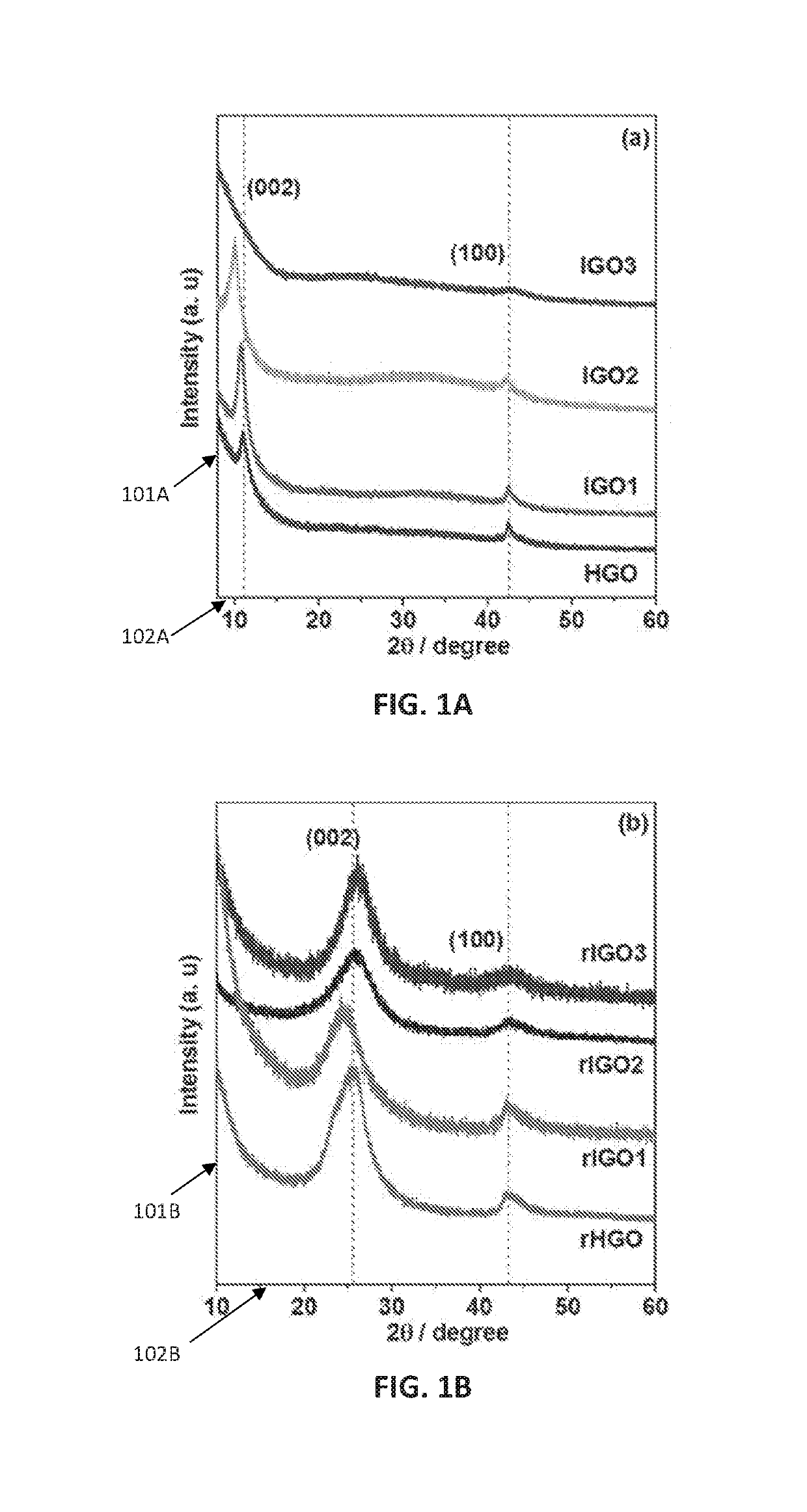
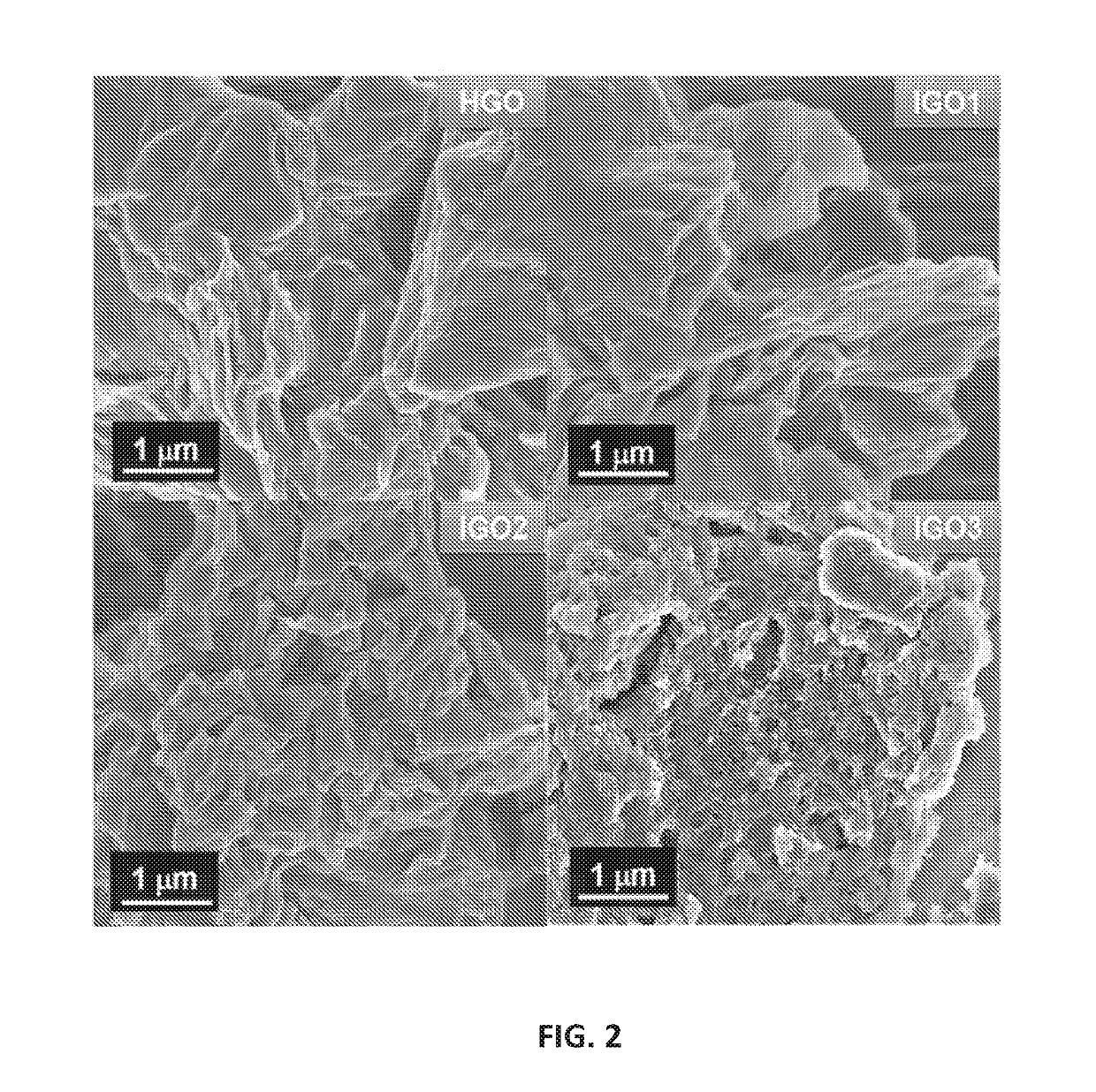
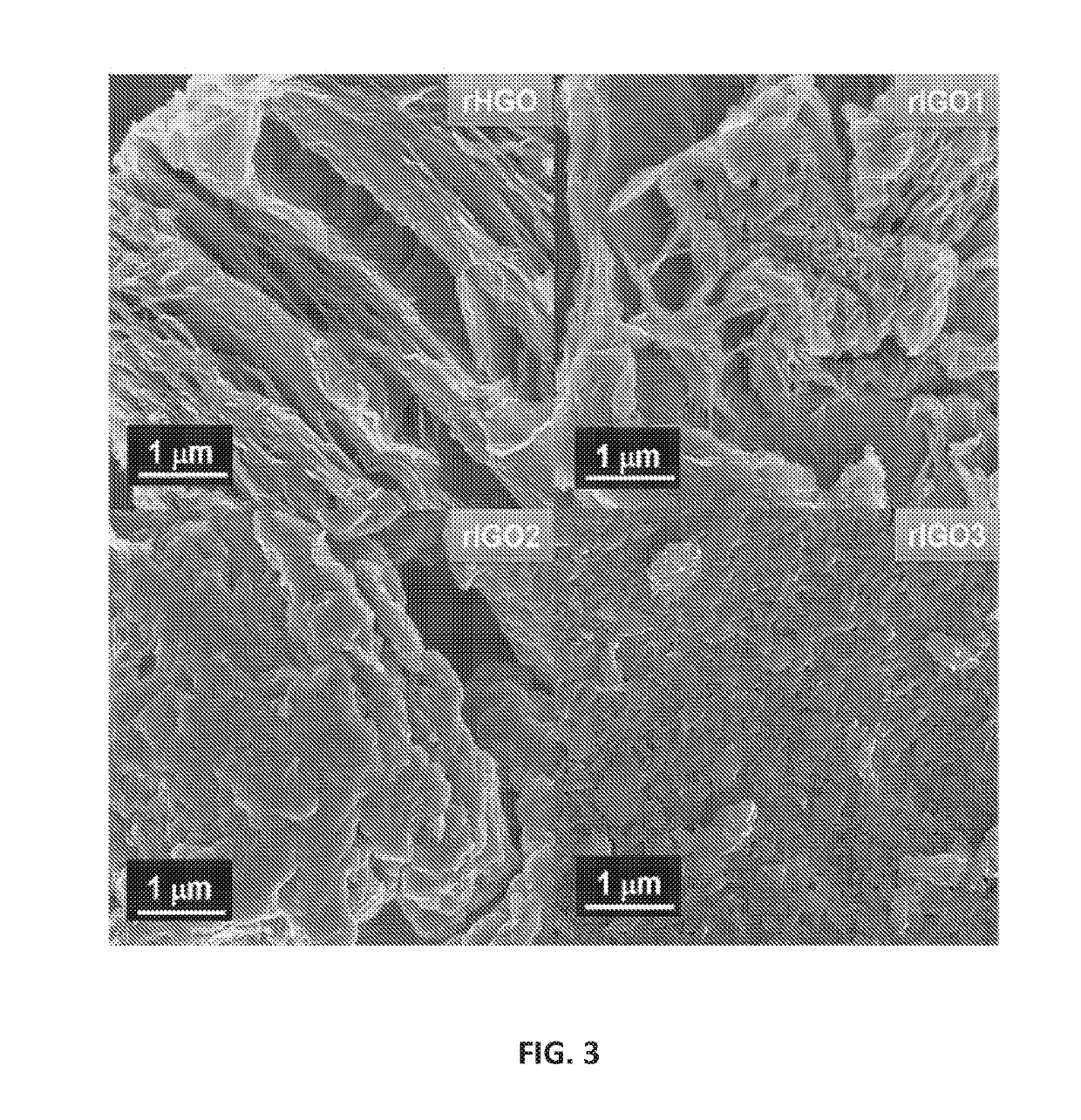
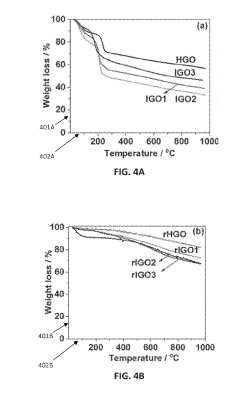
- A process that encloses graphene oxide sheets in a closed container and heats them in an environment devoid of a controlled atmosphere, using conventional ovens, eliminating the need for special equipment and reducing operational complexity.


- A method involving the oxidation of graphite in a mixture of phosphoric and sulfuric acids with KMnO4, followed by dispersion in water and adjustment of pH, results in high-purity graphene oxide with improved capacitance and reduced impurities, which can be further reduced to produce reduced graphene oxide with enhanced specific capacitance.
Environmental Impact Assessment
The environmental impact of using graphene oxide to reduce e-waste is multifaceted and potentially significant. Graphene oxide, a derivative of graphene, has shown promising applications in electronic waste management due to its unique properties. When applied to electronic components, it can enhance their durability and extend their lifespan, thereby reducing the frequency of device replacement and subsequent e-waste generation.
One of the primary environmental benefits of using graphene oxide in electronics is the potential reduction in raw material extraction. By prolonging the life of electronic devices, fewer new devices need to be manufactured, leading to a decrease in the demand for rare earth elements and other minerals. This reduction in mining activities can help preserve natural habitats and reduce the carbon footprint associated with resource extraction.
Furthermore, graphene oxide's application in electronics can lead to more energy-efficient devices. Its excellent thermal and electrical conductivity properties can improve the performance of electronic components while reducing energy consumption. This efficiency gain translates to lower power requirements over the device's lifetime, potentially decreasing the overall environmental impact of electronic usage.
However, the production of graphene oxide itself requires careful consideration. The synthesis process can involve the use of harsh chemicals and energy-intensive procedures. As such, the environmental benefits of using graphene oxide in e-waste reduction must be weighed against the potential environmental costs of its production. Efforts to develop more sustainable and scalable production methods for graphene oxide are crucial to maximize its positive environmental impact.
In terms of end-of-life management, graphene oxide-enhanced electronics may present both opportunities and challenges. On one hand, the increased durability of components could make recycling processes more efficient, as fewer devices would need to be processed. On the other hand, the integration of graphene oxide into complex electronic systems may require the development of new recycling technologies to effectively separate and recover materials.
The potential for graphene oxide to contribute to a circular economy in electronics is significant. By enabling the creation of more easily repairable and upgradable devices, it could foster a shift towards more sustainable consumption patterns. This aligns with broader environmental goals of reducing waste and promoting resource efficiency.
Circular Economy Integration
The integration of graphene oxide into circular economy strategies presents a promising avenue for reducing electronic waste (e-waste). This approach aligns with the principles of resource efficiency, waste reduction, and sustainable product design. Graphene oxide's unique properties make it an ideal candidate for enhancing the recyclability and longevity of electronic components.
One key aspect of circular economy integration is the potential for graphene oxide to improve the durability of electronic devices. By incorporating graphene oxide into protective coatings or as a component in circuit boards, manufacturers can create more resilient products that withstand wear and tear, extending their lifespan. This directly contributes to reducing e-waste by decreasing the frequency of device replacements.
Furthermore, graphene oxide can play a crucial role in enhancing the recyclability of electronic components. Its use in conductive inks and flexible electronics allows for easier separation and recovery of valuable materials during the recycling process. This improved recyclability facilitates the closed-loop systems essential to circular economy models, ensuring that materials from end-of-life products can be effectively reintegrated into new manufacturing processes.
The application of graphene oxide in energy storage devices, such as batteries and supercapacitors, also supports circular economy goals. These enhanced energy storage solutions can lead to more efficient and longer-lasting power sources for electronic devices, reducing the need for frequent battery replacements and minimizing the associated waste.
In the context of product design, graphene oxide enables the development of modular and easily repairable electronic devices. This aligns with the circular economy principle of designing out waste and pollution. By creating products that can be easily disassembled, repaired, and upgraded, manufacturers can significantly extend the useful life of electronic devices and reduce the overall volume of e-waste generated.
The integration of graphene oxide into circular economy strategies also promotes the development of new business models. These may include product-as-a-service offerings, where manufacturers retain ownership of devices and are incentivized to design for longevity and recyclability. Such models can lead to more efficient resource use and reduced environmental impact throughout the product lifecycle.
Lastly, the use of graphene oxide in e-waste reduction strategies can drive innovation in recycling technologies. As more products incorporate this advanced material, recycling processes will need to adapt and improve to effectively recover and reuse graphene oxide. This continuous improvement cycle can lead to more efficient and effective e-waste management systems, further supporting the goals of a circular economy.