

Leveraging PNP Transistors for Future-Tech Narratives
JUL 28, 20259 MIN READ
Generate Your Research Report Instantly with AI Agent
PatSnap Eureka helps you evaluate technical feasibility & market potential.
PNP Transistor Evolution
The evolution of PNP transistors has been a significant journey in the field of electronics, marking several key milestones in technological advancement. Initially developed in the early 1950s, PNP transistors emerged as a complement to the NPN transistors, offering new possibilities in circuit design and electronic applications.
The first commercial PNP transistor was introduced by Western Electric in 1951, shortly after the invention of the bipolar junction transistor. This breakthrough paved the way for more complex and efficient electronic circuits, as it allowed for the creation of complementary designs using both NPN and PNP transistors.
Throughout the 1960s and 1970s, PNP transistors saw continuous improvements in their manufacturing processes and performance characteristics. The introduction of epitaxial growth techniques and advances in doping methods led to enhanced current gain, higher frequency response, and improved reliability. These advancements enabled PNP transistors to be used in a wider range of applications, from audio amplifiers to power supplies.
The 1980s and 1990s witnessed a shift towards miniaturization and integration. PNP transistors were increasingly incorporated into integrated circuits, allowing for more compact and efficient electronic devices. This period also saw the development of specialized PNP transistors for high-power applications, expanding their use in industrial and automotive sectors.
In the early 2000s, the focus shifted towards improving the energy efficiency and thermal performance of PNP transistors. New materials and fabrication techniques were explored to reduce power consumption and heat generation, making PNP transistors more suitable for portable and battery-powered devices.
Recent years have seen a renewed interest in PNP transistors for emerging technologies. Their unique characteristics are being leveraged in areas such as quantum computing, where they play a role in qubit control circuits. Additionally, PNP transistors are finding applications in advanced sensor technologies and IoT devices, where their low-power capabilities are particularly valuable.
Looking towards the future, research is ongoing to further enhance the performance of PNP transistors. This includes exploring new semiconductor materials, such as wide-bandgap semiconductors, to improve high-frequency and high-temperature operation. There is also a growing interest in developing PNP transistors for flexible and wearable electronics, opening up new possibilities in the realm of future-tech narratives.
The first commercial PNP transistor was introduced by Western Electric in 1951, shortly after the invention of the bipolar junction transistor. This breakthrough paved the way for more complex and efficient electronic circuits, as it allowed for the creation of complementary designs using both NPN and PNP transistors.
Throughout the 1960s and 1970s, PNP transistors saw continuous improvements in their manufacturing processes and performance characteristics. The introduction of epitaxial growth techniques and advances in doping methods led to enhanced current gain, higher frequency response, and improved reliability. These advancements enabled PNP transistors to be used in a wider range of applications, from audio amplifiers to power supplies.
The 1980s and 1990s witnessed a shift towards miniaturization and integration. PNP transistors were increasingly incorporated into integrated circuits, allowing for more compact and efficient electronic devices. This period also saw the development of specialized PNP transistors for high-power applications, expanding their use in industrial and automotive sectors.
In the early 2000s, the focus shifted towards improving the energy efficiency and thermal performance of PNP transistors. New materials and fabrication techniques were explored to reduce power consumption and heat generation, making PNP transistors more suitable for portable and battery-powered devices.
Recent years have seen a renewed interest in PNP transistors for emerging technologies. Their unique characteristics are being leveraged in areas such as quantum computing, where they play a role in qubit control circuits. Additionally, PNP transistors are finding applications in advanced sensor technologies and IoT devices, where their low-power capabilities are particularly valuable.
Looking towards the future, research is ongoing to further enhance the performance of PNP transistors. This includes exploring new semiconductor materials, such as wide-bandgap semiconductors, to improve high-frequency and high-temperature operation. There is also a growing interest in developing PNP transistors for flexible and wearable electronics, opening up new possibilities in the realm of future-tech narratives.
Future-Tech Market Demand
The market demand for PNP transistors in future-tech narratives is driven by the increasing need for advanced electronic devices and systems across various industries. As technology continues to evolve, the demand for more efficient, compact, and versatile semiconductor components grows exponentially. PNP transistors, with their unique characteristics and capabilities, are poised to play a crucial role in shaping the future of electronics and digital technologies.
One of the primary drivers of market demand is the rapid expansion of the Internet of Things (IoT) ecosystem. As more devices become interconnected, there is a growing need for transistors that can operate efficiently at low power levels while maintaining high performance. PNP transistors, known for their low power consumption and high current gain, are well-suited for IoT applications, ranging from smart home devices to industrial sensors and wearable technology.
The automotive industry is another significant contributor to the increasing demand for PNP transistors. With the rise of electric vehicles and advanced driver assistance systems (ADAS), there is a surge in demand for high-performance, reliable semiconductor components. PNP transistors are essential in power management systems, motor control circuits, and various sensor applications within modern vehicles.
In the telecommunications sector, the ongoing rollout of 5G networks and the development of future 6G technologies are creating new opportunities for PNP transistors. These components are crucial in the design of high-frequency amplifiers and signal processing circuits required for next-generation wireless communication systems.
The consumer electronics market continues to be a major driver of demand for PNP transistors. As smartphones, tablets, and other personal devices become more sophisticated, there is a constant need for transistors that can deliver higher performance while consuming less power. PNP transistors are particularly valuable in battery management systems and power-efficient audio amplifiers.
Emerging technologies such as artificial intelligence (AI) and machine learning are also contributing to the growing market demand. These technologies require advanced computing systems with high-performance transistors capable of handling complex calculations and data processing tasks. PNP transistors play a vital role in the development of neuromorphic computing systems and other AI-focused hardware.
The healthcare industry is another sector driving the demand for PNP transistors in future-tech applications. From medical imaging equipment to implantable devices and wearable health monitors, there is a growing need for reliable, low-power semiconductor components that can operate in sensitive environments.
As the global focus on sustainability and energy efficiency intensifies, the demand for PNP transistors in power management and renewable energy systems is expected to grow significantly. These transistors are essential in the development of more efficient solar inverters, wind turbine control systems, and energy storage solutions.
One of the primary drivers of market demand is the rapid expansion of the Internet of Things (IoT) ecosystem. As more devices become interconnected, there is a growing need for transistors that can operate efficiently at low power levels while maintaining high performance. PNP transistors, known for their low power consumption and high current gain, are well-suited for IoT applications, ranging from smart home devices to industrial sensors and wearable technology.
The automotive industry is another significant contributor to the increasing demand for PNP transistors. With the rise of electric vehicles and advanced driver assistance systems (ADAS), there is a surge in demand for high-performance, reliable semiconductor components. PNP transistors are essential in power management systems, motor control circuits, and various sensor applications within modern vehicles.
In the telecommunications sector, the ongoing rollout of 5G networks and the development of future 6G technologies are creating new opportunities for PNP transistors. These components are crucial in the design of high-frequency amplifiers and signal processing circuits required for next-generation wireless communication systems.
The consumer electronics market continues to be a major driver of demand for PNP transistors. As smartphones, tablets, and other personal devices become more sophisticated, there is a constant need for transistors that can deliver higher performance while consuming less power. PNP transistors are particularly valuable in battery management systems and power-efficient audio amplifiers.
Emerging technologies such as artificial intelligence (AI) and machine learning are also contributing to the growing market demand. These technologies require advanced computing systems with high-performance transistors capable of handling complex calculations and data processing tasks. PNP transistors play a vital role in the development of neuromorphic computing systems and other AI-focused hardware.
The healthcare industry is another sector driving the demand for PNP transistors in future-tech applications. From medical imaging equipment to implantable devices and wearable health monitors, there is a growing need for reliable, low-power semiconductor components that can operate in sensitive environments.
As the global focus on sustainability and energy efficiency intensifies, the demand for PNP transistors in power management and renewable energy systems is expected to grow significantly. These transistors are essential in the development of more efficient solar inverters, wind turbine control systems, and energy storage solutions.
PNP Challenges in Narratives
The integration of PNP transistors into future-tech narratives presents several significant challenges that researchers and storytellers must address. One of the primary obstacles is the accurate representation of PNP transistor functionality within the context of speculative technologies. As these transistors operate on the principle of hole conduction, their behavior can be counterintuitive to those more familiar with NPN transistors, leading to potential misrepresentations in narrative descriptions.
Another challenge lies in the limited public understanding of PNP transistors compared to their NPN counterparts. This knowledge gap can make it difficult for authors to create relatable and engaging narratives that incorporate PNP technology without alienating their audience. Striking a balance between technical accuracy and accessibility is crucial for maintaining the story's credibility while ensuring reader engagement.
The rapid pace of technological advancement poses an additional hurdle for narrative creators. As new developments in PNP transistor technology emerge, previously written future-tech scenarios may quickly become outdated or implausible. This necessitates a continuous updating process for authors and requires them to stay abreast of the latest research and innovations in the field.
Furthermore, the integration of PNP transistors into complex fictional systems and devices presents a unique challenge. Authors must consider how these components would interact with other hypothetical technologies, taking into account factors such as power consumption, heat dissipation, and overall system efficiency. This requires a deep understanding of both current and potential future applications of PNP transistors.
The narrative exploration of PNP transistor limitations and potential breakthroughs also poses a significant challenge. While it is essential to acknowledge the current constraints of PNP technology, authors must also envision plausible advancements that could overcome these limitations in future scenarios. This delicate balance between realism and speculation demands a thorough understanding of the technology's underlying principles and potential trajectories.
Lastly, the challenge of accurately portraying the societal and ethical implications of advanced PNP transistor technologies in narratives cannot be overlooked. Authors must consider how these advancements might impact various aspects of society, from energy consumption and environmental concerns to privacy and security issues. This requires not only technical knowledge but also a nuanced understanding of the broader implications of technological progress.
Another challenge lies in the limited public understanding of PNP transistors compared to their NPN counterparts. This knowledge gap can make it difficult for authors to create relatable and engaging narratives that incorporate PNP technology without alienating their audience. Striking a balance between technical accuracy and accessibility is crucial for maintaining the story's credibility while ensuring reader engagement.
The rapid pace of technological advancement poses an additional hurdle for narrative creators. As new developments in PNP transistor technology emerge, previously written future-tech scenarios may quickly become outdated or implausible. This necessitates a continuous updating process for authors and requires them to stay abreast of the latest research and innovations in the field.
Furthermore, the integration of PNP transistors into complex fictional systems and devices presents a unique challenge. Authors must consider how these components would interact with other hypothetical technologies, taking into account factors such as power consumption, heat dissipation, and overall system efficiency. This requires a deep understanding of both current and potential future applications of PNP transistors.
The narrative exploration of PNP transistor limitations and potential breakthroughs also poses a significant challenge. While it is essential to acknowledge the current constraints of PNP technology, authors must also envision plausible advancements that could overcome these limitations in future scenarios. This delicate balance between realism and speculation demands a thorough understanding of the technology's underlying principles and potential trajectories.
Lastly, the challenge of accurately portraying the societal and ethical implications of advanced PNP transistor technologies in narratives cannot be overlooked. Authors must consider how these advancements might impact various aspects of society, from energy consumption and environmental concerns to privacy and security issues. This requires not only technical knowledge but also a nuanced understanding of the broader implications of technological progress.
Current PNP Narrative Solutions
01 PNP transistor structure and fabrication
This category covers the basic structure and fabrication methods of PNP transistors. It includes the design of emitter, base, and collector regions, as well as the techniques used to create these structures on semiconductor substrates. The fabrication process may involve epitaxial growth, ion implantation, and various etching techniques to achieve the desired transistor characteristics.- PNP transistor structure and fabrication: This category covers the basic structure and fabrication methods of PNP transistors. It includes the design of emitter, base, and collector regions, as well as the processes used to create these structures on semiconductor substrates. Various techniques such as epitaxial growth, ion implantation, and diffusion are employed to achieve the desired PNP configuration.
- PNP transistor applications in integrated circuits: PNP transistors are widely used in integrated circuits for various applications. This category explores their implementation in analog and digital circuits, including amplifiers, current mirrors, and logic gates. It also covers their role in power management, voltage regulation, and temperature sensing within complex IC designs.
- PNP transistor performance optimization: This category focuses on techniques to enhance PNP transistor performance. It includes methods to improve current gain, reduce parasitic capacitances, and optimize frequency response. Advanced doping profiles, novel materials, and innovative device geometries are explored to achieve better electrical characteristics and overall transistor efficiency.
- PNP transistors in bipolar and BiCMOS technologies: This category examines the integration of PNP transistors in bipolar and BiCMOS (Bipolar-CMOS) technologies. It covers the challenges and solutions for combining PNP devices with NPN transistors and CMOS structures on the same chip. The focus is on achieving optimal performance for both PNP and other device types in mixed-signal applications.
- PNP transistor testing and characterization: This category deals with methods and systems for testing and characterizing PNP transistors. It includes techniques for measuring key parameters such as current gain, breakdown voltage, and leakage current. Advanced testing procedures, automated measurement systems, and modeling approaches are discussed to ensure accurate evaluation of PNP transistor performance in various operating conditions.
02 PNP transistor applications in integrated circuits
PNP transistors are widely used in various integrated circuit designs. This category focuses on the implementation of PNP transistors in different IC applications, such as amplifiers, current mirrors, and voltage regulators. It also covers the integration of PNP transistors with other semiconductor devices to create complex circuit functions.Expand Specific Solutions03 PNP transistor performance optimization
This category deals with techniques to improve the performance of PNP transistors. It includes methods to enhance parameters such as current gain, frequency response, and noise characteristics. Optimization techniques may involve adjusting doping profiles, modifying device geometry, or implementing novel materials to achieve better transistor performance.Expand Specific Solutions04 PNP transistor in power applications
PNP transistors are used in various power applications, including power supplies, motor drivers, and high-current switches. This category covers the design and implementation of PNP transistors for high-power handling capabilities, focusing on aspects such as thermal management, safe operating area, and breakdown voltage optimization.Expand Specific Solutions05 PNP transistor modeling and simulation
This category focuses on the development of accurate models and simulation techniques for PNP transistors. It includes the creation of SPICE models, compact models for circuit simulation, and advanced numerical methods for device-level simulation. These models and simulations are essential for predicting transistor behavior in complex circuit designs and optimizing performance.Expand Specific Solutions
Key PNP Innovators
The competitive landscape for leveraging PNP transistors in future-tech narratives is evolving rapidly, with the market still in its early growth stage. The global market size for this technology is expanding, driven by increasing demand for advanced semiconductor solutions across various industries. While the technology is not yet fully mature, several key players are making significant strides in research and development. Companies like IBM, Infineon Technologies, and GlobalFoundries are at the forefront, leveraging their extensive semiconductor expertise to push the boundaries of PNP transistor applications. Other major players such as Qualcomm, Samsung Electronics, and Intel are also investing heavily in this area, recognizing its potential to revolutionize future tech narratives and drive innovation in their respective product lines.
International Business Machines Corp.
Technical Solution: IBM has been leveraging PNP transistors in their advanced semiconductor technologies, particularly in their silicon-germanium (SiGe) heterojunction bipolar transistors (HBTs). Their approach involves using PNP transistors in complementary bipolar-CMOS (BiCMOS) processes, which combine the high-speed capabilities of bipolar transistors with the low power consumption of CMOS technology[1]. IBM's SiGe HBT technology has achieved record-breaking speeds, with cut-off frequencies exceeding 350 GHz[2]. This technology is crucial for future-tech narratives, especially in 5G and 6G communications, radar systems, and high-speed data converters. IBM has also explored vertical PNP transistors in their power management integrated circuits, enhancing energy efficiency in various applications[3].
Strengths: High-speed performance, integration with CMOS technology, and applicability in advanced communication systems. Weaknesses: Complexity in manufacturing processes and potential heat dissipation issues in high-density circuits.
Infineon Technologies AG
Technical Solution: Infineon has been at the forefront of leveraging PNP transistors for future-tech applications, particularly in power electronics and automotive systems. Their CoolMOS™ technology, which incorporates advanced PNP structures, has revolutionized power MOSFET design[4]. Infineon's approach involves optimizing the vertical PNP structure to achieve lower on-resistance and improved switching performance. They have also developed innovative bipolar-CMOS-DMOS (BCD) technologies that integrate PNP transistors with other device types on a single chip[5]. This integration is crucial for smart power ICs used in electric vehicles, renewable energy systems, and industrial automation. Infineon's PNP transistor designs have achieved breakdown voltages exceeding 1200V while maintaining low conduction losses[6].
Strengths: High voltage handling capability, integration in smart power ICs, and optimized performance for automotive and industrial applications. Weaknesses: Higher production costs compared to standard CMOS processes and potential limitations in very high-frequency applications.
PNP Storytelling Innovations
Electrostatic discharge protection device
PatentActiveUS8675322B2
Innovation
- The use of serially connected PNP transistors to conduct electrostatic signals to ground, reducing the rated current supported by the protection circuit and minimizing the layout area, thereby mitigating the impact of process variations.


Lateral PNP fast turn-on circuit
PatentInactiveUS5834964A
Innovation
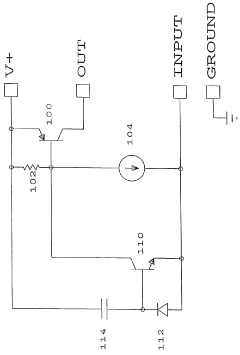
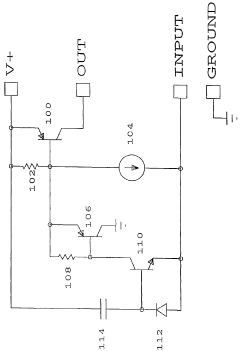
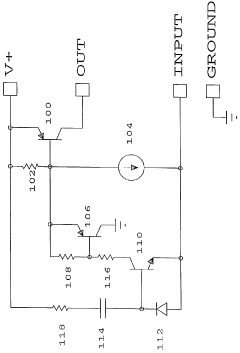
- A control circuit is designed with a current amplifier connected in parallel to the PNP output transistor, featuring a capacitor coupled between a positive voltage and an input node, which provides a current boost when the switching signal transitions from high to low, accelerating the turn-on of the PNP transistor, and a switched current source maintains the transistor in the on state.

PNP in Sci-Fi Worldbuilding
In the realm of science fiction worldbuilding, PNP transistors offer a unique opportunity to create compelling and technologically plausible narratives. These semiconductor devices, which control the flow of electrical current, can be leveraged to imagine advanced technologies and societies far beyond our current capabilities. By extrapolating the principles of PNP transistors, authors and creators can craft intricate technological ecosystems that form the backbone of futuristic worlds.
One potential avenue for incorporating PNP transistors into sci-fi narratives is through the concept of advanced computing systems. Imagine a world where PNP-based quantum computers have become the norm, enabling processing power far beyond our current understanding. These systems could be integral to interstellar navigation, solving complex societal problems, or even simulating entire universes within virtual environments.
Another fascinating application could be in the field of energy manipulation. PNP transistors could be envisioned as the foundation for highly efficient energy conversion and storage systems, powering everything from personal devices to entire cities or spacecraft. This could lead to narratives exploring the societal implications of near-limitless energy or the geopolitical tensions arising from control over such technology.
In the realm of biotechnology, PNP transistors could be reimagined as the basis for advanced neural interfaces. Stories could explore the implications of direct brain-computer connections, enabling instant information transfer, shared consciousness, or even the ability to upload and download memories. This opens up a wealth of narrative possibilities, from exploring the nature of identity to the ethical dilemmas of manipulating human cognition.
Transportation and space exploration are other areas ripe for PNP-inspired worldbuilding. Envision vehicles or spacecraft powered by PNP-based propulsion systems, capable of manipulating gravitational fields or achieving faster-than-light travel. These technologies could serve as the foundation for epic space operas or stories of interplanetary colonization.
Furthermore, PNP transistors could be the key to imagining advanced materials and manufacturing processes. Narratives could explore worlds where molecular-scale PNP structures enable the creation of self-repairing materials, shape-shifting objects, or even programmable matter. This could lead to fascinating explorations of how such technologies might reshape society, architecture, and even the human form.
By grounding these speculative technologies in the real-world principles of PNP transistors, authors can create a sense of scientific plausibility that enhances the reader's immersion in the fictional world. This approach not only stimulates the imagination but also encourages readers to consider the potential long-term implications of current technological trends.
One potential avenue for incorporating PNP transistors into sci-fi narratives is through the concept of advanced computing systems. Imagine a world where PNP-based quantum computers have become the norm, enabling processing power far beyond our current understanding. These systems could be integral to interstellar navigation, solving complex societal problems, or even simulating entire universes within virtual environments.
Another fascinating application could be in the field of energy manipulation. PNP transistors could be envisioned as the foundation for highly efficient energy conversion and storage systems, powering everything from personal devices to entire cities or spacecraft. This could lead to narratives exploring the societal implications of near-limitless energy or the geopolitical tensions arising from control over such technology.
In the realm of biotechnology, PNP transistors could be reimagined as the basis for advanced neural interfaces. Stories could explore the implications of direct brain-computer connections, enabling instant information transfer, shared consciousness, or even the ability to upload and download memories. This opens up a wealth of narrative possibilities, from exploring the nature of identity to the ethical dilemmas of manipulating human cognition.
Transportation and space exploration are other areas ripe for PNP-inspired worldbuilding. Envision vehicles or spacecraft powered by PNP-based propulsion systems, capable of manipulating gravitational fields or achieving faster-than-light travel. These technologies could serve as the foundation for epic space operas or stories of interplanetary colonization.
Furthermore, PNP transistors could be the key to imagining advanced materials and manufacturing processes. Narratives could explore worlds where molecular-scale PNP structures enable the creation of self-repairing materials, shape-shifting objects, or even programmable matter. This could lead to fascinating explorations of how such technologies might reshape society, architecture, and even the human form.
By grounding these speculative technologies in the real-world principles of PNP transistors, authors can create a sense of scientific plausibility that enhances the reader's immersion in the fictional world. This approach not only stimulates the imagination but also encourages readers to consider the potential long-term implications of current technological trends.
Ethical Implications of PNP Tech
The ethical implications of PNP transistor technology in future-tech narratives are multifaceted and warrant careful consideration. As PNP transistors become increasingly integrated into advanced electronic systems, their potential impact on society and individual privacy raises significant ethical concerns.
One primary ethical consideration is the potential for enhanced surveillance capabilities. PNP transistors, with their improved performance and miniaturization, could enable more sophisticated and pervasive monitoring systems. This raises questions about the balance between security and privacy, and the extent to which individuals' personal freedoms may be compromised in the name of technological advancement.
Another ethical dimension relates to the digital divide and access to technology. As PNP transistor-based devices become more prevalent and essential for daily life, there is a risk of exacerbating existing socioeconomic inequalities. Those unable to afford or access these advanced technologies may find themselves at a significant disadvantage in various aspects of life, from education to employment opportunities.
The environmental impact of PNP transistor production and disposal also presents ethical challenges. While these transistors may offer improved energy efficiency in operation, their manufacturing process and end-of-life management could potentially contribute to electronic waste and environmental degradation. Balancing technological progress with ecological responsibility becomes a critical ethical consideration.
Data security and ownership present another ethical quandary. PNP transistors' enhanced capabilities in data processing and storage could lead to more sophisticated data collection and analysis. This raises concerns about data privacy, consent, and the potential for misuse of personal information by corporations or governments.
The potential for PNP transistor technology to be used in autonomous systems and artificial intelligence also brings forth ethical questions regarding decision-making and accountability. As these transistors enable more advanced AI systems, society must grapple with the ethical implications of machines making increasingly complex and impactful decisions.
Lastly, the use of PNP transistors in medical devices and human augmentation technologies raises bioethical concerns. While these advancements may offer significant benefits in healthcare and human capabilities, they also prompt discussions about human enhancement, bodily autonomy, and the definition of what it means to be human.
One primary ethical consideration is the potential for enhanced surveillance capabilities. PNP transistors, with their improved performance and miniaturization, could enable more sophisticated and pervasive monitoring systems. This raises questions about the balance between security and privacy, and the extent to which individuals' personal freedoms may be compromised in the name of technological advancement.
Another ethical dimension relates to the digital divide and access to technology. As PNP transistor-based devices become more prevalent and essential for daily life, there is a risk of exacerbating existing socioeconomic inequalities. Those unable to afford or access these advanced technologies may find themselves at a significant disadvantage in various aspects of life, from education to employment opportunities.
The environmental impact of PNP transistor production and disposal also presents ethical challenges. While these transistors may offer improved energy efficiency in operation, their manufacturing process and end-of-life management could potentially contribute to electronic waste and environmental degradation. Balancing technological progress with ecological responsibility becomes a critical ethical consideration.
Data security and ownership present another ethical quandary. PNP transistors' enhanced capabilities in data processing and storage could lead to more sophisticated data collection and analysis. This raises concerns about data privacy, consent, and the potential for misuse of personal information by corporations or governments.
The potential for PNP transistor technology to be used in autonomous systems and artificial intelligence also brings forth ethical questions regarding decision-making and accountability. As these transistors enable more advanced AI systems, society must grapple with the ethical implications of machines making increasingly complex and impactful decisions.
Lastly, the use of PNP transistors in medical devices and human augmentation technologies raises bioethical concerns. While these advancements may offer significant benefits in healthcare and human capabilities, they also prompt discussions about human enhancement, bodily autonomy, and the definition of what it means to be human.
Unlock deeper insights with PatSnap Eureka Quick Research — get a full tech report to explore trends and direct your research. Try now!
Generate Your Research Report Instantly with AI Agent
Supercharge your innovation with PatSnap Eureka AI Agent Platform!