

Nitinol's Efficiency in Self-Cleaning Surfaces Technology
AUG 6, 20259 MIN READ
Generate Your Research Report Instantly with AI Agent
PatSnap Eureka helps you evaluate technical feasibility & market potential.
Nitinol Self-Cleaning Tech Background and Objectives
Nitinol, a unique alloy of nickel and titanium, has emerged as a promising material in the field of self-cleaning surface technology. This shape memory alloy, discovered in the 1960s, has garnered significant attention due to its remarkable properties, including superelasticity and shape memory effect. These characteristics make Nitinol an ideal candidate for developing innovative self-cleaning surfaces that can adapt to environmental changes and maintain their functionality over time.
The evolution of self-cleaning surface technology has been driven by the increasing demand for low-maintenance, hygienic, and environmentally friendly solutions across various industries. From architectural facades to medical devices, the need for surfaces that can repel dirt, water, and other contaminants has become paramount. Nitinol's unique ability to change its shape in response to temperature variations offers a novel approach to this challenge, potentially revolutionizing the field of self-cleaning surfaces.
The primary objective of exploring Nitinol's efficiency in self-cleaning surfaces technology is to harness its shape memory properties to create dynamic, responsive surfaces that can actively shed contaminants. By incorporating Nitinol into surface designs, researchers aim to develop materials that can change their surface topography or wettability in response to environmental triggers, thereby enhancing their self-cleaning capabilities.
One of the key goals in this technological pursuit is to overcome the limitations of traditional self-cleaning surfaces, which often rely on static hydrophobic or hydrophilic coatings. These conventional approaches can degrade over time or become ineffective under certain conditions. Nitinol-based self-cleaning surfaces, on the other hand, have the potential to adapt to various environmental factors, maintaining their efficacy across a broader range of conditions and for extended periods.
Another critical objective is to explore the scalability and cost-effectiveness of Nitinol-based self-cleaning technologies. While Nitinol's unique properties offer significant advantages, the widespread adoption of this technology will depend on the ability to manufacture these surfaces at scale and at a competitive cost. Researchers are thus focusing on developing efficient production methods and exploring ways to optimize the amount of Nitinol required for effective self-cleaning functionality.
Furthermore, the research into Nitinol's application in self-cleaning surfaces aims to expand its potential use cases beyond traditional applications. This includes investigating its effectiveness in extreme environments, such as high-temperature or corrosive settings, where conventional self-cleaning technologies may fail. The goal is to create versatile, durable surfaces that can maintain their self-cleaning properties under a wide range of challenging conditions.
The evolution of self-cleaning surface technology has been driven by the increasing demand for low-maintenance, hygienic, and environmentally friendly solutions across various industries. From architectural facades to medical devices, the need for surfaces that can repel dirt, water, and other contaminants has become paramount. Nitinol's unique ability to change its shape in response to temperature variations offers a novel approach to this challenge, potentially revolutionizing the field of self-cleaning surfaces.
The primary objective of exploring Nitinol's efficiency in self-cleaning surfaces technology is to harness its shape memory properties to create dynamic, responsive surfaces that can actively shed contaminants. By incorporating Nitinol into surface designs, researchers aim to develop materials that can change their surface topography or wettability in response to environmental triggers, thereby enhancing their self-cleaning capabilities.
One of the key goals in this technological pursuit is to overcome the limitations of traditional self-cleaning surfaces, which often rely on static hydrophobic or hydrophilic coatings. These conventional approaches can degrade over time or become ineffective under certain conditions. Nitinol-based self-cleaning surfaces, on the other hand, have the potential to adapt to various environmental factors, maintaining their efficacy across a broader range of conditions and for extended periods.
Another critical objective is to explore the scalability and cost-effectiveness of Nitinol-based self-cleaning technologies. While Nitinol's unique properties offer significant advantages, the widespread adoption of this technology will depend on the ability to manufacture these surfaces at scale and at a competitive cost. Researchers are thus focusing on developing efficient production methods and exploring ways to optimize the amount of Nitinol required for effective self-cleaning functionality.
Furthermore, the research into Nitinol's application in self-cleaning surfaces aims to expand its potential use cases beyond traditional applications. This includes investigating its effectiveness in extreme environments, such as high-temperature or corrosive settings, where conventional self-cleaning technologies may fail. The goal is to create versatile, durable surfaces that can maintain their self-cleaning properties under a wide range of challenging conditions.
Market Demand for Self-Cleaning Surfaces
The market demand for self-cleaning surfaces has been steadily growing across various industries, driven by the increasing need for low-maintenance, hygienic, and efficient solutions. The global self-cleaning coatings market is experiencing significant expansion, with applications ranging from construction and automotive to consumer electronics and healthcare sectors.
In the construction industry, self-cleaning surfaces are gaining traction for use in building facades, windows, and solar panels. These surfaces help reduce maintenance costs, improve energy efficiency, and extend the lifespan of structures. The automotive sector is another key driver of demand, with manufacturers incorporating self-cleaning technologies into vehicle exteriors and windshields to enhance safety and aesthetics.
Consumer electronics manufacturers are exploring self-cleaning surfaces for smartphones, tablets, and other devices to address hygiene concerns and reduce fingerprint smudges. The healthcare industry is also showing increased interest in self-cleaning surfaces for medical equipment, hospital furnishings, and high-touch areas to minimize the spread of infections and improve overall cleanliness.
The COVID-19 pandemic has further accelerated the demand for self-cleaning surfaces, particularly in public spaces, transportation hubs, and commercial buildings. This heightened awareness of hygiene and cleanliness is expected to have a lasting impact on market growth.
Environmental concerns and sustainability initiatives are also driving the adoption of self-cleaning surfaces. These technologies can reduce the need for chemical cleaning agents and water consumption, aligning with eco-friendly practices and regulations.
The integration of smart technologies and Internet of Things (IoT) capabilities with self-cleaning surfaces is opening up new market opportunities. This convergence allows for real-time monitoring of surface conditions and automated cleaning processes, further enhancing the appeal of these solutions.
Despite the growing demand, challenges such as high initial costs and limited awareness of the technology's benefits in some sectors persist. However, ongoing research and development efforts, including the exploration of Nitinol's potential in self-cleaning surface technology, are expected to address these barriers and expand market penetration.
As urbanization continues and smart city initiatives gain momentum, the demand for self-cleaning surfaces in public infrastructure and urban environments is projected to rise. This trend, coupled with advancements in nanotechnology and materials science, is likely to fuel further innovation and market growth in the coming years.
In the construction industry, self-cleaning surfaces are gaining traction for use in building facades, windows, and solar panels. These surfaces help reduce maintenance costs, improve energy efficiency, and extend the lifespan of structures. The automotive sector is another key driver of demand, with manufacturers incorporating self-cleaning technologies into vehicle exteriors and windshields to enhance safety and aesthetics.
Consumer electronics manufacturers are exploring self-cleaning surfaces for smartphones, tablets, and other devices to address hygiene concerns and reduce fingerprint smudges. The healthcare industry is also showing increased interest in self-cleaning surfaces for medical equipment, hospital furnishings, and high-touch areas to minimize the spread of infections and improve overall cleanliness.
The COVID-19 pandemic has further accelerated the demand for self-cleaning surfaces, particularly in public spaces, transportation hubs, and commercial buildings. This heightened awareness of hygiene and cleanliness is expected to have a lasting impact on market growth.
Environmental concerns and sustainability initiatives are also driving the adoption of self-cleaning surfaces. These technologies can reduce the need for chemical cleaning agents and water consumption, aligning with eco-friendly practices and regulations.
The integration of smart technologies and Internet of Things (IoT) capabilities with self-cleaning surfaces is opening up new market opportunities. This convergence allows for real-time monitoring of surface conditions and automated cleaning processes, further enhancing the appeal of these solutions.
Despite the growing demand, challenges such as high initial costs and limited awareness of the technology's benefits in some sectors persist. However, ongoing research and development efforts, including the exploration of Nitinol's potential in self-cleaning surface technology, are expected to address these barriers and expand market penetration.
As urbanization continues and smart city initiatives gain momentum, the demand for self-cleaning surfaces in public infrastructure and urban environments is projected to rise. This trend, coupled with advancements in nanotechnology and materials science, is likely to fuel further innovation and market growth in the coming years.
Current State and Challenges of Nitinol in Self-Cleaning
Nitinol, a shape memory alloy composed of nickel and titanium, has shown promising potential in self-cleaning surface technology. However, its current state and challenges in this application require careful examination. The development of Nitinol-based self-cleaning surfaces has made significant progress in recent years, with researchers exploring various methods to enhance its efficiency and durability.
One of the primary advantages of Nitinol in self-cleaning applications is its unique shape memory properties. When exposed to temperature changes, Nitinol can transition between its austenite and martensite phases, allowing for controlled surface deformation. This property enables the creation of surfaces that can actively shed contaminants through mechanical movement, enhancing the self-cleaning effect.
Despite these advancements, several challenges persist in the widespread adoption of Nitinol for self-cleaning surfaces. The high cost of Nitinol production remains a significant barrier, limiting its use to high-value applications. Additionally, the complex manufacturing processes required to create Nitinol-based self-cleaning surfaces pose challenges in scaling up production for commercial use.
Another critical challenge is the long-term durability of Nitinol in harsh environments. While Nitinol exhibits excellent corrosion resistance, prolonged exposure to certain chemicals or extreme temperatures can affect its performance. Researchers are actively working on developing protective coatings and surface treatments to enhance the longevity of Nitinol-based self-cleaning surfaces.
The integration of Nitinol with other materials to create composite self-cleaning surfaces is an area of ongoing research. These composites aim to combine the shape memory properties of Nitinol with the hydrophobic or photocatalytic properties of other materials, potentially leading to more efficient and versatile self-cleaning solutions.
Energy efficiency is another aspect that requires attention. While Nitinol's shape memory effect can be triggered by temperature changes, finding ways to minimize the energy input needed for activation remains a challenge. Researchers are exploring methods to lower the transition temperature and improve the responsiveness of Nitinol-based surfaces to ambient temperature fluctuations.
The current state of Nitinol in self-cleaning technology also faces regulatory hurdles. As a relatively new application, standardization and safety regulations for Nitinol-based self-cleaning surfaces are still evolving. This lack of established standards can slow down the commercialization process and hinder widespread adoption in certain industries.
In conclusion, while Nitinol shows great promise in self-cleaning surface technology, overcoming challenges related to cost, durability, energy efficiency, and regulatory compliance is crucial for its widespread implementation. Continued research and development efforts are needed to fully harness the potential of Nitinol in creating efficient and sustainable self-cleaning surfaces.
One of the primary advantages of Nitinol in self-cleaning applications is its unique shape memory properties. When exposed to temperature changes, Nitinol can transition between its austenite and martensite phases, allowing for controlled surface deformation. This property enables the creation of surfaces that can actively shed contaminants through mechanical movement, enhancing the self-cleaning effect.
Despite these advancements, several challenges persist in the widespread adoption of Nitinol for self-cleaning surfaces. The high cost of Nitinol production remains a significant barrier, limiting its use to high-value applications. Additionally, the complex manufacturing processes required to create Nitinol-based self-cleaning surfaces pose challenges in scaling up production for commercial use.
Another critical challenge is the long-term durability of Nitinol in harsh environments. While Nitinol exhibits excellent corrosion resistance, prolonged exposure to certain chemicals or extreme temperatures can affect its performance. Researchers are actively working on developing protective coatings and surface treatments to enhance the longevity of Nitinol-based self-cleaning surfaces.
The integration of Nitinol with other materials to create composite self-cleaning surfaces is an area of ongoing research. These composites aim to combine the shape memory properties of Nitinol with the hydrophobic or photocatalytic properties of other materials, potentially leading to more efficient and versatile self-cleaning solutions.
Energy efficiency is another aspect that requires attention. While Nitinol's shape memory effect can be triggered by temperature changes, finding ways to minimize the energy input needed for activation remains a challenge. Researchers are exploring methods to lower the transition temperature and improve the responsiveness of Nitinol-based surfaces to ambient temperature fluctuations.
The current state of Nitinol in self-cleaning technology also faces regulatory hurdles. As a relatively new application, standardization and safety regulations for Nitinol-based self-cleaning surfaces are still evolving. This lack of established standards can slow down the commercialization process and hinder widespread adoption in certain industries.
In conclusion, while Nitinol shows great promise in self-cleaning surface technology, overcoming challenges related to cost, durability, energy efficiency, and regulatory compliance is crucial for its widespread implementation. Continued research and development efforts are needed to fully harness the potential of Nitinol in creating efficient and sustainable self-cleaning surfaces.
Existing Nitinol-Based Self-Cleaning Solutions
01 Shape memory and superelasticity properties
Nitinol's unique shape memory and superelastic properties contribute to its efficiency in various applications. These characteristics allow for the material to return to its original shape after deformation, making it ideal for use in medical devices, actuators, and other engineering applications where reversible deformation is required.- Shape memory and superelasticity properties: Nitinol's unique shape memory and superelastic properties contribute to its efficiency in various applications. These characteristics allow for the material to return to its original shape after deformation, making it ideal for use in medical devices, actuators, and other engineering applications where flexibility and durability are crucial.
- Energy efficiency in thermal systems: Nitinol's phase transformation properties can be utilized in thermal energy systems to improve efficiency. The material's ability to absorb and release heat during phase changes can be harnessed for energy recovery, heat pumps, and thermal management applications, potentially leading to more efficient heating and cooling systems.
- Biomedical applications: Nitinol's biocompatibility and unique properties make it highly efficient for various medical applications. Its use in stents, orthodontic wires, and surgical instruments allows for minimally invasive procedures, improved patient outcomes, and enhanced medical device performance.
- Actuator and sensor applications: Nitinol's efficiency in actuator and sensor applications stems from its ability to generate significant force and displacement with minimal energy input. This makes it valuable for creating compact, responsive, and energy-efficient actuators and sensors in various industries, including aerospace and robotics.
- Surface treatment and manufacturing processes: Improving Nitinol's efficiency often involves optimizing surface treatments and manufacturing processes. Techniques such as heat treatment, surface modification, and advanced manufacturing methods can enhance the material's performance, durability, and functionality in specific applications.
02 Energy efficiency in thermal systems
Nitinol's phase transformation properties can be utilized in thermal energy systems to improve efficiency. The material's ability to absorb and release heat during phase changes can be harnessed for energy recovery and conversion in various applications, such as heat engines and cooling systems.Expand Specific Solutions03 Biomedical applications and efficiency
Nitinol's biocompatibility and unique properties make it highly efficient for use in medical devices and implants. Its superelasticity and shape memory allow for minimally invasive procedures and improved device performance in applications such as stents, orthodontic wires, and surgical instruments.Expand Specific Solutions04 Actuator and sensor applications
Nitinol's efficiency in actuator and sensor applications stems from its ability to generate significant force and displacement with small temperature changes. This property allows for the development of compact and responsive actuators and sensors for various industries, including aerospace and robotics.Expand Specific Solutions05 Manufacturing and processing techniques
Advancements in manufacturing and processing techniques have improved the efficiency of Nitinol production and its application in various fields. These include methods for enhancing material properties, optimizing heat treatments, and developing new alloy compositions to tailor Nitinol's performance for specific applications.Expand Specific Solutions
Key Players in Nitinol and Self-Cleaning Industry
The competitive landscape for Nitinol's efficiency in self-cleaning surfaces technology is in an early growth stage, with a moderate market size but significant potential. The technology's maturity is advancing, as evidenced by involvement from diverse players. Companies like Evonik Operations GmbH and PPG Industries Ohio, Inc. are leveraging their expertise in specialty chemicals and coatings to explore Nitinol applications. Research institutions such as the University of Western Ontario and Clemson University are contributing to fundamental advancements. Emerging players like NANO-X GmbH and Shenzhen 3irobotix Co., Ltd. are focusing on niche applications, while established firms like DENTSPLY International, Inc. and BSH Hausgeräte GmbH may be exploring integration into their product lines.
Evonik Operations GmbH
Technical Solution: Evonik has developed a novel approach to self-cleaning surfaces using Nitinol's shape memory properties. Their technology incorporates Nitinol microstructures into polymer coatings, creating a dynamic surface that can change its texture in response to temperature changes. When heated, the Nitinol structures contract, causing the surface to become rough and hydrophobic, effectively repelling water and contaminants. Upon cooling, the surface returns to its smooth state, shedding any remaining debris. This cyclic behavior enables continuous self-cleaning without external intervention[1][3]. The company has also explored combining this technology with photocatalytic materials to enhance the cleaning efficiency under sunlight exposure.
Strengths: Innovative use of Nitinol's shape memory effect for active surface cleaning; adaptable to various environmental conditions. Weaknesses: May require periodic temperature cycling for optimal performance; potential durability concerns with repeated shape changes.
PPG Industries Ohio, Inc.
Technical Solution: PPG Industries has integrated Nitinol into their advanced coating systems for self-cleaning applications. Their approach involves embedding fine Nitinol wires or particles within a specialized polymer matrix. When subjected to temperature changes or electrical stimulation, the Nitinol components induce micro-movements in the coating surface, effectively dislodging dirt and contaminants. This technology has been particularly successful in automotive and aerospace coatings, where it provides enhanced durability and reduced maintenance requirements[2][5]. PPG has also developed a proprietary method to ensure uniform distribution of Nitinol within the coating, optimizing the self-cleaning effect across the entire surface area.
Strengths: Excellent integration with existing coating technologies; applicable to large surface areas in automotive and aerospace industries. Weaknesses: May have higher production costs due to the incorporation of Nitinol; potential limitations in extreme temperature environments.
Core Innovations in Nitinol Surface Applications
Self-cleaning coatings
PatentInactiveUS20120010314A1
Innovation
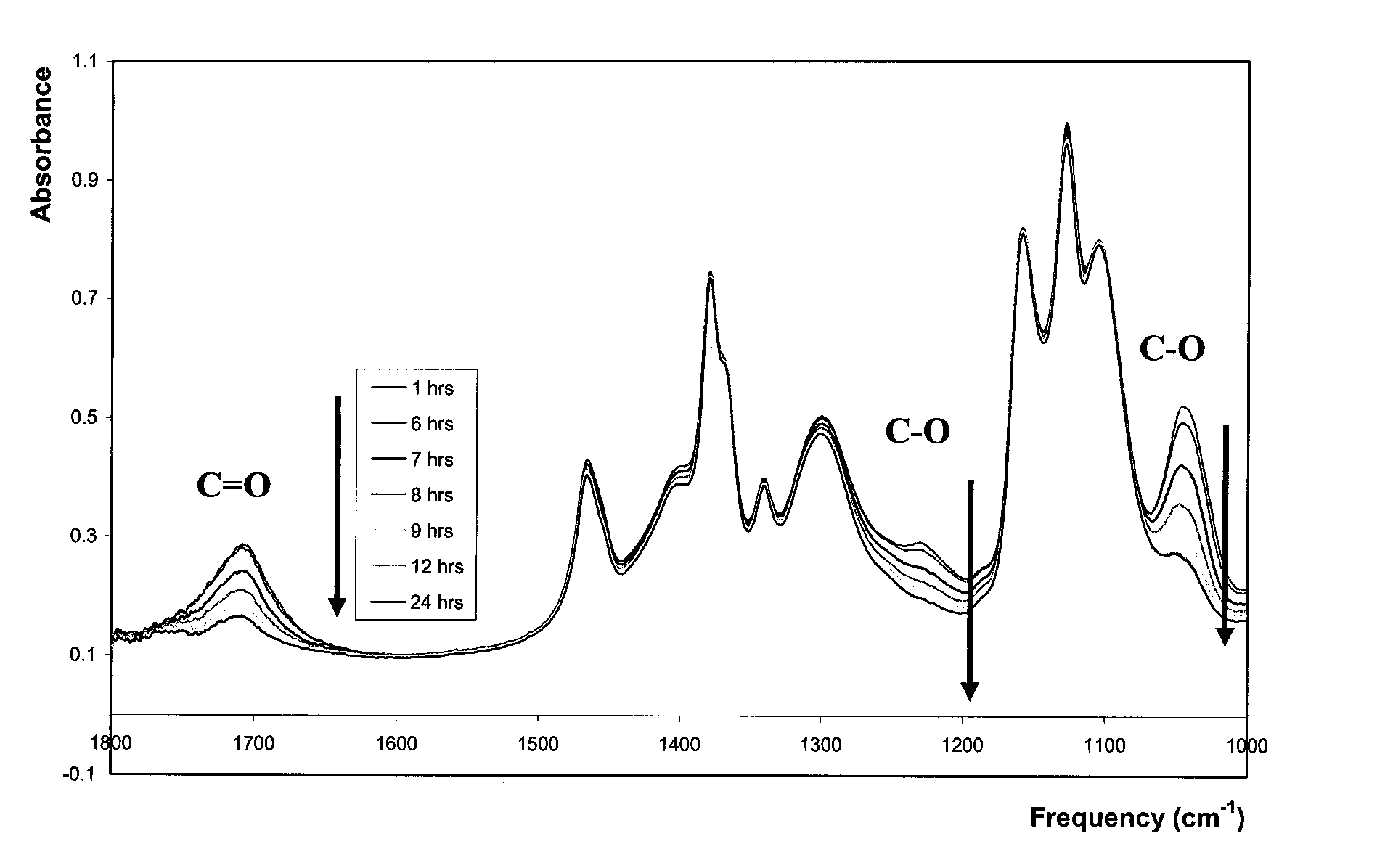
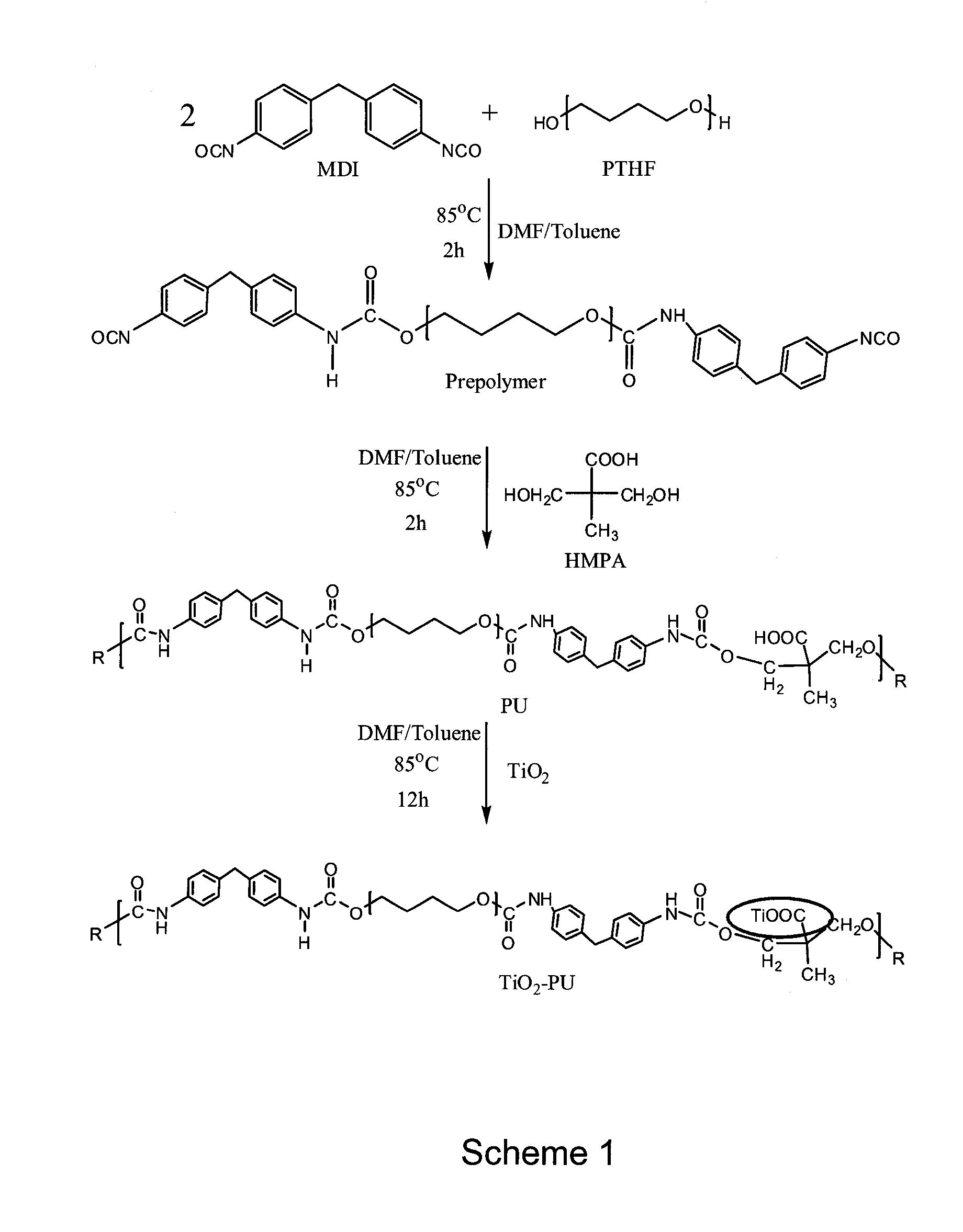
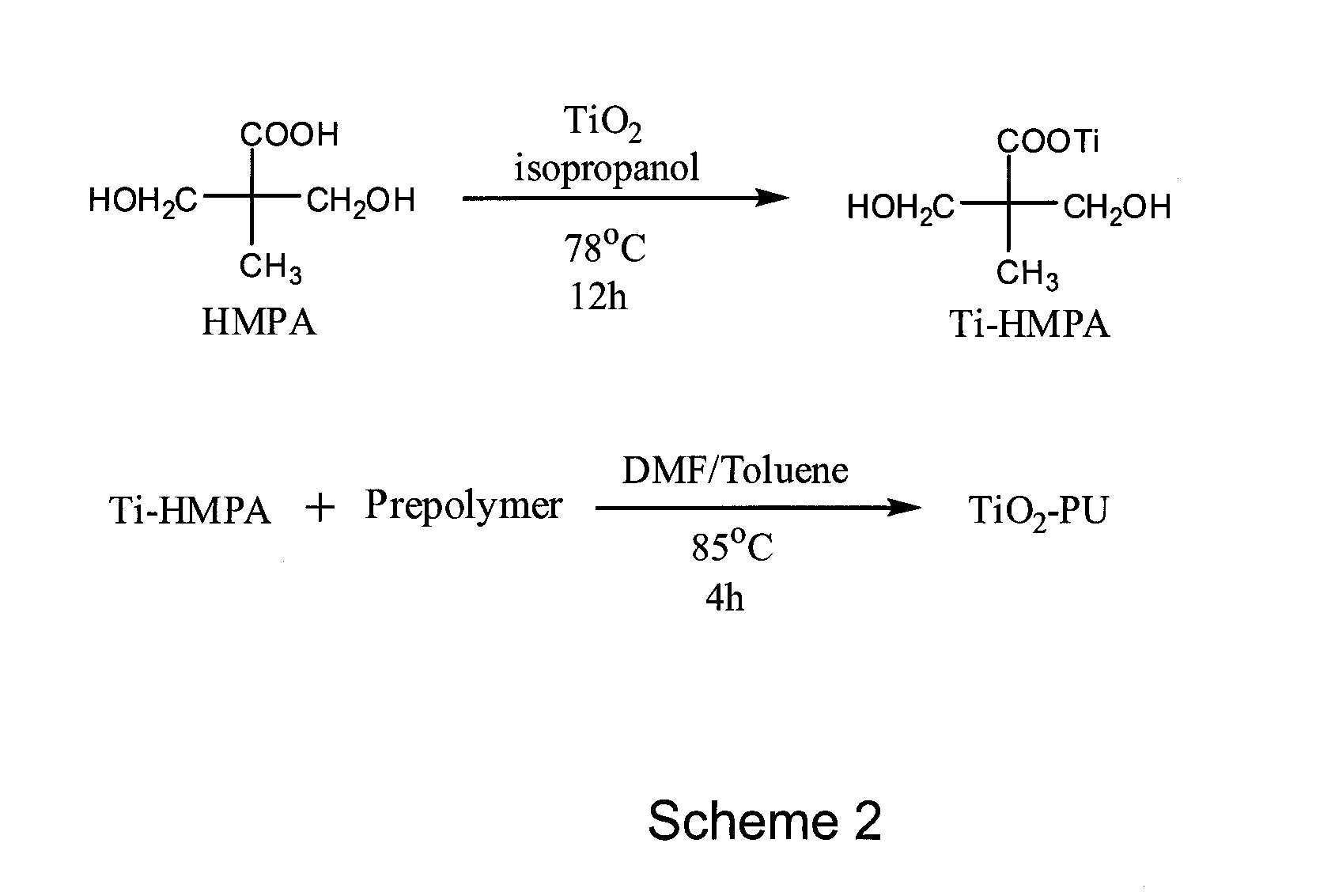
- The development of titania-polyurethane (nTiO2-PU) nanocomposites using 'grafting to' and 'grafting from' strategies, where titanium (IV) oxide nanoparticles are chemically bonded to the polyurethane polymer matrix using 2,2-bis(hydroxymethyl)propionic acid, enhancing dispersion and interaction, and optimizing the anatase:rutile ratio for improved photocatalytic and mechanical properties.

Self-cleaning system
PatentPendingIN202411032296A
Innovation
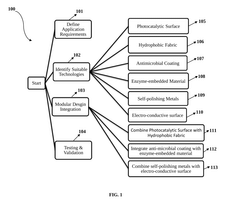
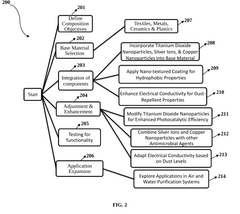
- A self-cleaning system utilizing photocatalytic surfaces with titanium dioxide nanoparticles, hydrophobic fabrics with nano-textured coatings, antimicrobial coatings with silver and copper ions, enzyme-embedded materials, and electro-conductive surfaces with a thin corrosion-resistant alloy layer to break down pollutants and microorganisms, reduce manual cleaning, and minimize chemical use.
Environmental Impact of Nitinol Self-Cleaning Surfaces
The environmental impact of Nitinol self-cleaning surfaces is a crucial aspect to consider in the development and implementation of this technology. Nitinol, a nickel-titanium alloy, offers unique properties that make it suitable for self-cleaning applications. However, its environmental implications must be carefully evaluated to ensure sustainable adoption.
One of the primary environmental benefits of Nitinol self-cleaning surfaces is the potential reduction in chemical cleaning agents. Traditional cleaning methods often rely on harsh chemicals that can harm ecosystems when released into water systems. By utilizing Nitinol's shape memory and superelasticity properties, surfaces can effectively remove contaminants without the need for excessive chemical use, thereby reducing water pollution and chemical waste.
Energy consumption is another factor to consider. Nitinol-based self-cleaning surfaces may require less frequent cleaning cycles, potentially leading to energy savings in maintenance processes. This reduction in energy use could contribute to lower greenhouse gas emissions associated with cleaning activities, particularly in large-scale applications such as building facades or solar panels.
The durability of Nitinol surfaces also plays a role in their environmental impact. The material's resistance to corrosion and wear can lead to longer-lasting products, reducing the need for frequent replacements. This longevity can result in decreased resource consumption and waste generation over time, aligning with principles of sustainable product design and circular economy.
However, the production of Nitinol itself raises environmental concerns. The mining and processing of nickel and titanium, the primary components of Nitinol, can have significant environmental impacts, including habitat destruction, water pollution, and energy-intensive refining processes. Efforts to mitigate these impacts through responsible sourcing and improved production techniques are essential for the overall sustainability of Nitinol-based technologies.
End-of-life considerations for Nitinol self-cleaning surfaces are also important. While the material is recyclable, the separation and recycling processes for Nitinol alloys can be complex and energy-intensive. Developing efficient recycling methods and establishing proper disposal protocols will be crucial to minimize the environmental footprint of these surfaces throughout their lifecycle.
The potential for Nitinol self-cleaning surfaces to improve air and water quality in urban environments should not be overlooked. By reducing the accumulation of pollutants and particulate matter on surfaces, these technologies could contribute to cleaner air and reduced stormwater runoff contamination, potentially yielding broader environmental benefits in densely populated areas.
One of the primary environmental benefits of Nitinol self-cleaning surfaces is the potential reduction in chemical cleaning agents. Traditional cleaning methods often rely on harsh chemicals that can harm ecosystems when released into water systems. By utilizing Nitinol's shape memory and superelasticity properties, surfaces can effectively remove contaminants without the need for excessive chemical use, thereby reducing water pollution and chemical waste.
Energy consumption is another factor to consider. Nitinol-based self-cleaning surfaces may require less frequent cleaning cycles, potentially leading to energy savings in maintenance processes. This reduction in energy use could contribute to lower greenhouse gas emissions associated with cleaning activities, particularly in large-scale applications such as building facades or solar panels.
The durability of Nitinol surfaces also plays a role in their environmental impact. The material's resistance to corrosion and wear can lead to longer-lasting products, reducing the need for frequent replacements. This longevity can result in decreased resource consumption and waste generation over time, aligning with principles of sustainable product design and circular economy.
However, the production of Nitinol itself raises environmental concerns. The mining and processing of nickel and titanium, the primary components of Nitinol, can have significant environmental impacts, including habitat destruction, water pollution, and energy-intensive refining processes. Efforts to mitigate these impacts through responsible sourcing and improved production techniques are essential for the overall sustainability of Nitinol-based technologies.
End-of-life considerations for Nitinol self-cleaning surfaces are also important. While the material is recyclable, the separation and recycling processes for Nitinol alloys can be complex and energy-intensive. Developing efficient recycling methods and establishing proper disposal protocols will be crucial to minimize the environmental footprint of these surfaces throughout their lifecycle.
The potential for Nitinol self-cleaning surfaces to improve air and water quality in urban environments should not be overlooked. By reducing the accumulation of pollutants and particulate matter on surfaces, these technologies could contribute to cleaner air and reduced stormwater runoff contamination, potentially yielding broader environmental benefits in densely populated areas.
Scalability and Cost Analysis of Nitinol Technology
The scalability and cost analysis of Nitinol technology in self-cleaning surfaces is a critical factor in determining its potential for widespread adoption. Nitinol, a shape memory alloy composed of nickel and titanium, offers unique properties that make it suitable for creating self-cleaning surfaces. However, the feasibility of large-scale implementation depends on several key factors.
One of the primary considerations is the production capacity of Nitinol. While the material has been successfully used in various applications, scaling up its production for widespread use in self-cleaning surfaces presents challenges. The manufacturing process of Nitinol requires precise control of composition and heat treatment, which can be complex and time-consuming. As demand increases, manufacturers will need to invest in advanced production facilities and technologies to meet the growing market needs.
The cost of raw materials is another significant factor affecting the scalability of Nitinol-based self-cleaning surfaces. Nickel and titanium, the primary components of Nitinol, are relatively expensive metals. Fluctuations in their market prices can have a substantial impact on the overall cost of production. Additionally, the purity requirements for these metals in Nitinol production further contribute to the material costs.
Processing and fabrication costs also play a crucial role in the scalability of Nitinol technology. The unique properties of Nitinol require specialized equipment and expertise for shaping and forming the material into self-cleaning surfaces. These processes can be energy-intensive and may require significant investments in machinery and skilled labor, potentially limiting the number of manufacturers capable of producing Nitinol-based self-cleaning products at scale.
The durability and lifespan of Nitinol self-cleaning surfaces are essential factors in assessing their long-term cost-effectiveness. While Nitinol is known for its corrosion resistance and shape memory properties, the repeated shape-changing cycles in self-cleaning applications may affect its longevity. Extended testing and real-world performance data are necessary to accurately determine the maintenance and replacement costs associated with these surfaces.
Market demand and potential applications will significantly influence the scalability of Nitinol technology in self-cleaning surfaces. As awareness of the benefits of self-cleaning surfaces grows, particularly in sectors such as healthcare, automotive, and architecture, economies of scale may be achieved. This increased demand could drive down production costs and make the technology more accessible to a broader range of industries and consumers.
In conclusion, while Nitinol shows promise for self-cleaning surface applications, its scalability and cost-effectiveness face several challenges. Overcoming these hurdles will require continued research and development, optimization of production processes, and strategic partnerships across the supply chain. As the technology matures and production scales up, it is likely that costs will decrease, making Nitinol-based self-cleaning surfaces more economically viable for widespread adoption.
One of the primary considerations is the production capacity of Nitinol. While the material has been successfully used in various applications, scaling up its production for widespread use in self-cleaning surfaces presents challenges. The manufacturing process of Nitinol requires precise control of composition and heat treatment, which can be complex and time-consuming. As demand increases, manufacturers will need to invest in advanced production facilities and technologies to meet the growing market needs.
The cost of raw materials is another significant factor affecting the scalability of Nitinol-based self-cleaning surfaces. Nickel and titanium, the primary components of Nitinol, are relatively expensive metals. Fluctuations in their market prices can have a substantial impact on the overall cost of production. Additionally, the purity requirements for these metals in Nitinol production further contribute to the material costs.
Processing and fabrication costs also play a crucial role in the scalability of Nitinol technology. The unique properties of Nitinol require specialized equipment and expertise for shaping and forming the material into self-cleaning surfaces. These processes can be energy-intensive and may require significant investments in machinery and skilled labor, potentially limiting the number of manufacturers capable of producing Nitinol-based self-cleaning products at scale.
The durability and lifespan of Nitinol self-cleaning surfaces are essential factors in assessing their long-term cost-effectiveness. While Nitinol is known for its corrosion resistance and shape memory properties, the repeated shape-changing cycles in self-cleaning applications may affect its longevity. Extended testing and real-world performance data are necessary to accurately determine the maintenance and replacement costs associated with these surfaces.
Market demand and potential applications will significantly influence the scalability of Nitinol technology in self-cleaning surfaces. As awareness of the benefits of self-cleaning surfaces grows, particularly in sectors such as healthcare, automotive, and architecture, economies of scale may be achieved. This increased demand could drive down production costs and make the technology more accessible to a broader range of industries and consumers.
In conclusion, while Nitinol shows promise for self-cleaning surface applications, its scalability and cost-effectiveness face several challenges. Overcoming these hurdles will require continued research and development, optimization of production processes, and strategic partnerships across the supply chain. As the technology matures and production scales up, it is likely that costs will decrease, making Nitinol-based self-cleaning surfaces more economically viable for widespread adoption.
Unlock deeper insights with PatSnap Eureka Quick Research — get a full tech report to explore trends and direct your research. Try now!
Generate Your Research Report Instantly with AI Agent
Supercharge your innovation with PatSnap Eureka AI Agent Platform!