

Modular Nitinol Assemblies for Rapid Deployment Systems
AUG 6, 20259 MIN READ
Generate Your Research Report Instantly with AI Agent
PatSnap Eureka helps you evaluate technical feasibility & market potential.
Nitinol Assemblies Background and Objectives
Nitinol, an equiatomic alloy of nickel and titanium, has emerged as a revolutionary material in the field of rapid deployment systems due to its unique shape memory and superelastic properties. The evolution of Nitinol technology can be traced back to its discovery in 1959 at the Naval Ordnance Laboratory. Since then, it has undergone significant advancements, leading to its widespread application in various industries, particularly in medical devices and aerospace engineering.
The primary objective of research on modular Nitinol assemblies for rapid deployment systems is to harness the material's exceptional characteristics to create innovative, compact, and efficient structures that can be quickly deployed in various environments. This research aims to overcome the limitations of traditional deployment mechanisms by leveraging Nitinol's ability to remember and return to a pre-defined shape when subjected to specific temperature changes or mechanical stress.
The development of modular Nitinol assemblies represents a convergence of materials science, mechanical engineering, and systems design. By focusing on modularity, researchers seek to enhance the versatility and adaptability of rapid deployment systems, allowing for customizable configurations that can be tailored to specific applications and environmental conditions.
Key technological trends in this field include the optimization of Nitinol's composition and heat treatment processes to fine-tune its transformation temperatures and mechanical properties. Additionally, there is a growing emphasis on developing advanced manufacturing techniques, such as 3D printing and precision machining, to fabricate complex Nitinol structures with high accuracy and repeatability.
The potential applications for modular Nitinol assemblies in rapid deployment systems span a wide range of sectors. In the aerospace industry, these assemblies could revolutionize the design of deployable antennas, solar arrays, and space habitats. In the medical field, they could enable the development of minimally invasive surgical tools and implantable devices that can be easily inserted and then expanded to their functional shape within the body.
As research in this area progresses, the ultimate goal is to create a new generation of rapid deployment systems that are lighter, more compact, and more reliable than their conventional counterparts. These systems would offer significant advantages in terms of transportation, storage, and operational efficiency, potentially transforming industries that rely on quick and effective deployment of structures and equipment.
The primary objective of research on modular Nitinol assemblies for rapid deployment systems is to harness the material's exceptional characteristics to create innovative, compact, and efficient structures that can be quickly deployed in various environments. This research aims to overcome the limitations of traditional deployment mechanisms by leveraging Nitinol's ability to remember and return to a pre-defined shape when subjected to specific temperature changes or mechanical stress.
The development of modular Nitinol assemblies represents a convergence of materials science, mechanical engineering, and systems design. By focusing on modularity, researchers seek to enhance the versatility and adaptability of rapid deployment systems, allowing for customizable configurations that can be tailored to specific applications and environmental conditions.
Key technological trends in this field include the optimization of Nitinol's composition and heat treatment processes to fine-tune its transformation temperatures and mechanical properties. Additionally, there is a growing emphasis on developing advanced manufacturing techniques, such as 3D printing and precision machining, to fabricate complex Nitinol structures with high accuracy and repeatability.
The potential applications for modular Nitinol assemblies in rapid deployment systems span a wide range of sectors. In the aerospace industry, these assemblies could revolutionize the design of deployable antennas, solar arrays, and space habitats. In the medical field, they could enable the development of minimally invasive surgical tools and implantable devices that can be easily inserted and then expanded to their functional shape within the body.
As research in this area progresses, the ultimate goal is to create a new generation of rapid deployment systems that are lighter, more compact, and more reliable than their conventional counterparts. These systems would offer significant advantages in terms of transportation, storage, and operational efficiency, potentially transforming industries that rely on quick and effective deployment of structures and equipment.
Market Analysis for Rapid Deployment Systems
The market for rapid deployment systems utilizing modular Nitinol assemblies is experiencing significant growth, driven by increasing demand across various sectors including military, emergency response, and aerospace industries. These systems offer crucial advantages in situations requiring quick setup and adaptability, making them particularly valuable in time-sensitive operations.
In the military sector, rapid deployment systems are essential for establishing temporary bases, command centers, and field hospitals in remote or hostile environments. The market for these systems is expected to expand as armed forces worldwide prioritize mobility and rapid response capabilities. The ability of Nitinol-based assemblies to deploy quickly and withstand harsh conditions aligns perfectly with military requirements.
Emergency response organizations represent another key market segment. In disaster relief operations, the speed of deployment can significantly impact the effectiveness of aid efforts. Modular Nitinol assemblies enable the rapid setup of temporary shelters, medical facilities, and communication centers, enhancing the overall efficiency of disaster response. As climate change increases the frequency and severity of natural disasters, the demand for these systems is projected to rise.
The aerospace industry is also showing growing interest in rapid deployment systems. Space agencies and private companies are exploring the use of Nitinol-based assemblies for deployable structures in satellites and space habitats. The unique properties of Nitinol, such as its shape memory and superelasticity, make it an ideal material for compact, lightweight structures that can unfold in space.
Market analysis indicates a trend towards miniaturization and increased functionality in rapid deployment systems. Customers are seeking solutions that offer not only quick setup but also enhanced durability, multi-functionality, and ease of transport. This trend is driving innovation in modular Nitinol assemblies, with manufacturers focusing on developing more compact and versatile designs.
The global market for rapid deployment systems is geographically diverse, with North America currently leading in terms of market share. However, significant growth is expected in Asia-Pacific and Middle Eastern markets, driven by increasing military modernization efforts and growing awareness of disaster preparedness needs.
Competition in this market is intensifying, with both established defense contractors and innovative startups vying for market share. Companies are investing heavily in research and development to create more advanced Nitinol-based systems, focusing on improving deployment speed, structural integrity, and overall system performance.
In the military sector, rapid deployment systems are essential for establishing temporary bases, command centers, and field hospitals in remote or hostile environments. The market for these systems is expected to expand as armed forces worldwide prioritize mobility and rapid response capabilities. The ability of Nitinol-based assemblies to deploy quickly and withstand harsh conditions aligns perfectly with military requirements.
Emergency response organizations represent another key market segment. In disaster relief operations, the speed of deployment can significantly impact the effectiveness of aid efforts. Modular Nitinol assemblies enable the rapid setup of temporary shelters, medical facilities, and communication centers, enhancing the overall efficiency of disaster response. As climate change increases the frequency and severity of natural disasters, the demand for these systems is projected to rise.
The aerospace industry is also showing growing interest in rapid deployment systems. Space agencies and private companies are exploring the use of Nitinol-based assemblies for deployable structures in satellites and space habitats. The unique properties of Nitinol, such as its shape memory and superelasticity, make it an ideal material for compact, lightweight structures that can unfold in space.
Market analysis indicates a trend towards miniaturization and increased functionality in rapid deployment systems. Customers are seeking solutions that offer not only quick setup but also enhanced durability, multi-functionality, and ease of transport. This trend is driving innovation in modular Nitinol assemblies, with manufacturers focusing on developing more compact and versatile designs.
The global market for rapid deployment systems is geographically diverse, with North America currently leading in terms of market share. However, significant growth is expected in Asia-Pacific and Middle Eastern markets, driven by increasing military modernization efforts and growing awareness of disaster preparedness needs.
Competition in this market is intensifying, with both established defense contractors and innovative startups vying for market share. Companies are investing heavily in research and development to create more advanced Nitinol-based systems, focusing on improving deployment speed, structural integrity, and overall system performance.
Current Challenges in Modular Nitinol Technology
Despite the promising potential of modular Nitinol assemblies for rapid deployment systems, several significant challenges currently hinder their widespread adoption and optimal performance. One of the primary obstacles is the complex thermomechanical behavior of Nitinol, which exhibits nonlinear and hysteretic characteristics. This makes it difficult to precisely control and predict the shape memory and superelastic properties of Nitinol components in modular assemblies, especially under varying environmental conditions and stress states.
Another major challenge lies in the design and manufacturing of reliable and consistent modular connections between Nitinol components. The unique properties of Nitinol, including its high elasticity and shape memory effect, complicate traditional joining methods such as welding or mechanical fastening. Ensuring robust and repeatable connections that maintain the desired functionality of the overall assembly remains a significant technical hurdle.
The scalability of modular Nitinol assemblies presents additional challenges. As the size and complexity of rapid deployment systems increase, maintaining uniform performance across all modules becomes increasingly difficult. This is particularly evident in larger structures where thermal gradients and mechanical stresses can lead to inconsistent activation and deployment behaviors among different modules.
Fatigue and durability concerns also pose significant challenges for modular Nitinol assemblies in rapid deployment applications. The repeated cycling of shape memory and superelastic transformations can lead to material degradation over time, potentially compromising the reliability and longevity of the system. Developing Nitinol alloys and assembly designs that can withstand numerous deployment cycles without significant performance deterioration is crucial for long-term viability.
Furthermore, the integration of sensing and control systems within modular Nitinol assemblies presents unique challenges. Incorporating sensors and actuators that can effectively monitor and regulate the behavior of Nitinol components without interfering with their functionality or compromising the overall system performance is a complex task. This integration is essential for achieving precise and adaptive control in rapid deployment scenarios.
Lastly, the cost-effectiveness of modular Nitinol assemblies remains a significant barrier to widespread adoption. The high cost of Nitinol materials, coupled with the specialized manufacturing processes required for modular assembly production, currently limits their application to high-value or niche markets. Developing more efficient production methods and exploring alternative material compositions that retain the desirable properties of Nitinol while reducing costs is an ongoing challenge in the field.
Another major challenge lies in the design and manufacturing of reliable and consistent modular connections between Nitinol components. The unique properties of Nitinol, including its high elasticity and shape memory effect, complicate traditional joining methods such as welding or mechanical fastening. Ensuring robust and repeatable connections that maintain the desired functionality of the overall assembly remains a significant technical hurdle.
The scalability of modular Nitinol assemblies presents additional challenges. As the size and complexity of rapid deployment systems increase, maintaining uniform performance across all modules becomes increasingly difficult. This is particularly evident in larger structures where thermal gradients and mechanical stresses can lead to inconsistent activation and deployment behaviors among different modules.
Fatigue and durability concerns also pose significant challenges for modular Nitinol assemblies in rapid deployment applications. The repeated cycling of shape memory and superelastic transformations can lead to material degradation over time, potentially compromising the reliability and longevity of the system. Developing Nitinol alloys and assembly designs that can withstand numerous deployment cycles without significant performance deterioration is crucial for long-term viability.
Furthermore, the integration of sensing and control systems within modular Nitinol assemblies presents unique challenges. Incorporating sensors and actuators that can effectively monitor and regulate the behavior of Nitinol components without interfering with their functionality or compromising the overall system performance is a complex task. This integration is essential for achieving precise and adaptive control in rapid deployment scenarios.
Lastly, the cost-effectiveness of modular Nitinol assemblies remains a significant barrier to widespread adoption. The high cost of Nitinol materials, coupled with the specialized manufacturing processes required for modular assembly production, currently limits their application to high-value or niche markets. Developing more efficient production methods and exploring alternative material compositions that retain the desirable properties of Nitinol while reducing costs is an ongoing challenge in the field.
Existing Modular Nitinol Assembly Solutions
01 Rapid deployment mechanisms for Nitinol assemblies
Modular Nitinol assemblies can be designed with rapid deployment mechanisms, allowing for quick and efficient installation in various applications. These mechanisms may utilize the shape memory properties of Nitinol to facilitate rapid expansion or deployment upon activation, making them suitable for time-sensitive operations or emergency situations.- Rapid deployment mechanisms for Nitinol assemblies: Modular Nitinol assemblies can be designed with rapid deployment mechanisms, allowing for quick and efficient installation in various applications. These mechanisms may utilize the shape memory properties of Nitinol to facilitate fast and controlled expansion or deployment of the assembly components.
- Modular design for customizable Nitinol structures: Nitinol assemblies can be designed with modular components, allowing for customization and adaptability to different requirements. This modular approach enables the creation of scalable and versatile structures that can be easily modified or expanded as needed.
- Integration of Nitinol assemblies in medical devices: Modular Nitinol assemblies can be incorporated into medical devices for rapid deployment in minimally invasive procedures. The unique properties of Nitinol, such as superelasticity and shape memory, make it ideal for applications in stents, implants, and other medical instruments that require controlled expansion or shape change.
- Automated deployment systems for Nitinol assemblies: Automated systems can be developed to facilitate the rapid deployment of modular Nitinol assemblies. These systems may incorporate sensors, actuators, and control mechanisms to ensure precise and efficient deployment of the Nitinol components in various applications.
- Environmental adaptability of Nitinol assemblies: Modular Nitinol assemblies can be designed to adapt to different environmental conditions during rapid deployment. This may include temperature-responsive activation, stress-induced transformations, or other mechanisms that allow the assembly to adjust its properties or configuration based on the surrounding environment.
02 Modular design for customizable Nitinol structures
The modular nature of these Nitinol assemblies allows for customizable and adaptable structures. Components can be easily added, removed, or replaced, enabling the creation of tailored solutions for specific applications. This modularity enhances versatility and reduces the need for complete system replacements when modifications are required.Expand Specific Solutions03 Integration of Nitinol assemblies in medical devices
Modular Nitinol assemblies find applications in medical devices, particularly in minimally invasive procedures. The shape memory and superelastic properties of Nitinol make it ideal for creating deployable structures within the body, such as stents or surgical instruments that can be easily inserted and expanded at the target site.Expand Specific Solutions04 Automated deployment systems for Nitinol assemblies
Advanced automated systems can be developed to control the deployment of modular Nitinol assemblies. These systems may incorporate sensors, actuators, and control algorithms to ensure precise and controlled deployment, enhancing the reliability and efficiency of the deployment process in various applications.Expand Specific Solutions05 Environmental adaptability of Nitinol assemblies
Modular Nitinol assemblies can be designed to adapt to changing environmental conditions. The unique properties of Nitinol allow these structures to respond to temperature changes or external stimuli, enabling self-adjustment or self-deployment in response to specific environmental triggers. This feature enhances the versatility and autonomy of the assemblies in various applications.Expand Specific Solutions
Key Players in Nitinol-based Systems
The research on Modular Nitinol Assemblies for Rapid Deployment Systems is in an emerging stage, with a growing market potential due to increasing applications in aerospace, defense, and medical industries. The technology's maturity is still developing, with key players like Diehl Stiftung & Co. KG, The Boeing Co., and Cornerstone Research Group, Inc. leading innovation. Universities such as Tsinghua University and University of Science & Technology Beijing are contributing to fundamental research. The market is characterized by a mix of established aerospace companies and specialized materials firms, indicating a competitive landscape with opportunities for technological breakthroughs and market expansion.
The Boeing Co.
Technical Solution: Boeing's research on modular Nitinol assemblies focuses on aerospace applications, particularly for deployable structures in satellites and aircraft. They have developed a patented system of interconnected Nitinol elements that can be compactly stored and rapidly deployed in space environments[4]. This technology utilizes the shape memory effect of Nitinol to create self-deploying antennas, solar arrays, and other space structures. Boeing's approach incorporates advanced computer modeling to predict and optimize the deployment behavior of complex Nitinol assemblies under various thermal conditions[5]. Additionally, they have made progress in integrating smart materials with traditional aerospace composites, creating hybrid structures that can adapt to changing mission requirements or environmental conditions[6].
Strengths: Extensive aerospace engineering expertise; Advanced modeling capabilities for complex deployments; Integration with existing aerospace systems. Weaknesses: High development costs; Limited terrestrial applications; Potential regulatory hurdles for space-based technologies.
Cornerstone Research Group, Inc.
Technical Solution: Cornerstone Research Group has developed innovative approaches to modular Nitinol assemblies, focusing on multifunctional and adaptive structures. Their research includes the development of Nitinol-based composite materials that combine the shape memory properties of Nitinol with the lightweight and high-strength characteristics of advanced composites[7]. They have pioneered techniques for embedding Nitinol wires or ribbons into polymer matrices, creating materials that can change shape or stiffness in response to thermal or electrical stimuli. CRG's modular approach allows for the creation of scalable, reconfigurable structures suitable for a wide range of applications, from morphing aircraft wings to adaptive space structures[8]. They have also developed novel joining techniques for Nitinol components, enabling the assembly of complex, three-dimensional structures with programmable deployment sequences[9].
Strengths: Integration of Nitinol with composite materials; Scalable and reconfigurable designs; Diverse application potential. Weaknesses: Complexity in manufacturing and quality control; Potential high costs for custom solutions; Challenges in long-term durability testing.
Core Innovations in Nitinol Deployment Mechanisms
Mechanical joining of nitinol tubes
PatentWO2020247650A1
Innovation
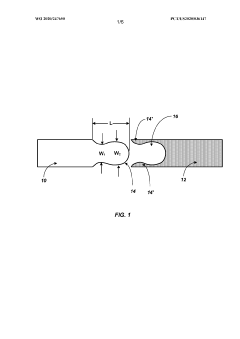
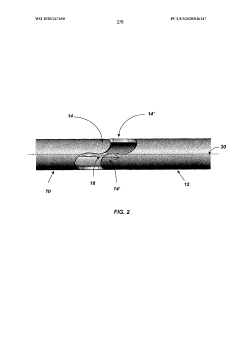
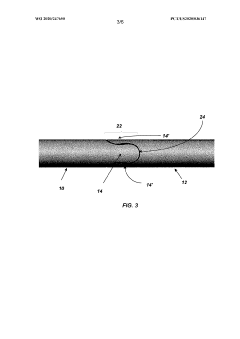
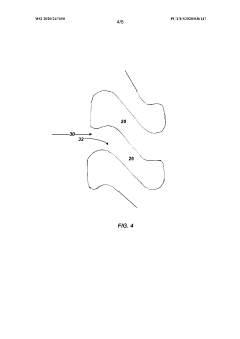
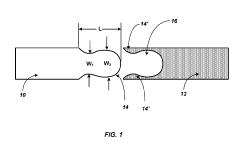
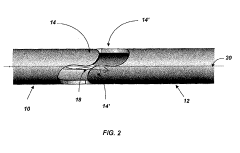
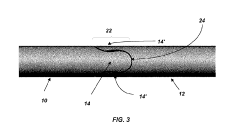
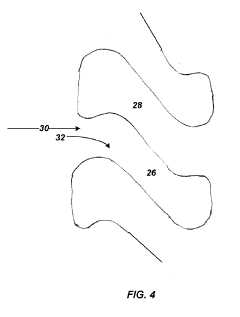
- The method involves creating Nitinol tubes with protruding lobes that interlock with corresponding lobes on other metallic tubes, utilizing superelasticity or shape memory properties to form a mechanical joint through translation, rotation, or hinging motions, eliminating the need for welding and intermediate components.
Mechanical Joining Of Nitinol Tubes
PatentActiveUS20190186659A1
Innovation
- A mechanical joint is formed by using Nitinol tubes with protruding lobes that interlock with corresponding lobes on another metallic tubular component, allowing for translation, rotational, or hinging motion to create a snap-fit joint, eliminating the need for welding and intermediate materials.
Material Science Advancements for Nitinol Alloys
Recent advancements in material science have significantly enhanced the properties and applications of Nitinol alloys, paving the way for innovative modular assemblies in rapid deployment systems. Nitinol, a nickel-titanium alloy known for its shape memory and superelastic properties, has undergone substantial improvements in terms of composition, processing techniques, and surface treatments.
One of the key developments is the refinement of Nitinol's microstructure through advanced heat treatment processes. Researchers have successfully optimized the transformation temperatures and mechanical properties by precisely controlling the annealing conditions. This has resulted in Nitinol components with enhanced fatigue resistance and improved cyclic stability, crucial for repetitive deployment applications.
Surface modification techniques have also seen significant progress. Novel coating methods, such as plasma electrolytic oxidation and diamond-like carbon coatings, have been developed to enhance the biocompatibility and wear resistance of Nitinol surfaces. These advancements are particularly beneficial for medical applications, where long-term implantation and interaction with biological tissues are common.
The introduction of ternary and quaternary Nitinol alloys has expanded the material's functional range. By adding elements like copper, iron, or cobalt, researchers have created Nitinol variants with tailored transformation temperatures and mechanical properties. This allows for more precise control over the shape memory effect and superelasticity, enabling the design of modular assemblies that can respond to specific environmental triggers.
Additive manufacturing techniques have revolutionized the fabrication of complex Nitinol structures. Selective laser melting and electron beam melting processes now allow for the production of intricate, patient-specific Nitinol components with optimized geometries. This breakthrough has opened up new possibilities for creating modular, customizable rapid deployment systems.
Advances in computational modeling and simulation have greatly enhanced the design process for Nitinol-based systems. Finite element analysis tools, coupled with machine learning algorithms, now enable accurate prediction of Nitinol's behavior under various loading conditions and temperatures. This has significantly reduced the time and cost associated with prototyping and testing of modular Nitinol assemblies.
The development of smart Nitinol composites represents another frontier in material science. By incorporating sensors or actuators within the Nitinol matrix, researchers have created materials that can self-monitor their state and actively respond to external stimuli. This innovation holds great promise for creating adaptive, self-deploying systems with enhanced functionality and reliability.
One of the key developments is the refinement of Nitinol's microstructure through advanced heat treatment processes. Researchers have successfully optimized the transformation temperatures and mechanical properties by precisely controlling the annealing conditions. This has resulted in Nitinol components with enhanced fatigue resistance and improved cyclic stability, crucial for repetitive deployment applications.
Surface modification techniques have also seen significant progress. Novel coating methods, such as plasma electrolytic oxidation and diamond-like carbon coatings, have been developed to enhance the biocompatibility and wear resistance of Nitinol surfaces. These advancements are particularly beneficial for medical applications, where long-term implantation and interaction with biological tissues are common.
The introduction of ternary and quaternary Nitinol alloys has expanded the material's functional range. By adding elements like copper, iron, or cobalt, researchers have created Nitinol variants with tailored transformation temperatures and mechanical properties. This allows for more precise control over the shape memory effect and superelasticity, enabling the design of modular assemblies that can respond to specific environmental triggers.
Additive manufacturing techniques have revolutionized the fabrication of complex Nitinol structures. Selective laser melting and electron beam melting processes now allow for the production of intricate, patient-specific Nitinol components with optimized geometries. This breakthrough has opened up new possibilities for creating modular, customizable rapid deployment systems.
Advances in computational modeling and simulation have greatly enhanced the design process for Nitinol-based systems. Finite element analysis tools, coupled with machine learning algorithms, now enable accurate prediction of Nitinol's behavior under various loading conditions and temperatures. This has significantly reduced the time and cost associated with prototyping and testing of modular Nitinol assemblies.
The development of smart Nitinol composites represents another frontier in material science. By incorporating sensors or actuators within the Nitinol matrix, researchers have created materials that can self-monitor their state and actively respond to external stimuli. This innovation holds great promise for creating adaptive, self-deploying systems with enhanced functionality and reliability.
Safety and Reliability Considerations
Safety and reliability are paramount considerations in the development and deployment of modular Nitinol assemblies for rapid deployment systems. The unique properties of Nitinol, particularly its shape memory and superelasticity, while advantageous for many applications, also present specific challenges that must be addressed to ensure the safety and reliability of these systems.
One of the primary safety concerns is the potential for unexpected shape changes or mechanical failures during deployment. Nitinol's shape memory effect, triggered by temperature changes, must be precisely controlled to prevent unintended transformations that could compromise the integrity of the assembly or pose risks to operators and surrounding equipment. Extensive testing under various environmental conditions is essential to validate the predictability and consistency of the shape memory response.
The fatigue resistance of Nitinol components is another critical factor in ensuring long-term reliability. While Nitinol generally exhibits excellent fatigue properties, the repeated stress cycles inherent in rapid deployment systems can lead to material degradation over time. Comprehensive fatigue testing protocols must be established to simulate real-world usage scenarios and determine the safe operational lifespan of the assemblies.
Corrosion resistance is also a key consideration, particularly in applications where the assemblies may be exposed to harsh environments or bodily fluids. Although Nitinol has good corrosion resistance due to its titanium content, the potential for galvanic corrosion when in contact with other metals must be carefully evaluated and mitigated through appropriate material selection and protective coatings.
The biocompatibility of Nitinol is crucial for applications in medical devices or systems that may come into contact with living tissues. Rigorous biocompatibility testing and compliance with relevant regulatory standards are necessary to ensure the safety of these assemblies in biological environments.
Quality control in the manufacturing process is essential for maintaining consistent performance and reliability. Precise control over the composition, heat treatment, and surface finish of Nitinol components is required to achieve the desired mechanical properties and prevent defects that could lead to premature failure.
Lastly, the design of fail-safe mechanisms and redundancies within the modular assemblies is crucial to mitigate the risks associated with component failure. This may include incorporating backup deployment systems or designing the assemblies to fail in a predictable and safe manner in the event of a malfunction.
By addressing these safety and reliability considerations through rigorous testing, careful material selection, and thoughtful design practices, researchers and engineers can develop modular Nitinol assemblies for rapid deployment systems that meet the high standards of safety and reliability required for critical applications.
One of the primary safety concerns is the potential for unexpected shape changes or mechanical failures during deployment. Nitinol's shape memory effect, triggered by temperature changes, must be precisely controlled to prevent unintended transformations that could compromise the integrity of the assembly or pose risks to operators and surrounding equipment. Extensive testing under various environmental conditions is essential to validate the predictability and consistency of the shape memory response.
The fatigue resistance of Nitinol components is another critical factor in ensuring long-term reliability. While Nitinol generally exhibits excellent fatigue properties, the repeated stress cycles inherent in rapid deployment systems can lead to material degradation over time. Comprehensive fatigue testing protocols must be established to simulate real-world usage scenarios and determine the safe operational lifespan of the assemblies.
Corrosion resistance is also a key consideration, particularly in applications where the assemblies may be exposed to harsh environments or bodily fluids. Although Nitinol has good corrosion resistance due to its titanium content, the potential for galvanic corrosion when in contact with other metals must be carefully evaluated and mitigated through appropriate material selection and protective coatings.
The biocompatibility of Nitinol is crucial for applications in medical devices or systems that may come into contact with living tissues. Rigorous biocompatibility testing and compliance with relevant regulatory standards are necessary to ensure the safety of these assemblies in biological environments.
Quality control in the manufacturing process is essential for maintaining consistent performance and reliability. Precise control over the composition, heat treatment, and surface finish of Nitinol components is required to achieve the desired mechanical properties and prevent defects that could lead to premature failure.
Lastly, the design of fail-safe mechanisms and redundancies within the modular assemblies is crucial to mitigate the risks associated with component failure. This may include incorporating backup deployment systems or designing the assemblies to fail in a predictable and safe manner in the event of a malfunction.
By addressing these safety and reliability considerations through rigorous testing, careful material selection, and thoughtful design practices, researchers and engineers can develop modular Nitinol assemblies for rapid deployment systems that meet the high standards of safety and reliability required for critical applications.
Unlock deeper insights with PatSnap Eureka Quick Research — get a full tech report to explore trends and direct your research. Try now!
Generate Your Research Report Instantly with AI Agent
Supercharge your innovation with PatSnap Eureka AI Agent Platform!