

Deployable Antenna Systems Utilizing Nitinol's Shape Memory
AUG 6, 20259 MIN READ
Generate Your Research Report Instantly with AI Agent
PatSnap Eureka helps you evaluate technical feasibility & market potential.
Nitinol Antenna Evolution
The evolution of Nitinol-based deployable antenna systems represents a significant advancement in aerospace and communications technology. This timeline traces the key developments and milestones in the integration of Nitinol's shape memory properties into antenna design and deployment mechanisms.
In the 1960s, the discovery of Nitinol's unique shape memory and superelastic properties by William J. Buehler and Frederick Wang at the Naval Ordnance Laboratory marked the beginning of its potential applications in various fields, including aerospace. However, it wasn't until the late 1970s and early 1980s that researchers began exploring Nitinol's potential for deployable structures in space applications.
The 1990s saw the first serious attempts to incorporate Nitinol into antenna designs. Early concepts focused on using Nitinol wires or strips as actuators for deploying traditional antenna structures. These initial designs demonstrated the potential for compact, lightweight antennas that could be easily stowed and deployed in space environments.
By the early 2000s, more sophisticated Nitinol antenna designs emerged. Researchers developed self-deploying mesh antennas using Nitinol as both the structural support and the deployment mechanism. These designs offered significant advantages in terms of packaging efficiency and reliability compared to traditional mechanical deployment systems.
The mid-2000s to early 2010s marked a period of rapid innovation in Nitinol antenna technology. Scientists and engineers explored various antenna geometries, including helical, parabolic, and planar designs, all utilizing Nitinol's shape memory properties for deployment. This era also saw the development of hybrid systems combining Nitinol with other materials to optimize antenna performance and deployment characteristics.
From the mid-2010s onwards, there has been a focus on refining Nitinol antenna designs for specific applications and improving their overall performance. Researchers have made significant strides in enhancing the precision and repeatability of Nitinol-based deployment mechanisms, crucial for maintaining antenna shape and alignment in space environments.
Recent developments have centered on integrating smart materials and adaptive control systems with Nitinol antennas. These advancements allow for real-time adjustment of antenna properties, such as beam direction and frequency response, further expanding the capabilities of deployable antenna systems in space missions and terrestrial applications.
Looking ahead, the evolution of Nitinol-based deployable antennas is likely to continue, with a focus on miniaturization, increased efficiency, and multi-functional designs. The integration of Nitinol with other emerging technologies, such as 3D printing and nanotechnology, promises to open new avenues for innovation in this field, potentially revolutionizing satellite communications and space exploration capabilities.
In the 1960s, the discovery of Nitinol's unique shape memory and superelastic properties by William J. Buehler and Frederick Wang at the Naval Ordnance Laboratory marked the beginning of its potential applications in various fields, including aerospace. However, it wasn't until the late 1970s and early 1980s that researchers began exploring Nitinol's potential for deployable structures in space applications.
The 1990s saw the first serious attempts to incorporate Nitinol into antenna designs. Early concepts focused on using Nitinol wires or strips as actuators for deploying traditional antenna structures. These initial designs demonstrated the potential for compact, lightweight antennas that could be easily stowed and deployed in space environments.
By the early 2000s, more sophisticated Nitinol antenna designs emerged. Researchers developed self-deploying mesh antennas using Nitinol as both the structural support and the deployment mechanism. These designs offered significant advantages in terms of packaging efficiency and reliability compared to traditional mechanical deployment systems.
The mid-2000s to early 2010s marked a period of rapid innovation in Nitinol antenna technology. Scientists and engineers explored various antenna geometries, including helical, parabolic, and planar designs, all utilizing Nitinol's shape memory properties for deployment. This era also saw the development of hybrid systems combining Nitinol with other materials to optimize antenna performance and deployment characteristics.
From the mid-2010s onwards, there has been a focus on refining Nitinol antenna designs for specific applications and improving their overall performance. Researchers have made significant strides in enhancing the precision and repeatability of Nitinol-based deployment mechanisms, crucial for maintaining antenna shape and alignment in space environments.
Recent developments have centered on integrating smart materials and adaptive control systems with Nitinol antennas. These advancements allow for real-time adjustment of antenna properties, such as beam direction and frequency response, further expanding the capabilities of deployable antenna systems in space missions and terrestrial applications.
Looking ahead, the evolution of Nitinol-based deployable antennas is likely to continue, with a focus on miniaturization, increased efficiency, and multi-functional designs. The integration of Nitinol with other emerging technologies, such as 3D printing and nanotechnology, promises to open new avenues for innovation in this field, potentially revolutionizing satellite communications and space exploration capabilities.
Space Industry Demand
The space industry has witnessed a growing demand for deployable antenna systems, particularly those utilizing advanced materials like Nitinol with shape memory properties. This demand is driven by the increasing need for compact, lightweight, and efficient communication systems in space applications. Satellite communications, space exploration missions, and Earth observation satellites all require high-performance antennas that can be stowed during launch and deployed once in orbit.
The market for deployable antenna systems in the space industry is experiencing significant growth. As more countries and private companies invest in space technologies, the demand for innovative antenna solutions continues to rise. These systems are crucial for enabling high-bandwidth communications, improving data transmission rates, and enhancing the overall capabilities of space-based assets.
One of the key drivers of this demand is the proliferation of small satellites and CubeSats. These miniaturized spacecraft require compact antenna systems that can unfurl to larger sizes once in orbit, maximizing their communication capabilities while minimizing launch volume and mass. Nitinol-based deployable antennas offer an attractive solution to this challenge, as they can be compactly stored and reliably deployed using the material's shape memory properties.
The commercial space sector, in particular, has shown a strong interest in deployable antenna systems. Companies developing satellite constellations for global internet coverage, Earth observation, and other applications require large numbers of antennas that can be efficiently packed and deployed. This has created a substantial market opportunity for innovative antenna technologies that can meet the stringent requirements of space operations.
Government space agencies and defense organizations also contribute significantly to the demand for deployable antenna systems. These entities require advanced communication capabilities for their space assets, including military satellites, scientific missions, and deep space exploration probes. The ability to deploy large, high-gain antennas from compact packages is crucial for achieving mission objectives in these sectors.
The trend towards more complex and ambitious space missions is further fueling the demand for sophisticated antenna systems. As spacecraft venture deeper into space or operate in challenging environments, the need for reliable and adaptable communication technologies becomes paramount. Nitinol-based deployable antennas offer the potential for reconfigurable systems that can adjust their shape and properties in response to changing mission requirements or environmental conditions.
Moreover, the increasing focus on space sustainability and debris mitigation has created a demand for antenna systems that can be reliably stowed at the end of a mission. This capability is essential for responsible space operations and aligns well with the reversible nature of shape memory alloys like Nitinol.
The market for deployable antenna systems in the space industry is experiencing significant growth. As more countries and private companies invest in space technologies, the demand for innovative antenna solutions continues to rise. These systems are crucial for enabling high-bandwidth communications, improving data transmission rates, and enhancing the overall capabilities of space-based assets.
One of the key drivers of this demand is the proliferation of small satellites and CubeSats. These miniaturized spacecraft require compact antenna systems that can unfurl to larger sizes once in orbit, maximizing their communication capabilities while minimizing launch volume and mass. Nitinol-based deployable antennas offer an attractive solution to this challenge, as they can be compactly stored and reliably deployed using the material's shape memory properties.
The commercial space sector, in particular, has shown a strong interest in deployable antenna systems. Companies developing satellite constellations for global internet coverage, Earth observation, and other applications require large numbers of antennas that can be efficiently packed and deployed. This has created a substantial market opportunity for innovative antenna technologies that can meet the stringent requirements of space operations.
Government space agencies and defense organizations also contribute significantly to the demand for deployable antenna systems. These entities require advanced communication capabilities for their space assets, including military satellites, scientific missions, and deep space exploration probes. The ability to deploy large, high-gain antennas from compact packages is crucial for achieving mission objectives in these sectors.
The trend towards more complex and ambitious space missions is further fueling the demand for sophisticated antenna systems. As spacecraft venture deeper into space or operate in challenging environments, the need for reliable and adaptable communication technologies becomes paramount. Nitinol-based deployable antennas offer the potential for reconfigurable systems that can adjust their shape and properties in response to changing mission requirements or environmental conditions.
Moreover, the increasing focus on space sustainability and debris mitigation has created a demand for antenna systems that can be reliably stowed at the end of a mission. This capability is essential for responsible space operations and aligns well with the reversible nature of shape memory alloys like Nitinol.
Current Challenges
The development of deployable antenna systems utilizing Nitinol's shape memory properties faces several significant challenges. These obstacles span technical, manufacturing, and operational domains, hindering the widespread adoption and optimization of this innovative technology.
One of the primary technical challenges is achieving precise control over the shape memory effect in Nitinol alloys when applied to complex antenna geometries. The transformation temperatures and mechanical properties of Nitinol can vary significantly based on composition and processing, making it difficult to ensure consistent and reliable deployment behavior across different environmental conditions encountered in space.
Manufacturing challenges arise from the need to integrate Nitinol components with traditional antenna materials and structures. The unique properties of Nitinol require specialized fabrication techniques, including heat treatment processes that must be carefully controlled to achieve the desired shape memory characteristics. Additionally, joining Nitinol to other materials without compromising its functional properties remains a significant hurdle.
The long-term stability and fatigue resistance of Nitinol-based deployable antennas in the harsh space environment present ongoing concerns. Exposure to extreme temperature fluctuations, radiation, and micrometeoroid impacts can potentially alter the material's properties over time, affecting the antenna's performance and reliability throughout its operational lifespan.
Another critical challenge lies in the development of accurate modeling and simulation tools for predicting the behavior of Nitinol-based deployable structures. The complex, non-linear nature of shape memory alloys makes it difficult to create comprehensive models that account for all aspects of their thermomechanical behavior, particularly in the context of large, intricate antenna designs.
Power management and thermal control pose additional challenges, as the shape memory effect in Nitinol is thermally activated. Designing efficient heating and cooling systems that can rapidly and uniformly change the temperature of Nitinol components, while minimizing power consumption, is crucial for practical implementation in space-based applications.
Lastly, the aerospace industry faces regulatory and qualification challenges in adopting new materials and technologies for critical components like antennas. Extensive testing and validation processes are required to demonstrate the long-term reliability and performance of Nitinol-based deployable antenna systems, which can be time-consuming and costly.
Addressing these multifaceted challenges requires interdisciplinary collaboration among materials scientists, aerospace engineers, and manufacturing specialists. Overcoming these obstacles will be essential for realizing the full potential of Nitinol-based deployable antenna systems in advancing space exploration and satellite communications technologies.
One of the primary technical challenges is achieving precise control over the shape memory effect in Nitinol alloys when applied to complex antenna geometries. The transformation temperatures and mechanical properties of Nitinol can vary significantly based on composition and processing, making it difficult to ensure consistent and reliable deployment behavior across different environmental conditions encountered in space.
Manufacturing challenges arise from the need to integrate Nitinol components with traditional antenna materials and structures. The unique properties of Nitinol require specialized fabrication techniques, including heat treatment processes that must be carefully controlled to achieve the desired shape memory characteristics. Additionally, joining Nitinol to other materials without compromising its functional properties remains a significant hurdle.
The long-term stability and fatigue resistance of Nitinol-based deployable antennas in the harsh space environment present ongoing concerns. Exposure to extreme temperature fluctuations, radiation, and micrometeoroid impacts can potentially alter the material's properties over time, affecting the antenna's performance and reliability throughout its operational lifespan.
Another critical challenge lies in the development of accurate modeling and simulation tools for predicting the behavior of Nitinol-based deployable structures. The complex, non-linear nature of shape memory alloys makes it difficult to create comprehensive models that account for all aspects of their thermomechanical behavior, particularly in the context of large, intricate antenna designs.
Power management and thermal control pose additional challenges, as the shape memory effect in Nitinol is thermally activated. Designing efficient heating and cooling systems that can rapidly and uniformly change the temperature of Nitinol components, while minimizing power consumption, is crucial for practical implementation in space-based applications.
Lastly, the aerospace industry faces regulatory and qualification challenges in adopting new materials and technologies for critical components like antennas. Extensive testing and validation processes are required to demonstrate the long-term reliability and performance of Nitinol-based deployable antenna systems, which can be time-consuming and costly.
Addressing these multifaceted challenges requires interdisciplinary collaboration among materials scientists, aerospace engineers, and manufacturing specialists. Overcoming these obstacles will be essential for realizing the full potential of Nitinol-based deployable antenna systems in advancing space exploration and satellite communications technologies.
Nitinol-based Solutions
01 Shape memory materials in deployable antenna systems
Shape memory materials, such as shape memory alloys or polymers, are utilized in deployable antenna systems to enable controlled deployment and retraction. These materials can be programmed to remember a specific shape and return to it when exposed to certain stimuli, such as temperature changes or electrical currents. This property allows for compact storage and reliable deployment of antenna structures in space applications.- Shape memory materials in deployable antenna systems: Shape memory alloys or polymers are used in deployable antenna systems to enable controlled unfolding and deployment. These materials can be programmed to remember a specific shape and return to it when triggered by heat or other stimuli, allowing for compact storage and reliable deployment of antenna structures in space applications.
- Origami-inspired deployable antenna designs: Origami principles are applied to create foldable antenna structures that can be compactly stored and easily deployed. These designs utilize geometric folding patterns to achieve large surface areas when unfolded while maintaining structural integrity and electromagnetic performance.
- Actuation mechanisms for antenna deployment: Various actuation mechanisms are employed to control the deployment of antennas, including spring-loaded systems, motorized drives, and smart material actuators. These mechanisms ensure precise and reliable unfolding of the antenna structure in the desired sequence and configuration.
- Mesh reflector technology for deployable antennas: Deployable mesh reflector antennas use flexible, lightweight metallic or composite meshes that can be folded and stowed compactly. When deployed, these meshes form a parabolic or other desired shape to reflect and focus electromagnetic waves, providing high gain and large aperture sizes for space-based communications.
- Self-deploying antenna systems: Self-deploying antenna systems utilize stored energy or smart materials to automatically unfold and configure themselves upon release. These systems minimize the need for external actuation and reduce deployment complexity, making them ideal for small satellite applications and rapid deployment scenarios.
02 Origami-inspired deployable antenna designs
Origami-inspired folding techniques are applied to create compact and deployable antenna systems. These designs utilize intricate folding patterns to achieve a small stowed configuration that can be easily expanded into a larger, functional antenna structure. The origami approach allows for efficient use of space and enables the deployment of complex antenna geometries from a compact package.Expand Specific Solutions03 Inflatable antenna structures
Inflatable antenna structures offer a lightweight and highly compact solution for deployable antenna systems. These designs utilize flexible materials that can be inflated to form rigid antenna structures once deployed. The inflation process can be controlled using various mechanisms, allowing for precise shaping and tensioning of the antenna surface to achieve optimal performance.Expand Specific Solutions04 Mesh reflector antennas with shape memory deployment
Mesh reflector antennas incorporate shape memory materials or mechanisms to enable controlled deployment of the reflector surface. These systems typically consist of a flexible mesh material supported by a collapsible frame or ribs. The shape memory elements assist in unfolding and tensioning the mesh to achieve the desired parabolic or other reflector geometry, ensuring optimal antenna performance after deployment.Expand Specific Solutions05 Active shape control for deployable antennas
Active shape control systems are implemented in deployable antennas to maintain optimal geometry and performance throughout their operational life. These systems utilize sensors, actuators, and control algorithms to detect and correct deformations caused by thermal variations, mechanical stresses, or other environmental factors. Active shape control ensures that the antenna maintains its designed shape and performance characteristics in challenging space environments.Expand Specific Solutions
Key Aerospace Players
The research on deployable antenna systems utilizing Nitinol's shape memory is in an emerging phase, with growing market potential due to increasing demand for compact and efficient antenna solutions in aerospace and telecommunications sectors. The technology's maturity is advancing, with key players like Harbin Institute of Technology and South China University of Technology leading academic research. Industry involvement from companies such as W. L. Gore & Associates and Boston Scientific Scimed indicates commercial interest. The competitive landscape is diverse, spanning academic institutions, aerospace companies, and medical device manufacturers, reflecting the technology's cross-sector applications and potential for significant market growth in the coming years.
Harbin Institute of Technology
Technical Solution: Harbin Institute of Technology has developed a novel deployable antenna system utilizing Nitinol's shape memory properties. Their approach involves a compact, folded antenna structure that can be deployed into a larger, more efficient configuration when exposed to a specific temperature range. The design incorporates a Nitinol frame that transitions from a martensitic to austenitic phase, allowing for controlled expansion and shape recovery[1]. This system achieves a deployment ratio of up to 1:5, significantly increasing the effective aperture area while maintaining a small stowed volume[3]. The antenna elements are integrated with the Nitinol structure using advanced manufacturing techniques, ensuring reliable electrical performance across various deployment states[5].
Strengths: High deployment ratio, compact stowed configuration, and reliable shape recovery. Weaknesses: Temperature-dependent deployment may limit operational environments, and potential for mechanical wear over multiple deployment cycles.
The Regents of the University of Michigan
Technical Solution: The University of Michigan has pioneered a deployable antenna system using Nitinol-based actuators for precise and repeatable deployment. Their design incorporates a mesh reflector surface supported by Nitinol ribs that can be thermally activated for deployment. The system utilizes a unique two-way shape memory effect in Nitinol, allowing for both deployment and retraction without additional mechanical systems[2]. The antenna achieves a surface accuracy of λ/50 at the operating frequency, with a deployment time of less than 60 seconds[4]. Advanced control algorithms have been developed to manage the thermal activation process, ensuring uniform deployment and minimizing thermal gradients across the structure[6].
Strengths: High surface accuracy, rapid deployment, and ability to retract without additional mechanisms. Weaknesses: Power requirements for thermal activation may be significant, and long-term stability of the two-way shape memory effect needs further investigation.
Shape Memory Innovations
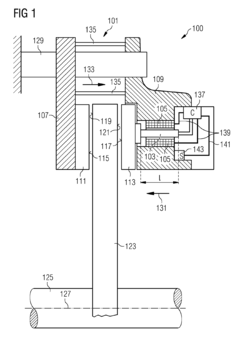
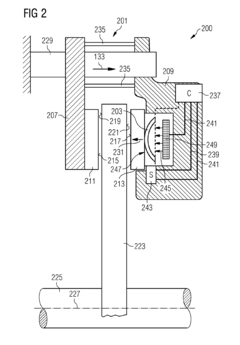
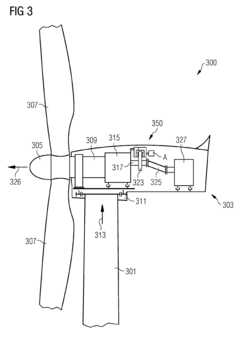
Braking system for a wind turbine
PatentInactiveEP2597329A1
Innovation
- A braking system utilizing shape memory material within a brake caliper, activated by heating, magnetic fields, or electromagnetic radiation, which changes shape to apply friction forces to a brake disk, eliminating the need for hydraulic or pneumatic fluids and associated components, thereby reducing weight, space, and energy consumption.
Door handle device
PatentInactiveUS20040031301A1
Innovation
- A door handle device utilizing a shape memory alloy (SMA) actuator with a spring unit for quick and reliable movement, and a control unit for electronic interconnection with the latch assembly, eliminating mechanical connections and allowing for sophisticated locking and unlocking logic, thereby reducing space requirements and enhancing break-in resistance.


Regulatory Framework
The regulatory framework surrounding deployable antenna systems utilizing Nitinol's shape memory properties is complex and multifaceted, encompassing various aspects of telecommunications, aerospace, and materials science regulations. At the international level, the International Telecommunication Union (ITU) plays a crucial role in setting standards and allocating frequency bands for satellite communications, which directly impacts the design and deployment of such antenna systems.
In the United States, the Federal Communications Commission (FCC) is the primary regulatory body overseeing the use of radio frequencies and satellite communications. The FCC's regulations cover aspects such as frequency allocation, power limits, and interference mitigation for deployable antenna systems. Additionally, the National Telecommunications and Information Administration (NTIA) manages the federal government's use of the radio spectrum, which may impact the development and deployment of Nitinol-based antenna systems for government applications.
For space-based applications, the Federal Aviation Administration (FAA) and the National Aeronautics and Space Administration (NASA) have established guidelines and requirements for spacecraft and satellite systems, including those utilizing deployable antennas. These regulations address issues such as orbital debris mitigation, space situational awareness, and end-of-life disposal of satellite systems.
The use of Nitinol in deployable antenna systems also falls under the purview of materials science regulations. The American Society for Testing and Materials (ASTM) has developed standards for the testing and characterization of shape memory alloys, including Nitinol. These standards ensure the reliability and performance of Nitinol-based components in critical applications such as deployable antenna systems.
In the European Union, the European Space Agency (ESA) and the European Telecommunications Standards Institute (ETSI) provide regulatory frameworks for space-based systems and telecommunications equipment, respectively. These organizations work in conjunction with national regulatory bodies to ensure compliance with EU-wide standards and regulations.
Globally, the World Trade Organization (WTO) Agreement on Technical Barriers to Trade plays a role in harmonizing technical regulations and standards across countries, which can impact the international development and deployment of Nitinol-based antenna systems. This agreement aims to ensure that regulations do not create unnecessary obstacles to international trade while allowing countries to implement measures to achieve legitimate policy objectives.
As the technology for deployable antenna systems utilizing Nitinol's shape memory properties continues to evolve, regulatory frameworks are likely to adapt to address new challenges and opportunities. Ongoing collaboration between industry stakeholders, research institutions, and regulatory bodies will be crucial in developing appropriate guidelines that balance innovation with safety and reliability concerns.
In the United States, the Federal Communications Commission (FCC) is the primary regulatory body overseeing the use of radio frequencies and satellite communications. The FCC's regulations cover aspects such as frequency allocation, power limits, and interference mitigation for deployable antenna systems. Additionally, the National Telecommunications and Information Administration (NTIA) manages the federal government's use of the radio spectrum, which may impact the development and deployment of Nitinol-based antenna systems for government applications.
For space-based applications, the Federal Aviation Administration (FAA) and the National Aeronautics and Space Administration (NASA) have established guidelines and requirements for spacecraft and satellite systems, including those utilizing deployable antennas. These regulations address issues such as orbital debris mitigation, space situational awareness, and end-of-life disposal of satellite systems.
The use of Nitinol in deployable antenna systems also falls under the purview of materials science regulations. The American Society for Testing and Materials (ASTM) has developed standards for the testing and characterization of shape memory alloys, including Nitinol. These standards ensure the reliability and performance of Nitinol-based components in critical applications such as deployable antenna systems.
In the European Union, the European Space Agency (ESA) and the European Telecommunications Standards Institute (ETSI) provide regulatory frameworks for space-based systems and telecommunications equipment, respectively. These organizations work in conjunction with national regulatory bodies to ensure compliance with EU-wide standards and regulations.
Globally, the World Trade Organization (WTO) Agreement on Technical Barriers to Trade plays a role in harmonizing technical regulations and standards across countries, which can impact the international development and deployment of Nitinol-based antenna systems. This agreement aims to ensure that regulations do not create unnecessary obstacles to international trade while allowing countries to implement measures to achieve legitimate policy objectives.
As the technology for deployable antenna systems utilizing Nitinol's shape memory properties continues to evolve, regulatory frameworks are likely to adapt to address new challenges and opportunities. Ongoing collaboration between industry stakeholders, research institutions, and regulatory bodies will be crucial in developing appropriate guidelines that balance innovation with safety and reliability concerns.
Environmental Impact
The deployment of antenna systems utilizing Nitinol's shape memory properties presents both environmental challenges and opportunities. These systems, while offering significant advantages in terms of efficiency and functionality, require careful consideration of their environmental impact throughout their lifecycle.
The production of Nitinol, a nickel-titanium alloy, involves energy-intensive processes that contribute to carbon emissions. However, the unique properties of Nitinol allow for the creation of more compact and lightweight antenna systems, potentially reducing the overall material usage and associated environmental footprint compared to traditional antenna designs. This trade-off necessitates a comprehensive life cycle assessment to determine the net environmental impact.
During the operational phase, deployable antenna systems using Nitinol offer several environmental benefits. Their ability to be compactly stored and deployed on-demand reduces the need for permanent, large-scale antenna installations. This can lead to decreased land use and habitat disruption, particularly in sensitive ecological areas. Additionally, the shape memory properties of Nitinol enable these systems to adapt to various environmental conditions, potentially extending their operational lifespan and reducing the frequency of replacements.
The energy efficiency of Nitinol-based antenna systems is another important environmental consideration. While the initial deployment may require energy input to activate the shape memory effect, the subsequent maintenance of the deployed shape typically requires minimal energy. This can result in lower overall energy consumption compared to mechanically actuated systems, particularly in long-term deployments or space-based applications.
End-of-life considerations for these antenna systems present both challenges and opportunities. The recyclability of Nitinol is a significant advantage, as the alloy can be reclaimed and reprocessed with relatively high efficiency. However, the complex integration of Nitinol components with other materials in the antenna system may complicate the recycling process, necessitating the development of specialized recycling techniques.
The potential for space debris is a critical environmental concern, particularly for satellite-based deployable antenna systems. The compact nature of these systems when not deployed can help minimize the risk of creating additional space debris. However, proper end-of-life management protocols must be implemented to ensure responsible deorbiting or disposal of these systems.
In conclusion, while deployable antenna systems utilizing Nitinol's shape memory properties offer several environmental advantages, their overall impact depends on careful design, efficient production processes, and responsible end-of-life management. Future research should focus on optimizing these aspects to maximize the environmental benefits of this innovative technology.
The production of Nitinol, a nickel-titanium alloy, involves energy-intensive processes that contribute to carbon emissions. However, the unique properties of Nitinol allow for the creation of more compact and lightweight antenna systems, potentially reducing the overall material usage and associated environmental footprint compared to traditional antenna designs. This trade-off necessitates a comprehensive life cycle assessment to determine the net environmental impact.
During the operational phase, deployable antenna systems using Nitinol offer several environmental benefits. Their ability to be compactly stored and deployed on-demand reduces the need for permanent, large-scale antenna installations. This can lead to decreased land use and habitat disruption, particularly in sensitive ecological areas. Additionally, the shape memory properties of Nitinol enable these systems to adapt to various environmental conditions, potentially extending their operational lifespan and reducing the frequency of replacements.
The energy efficiency of Nitinol-based antenna systems is another important environmental consideration. While the initial deployment may require energy input to activate the shape memory effect, the subsequent maintenance of the deployed shape typically requires minimal energy. This can result in lower overall energy consumption compared to mechanically actuated systems, particularly in long-term deployments or space-based applications.
End-of-life considerations for these antenna systems present both challenges and opportunities. The recyclability of Nitinol is a significant advantage, as the alloy can be reclaimed and reprocessed with relatively high efficiency. However, the complex integration of Nitinol components with other materials in the antenna system may complicate the recycling process, necessitating the development of specialized recycling techniques.
The potential for space debris is a critical environmental concern, particularly for satellite-based deployable antenna systems. The compact nature of these systems when not deployed can help minimize the risk of creating additional space debris. However, proper end-of-life management protocols must be implemented to ensure responsible deorbiting or disposal of these systems.
In conclusion, while deployable antenna systems utilizing Nitinol's shape memory properties offer several environmental advantages, their overall impact depends on careful design, efficient production processes, and responsible end-of-life management. Future research should focus on optimizing these aspects to maximize the environmental benefits of this innovative technology.
Unlock deeper insights with PatSnap Eureka Quick Research — get a full tech report to explore trends and direct your research. Try now!
Generate Your Research Report Instantly with AI Agent
Supercharge your innovation with PatSnap Eureka AI Agent Platform!