PHEV contribution to sustainable commuting solutions
AUG 14, 20259 MIN READ
Generate Your Research Report Instantly with AI Agent
PatSnap Eureka helps you evaluate technical feasibility & market potential.
PHEV Technology Evolution
The evolution of Plug-in Hybrid Electric Vehicle (PHEV) technology has been a significant contributor to sustainable commuting solutions. This progression can be traced through several key stages, each marked by notable advancements and innovations.
In the early 2000s, the first generation of PHEVs emerged, characterized by limited electric-only range and relatively simple hybrid systems. These vehicles typically offered electric ranges of 10-20 miles, primarily suitable for short urban commutes. The battery technology was predominantly based on nickel-metal hydride (NiMH) chemistry, which limited energy density and overall performance.
The second generation of PHEVs, introduced in the late 2000s and early 2010s, saw a shift towards lithium-ion battery technology. This transition enabled increased energy density, resulting in extended electric ranges of 20-40 miles. Improved power electronics and more sophisticated energy management systems also enhanced overall efficiency and performance.
As PHEV technology matured in the mid-2010s, the third generation brought about significant improvements in electric range and overall system integration. Many models began offering electric-only ranges of 40-60 miles, making them viable for a larger portion of daily commutes. Advanced battery management systems and regenerative braking technologies further optimized energy utilization.
The current generation of PHEVs, emerging in the late 2010s and early 2020s, has pushed the boundaries of electric range and efficiency. Some models now boast electric ranges exceeding 60 miles, with a few approaching or surpassing 100 miles. This has been achieved through advancements in battery chemistry, including the use of silicon anodes and solid-state electrolytes, as well as more efficient electric motors and power electronics.
Throughout this evolution, PHEV powertrains have become increasingly sophisticated. Early parallel hybrid systems have given way to more complex power-split architectures and series-parallel hybrids. These advancements have allowed for smoother transitions between electric and combustion power, optimizing efficiency across various driving conditions.
The integration of smart charging capabilities and vehicle-to-grid (V2G) technologies has also been a key development in recent years. This has enabled PHEVs to play a more active role in grid management and renewable energy integration, further enhancing their contribution to sustainable commuting solutions.
Looking ahead, the continued evolution of PHEV technology is likely to focus on further extending electric range, improving overall system efficiency, and enhancing integration with smart grid systems. Advancements in battery technology, such as the potential commercialization of solid-state batteries, could lead to even greater energy density and faster charging capabilities, further solidifying the role of PHEVs in sustainable transportation.
In the early 2000s, the first generation of PHEVs emerged, characterized by limited electric-only range and relatively simple hybrid systems. These vehicles typically offered electric ranges of 10-20 miles, primarily suitable for short urban commutes. The battery technology was predominantly based on nickel-metal hydride (NiMH) chemistry, which limited energy density and overall performance.
The second generation of PHEVs, introduced in the late 2000s and early 2010s, saw a shift towards lithium-ion battery technology. This transition enabled increased energy density, resulting in extended electric ranges of 20-40 miles. Improved power electronics and more sophisticated energy management systems also enhanced overall efficiency and performance.
As PHEV technology matured in the mid-2010s, the third generation brought about significant improvements in electric range and overall system integration. Many models began offering electric-only ranges of 40-60 miles, making them viable for a larger portion of daily commutes. Advanced battery management systems and regenerative braking technologies further optimized energy utilization.
The current generation of PHEVs, emerging in the late 2010s and early 2020s, has pushed the boundaries of electric range and efficiency. Some models now boast electric ranges exceeding 60 miles, with a few approaching or surpassing 100 miles. This has been achieved through advancements in battery chemistry, including the use of silicon anodes and solid-state electrolytes, as well as more efficient electric motors and power electronics.
Throughout this evolution, PHEV powertrains have become increasingly sophisticated. Early parallel hybrid systems have given way to more complex power-split architectures and series-parallel hybrids. These advancements have allowed for smoother transitions between electric and combustion power, optimizing efficiency across various driving conditions.
The integration of smart charging capabilities and vehicle-to-grid (V2G) technologies has also been a key development in recent years. This has enabled PHEVs to play a more active role in grid management and renewable energy integration, further enhancing their contribution to sustainable commuting solutions.
Looking ahead, the continued evolution of PHEV technology is likely to focus on further extending electric range, improving overall system efficiency, and enhancing integration with smart grid systems. Advancements in battery technology, such as the potential commercialization of solid-state batteries, could lead to even greater energy density and faster charging capabilities, further solidifying the role of PHEVs in sustainable transportation.
Sustainable Commuting Demand
The demand for sustainable commuting solutions has been steadily increasing in recent years, driven by growing environmental concerns, urbanization, and the need for more efficient transportation systems. As cities become more congested and air quality deteriorates, there is a pressing need for alternatives to traditional fossil fuel-powered vehicles for daily commutes.
Plug-in Hybrid Electric Vehicles (PHEVs) have emerged as a promising solution to address this demand. These vehicles combine the benefits of electric propulsion with the range and flexibility of conventional internal combustion engines, making them particularly well-suited for commuting scenarios. The ability to operate in all-electric mode for shorter distances while having the option to switch to hybrid mode for longer trips aligns well with the typical commuting patterns of many urban and suburban residents.
Market research indicates that the global PHEV market is expected to grow significantly in the coming years. This growth is fueled by several factors, including increasing consumer awareness of environmental issues, government incentives for eco-friendly vehicles, and improvements in battery technology that extend electric-only range. Additionally, as charging infrastructure continues to expand, PHEVs become an increasingly attractive option for commuters who may not have access to home charging facilities.
The demand for sustainable commuting solutions is further amplified by corporate and governmental initiatives to reduce carbon footprints. Many organizations are implementing green commuting programs, encouraging employees to use more environmentally friendly transportation options. PHEVs fit well into these programs, offering a compromise between fully electric vehicles and conventional cars.
Urban planners and policymakers are also recognizing the potential of PHEVs in creating more sustainable cities. By promoting the adoption of these vehicles, cities can work towards reducing air pollution, noise levels, and overall carbon emissions associated with daily commutes. This aligns with broader sustainability goals and helps in creating more livable urban environments.
Consumer preferences are shifting towards vehicles that offer both environmental benefits and practical usability. PHEVs meet this demand by providing the option to use electric power for most daily commutes while retaining the ability to use gasoline for longer trips or when charging infrastructure is not readily available. This flexibility is particularly appealing to commuters who may have varying daily travel requirements or occasional long-distance needs.
As the technology continues to evolve, the demand for PHEVs in sustainable commuting solutions is likely to grow further. Improvements in battery capacity, charging speeds, and overall vehicle efficiency are making PHEVs an increasingly viable option for a wider range of commuters. This trend is expected to continue, with PHEVs playing a significant role in the transition towards more sustainable transportation systems.
Plug-in Hybrid Electric Vehicles (PHEVs) have emerged as a promising solution to address this demand. These vehicles combine the benefits of electric propulsion with the range and flexibility of conventional internal combustion engines, making them particularly well-suited for commuting scenarios. The ability to operate in all-electric mode for shorter distances while having the option to switch to hybrid mode for longer trips aligns well with the typical commuting patterns of many urban and suburban residents.
Market research indicates that the global PHEV market is expected to grow significantly in the coming years. This growth is fueled by several factors, including increasing consumer awareness of environmental issues, government incentives for eco-friendly vehicles, and improvements in battery technology that extend electric-only range. Additionally, as charging infrastructure continues to expand, PHEVs become an increasingly attractive option for commuters who may not have access to home charging facilities.
The demand for sustainable commuting solutions is further amplified by corporate and governmental initiatives to reduce carbon footprints. Many organizations are implementing green commuting programs, encouraging employees to use more environmentally friendly transportation options. PHEVs fit well into these programs, offering a compromise between fully electric vehicles and conventional cars.
Urban planners and policymakers are also recognizing the potential of PHEVs in creating more sustainable cities. By promoting the adoption of these vehicles, cities can work towards reducing air pollution, noise levels, and overall carbon emissions associated with daily commutes. This aligns with broader sustainability goals and helps in creating more livable urban environments.
Consumer preferences are shifting towards vehicles that offer both environmental benefits and practical usability. PHEVs meet this demand by providing the option to use electric power for most daily commutes while retaining the ability to use gasoline for longer trips or when charging infrastructure is not readily available. This flexibility is particularly appealing to commuters who may have varying daily travel requirements or occasional long-distance needs.
As the technology continues to evolve, the demand for PHEVs in sustainable commuting solutions is likely to grow further. Improvements in battery capacity, charging speeds, and overall vehicle efficiency are making PHEVs an increasingly viable option for a wider range of commuters. This trend is expected to continue, with PHEVs playing a significant role in the transition towards more sustainable transportation systems.
PHEV Technical Challenges
Plug-in Hybrid Electric Vehicles (PHEVs) face several technical challenges that impact their contribution to sustainable commuting solutions. One of the primary issues is battery technology limitations. Current PHEV batteries struggle with energy density, which directly affects the all-electric range of these vehicles. This constraint often results in a limited electric-only driving distance, reducing the overall environmental benefits of PHEVs in daily commutes.
Another significant challenge lies in the integration and management of dual powertrains. PHEVs must seamlessly switch between electric and internal combustion engine (ICE) modes, requiring sophisticated control systems. This complexity not only increases manufacturing costs but also poses reliability concerns, potentially affecting the long-term sustainability of PHEV solutions.
The charging infrastructure for PHEVs presents another hurdle. While PHEVs can be charged using standard electrical outlets, the charging time is often lengthy. Fast-charging capabilities are limited compared to full electric vehicles, which can discourage users from fully utilizing the electric mode, especially during short commutes.
Weight management is a critical issue for PHEV designers. The inclusion of both electric and ICE components results in increased vehicle weight, which negatively impacts energy efficiency and performance. This added weight can offset some of the fuel economy benefits, particularly in urban commuting scenarios where frequent stops and starts are common.
Thermal management of the battery and powertrain components poses another technical challenge. Efficient cooling systems are crucial to maintain optimal battery performance and longevity, especially in varying climate conditions. Inadequate thermal management can lead to reduced battery life and decreased overall vehicle efficiency, impacting the long-term sustainability of PHEVs as a commuting solution.
Cost remains a significant barrier to widespread PHEV adoption. The complex dual powertrain system and advanced battery technology contribute to higher production costs compared to conventional vehicles. This price premium can deter potential buyers, limiting the market penetration of PHEVs and their potential impact on sustainable commuting.
Lastly, the optimization of energy management strategies presents an ongoing challenge. PHEVs must constantly balance the use of electric and ICE power to maximize efficiency and minimize emissions. Developing intelligent systems that can adapt to various driving conditions, user preferences, and energy availability requires continuous innovation in software and control algorithms.
Another significant challenge lies in the integration and management of dual powertrains. PHEVs must seamlessly switch between electric and internal combustion engine (ICE) modes, requiring sophisticated control systems. This complexity not only increases manufacturing costs but also poses reliability concerns, potentially affecting the long-term sustainability of PHEV solutions.
The charging infrastructure for PHEVs presents another hurdle. While PHEVs can be charged using standard electrical outlets, the charging time is often lengthy. Fast-charging capabilities are limited compared to full electric vehicles, which can discourage users from fully utilizing the electric mode, especially during short commutes.
Weight management is a critical issue for PHEV designers. The inclusion of both electric and ICE components results in increased vehicle weight, which negatively impacts energy efficiency and performance. This added weight can offset some of the fuel economy benefits, particularly in urban commuting scenarios where frequent stops and starts are common.
Thermal management of the battery and powertrain components poses another technical challenge. Efficient cooling systems are crucial to maintain optimal battery performance and longevity, especially in varying climate conditions. Inadequate thermal management can lead to reduced battery life and decreased overall vehicle efficiency, impacting the long-term sustainability of PHEVs as a commuting solution.
Cost remains a significant barrier to widespread PHEV adoption. The complex dual powertrain system and advanced battery technology contribute to higher production costs compared to conventional vehicles. This price premium can deter potential buyers, limiting the market penetration of PHEVs and their potential impact on sustainable commuting.
Lastly, the optimization of energy management strategies presents an ongoing challenge. PHEVs must constantly balance the use of electric and ICE power to maximize efficiency and minimize emissions. Developing intelligent systems that can adapt to various driving conditions, user preferences, and energy availability requires continuous innovation in software and control algorithms.
Current PHEV Solutions
01 Energy management systems for PHEVs
Advanced energy management systems are developed for PHEVs to optimize power distribution between the electric motor and internal combustion engine. These systems aim to maximize fuel efficiency, reduce emissions, and enhance overall vehicle performance by intelligently controlling the power flow based on driving conditions and battery state of charge.- Energy management systems for PHEVs: Advanced energy management systems are developed for PHEVs to optimize power distribution between the electric motor and internal combustion engine. These systems aim to maximize fuel efficiency, reduce emissions, and enhance overall vehicle performance by intelligently controlling the power flow based on driving conditions and battery state of charge.
- Charging infrastructure and strategies for PHEVs: Innovative charging solutions are being developed to support the widespread adoption of PHEVs. These include smart charging stations, wireless charging technologies, and grid integration strategies. The focus is on improving charging efficiency, reducing charging times, and optimizing the use of renewable energy sources for charging PHEVs.
- PHEV powertrain configurations and control: Various powertrain configurations are being explored for PHEVs, including series, parallel, and power-split architectures. Advanced control strategies are developed to optimize the interaction between the electric motor and internal combustion engine, improving overall efficiency and performance while reducing emissions.
- Battery technology advancements for PHEVs: Ongoing research focuses on improving battery technology for PHEVs, including the development of high-energy-density batteries, fast-charging capabilities, and enhanced thermal management systems. These advancements aim to increase electric range, reduce battery costs, and improve overall vehicle performance.
- Integration of PHEVs with smart grid and V2G technologies: PHEVs are being integrated with smart grid systems and vehicle-to-grid (V2G) technologies. This integration allows for bidirectional power flow between vehicles and the grid, enabling PHEVs to serve as mobile energy storage units. Such systems contribute to grid stability, load balancing, and the efficient use of renewable energy sources.
02 Charging infrastructure and strategies for PHEVs
Innovative charging solutions are being developed to support the widespread adoption of PHEVs. These include smart charging stations, wireless charging technologies, and grid integration strategies. The focus is on improving charging efficiency, reducing charging times, and optimizing the use of renewable energy sources for charging PHEVs.Expand Specific Solutions03 PHEV powertrain configurations and control
Various powertrain configurations are being explored for PHEVs, including series, parallel, and power-split architectures. Advanced control strategies are developed to optimize the interaction between the electric motor and internal combustion engine, improving overall efficiency and performance while reducing emissions.Expand Specific Solutions04 Battery technology advancements for PHEVs
Continuous improvements in battery technology are crucial for enhancing PHEV performance. Research focuses on developing high-energy-density batteries, improving battery management systems, and extending battery life. These advancements aim to increase the electric-only range of PHEVs and reduce overall vehicle weight.Expand Specific Solutions05 Integration of PHEVs with smart grid and V2G technologies
PHEVs are being integrated with smart grid systems and vehicle-to-grid (V2G) technologies. This integration allows PHEVs to participate in grid services, such as load balancing and energy storage. Advanced communication and control systems enable bidirectional power flow between PHEVs and the electrical grid, contributing to overall grid stability and efficiency.Expand Specific Solutions
Key PHEV Manufacturers
The PHEV (Plug-in Hybrid Electric Vehicle) market for sustainable commuting solutions is in a growth phase, with increasing adoption driven by environmental concerns and government incentives. The global PHEV market size is projected to expand significantly in the coming years, reflecting a growing demand for eco-friendly transportation options. Technologically, PHEVs are relatively mature, with major automotive players like Ford, Toyota, and Subaru offering competitive models. However, there is ongoing innovation in areas such as battery efficiency, charging infrastructure, and powertrain optimization. Companies like Chery Automobile, GlobalFoundries, and Turntide Technologies are contributing to advancements in PHEV technology, while research institutions such as Southeast University and Chongqing University are supporting further development in this field.
Ford Global Technologies LLC
Technical Solution: Ford's PHEV technology for sustainable commuting solutions centers around their PowerSplit architecture, which allows for seamless transition between electric and gasoline power. Their latest PHEVs feature an advanced lithium-ion battery pack with improved energy density, providing an all-electric range of up to 37 miles[2]. Ford has implemented a smart charging system that can be programmed to charge during off-peak hours, reducing strain on the power grid and potentially lowering charging costs for commuters. The company has also developed an EcoGuide system that provides real-time feedback to drivers on their energy usage, helping to optimize driving behavior for maximum efficiency. Additionally, Ford's PHEVs incorporate a regenerative braking system that can capture up to 94% of braking energy, significantly extending the electric driving range during stop-and-go commuting[4].
Strengths: Strong integration with smart city infrastructure, user-friendly interfaces for energy management. Weaknesses: Slightly lower electric-only range compared to some competitors, higher production costs.
Guangzhou Automobile Group Co., Ltd.
Technical Solution: Guangzhou Automobile Group (GAC) has developed a PHEV system called "G-MC electromechanical coupling system" for sustainable commuting solutions. This system integrates a high-efficiency Atkinson cycle engine with dual electric motors, allowing for multiple driving modes to suit various commuting scenarios. GAC's PHEVs feature a large-capacity lithium-ion battery pack that provides an all-electric range of up to 80 km (50 miles), suitable for most daily commutes[8]. The company has implemented an intelligent energy management system that uses machine learning algorithms to optimize power distribution based on driving habits and routes. Additionally, GAC's PHEVs incorporate a fast-charging capability, allowing the battery to be charged to 80% capacity in approximately 30 minutes, enhancing convenience for commuters[9].
Strengths: Long electric-only range, fast-charging capability, and advanced energy management system. Weaknesses: Limited global market presence, less brand recognition in Western markets compared to established automakers.
PHEV Core Innovations
Cost based method for optimizing external PHEV (Plug-in Hybrid Electric Vehicle) power assembly and application thereof
PatentInactiveCN102180169A
Innovation
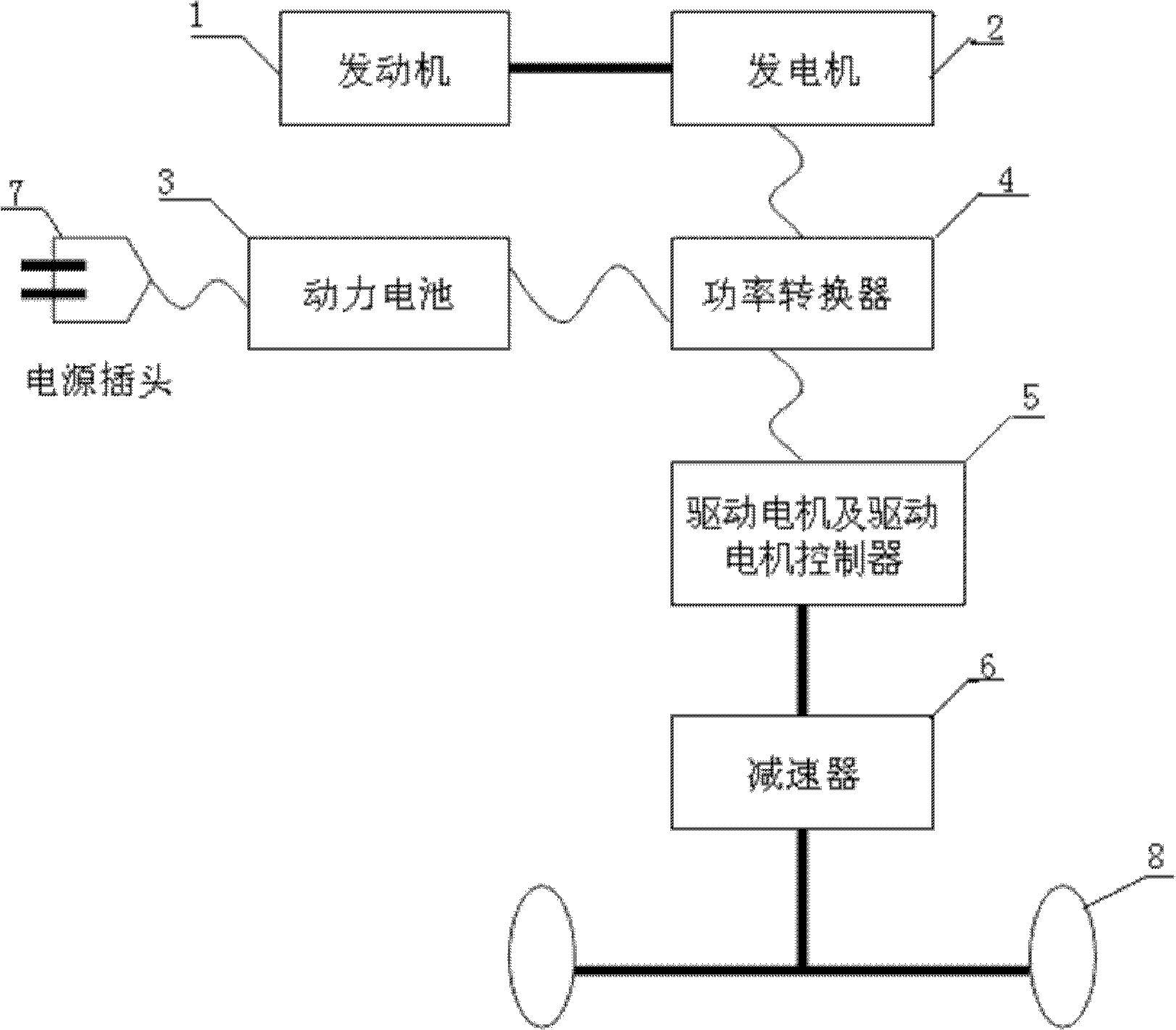
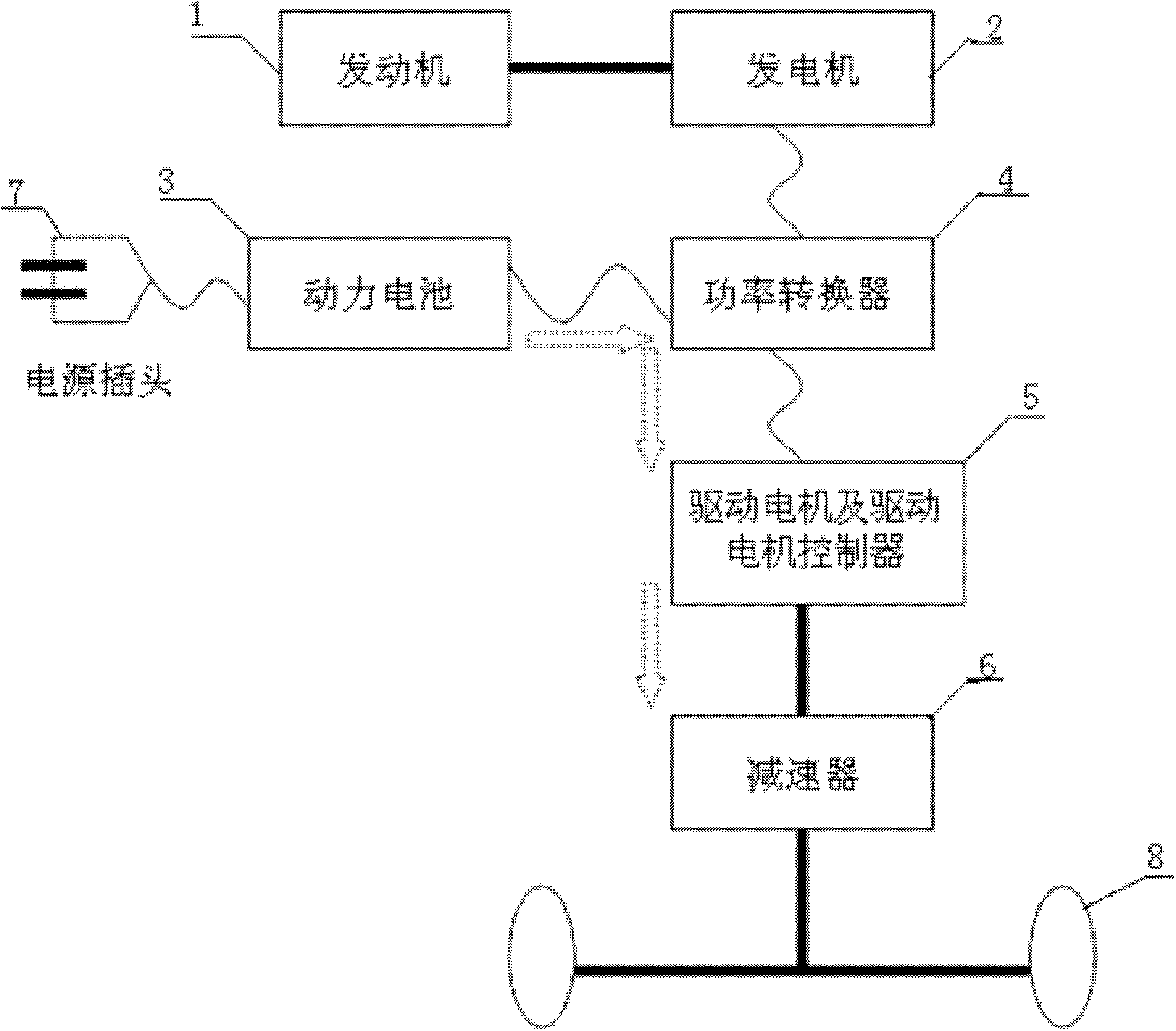
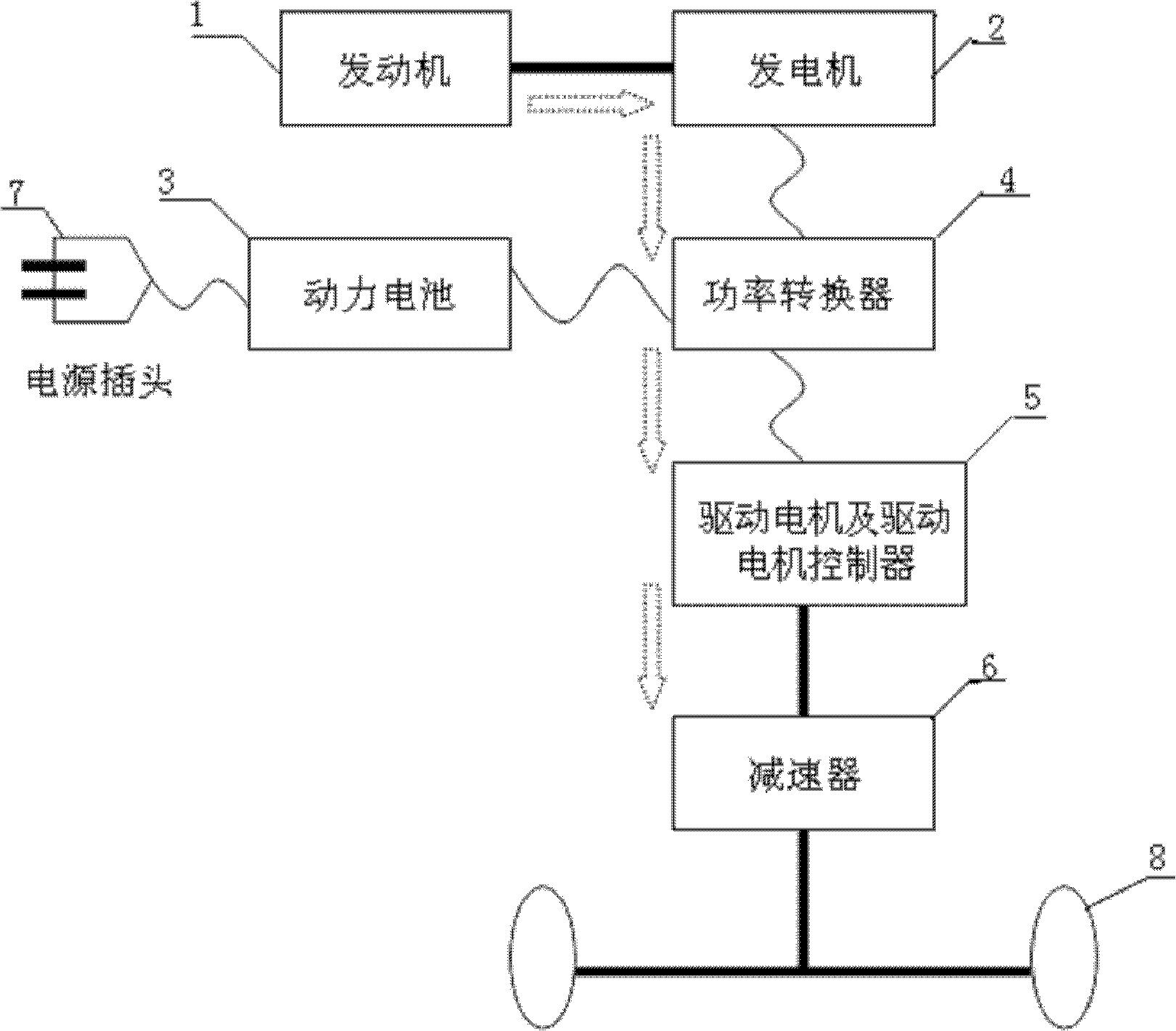
- By establishing a cost-based optimization method, determine the variables to be optimized and construct a cost objective function equation, and use quadratic programming or matrix partitioning optimization algorithms to optimize the maximum output power of the engine, the maximum output power of the drive motor, the output power of the power battery and the capacity of the power battery pack. , to achieve the lowest cost powertrain design.
Environmental Impact
Plug-in Hybrid Electric Vehicles (PHEVs) play a significant role in reducing the environmental impact of commuting, offering a transitional solution between conventional internal combustion engine vehicles and fully electric vehicles. The environmental benefits of PHEVs are multifaceted, encompassing reduced greenhouse gas emissions, improved air quality, and decreased reliance on fossil fuels.
One of the primary environmental advantages of PHEVs is their ability to operate in all-electric mode for short distances, typically covering the average daily commute. This feature results in zero tailpipe emissions during electric-only operation, significantly reducing local air pollution in urban areas. When the electric range is depleted, PHEVs switch to hybrid mode, still maintaining lower emissions compared to conventional vehicles.
The overall carbon footprint of PHEVs depends on various factors, including the electricity source used for charging and the frequency of all-electric operation. In regions with a high proportion of renewable energy in the grid mix, PHEVs can achieve substantial reductions in greenhouse gas emissions. Studies have shown that PHEVs can reduce CO2 emissions by 30-60% compared to conventional vehicles, depending on driving patterns and energy sources.
PHEVs also contribute to noise pollution reduction, particularly in urban environments. The electric motor's quiet operation during low-speed driving and idling helps create a more peaceful urban soundscape, benefiting both residents and wildlife in city areas.
Furthermore, the adoption of PHEVs can lead to a gradual decrease in fossil fuel consumption, as a significant portion of daily commutes can be completed using electricity. This reduction in petroleum dependence has broader environmental implications, including decreased oil extraction and transportation-related environmental risks.
However, it is important to consider the full lifecycle environmental impact of PHEVs, including battery production and disposal. While the manufacturing process of batteries can have a higher environmental footprint compared to conventional vehicles, this is typically offset by the reduced emissions during the vehicle's operational life.
In conclusion, PHEVs offer a valuable contribution to sustainable commuting solutions by providing a balance between the benefits of electric vehicles and the practicality of conventional vehicles. Their ability to reduce emissions, improve air quality, and decrease fossil fuel dependence makes them an important stepping stone in the transition towards more sustainable transportation systems.
One of the primary environmental advantages of PHEVs is their ability to operate in all-electric mode for short distances, typically covering the average daily commute. This feature results in zero tailpipe emissions during electric-only operation, significantly reducing local air pollution in urban areas. When the electric range is depleted, PHEVs switch to hybrid mode, still maintaining lower emissions compared to conventional vehicles.
The overall carbon footprint of PHEVs depends on various factors, including the electricity source used for charging and the frequency of all-electric operation. In regions with a high proportion of renewable energy in the grid mix, PHEVs can achieve substantial reductions in greenhouse gas emissions. Studies have shown that PHEVs can reduce CO2 emissions by 30-60% compared to conventional vehicles, depending on driving patterns and energy sources.
PHEVs also contribute to noise pollution reduction, particularly in urban environments. The electric motor's quiet operation during low-speed driving and idling helps create a more peaceful urban soundscape, benefiting both residents and wildlife in city areas.
Furthermore, the adoption of PHEVs can lead to a gradual decrease in fossil fuel consumption, as a significant portion of daily commutes can be completed using electricity. This reduction in petroleum dependence has broader environmental implications, including decreased oil extraction and transportation-related environmental risks.
However, it is important to consider the full lifecycle environmental impact of PHEVs, including battery production and disposal. While the manufacturing process of batteries can have a higher environmental footprint compared to conventional vehicles, this is typically offset by the reduced emissions during the vehicle's operational life.
In conclusion, PHEVs offer a valuable contribution to sustainable commuting solutions by providing a balance between the benefits of electric vehicles and the practicality of conventional vehicles. Their ability to reduce emissions, improve air quality, and decrease fossil fuel dependence makes them an important stepping stone in the transition towards more sustainable transportation systems.
Infrastructure Requirements
The successful integration of Plug-in Hybrid Electric Vehicles (PHEVs) into sustainable commuting solutions requires a robust and well-planned infrastructure. This infrastructure must support both the electric and conventional fuel aspects of PHEVs, ensuring seamless operation and maximizing their potential for reducing emissions and improving energy efficiency.
A critical component of PHEV infrastructure is the charging network. Public charging stations need to be strategically placed in urban areas, workplaces, and along major commuting routes. These stations should offer a mix of Level 2 AC chargers for longer parking durations and DC fast chargers for quick top-ups. The distribution and density of charging points must align with population centers and commuting patterns to provide convenient access for PHEV users.
Grid capacity and stability are paramount considerations when developing PHEV infrastructure. As the number of PHEVs increases, the electrical grid must be capable of handling the additional load, particularly during peak charging times. Smart grid technologies and load management systems are essential to balance demand and prevent localized grid stress. These systems can incentivize off-peak charging through dynamic pricing and help distribute the charging load more evenly throughout the day.
Fuel infrastructure remains important for PHEVs, as they still rely on conventional fuels for extended trips. Existing gas stations may need to be adapted to include charging facilities, creating multi-fuel hubs that cater to various vehicle types. This integration can help smooth the transition to electrified transportation while maintaining the flexibility that PHEVs offer.
Data infrastructure is another crucial element. A comprehensive network of connected charging stations, coupled with real-time information systems, can provide users with up-to-date availability and pricing information. This data infrastructure should also facilitate seamless payment systems and reservations, enhancing the user experience and encouraging PHEV adoption.
Lastly, the infrastructure requirements extend to maintenance and service facilities. As PHEVs combine two propulsion systems, specialized service centers and trained technicians are needed to handle both electric and conventional components. This includes facilities for battery diagnostics, repair, and eventual recycling, as well as the traditional automotive service infrastructure.
In conclusion, the infrastructure requirements for PHEVs in sustainable commuting solutions encompass a wide range of elements, from charging networks and grid enhancements to data systems and specialized maintenance facilities. A holistic approach to infrastructure development is essential to support the widespread adoption of PHEVs and maximize their contribution to sustainable urban mobility.
A critical component of PHEV infrastructure is the charging network. Public charging stations need to be strategically placed in urban areas, workplaces, and along major commuting routes. These stations should offer a mix of Level 2 AC chargers for longer parking durations and DC fast chargers for quick top-ups. The distribution and density of charging points must align with population centers and commuting patterns to provide convenient access for PHEV users.
Grid capacity and stability are paramount considerations when developing PHEV infrastructure. As the number of PHEVs increases, the electrical grid must be capable of handling the additional load, particularly during peak charging times. Smart grid technologies and load management systems are essential to balance demand and prevent localized grid stress. These systems can incentivize off-peak charging through dynamic pricing and help distribute the charging load more evenly throughout the day.
Fuel infrastructure remains important for PHEVs, as they still rely on conventional fuels for extended trips. Existing gas stations may need to be adapted to include charging facilities, creating multi-fuel hubs that cater to various vehicle types. This integration can help smooth the transition to electrified transportation while maintaining the flexibility that PHEVs offer.
Data infrastructure is another crucial element. A comprehensive network of connected charging stations, coupled with real-time information systems, can provide users with up-to-date availability and pricing information. This data infrastructure should also facilitate seamless payment systems and reservations, enhancing the user experience and encouraging PHEV adoption.
Lastly, the infrastructure requirements extend to maintenance and service facilities. As PHEVs combine two propulsion systems, specialized service centers and trained technicians are needed to handle both electric and conventional components. This includes facilities for battery diagnostics, repair, and eventual recycling, as well as the traditional automotive service infrastructure.
In conclusion, the infrastructure requirements for PHEVs in sustainable commuting solutions encompass a wide range of elements, from charging networks and grid enhancements to data systems and specialized maintenance facilities. A holistic approach to infrastructure development is essential to support the widespread adoption of PHEVs and maximize their contribution to sustainable urban mobility.
Unlock deeper insights with PatSnap Eureka Quick Research — get a full tech report to explore trends and direct your research. Try now!
Generate Your Research Report Instantly with AI Agent
Supercharge your innovation with PatSnap Eureka AI Agent Platform!