PHEV impact on reducing grid congestion
AUG 14, 20259 MIN READ
Generate Your Research Report Instantly with AI Agent
PatSnap Eureka helps you evaluate technical feasibility & market potential.
PHEV Grid Integration Background and Objectives
Plug-in Hybrid Electric Vehicles (PHEVs) have emerged as a promising technology in the automotive industry, bridging the gap between conventional internal combustion engine vehicles and fully electric vehicles. The integration of PHEVs into the electrical grid presents both opportunities and challenges for reducing grid congestion. This technological evolution is driven by the increasing need for sustainable transportation solutions and the global push towards reducing carbon emissions.
The primary objective of PHEV grid integration is to leverage the potential of these vehicles to alleviate stress on the electrical grid during peak demand periods. By utilizing the energy storage capabilities of PHEVs, it becomes possible to implement smart charging strategies that can help balance load distribution and potentially reduce the need for costly grid infrastructure upgrades.
The development of PHEV technology has been marked by significant milestones over the past two decades. Initially, the focus was on improving battery technology and extending electric-only driving range. As the technology matured, attention shifted towards enhancing the integration between PHEVs and the electrical grid. This progression has led to the concept of Vehicle-to-Grid (V2G) technology, where PHEVs can not only draw power from the grid but also feed power back during high demand periods.
Current trends in PHEV grid integration are centered around the development of smart charging systems and advanced energy management algorithms. These innovations aim to optimize charging patterns based on grid conditions, electricity prices, and user preferences. Additionally, there is a growing emphasis on standardizing communication protocols between vehicles and charging infrastructure to ensure seamless integration across different manufacturers and regions.
The potential impact of PHEVs on reducing grid congestion is multifaceted. By intelligently managing charging times, PHEVs can help flatten the demand curve, reducing strain during peak hours. Furthermore, the ability of PHEVs to act as distributed energy storage units opens up possibilities for grid stabilization and improved resilience against power outages.
However, realizing these benefits requires overcoming several technical challenges. These include developing robust communication systems between vehicles and the grid, ensuring cybersecurity in vehicle-grid interactions, and creating scalable infrastructure to support widespread PHEV adoption. Additionally, there is a need for regulatory frameworks that incentivize the use of PHEVs as grid assets while protecting consumer interests.
As research in this field progresses, the focus is increasingly on developing predictive models for PHEV charging behavior and its impact on grid dynamics. These models aim to optimize the integration of PHEVs into smart grid systems, maximizing their potential to reduce congestion while maintaining grid stability and reliability.
The primary objective of PHEV grid integration is to leverage the potential of these vehicles to alleviate stress on the electrical grid during peak demand periods. By utilizing the energy storage capabilities of PHEVs, it becomes possible to implement smart charging strategies that can help balance load distribution and potentially reduce the need for costly grid infrastructure upgrades.
The development of PHEV technology has been marked by significant milestones over the past two decades. Initially, the focus was on improving battery technology and extending electric-only driving range. As the technology matured, attention shifted towards enhancing the integration between PHEVs and the electrical grid. This progression has led to the concept of Vehicle-to-Grid (V2G) technology, where PHEVs can not only draw power from the grid but also feed power back during high demand periods.
Current trends in PHEV grid integration are centered around the development of smart charging systems and advanced energy management algorithms. These innovations aim to optimize charging patterns based on grid conditions, electricity prices, and user preferences. Additionally, there is a growing emphasis on standardizing communication protocols between vehicles and charging infrastructure to ensure seamless integration across different manufacturers and regions.
The potential impact of PHEVs on reducing grid congestion is multifaceted. By intelligently managing charging times, PHEVs can help flatten the demand curve, reducing strain during peak hours. Furthermore, the ability of PHEVs to act as distributed energy storage units opens up possibilities for grid stabilization and improved resilience against power outages.
However, realizing these benefits requires overcoming several technical challenges. These include developing robust communication systems between vehicles and the grid, ensuring cybersecurity in vehicle-grid interactions, and creating scalable infrastructure to support widespread PHEV adoption. Additionally, there is a need for regulatory frameworks that incentivize the use of PHEVs as grid assets while protecting consumer interests.
As research in this field progresses, the focus is increasingly on developing predictive models for PHEV charging behavior and its impact on grid dynamics. These models aim to optimize the integration of PHEVs into smart grid systems, maximizing their potential to reduce congestion while maintaining grid stability and reliability.
Market Analysis for PHEV Adoption
The market for Plug-in Hybrid Electric Vehicles (PHEVs) has shown significant growth potential in recent years, driven by increasing environmental awareness, government incentives, and advancements in battery technology. As consumers seek more sustainable transportation options, PHEVs offer a compelling compromise between traditional internal combustion engines and fully electric vehicles.
Global PHEV sales have been steadily increasing, with major automotive markets such as China, Europe, and North America leading the adoption. In 2020, despite the global pandemic, PHEV sales grew by 38% year-over-year, reaching over 1.7 million units sold worldwide. This trend is expected to continue, with projections suggesting that PHEVs could account for 20-25% of new vehicle sales in major markets by 2030.
The adoption of PHEVs is closely tied to several key factors. Firstly, government policies and incentives play a crucial role in driving market growth. Many countries offer tax rebates, subsidies, and other financial incentives to encourage PHEV purchases. For instance, in the European Union, stringent CO2 emission targets have pushed automakers to increase their PHEV offerings, resulting in a wider range of models available to consumers.
Infrastructure development is another critical aspect influencing PHEV adoption. The expansion of charging networks, both public and private, has reduced range anxiety and made PHEVs more practical for everyday use. As of 2021, there were over 1.3 million public charging points globally, with rapid growth expected in the coming years.
Consumer preferences and awareness also play a significant role in PHEV market dynamics. As more consumers become environmentally conscious and seek to reduce their carbon footprint, PHEVs offer an attractive option that combines the benefits of electric driving with the flexibility of a gasoline engine for longer trips.
The potential impact of PHEVs on reducing grid congestion is a key consideration for utilities and policymakers. PHEVs can contribute to load balancing by charging during off-peak hours, potentially reducing strain on the grid during peak demand periods. However, the effectiveness of this strategy depends on the implementation of smart charging systems and time-of-use electricity pricing to incentivize optimal charging behavior.
Market analysis indicates that the PHEV segment is likely to experience continued growth in the short to medium term. However, the long-term outlook remains uncertain, as fully electric vehicles (EVs) continue to improve in range and affordability. The PHEV market may serve as a transitional technology, bridging the gap between conventional vehicles and EVs as battery technology and charging infrastructure continue to advance.
Global PHEV sales have been steadily increasing, with major automotive markets such as China, Europe, and North America leading the adoption. In 2020, despite the global pandemic, PHEV sales grew by 38% year-over-year, reaching over 1.7 million units sold worldwide. This trend is expected to continue, with projections suggesting that PHEVs could account for 20-25% of new vehicle sales in major markets by 2030.
The adoption of PHEVs is closely tied to several key factors. Firstly, government policies and incentives play a crucial role in driving market growth. Many countries offer tax rebates, subsidies, and other financial incentives to encourage PHEV purchases. For instance, in the European Union, stringent CO2 emission targets have pushed automakers to increase their PHEV offerings, resulting in a wider range of models available to consumers.
Infrastructure development is another critical aspect influencing PHEV adoption. The expansion of charging networks, both public and private, has reduced range anxiety and made PHEVs more practical for everyday use. As of 2021, there were over 1.3 million public charging points globally, with rapid growth expected in the coming years.
Consumer preferences and awareness also play a significant role in PHEV market dynamics. As more consumers become environmentally conscious and seek to reduce their carbon footprint, PHEVs offer an attractive option that combines the benefits of electric driving with the flexibility of a gasoline engine for longer trips.
The potential impact of PHEVs on reducing grid congestion is a key consideration for utilities and policymakers. PHEVs can contribute to load balancing by charging during off-peak hours, potentially reducing strain on the grid during peak demand periods. However, the effectiveness of this strategy depends on the implementation of smart charging systems and time-of-use electricity pricing to incentivize optimal charging behavior.
Market analysis indicates that the PHEV segment is likely to experience continued growth in the short to medium term. However, the long-term outlook remains uncertain, as fully electric vehicles (EVs) continue to improve in range and affordability. The PHEV market may serve as a transitional technology, bridging the gap between conventional vehicles and EVs as battery technology and charging infrastructure continue to advance.
Current PHEV Technology and Grid Challenges
Plug-in Hybrid Electric Vehicles (PHEVs) have emerged as a promising technology to address both environmental concerns and energy efficiency in the automotive sector. However, their integration into the existing power grid presents both opportunities and challenges. The current PHEV technology relies on a combination of internal combustion engines and electric motors, allowing for flexibility in power sources and extended driving ranges.
One of the primary challenges faced by the grid is the potential for increased load during peak hours, particularly if a large number of PHEVs are charging simultaneously. This could exacerbate existing grid congestion issues, especially in urban areas with high PHEV adoption rates. The unpredictable nature of PHEV charging patterns adds another layer of complexity to grid management, as it becomes difficult to forecast and balance energy demand.
On the technology front, PHEVs are equipped with advanced battery management systems and power electronics that enable efficient energy conversion and storage. However, the current charging infrastructure is not uniformly distributed, leading to potential bottlenecks in certain areas. This uneven distribution can result in localized grid stress and the need for targeted infrastructure upgrades.
The integration of smart charging technologies in PHEVs offers a potential solution to mitigate grid congestion. These systems can communicate with the grid to optimize charging times, taking advantage of off-peak hours and surplus renewable energy. However, the widespread implementation of such technologies requires significant investment in both vehicle systems and grid infrastructure.
Grid operators face the challenge of balancing the increased electricity demand from PHEVs with the existing load from residential, commercial, and industrial sectors. This balancing act becomes more complex as the penetration of PHEVs increases, necessitating more sophisticated load management strategies and potentially requiring grid reinforcement in high-adoption areas.
The bidirectional charging capability of some advanced PHEVs presents an opportunity for vehicle-to-grid (V2G) technology. This could potentially allow PHEVs to act as distributed energy resources, providing grid support during peak demand periods. However, the implementation of V2G technology is still in its early stages and faces technical, regulatory, and economic hurdles.
In conclusion, while PHEVs offer significant potential for reducing emissions and improving energy efficiency in the transportation sector, their impact on the grid presents a complex set of challenges. Addressing these issues requires a multifaceted approach, involving advancements in vehicle technology, charging infrastructure, grid management systems, and regulatory frameworks to ensure a smooth integration of PHEVs into the existing power grid ecosystem.
One of the primary challenges faced by the grid is the potential for increased load during peak hours, particularly if a large number of PHEVs are charging simultaneously. This could exacerbate existing grid congestion issues, especially in urban areas with high PHEV adoption rates. The unpredictable nature of PHEV charging patterns adds another layer of complexity to grid management, as it becomes difficult to forecast and balance energy demand.
On the technology front, PHEVs are equipped with advanced battery management systems and power electronics that enable efficient energy conversion and storage. However, the current charging infrastructure is not uniformly distributed, leading to potential bottlenecks in certain areas. This uneven distribution can result in localized grid stress and the need for targeted infrastructure upgrades.
The integration of smart charging technologies in PHEVs offers a potential solution to mitigate grid congestion. These systems can communicate with the grid to optimize charging times, taking advantage of off-peak hours and surplus renewable energy. However, the widespread implementation of such technologies requires significant investment in both vehicle systems and grid infrastructure.
Grid operators face the challenge of balancing the increased electricity demand from PHEVs with the existing load from residential, commercial, and industrial sectors. This balancing act becomes more complex as the penetration of PHEVs increases, necessitating more sophisticated load management strategies and potentially requiring grid reinforcement in high-adoption areas.
The bidirectional charging capability of some advanced PHEVs presents an opportunity for vehicle-to-grid (V2G) technology. This could potentially allow PHEVs to act as distributed energy resources, providing grid support during peak demand periods. However, the implementation of V2G technology is still in its early stages and faces technical, regulatory, and economic hurdles.
In conclusion, while PHEVs offer significant potential for reducing emissions and improving energy efficiency in the transportation sector, their impact on the grid presents a complex set of challenges. Addressing these issues requires a multifaceted approach, involving advancements in vehicle technology, charging infrastructure, grid management systems, and regulatory frameworks to ensure a smooth integration of PHEVs into the existing power grid ecosystem.
Existing PHEV Grid Congestion Solutions
01 Smart charging strategies for PHEVs
Implementing intelligent charging strategies for plug-in hybrid electric vehicles to manage grid load and prevent congestion. These strategies include coordinated charging schedules, dynamic pricing, and load balancing techniques to optimize power distribution and minimize strain on the electrical grid during peak hours.- Smart charging strategies for PHEVs: Implementing intelligent charging strategies for plug-in hybrid electric vehicles to manage grid load and prevent congestion. These strategies include coordinated charging schedules, dynamic pricing, and load balancing techniques to optimize power distribution and minimize strain on the electrical grid during peak hours.
- Vehicle-to-Grid (V2G) technology: Utilizing V2G technology to enable bidirectional power flow between PHEVs and the electrical grid. This allows PHEVs to act as distributed energy resources, providing power back to the grid during high demand periods and helping to alleviate grid congestion.
- Grid infrastructure upgrades: Enhancing the existing power grid infrastructure to accommodate the increasing number of PHEVs. This includes upgrading transformers, substations, and distribution networks to handle higher loads and implementing smart grid technologies for improved monitoring and control of power flow.
- Demand response and load management: Implementing demand response programs and load management techniques specifically designed for PHEV charging. These systems can incentivize off-peak charging, adjust charging rates based on grid conditions, and prioritize charging for critical needs to reduce overall grid congestion.
- Integration of renewable energy sources: Combining PHEV charging infrastructure with renewable energy sources such as solar and wind power. This approach helps to reduce the overall load on the grid by utilizing clean energy for charging and potentially storing excess renewable energy in PHEV batteries for later use or grid support.
02 Vehicle-to-Grid (V2G) technology
Utilizing V2G technology to enable bidirectional power flow between PHEVs and the electrical grid. This allows PHEVs to act as distributed energy resources, providing power back to the grid during high demand periods and helping to alleviate grid congestion.Expand Specific Solutions03 Grid infrastructure upgrades
Enhancing the existing power grid infrastructure to accommodate the increasing number of PHEVs. This includes upgrading transformers, power lines, and substations to handle higher loads and implementing smart grid technologies for improved monitoring and control of power distribution.Expand Specific Solutions04 Demand response and load management
Implementing demand response programs and load management techniques to incentivize PHEV owners to charge during off-peak hours. This helps to distribute the charging load more evenly throughout the day, reducing the risk of grid congestion during peak demand periods.Expand Specific Solutions05 Energy storage integration
Incorporating energy storage systems, such as stationary batteries, into the grid infrastructure to support PHEV charging. These systems can store excess energy during low-demand periods and provide additional power during peak hours, helping to balance the load and prevent grid congestion.Expand Specific Solutions
Key PHEV and Utility Industry Players
The competitive landscape for PHEV impact on reducing grid congestion is evolving rapidly, with the market in its growth phase. As electric vehicle adoption increases, the potential for PHEVs to alleviate grid stress is gaining attention. The market size is expanding, driven by environmental concerns and government incentives. Technologically, the field is advancing, with companies like Ford Global Technologies LLC and Subaru Corp. leading innovation in PHEV design and grid integration. Universities such as North China Electric Power University and Zhejiang University of Technology are contributing to research and development. State Grid Corp. of China and other utilities are exploring PHEV's role in smart grid management, indicating a growing industry focus on this solution for grid congestion.
Ford Global Technologies LLC
Technical Solution: Ford's PHEV technology focuses on intelligent grid integration to reduce congestion. Their system utilizes bi-directional charging capabilities, allowing PHEVs to both draw power from and feed it back to the grid during peak demand periods[1]. This Vehicle-to-Grid (V2G) approach enables PHEVs to act as mobile energy storage units, helping to balance grid load. Ford has also developed smart charging algorithms that optimize charging times based on grid demand and electricity prices, reducing strain during peak hours[2]. Additionally, their PHEVs incorporate geofencing technology to automatically switch to electric-only mode in low-emission zones, further reducing local grid stress in urban areas[3].
Strengths: Extensive automotive expertise, large-scale manufacturing capabilities, and established market presence. Weaknesses: Relatively new to grid technology integration, potential challenges in coordinating with utility companies.
State Grid Corp. of China
Technical Solution: State Grid Corp. of China has developed an advanced PHEV integration system to mitigate grid congestion. Their approach involves a comprehensive smart grid infrastructure that incorporates real-time monitoring and predictive analytics to manage PHEV charging loads[1]. The system utilizes dynamic pricing mechanisms to incentivize off-peak charging, effectively distributing the load across different times of the day[2]. State Grid has also implemented a network of smart charging stations that can communicate with both vehicles and the grid, allowing for adaptive charging rates based on current grid conditions[3]. Furthermore, they have developed a large-scale energy storage system that works in tandem with PHEVs to absorb excess renewable energy during low-demand periods and release it during peak times, significantly reducing grid congestion[4].
Strengths: Vast grid management experience, extensive infrastructure, and strong government support. Weaknesses: Potential challenges in adapting to rapidly evolving PHEV technologies and international standards.
Core PHEV-Grid Integration Innovations
Battery pack management strategy in a hybrid electric motor vehicle
PatentWO2009120740A1
Innovation
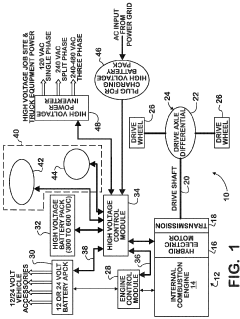
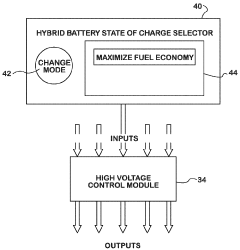
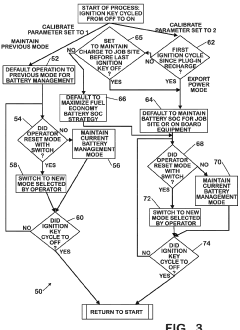
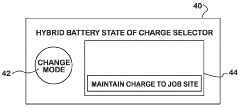
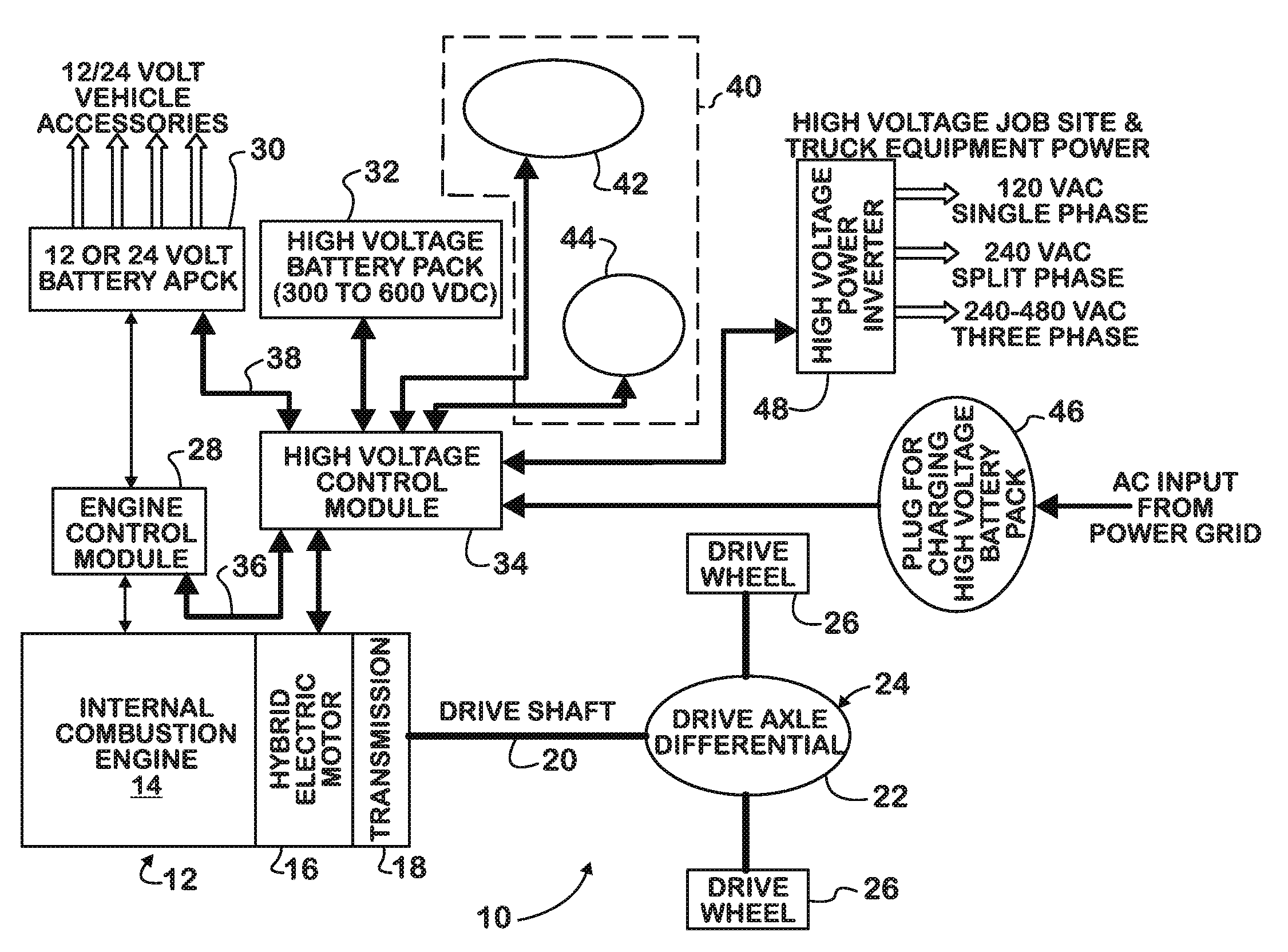
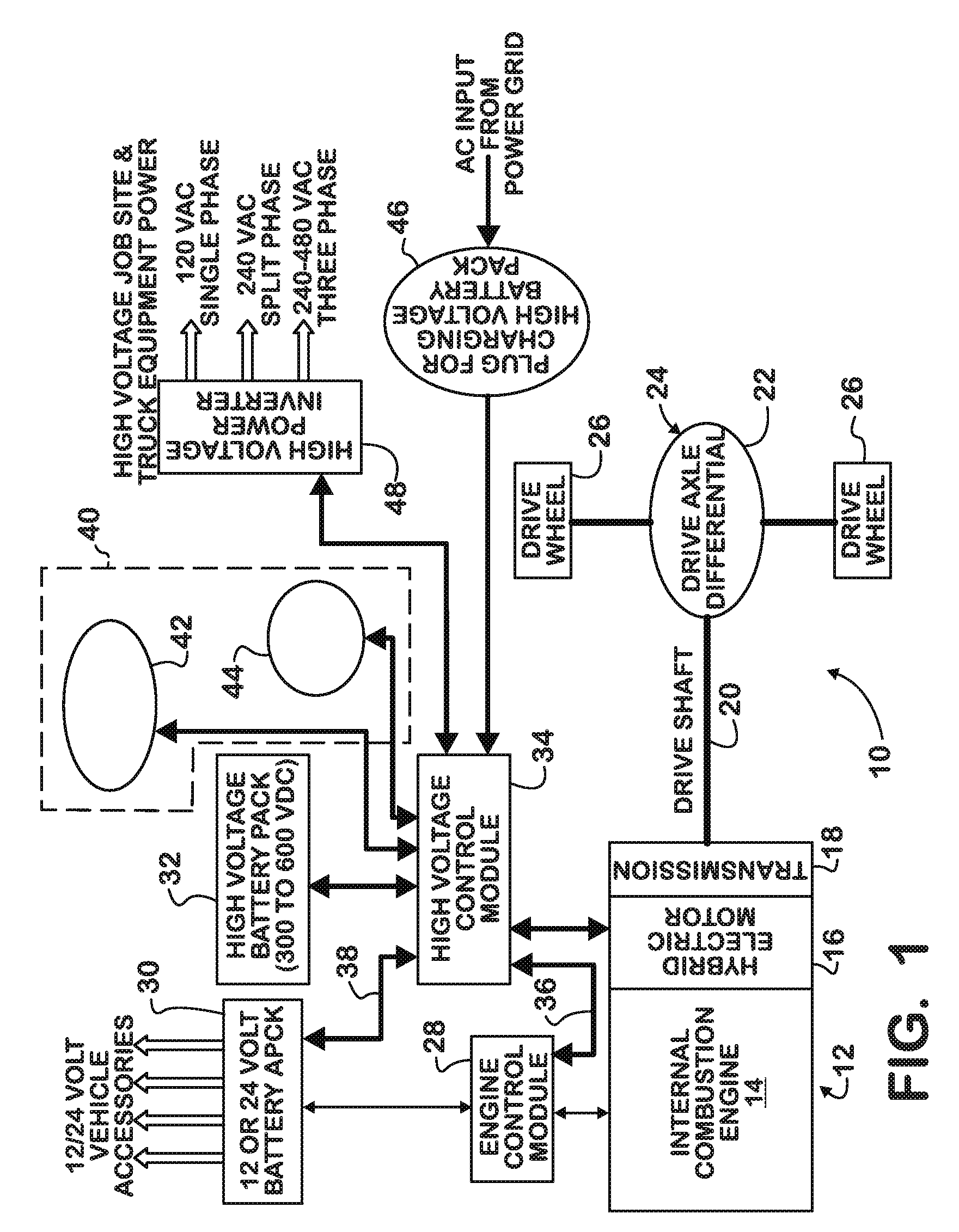
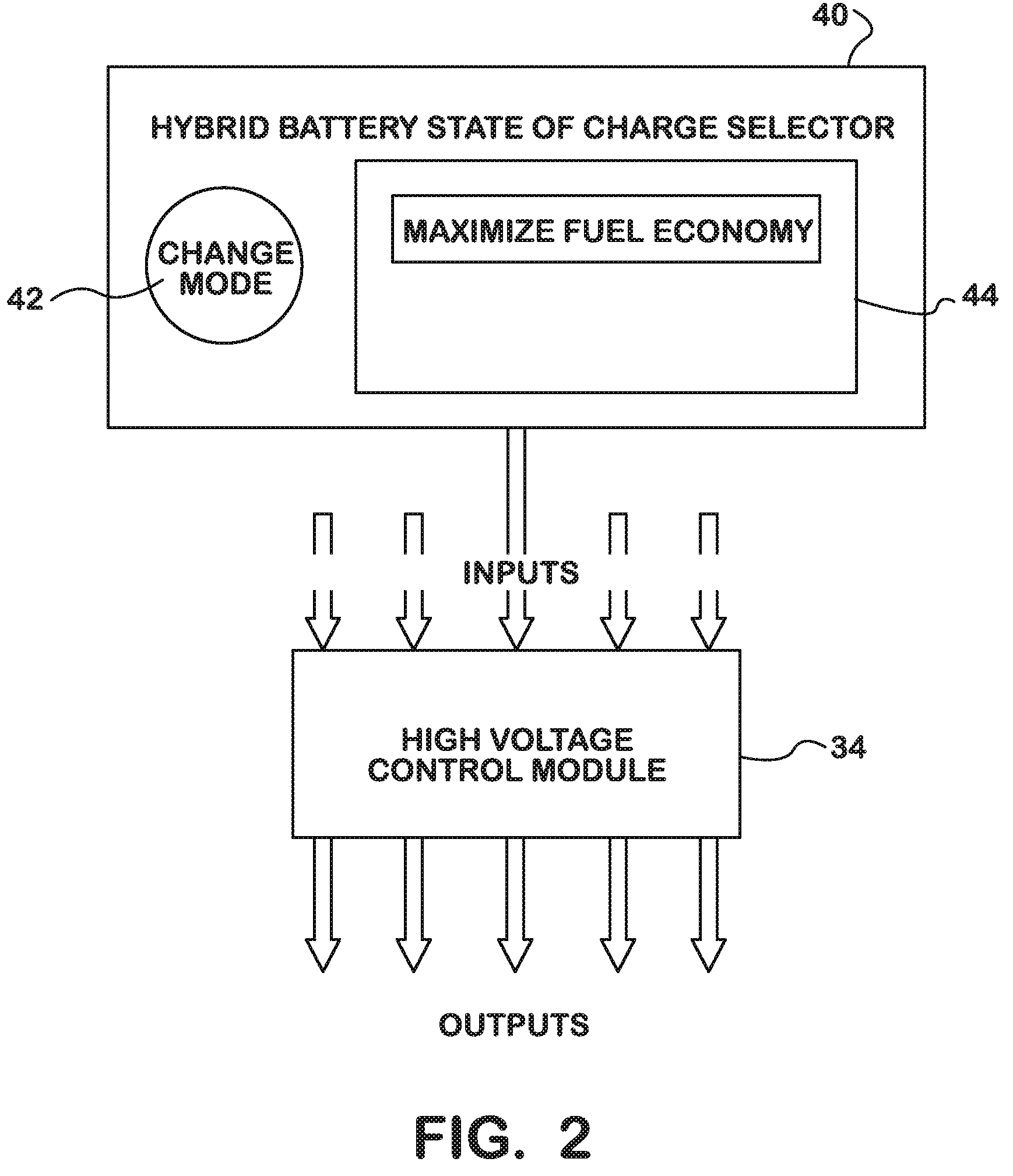
- A software algorithm within the high-voltage control module allows operators to choose between 'Maximize Fuel Economy' and 'Maintain Charge To Job Site' strategies, with options to override defaults and adapt based on specific battery chemistry and capacity, enabling flexible energy use.
Battery pack management strategy in a hybrid electric motor vehicle
PatentInactiveUS20090248228A1
Innovation
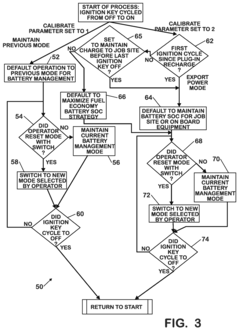
- A software algorithm that allows operators to choose between 'Maximize Fuel Economy' and 'Maintain Charge To Job Site' strategies, with a calibratable parameter determining the default strategy selection each time the vehicle is started, and a momentary contact switch for manual override, enabling operators to select how battery energy is used.
PHEV Environmental Impact Assessment
The environmental impact assessment of Plug-in Hybrid Electric Vehicles (PHEVs) reveals both positive and negative effects on the ecosystem and human health. PHEVs contribute significantly to reducing greenhouse gas emissions and air pollution in urban areas, particularly when operating in electric mode. Studies have shown that PHEVs can reduce CO2 emissions by up to 60% compared to conventional vehicles, depending on the electricity source and driving patterns.
However, the environmental benefits of PHEVs are closely tied to the energy mix of the electricity grid. In regions heavily reliant on fossil fuels for electricity generation, the overall environmental impact of PHEVs may be less favorable. The production of batteries for PHEVs also raises concerns about resource depletion and environmental degradation associated with mining activities for rare earth elements and other materials.
PHEVs have the potential to improve local air quality by reducing tailpipe emissions of particulate matter, nitrogen oxides, and other pollutants. This is particularly beneficial in densely populated urban areas where air pollution is a significant health concern. The reduction in noise pollution is another positive environmental impact, especially in low-speed urban environments where PHEVs operate primarily in electric mode.
The impact of PHEVs on water resources is mixed. While they reduce the risk of oil spills and groundwater contamination associated with conventional vehicles, the increased electricity demand may lead to higher water consumption for cooling in thermal power plants. Additionally, the disposal and recycling of PHEV batteries present environmental challenges that require careful management to prevent soil and water contamination.
Land use impacts of PHEVs are generally positive when compared to conventional vehicles. The reduced dependence on oil can potentially decrease the need for oil exploration and extraction, thereby preserving natural habitats. However, the expansion of charging infrastructure may lead to some land use changes in urban and suburban areas.
Long-term environmental benefits of PHEVs include their potential to facilitate the transition to a low-carbon transportation system. As electricity grids become cleaner with increased renewable energy integration, the environmental footprint of PHEVs will continue to improve. Furthermore, PHEVs can serve as a stepping stone towards full electrification of the transport sector, paving the way for more sustainable mobility solutions.
However, the environmental benefits of PHEVs are closely tied to the energy mix of the electricity grid. In regions heavily reliant on fossil fuels for electricity generation, the overall environmental impact of PHEVs may be less favorable. The production of batteries for PHEVs also raises concerns about resource depletion and environmental degradation associated with mining activities for rare earth elements and other materials.
PHEVs have the potential to improve local air quality by reducing tailpipe emissions of particulate matter, nitrogen oxides, and other pollutants. This is particularly beneficial in densely populated urban areas where air pollution is a significant health concern. The reduction in noise pollution is another positive environmental impact, especially in low-speed urban environments where PHEVs operate primarily in electric mode.
The impact of PHEVs on water resources is mixed. While they reduce the risk of oil spills and groundwater contamination associated with conventional vehicles, the increased electricity demand may lead to higher water consumption for cooling in thermal power plants. Additionally, the disposal and recycling of PHEV batteries present environmental challenges that require careful management to prevent soil and water contamination.
Land use impacts of PHEVs are generally positive when compared to conventional vehicles. The reduced dependence on oil can potentially decrease the need for oil exploration and extraction, thereby preserving natural habitats. However, the expansion of charging infrastructure may lead to some land use changes in urban and suburban areas.
Long-term environmental benefits of PHEVs include their potential to facilitate the transition to a low-carbon transportation system. As electricity grids become cleaner with increased renewable energy integration, the environmental footprint of PHEVs will continue to improve. Furthermore, PHEVs can serve as a stepping stone towards full electrification of the transport sector, paving the way for more sustainable mobility solutions.
Regulatory Framework for PHEV-Grid Integration
The regulatory framework for PHEV-Grid integration plays a crucial role in shaping the impact of Plug-in Hybrid Electric Vehicles (PHEVs) on reducing grid congestion. As PHEVs become more prevalent, policymakers and regulatory bodies are developing guidelines to ensure their seamless integration with the existing power grid infrastructure.
One of the key aspects of this regulatory framework is the establishment of smart charging protocols. These protocols aim to optimize the charging patterns of PHEVs to minimize strain on the grid during peak demand periods. Regulators are working on standardizing communication interfaces between vehicles, charging stations, and grid operators to enable real-time load management and dynamic pricing mechanisms.
Time-of-use (TOU) electricity rates are another important component of the regulatory landscape. By incentivizing off-peak charging through lower electricity rates, regulators can encourage PHEV owners to shift their charging schedules to periods of lower grid demand. This helps in flattening the overall load curve and reducing congestion during peak hours.
Vehicle-to-Grid (V2G) technology is also gaining attention from regulators. Policies are being developed to allow PHEVs to not only draw power from the grid but also feed it back during high-demand periods. This bidirectional flow of electricity can significantly contribute to grid stability and congestion reduction. However, regulations must address concerns related to battery degradation, fair compensation for vehicle owners, and safety standards for V2G operations.
Grid modernization initiatives are being incorporated into regulatory frameworks to support PHEV integration. These include mandates for utilities to upgrade their infrastructure with smart meters, advanced distribution management systems, and enhanced grid monitoring capabilities. Such upgrades are essential for managing the increased complexity introduced by widespread PHEV adoption.
Interoperability standards are another critical focus area for regulators. These standards ensure that PHEVs from different manufacturers can seamlessly interact with various charging infrastructures and grid management systems. By promoting standardization, regulators aim to create a more efficient and user-friendly ecosystem for PHEV owners while simplifying grid integration challenges.
Lastly, regulatory bodies are addressing data privacy and cybersecurity concerns associated with PHEV-Grid integration. As the system relies heavily on data exchange between vehicles, charging stations, and grid operators, robust regulations are being put in place to protect sensitive information and prevent potential cyber attacks that could disrupt grid operations.
One of the key aspects of this regulatory framework is the establishment of smart charging protocols. These protocols aim to optimize the charging patterns of PHEVs to minimize strain on the grid during peak demand periods. Regulators are working on standardizing communication interfaces between vehicles, charging stations, and grid operators to enable real-time load management and dynamic pricing mechanisms.
Time-of-use (TOU) electricity rates are another important component of the regulatory landscape. By incentivizing off-peak charging through lower electricity rates, regulators can encourage PHEV owners to shift their charging schedules to periods of lower grid demand. This helps in flattening the overall load curve and reducing congestion during peak hours.
Vehicle-to-Grid (V2G) technology is also gaining attention from regulators. Policies are being developed to allow PHEVs to not only draw power from the grid but also feed it back during high-demand periods. This bidirectional flow of electricity can significantly contribute to grid stability and congestion reduction. However, regulations must address concerns related to battery degradation, fair compensation for vehicle owners, and safety standards for V2G operations.
Grid modernization initiatives are being incorporated into regulatory frameworks to support PHEV integration. These include mandates for utilities to upgrade their infrastructure with smart meters, advanced distribution management systems, and enhanced grid monitoring capabilities. Such upgrades are essential for managing the increased complexity introduced by widespread PHEV adoption.
Interoperability standards are another critical focus area for regulators. These standards ensure that PHEVs from different manufacturers can seamlessly interact with various charging infrastructures and grid management systems. By promoting standardization, regulators aim to create a more efficient and user-friendly ecosystem for PHEV owners while simplifying grid integration challenges.
Lastly, regulatory bodies are addressing data privacy and cybersecurity concerns associated with PHEV-Grid integration. As the system relies heavily on data exchange between vehicles, charging stations, and grid operators, robust regulations are being put in place to protect sensitive information and prevent potential cyber attacks that could disrupt grid operations.
Unlock deeper insights with PatSnap Eureka Quick Research — get a full tech report to explore trends and direct your research. Try now!
Generate Your Research Report Instantly with AI Agent
Supercharge your innovation with PatSnap Eureka AI Agent Platform!