Rethinking CMOS Battery Usage in Low-Power Computing Devices
JUL 22, 20259 MIN READ
Generate Your Research Report Instantly with AI Agent
Patsnap Eureka helps you evaluate technical feasibility & market potential.
CMOS Battery Evolution
The evolution of CMOS battery usage in low-power computing devices has been a critical factor in the advancement of portable electronics. Initially introduced in the 1980s, CMOS batteries were primarily used to maintain system settings and real-time clock information when the main power was disconnected. These early implementations typically utilized coin cell batteries, which provided a simple and cost-effective solution for maintaining critical data.
As computing devices became more sophisticated and energy-efficient, the role of CMOS batteries expanded. In the 1990s and early 2000s, manufacturers began integrating CMOS batteries more tightly with system architecture, allowing for improved power management and extended battery life. This period saw the introduction of rechargeable CMOS batteries in some high-end devices, reducing the need for periodic battery replacements.
The mid-2000s marked a significant shift in CMOS battery technology, with the advent of ultra-low-power microcontrollers and improved power management techniques. These advancements allowed for the development of systems that could maintain critical information for extended periods without relying on a dedicated CMOS battery. Some manufacturers began implementing super capacitors or other energy storage solutions as alternatives to traditional batteries.
In recent years, the focus has shifted towards minimizing or eliminating the need for separate CMOS batteries altogether. Modern low-power computing devices often utilize non-volatile memory technologies, such as FRAM or MRAM, to store system settings and real-time clock information. These technologies can retain data for extended periods without power, reducing the reliance on dedicated backup power sources.
The latest trends in CMOS battery evolution involve the integration of energy harvesting technologies. Some cutting-edge designs incorporate small solar cells, thermoelectric generators, or even radio frequency energy harvesters to trickle-charge the CMOS power source. This approach aims to create self-sustaining systems that can maintain critical information indefinitely without the need for battery replacements or external charging.
As we look to the future, the evolution of CMOS battery usage in low-power computing devices is likely to continue towards more integrated and sustainable solutions. The development of new materials and energy storage technologies promises to further reduce power consumption and increase the longevity of backup power systems. These advancements will play a crucial role in enabling the next generation of ultra-low-power and always-on computing devices.
As computing devices became more sophisticated and energy-efficient, the role of CMOS batteries expanded. In the 1990s and early 2000s, manufacturers began integrating CMOS batteries more tightly with system architecture, allowing for improved power management and extended battery life. This period saw the introduction of rechargeable CMOS batteries in some high-end devices, reducing the need for periodic battery replacements.
The mid-2000s marked a significant shift in CMOS battery technology, with the advent of ultra-low-power microcontrollers and improved power management techniques. These advancements allowed for the development of systems that could maintain critical information for extended periods without relying on a dedicated CMOS battery. Some manufacturers began implementing super capacitors or other energy storage solutions as alternatives to traditional batteries.
In recent years, the focus has shifted towards minimizing or eliminating the need for separate CMOS batteries altogether. Modern low-power computing devices often utilize non-volatile memory technologies, such as FRAM or MRAM, to store system settings and real-time clock information. These technologies can retain data for extended periods without power, reducing the reliance on dedicated backup power sources.
The latest trends in CMOS battery evolution involve the integration of energy harvesting technologies. Some cutting-edge designs incorporate small solar cells, thermoelectric generators, or even radio frequency energy harvesters to trickle-charge the CMOS power source. This approach aims to create self-sustaining systems that can maintain critical information indefinitely without the need for battery replacements or external charging.
As we look to the future, the evolution of CMOS battery usage in low-power computing devices is likely to continue towards more integrated and sustainable solutions. The development of new materials and energy storage technologies promises to further reduce power consumption and increase the longevity of backup power systems. These advancements will play a crucial role in enabling the next generation of ultra-low-power and always-on computing devices.
Low-Power Device Market
The low-power device market has experienced significant growth in recent years, driven by the increasing demand for portable and energy-efficient computing solutions. This market segment encompasses a wide range of products, including smartphones, tablets, wearables, IoT devices, and ultra-low-power microcontrollers. The global low-power device market was valued at $38.5 billion in 2020 and is projected to reach $65.7 billion by 2026, growing at a CAGR of 9.3% during the forecast period.
One of the key factors fueling this market growth is the rising adoption of Internet of Things (IoT) technologies across various industries. IoT devices require long battery life and minimal power consumption, making low-power computing solutions essential for their widespread deployment. The smart home and industrial IoT sectors, in particular, have been driving demand for energy-efficient devices that can operate for extended periods without frequent battery replacements.
The consumer electronics segment continues to be a major contributor to the low-power device market. Smartphones and wearables, such as smartwatches and fitness trackers, have seen substantial growth in recent years. These devices rely heavily on low-power components to extend battery life and improve user experience. The increasing integration of advanced features like health monitoring and always-on displays has further emphasized the need for power-efficient solutions in this sector.
In the healthcare industry, the demand for low-power medical devices has been steadily increasing. Portable medical equipment, implantable devices, and remote patient monitoring systems require long-lasting battery performance to ensure continuous operation and patient safety. This trend has been accelerated by the COVID-19 pandemic, which has highlighted the importance of remote healthcare solutions and wearable health monitoring devices.
The automotive sector is another significant market for low-power devices, particularly with the growing adoption of electric vehicles (EVs) and advanced driver assistance systems (ADAS). These applications require sophisticated, energy-efficient computing solutions to maximize vehicle range and performance. The integration of low-power sensors and microcontrollers in modern vehicles has also contributed to the market's expansion.
Geographically, Asia-Pacific has emerged as the largest market for low-power devices, driven by the presence of major semiconductor manufacturers and the rapid adoption of IoT technologies in countries like China, Japan, and South Korea. North America and Europe follow closely, with strong demand from the consumer electronics, healthcare, and automotive sectors.
As the market continues to evolve, several trends are shaping its future. The ongoing development of 5G networks is expected to drive demand for low-power devices capable of supporting high-speed connectivity while maintaining energy efficiency. Additionally, the growing focus on edge computing and artificial intelligence in IoT applications is creating new opportunities for low-power, high-performance computing solutions.
One of the key factors fueling this market growth is the rising adoption of Internet of Things (IoT) technologies across various industries. IoT devices require long battery life and minimal power consumption, making low-power computing solutions essential for their widespread deployment. The smart home and industrial IoT sectors, in particular, have been driving demand for energy-efficient devices that can operate for extended periods without frequent battery replacements.
The consumer electronics segment continues to be a major contributor to the low-power device market. Smartphones and wearables, such as smartwatches and fitness trackers, have seen substantial growth in recent years. These devices rely heavily on low-power components to extend battery life and improve user experience. The increasing integration of advanced features like health monitoring and always-on displays has further emphasized the need for power-efficient solutions in this sector.
In the healthcare industry, the demand for low-power medical devices has been steadily increasing. Portable medical equipment, implantable devices, and remote patient monitoring systems require long-lasting battery performance to ensure continuous operation and patient safety. This trend has been accelerated by the COVID-19 pandemic, which has highlighted the importance of remote healthcare solutions and wearable health monitoring devices.
The automotive sector is another significant market for low-power devices, particularly with the growing adoption of electric vehicles (EVs) and advanced driver assistance systems (ADAS). These applications require sophisticated, energy-efficient computing solutions to maximize vehicle range and performance. The integration of low-power sensors and microcontrollers in modern vehicles has also contributed to the market's expansion.
Geographically, Asia-Pacific has emerged as the largest market for low-power devices, driven by the presence of major semiconductor manufacturers and the rapid adoption of IoT technologies in countries like China, Japan, and South Korea. North America and Europe follow closely, with strong demand from the consumer electronics, healthcare, and automotive sectors.
As the market continues to evolve, several trends are shaping its future. The ongoing development of 5G networks is expected to drive demand for low-power devices capable of supporting high-speed connectivity while maintaining energy efficiency. Additionally, the growing focus on edge computing and artificial intelligence in IoT applications is creating new opportunities for low-power, high-performance computing solutions.
CMOS Power Challenges
The use of CMOS batteries in low-power computing devices has long been a standard practice, but it faces significant challenges in the modern era of ultra-portable and energy-efficient electronics. These challenges stem from the inherent limitations of CMOS technology and the increasing demands of contemporary computing devices.
One of the primary challenges is the continuous power drain associated with CMOS batteries. Even when a device is powered off, the CMOS battery continues to supply power to maintain critical system information, such as date, time, and BIOS settings. This constant power consumption, albeit minimal, can lead to reduced battery life and increased maintenance requirements over time.
The size and form factor of CMOS batteries also present challenges in the design of compact, low-power devices. As manufacturers strive to create thinner and lighter products, the physical space occupied by traditional CMOS batteries becomes a significant constraint. This limitation often forces designers to make compromises in other areas of device functionality or performance.
Another critical issue is the environmental impact of CMOS batteries. Many of these batteries contain lithium, which poses disposal challenges and environmental concerns. As the number of electronic devices continues to grow, the cumulative effect of discarded CMOS batteries becomes an increasingly pressing environmental issue.
The reliability and lifespan of CMOS batteries also present challenges. Over time, these batteries can degrade, leading to data loss and system instability. This degradation is particularly problematic in devices expected to have long operational lifespans, such as industrial computers or medical equipment.
Furthermore, the power management capabilities of CMOS batteries are limited compared to more advanced power storage technologies. They lack features such as rapid charging, intelligent power distribution, or integration with renewable energy sources, which are becoming increasingly important in modern low-power computing devices.
The cost factor associated with CMOS batteries, while not substantial for individual units, can become significant when considering large-scale production or fleet management of devices. The need for periodic replacement and the logistics involved in maintaining CMOS battery-dependent systems add to the total cost of ownership for both manufacturers and end-users.
Lastly, the security implications of CMOS batteries cannot be overlooked. In some cases, the reliance on CMOS batteries for maintaining system settings can create vulnerabilities that malicious actors might exploit. This concern is particularly relevant in an era where cybersecurity is paramount across all computing platforms.
One of the primary challenges is the continuous power drain associated with CMOS batteries. Even when a device is powered off, the CMOS battery continues to supply power to maintain critical system information, such as date, time, and BIOS settings. This constant power consumption, albeit minimal, can lead to reduced battery life and increased maintenance requirements over time.
The size and form factor of CMOS batteries also present challenges in the design of compact, low-power devices. As manufacturers strive to create thinner and lighter products, the physical space occupied by traditional CMOS batteries becomes a significant constraint. This limitation often forces designers to make compromises in other areas of device functionality or performance.
Another critical issue is the environmental impact of CMOS batteries. Many of these batteries contain lithium, which poses disposal challenges and environmental concerns. As the number of electronic devices continues to grow, the cumulative effect of discarded CMOS batteries becomes an increasingly pressing environmental issue.
The reliability and lifespan of CMOS batteries also present challenges. Over time, these batteries can degrade, leading to data loss and system instability. This degradation is particularly problematic in devices expected to have long operational lifespans, such as industrial computers or medical equipment.
Furthermore, the power management capabilities of CMOS batteries are limited compared to more advanced power storage technologies. They lack features such as rapid charging, intelligent power distribution, or integration with renewable energy sources, which are becoming increasingly important in modern low-power computing devices.
The cost factor associated with CMOS batteries, while not substantial for individual units, can become significant when considering large-scale production or fleet management of devices. The need for periodic replacement and the logistics involved in maintaining CMOS battery-dependent systems add to the total cost of ownership for both manufacturers and end-users.
Lastly, the security implications of CMOS batteries cannot be overlooked. In some cases, the reliance on CMOS batteries for maintaining system settings can create vulnerabilities that malicious actors might exploit. This concern is particularly relevant in an era where cybersecurity is paramount across all computing platforms.
Current CMOS Solutions
01 Power management techniques for CMOS batteries
Various power management techniques are employed to reduce CMOS battery power consumption. These include implementing low-power modes, optimizing clock gating, and using power-efficient circuit designs. Such techniques help extend battery life and improve overall system efficiency in devices utilizing CMOS batteries.- Power management techniques for CMOS batteries: Various power management techniques are employed to reduce CMOS battery power consumption. These include implementing low-power modes, optimizing clock gating, and utilizing power-efficient circuit designs. Such techniques help extend battery life and improve overall system efficiency in devices using CMOS batteries.
- Battery monitoring and charging systems: Advanced battery monitoring and charging systems are developed to optimize CMOS battery usage. These systems include intelligent charging algorithms, accurate state-of-charge estimation, and adaptive power distribution. By effectively managing the charging process and battery health, these innovations contribute to reduced power consumption and extended battery lifespan.
- Low-power CMOS circuit designs: Innovative low-power CMOS circuit designs are implemented to minimize battery drain. These designs incorporate techniques such as voltage scaling, subthreshold operation, and leakage current reduction. By optimizing the circuit architecture, significant improvements in power efficiency can be achieved, leading to reduced CMOS battery power consumption.
- Energy harvesting and power recovery systems: Energy harvesting and power recovery systems are integrated into CMOS devices to supplement battery power. These systems capture and utilize ambient energy sources or recover waste energy from the device itself. By reducing the reliance on the CMOS battery, these innovations help extend battery life and improve overall energy efficiency.
- Adaptive power management in mobile devices: Adaptive power management techniques are implemented in mobile devices to optimize CMOS battery usage. These systems dynamically adjust power consumption based on usage patterns, environmental conditions, and application requirements. By intelligently managing power distribution, these innovations help reduce overall battery drain and extend device operation time.
02 Battery monitoring and charging systems
Advanced battery monitoring and charging systems are developed to optimize CMOS battery usage. These systems include intelligent charging algorithms, accurate state-of-charge estimation, and adaptive power distribution. By efficiently managing battery charging and discharging cycles, these innovations contribute to reduced power consumption and extended battery lifespan.Expand Specific Solutions03 Low-power CMOS circuit designs
Innovative low-power CMOS circuit designs are implemented to minimize battery drain. These designs incorporate techniques such as voltage scaling, subthreshold operation, and dynamic threshold voltage control. By reducing the power requirements of individual CMOS components, overall battery consumption is significantly decreased.Expand Specific Solutions04 Energy harvesting and power recovery systems
Energy harvesting and power recovery systems are integrated with CMOS batteries to supplement power supply and reduce overall consumption. These systems capture and utilize ambient energy sources or recover energy from the device's operation, effectively extending battery life and reducing the frequency of battery replacements or recharges.Expand Specific Solutions05 Adaptive power management in mobile devices
Adaptive power management techniques are implemented in mobile devices to optimize CMOS battery usage. These systems dynamically adjust power consumption based on usage patterns, environmental conditions, and application requirements. By intelligently allocating power resources, these innovations significantly reduce overall battery drain in portable electronics.Expand Specific Solutions
Key Industry Players
The market for low-power computing devices is in a mature growth stage, with a global market size expected to reach $XX billion by 2025. The technological landscape is highly competitive, with major players like Intel, Qualcomm, Apple, and AMD leading innovation in CMOS battery usage optimization. These companies are investing heavily in R&D to develop more energy-efficient solutions, focusing on extending battery life and reducing power consumption in mobile and IoT devices. Emerging technologies from companies like Renesas Electronics and GlobalFoundries are challenging traditional approaches, pushing the boundaries of low-power design. The industry is witnessing a shift towards more integrated and specialized solutions, with companies like IBM and Samsung exploring novel materials and architectures to address the growing demand for energy-efficient computing in an increasingly connected world.
Intel Corp.
Technical Solution: Intel has developed a novel approach to low-power computing devices by rethinking CMOS battery usage. Their solution involves implementing advanced power gating techniques and adaptive voltage scaling[1]. This allows for dynamic power management, where unused circuit blocks are completely shut off, and voltage is adjusted in real-time based on computational demands. Additionally, Intel has introduced a new generation of ultra-low-power transistors that operate at near-threshold voltages, significantly reducing static power consumption[2]. The company has also integrated energy harvesting technologies to supplement battery power, extending device operation time[3]. These innovations are coupled with sophisticated power management algorithms that optimize energy usage across different workloads and environmental conditions.
Strengths: Industry-leading semiconductor manufacturing capabilities, extensive R&D resources, and a strong patent portfolio. Weaknesses: Higher production costs compared to some competitors, potential challenges in scaling solutions for smaller devices.
QUALCOMM, Inc.
Technical Solution: Qualcomm's approach to rethinking CMOS battery usage in low-power computing devices centers on their proprietary "Always On, Always Connected" technology[4]. This involves integrating ultra-low-power sensor hubs and dedicated AI processors that can perform tasks while the main processor remains in sleep mode. Qualcomm has also developed advanced power management ICs (PMICs) that utilize dynamic voltage and frequency scaling to optimize power consumption based on real-time workload demands[5]. Their solution incorporates a novel battery management system that leverages machine learning algorithms to predict usage patterns and adjust power allocation accordingly. Furthermore, Qualcomm has introduced a new class of energy-efficient RF front-end modules that significantly reduce power consumption in wireless communication, a critical aspect of modern low-power devices[6].
Strengths: Strong presence in mobile and IoT markets, expertise in integrating wireless technologies with low-power solutions. Weaknesses: Dependency on the mobile market, potential regulatory challenges in some markets.
CMOS Power Innovations
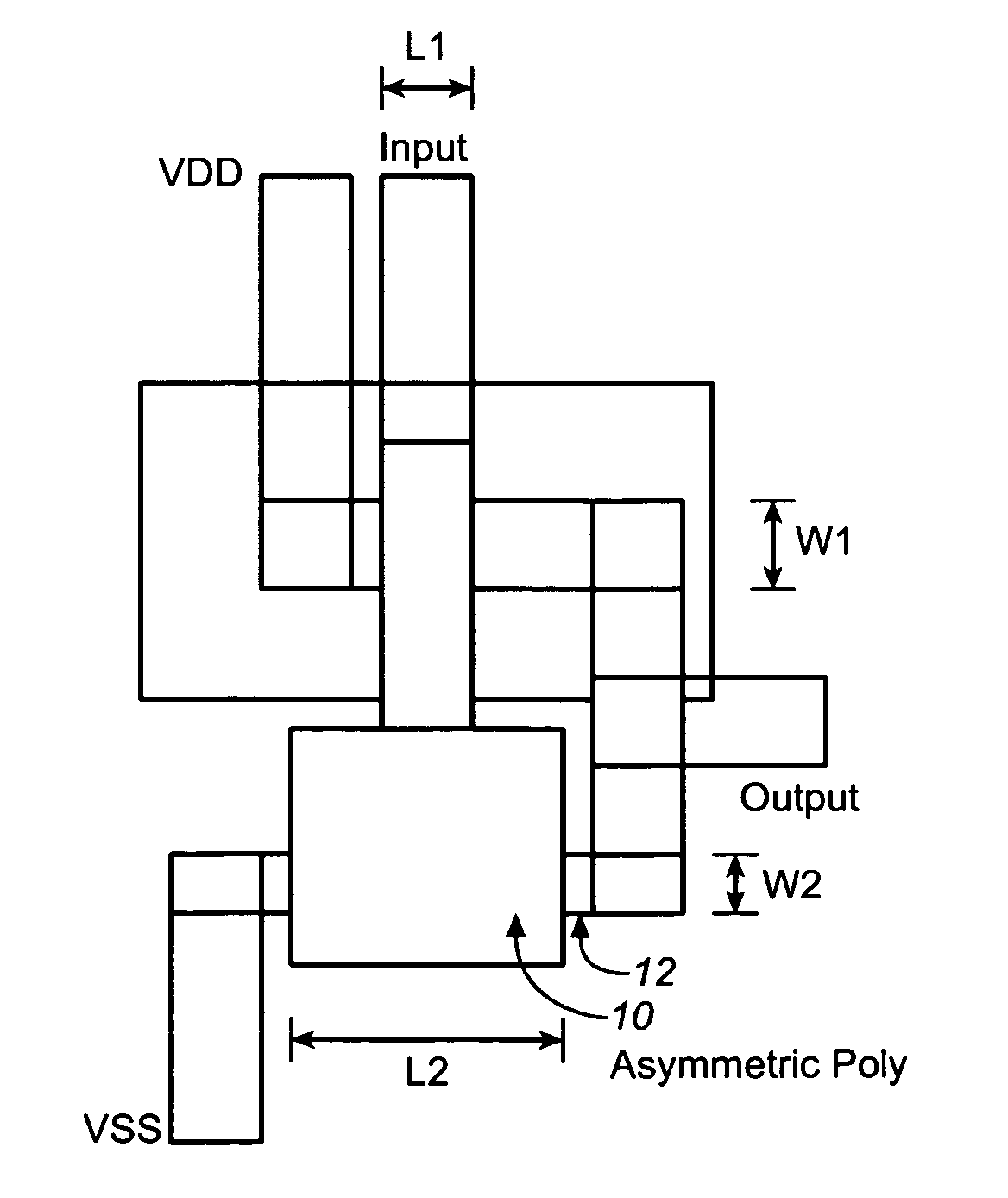
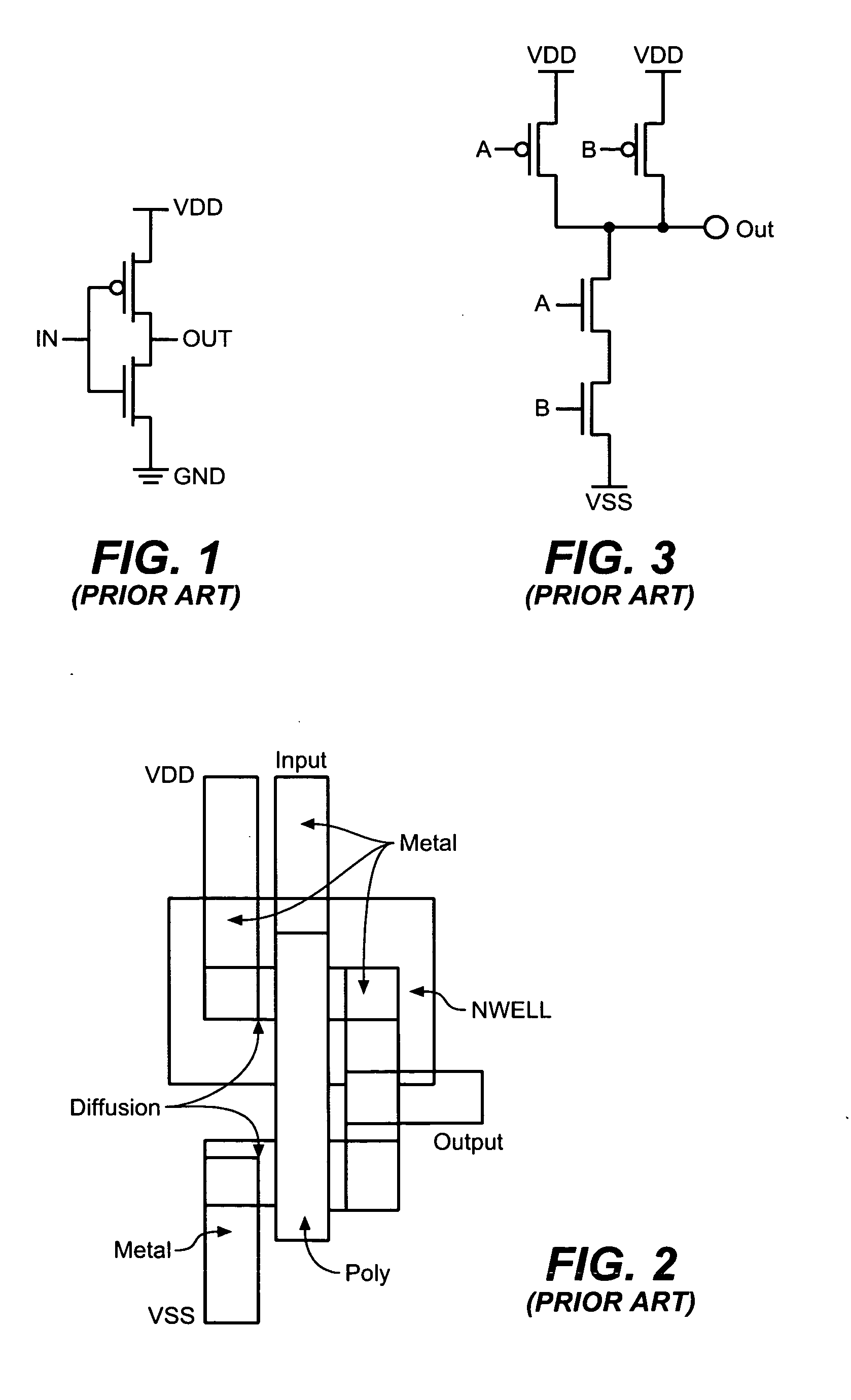
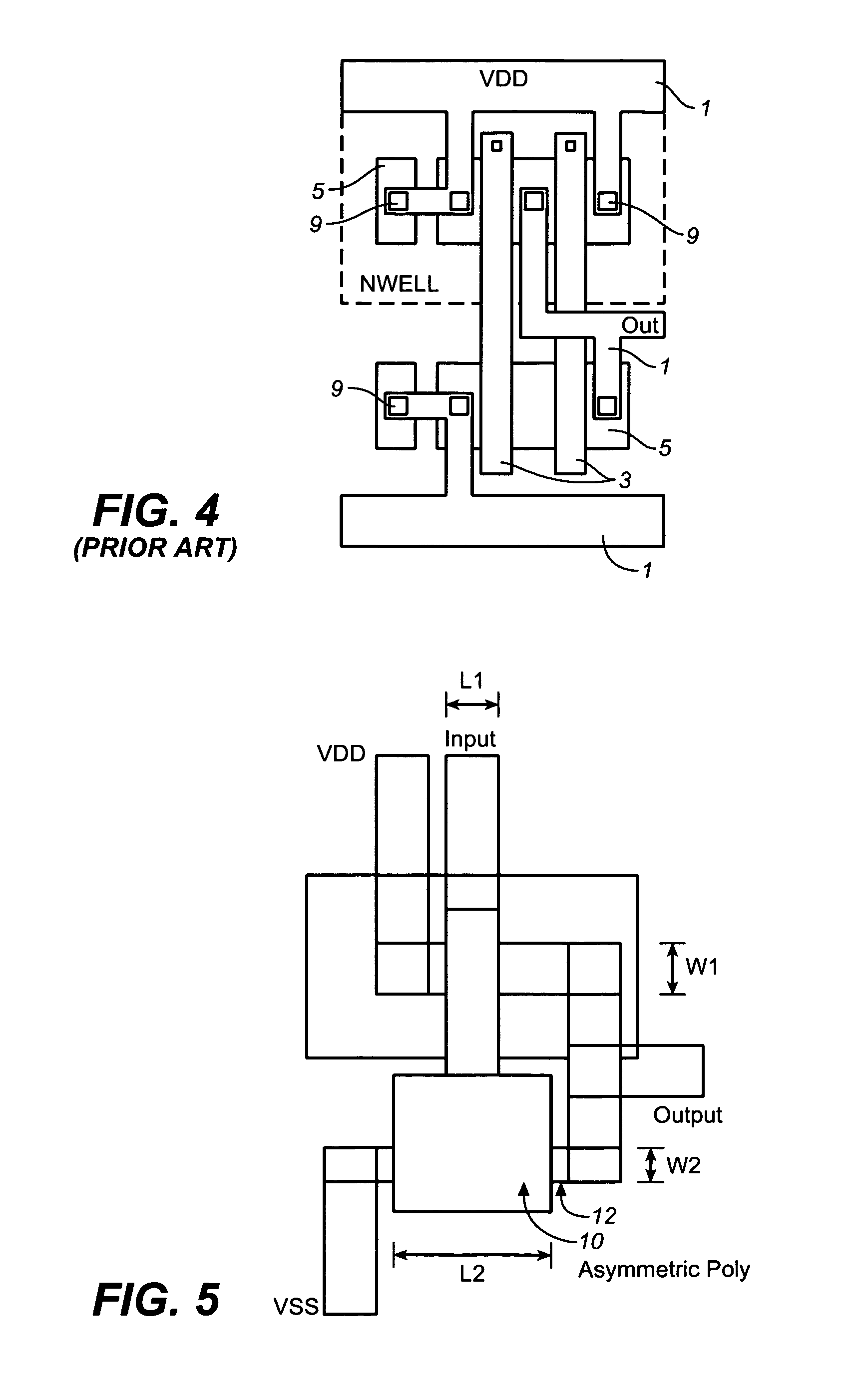
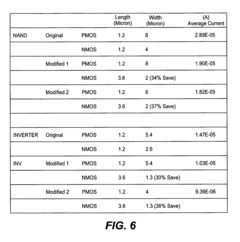
Asymmetrical layout for complementary metal-oxide-semiconductor integrated circuit to reduce power consumption
PatentInactiveUS20090072320A1
Innovation
- The implementation of an asymmetrical polysilicon gate and diffusion layout in CMOS integrated circuits, where the polysilicon gate and diffusion dimensions are asymmetrical, causing P-type and N-type transistors to switch at different times, thereby reducing short circuit current and power consumption.
Semiconductor devices having controlled S/D epitaxial shape
PatentActiveUS11935791B2
Innovation
- A method and structure are provided to improve the growth of source/drain epitaxial layers by forming a cover layer that exposes the active region between isolation and gate structures, allowing for recess formation and epitaxial layer growth, ensuring sufficient stress and symmetry, which involves forming a cover layer over the gate structures and etching the active region to create recesses for epitaxial growth, using SiGe or SiP layers for compressive or tensile stress, respectively.


Energy Efficiency Regs
Energy efficiency regulations have become increasingly stringent in recent years, driven by global efforts to combat climate change and reduce energy consumption. These regulations have a significant impact on the design and development of low-power computing devices, including those utilizing CMOS batteries. The European Union's Ecodesign Directive, for instance, sets mandatory energy efficiency requirements for various electronic products, including computers and servers. This directive aims to improve the overall environmental performance of products throughout their lifecycle.
In the United States, the Environmental Protection Agency's ENERGY STAR program provides voluntary certification for energy-efficient products, including computers and other electronic devices. The program's specifications for computers include power management requirements and maximum power consumption limits for different operational modes. These standards encourage manufacturers to develop more energy-efficient devices, which often leads to innovations in battery technology and power management systems.
The California Energy Commission (CEC) has also implemented its own energy efficiency standards for computers and monitors, which are often more stringent than federal regulations. These standards set specific energy consumption limits for different types of devices and require manufacturers to implement power management features. As California is a significant market for technology products, these regulations often influence product design on a national and even global scale.
In Asia, countries like Japan and South Korea have implemented their own energy efficiency standards for electronic devices. Japan's Top Runner Program, for example, sets energy efficiency targets based on the most efficient products in each category, encouraging continuous improvement in energy performance. This approach has led to significant advancements in energy-efficient technologies, including those related to battery usage and power management in computing devices.
The impact of these regulations on CMOS battery usage in low-power computing devices is multifaceted. Manufacturers are increasingly focused on developing more efficient power management systems that can extend battery life while meeting regulatory requirements. This has led to innovations in CMOS battery technology, including the development of lower-power CMOS chips and more efficient charging systems. Additionally, there is a growing trend towards the integration of energy harvesting technologies to supplement or even replace traditional CMOS batteries in certain applications.
As energy efficiency regulations continue to evolve, they are likely to drive further innovation in CMOS battery technology and power management systems for low-power computing devices. This may include the development of new battery chemistries, advanced power-saving modes, and more sophisticated energy management algorithms. The challenge for manufacturers will be to balance these regulatory requirements with consumer demands for performance and functionality in their devices.
In the United States, the Environmental Protection Agency's ENERGY STAR program provides voluntary certification for energy-efficient products, including computers and other electronic devices. The program's specifications for computers include power management requirements and maximum power consumption limits for different operational modes. These standards encourage manufacturers to develop more energy-efficient devices, which often leads to innovations in battery technology and power management systems.
The California Energy Commission (CEC) has also implemented its own energy efficiency standards for computers and monitors, which are often more stringent than federal regulations. These standards set specific energy consumption limits for different types of devices and require manufacturers to implement power management features. As California is a significant market for technology products, these regulations often influence product design on a national and even global scale.
In Asia, countries like Japan and South Korea have implemented their own energy efficiency standards for electronic devices. Japan's Top Runner Program, for example, sets energy efficiency targets based on the most efficient products in each category, encouraging continuous improvement in energy performance. This approach has led to significant advancements in energy-efficient technologies, including those related to battery usage and power management in computing devices.
The impact of these regulations on CMOS battery usage in low-power computing devices is multifaceted. Manufacturers are increasingly focused on developing more efficient power management systems that can extend battery life while meeting regulatory requirements. This has led to innovations in CMOS battery technology, including the development of lower-power CMOS chips and more efficient charging systems. Additionally, there is a growing trend towards the integration of energy harvesting technologies to supplement or even replace traditional CMOS batteries in certain applications.
As energy efficiency regulations continue to evolve, they are likely to drive further innovation in CMOS battery technology and power management systems for low-power computing devices. This may include the development of new battery chemistries, advanced power-saving modes, and more sophisticated energy management algorithms. The challenge for manufacturers will be to balance these regulatory requirements with consumer demands for performance and functionality in their devices.
Sustainable Electronics
The concept of sustainable electronics has gained significant traction in recent years, particularly in the context of low-power computing devices. As the demand for energy-efficient and environmentally friendly technologies continues to grow, rethinking the use of CMOS batteries in these devices has become a crucial area of focus for researchers and manufacturers alike.
CMOS batteries, traditionally used to maintain system settings and real-time clock information in computing devices, have long been a standard component in electronic systems. However, their environmental impact and limited lifespan have prompted a reevaluation of their role in modern, sustainable electronics design.
One of the primary concerns surrounding CMOS batteries is their disposal. These batteries often contain harmful materials such as lithium, which can pose environmental risks if not properly managed at the end of their lifecycle. As the electronics industry moves towards more sustainable practices, finding alternatives to traditional CMOS batteries has become a priority.
Several innovative approaches are being explored to address this challenge. One promising direction is the development of non-volatile memory technologies that can retain system information without the need for a constant power source. This could potentially eliminate the need for CMOS batteries altogether in certain applications, significantly reducing electronic waste.
Another area of research focuses on improving the longevity and efficiency of power management systems in low-power computing devices. By optimizing power consumption and implementing more sophisticated sleep modes, designers aim to reduce the reliance on CMOS batteries for maintaining critical system information during periods of inactivity.
The integration of energy harvesting technologies is also being considered as a potential solution. By capturing and storing small amounts of energy from the environment, such as light, heat, or motion, devices could potentially maintain their settings and clock information without the need for a dedicated battery.
Furthermore, advancements in ultra-low-power circuit design are contributing to the development of systems that can operate with minimal energy requirements. This approach not only reduces the overall power consumption of devices but also diminishes the need for constant backup power sources like CMOS batteries.
As the industry continues to evolve, the focus on sustainable electronics is driving innovation in power management and system design. The reimagining of CMOS battery usage in low-power computing devices is just one aspect of a broader movement towards more environmentally responsible and energy-efficient electronic products.
CMOS batteries, traditionally used to maintain system settings and real-time clock information in computing devices, have long been a standard component in electronic systems. However, their environmental impact and limited lifespan have prompted a reevaluation of their role in modern, sustainable electronics design.
One of the primary concerns surrounding CMOS batteries is their disposal. These batteries often contain harmful materials such as lithium, which can pose environmental risks if not properly managed at the end of their lifecycle. As the electronics industry moves towards more sustainable practices, finding alternatives to traditional CMOS batteries has become a priority.
Several innovative approaches are being explored to address this challenge. One promising direction is the development of non-volatile memory technologies that can retain system information without the need for a constant power source. This could potentially eliminate the need for CMOS batteries altogether in certain applications, significantly reducing electronic waste.
Another area of research focuses on improving the longevity and efficiency of power management systems in low-power computing devices. By optimizing power consumption and implementing more sophisticated sleep modes, designers aim to reduce the reliance on CMOS batteries for maintaining critical system information during periods of inactivity.
The integration of energy harvesting technologies is also being considered as a potential solution. By capturing and storing small amounts of energy from the environment, such as light, heat, or motion, devices could potentially maintain their settings and clock information without the need for a dedicated battery.
Furthermore, advancements in ultra-low-power circuit design are contributing to the development of systems that can operate with minimal energy requirements. This approach not only reduces the overall power consumption of devices but also diminishes the need for constant backup power sources like CMOS batteries.
As the industry continues to evolve, the focus on sustainable electronics is driving innovation in power management and system design. The reimagining of CMOS battery usage in low-power computing devices is just one aspect of a broader movement towards more environmentally responsible and energy-efficient electronic products.
Unlock deeper insights with Patsnap Eureka Quick Research — get a full tech report to explore trends and direct your research. Try now!
Generate Your Research Report Instantly with AI Agent
Supercharge your innovation with Patsnap Eureka AI Agent Platform!