

Solid-State Transformers in Emergency Power Systems: Reliability
APR 20, 20269 MIN READ
Generate Your Research Report Instantly with AI Agent
PatSnap Eureka helps you evaluate technical feasibility & market potential.
SST Emergency Power Background and Reliability Goals
Solid-State Transformers represent a paradigm shift in power conversion technology, emerging from the convergence of advanced semiconductor devices, high-frequency magnetic components, and sophisticated control systems. The evolution of SST technology traces back to the early 1970s when researchers first conceptualized electronic alternatives to conventional electromagnetic transformers. However, practical implementation remained elusive until the advent of wide bandgap semiconductors such as Silicon Carbide and Gallium Nitride in the late 1990s and early 2000s.
The development trajectory accelerated significantly with the introduction of smart grid concepts and renewable energy integration requirements. Traditional transformers, while reliable, lack the flexibility and controllability demanded by modern power systems. SSTs address these limitations by providing bidirectional power flow, voltage regulation, power factor correction, and harmonic filtering capabilities within a single device. The technology gained momentum through military applications where weight, size, and efficiency constraints drove innovation beyond conventional solutions.
Emergency power systems present unique operational challenges that distinguish them from standard grid applications. These systems must deliver instantaneous response during power outages, maintain stable operation under varying load conditions, and provide seamless transition between normal and emergency modes. The criticality of emergency power applications demands exceptional reliability standards, often exceeding 99.9% availability requirements across extended operational periods.
The reliability objectives for SSTs in emergency power applications encompass multiple dimensions beyond simple operational availability. Mean Time Between Failures must exceed 100,000 hours under normal operating conditions, while maintaining functionality across temperature ranges from -40°C to +85°C. Fault tolerance becomes paramount, requiring redundant power paths and graceful degradation capabilities when individual components fail.
System-level reliability goals extend to electromagnetic compatibility, ensuring SST operation does not interfere with critical communication systems or sensitive electronic equipment typically present in emergency facilities. Additionally, the technology must demonstrate resilience against power quality disturbances, including voltage sags, surges, and harmonic distortion that commonly occur during emergency scenarios.
The integration of advanced diagnostics and prognostic capabilities represents a fundamental reliability requirement, enabling predictive maintenance strategies that prevent unexpected failures. Real-time monitoring of semiconductor junction temperatures, magnetic core losses, and capacitor degradation provides essential data for reliability assessment and maintenance scheduling.
The development trajectory accelerated significantly with the introduction of smart grid concepts and renewable energy integration requirements. Traditional transformers, while reliable, lack the flexibility and controllability demanded by modern power systems. SSTs address these limitations by providing bidirectional power flow, voltage regulation, power factor correction, and harmonic filtering capabilities within a single device. The technology gained momentum through military applications where weight, size, and efficiency constraints drove innovation beyond conventional solutions.
Emergency power systems present unique operational challenges that distinguish them from standard grid applications. These systems must deliver instantaneous response during power outages, maintain stable operation under varying load conditions, and provide seamless transition between normal and emergency modes. The criticality of emergency power applications demands exceptional reliability standards, often exceeding 99.9% availability requirements across extended operational periods.
The reliability objectives for SSTs in emergency power applications encompass multiple dimensions beyond simple operational availability. Mean Time Between Failures must exceed 100,000 hours under normal operating conditions, while maintaining functionality across temperature ranges from -40°C to +85°C. Fault tolerance becomes paramount, requiring redundant power paths and graceful degradation capabilities when individual components fail.
System-level reliability goals extend to electromagnetic compatibility, ensuring SST operation does not interfere with critical communication systems or sensitive electronic equipment typically present in emergency facilities. Additionally, the technology must demonstrate resilience against power quality disturbances, including voltage sags, surges, and harmonic distortion that commonly occur during emergency scenarios.
The integration of advanced diagnostics and prognostic capabilities represents a fundamental reliability requirement, enabling predictive maintenance strategies that prevent unexpected failures. Real-time monitoring of semiconductor junction temperatures, magnetic core losses, and capacitor degradation provides essential data for reliability assessment and maintenance scheduling.
Market Demand for Reliable Emergency Power Solutions
The global emergency power systems market is experiencing unprecedented growth driven by increasing frequency of natural disasters, aging electrical infrastructure, and rising demand for uninterrupted power supply across critical sectors. Healthcare facilities, data centers, telecommunications networks, and industrial manufacturing plants require robust backup power solutions that can deliver immediate response during grid failures. Traditional emergency power systems, while functional, often suffer from reliability issues including mechanical wear, maintenance complexity, and slower response times that can compromise critical operations.
Solid-state transformers represent a paradigm shift in emergency power system design, addressing fundamental reliability concerns that plague conventional solutions. The market demand stems from the need for power systems that can provide instantaneous switching capabilities, enhanced power quality, and reduced maintenance requirements. Industries are increasingly recognizing that power outages cost significantly more than investing in advanced emergency power infrastructure, creating substantial market pull for innovative technologies.
The healthcare sector demonstrates particularly strong demand for reliable emergency power solutions, where power interruptions can directly impact patient safety and life-support systems. Modern medical facilities require power systems capable of seamless transitions with minimal voltage fluctuations and harmonic distortion. Solid-state transformers offer superior power conditioning capabilities compared to traditional electromagnetic transformers, making them highly attractive for medical applications where power quality is paramount.
Data centers and cloud computing facilities represent another major market segment driving demand for reliable emergency power systems. These facilities require power systems that can handle dynamic load variations while maintaining strict power quality standards. The increasing digitization of business operations and growing reliance on cloud services have amplified the economic impact of power disruptions, creating strong market incentives for advanced emergency power technologies.
Industrial manufacturing sectors, particularly those involving continuous processes such as chemical production, semiconductor fabrication, and steel manufacturing, require emergency power systems with exceptional reliability characteristics. Process interruptions in these industries can result in substantial financial losses, equipment damage, and safety hazards. The market demand focuses on emergency power solutions that can provide stable, high-quality power during extended outage periods while minimizing the risk of system failures.
The integration of renewable energy sources and smart grid technologies is creating additional market demand for advanced emergency power systems. Solid-state transformers offer enhanced grid integration capabilities, bidirectional power flow management, and improved compatibility with distributed energy resources, positioning them as essential components in modern emergency power infrastructure.
Solid-state transformers represent a paradigm shift in emergency power system design, addressing fundamental reliability concerns that plague conventional solutions. The market demand stems from the need for power systems that can provide instantaneous switching capabilities, enhanced power quality, and reduced maintenance requirements. Industries are increasingly recognizing that power outages cost significantly more than investing in advanced emergency power infrastructure, creating substantial market pull for innovative technologies.
The healthcare sector demonstrates particularly strong demand for reliable emergency power solutions, where power interruptions can directly impact patient safety and life-support systems. Modern medical facilities require power systems capable of seamless transitions with minimal voltage fluctuations and harmonic distortion. Solid-state transformers offer superior power conditioning capabilities compared to traditional electromagnetic transformers, making them highly attractive for medical applications where power quality is paramount.
Data centers and cloud computing facilities represent another major market segment driving demand for reliable emergency power systems. These facilities require power systems that can handle dynamic load variations while maintaining strict power quality standards. The increasing digitization of business operations and growing reliance on cloud services have amplified the economic impact of power disruptions, creating strong market incentives for advanced emergency power technologies.
Industrial manufacturing sectors, particularly those involving continuous processes such as chemical production, semiconductor fabrication, and steel manufacturing, require emergency power systems with exceptional reliability characteristics. Process interruptions in these industries can result in substantial financial losses, equipment damage, and safety hazards. The market demand focuses on emergency power solutions that can provide stable, high-quality power during extended outage periods while minimizing the risk of system failures.
The integration of renewable energy sources and smart grid technologies is creating additional market demand for advanced emergency power systems. Solid-state transformers offer enhanced grid integration capabilities, bidirectional power flow management, and improved compatibility with distributed energy resources, positioning them as essential components in modern emergency power infrastructure.
Current SST Reliability Challenges in Emergency Applications
Solid-State Transformers deployed in emergency power systems face unique reliability challenges that significantly differ from conventional grid applications. The critical nature of emergency scenarios demands near-perfect operational availability, yet current SST implementations struggle with several fundamental reliability constraints that limit their widespread adoption in mission-critical applications.
Power semiconductor devices represent the primary vulnerability in emergency SST deployments. Silicon carbide and gallium nitride switching devices, while offering superior efficiency and power density, exhibit temperature-dependent failure modes that become pronounced during extended emergency operations. Junction temperature fluctuations exceeding 150°C during load transients can trigger thermal cycling stress, leading to wire bond degradation and metallization fatigue. These failure mechanisms are particularly problematic in emergency scenarios where cooling systems may operate under compromised conditions.
Control system complexity introduces additional reliability concerns specific to emergency applications. SSTs require sophisticated real-time control algorithms for voltage regulation, power flow management, and grid synchronization. However, the multi-layered control architecture creates numerous single points of failure. Communication delays between control modules during fault conditions can result in protection system malfunctions, potentially causing cascading failures when emergency power delivery is most critical.
Electromagnetic interference susceptibility poses significant challenges in emergency environments. SSTs generate substantial high-frequency switching noise that can interfere with critical communication systems and medical equipment commonly present in emergency facilities. Conversely, external electromagnetic disturbances from emergency generators, radio communications, and medical devices can disrupt SST control systems, leading to operational instability or complete shutdown.
Fault tolerance mechanisms in current SST designs remain inadequate for emergency applications. Unlike traditional transformers that fail gradually, SSTs typically experience abrupt failures due to semiconductor device breakdown. The lack of inherent fault ride-through capability means that single component failures can compromise entire emergency power distribution networks. Current redundancy schemes add significant cost and complexity while still failing to achieve the reliability levels required for life-critical applications.
Maintenance and diagnostic capabilities present operational challenges in emergency scenarios. SSTs require specialized diagnostic equipment and trained personnel for troubleshooting, resources that may be unavailable during emergency situations. The absence of standardized diagnostic protocols and remote monitoring capabilities further complicates reliability assessment and predictive maintenance strategies essential for emergency preparedness.
Power semiconductor devices represent the primary vulnerability in emergency SST deployments. Silicon carbide and gallium nitride switching devices, while offering superior efficiency and power density, exhibit temperature-dependent failure modes that become pronounced during extended emergency operations. Junction temperature fluctuations exceeding 150°C during load transients can trigger thermal cycling stress, leading to wire bond degradation and metallization fatigue. These failure mechanisms are particularly problematic in emergency scenarios where cooling systems may operate under compromised conditions.
Control system complexity introduces additional reliability concerns specific to emergency applications. SSTs require sophisticated real-time control algorithms for voltage regulation, power flow management, and grid synchronization. However, the multi-layered control architecture creates numerous single points of failure. Communication delays between control modules during fault conditions can result in protection system malfunctions, potentially causing cascading failures when emergency power delivery is most critical.
Electromagnetic interference susceptibility poses significant challenges in emergency environments. SSTs generate substantial high-frequency switching noise that can interfere with critical communication systems and medical equipment commonly present in emergency facilities. Conversely, external electromagnetic disturbances from emergency generators, radio communications, and medical devices can disrupt SST control systems, leading to operational instability or complete shutdown.
Fault tolerance mechanisms in current SST designs remain inadequate for emergency applications. Unlike traditional transformers that fail gradually, SSTs typically experience abrupt failures due to semiconductor device breakdown. The lack of inherent fault ride-through capability means that single component failures can compromise entire emergency power distribution networks. Current redundancy schemes add significant cost and complexity while still failing to achieve the reliability levels required for life-critical applications.
Maintenance and diagnostic capabilities present operational challenges in emergency scenarios. SSTs require specialized diagnostic equipment and trained personnel for troubleshooting, resources that may be unavailable during emergency situations. The absence of standardized diagnostic protocols and remote monitoring capabilities further complicates reliability assessment and predictive maintenance strategies essential for emergency preparedness.
Existing SST Reliability Enhancement Solutions
01 Fault detection and protection mechanisms for solid-state transformers
Implementing advanced fault detection systems and protection mechanisms is crucial for enhancing the reliability of solid-state transformers. These systems can monitor various parameters such as voltage, current, and temperature to detect abnormal conditions. Protection circuits can quickly isolate faulty components or sections to prevent cascading failures and minimize damage. Intelligent diagnostic algorithms can identify potential issues before they lead to complete system failure, enabling predictive maintenance and improving overall system reliability.- Fault detection and protection mechanisms for solid-state transformers: Solid-state transformers require advanced fault detection and protection systems to ensure reliable operation. These mechanisms include monitoring circuits that detect abnormal conditions such as overcurrent, overvoltage, and thermal stress. Protection schemes can incorporate fast-acting circuit breakers, fault isolation techniques, and diagnostic systems that identify potential failures before they cause system damage. Real-time monitoring and predictive maintenance algorithms help improve the overall reliability by preventing catastrophic failures and extending the operational lifespan of the transformer.
- Thermal management and cooling systems: Effective thermal management is critical for maintaining the reliability of solid-state transformers. High power density and switching frequencies generate significant heat that must be dissipated to prevent component degradation and failure. Advanced cooling solutions include heat sinks, liquid cooling systems, and thermal interface materials that enhance heat transfer. Temperature monitoring sensors and thermal modeling techniques help optimize cooling design and ensure components operate within safe temperature ranges, thereby improving long-term reliability and performance.
- Power semiconductor device reliability and degradation analysis: The reliability of solid-state transformers heavily depends on the performance and longevity of power semiconductor devices such as IGBTs, MOSFETs, and wide-bandgap semiconductors. Degradation mechanisms include thermal cycling, electrical stress, and aging effects that can lead to increased on-resistance, reduced switching speed, and eventual failure. Reliability assessment methods involve accelerated life testing, failure mode analysis, and physics-of-failure models. Design strategies to enhance semiconductor reliability include proper gate drive design, snubber circuits, and selection of devices with appropriate voltage and current ratings.
- Control system stability and fault-tolerant operation: Reliable operation of solid-state transformers requires robust control systems that maintain stability under various operating conditions and fault scenarios. Advanced control algorithms include adaptive control, model predictive control, and fault-tolerant control strategies that can reconfigure the system in response to component failures. Redundancy in control hardware and software, along with self-diagnostic capabilities, ensures continuous operation even when partial failures occur. Communication protocols and cybersecurity measures also play important roles in maintaining control system reliability in grid-connected applications.
- Insulation system design and partial discharge mitigation: The insulation system is a critical component affecting the long-term reliability of solid-state transformers. High-frequency switching operations create voltage stress that can lead to partial discharge, insulation degradation, and eventual breakdown. Reliability improvements include the use of advanced insulation materials with high dielectric strength, optimized electrode geometries to reduce electric field concentration, and encapsulation techniques that protect against environmental factors. Partial discharge detection and monitoring systems enable early identification of insulation weaknesses, allowing for preventive maintenance and reducing the risk of catastrophic failure.
02 Thermal management and cooling systems
Effective thermal management is essential for maintaining the reliability of solid-state transformers, as excessive heat can degrade semiconductor components and reduce their lifespan. Advanced cooling systems, including liquid cooling, heat sinks, and thermal interface materials, help dissipate heat efficiently. Temperature monitoring and control systems ensure that components operate within safe temperature ranges. Proper thermal design can significantly extend the operational life of power electronic devices and improve the overall reliability of the transformer system.Expand Specific Solutions03 Modular and redundant architecture design
Adopting modular and redundant architecture designs can greatly enhance the reliability of solid-state transformers. Modular designs allow for easier maintenance, repair, and replacement of individual components without shutting down the entire system. Redundancy ensures that backup components or parallel paths are available to maintain operation if primary components fail. This approach improves fault tolerance and system availability, making the transformer more resilient to component failures and reducing downtime in critical applications.Expand Specific Solutions04 Power semiconductor device selection and optimization
The selection and optimization of power semiconductor devices, such as IGBTs, MOSFETs, and wide-bandgap devices like SiC and GaN, play a critical role in solid-state transformer reliability. These devices must be carefully chosen based on voltage and current ratings, switching characteristics, and thermal properties. Advanced semiconductor technologies offer improved efficiency, higher switching frequencies, and better thermal performance. Proper device selection and gate drive optimization can reduce stress on components, minimize losses, and enhance the overall reliability and longevity of the transformer system.Expand Specific Solutions05 Control strategies and monitoring systems
Advanced control strategies and comprehensive monitoring systems are vital for ensuring the reliable operation of solid-state transformers. Sophisticated control algorithms can optimize power flow, balance loads, and respond to grid disturbances while maintaining stable operation. Real-time monitoring systems track key performance indicators, operational parameters, and health status of components. Data analytics and machine learning techniques can be applied to predict potential failures and schedule maintenance activities. These intelligent control and monitoring approaches enable proactive management of the transformer system, reducing unexpected failures and improving overall reliability.Expand Specific Solutions
Key Players in SST and Emergency Power Industry
The solid-state transformer (SST) market for emergency power systems is in an emerging growth phase, driven by increasing demand for reliable backup power infrastructure across critical facilities. The market demonstrates significant expansion potential as organizations prioritize power resilience, with the global SST market projected to reach substantial valuations by 2030. Technology maturity varies considerably among key players, with established industrial giants like ABB Ltd., Huawei Digital Power Technologies, and Delta Electronics leading advanced SST development through extensive R&D investments and proven power electronics expertise. State Grid Corp. of China and regional utilities like Jiangsu Electric Power Co. are driving deployment in grid applications, while semiconductor specialists including Semiconductor Components Industries LLC provide critical component technologies. Academic institutions such as Nanyang Technological University and Shanghai Jiao Tong University contribute fundamental research, though commercial readiness remains concentrated among major industrial manufacturers who possess the integration capabilities necessary for reliable emergency power applications.
Huawei Digital Power Technologies Co Ltd
Technical Solution: Huawei Digital Power has developed intelligent solid-state transformer solutions integrating advanced power electronics with digital control systems for emergency power applications. Their SST technology features modular design with hot-swappable components, ensuring high availability during critical operations. The system incorporates wide bandgap semiconductors for improved efficiency and thermal performance. Advanced algorithms enable optimal power flow management between multiple sources including grid, generators, and battery storage systems. The SST includes comprehensive protection mechanisms with fault ride-through capabilities and automatic reconfiguration features. Cloud-based monitoring and AI-driven analytics provide real-time system health assessment and predictive maintenance scheduling, enhancing overall reliability in emergency power scenarios.
Strengths: Strong digital integration capabilities, modular hot-swappable design, comprehensive cloud-based monitoring system. Weaknesses: Relatively new in SST market, potential concerns regarding technology transfer and long-term support in some regions.
Delta Electronics (Shanghai) Co., Ltd.
Technical Solution: Delta Electronics has developed solid-state transformer technology focusing on high reliability and efficiency for emergency power systems. Their SST solutions feature dual active bridge (DAB) converter topology with galvanic isolation and bidirectional power flow capabilities. The system incorporates advanced thermal management with liquid cooling systems to ensure reliable operation under extreme conditions. Multiple redundancy levels including N+1 configuration provide fault tolerance essential for emergency applications. The SST includes integrated energy management system capable of coordinating multiple power sources and loads during emergency scenarios. Advanced protection features include arc fault detection, ground fault protection, and cybersecurity measures for critical infrastructure applications.
Strengths: Proven power electronics expertise, robust thermal management systems, strong focus on industrial reliability standards. Weaknesses: Limited market presence in large-scale emergency power applications, higher complexity compared to traditional solutions.
Core Reliability Innovations in SST Design
Three-phase power supply system and power supply method
PatentActiveUS20210391724A1
Innovation
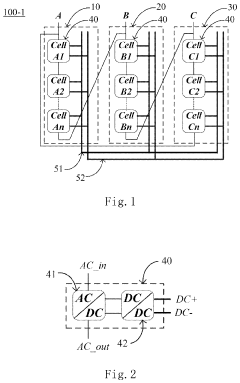
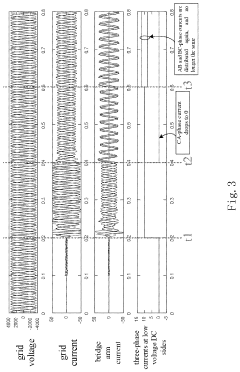
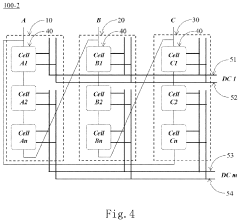
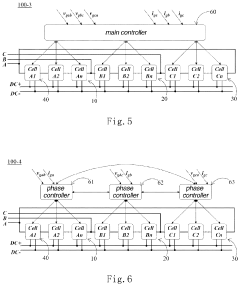
- A three-phase power supply system with a delta connection architecture, where each phase branch comprises multiple power conversion cells connected in parallel, allowing for regulation of active and reactive powers to maintain three-phase current balance without injecting negative-sequence or reactive currents, enabling four-quadrant operation even when one phase branch fails.
Power unit and solid-state transformer
PatentPendingEP4369588A1
Innovation
- A power unit comprising a first subsidiary power supply circuit and a first power circuit, where the first power circuit includes an AC/AC power main circuit and a first control module, and a second power circuit with an AC/DC power main circuit, allowing for voltage adjustment and reliable power delivery to the control modules, with no separate isolation device required.


Safety Standards for Emergency Power Systems
Safety standards for emergency power systems incorporating solid-state transformers represent a critical framework ensuring operational integrity during crisis situations. These standards encompass multiple regulatory domains, including electrical safety, electromagnetic compatibility, and system reliability requirements that must be rigorously maintained under extreme operating conditions.
The International Electrotechnical Commission (IEC) 62040 series provides foundational guidelines for uninterruptible power systems, while IEEE 1547 addresses distributed energy resource interconnection standards. For solid-state transformers specifically, IEC 61558 safety requirements for power transformers have been adapted to address the unique characteristics of semiconductor-based power conversion systems. These standards mandate comprehensive insulation coordination, fault protection mechanisms, and thermal management protocols.
Emergency power applications demand enhanced safety protocols beyond conventional transformer standards. The National Fire Protection Association (NFPA) 110 establishes critical performance criteria for emergency power supply systems, requiring automatic transfer capabilities within ten seconds and sustained operation for minimum durations. Solid-state transformers must demonstrate compliance with these timing requirements while maintaining galvanic isolation and surge protection capabilities.
Functional safety standards, particularly IEC 61508 for electrical systems and ISO 13849 for safety-related control systems, define systematic approaches for achieving acceptable risk levels. These frameworks require comprehensive hazard analysis, safety integrity level determination, and systematic verification procedures. For solid-state transformers, this includes semiconductor failure mode analysis, redundancy implementation strategies, and diagnostic coverage assessment.
Environmental and electromagnetic compatibility standards such as IEC 61000 series address power quality requirements and electromagnetic interference limitations. Emergency power systems must maintain stable voltage and frequency output while minimizing harmonic distortion and electromagnetic emissions that could interfere with critical communication systems during emergencies.
Certification processes typically involve third-party testing laboratories conducting comprehensive evaluation protocols including temperature cycling, vibration testing, surge immunity verification, and long-term reliability assessment. These rigorous testing procedures ensure solid-state transformers can withstand the demanding operational requirements inherent in emergency power applications while maintaining compliance with applicable safety standards.
The International Electrotechnical Commission (IEC) 62040 series provides foundational guidelines for uninterruptible power systems, while IEEE 1547 addresses distributed energy resource interconnection standards. For solid-state transformers specifically, IEC 61558 safety requirements for power transformers have been adapted to address the unique characteristics of semiconductor-based power conversion systems. These standards mandate comprehensive insulation coordination, fault protection mechanisms, and thermal management protocols.
Emergency power applications demand enhanced safety protocols beyond conventional transformer standards. The National Fire Protection Association (NFPA) 110 establishes critical performance criteria for emergency power supply systems, requiring automatic transfer capabilities within ten seconds and sustained operation for minimum durations. Solid-state transformers must demonstrate compliance with these timing requirements while maintaining galvanic isolation and surge protection capabilities.
Functional safety standards, particularly IEC 61508 for electrical systems and ISO 13849 for safety-related control systems, define systematic approaches for achieving acceptable risk levels. These frameworks require comprehensive hazard analysis, safety integrity level determination, and systematic verification procedures. For solid-state transformers, this includes semiconductor failure mode analysis, redundancy implementation strategies, and diagnostic coverage assessment.
Environmental and electromagnetic compatibility standards such as IEC 61000 series address power quality requirements and electromagnetic interference limitations. Emergency power systems must maintain stable voltage and frequency output while minimizing harmonic distortion and electromagnetic emissions that could interfere with critical communication systems during emergencies.
Certification processes typically involve third-party testing laboratories conducting comprehensive evaluation protocols including temperature cycling, vibration testing, surge immunity verification, and long-term reliability assessment. These rigorous testing procedures ensure solid-state transformers can withstand the demanding operational requirements inherent in emergency power applications while maintaining compliance with applicable safety standards.
Risk Assessment Framework for SST Deployment
The deployment of Solid-State Transformers in emergency power systems necessitates a comprehensive risk assessment framework that addresses both technical and operational vulnerabilities. This framework must systematically evaluate potential failure modes, their likelihood of occurrence, and the severity of their impact on critical power delivery during emergency scenarios.
The risk assessment methodology should begin with hazard identification, focusing on component-level failures such as semiconductor device degradation, thermal management system malfunctions, and control system vulnerabilities. Power electronic components in SSTs are particularly susceptible to stress-related failures under emergency conditions, where rapid load changes and extended operation periods can accelerate aging mechanisms. The framework must quantify these risks through probabilistic models that account for environmental factors, operational stress levels, and component reliability data.
Failure Mode and Effects Analysis (FMEA) forms the cornerstone of SST risk evaluation, systematically examining each subsystem's potential failure mechanisms and their cascading effects on overall system performance. Critical failure modes include switching device failures, magnetic component saturation, and communication link disruptions between control modules. Each failure mode requires assessment of its detection probability, occurrence frequency, and severity ranking to establish risk priority numbers.
The framework should incorporate dynamic risk assessment capabilities that adapt to changing operational conditions during emergency scenarios. Real-time monitoring systems must track key performance indicators such as junction temperatures, switching frequencies, and harmonic distortion levels to provide early warning of impending failures. Machine learning algorithms can enhance predictive capabilities by identifying subtle patterns in operational data that precede component degradation.
Redundancy strategies and fault-tolerant design principles must be evaluated within the risk framework to determine optimal system architectures. Multi-level converter topologies with built-in redundancy can maintain partial functionality even during component failures, but the framework must assess whether reduced capacity meets minimum emergency power requirements. The trade-offs between system complexity, cost, and reliability improvement require quantitative analysis.
Environmental risk factors specific to emergency deployment scenarios demand special attention, including exposure to extreme temperatures, humidity, vibration, and electromagnetic interference. The framework should establish environmental stress screening protocols and define operational boundaries that ensure reliable performance under adverse conditions while maintaining acceptable risk levels for critical emergency power applications.
The risk assessment methodology should begin with hazard identification, focusing on component-level failures such as semiconductor device degradation, thermal management system malfunctions, and control system vulnerabilities. Power electronic components in SSTs are particularly susceptible to stress-related failures under emergency conditions, where rapid load changes and extended operation periods can accelerate aging mechanisms. The framework must quantify these risks through probabilistic models that account for environmental factors, operational stress levels, and component reliability data.
Failure Mode and Effects Analysis (FMEA) forms the cornerstone of SST risk evaluation, systematically examining each subsystem's potential failure mechanisms and their cascading effects on overall system performance. Critical failure modes include switching device failures, magnetic component saturation, and communication link disruptions between control modules. Each failure mode requires assessment of its detection probability, occurrence frequency, and severity ranking to establish risk priority numbers.
The framework should incorporate dynamic risk assessment capabilities that adapt to changing operational conditions during emergency scenarios. Real-time monitoring systems must track key performance indicators such as junction temperatures, switching frequencies, and harmonic distortion levels to provide early warning of impending failures. Machine learning algorithms can enhance predictive capabilities by identifying subtle patterns in operational data that precede component degradation.
Redundancy strategies and fault-tolerant design principles must be evaluated within the risk framework to determine optimal system architectures. Multi-level converter topologies with built-in redundancy can maintain partial functionality even during component failures, but the framework must assess whether reduced capacity meets minimum emergency power requirements. The trade-offs between system complexity, cost, and reliability improvement require quantitative analysis.
Environmental risk factors specific to emergency deployment scenarios demand special attention, including exposure to extreme temperatures, humidity, vibration, and electromagnetic interference. The framework should establish environmental stress screening protocols and define operational boundaries that ensure reliable performance under adverse conditions while maintaining acceptable risk levels for critical emergency power applications.
Unlock deeper insights with PatSnap Eureka Quick Research — get a full tech report to explore trends and direct your research. Try now!
Generate Your Research Report Instantly with AI Agent
Supercharge your innovation with PatSnap Eureka AI Agent Platform!