Solid-State Transformers in Fast Charging Stations: Efficiency
APR 20, 20269 MIN READ
Generate Your Research Report Instantly with AI Agent
Patsnap Eureka helps you evaluate technical feasibility & market potential.
SST Fast Charging Background and Efficiency Goals
The electric vehicle revolution has fundamentally transformed transportation infrastructure requirements, with fast charging stations emerging as critical enablers for widespread EV adoption. Traditional charging infrastructure relies on conventional transformers and power conversion systems that face significant limitations in efficiency, size, and grid integration capabilities. These limitations become particularly pronounced in high-power fast charging applications where power levels can exceed 350kW per charging port.
Solid-State Transformers represent a paradigm shift from conventional magnetic-core transformers by utilizing power electronics and high-frequency switching technologies. Unlike traditional transformers that operate at grid frequency (50/60Hz), SSTs employ high-frequency operation typically ranging from 10kHz to 100kHz, enabling dramatic size and weight reductions while providing advanced power management capabilities. This technology integration allows for bidirectional power flow, real-time grid stabilization, and enhanced power quality management.
The evolution of SST technology has been driven by advances in wide bandgap semiconductors, particularly Silicon Carbide (SiC) and Gallium Nitride (GaN) devices. These materials enable higher switching frequencies, reduced switching losses, and improved thermal performance compared to traditional Silicon-based power devices. The convergence of these semiconductor advances with sophisticated control algorithms has made commercial SST implementations increasingly viable for demanding applications like fast charging infrastructure.
Current efficiency targets for SST-based fast charging systems aim to achieve overall system efficiencies exceeding 96% from grid connection to vehicle battery. This represents a significant improvement over conventional charging systems that typically achieve 92-94% efficiency. The efficiency gains stem from reduced conversion stages, optimized power factor correction, and minimized harmonic distortion. Additionally, SSTs enable dynamic efficiency optimization based on real-time load conditions and grid parameters.
The primary efficiency goals encompass multiple operational aspects including peak efficiency performance, partial load efficiency characteristics, and thermal management effectiveness. Advanced SST designs target maintaining efficiency levels above 94% even at 25% load conditions, addressing the variable nature of EV charging demands. Furthermore, integration of energy storage systems and renewable energy sources through SST platforms aims to achieve holistic energy management with minimal conversion losses while supporting grid stability and power quality requirements.
Solid-State Transformers represent a paradigm shift from conventional magnetic-core transformers by utilizing power electronics and high-frequency switching technologies. Unlike traditional transformers that operate at grid frequency (50/60Hz), SSTs employ high-frequency operation typically ranging from 10kHz to 100kHz, enabling dramatic size and weight reductions while providing advanced power management capabilities. This technology integration allows for bidirectional power flow, real-time grid stabilization, and enhanced power quality management.
The evolution of SST technology has been driven by advances in wide bandgap semiconductors, particularly Silicon Carbide (SiC) and Gallium Nitride (GaN) devices. These materials enable higher switching frequencies, reduced switching losses, and improved thermal performance compared to traditional Silicon-based power devices. The convergence of these semiconductor advances with sophisticated control algorithms has made commercial SST implementations increasingly viable for demanding applications like fast charging infrastructure.
Current efficiency targets for SST-based fast charging systems aim to achieve overall system efficiencies exceeding 96% from grid connection to vehicle battery. This represents a significant improvement over conventional charging systems that typically achieve 92-94% efficiency. The efficiency gains stem from reduced conversion stages, optimized power factor correction, and minimized harmonic distortion. Additionally, SSTs enable dynamic efficiency optimization based on real-time load conditions and grid parameters.
The primary efficiency goals encompass multiple operational aspects including peak efficiency performance, partial load efficiency characteristics, and thermal management effectiveness. Advanced SST designs target maintaining efficiency levels above 94% even at 25% load conditions, addressing the variable nature of EV charging demands. Furthermore, integration of energy storage systems and renewable energy sources through SST platforms aims to achieve holistic energy management with minimal conversion losses while supporting grid stability and power quality requirements.
Market Demand for High-Efficiency EV Charging Infrastructure
The global electric vehicle market has experienced unprecedented growth, fundamentally reshaping transportation infrastructure requirements. This transformation has created substantial demand for advanced charging solutions that can deliver rapid, reliable, and efficient power delivery. Traditional charging infrastructure faces significant limitations in meeting the evolving needs of modern electric vehicles, particularly regarding charging speed, grid integration, and energy efficiency.
Current market dynamics reveal a critical gap between existing charging capabilities and user expectations. Electric vehicle owners increasingly demand charging experiences comparable to conventional fuel refilling, necessitating ultra-fast charging solutions that can deliver substantial power within minutes rather than hours. This demand extends beyond individual consumers to commercial fleet operators, ride-sharing services, and logistics companies that require minimal downtime for their electric vehicle operations.
The proliferation of high-capacity battery systems in modern electric vehicles has intensified requirements for sophisticated charging infrastructure. Next-generation electric vehicles feature battery packs capable of accepting higher charging rates, but conventional charging stations often cannot fully utilize these capabilities due to efficiency limitations and thermal management constraints. This mismatch between vehicle capabilities and infrastructure performance represents a significant market opportunity for advanced charging technologies.
Grid stability concerns have emerged as a paramount consideration in charging infrastructure deployment. Utility companies face increasing challenges managing peak demand loads created by multiple high-power charging events. The market demands intelligent charging solutions that can optimize power delivery while minimizing grid stress and reducing operational costs for charging station operators.
Energy efficiency requirements have become increasingly stringent due to environmental regulations and economic considerations. Charging station operators seek technologies that minimize energy losses during power conversion and transmission, directly impacting operational profitability and environmental sustainability. The market shows strong preference for solutions that can achieve superior efficiency ratings while maintaining reliability and safety standards.
Commercial and industrial sectors demonstrate particularly strong demand for high-efficiency charging infrastructure. Logistics companies, public transportation authorities, and commercial fleet operators require charging solutions that can support intensive daily operations while minimizing energy costs and maximizing vehicle availability. These applications demand robust, efficient charging systems capable of handling continuous high-power operations.
The integration of renewable energy sources into charging infrastructure has created additional market requirements. Operators increasingly seek charging solutions that can effectively interface with solar installations, wind generation, and energy storage systems while maintaining optimal efficiency throughout the power conversion chain.
Current market dynamics reveal a critical gap between existing charging capabilities and user expectations. Electric vehicle owners increasingly demand charging experiences comparable to conventional fuel refilling, necessitating ultra-fast charging solutions that can deliver substantial power within minutes rather than hours. This demand extends beyond individual consumers to commercial fleet operators, ride-sharing services, and logistics companies that require minimal downtime for their electric vehicle operations.
The proliferation of high-capacity battery systems in modern electric vehicles has intensified requirements for sophisticated charging infrastructure. Next-generation electric vehicles feature battery packs capable of accepting higher charging rates, but conventional charging stations often cannot fully utilize these capabilities due to efficiency limitations and thermal management constraints. This mismatch between vehicle capabilities and infrastructure performance represents a significant market opportunity for advanced charging technologies.
Grid stability concerns have emerged as a paramount consideration in charging infrastructure deployment. Utility companies face increasing challenges managing peak demand loads created by multiple high-power charging events. The market demands intelligent charging solutions that can optimize power delivery while minimizing grid stress and reducing operational costs for charging station operators.
Energy efficiency requirements have become increasingly stringent due to environmental regulations and economic considerations. Charging station operators seek technologies that minimize energy losses during power conversion and transmission, directly impacting operational profitability and environmental sustainability. The market shows strong preference for solutions that can achieve superior efficiency ratings while maintaining reliability and safety standards.
Commercial and industrial sectors demonstrate particularly strong demand for high-efficiency charging infrastructure. Logistics companies, public transportation authorities, and commercial fleet operators require charging solutions that can support intensive daily operations while minimizing energy costs and maximizing vehicle availability. These applications demand robust, efficient charging systems capable of handling continuous high-power operations.
The integration of renewable energy sources into charging infrastructure has created additional market requirements. Operators increasingly seek charging solutions that can effectively interface with solar installations, wind generation, and energy storage systems while maintaining optimal efficiency throughout the power conversion chain.
Current SST Efficiency Challenges in Fast Charging Applications
Solid-state transformers in fast charging applications face significant efficiency challenges that stem from multiple interconnected factors. The primary concern lies in power conversion losses across the multi-stage architecture typical of SST systems. These losses occur during AC-DC rectification, DC-DC conversion, and DC-AC inversion processes, with each stage contributing to overall efficiency degradation.
Semiconductor switching losses represent a critical bottleneck in SST efficiency. High-frequency switching operations, while enabling compact transformer designs, generate substantial switching losses that increase exponentially with switching frequency. Silicon carbide and gallium nitride devices, despite their superior performance compared to silicon counterparts, still exhibit considerable losses at the high power levels required for fast charging applications exceeding 150kW.
Thermal management poses another fundamental challenge affecting SST efficiency in fast charging environments. The concentrated power density within SST modules generates significant heat loads that must be effectively dissipated to maintain optimal semiconductor performance. Inadequate thermal management leads to increased junction temperatures, resulting in higher conduction losses and reduced switching efficiency.
Magnetic component losses within the high-frequency transformers constitute a substantial efficiency concern. Core losses increase with frequency and flux density, while copper losses in windings are exacerbated by skin and proximity effects at high frequencies. The trade-off between transformer size reduction and efficiency optimization remains a persistent challenge in SST design.
Control system complexity introduces additional efficiency penalties through computational overhead and sensing losses. Advanced control algorithms required for grid synchronization, power factor correction, and harmonic mitigation demand sophisticated processing capabilities that consume auxiliary power and introduce control delays affecting overall system efficiency.
Grid integration challenges further compound efficiency issues, particularly regarding power quality requirements and harmonic distortion limits. SST systems must maintain high efficiency while simultaneously providing grid support functions such as reactive power compensation and voltage regulation, creating conflicting optimization objectives that compromise peak efficiency performance in practical fast charging deployments.
Semiconductor switching losses represent a critical bottleneck in SST efficiency. High-frequency switching operations, while enabling compact transformer designs, generate substantial switching losses that increase exponentially with switching frequency. Silicon carbide and gallium nitride devices, despite their superior performance compared to silicon counterparts, still exhibit considerable losses at the high power levels required for fast charging applications exceeding 150kW.
Thermal management poses another fundamental challenge affecting SST efficiency in fast charging environments. The concentrated power density within SST modules generates significant heat loads that must be effectively dissipated to maintain optimal semiconductor performance. Inadequate thermal management leads to increased junction temperatures, resulting in higher conduction losses and reduced switching efficiency.
Magnetic component losses within the high-frequency transformers constitute a substantial efficiency concern. Core losses increase with frequency and flux density, while copper losses in windings are exacerbated by skin and proximity effects at high frequencies. The trade-off between transformer size reduction and efficiency optimization remains a persistent challenge in SST design.
Control system complexity introduces additional efficiency penalties through computational overhead and sensing losses. Advanced control algorithms required for grid synchronization, power factor correction, and harmonic mitigation demand sophisticated processing capabilities that consume auxiliary power and introduce control delays affecting overall system efficiency.
Grid integration challenges further compound efficiency issues, particularly regarding power quality requirements and harmonic distortion limits. SST systems must maintain high efficiency while simultaneously providing grid support functions such as reactive power compensation and voltage regulation, creating conflicting optimization objectives that compromise peak efficiency performance in practical fast charging deployments.
Existing SST Solutions for Fast Charging Efficiency
01 Advanced power semiconductor devices for efficiency improvement
Solid-state transformers utilize advanced power semiconductor devices such as silicon carbide (SiC) and gallium nitride (GaN) transistors to reduce switching losses and conduction losses. These wide-bandgap semiconductors enable higher switching frequencies and lower on-resistance, resulting in improved overall efficiency. The implementation of optimized gate drive circuits and thermal management systems further enhances the performance of these semiconductor devices in solid-state transformer applications.- Advanced power semiconductor devices for efficiency improvement: Solid-state transformers utilize advanced power semiconductor devices such as silicon carbide (SiC) and gallium nitride (GaN) transistors to reduce switching losses and conduction losses. These wide-bandgap semiconductors enable higher switching frequencies and lower on-resistance, significantly improving overall transformer efficiency. The implementation of optimized gate drive circuits and thermal management systems further enhances the performance of these semiconductor devices in solid-state transformer applications.
- Multi-stage conversion topology optimization: Efficiency enhancement through optimized multi-stage power conversion architectures that minimize conversion stages and associated losses. These topologies employ modular multilevel converter structures with reduced component count and optimized voltage levels. The design incorporates soft-switching techniques and resonant conversion methods to achieve zero-voltage or zero-current switching, thereby reducing switching losses and electromagnetic interference while improving overall system efficiency.
- Magnetic core material and design optimization: Utilization of advanced magnetic materials such as nanocrystalline and amorphous alloys with low core losses and high saturation flux density. The magnetic component design incorporates optimized core geometries, winding configurations, and interleaving techniques to minimize eddy current losses and leakage inductance. High-frequency operation enabled by these materials reduces the size and weight of magnetic components while maintaining high efficiency across varying load conditions.
- Intelligent control algorithms and power management: Implementation of advanced digital control strategies including model predictive control, adaptive control, and artificial intelligence-based optimization algorithms. These control systems dynamically adjust operating parameters such as switching frequency, modulation schemes, and phase-shift angles to maximize efficiency under different load conditions. Real-time monitoring and feedback mechanisms enable optimal power flow management and loss minimization across the entire operating range of the solid-state transformer.
- Thermal management and cooling system design: Advanced thermal management solutions incorporating liquid cooling, heat pipe technology, and optimized heat sink designs to maintain optimal operating temperatures of power semiconductor devices. Efficient thermal interface materials and thermal spreading techniques ensure uniform temperature distribution across critical components. The cooling system design considers both steady-state and transient thermal conditions to prevent hotspots and maintain high efficiency while extending component lifetime and reliability.
02 Multi-stage conversion topology optimization
Efficiency in solid-state transformers can be enhanced through optimized multi-stage power conversion topologies that minimize the number of conversion stages and associated losses. These topologies include dual active bridge converters, modular multilevel converters, and cascaded H-bridge configurations. By carefully designing the voltage conversion ratios and implementing soft-switching techniques, the overall conversion efficiency can be significantly improved while maintaining voltage regulation and power quality.Expand Specific Solutions03 Magnetic core material and design optimization
The selection and design of magnetic core materials play a crucial role in improving solid-state transformer efficiency. Advanced magnetic materials such as nanocrystalline alloys and amorphous metals reduce core losses at high frequencies. Optimized core geometries, winding configurations, and interleaving techniques minimize leakage inductance and copper losses. Proper thermal design of magnetic components ensures operation within optimal temperature ranges for maximum efficiency.Expand Specific Solutions04 Intelligent control algorithms and modulation strategies
Advanced control algorithms and modulation strategies significantly impact solid-state transformer efficiency. These include predictive control methods, adaptive modulation techniques, and real-time optimization algorithms that adjust operating parameters based on load conditions. Phase-shift control, pulse-width modulation optimization, and zero-voltage switching techniques reduce switching losses. Digital signal processors and field-programmable gate arrays enable precise implementation of these control strategies for maximum efficiency across varying operating conditions.Expand Specific Solutions05 Thermal management and cooling system design
Effective thermal management is essential for maintaining high efficiency in solid-state transformers by ensuring optimal operating temperatures for power semiconductors and magnetic components. Advanced cooling solutions include liquid cooling systems, heat pipe technologies, and optimized heat sink designs with enhanced surface areas. Thermal interface materials with high conductivity and intelligent temperature monitoring systems help maintain components within their optimal efficiency ranges. Proper thermal design prevents efficiency degradation due to temperature-dependent losses in semiconductors and magnetic materials.Expand Specific Solutions
Key Players in SST and EV Charging Industry
The solid-state transformer (SST) market for fast charging stations is in its early commercialization phase, transitioning from research to practical deployment. The global market is experiencing rapid growth driven by increasing EV adoption and demand for ultra-fast charging infrastructure, with projections indicating substantial expansion through 2030. Technology maturity varies significantly across market players, with established power electronics companies like Delta Electronics, Hitachi Energy, and Toshiba Mitsubishi-Electric Industrial Systems leading in commercial-grade SST solutions. Battery manufacturers such as Contemporary Amperex Technology and component specialists like Murata Manufacturing and TDK Electronics are advancing supporting technologies. Automotive giants including BMW and Caterpillar are integrating SST solutions into their electrification strategies, while emerging companies like StoreDot and Edgeenergy are developing innovative approaches to power conversion and charging infrastructure, indicating a competitive landscape with diverse technological approaches and varying levels of market readiness.
Delta Electronics, Inc.
Technical Solution: Delta Electronics has developed advanced solid-state transformer solutions for fast charging applications, featuring high-frequency isolation transformers with silicon carbide (SiC) power semiconductors. Their SST systems achieve power conversion efficiency exceeding 96% through optimized magnetic design and advanced control algorithms. The company's modular SST architecture enables scalable power ratings from 50kW to 350kW, incorporating bidirectional power flow capability for vehicle-to-grid applications. Delta's SST solutions integrate power factor correction, galvanic isolation, and voltage regulation in a single compact unit, reducing system complexity and installation footprint by up to 40% compared to conventional transformer-based charging stations.
Strengths: High efficiency above 96%, proven commercial deployment experience, comprehensive power electronics expertise. Weaknesses: Higher initial cost compared to traditional transformers, complex control systems requiring specialized maintenance.
Hitachi Energy Ltd.
Technical Solution: Hitachi Energy has pioneered solid-state transformer technology for grid-connected fast charging infrastructure, utilizing advanced wide bandgap semiconductors and high-frequency magnetic components. Their SST systems feature intelligent power management with real-time grid stabilization capabilities, achieving conversion efficiency of 95-97% across varying load conditions. The company's modular design supports power levels up to 1MW with integrated energy storage interfaces and advanced harmonic filtering. Hitachi's SST solutions incorporate predictive maintenance algorithms and remote monitoring capabilities, enabling optimal performance optimization and reduced operational costs for charging station operators.
Strengths: Grid integration expertise, high power handling capability up to 1MW, advanced monitoring systems. Weaknesses: Complex system architecture, higher maintenance requirements for wide bandgap devices.
Core Innovations in High-Efficiency SST Design
Electric vehicle charging station power supply system based on solid-state transformer
PatentActiveCN106602565A
Innovation
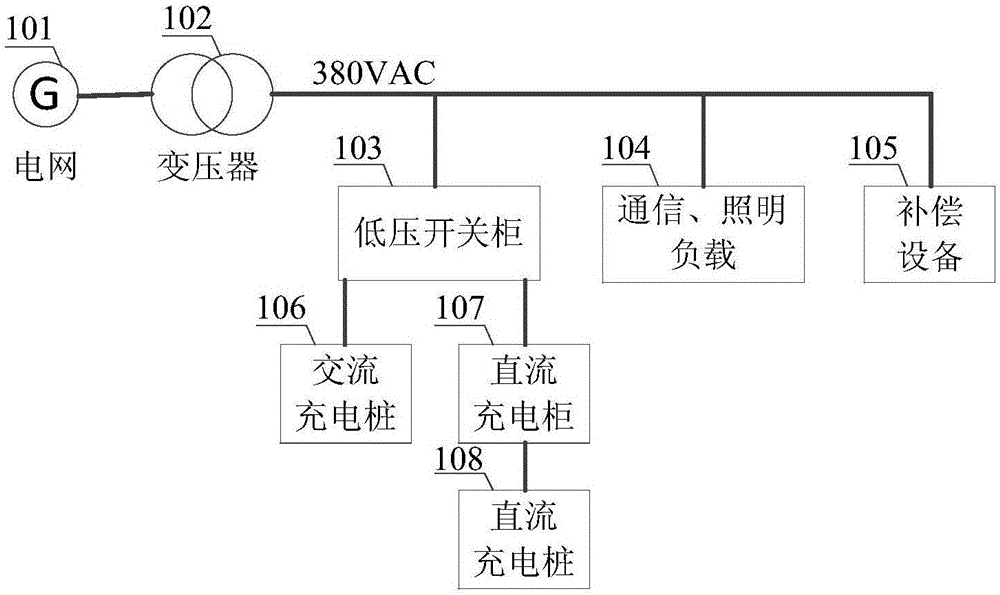
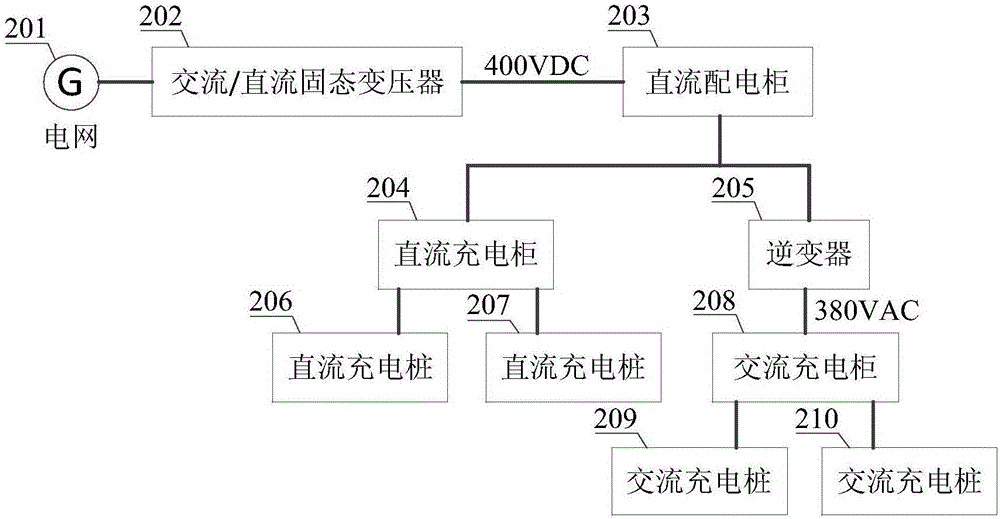
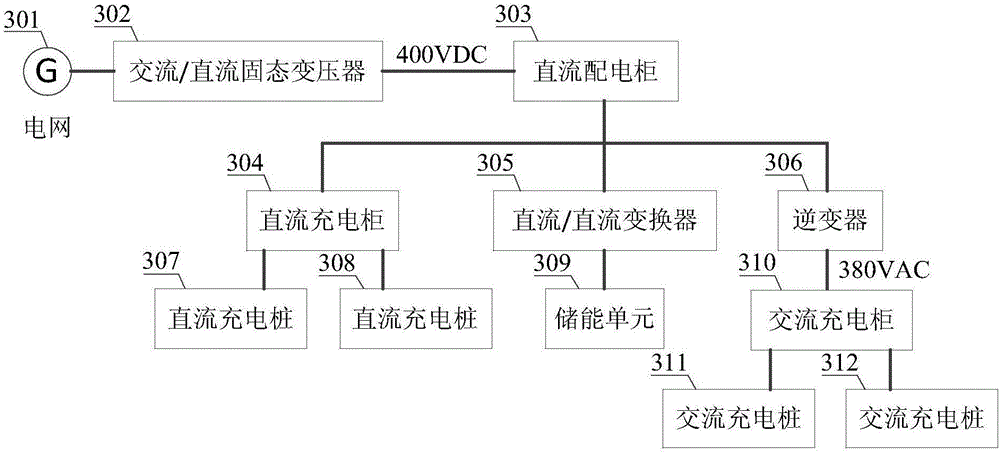
- Adopt a solid-state transformer-based electric vehicle charging station power supply system, using 400V DC-based power supply lines and AC/DC solid-state transformers to connect to the power grid to suppress harmonic effects, improve power factor, and simplify the power supply system structure, combined with energy storage unit control load to facilitate the access of renewable energy.

Solid state transformer and converter system
PatentWO2025061261A1
Innovation
- A solid state transformer system with a single core magnetic link, which includes power semiconductor devices such as transistors and diodes, is used to efficiently transform and regulate electrical voltage, reducing hardware costs by derating the power ratings of the transformer ports.


Grid Integration Standards for SST-Based Charging
The integration of Solid-State Transformers into electric vehicle fast charging infrastructure requires adherence to comprehensive grid integration standards that ensure safe, reliable, and efficient operation within existing electrical networks. Current grid integration frameworks primarily rely on IEEE 1547 series standards, which establish fundamental requirements for distributed energy resources interconnection, though these standards require significant adaptation for SST-specific applications in high-power charging environments.
IEC 61850 communication protocols represent the cornerstone of modern grid integration standards for SST-based charging stations, enabling seamless data exchange between charging infrastructure and grid management systems. These protocols facilitate real-time monitoring of power quality parameters, voltage regulation capabilities, and harmonic distortion levels that are critical for maintaining grid stability during high-power charging operations.
Power quality standards under IEEE 519 and IEC 61000 series establish stringent requirements for total harmonic distortion, voltage flicker, and electromagnetic compatibility that SST-based charging systems must satisfy. These standards become particularly challenging for solid-state transformers due to their high-frequency switching operations, necessitating advanced filtering techniques and careful electromagnetic design considerations to ensure compliance with grid-imposed limits.
Grid code compliance varies significantly across different regions, with European ENTSO-E network codes, North American NERC standards, and emerging Asian grid integration requirements each presenting unique challenges for SST deployment. These regional variations particularly affect fault ride-through capabilities, reactive power support requirements, and frequency response characteristics that SST-based charging stations must demonstrate.
Cybersecurity standards including IEC 62351 and NIST cybersecurity frameworks are becoming increasingly critical as SST-based charging infrastructure incorporates advanced digital communication capabilities and grid-interactive functionalities. The integration of these security protocols ensures protection against cyber threats while maintaining the operational flexibility required for dynamic grid support services.
Future standardization efforts are focusing on developing SST-specific grid integration requirements that address unique characteristics such as bidirectional power flow capabilities, enhanced voltage regulation ranges, and advanced grid support functionalities that traditional transformer-based systems cannot provide, positioning these standards as enablers for next-generation smart grid integration.
IEC 61850 communication protocols represent the cornerstone of modern grid integration standards for SST-based charging stations, enabling seamless data exchange between charging infrastructure and grid management systems. These protocols facilitate real-time monitoring of power quality parameters, voltage regulation capabilities, and harmonic distortion levels that are critical for maintaining grid stability during high-power charging operations.
Power quality standards under IEEE 519 and IEC 61000 series establish stringent requirements for total harmonic distortion, voltage flicker, and electromagnetic compatibility that SST-based charging systems must satisfy. These standards become particularly challenging for solid-state transformers due to their high-frequency switching operations, necessitating advanced filtering techniques and careful electromagnetic design considerations to ensure compliance with grid-imposed limits.
Grid code compliance varies significantly across different regions, with European ENTSO-E network codes, North American NERC standards, and emerging Asian grid integration requirements each presenting unique challenges for SST deployment. These regional variations particularly affect fault ride-through capabilities, reactive power support requirements, and frequency response characteristics that SST-based charging stations must demonstrate.
Cybersecurity standards including IEC 62351 and NIST cybersecurity frameworks are becoming increasingly critical as SST-based charging infrastructure incorporates advanced digital communication capabilities and grid-interactive functionalities. The integration of these security protocols ensures protection against cyber threats while maintaining the operational flexibility required for dynamic grid support services.
Future standardization efforts are focusing on developing SST-specific grid integration requirements that address unique characteristics such as bidirectional power flow capabilities, enhanced voltage regulation ranges, and advanced grid support functionalities that traditional transformer-based systems cannot provide, positioning these standards as enablers for next-generation smart grid integration.
Thermal Management Strategies for SST Efficiency
Thermal management represents a critical factor in determining the operational efficiency of solid-state transformers within fast charging station environments. The high-frequency switching operations and power density characteristics of SSTs generate substantial heat loads that directly impact semiconductor performance, magnetic core losses, and overall system reliability. Effective thermal management strategies must address both steady-state and transient thermal conditions while maintaining compact form factors essential for charging station integration.
Advanced cooling architectures for SST applications typically employ multi-level thermal management approaches. Liquid cooling systems utilizing dielectric coolants provide superior heat removal capabilities compared to traditional air-cooling methods, enabling higher power densities and improved efficiency retention. Direct liquid cooling of power semiconductor modules through cold plates or immersion cooling techniques can reduce junction temperatures by 20-30°C, translating to efficiency improvements of 1-2% and extended component lifespan.
Thermal interface materials play a pivotal role in SST thermal management effectiveness. High-performance thermal interface materials with thermal conductivities exceeding 5 W/mK facilitate efficient heat transfer from semiconductor dies to heat sinks. Phase change materials and thermal gap fillers specifically designed for power electronics applications help minimize thermal resistance while accommodating mechanical tolerances and thermal expansion differences between components.
Intelligent thermal management systems incorporating real-time temperature monitoring and adaptive cooling control enhance SST efficiency under varying load conditions. Temperature-aware power management algorithms can dynamically adjust switching frequencies and modulation strategies to optimize the trade-off between efficiency and thermal stress. Predictive thermal modeling enables proactive cooling system adjustments, preventing thermal runaway conditions that could compromise system performance.
Heat sink design optimization for SST applications requires careful consideration of airflow patterns, fin geometry, and material selection. Microchannel heat sinks and vapor chamber technologies offer enhanced thermal performance in space-constrained environments. The integration of heat pipes and thermal spreaders helps distribute heat loads more uniformly across cooling surfaces, reducing hot spots that can degrade semiconductor performance and accelerate aging processes.
System-level thermal management strategies must also address the thermal interaction between SST components and surrounding charging station infrastructure. Proper thermal isolation and heat dissipation pathways prevent thermal coupling effects that could impact neighboring systems or create localized overheating conditions within the charging station enclosure.
Advanced cooling architectures for SST applications typically employ multi-level thermal management approaches. Liquid cooling systems utilizing dielectric coolants provide superior heat removal capabilities compared to traditional air-cooling methods, enabling higher power densities and improved efficiency retention. Direct liquid cooling of power semiconductor modules through cold plates or immersion cooling techniques can reduce junction temperatures by 20-30°C, translating to efficiency improvements of 1-2% and extended component lifespan.
Thermal interface materials play a pivotal role in SST thermal management effectiveness. High-performance thermal interface materials with thermal conductivities exceeding 5 W/mK facilitate efficient heat transfer from semiconductor dies to heat sinks. Phase change materials and thermal gap fillers specifically designed for power electronics applications help minimize thermal resistance while accommodating mechanical tolerances and thermal expansion differences between components.
Intelligent thermal management systems incorporating real-time temperature monitoring and adaptive cooling control enhance SST efficiency under varying load conditions. Temperature-aware power management algorithms can dynamically adjust switching frequencies and modulation strategies to optimize the trade-off between efficiency and thermal stress. Predictive thermal modeling enables proactive cooling system adjustments, preventing thermal runaway conditions that could compromise system performance.
Heat sink design optimization for SST applications requires careful consideration of airflow patterns, fin geometry, and material selection. Microchannel heat sinks and vapor chamber technologies offer enhanced thermal performance in space-constrained environments. The integration of heat pipes and thermal spreaders helps distribute heat loads more uniformly across cooling surfaces, reducing hot spots that can degrade semiconductor performance and accelerate aging processes.
System-level thermal management strategies must also address the thermal interaction between SST components and surrounding charging station infrastructure. Proper thermal isolation and heat dissipation pathways prevent thermal coupling effects that could impact neighboring systems or create localized overheating conditions within the charging station enclosure.
Unlock deeper insights with Patsnap Eureka Quick Research — get a full tech report to explore trends and direct your research. Try now!
Generate Your Research Report Instantly with AI Agent
Supercharge your innovation with Patsnap Eureka AI Agent Platform!