

Solid-State Transformers Vs Step-Up Transformers: Voltage Range
APR 20, 20269 MIN READ
Generate Your Research Report Instantly with AI Agent
PatSnap Eureka helps you evaluate technical feasibility & market potential.
SST vs Step-Up Transformer Voltage Range Background and Goals
The electrical power industry has undergone significant transformation over the past century, with transformer technology serving as the backbone of power transmission and distribution systems. Traditional step-up transformers, utilizing electromagnetic induction principles through iron cores and copper windings, have dominated voltage conversion applications since the early 1900s. These conventional transformers have proven reliable for bulk power transmission, typically operating in voltage ranges from medium voltage levels up to extra-high voltage applications exceeding 800kV.
The emergence of solid-state transformers represents a paradigm shift in power conversion technology, driven by advances in wide bandgap semiconductors and digital control systems. SSTs leverage power electronics to achieve voltage transformation without relying on traditional magnetic coupling, offering unprecedented flexibility in voltage regulation and power quality management. This technology has gained momentum particularly in smart grid applications, renewable energy integration, and industrial power systems where dynamic voltage control is essential.
The voltage range capabilities of these two transformer technologies present distinct operational characteristics and limitations. Traditional step-up transformers excel in high-voltage, high-power applications where efficiency and cost-effectiveness are paramount. Their voltage transformation ratios are fixed by design, making them ideal for steady-state power transmission scenarios. However, they lack the dynamic voltage regulation capabilities increasingly demanded by modern power systems.
SSTs demonstrate superior performance in medium voltage applications, typically ranging from 1kV to 35kV, where their advanced control capabilities can be fully utilized. Their ability to provide real-time voltage regulation, power factor correction, and harmonic filtering makes them particularly valuable in distribution networks and industrial applications. The technology's modular architecture enables scalable voltage solutions that can adapt to varying load conditions.
The comparative analysis of voltage range performance between SSTs and step-up transformers reveals critical insights for future power system design. While traditional transformers maintain advantages in ultra-high voltage applications due to their proven reliability and cost structure, SSTs are positioned to revolutionize medium voltage applications through enhanced controllability and grid integration capabilities.
The strategic importance of understanding these voltage range characteristics extends beyond technical specifications to encompass grid modernization initiatives, renewable energy integration requirements, and the evolving demands of industrial electrification. This technological comparison forms the foundation for informed decision-making in power system infrastructure development and investment strategies.
The emergence of solid-state transformers represents a paradigm shift in power conversion technology, driven by advances in wide bandgap semiconductors and digital control systems. SSTs leverage power electronics to achieve voltage transformation without relying on traditional magnetic coupling, offering unprecedented flexibility in voltage regulation and power quality management. This technology has gained momentum particularly in smart grid applications, renewable energy integration, and industrial power systems where dynamic voltage control is essential.
The voltage range capabilities of these two transformer technologies present distinct operational characteristics and limitations. Traditional step-up transformers excel in high-voltage, high-power applications where efficiency and cost-effectiveness are paramount. Their voltage transformation ratios are fixed by design, making them ideal for steady-state power transmission scenarios. However, they lack the dynamic voltage regulation capabilities increasingly demanded by modern power systems.
SSTs demonstrate superior performance in medium voltage applications, typically ranging from 1kV to 35kV, where their advanced control capabilities can be fully utilized. Their ability to provide real-time voltage regulation, power factor correction, and harmonic filtering makes them particularly valuable in distribution networks and industrial applications. The technology's modular architecture enables scalable voltage solutions that can adapt to varying load conditions.
The comparative analysis of voltage range performance between SSTs and step-up transformers reveals critical insights for future power system design. While traditional transformers maintain advantages in ultra-high voltage applications due to their proven reliability and cost structure, SSTs are positioned to revolutionize medium voltage applications through enhanced controllability and grid integration capabilities.
The strategic importance of understanding these voltage range characteristics extends beyond technical specifications to encompass grid modernization initiatives, renewable energy integration requirements, and the evolving demands of industrial electrification. This technological comparison forms the foundation for informed decision-making in power system infrastructure development and investment strategies.
Market Demand Analysis for High Voltage Transformation Solutions
The global high voltage transformation market is experiencing unprecedented growth driven by the accelerating transition toward renewable energy infrastructure and smart grid modernization initiatives. Traditional step-up transformers have dominated this sector for decades, primarily serving utility-scale applications in power generation facilities, transmission substations, and industrial complexes requiring voltage elevation from medium voltage levels to transmission-grade voltages exceeding 100kV.
Solid-state transformers represent an emerging segment within this market, targeting applications where traditional magnetic transformers face limitations. The demand for SSTs is particularly pronounced in renewable energy integration scenarios, where their bidirectional power flow capabilities and advanced grid management features address critical infrastructure needs. Wind farms and solar installations increasingly require sophisticated voltage transformation solutions that can handle variable power generation patterns while maintaining grid stability.
The industrial automation sector demonstrates growing appetite for high-performance voltage transformation solutions, especially in manufacturing facilities implementing Industry 4.0 technologies. These environments demand transformers capable of precise voltage regulation, rapid response times, and seamless integration with digital control systems. Solid-state transformers excel in these applications due to their inherent controllability and compact form factors.
Data center infrastructure represents another significant demand driver, where space constraints and power quality requirements favor advanced transformation technologies. The exponential growth in cloud computing and edge computing facilities creates substantial market opportunities for both traditional and solid-state solutions, with selection criteria heavily influenced by efficiency requirements and footprint limitations.
Railway electrification projects worldwide generate substantial demand for specialized high voltage transformation equipment. Modern rail systems require transformers capable of handling dynamic load conditions while maintaining high reliability standards. The choice between solid-state and conventional step-up transformers often depends on specific voltage ranges, with SSTs gaining traction in urban transit applications requiring frequent voltage adjustments.
Market dynamics indicate increasing preference for solutions offering enhanced monitoring capabilities, predictive maintenance features, and grid integration flexibility. These requirements align closely with solid-state transformer capabilities, suggesting potential market share expansion despite higher initial investment costs compared to traditional alternatives.
Solid-state transformers represent an emerging segment within this market, targeting applications where traditional magnetic transformers face limitations. The demand for SSTs is particularly pronounced in renewable energy integration scenarios, where their bidirectional power flow capabilities and advanced grid management features address critical infrastructure needs. Wind farms and solar installations increasingly require sophisticated voltage transformation solutions that can handle variable power generation patterns while maintaining grid stability.
The industrial automation sector demonstrates growing appetite for high-performance voltage transformation solutions, especially in manufacturing facilities implementing Industry 4.0 technologies. These environments demand transformers capable of precise voltage regulation, rapid response times, and seamless integration with digital control systems. Solid-state transformers excel in these applications due to their inherent controllability and compact form factors.
Data center infrastructure represents another significant demand driver, where space constraints and power quality requirements favor advanced transformation technologies. The exponential growth in cloud computing and edge computing facilities creates substantial market opportunities for both traditional and solid-state solutions, with selection criteria heavily influenced by efficiency requirements and footprint limitations.
Railway electrification projects worldwide generate substantial demand for specialized high voltage transformation equipment. Modern rail systems require transformers capable of handling dynamic load conditions while maintaining high reliability standards. The choice between solid-state and conventional step-up transformers often depends on specific voltage ranges, with SSTs gaining traction in urban transit applications requiring frequent voltage adjustments.
Market dynamics indicate increasing preference for solutions offering enhanced monitoring capabilities, predictive maintenance features, and grid integration flexibility. These requirements align closely with solid-state transformer capabilities, suggesting potential market share expansion despite higher initial investment costs compared to traditional alternatives.
Current State and Challenges of SST Voltage Range Capabilities
Solid-state transformers currently demonstrate significant limitations in voltage handling capabilities compared to conventional step-up transformers. Most commercial SST systems operate within medium voltage ranges of 1-35 kV, while traditional transformers routinely handle voltages exceeding 500 kV in transmission applications. This voltage gap represents one of the most critical technical barriers preventing widespread SST adoption in high-voltage grid applications.
The semiconductor devices forming the core of SST systems impose fundamental voltage constraints. Silicon-based power electronics typically limit individual device ratings to 6.5-15 kV, while silicon carbide devices extend this range to approximately 20-30 kV. Even with advanced series connection techniques, achieving voltage levels comparable to conventional transformers remains challenging due to voltage sharing complexities and reliability concerns.
Current SST architectures employ various topologies to address voltage limitations, including cascaded H-bridge converters, modular multilevel converters, and series-connected power modules. However, these solutions introduce significant complexity in control systems, voltage balancing mechanisms, and fault management protocols. The increased component count also raises concerns about overall system reliability and maintenance requirements.
Thermal management presents another critical challenge affecting voltage range capabilities. Higher voltage operations typically correlate with increased power levels, generating substantial heat that must be effectively dissipated. Current cooling technologies, while adequate for medium voltage applications, struggle to maintain optimal operating temperatures in high-voltage, high-power SST configurations without significantly increasing system size and cost.
Manufacturing and testing challenges further constrain SST voltage capabilities. High-voltage SST systems require specialized production facilities, advanced insulation materials, and comprehensive testing protocols that differ substantially from conventional transformer manufacturing processes. The lack of standardized testing procedures for high-voltage SST systems creates additional barriers to commercial deployment.
Economic factors compound these technical challenges. The cost per kVA for SST systems remains significantly higher than conventional transformers, particularly at higher voltage levels where the semiconductor content and control complexity increase exponentially. This cost disadvantage becomes more pronounced as voltage requirements increase, limiting market acceptance in utility-scale applications.
Despite these challenges, ongoing research focuses on wide bandgap semiconductors, advanced packaging technologies, and innovative circuit topologies to extend SST voltage capabilities. However, bridging the gap to transmission-level voltages requires breakthrough innovations in multiple technological domains simultaneously.
The semiconductor devices forming the core of SST systems impose fundamental voltage constraints. Silicon-based power electronics typically limit individual device ratings to 6.5-15 kV, while silicon carbide devices extend this range to approximately 20-30 kV. Even with advanced series connection techniques, achieving voltage levels comparable to conventional transformers remains challenging due to voltage sharing complexities and reliability concerns.
Current SST architectures employ various topologies to address voltage limitations, including cascaded H-bridge converters, modular multilevel converters, and series-connected power modules. However, these solutions introduce significant complexity in control systems, voltage balancing mechanisms, and fault management protocols. The increased component count also raises concerns about overall system reliability and maintenance requirements.
Thermal management presents another critical challenge affecting voltage range capabilities. Higher voltage operations typically correlate with increased power levels, generating substantial heat that must be effectively dissipated. Current cooling technologies, while adequate for medium voltage applications, struggle to maintain optimal operating temperatures in high-voltage, high-power SST configurations without significantly increasing system size and cost.
Manufacturing and testing challenges further constrain SST voltage capabilities. High-voltage SST systems require specialized production facilities, advanced insulation materials, and comprehensive testing protocols that differ substantially from conventional transformer manufacturing processes. The lack of standardized testing procedures for high-voltage SST systems creates additional barriers to commercial deployment.
Economic factors compound these technical challenges. The cost per kVA for SST systems remains significantly higher than conventional transformers, particularly at higher voltage levels where the semiconductor content and control complexity increase exponentially. This cost disadvantage becomes more pronounced as voltage requirements increase, limiting market acceptance in utility-scale applications.
Despite these challenges, ongoing research focuses on wide bandgap semiconductors, advanced packaging technologies, and innovative circuit topologies to extend SST voltage capabilities. However, bridging the gap to transmission-level voltages requires breakthrough innovations in multiple technological domains simultaneously.
Current Technical Solutions for Voltage Range Extension
01 High-voltage solid-state transformer architectures
Solid-state transformers designed for high-voltage applications utilize advanced semiconductor devices and modular multilevel converter topologies to handle voltage ranges from medium voltage distribution levels to high voltage transmission levels. These architectures incorporate cascaded power electronic stages with voltage balancing control to achieve step-up or step-down transformation while maintaining high efficiency and power quality. The designs often feature isolated DC-DC conversion stages with high-frequency transformers to achieve galvanic isolation and voltage transformation ratios suitable for grid integration.- High-voltage solid-state transformer architectures: Solid-state transformers designed for high-voltage applications utilize advanced power semiconductor devices and modular multilevel converter topologies to handle voltage ranges from medium voltage distribution levels up to high voltage transmission levels. These architectures incorporate cascaded H-bridge configurations or modular multilevel structures to achieve voltage step-up or step-down functionality while maintaining high efficiency and power quality. The designs enable bidirectional power flow and provide enhanced control capabilities compared to conventional transformers.
- Medium-voltage range step-up transformer configurations: Step-up transformers operating in medium-voltage ranges typically handle input voltages from low voltage levels and transform them to distribution voltage levels. These configurations employ specific winding arrangements and core designs to achieve voltage ratios suitable for industrial and commercial applications. The transformer designs incorporate insulation systems and cooling mechanisms appropriate for the voltage stress levels encountered in medium-voltage operations.
- Power electronic converter-based voltage transformation: Solid-state transformers utilize power electronic converters with active switching devices to perform voltage transformation without traditional magnetic coupling. These systems employ DC-link stages and high-frequency switching techniques to achieve compact designs with voltage transformation ratios that can be dynamically adjusted. The converter topologies include AC-DC-AC conversion stages with intermediate energy storage elements, enabling precise voltage regulation across wide operating ranges.
- Voltage regulation and control mechanisms: Advanced control systems for solid-state and step-up transformers implement sophisticated algorithms to maintain output voltage stability across varying load conditions and input voltage fluctuations. These mechanisms incorporate feedback control loops, pulse-width modulation techniques, and adaptive control strategies to ensure precise voltage regulation. The control systems also provide protection functions including overvoltage protection, current limiting, and thermal management to ensure safe operation across the specified voltage range.
- Insulation and isolation systems for voltage transformation: Transformer designs incorporate specialized insulation materials and isolation barriers to withstand the electrical stress associated with different voltage ranges. The insulation systems are engineered to provide adequate dielectric strength for both steady-state operation and transient overvoltage conditions. High-frequency isolation transformers in solid-state designs utilize advanced magnetic materials and optimized winding configurations to minimize size while maintaining required isolation levels across the voltage transformation interface.
02 Medium voltage range step-up transformer configurations
Step-up transformers operating in medium voltage ranges typically handle input voltages from low voltage levels and transform them to distribution voltage levels. These configurations employ specific winding arrangements and core designs to optimize voltage transformation ratios while minimizing losses. The transformer designs incorporate tap changers and voltage regulation mechanisms to accommodate varying load conditions and maintain stable output voltage levels across different operating scenarios.Expand Specific Solutions03 Power electronic control for voltage regulation
Advanced control systems for solid-state and step-up transformers implement sophisticated algorithms for voltage regulation and power flow management. These systems utilize pulse-width modulation techniques, feedback control loops, and real-time monitoring to maintain precise voltage levels across wide operating ranges. The control strategies enable dynamic response to load variations, fault conditions, and grid disturbances while ensuring optimal efficiency and power quality throughout the voltage transformation process.Expand Specific Solutions04 Insulation and thermal management for high voltage operation
Transformer designs for extended voltage ranges incorporate specialized insulation systems and thermal management solutions to ensure reliable operation under high voltage stress conditions. These systems utilize advanced dielectric materials, optimized cooling configurations, and thermal monitoring to prevent breakdown and maintain operational integrity. The designs address voltage gradient distribution, partial discharge mitigation, and heat dissipation challenges associated with high voltage and high power density applications.Expand Specific Solutions05 Modular and scalable transformer topologies
Modular transformer architectures enable scalable voltage range capabilities through series and parallel connection of multiple transformer units or power electronic modules. These topologies provide flexibility in voltage and power ratings while facilitating redundancy and fault tolerance. The modular approach allows for standardized building blocks that can be configured to meet specific voltage transformation requirements, from low voltage to ultra-high voltage applications, with simplified maintenance and enhanced reliability.Expand Specific Solutions
Major Players in SST and Conventional Transformer Markets
The solid-state transformer (SST) versus step-up transformer voltage range competition represents a rapidly evolving market transitioning from traditional electromagnetic solutions to advanced power electronics. The industry is in an early growth stage with significant technological disruption potential, driven by increasing demand for smart grid infrastructure and renewable energy integration. Market size is expanding substantially as utilities modernize aging grid infrastructure. Technology maturity varies significantly across players, with established companies like Siemens AG, ABB Ltd., and Hitachi Energy Ltd. leading traditional transformer markets while advancing SST capabilities. Power electronics specialists including Infineon Technologies AG, Delta Electronics Inc., and ROHM Co. Ltd. are driving semiconductor innovations essential for SST development. Asian manufacturers such as Huawei Digital Power Technologies and Samsung Electronics are rapidly advancing SST technologies, while traditional grid operators like State Grid Corp. of China are piloting large-scale deployments, indicating strong market momentum toward solid-state solutions.
Infineon Technologies AG
Technical Solution: Infineon provides semiconductor solutions for solid-state transformers featuring their CoolSiC MOSFET technology that enables operation at voltages up to 6.5kV with switching frequencies reaching 100kHz. Their SST solutions support voltage transformation ratios from 1:1 to 1:20, covering low voltage (400V-1kV) to medium voltage (1kV-35kV) applications. The technology incorporates advanced gate drivers and control ICs that enable precise voltage regulation within ±1% accuracy and response times under 1ms. Infineon's SST semiconductor platform supports modular designs allowing scalability for different power ratings from 100kW to 10MW. The wide bandgap semiconductor technology reduces switching losses by 50-70% compared to silicon-based solutions, enabling higher power densities and improved thermal management in compact form factors.
Strengths: Advanced semiconductor technology, high switching frequency capability, excellent voltage regulation accuracy, modular scalability. Weaknesses: Requires sophisticated cooling systems, higher semiconductor costs, limited to component supply rather than complete systems.
Siemens AG
Technical Solution: Siemens has developed solid-state transformer solutions utilizing advanced power electronics with voltage handling capabilities from 400V to 36kV. Their SST technology employs dual active bridge (DAB) converter topology with galvanic isolation through high-frequency transformers operating at 10-50kHz. The system achieves power densities of 8-12kW/L and efficiency levels of 96-98% across the operational voltage range. Siemens' SST incorporates intelligent grid functionalities including real-time voltage regulation, power quality enhancement, and seamless integration with renewable energy sources. The technology supports voltage step-up ratios comparable to conventional transformers while providing additional features like power factor correction and harmonic mitigation that traditional step-up transformers cannot offer.
Strengths: Proven industrial experience, comprehensive voltage range coverage, intelligent grid integration capabilities. Weaknesses: Higher complexity in design and maintenance, cost premium over conventional solutions.
Core Patents in SST Voltage Scaling Technologies
Phase-shift control method for power module, three-phase power module, and power system
PatentActiveUS20220368235A1
Innovation
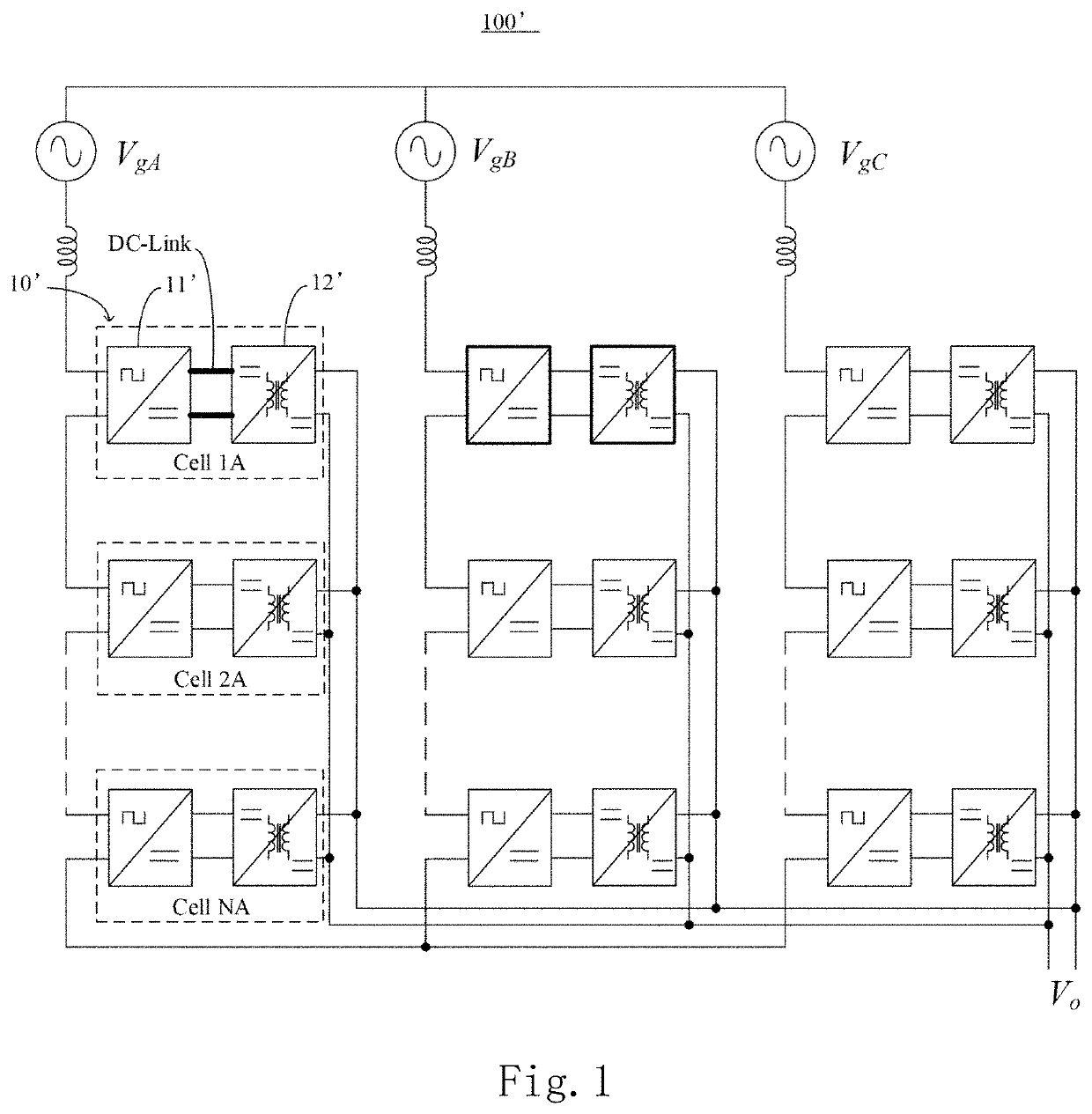
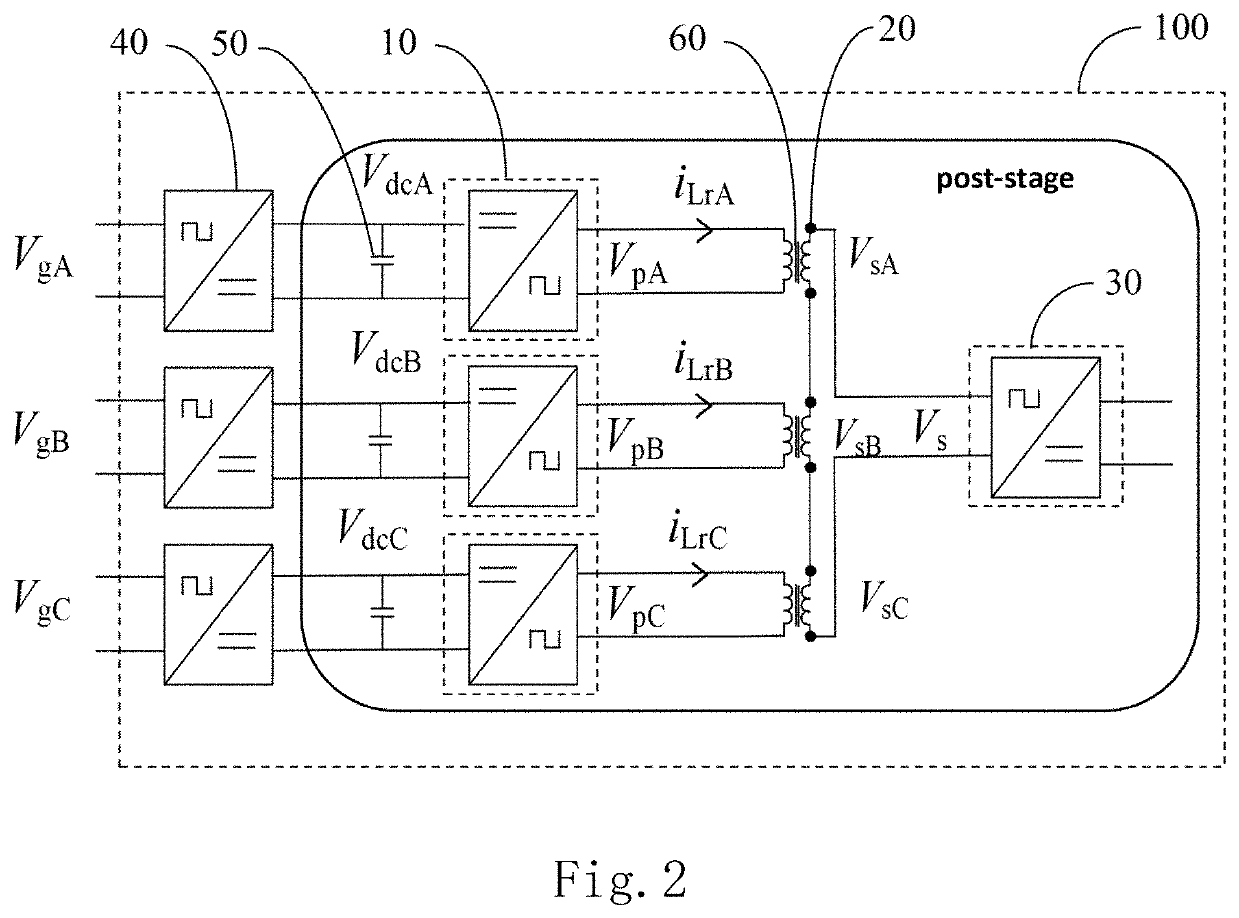
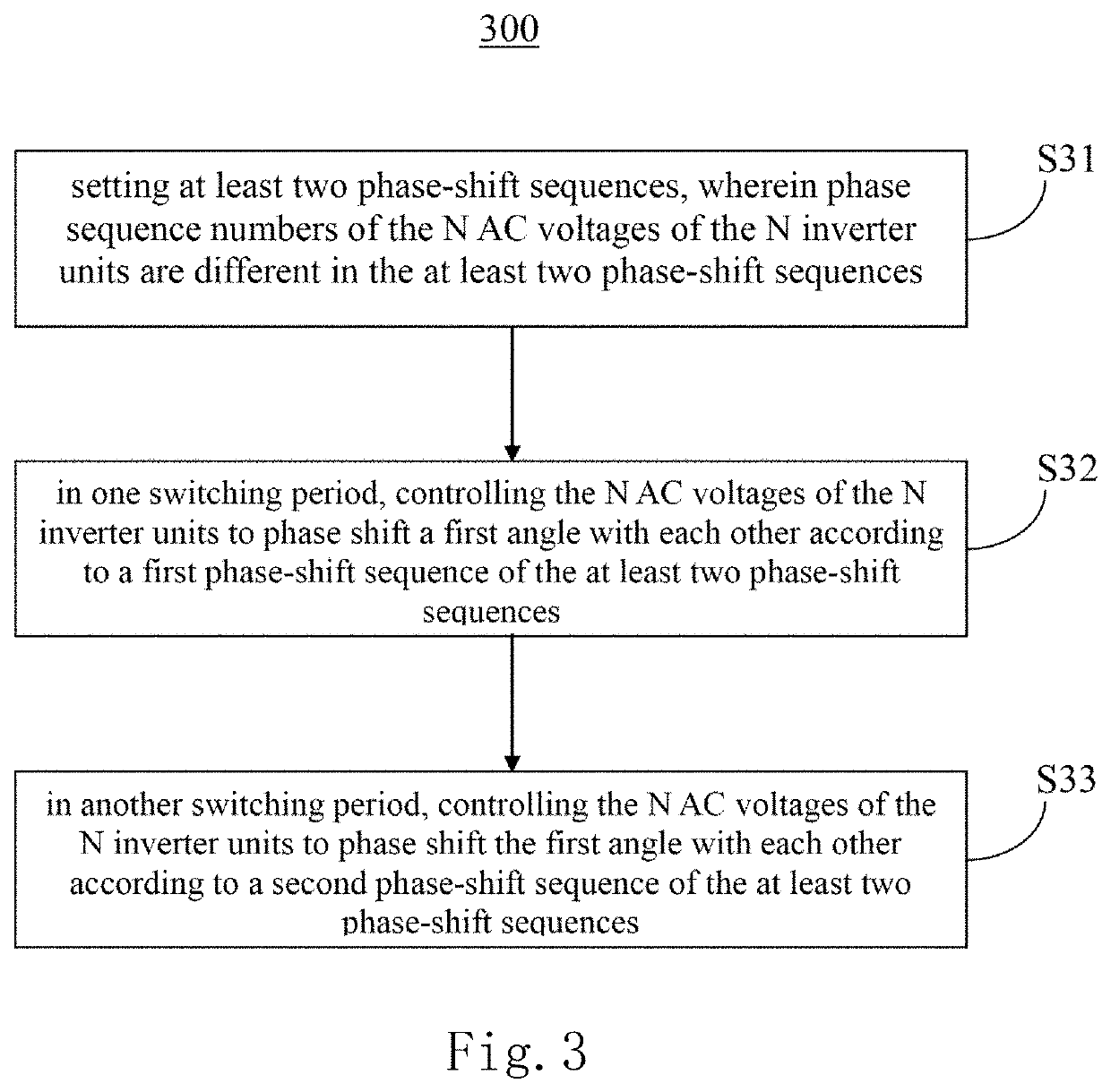
- A phase-shift control method for power modules, where N inverter units output AC voltages that are cascaded and connected to a post-stage rectifier circuit, with at least two phase-shift sequences controlling the AC voltages to phase shift alternately, inhibiting double frequency fluctuations and balancing powers among phases.

Bidirectional buck-boost direct-current solid-state transformer and control method and apparatus therefor, and medium
PatentWO2025035554A1
Innovation
- A bidirectional step-up and buck DC solid-state transformer is proposed. The step-down and boost coefficients are adjusted between the DC power supply through the first semiconductor module and the second semiconductor module respectively, and the inductor module is used to store electrical energy and improve the voltage transformation efficiency.


Grid Integration Standards and Regulatory Requirements
The integration of solid-state transformers and traditional step-up transformers into electrical grids requires adherence to comprehensive regulatory frameworks that vary significantly across different voltage ranges and applications. International standards such as IEEE 1547 for distributed energy resources and IEC 61850 for substation automation provide foundational requirements for grid-connected equipment, establishing protocols for voltage regulation, frequency response, and fault protection mechanisms.
For solid-state transformers operating in medium voltage applications, compliance with IEEE C57.12.00 series standards becomes critical, particularly regarding insulation coordination and thermal management. These devices must demonstrate capability to maintain voltage stability within ±5% tolerance under varying load conditions while providing rapid response to grid disturbances within milliseconds, significantly faster than conventional transformers.
Traditional step-up transformers face established regulatory pathways under IEEE C57 standards, with well-defined testing procedures for impulse withstand, temperature rise, and load tap changer operations. However, their integration at higher voltage levels requires additional compliance with transmission system operator codes, including specific requirements for harmonic distortion limits typically below 3% total harmonic distortion.
Grid codes increasingly emphasize power quality standards that favor solid-state transformer capabilities, particularly in renewable energy integration scenarios. European Network Codes such as RfG (Requirements for Generators) mandate advanced grid support functions including voltage control, frequency response, and fault ride-through capabilities that solid-state transformers can provide more effectively than conventional alternatives.
Regulatory approval processes differ substantially between technologies, with solid-state transformers requiring extensive electromagnetic compatibility testing under IEC 61000 standards due to their semiconductor-based switching operations. Environmental regulations also impact deployment, as solid-state transformers eliminate oil-based insulation systems, simplifying compliance with environmental protection standards while introducing new considerations for electronic waste management and rare earth material sourcing.
For solid-state transformers operating in medium voltage applications, compliance with IEEE C57.12.00 series standards becomes critical, particularly regarding insulation coordination and thermal management. These devices must demonstrate capability to maintain voltage stability within ±5% tolerance under varying load conditions while providing rapid response to grid disturbances within milliseconds, significantly faster than conventional transformers.
Traditional step-up transformers face established regulatory pathways under IEEE C57 standards, with well-defined testing procedures for impulse withstand, temperature rise, and load tap changer operations. However, their integration at higher voltage levels requires additional compliance with transmission system operator codes, including specific requirements for harmonic distortion limits typically below 3% total harmonic distortion.
Grid codes increasingly emphasize power quality standards that favor solid-state transformer capabilities, particularly in renewable energy integration scenarios. European Network Codes such as RfG (Requirements for Generators) mandate advanced grid support functions including voltage control, frequency response, and fault ride-through capabilities that solid-state transformers can provide more effectively than conventional alternatives.
Regulatory approval processes differ substantially between technologies, with solid-state transformers requiring extensive electromagnetic compatibility testing under IEC 61000 standards due to their semiconductor-based switching operations. Environmental regulations also impact deployment, as solid-state transformers eliminate oil-based insulation systems, simplifying compliance with environmental protection standards while introducing new considerations for electronic waste management and rare earth material sourcing.
Cost-Performance Trade-offs in SST Implementation
The implementation of solid-state transformers presents a complex cost-performance paradigm that significantly differs from traditional step-up transformers, particularly when considering voltage range applications. Initial capital expenditure for SST systems typically ranges from 3-5 times higher than conventional transformers of equivalent power ratings, primarily due to sophisticated semiconductor components, advanced control systems, and specialized cooling infrastructure requirements.
Performance advantages of SSTs justify premium costs through enhanced operational capabilities. Power density improvements of 50-70% reduce installation footprint and associated infrastructure costs. Dynamic voltage regulation capabilities eliminate need for additional voltage control equipment, while bidirectional power flow functionality supports grid modernization initiatives without supplementary hardware investments.
Semiconductor component costs represent 40-60% of total SST system expenses, with wide-bandgap devices like silicon carbide and gallium nitride commanding premium pricing despite superior switching characteristics. However, projected cost reductions of 15-20% annually for these components improve long-term economic viability. Control system complexity adds 20-25% to overall costs but enables advanced functionalities including harmonic filtering, reactive power compensation, and grid synchronization.
Operational cost considerations favor SST implementations through improved efficiency metrics. Modern SST designs achieve 96-98% efficiency across wide load ranges, compared to 94-96% for traditional transformers. Reduced maintenance requirements due to absence of oil-filled components and mechanical tap changers decrease lifecycle operational expenses by approximately 30-40%.
Economic break-even analysis indicates SST cost-effectiveness emerges in applications requiring frequent voltage regulation, bidirectional power flow, or space-constrained installations. Grid-tie renewable energy systems, electric vehicle charging infrastructure, and urban distribution networks demonstrate favorable cost-performance ratios within 8-12 year operational periods.
Manufacturing scale effects will significantly impact future cost structures. Current low-volume production maintains high unit costs, but projected market expansion could reduce SST costs by 40-50% within the next decade, making them competitive with conventional solutions across broader application ranges.
Performance advantages of SSTs justify premium costs through enhanced operational capabilities. Power density improvements of 50-70% reduce installation footprint and associated infrastructure costs. Dynamic voltage regulation capabilities eliminate need for additional voltage control equipment, while bidirectional power flow functionality supports grid modernization initiatives without supplementary hardware investments.
Semiconductor component costs represent 40-60% of total SST system expenses, with wide-bandgap devices like silicon carbide and gallium nitride commanding premium pricing despite superior switching characteristics. However, projected cost reductions of 15-20% annually for these components improve long-term economic viability. Control system complexity adds 20-25% to overall costs but enables advanced functionalities including harmonic filtering, reactive power compensation, and grid synchronization.
Operational cost considerations favor SST implementations through improved efficiency metrics. Modern SST designs achieve 96-98% efficiency across wide load ranges, compared to 94-96% for traditional transformers. Reduced maintenance requirements due to absence of oil-filled components and mechanical tap changers decrease lifecycle operational expenses by approximately 30-40%.
Economic break-even analysis indicates SST cost-effectiveness emerges in applications requiring frequent voltage regulation, bidirectional power flow, or space-constrained installations. Grid-tie renewable energy systems, electric vehicle charging infrastructure, and urban distribution networks demonstrate favorable cost-performance ratios within 8-12 year operational periods.
Manufacturing scale effects will significantly impact future cost structures. Current low-volume production maintains high unit costs, but projected market expansion could reduce SST costs by 40-50% within the next decade, making them competitive with conventional solutions across broader application ranges.
Unlock deeper insights with PatSnap Eureka Quick Research — get a full tech report to explore trends and direct your research. Try now!
Generate Your Research Report Instantly with AI Agent
Supercharge your innovation with PatSnap Eureka AI Agent Platform!