

Structural analysis of lepidolite using electron microscopy techniques
AUG 19, 202510 MIN READ
Generate Your Research Report Instantly with AI Agent
PatSnap Eureka helps you evaluate technical feasibility & market potential.
Lepidolite Microscopy Background and Objectives
Lepidolite, a lithium-rich mica mineral, has gained significant attention in recent years due to its potential as a source of lithium for battery production. The structural analysis of lepidolite using electron microscopy techniques has become a crucial area of research, aiming to better understand its composition, properties, and potential applications.
Electron microscopy has revolutionized the field of materials science, allowing researchers to observe and analyze materials at the atomic and molecular levels. In the context of lepidolite analysis, various electron microscopy techniques, including Scanning Electron Microscopy (SEM), Transmission Electron Microscopy (TEM), and Electron Probe Microanalysis (EPMA), have been employed to unravel the complex structure of this mineral.
The primary objective of using electron microscopy for lepidolite analysis is to gain a comprehensive understanding of its crystalline structure, chemical composition, and spatial distribution of elements. This information is vital for optimizing extraction processes, improving the efficiency of lithium recovery, and developing new applications for lepidolite in various industries.
Historically, the study of lepidolite has been limited by the resolution of traditional optical microscopy techniques. However, the advent of electron microscopy has opened up new avenues for research, enabling scientists to explore the mineral's structure at unprecedented levels of detail. This technological advancement has led to significant breakthroughs in our understanding of lepidolite's properties and behavior under different conditions.
The evolution of electron microscopy techniques has paralleled the growing interest in lepidolite as a strategic mineral resource. As the demand for lithium continues to rise, driven by the rapid growth of the electric vehicle and energy storage industries, the need for more efficient and sustainable lithium extraction methods has become increasingly urgent. Electron microscopy plays a crucial role in addressing this challenge by providing valuable insights into the mineral's structure and composition.
Current research objectives in the field of lepidolite structural analysis using electron microscopy include:
1. Characterizing the distribution and bonding of lithium within the lepidolite crystal structure
2. Identifying and quantifying impurities and associated minerals
3. Studying the effects of different extraction processes on the mineral's structure
4. Investigating the relationship between lepidolite's crystal structure and its physical and chemical properties
5. Developing new analytical methods to improve the accuracy and efficiency of lepidolite characterization
By achieving these objectives, researchers aim to optimize lithium extraction processes, reduce environmental impacts, and explore new applications for lepidolite in various technological fields. The ongoing advancements in electron microscopy techniques continue to push the boundaries of our understanding of this important mineral, paving the way for innovative solutions to meet the growing global demand for lithium resources.
Electron microscopy has revolutionized the field of materials science, allowing researchers to observe and analyze materials at the atomic and molecular levels. In the context of lepidolite analysis, various electron microscopy techniques, including Scanning Electron Microscopy (SEM), Transmission Electron Microscopy (TEM), and Electron Probe Microanalysis (EPMA), have been employed to unravel the complex structure of this mineral.
The primary objective of using electron microscopy for lepidolite analysis is to gain a comprehensive understanding of its crystalline structure, chemical composition, and spatial distribution of elements. This information is vital for optimizing extraction processes, improving the efficiency of lithium recovery, and developing new applications for lepidolite in various industries.
Historically, the study of lepidolite has been limited by the resolution of traditional optical microscopy techniques. However, the advent of electron microscopy has opened up new avenues for research, enabling scientists to explore the mineral's structure at unprecedented levels of detail. This technological advancement has led to significant breakthroughs in our understanding of lepidolite's properties and behavior under different conditions.
The evolution of electron microscopy techniques has paralleled the growing interest in lepidolite as a strategic mineral resource. As the demand for lithium continues to rise, driven by the rapid growth of the electric vehicle and energy storage industries, the need for more efficient and sustainable lithium extraction methods has become increasingly urgent. Electron microscopy plays a crucial role in addressing this challenge by providing valuable insights into the mineral's structure and composition.
Current research objectives in the field of lepidolite structural analysis using electron microscopy include:
1. Characterizing the distribution and bonding of lithium within the lepidolite crystal structure
2. Identifying and quantifying impurities and associated minerals
3. Studying the effects of different extraction processes on the mineral's structure
4. Investigating the relationship between lepidolite's crystal structure and its physical and chemical properties
5. Developing new analytical methods to improve the accuracy and efficiency of lepidolite characterization
By achieving these objectives, researchers aim to optimize lithium extraction processes, reduce environmental impacts, and explore new applications for lepidolite in various technological fields. The ongoing advancements in electron microscopy techniques continue to push the boundaries of our understanding of this important mineral, paving the way for innovative solutions to meet the growing global demand for lithium resources.
Market Applications of Lepidolite Analysis
The market applications of lepidolite analysis using electron microscopy techniques are diverse and expanding, driven by the growing demand for lithium in various industries. Lepidolite, a lithium-rich mica mineral, has gained significant attention due to its potential as a source of lithium for batteries, ceramics, and other high-tech applications.
In the battery industry, precise structural analysis of lepidolite is crucial for optimizing lithium extraction processes. Electron microscopy techniques enable manufacturers to assess the mineral's composition, grain size, and distribution of lithium-bearing phases. This information is vital for developing more efficient and cost-effective extraction methods, ultimately leading to improved battery performance and reduced production costs.
The ceramics sector also benefits from detailed lepidolite analysis. By understanding the mineral's microstructure and impurities, manufacturers can fine-tune their formulations to enhance the properties of ceramic products. This leads to the development of advanced ceramics with improved strength, thermal resistance, and electrical insulation characteristics, catering to demands in aerospace, electronics, and medical industries.
In the field of geosciences, electron microscopy analysis of lepidolite provides valuable insights into geological formations and mineral deposits. This information is essential for mineral exploration companies seeking to identify and evaluate potential lithium resources. The ability to accurately characterize lepidolite samples can significantly reduce exploration costs and improve the success rate of lithium mining operations.
The electronics industry utilizes lepidolite analysis to develop new materials for semiconductor applications. By studying the mineral's structure at the nanoscale, researchers can explore its potential for creating novel electronic components with enhanced performance characteristics. This research contributes to the ongoing miniaturization and efficiency improvements in electronic devices.
Environmental applications of lepidolite analysis are also emerging. The mineral's ability to absorb certain pollutants has led to investigations into its use in water treatment and soil remediation. Electron microscopy techniques help researchers understand the mechanisms of pollutant adsorption and optimize the mineral's performance in environmental cleanup applications.
In the renewable energy sector, lepidolite analysis supports the development of more efficient lithium-ion batteries for energy storage systems. This is particularly relevant for grid-scale storage solutions and electric vehicle batteries, where understanding the mineral's structure can lead to improvements in energy density, charging speed, and overall battery lifespan.
As the demand for lithium continues to grow, the market applications of lepidolite analysis using electron microscopy techniques are expected to expand further. This analytical approach will play a crucial role in driving innovation across multiple industries, supporting the transition to clean energy technologies, and enabling the development of advanced materials for next-generation applications.
In the battery industry, precise structural analysis of lepidolite is crucial for optimizing lithium extraction processes. Electron microscopy techniques enable manufacturers to assess the mineral's composition, grain size, and distribution of lithium-bearing phases. This information is vital for developing more efficient and cost-effective extraction methods, ultimately leading to improved battery performance and reduced production costs.
The ceramics sector also benefits from detailed lepidolite analysis. By understanding the mineral's microstructure and impurities, manufacturers can fine-tune their formulations to enhance the properties of ceramic products. This leads to the development of advanced ceramics with improved strength, thermal resistance, and electrical insulation characteristics, catering to demands in aerospace, electronics, and medical industries.
In the field of geosciences, electron microscopy analysis of lepidolite provides valuable insights into geological formations and mineral deposits. This information is essential for mineral exploration companies seeking to identify and evaluate potential lithium resources. The ability to accurately characterize lepidolite samples can significantly reduce exploration costs and improve the success rate of lithium mining operations.
The electronics industry utilizes lepidolite analysis to develop new materials for semiconductor applications. By studying the mineral's structure at the nanoscale, researchers can explore its potential for creating novel electronic components with enhanced performance characteristics. This research contributes to the ongoing miniaturization and efficiency improvements in electronic devices.
Environmental applications of lepidolite analysis are also emerging. The mineral's ability to absorb certain pollutants has led to investigations into its use in water treatment and soil remediation. Electron microscopy techniques help researchers understand the mechanisms of pollutant adsorption and optimize the mineral's performance in environmental cleanup applications.
In the renewable energy sector, lepidolite analysis supports the development of more efficient lithium-ion batteries for energy storage systems. This is particularly relevant for grid-scale storage solutions and electric vehicle batteries, where understanding the mineral's structure can lead to improvements in energy density, charging speed, and overall battery lifespan.
As the demand for lithium continues to grow, the market applications of lepidolite analysis using electron microscopy techniques are expected to expand further. This analytical approach will play a crucial role in driving innovation across multiple industries, supporting the transition to clean energy technologies, and enabling the development of advanced materials for next-generation applications.
Current Electron Microscopy Techniques for Lepidolite
Electron microscopy techniques have become indispensable tools for the structural analysis of lepidolite, offering unprecedented insights into its atomic-scale structure and composition. Currently, several advanced electron microscopy methods are employed to study lepidolite, each providing unique advantages and complementary information.
Scanning Electron Microscopy (SEM) is widely used for surface morphology analysis of lepidolite samples. It provides high-resolution images of the mineral's topography, revealing intricate details of crystal habits, grain boundaries, and intergrowths. When coupled with Energy Dispersive X-ray Spectroscopy (EDS), SEM enables elemental mapping and compositional analysis, crucial for understanding the distribution of key elements like lithium, potassium, and aluminum within the lepidolite structure.
Transmission Electron Microscopy (TEM) offers even higher resolution, allowing researchers to probe the internal structure of lepidolite at the atomic level. TEM is particularly valuable for studying the layered structure of lepidolite, revealing the arrangement of silicate sheets and interlayer cations. High-Resolution TEM (HRTEM) can resolve individual atomic columns, providing direct visualization of the crystal lattice and any structural defects or irregularities.
Electron Backscatter Diffraction (EBSD) is another powerful technique used in lepidolite analysis. It provides information on crystal orientation, grain boundaries, and phase identification. EBSD is especially useful for studying the texture and microstructure of lepidolite in polycrystalline samples, offering insights into its formation and deformation history.
Focused Ion Beam (FIB) microscopy, often integrated with SEM systems, allows for site-specific sample preparation and 3D reconstruction of lepidolite structures. This technique is invaluable for preparing thin, electron-transparent specimens for TEM analysis and for creating cross-sectional views of specific regions of interest within the mineral.
Scanning Transmission Electron Microscopy (STEM) combines the principles of TEM and SEM, offering high-resolution imaging with the ability to perform spectroscopic analysis at specific points. STEM, especially when equipped with high-angle annular dark-field (HAADF) detectors, provides atomic-resolution images with strong compositional contrast, ideal for studying the distribution of heavy and light elements in lepidolite.
These current electron microscopy techniques, often used in combination, provide a comprehensive toolset for the structural analysis of lepidolite. They enable researchers to investigate the mineral's crystal structure, chemical composition, defects, and spatial relationships at multiple scales, from macroscopic features down to individual atoms. This multi-scale approach is crucial for understanding the complex structure-property relationships in lepidolite, which in turn informs its geological formation processes and potential applications in lithium extraction and other industries.
Scanning Electron Microscopy (SEM) is widely used for surface morphology analysis of lepidolite samples. It provides high-resolution images of the mineral's topography, revealing intricate details of crystal habits, grain boundaries, and intergrowths. When coupled with Energy Dispersive X-ray Spectroscopy (EDS), SEM enables elemental mapping and compositional analysis, crucial for understanding the distribution of key elements like lithium, potassium, and aluminum within the lepidolite structure.
Transmission Electron Microscopy (TEM) offers even higher resolution, allowing researchers to probe the internal structure of lepidolite at the atomic level. TEM is particularly valuable for studying the layered structure of lepidolite, revealing the arrangement of silicate sheets and interlayer cations. High-Resolution TEM (HRTEM) can resolve individual atomic columns, providing direct visualization of the crystal lattice and any structural defects or irregularities.
Electron Backscatter Diffraction (EBSD) is another powerful technique used in lepidolite analysis. It provides information on crystal orientation, grain boundaries, and phase identification. EBSD is especially useful for studying the texture and microstructure of lepidolite in polycrystalline samples, offering insights into its formation and deformation history.
Focused Ion Beam (FIB) microscopy, often integrated with SEM systems, allows for site-specific sample preparation and 3D reconstruction of lepidolite structures. This technique is invaluable for preparing thin, electron-transparent specimens for TEM analysis and for creating cross-sectional views of specific regions of interest within the mineral.
Scanning Transmission Electron Microscopy (STEM) combines the principles of TEM and SEM, offering high-resolution imaging with the ability to perform spectroscopic analysis at specific points. STEM, especially when equipped with high-angle annular dark-field (HAADF) detectors, provides atomic-resolution images with strong compositional contrast, ideal for studying the distribution of heavy and light elements in lepidolite.
These current electron microscopy techniques, often used in combination, provide a comprehensive toolset for the structural analysis of lepidolite. They enable researchers to investigate the mineral's crystal structure, chemical composition, defects, and spatial relationships at multiple scales, from macroscopic features down to individual atoms. This multi-scale approach is crucial for understanding the complex structure-property relationships in lepidolite, which in turn informs its geological formation processes and potential applications in lithium extraction and other industries.
Existing Lepidolite Structural Analysis Approaches
01 Crystal structure of lepidolite
Lepidolite is a phyllosilicate mineral with a monoclinic crystal system. It forms in sheets or layers, typical of mica group minerals. The structure consists of alternating layers of silicate tetrahedra and octahedra containing lithium, aluminum, and other cations. This layered structure contributes to its perfect basal cleavage and pearly luster.- Crystal structure of lepidolite: Lepidolite is a phyllosilicate mineral with a monoclinic crystal system. It forms in sheets or layers, similar to other mica minerals. The structure consists of alternating layers of silicate tetrahedra and octahedra containing lithium, aluminum, and other cations. This layered structure contributes to its perfect basal cleavage and pearly luster.
- Chemical composition of lepidolite: Lepidolite is a lithium-rich mica with a complex chemical formula. It typically contains varying amounts of potassium, aluminum, lithium, and fluorine, along with other trace elements. The exact composition can vary, but it generally includes silica, alumina, and lithium oxide as major components. This composition gives lepidolite its unique properties and makes it valuable for various industrial applications.
- Physical properties of lepidolite: Lepidolite exhibits distinctive physical properties due to its structure and composition. It has a Mohs hardness of 2.5-3, making it relatively soft. The mineral typically displays a range of colors from lilac to pink, sometimes with a pearly or silvery sheen. It has perfect cleavage in one direction, resulting in thin, flexible sheets when cleaved. These properties make it easily identifiable and useful in various applications.
- Occurrence and formation of lepidolite: Lepidolite primarily forms in lithium-rich granitic pegmatites. These pegmatites are typically associated with the late stages of magmatic crystallization, where lithium and other rare elements become concentrated. The mineral often occurs alongside other lithium-bearing minerals such as spodumene and petalite. Understanding the geological conditions for lepidolite formation is crucial for exploration and mining of lithium resources.
- Applications and processing of lepidolite: Lepidolite has various industrial and technological applications due to its unique structure and composition. It serves as an important source of lithium for batteries, ceramics, and glass production. The mineral can be processed through methods such as flotation, magnetic separation, and hydrometallurgical techniques to extract lithium and other valuable components. Ongoing research focuses on improving extraction efficiency and developing new applications for lepidolite and its derivatives.
02 Chemical composition of lepidolite
Lepidolite is a lithium-rich mica with a complex chemical formula. It typically contains potassium, aluminum, lithium, and fluorine, along with varying amounts of rubidium, cesium, and other trace elements. The exact composition can vary, affecting its properties and potential applications in industry and technology.Expand Specific Solutions03 Lepidolite in lithium extraction processes
The unique structure of lepidolite makes it a valuable source of lithium. Various extraction methods have been developed to efficiently separate lithium from the mineral's structure. These processes often involve acid leaching, roasting, or other chemical treatments to break down the crystal structure and isolate the lithium compounds.Expand Specific Solutions04 Modification of lepidolite structure
Research has been conducted on modifying the structure of lepidolite to enhance its properties or create new materials. This can involve ion exchange, intercalation, or other chemical treatments to alter the interlayer spacing or composition. Such modifications can lead to improved performance in various applications, such as catalysis or energy storage.Expand Specific Solutions05 Applications utilizing lepidolite structure
The unique layered structure and composition of lepidolite make it suitable for various applications. It has been used in the production of ceramics, glass, and as a component in certain types of batteries. The mineral's structure also lends itself to potential uses in nanotechnology, where its layered nature can be exploited for developing new materials or devices.Expand Specific Solutions
Key Players in Electron Microscopy Industry
The structural analysis of lepidolite using electron microscopy techniques is in a mature stage of development, with significant market potential in the lithium industry. The global market for lithium-based products is expanding rapidly, driven by the growing demand for electric vehicle batteries and energy storage systems. Companies like Jiangxi Nanshi Lithium New Material Co., Ltd. and Yichun Yinli New Energy Co. Ltd. are at the forefront of lepidolite processing and lithium extraction. Academic institutions such as Tohoku University and Central South University are contributing to advancements in electron microscopy techniques, enhancing the precision and efficiency of lepidolite analysis. This collaborative ecosystem between industry and academia is fostering innovation and driving the technology's maturity in both commercial and research applications.
Tohoku University
Technical Solution: Tohoku University has developed advanced electron microscopy techniques for structural analysis of lepidolite. Their approach combines high-resolution transmission electron microscopy (HRTEM) with electron energy loss spectroscopy (EELS) to provide detailed insights into the atomic structure and chemical composition of lepidolite samples. The research team has successfully mapped the distribution of lithium ions within the crystal lattice, which is crucial for understanding the material's properties[1]. They have also employed in-situ heating experiments during TEM observations to study phase transformations in lepidolite at elevated temperatures[2]. This comprehensive approach allows for a multi-scale understanding of lepidolite's structure, from atomic arrangements to microscale defects and grain boundaries.
Strengths: High-resolution imaging capabilities, combined spectroscopic analysis, and in-situ experimental setups. Weaknesses: Potential for electron beam damage to sensitive lepidolite samples, requiring careful control of beam conditions.
Sidec AB
Technical Solution: Sidec AB has pioneered the use of cryo-electron tomography for structural analysis of lepidolite and other lithium-bearing minerals. Their proprietary technology, CryoET, allows for 3D visualization of lepidolite samples in their near-native state without the need for staining or fixation[3]. This approach preserves the delicate structure of lepidolite, including its hydration layers and interlayer spaces. Sidec's method involves rapid freezing of lepidolite suspensions, followed by tilt-series imaging in a cryo-electron microscope. The resulting tomograms provide unprecedented insights into the three-dimensional arrangement of lepidolite sheets and the distribution of lithium ions within the structure. Additionally, Sidec has developed advanced image processing algorithms to enhance contrast and resolution in the reconstructed 3D volumes[4].
Strengths: Preservation of native mineral structure, 3D visualization capabilities, and minimal sample preparation artifacts. Weaknesses: Limited to thin samples due to electron penetration constraints, and potential ice crystal formation during freezing.
Core Innovations in Lepidolite Microscopy
Method and system for analysis of organic material by auto-cathodoluminescence
PatentWO2020104975A1
Innovation
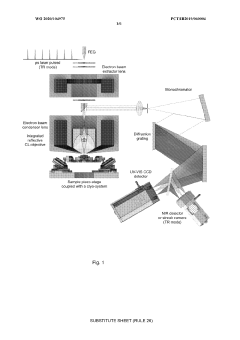
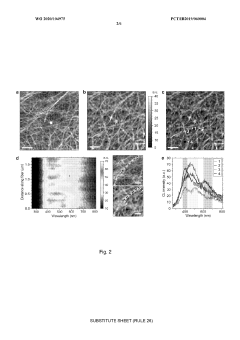
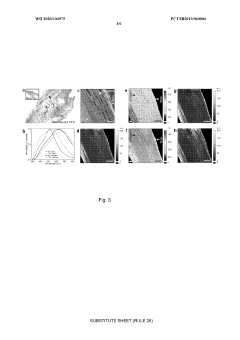
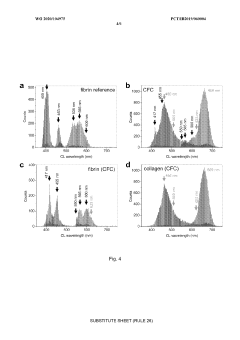
- A highly sensitive quantitative CL-SEM microscope is used to detect intrinsic auto-cathodoluminescence signals from collagen matrices, enabling spectrally resolved cathodoluminescence microscopy that unveils material composition and spatial distribution without antibodies, nanolabels, or fluorophores, correlating with mass spectroscopy data for label-free characterization.
Electron microscopy grids and high-resolution structural determination methods
PatentActiveUS12385813B2
Innovation
- The use of electron microscopy grids with a mixture of linker molecules, each with unique angled and linear linker sections, forces analytes into multiple orientations, maximizing angular distribution and reducing the need for tilt adjustments during imaging.


Environmental Impact of Lepidolite Mining
The environmental impact of lepidolite mining is a significant concern that requires careful consideration and management. Lepidolite, a lithium-rich mica mineral, is increasingly sought after due to the growing demand for lithium in battery production. However, its extraction can have substantial environmental consequences.
Open-pit mining, the primary method for lepidolite extraction, leads to extensive land disturbance and habitat destruction. This process often involves the removal of large amounts of topsoil and vegetation, altering local ecosystems and potentially displacing wildlife. The creation of deep pits and waste rock piles can permanently change the landscape, impacting both terrestrial and aquatic habitats.
Water pollution is another major concern associated with lepidolite mining. The extraction process may introduce harmful chemicals and sediments into nearby water bodies, affecting water quality and aquatic life. Acid mine drainage, a common issue in mining operations, can occur when sulfide minerals are exposed to air and water, leading to the formation of sulfuric acid that can contaminate groundwater and surface water sources.
Air quality can also be negatively impacted by lepidolite mining activities. Dust generated during extraction, crushing, and transportation of the mineral can contribute to particulate matter pollution. This not only affects the immediate mining area but can also impact surrounding communities, potentially causing respiratory issues for both workers and local residents.
The energy-intensive nature of lepidolite mining and processing contributes to greenhouse gas emissions, further exacerbating climate change concerns. The use of heavy machinery and the energy required for mineral separation and refining processes all contribute to the carbon footprint of lepidolite production.
Waste management is a critical aspect of mitigating the environmental impact of lepidolite mining. The process generates significant amounts of waste rock and tailings, which must be properly stored and managed to prevent contamination of soil and water resources. Improper disposal of these materials can lead to long-term environmental degradation and potential health risks for nearby communities.
To address these environmental challenges, mining companies are increasingly adopting sustainable practices and technologies. These include implementing more efficient extraction methods, using renewable energy sources, improving water management systems, and developing comprehensive land rehabilitation plans. Additionally, regulatory bodies are enforcing stricter environmental standards and monitoring requirements to ensure responsible mining practices.
As the demand for lithium continues to grow, balancing the economic benefits of lepidolite mining with environmental protection remains a crucial challenge. Ongoing research and development in mining technologies and environmental management strategies will be essential in minimizing the ecological footprint of lepidolite extraction while meeting the global demand for lithium resources.
Open-pit mining, the primary method for lepidolite extraction, leads to extensive land disturbance and habitat destruction. This process often involves the removal of large amounts of topsoil and vegetation, altering local ecosystems and potentially displacing wildlife. The creation of deep pits and waste rock piles can permanently change the landscape, impacting both terrestrial and aquatic habitats.
Water pollution is another major concern associated with lepidolite mining. The extraction process may introduce harmful chemicals and sediments into nearby water bodies, affecting water quality and aquatic life. Acid mine drainage, a common issue in mining operations, can occur when sulfide minerals are exposed to air and water, leading to the formation of sulfuric acid that can contaminate groundwater and surface water sources.
Air quality can also be negatively impacted by lepidolite mining activities. Dust generated during extraction, crushing, and transportation of the mineral can contribute to particulate matter pollution. This not only affects the immediate mining area but can also impact surrounding communities, potentially causing respiratory issues for both workers and local residents.
The energy-intensive nature of lepidolite mining and processing contributes to greenhouse gas emissions, further exacerbating climate change concerns. The use of heavy machinery and the energy required for mineral separation and refining processes all contribute to the carbon footprint of lepidolite production.
Waste management is a critical aspect of mitigating the environmental impact of lepidolite mining. The process generates significant amounts of waste rock and tailings, which must be properly stored and managed to prevent contamination of soil and water resources. Improper disposal of these materials can lead to long-term environmental degradation and potential health risks for nearby communities.
To address these environmental challenges, mining companies are increasingly adopting sustainable practices and technologies. These include implementing more efficient extraction methods, using renewable energy sources, improving water management systems, and developing comprehensive land rehabilitation plans. Additionally, regulatory bodies are enforcing stricter environmental standards and monitoring requirements to ensure responsible mining practices.
As the demand for lithium continues to grow, balancing the economic benefits of lepidolite mining with environmental protection remains a crucial challenge. Ongoing research and development in mining technologies and environmental management strategies will be essential in minimizing the ecological footprint of lepidolite extraction while meeting the global demand for lithium resources.
Data Processing in Electron Microscopy Analysis
Data processing is a critical component in electron microscopy analysis of lepidolite structures. The process begins with the acquisition of raw data from various electron microscopy techniques, such as Scanning Electron Microscopy (SEM) and Transmission Electron Microscopy (TEM). These techniques generate large volumes of high-resolution image data that require sophisticated processing to extract meaningful structural information.
One of the primary challenges in data processing is noise reduction. Electron microscopy images often contain various types of noise, including shot noise, thermal noise, and readout noise. Advanced filtering algorithms, such as Wiener filters and wavelet-based denoising methods, are employed to enhance image quality while preserving critical structural details of lepidolite samples.
Image segmentation is another crucial step in the data processing pipeline. This involves separating the lepidolite crystals from the background and other mineral phases present in the sample. Machine learning algorithms, particularly convolutional neural networks (CNNs), have shown promising results in automating this process, significantly reducing the time and effort required for manual segmentation.
Quantitative analysis of lepidolite structures requires precise measurement of crystal dimensions, orientations, and spatial distributions. Computer vision techniques, including edge detection and feature extraction algorithms, are utilized to obtain these measurements accurately. Statistical analysis of these measurements provides valuable insights into the overall structural characteristics of the lepidolite samples.
Three-dimensional reconstruction is often necessary to fully understand the complex structure of lepidolite minerals. Techniques such as electron tomography and focused ion beam-scanning electron microscopy (FIB-SEM) generate series of 2D images that can be processed and combined to create 3D models. This process involves careful alignment of image stacks, interpolation between slices, and application of volume rendering algorithms.
Data visualization plays a crucial role in interpreting the processed results. Advanced visualization software allows researchers to create interactive 3D models of lepidolite structures, enabling detailed exploration of crystal morphology, defects, and intergrowths. These visualizations are essential for communicating findings and facilitating collaboration among researchers.
As the field of electron microscopy continues to advance, new data processing techniques are emerging. Machine learning and artificial intelligence are increasingly being integrated into data processing workflows, offering the potential for more automated, efficient, and accurate analysis of lepidolite structures. These developments are expected to significantly enhance our understanding of lepidolite mineralogy and its implications for geological processes and industrial applications.
One of the primary challenges in data processing is noise reduction. Electron microscopy images often contain various types of noise, including shot noise, thermal noise, and readout noise. Advanced filtering algorithms, such as Wiener filters and wavelet-based denoising methods, are employed to enhance image quality while preserving critical structural details of lepidolite samples.
Image segmentation is another crucial step in the data processing pipeline. This involves separating the lepidolite crystals from the background and other mineral phases present in the sample. Machine learning algorithms, particularly convolutional neural networks (CNNs), have shown promising results in automating this process, significantly reducing the time and effort required for manual segmentation.
Quantitative analysis of lepidolite structures requires precise measurement of crystal dimensions, orientations, and spatial distributions. Computer vision techniques, including edge detection and feature extraction algorithms, are utilized to obtain these measurements accurately. Statistical analysis of these measurements provides valuable insights into the overall structural characteristics of the lepidolite samples.
Three-dimensional reconstruction is often necessary to fully understand the complex structure of lepidolite minerals. Techniques such as electron tomography and focused ion beam-scanning electron microscopy (FIB-SEM) generate series of 2D images that can be processed and combined to create 3D models. This process involves careful alignment of image stacks, interpolation between slices, and application of volume rendering algorithms.
Data visualization plays a crucial role in interpreting the processed results. Advanced visualization software allows researchers to create interactive 3D models of lepidolite structures, enabling detailed exploration of crystal morphology, defects, and intergrowths. These visualizations are essential for communicating findings and facilitating collaboration among researchers.
As the field of electron microscopy continues to advance, new data processing techniques are emerging. Machine learning and artificial intelligence are increasingly being integrated into data processing workflows, offering the potential for more automated, efficient, and accurate analysis of lepidolite structures. These developments are expected to significantly enhance our understanding of lepidolite mineralogy and its implications for geological processes and industrial applications.
Unlock deeper insights with PatSnap Eureka Quick Research — get a full tech report to explore trends and direct your research. Try now!
Generate Your Research Report Instantly with AI Agent
Supercharge your innovation with PatSnap Eureka AI Agent Platform!