
Surface Texture Evolution during Laser Shock Peening
OCT 13, 20259 MIN READ
Generate Your Research Report Instantly with AI Agent
Patsnap Eureka helps you evaluate technical feasibility & market potential.
Laser Shock Peening Technology Background and Objectives
Laser Shock Peening (LSP) emerged in the 1960s as a surface treatment technology initially developed for enhancing the fatigue life of aircraft engine components. The technology has evolved significantly over the past six decades, transitioning from laboratory experiments to industrial applications across aerospace, automotive, and medical sectors. The fundamental principle involves using high-energy laser pulses to generate plasma-induced shock waves that propagate through the material, inducing beneficial compressive residual stresses and microstructural changes.
The evolution of LSP technology has been marked by continuous improvements in laser systems, from early ruby lasers to modern high-power Nd:YAG and fiber lasers, enabling higher processing speeds and more precise control. Concurrently, the understanding of surface texture evolution during LSP has become increasingly important as researchers recognized that beyond residual stress, the surface morphology significantly impacts component performance.
Surface texture evolution during LSP represents a complex interplay between laser parameters, material properties, and processing conditions. The laser-induced shock waves create plastic deformation that alters surface topography at micro and nano scales. This modification process affects critical surface properties including roughness, waviness, and feature distribution patterns, which in turn influence functional performance aspects such as fatigue resistance, wear behavior, and corrosion susceptibility.
Recent technological trends show increasing focus on controlled surface texture manipulation through LSP, moving beyond traditional applications focused solely on residual stress. Advanced monitoring systems and real-time process control have enabled more precise texture engineering, allowing manufacturers to tailor surface properties for specific applications.
The primary technical objectives in this field include developing predictive models for surface texture evolution during LSP, establishing quantitative relationships between processing parameters and resulting surface characteristics, and optimizing surface textures for specific functional requirements. Additionally, there is growing interest in multi-scale surface characterization methods to fully understand the hierarchical nature of LSP-induced surface modifications.
Industry adoption of LSP for surface texture engineering has been accelerating, particularly in high-value applications where surface integrity directly impacts component performance and longevity. The technology shows promising potential for creating biologically-inspired surface textures for medical implants, aerodynamically optimized surfaces for aerospace components, and tribologically enhanced surfaces for mechanical systems.
As LSP technology continues to mature, the integration with digital manufacturing paradigms and Industry 4.0 principles represents the next frontier, enabling adaptive processing strategies that can respond to material variations and achieve consistent surface texture outcomes across complex geometries and diverse material systems.
The evolution of LSP technology has been marked by continuous improvements in laser systems, from early ruby lasers to modern high-power Nd:YAG and fiber lasers, enabling higher processing speeds and more precise control. Concurrently, the understanding of surface texture evolution during LSP has become increasingly important as researchers recognized that beyond residual stress, the surface morphology significantly impacts component performance.
Surface texture evolution during LSP represents a complex interplay between laser parameters, material properties, and processing conditions. The laser-induced shock waves create plastic deformation that alters surface topography at micro and nano scales. This modification process affects critical surface properties including roughness, waviness, and feature distribution patterns, which in turn influence functional performance aspects such as fatigue resistance, wear behavior, and corrosion susceptibility.
Recent technological trends show increasing focus on controlled surface texture manipulation through LSP, moving beyond traditional applications focused solely on residual stress. Advanced monitoring systems and real-time process control have enabled more precise texture engineering, allowing manufacturers to tailor surface properties for specific applications.
The primary technical objectives in this field include developing predictive models for surface texture evolution during LSP, establishing quantitative relationships between processing parameters and resulting surface characteristics, and optimizing surface textures for specific functional requirements. Additionally, there is growing interest in multi-scale surface characterization methods to fully understand the hierarchical nature of LSP-induced surface modifications.
Industry adoption of LSP for surface texture engineering has been accelerating, particularly in high-value applications where surface integrity directly impacts component performance and longevity. The technology shows promising potential for creating biologically-inspired surface textures for medical implants, aerodynamically optimized surfaces for aerospace components, and tribologically enhanced surfaces for mechanical systems.
As LSP technology continues to mature, the integration with digital manufacturing paradigms and Industry 4.0 principles represents the next frontier, enabling adaptive processing strategies that can respond to material variations and achieve consistent surface texture outcomes across complex geometries and diverse material systems.
Market Applications and Industry Demand Analysis
Laser Shock Peening (LSP) has witnessed significant market growth across multiple industrial sectors due to its ability to enhance surface properties and extend component lifespans. The aerospace industry represents the largest market segment for LSP technology, with an estimated market value exceeding $300 million annually. Major aircraft manufacturers including Boeing, Airbus, and Lockheed Martin have integrated LSP into their manufacturing processes for critical components such as turbine blades, compressor blades, and structural elements where fatigue resistance is paramount.
The automotive industry has emerged as the second-largest adopter of LSP technology, particularly for high-performance vehicles and racing applications. Premium automotive manufacturers have begun implementing LSP for treating engine components, transmission systems, and safety-critical parts. Market analysis indicates a compound annual growth rate of 7.8% in automotive LSP applications over the past five years, driven by increasing demands for lightweight yet durable components.
Medical device manufacturing represents a rapidly expanding market for LSP, particularly for implantable devices such as orthopedic implants and cardiovascular stents. The biomedical sector values the precise surface texture control that LSP provides, which can significantly improve biocompatibility and reduce rejection rates. Industry reports suggest the medical LSP market segment is growing at approximately 12% annually.
Energy sector applications, particularly in power generation equipment, oil and gas infrastructure, and nuclear components, constitute another significant market. The ability of LSP to enhance corrosion resistance and extend operational lifespans of components exposed to harsh environments has driven adoption in these industries. The market for LSP in energy applications is projected to reach $180 million by 2025.
Market research indicates evolving customer requirements across all sectors, with increasing demand for customizable surface textures that can be optimized for specific operational conditions. End-users are seeking LSP solutions that can deliver predictable and reproducible surface characteristics at scale, with growing interest in combining LSP with complementary surface engineering techniques.
Regional market analysis shows North America leading in LSP adoption (38% of global market), followed by Europe (29%) and Asia-Pacific (24%). However, the fastest growth is occurring in emerging economies, particularly in aerospace manufacturing hubs in China and India. This geographical shift is reshaping the competitive landscape and driving innovation in more cost-effective LSP implementation strategies.
The market is also witnessing increased demand for LSP equipment that offers greater process control and real-time monitoring capabilities, reflecting industry-wide movement toward smart manufacturing and Industry 4.0 integration. This trend is expected to accelerate as manufacturers seek to optimize surface texture evolution parameters for specific applications and operating environments.
The automotive industry has emerged as the second-largest adopter of LSP technology, particularly for high-performance vehicles and racing applications. Premium automotive manufacturers have begun implementing LSP for treating engine components, transmission systems, and safety-critical parts. Market analysis indicates a compound annual growth rate of 7.8% in automotive LSP applications over the past five years, driven by increasing demands for lightweight yet durable components.
Medical device manufacturing represents a rapidly expanding market for LSP, particularly for implantable devices such as orthopedic implants and cardiovascular stents. The biomedical sector values the precise surface texture control that LSP provides, which can significantly improve biocompatibility and reduce rejection rates. Industry reports suggest the medical LSP market segment is growing at approximately 12% annually.
Energy sector applications, particularly in power generation equipment, oil and gas infrastructure, and nuclear components, constitute another significant market. The ability of LSP to enhance corrosion resistance and extend operational lifespans of components exposed to harsh environments has driven adoption in these industries. The market for LSP in energy applications is projected to reach $180 million by 2025.
Market research indicates evolving customer requirements across all sectors, with increasing demand for customizable surface textures that can be optimized for specific operational conditions. End-users are seeking LSP solutions that can deliver predictable and reproducible surface characteristics at scale, with growing interest in combining LSP with complementary surface engineering techniques.
Regional market analysis shows North America leading in LSP adoption (38% of global market), followed by Europe (29%) and Asia-Pacific (24%). However, the fastest growth is occurring in emerging economies, particularly in aerospace manufacturing hubs in China and India. This geographical shift is reshaping the competitive landscape and driving innovation in more cost-effective LSP implementation strategies.
The market is also witnessing increased demand for LSP equipment that offers greater process control and real-time monitoring capabilities, reflecting industry-wide movement toward smart manufacturing and Industry 4.0 integration. This trend is expected to accelerate as manufacturers seek to optimize surface texture evolution parameters for specific applications and operating environments.
Surface Texture Modification Challenges and Current Status
Surface texture modification through Laser Shock Peening (LSP) faces significant challenges despite its promising applications in various industries. The primary challenge lies in achieving precise control over the resulting surface texture, as the process involves complex interactions between laser parameters, material properties, and environmental conditions. Current LSP systems struggle to maintain consistency across large surface areas, leading to variations in texture quality that can compromise performance in critical applications.
Material-specific challenges represent another major hurdle in LSP implementation. Different materials respond uniquely to laser shock waves, requiring tailored processing parameters that must be meticulously calibrated. For instance, titanium alloys commonly used in aerospace applications exhibit different texture evolution patterns compared to stainless steels used in medical implants, necessitating material-specific process optimization.
The energy efficiency of current LSP systems remains suboptimal, with significant energy losses occurring during the conversion of laser energy to mechanical shock waves. This inefficiency not only increases operational costs but also limits the scalability of the technology for industrial applications. Additionally, the high-power lasers required for effective peening contribute to substantial capital investment requirements, restricting widespread adoption.
Real-time monitoring and control systems for LSP processes are still in nascent stages of development. Current technologies lack the capability to provide immediate feedback on surface texture evolution during processing, forcing manufacturers to rely on post-process inspection. This limitation prevents adaptive control strategies that could optimize texture outcomes and reduce defect rates.
The global research landscape shows concentrated efforts in addressing these challenges, with significant advancements emerging from research institutions in the United States, Germany, China, and Japan. Recent innovations include the development of hybrid LSP systems that combine conventional peening with secondary processes to enhance texture control. These systems demonstrate improved capability in creating hierarchical surface textures with enhanced functional properties.
Industry standards for LSP-modified surfaces remain underdeveloped, creating barriers to quality assurance and process validation. The absence of standardized metrics for evaluating surface texture quality after LSP treatment complicates quality control procedures and hinders comparative assessment of different processing techniques.
Environmental considerations are gaining prominence in LSP research, with growing emphasis on reducing the ecological footprint of surface modification processes. Current LSP systems typically require substantial water consumption for plasma confinement, presenting sustainability challenges that newer technologies aim to address through alternative confinement methods and more efficient energy utilization.
Material-specific challenges represent another major hurdle in LSP implementation. Different materials respond uniquely to laser shock waves, requiring tailored processing parameters that must be meticulously calibrated. For instance, titanium alloys commonly used in aerospace applications exhibit different texture evolution patterns compared to stainless steels used in medical implants, necessitating material-specific process optimization.
The energy efficiency of current LSP systems remains suboptimal, with significant energy losses occurring during the conversion of laser energy to mechanical shock waves. This inefficiency not only increases operational costs but also limits the scalability of the technology for industrial applications. Additionally, the high-power lasers required for effective peening contribute to substantial capital investment requirements, restricting widespread adoption.
Real-time monitoring and control systems for LSP processes are still in nascent stages of development. Current technologies lack the capability to provide immediate feedback on surface texture evolution during processing, forcing manufacturers to rely on post-process inspection. This limitation prevents adaptive control strategies that could optimize texture outcomes and reduce defect rates.
The global research landscape shows concentrated efforts in addressing these challenges, with significant advancements emerging from research institutions in the United States, Germany, China, and Japan. Recent innovations include the development of hybrid LSP systems that combine conventional peening with secondary processes to enhance texture control. These systems demonstrate improved capability in creating hierarchical surface textures with enhanced functional properties.
Industry standards for LSP-modified surfaces remain underdeveloped, creating barriers to quality assurance and process validation. The absence of standardized metrics for evaluating surface texture quality after LSP treatment complicates quality control procedures and hinders comparative assessment of different processing techniques.
Environmental considerations are gaining prominence in LSP research, with growing emphasis on reducing the ecological footprint of surface modification processes. Current LSP systems typically require substantial water consumption for plasma confinement, presenting sustainability challenges that newer technologies aim to address through alternative confinement methods and more efficient energy utilization.
Current Surface Texture Control Methodologies
01 Surface texture modification techniques using laser shock peening
Laser shock peening can be used to create specific surface textures on metallic components. The process involves directing high-energy laser pulses at the material surface, which generates plasma and shock waves that modify the surface structure. This technique allows for controlled creation of micro-textures, dimples, and patterns that can enhance surface properties such as friction, wear resistance, and fluid dynamics. The modified surface texture can be tailored for specific applications by adjusting laser parameters.- Surface texture modification through laser shock peening: Laser shock peening can be used to modify the surface texture of materials, creating specific patterns or textures that enhance material properties. This process involves using high-energy laser pulses to create shock waves that plastically deform the surface layer of the material. The controlled deformation can create micro-textures, dimples, or other surface features that can improve tribological properties, reduce friction, or enhance adhesion characteristics.
- Improved material properties through laser shock peening texturing: The surface textures created by laser shock peening can significantly improve material properties such as fatigue resistance, wear resistance, and corrosion resistance. The process introduces compressive residual stresses in the surface layer while creating textured features that can trap lubricants, reduce contact area, or disrupt crack propagation paths. These improvements extend the service life of components and enhance their performance under demanding operating conditions.
- Control parameters for laser shock peening surface texturing: Various control parameters can be adjusted to achieve specific surface textures through laser shock peening. These parameters include laser power density, pulse duration, spot size, overlap ratio, and processing pattern. By precisely controlling these parameters, manufacturers can create customized surface textures with specific dimensions, densities, and distributions to meet particular application requirements. Advanced control systems enable repeatable and precise surface texture creation across complex geometries.
- Equipment and systems for laser shock peening surface texturing: Specialized equipment and systems have been developed for laser shock peening surface texturing applications. These systems typically include high-energy pulsed lasers, beam delivery optics, positioning systems, and confining media applicators. Modern systems may incorporate automation, real-time monitoring, and feedback control to ensure consistent texture quality. Some advanced systems integrate multiple laser sources or combine laser shock peening with other surface treatment methods for enhanced texturing capabilities.
- Applications of laser shock peened textured surfaces: Laser shock peened textured surfaces find applications across various industries including aerospace, automotive, medical, and energy sectors. In aerospace, textured surfaces can improve aerodynamic performance and reduce wear in turbine components. In automotive applications, textured surfaces can enhance lubrication in engine components. Medical implants benefit from improved biocompatibility and osseointegration with specific surface textures. Energy sector applications include improved heat transfer surfaces and enhanced wear resistance in power generation equipment.
02 Improved material properties through laser shock peening texturing
Laser shock peening can significantly improve material properties through surface texturing. The process induces compressive residual stresses in the material surface, which enhances fatigue life, stress corrosion resistance, and overall durability. The textured surface created by laser shock peening can also improve hardness, wear resistance, and tribological properties. This technique is particularly valuable for high-stress components in aerospace, automotive, and power generation industries where material performance is critical.Expand Specific Solutions03 Equipment and systems for laser shock peening surface texturing
Specialized equipment and systems have been developed for laser shock peening surface texturing applications. These systems typically include high-energy pulsed lasers, beam delivery optics, positioning systems, and confining media applicators. Advanced control systems allow for precise manipulation of laser parameters such as pulse energy, duration, spot size, and pattern to achieve desired surface textures. Some systems incorporate real-time monitoring capabilities to ensure consistency and quality of the textured surface across the treated component.Expand Specific Solutions04 Process parameters optimization for surface texture control
Optimizing process parameters is crucial for controlling surface texture in laser shock peening. Key parameters include laser power density, pulse duration, spot size, overlap ratio, and number of treatment layers. The confining medium (typically water or transparent overlay) and absorptive coating also significantly influence the resulting surface texture. Advanced algorithms and experimental methods have been developed to determine optimal parameter combinations for specific texture requirements, ensuring reproducible results while minimizing processing time and energy consumption.Expand Specific Solutions05 Applications of laser shock peened textured surfaces
Laser shock peened textured surfaces find applications across various industries. In aerospace, textured surfaces on turbine blades improve aerodynamic performance and heat resistance. In biomedical applications, controlled surface textures enhance implant integration with biological tissues. Automotive components benefit from reduced friction and improved wear resistance. Additionally, textured surfaces created by laser shock peening can improve lubrication retention, reduce contact area, and enhance hydrophobic or hydrophilic properties depending on the texture pattern, making them valuable for numerous specialized applications.Expand Specific Solutions
Leading Research Institutions and Industrial Manufacturers
The laser shock peening (LSP) technology landscape is currently in a growth phase, with increasing adoption across aerospace, automotive, and energy sectors. The market is estimated to reach $500 million by 2025, driven by demand for enhanced metal fatigue resistance and surface durability. Leading the field is LSP Technologies, Inc., which has commercialized laser peening systems and services, alongside Metal Improvement Co. LLC with its established metal treatment expertise. Major industrial players like General Electric, Rolls-Royce, and Airbus are integrating LSP into manufacturing processes, while academic institutions such as Jiangsu University, Huazhong University of Science & Technology, and Lawrence Livermore National Security are advancing fundamental research on surface texture evolution during LSP treatment, creating a competitive ecosystem of commercial applications and scientific innovation.
General Electric Company
Technical Solution: General Electric has developed an integrated approach to laser shock peening (LSP) for surface texture evolution, particularly for aerospace components. Their technology employs high-power Nd:YAG lasers delivering pulses of 10-30 J with durations of 10-30 nanoseconds to generate controlled plasma expansion on component surfaces[1]. GE's proprietary process incorporates real-time monitoring systems that analyze the plasma plume characteristics to ensure consistent surface modification across complex geometries. Their LSP technology creates engineered surface textures with nano-scale features that enhance tribological properties while simultaneously inducing compressive residual stresses extending 1-2mm below the surface[2]. GE has implemented this technology in production for critical rotating components in aircraft engines, where they've documented 3-5x improvements in fatigue life and significant reductions in fretting wear through optimized surface texturing[3].
Strengths: Extensive implementation experience in high-value aerospace applications; sophisticated process monitoring capabilities; ability to integrate LSP surface texturing into manufacturing workflows for complex components. Weaknesses: Technology primarily optimized for high-value applications rather than cost-sensitive markets; requires significant capital investment.
LSP Technologies, Inc.
Technical Solution: LSP Technologies has pioneered advanced laser shock peening (LSP) technology specifically focused on surface texture evolution. Their proprietary Procudo® Laser Peening System incorporates high-energy, short-duration laser pulses (8-16 nanoseconds) that generate plasma on the material surface, creating pressure waves of 10-20 GPa[1]. This process induces deep compressive residual stresses while simultaneously modifying surface textures. Their technology utilizes specialized transparent overlays (typically water) and opaque ablative layers to enhance shock wave transmission and protect the material surface during treatment[2]. LSP Technologies has developed precise control systems that can manipulate laser parameters to achieve specific surface texture outcomes, including controlled roughness patterns that enhance fatigue life by up to 10x while improving wear resistance[3].
Strengths: Industry-leading expertise in LSP with proprietary equipment designed specifically for surface texture control; ability to process complex geometries with minimal thermal effects. Weaknesses: Higher implementation costs compared to conventional peening methods; requires specialized knowledge for parameter optimization to achieve desired surface textures.
Key Patents and Research in Laser Shock Peening
Method for the laser shock peening of parts
PatentWO2022144809A1
Innovation
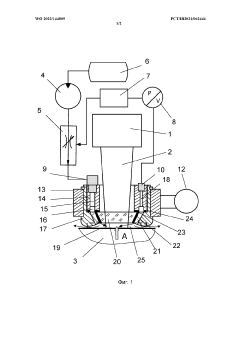
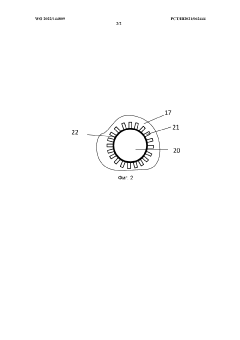
- The method involves applying an absorber layer to the workpiece surface, creating a laminar flow of liquid medium using ultrasonic vibrations to suppress bubble formation and ensure a stable liquid layer, allowing for consistent laser impact hardening.
Material Science Implications and Limitations
Laser Shock Peening (LSP) fundamentally alters material surface properties through complex metallurgical mechanisms. The process introduces significant microstructural changes, including grain refinement, dislocation density increases, and phase transformations that directly influence surface texture evolution. These modifications are governed by material-specific properties such as crystal structure, initial grain size, and chemical composition, creating inherent limitations in process predictability across different material systems.
The effectiveness of LSP varies substantially between material classes. Face-centered cubic (FCC) metals like aluminum and austenitic stainless steels typically respond favorably due to their multiple slip systems and high strain-hardening capacity. In contrast, hexagonal close-packed (HCP) materials such as titanium alloys and magnesium exhibit anisotropic behavior that complicates texture development prediction. Body-centered cubic (BCC) materials like ferritic steels present intermediate responses with unique texture evolution patterns.
Temperature sensitivity represents another critical limitation. Materials with low melting points may experience thermal effects that counteract the mechanical strengthening mechanisms of LSP. Additionally, high-temperature applications can trigger recovery and recrystallization processes that potentially reverse beneficial texture modifications, particularly in materials with low recrystallization temperatures.
Material homogeneity significantly impacts texture evolution consistency. Heterogeneous materials with inclusions, precipitates, or pre-existing defects develop non-uniform residual stress fields and inconsistent surface textures. This variability becomes particularly problematic in composite materials and multi-phase alloys where constituent phases respond differently to shock wave propagation.
Strain rate sensitivity introduces another dimension of complexity. Materials exhibit dramatically different responses at the ultra-high strain rates (10^6-10^7 s^-1) characteristic of LSP compared to conventional deformation processes. This strain rate dependence affects dislocation generation, twinning behavior, and ultimately surface texture development in ways that remain challenging to model accurately across diverse material systems.
The thickness-to-diameter ratio of treated components imposes physical limitations on shock wave propagation and reflection patterns. These geometric constraints can lead to unexpected texture variations, particularly in thin sections where wave interactions become more complex. Furthermore, pre-existing residual stresses from manufacturing processes interact with LSP-induced stresses in ways that can either enhance or diminish the intended surface modifications.
The effectiveness of LSP varies substantially between material classes. Face-centered cubic (FCC) metals like aluminum and austenitic stainless steels typically respond favorably due to their multiple slip systems and high strain-hardening capacity. In contrast, hexagonal close-packed (HCP) materials such as titanium alloys and magnesium exhibit anisotropic behavior that complicates texture development prediction. Body-centered cubic (BCC) materials like ferritic steels present intermediate responses with unique texture evolution patterns.
Temperature sensitivity represents another critical limitation. Materials with low melting points may experience thermal effects that counteract the mechanical strengthening mechanisms of LSP. Additionally, high-temperature applications can trigger recovery and recrystallization processes that potentially reverse beneficial texture modifications, particularly in materials with low recrystallization temperatures.
Material homogeneity significantly impacts texture evolution consistency. Heterogeneous materials with inclusions, precipitates, or pre-existing defects develop non-uniform residual stress fields and inconsistent surface textures. This variability becomes particularly problematic in composite materials and multi-phase alloys where constituent phases respond differently to shock wave propagation.
Strain rate sensitivity introduces another dimension of complexity. Materials exhibit dramatically different responses at the ultra-high strain rates (10^6-10^7 s^-1) characteristic of LSP compared to conventional deformation processes. This strain rate dependence affects dislocation generation, twinning behavior, and ultimately surface texture development in ways that remain challenging to model accurately across diverse material systems.
The thickness-to-diameter ratio of treated components imposes physical limitations on shock wave propagation and reflection patterns. These geometric constraints can lead to unexpected texture variations, particularly in thin sections where wave interactions become more complex. Furthermore, pre-existing residual stresses from manufacturing processes interact with LSP-induced stresses in ways that can either enhance or diminish the intended surface modifications.
Environmental and Energy Efficiency Considerations
Laser Shock Peening (LSP) processes, while offering significant surface enhancement benefits, present important environmental and energy efficiency considerations that must be addressed for sustainable industrial implementation. The energy consumption of LSP systems is substantial, with high-powered lasers typically operating in the range of 10-40 J per pulse at repetition rates of 10-20 Hz, resulting in considerable electricity usage during operation. Modern LSP facilities have begun implementing energy recovery systems and optimizing pulse parameters to reduce this consumption while maintaining treatment effectiveness.
Water usage represents another critical environmental factor, as LSP typically requires continuous flow of water as a confining medium during processing. Advanced facilities have developed closed-loop water recycling systems that can reduce freshwater consumption by up to 90% compared to traditional open systems. Additionally, water filtration technologies have been integrated to remove ablative coating particles and other contaminants, minimizing environmental discharge concerns.
The ablative coatings commonly used in LSP processes (typically aluminum, zinc, or black paint) introduce potential environmental hazards if not properly managed. Recent developments have focused on environmentally friendly coating alternatives and improved collection systems that capture over 95% of ablation byproducts. Some manufacturers have successfully implemented solvent-free, water-soluble coatings that significantly reduce hazardous waste generation while maintaining effective shock wave transmission.
Process emissions during LSP are relatively minimal compared to traditional surface treatment methods like shot peening or chemical treatments. Measurements indicate that LSP produces approximately 60-70% fewer airborne particulates and eliminates the need for chemical solvents used in competing processes. This reduction in emissions contributes to improved workplace air quality and reduced environmental impact.
From a lifecycle perspective, LSP demonstrates favorable environmental metrics due to the extended service life it provides to treated components. Studies on aerospace components show that LSP treatment can extend fatigue life by 3-5 times, reducing material consumption and associated environmental impacts from manufacturing replacement parts. This longevity benefit partially offsets the higher initial energy investment of the LSP process.
Recent innovations in LSP technology have focused on improving energy efficiency through optimized laser parameters, reduced pulse durations, and more efficient beam delivery systems. These advancements have demonstrated potential energy savings of 15-25% while maintaining or even improving surface enhancement outcomes. Further research into warm LSP processes may yield additional efficiency gains by reducing the energy required for effective treatment.
Water usage represents another critical environmental factor, as LSP typically requires continuous flow of water as a confining medium during processing. Advanced facilities have developed closed-loop water recycling systems that can reduce freshwater consumption by up to 90% compared to traditional open systems. Additionally, water filtration technologies have been integrated to remove ablative coating particles and other contaminants, minimizing environmental discharge concerns.
The ablative coatings commonly used in LSP processes (typically aluminum, zinc, or black paint) introduce potential environmental hazards if not properly managed. Recent developments have focused on environmentally friendly coating alternatives and improved collection systems that capture over 95% of ablation byproducts. Some manufacturers have successfully implemented solvent-free, water-soluble coatings that significantly reduce hazardous waste generation while maintaining effective shock wave transmission.
Process emissions during LSP are relatively minimal compared to traditional surface treatment methods like shot peening or chemical treatments. Measurements indicate that LSP produces approximately 60-70% fewer airborne particulates and eliminates the need for chemical solvents used in competing processes. This reduction in emissions contributes to improved workplace air quality and reduced environmental impact.
From a lifecycle perspective, LSP demonstrates favorable environmental metrics due to the extended service life it provides to treated components. Studies on aerospace components show that LSP treatment can extend fatigue life by 3-5 times, reducing material consumption and associated environmental impacts from manufacturing replacement parts. This longevity benefit partially offsets the higher initial energy investment of the LSP process.
Recent innovations in LSP technology have focused on improving energy efficiency through optimized laser parameters, reduced pulse durations, and more efficient beam delivery systems. These advancements have demonstrated potential energy savings of 15-25% while maintaining or even improving surface enhancement outcomes. Further research into warm LSP processes may yield additional efficiency gains by reducing the energy required for effective treatment.
Unlock deeper insights with Patsnap Eureka Quick Research — get a full tech report to explore trends and direct your research. Try now!
Generate Your Research Report Instantly with AI Agent
Supercharge your innovation with Patsnap Eureka AI Agent Platform!