Thermopile Systems in Precision Agriculture Explained
SEP 10, 20259 MIN READ
Generate Your Research Report Instantly with AI Agent
PatSnap Eureka helps you evaluate technical feasibility & market potential.
Thermopile Technology Evolution in Agriculture
Thermopile technology in agriculture has evolved significantly over the past decades, transforming from simple temperature measurement devices to sophisticated systems enabling precision farming practices. The journey began in the 1980s when basic thermopile sensors were first adapted from industrial applications to measure plant and soil temperatures in controlled agricultural environments. These early implementations were limited in scope and accuracy, primarily used in research settings rather than commercial farming operations.
By the mid-1990s, thermopile technology saw substantial improvements in sensitivity and miniaturization, allowing for more practical field applications. During this period, researchers began integrating these sensors into basic monitoring systems that could detect temperature variations across crop fields, though data interpretation remained largely manual and retrospective rather than predictive or prescriptive.
The early 2000s marked a significant turning point with the emergence of wireless sensor networks. Thermopile arrays could now be deployed across large agricultural areas, transmitting real-time temperature data to central monitoring stations. This development coincided with advances in data analytics, enabling farmers to identify patterns in temperature fluctuations that correlated with crop health, irrigation needs, and potential disease outbreaks.
Between 2010 and 2015, thermopile systems became increasingly sophisticated with the integration of multispectral and hyperspectral capabilities. These enhanced sensors could detect not only temperature variations but also subtle changes in plant physiology through thermal signatures, providing early indicators of stress before visible symptoms appeared. This period also saw the first commercial precision agriculture platforms incorporating thermopile data as a core component of their decision support systems.
The most recent evolution phase (2016-present) has been characterized by the convergence of thermopile technology with artificial intelligence and machine learning algorithms. Modern agricultural thermopile systems now incorporate edge computing capabilities, allowing for on-site processing of thermal data and immediate actionable insights. These systems can automatically adjust irrigation schedules, trigger targeted interventions for pest management, and optimize harvesting times based on crop maturity indicators derived from thermal signatures.
Looking forward, the technology roadmap for agricultural thermopile systems points toward further miniaturization, increased energy efficiency through harvesting ambient energy, and deeper integration with autonomous farming equipment. The next generation of thermopile sensors is expected to achieve sub-millikelvin resolution while consuming minimal power, making them suitable for continuous, long-term deployment in remote agricultural settings without frequent maintenance requirements.
By the mid-1990s, thermopile technology saw substantial improvements in sensitivity and miniaturization, allowing for more practical field applications. During this period, researchers began integrating these sensors into basic monitoring systems that could detect temperature variations across crop fields, though data interpretation remained largely manual and retrospective rather than predictive or prescriptive.
The early 2000s marked a significant turning point with the emergence of wireless sensor networks. Thermopile arrays could now be deployed across large agricultural areas, transmitting real-time temperature data to central monitoring stations. This development coincided with advances in data analytics, enabling farmers to identify patterns in temperature fluctuations that correlated with crop health, irrigation needs, and potential disease outbreaks.
Between 2010 and 2015, thermopile systems became increasingly sophisticated with the integration of multispectral and hyperspectral capabilities. These enhanced sensors could detect not only temperature variations but also subtle changes in plant physiology through thermal signatures, providing early indicators of stress before visible symptoms appeared. This period also saw the first commercial precision agriculture platforms incorporating thermopile data as a core component of their decision support systems.
The most recent evolution phase (2016-present) has been characterized by the convergence of thermopile technology with artificial intelligence and machine learning algorithms. Modern agricultural thermopile systems now incorporate edge computing capabilities, allowing for on-site processing of thermal data and immediate actionable insights. These systems can automatically adjust irrigation schedules, trigger targeted interventions for pest management, and optimize harvesting times based on crop maturity indicators derived from thermal signatures.
Looking forward, the technology roadmap for agricultural thermopile systems points toward further miniaturization, increased energy efficiency through harvesting ambient energy, and deeper integration with autonomous farming equipment. The next generation of thermopile sensors is expected to achieve sub-millikelvin resolution while consuming minimal power, making them suitable for continuous, long-term deployment in remote agricultural settings without frequent maintenance requirements.
Market Demand Analysis for Precision Agriculture Sensors
The precision agriculture sensor market is experiencing robust growth, driven by increasing global food demand and the need for sustainable farming practices. Current market valuations place this sector at approximately 2.5 billion USD in 2023, with projections indicating a compound annual growth rate of 13-15% through 2030. Thermopile sensor systems, specifically, are gaining significant traction within this expanding market due to their ability to provide non-contact temperature measurements crucial for crop health monitoring.
Demand for these sensors is particularly strong in developed agricultural markets including North America, Western Europe, and parts of Asia-Pacific, where technology adoption rates are highest. Large-scale commercial farming operations represent the primary customer segment, though medium-sized farms are increasingly implementing these technologies as costs decrease and integration becomes more straightforward.
The market demand is primarily driven by several key factors. First, the growing need for resource optimization in agriculture, where thermopile sensors enable precise irrigation management through canopy temperature monitoring, resulting in water savings of 20-30% compared to traditional methods. Second, climate change impacts are creating more variable growing conditions, increasing the value of real-time plant stress detection capabilities that thermopile arrays provide.
Consumer preferences are also shifting market dynamics, with increasing demand for sustainably grown produce creating pressure on farmers to adopt precision technologies that minimize chemical inputs. Thermopile systems that can detect early signs of disease or pest infestation allow for targeted interventions rather than broad-spectrum applications, reducing pesticide use by up to 40% in some documented implementations.
Regulatory environments globally are trending toward stricter environmental standards for agricultural practices, further incentivizing adoption of precision monitoring technologies. Several countries have introduced subsidy programs specifically supporting precision agriculture technology implementation, creating additional market pull for thermopile and other sensor systems.
Market research indicates that farmers are increasingly seeking integrated sensor solutions rather than standalone products, with strong preference for systems that provide actionable insights rather than raw data. This is driving demand for thermopile systems with built-in analytics capabilities and compatibility with farm management software platforms. The ability to integrate with autonomous systems, particularly agricultural drones and robotic implements, represents another significant growth vector for thermopile sensor demand.
Demand for these sensors is particularly strong in developed agricultural markets including North America, Western Europe, and parts of Asia-Pacific, where technology adoption rates are highest. Large-scale commercial farming operations represent the primary customer segment, though medium-sized farms are increasingly implementing these technologies as costs decrease and integration becomes more straightforward.
The market demand is primarily driven by several key factors. First, the growing need for resource optimization in agriculture, where thermopile sensors enable precise irrigation management through canopy temperature monitoring, resulting in water savings of 20-30% compared to traditional methods. Second, climate change impacts are creating more variable growing conditions, increasing the value of real-time plant stress detection capabilities that thermopile arrays provide.
Consumer preferences are also shifting market dynamics, with increasing demand for sustainably grown produce creating pressure on farmers to adopt precision technologies that minimize chemical inputs. Thermopile systems that can detect early signs of disease or pest infestation allow for targeted interventions rather than broad-spectrum applications, reducing pesticide use by up to 40% in some documented implementations.
Regulatory environments globally are trending toward stricter environmental standards for agricultural practices, further incentivizing adoption of precision monitoring technologies. Several countries have introduced subsidy programs specifically supporting precision agriculture technology implementation, creating additional market pull for thermopile and other sensor systems.
Market research indicates that farmers are increasingly seeking integrated sensor solutions rather than standalone products, with strong preference for systems that provide actionable insights rather than raw data. This is driving demand for thermopile systems with built-in analytics capabilities and compatibility with farm management software platforms. The ability to integrate with autonomous systems, particularly agricultural drones and robotic implements, represents another significant growth vector for thermopile sensor demand.
Current Thermopile Systems and Technical Limitations
Thermopile systems in precision agriculture currently operate through a network of infrared sensors that detect thermal radiation emitted by plants, soil, and surrounding environments. These systems typically consist of multiple thermopile sensors arranged in arrays, connected to data processing units that analyze temperature variations across agricultural fields. The primary function involves measuring temperature differentials between objects and their surroundings without direct contact, making them ideal for monitoring crop health and environmental conditions.
Modern agricultural thermopile systems generally achieve temperature resolution between 0.1°C and 0.5°C, with response times ranging from 50 to 200 milliseconds. Most commercial systems operate effectively within the 8-14 μm wavelength range, which corresponds to the thermal emission spectrum of most agricultural subjects. The detection range varies from 1 to 100 meters depending on the specific application and sensor configuration.
Despite their utility, current thermopile systems face significant technical limitations. Power consumption remains a critical constraint, particularly for remote deployment in agricultural settings where continuous operation is necessary but power sources are limited. Most systems require between 100-500 mW during active sensing, which presents challenges for battery-powered implementations intended for extended field use.
Calibration drift represents another substantial limitation, as environmental factors such as humidity, dust accumulation, and temperature fluctuations can affect sensor accuracy over time. Field tests indicate accuracy degradation of approximately 2-5% per month without recalibration in typical agricultural environments, necessitating regular maintenance interventions.
Spatial resolution limitations restrict the granularity of data collection, with most affordable systems providing resolution no better than 32×32 pixels. This constrains the ability to detect early-stage plant diseases or stress that may initially manifest in small leaf areas or specific plant parts.
Data integration challenges persist across platforms, as thermopile systems often generate proprietary data formats that don't seamlessly integrate with other agricultural management systems. The lack of standardization creates significant barriers to implementing comprehensive precision agriculture solutions that combine multiple sensing technologies.
Weather sensitivity further complicates reliable operation, with performance degradation during precipitation, fog, or extreme temperature conditions. Most systems experience up to 40% reduction in accuracy during adverse weather, limiting their reliability precisely when monitoring might be most critical for crop protection.
Cost remains prohibitive for widespread adoption, particularly for small and medium-scale farming operations. Current commercial systems range from $2,000 to $15,000 depending on coverage area and resolution, representing a significant investment that limits accessibility across the agricultural sector.
Modern agricultural thermopile systems generally achieve temperature resolution between 0.1°C and 0.5°C, with response times ranging from 50 to 200 milliseconds. Most commercial systems operate effectively within the 8-14 μm wavelength range, which corresponds to the thermal emission spectrum of most agricultural subjects. The detection range varies from 1 to 100 meters depending on the specific application and sensor configuration.
Despite their utility, current thermopile systems face significant technical limitations. Power consumption remains a critical constraint, particularly for remote deployment in agricultural settings where continuous operation is necessary but power sources are limited. Most systems require between 100-500 mW during active sensing, which presents challenges for battery-powered implementations intended for extended field use.
Calibration drift represents another substantial limitation, as environmental factors such as humidity, dust accumulation, and temperature fluctuations can affect sensor accuracy over time. Field tests indicate accuracy degradation of approximately 2-5% per month without recalibration in typical agricultural environments, necessitating regular maintenance interventions.
Spatial resolution limitations restrict the granularity of data collection, with most affordable systems providing resolution no better than 32×32 pixels. This constrains the ability to detect early-stage plant diseases or stress that may initially manifest in small leaf areas or specific plant parts.
Data integration challenges persist across platforms, as thermopile systems often generate proprietary data formats that don't seamlessly integrate with other agricultural management systems. The lack of standardization creates significant barriers to implementing comprehensive precision agriculture solutions that combine multiple sensing technologies.
Weather sensitivity further complicates reliable operation, with performance degradation during precipitation, fog, or extreme temperature conditions. Most systems experience up to 40% reduction in accuracy during adverse weather, limiting their reliability precisely when monitoring might be most critical for crop protection.
Cost remains prohibitive for widespread adoption, particularly for small and medium-scale farming operations. Current commercial systems range from $2,000 to $15,000 depending on coverage area and resolution, representing a significant investment that limits accessibility across the agricultural sector.
Existing Thermopile Implementation Strategies
01 Thermopile sensor design and structure
Thermopile sensors are designed with specific structures to enhance their performance in detecting thermal radiation. These designs include specialized junction arrangements, substrate materials, and protective coatings that improve sensitivity and durability. The structure often incorporates multiple thermocouples connected in series to amplify the output signal, with careful consideration given to the arrangement of hot and cold junctions to maximize temperature differential detection.- Thermopile sensor design and structure: Thermopile sensors are designed with specific structures to enhance their performance in detecting thermal radiation. These designs include various arrangements of thermocouples, specialized junction materials, and structural configurations that optimize sensitivity and response time. Advanced fabrication techniques are employed to create thermopile arrays with improved thermal isolation and signal-to-noise ratios, enabling more accurate temperature measurements and thermal imaging capabilities.
- Thermopile applications in energy harvesting: Thermopiles are utilized in energy harvesting systems that convert thermal gradients into electrical energy. These systems capture waste heat from various sources and transform it into usable electricity through the Seebeck effect. The technology includes specialized materials and configurations designed to maximize power generation efficiency from small temperature differences. Applications range from powering small electronic devices to supplementing energy in larger systems, providing sustainable power solutions.
- Thermopile integration in medical and healthcare devices: Thermopile systems are integrated into various medical and healthcare devices for non-contact temperature measurement and monitoring. These applications include infrared thermometers, thermal imaging for diagnostic purposes, and continuous patient monitoring systems. The technology enables accurate body temperature readings without physical contact, which is particularly valuable in clinical settings for infection control and patient comfort. Advanced signal processing techniques enhance measurement accuracy and reliability in these healthcare applications.
- Thermopile-based detection and imaging systems: Thermopile arrays are employed in detection and imaging systems for various applications including security, surveillance, and industrial monitoring. These systems utilize the thermal sensing capabilities of thermopiles to detect heat signatures and create thermal images. Advanced signal processing algorithms enhance image quality and enable feature recognition. The technology includes specialized optics and filters to improve detection range and accuracy, making these systems effective for identifying objects and anomalies based on their thermal profiles.
- Thermopile manufacturing techniques and materials: Advanced manufacturing techniques and specialized materials are employed in the production of thermopile systems to enhance performance and reliability. These include microfabrication processes, thin-film deposition methods, and novel thermoelectric materials with improved Seebeck coefficients. The manufacturing approaches focus on creating precise junctions between dissimilar metals or semiconductors while maintaining thermal isolation between hot and cold junctions. Innovations in materials science have led to thermopiles with higher sensitivity, faster response times, and greater stability across varying environmental conditions.
02 Thermopile applications in thermal imaging and detection
Thermopile systems are widely used in thermal imaging and detection applications. These systems can detect infrared radiation without requiring cooling, making them suitable for various applications including security systems, medical diagnostics, and industrial process monitoring. The technology enables non-contact temperature measurement and can be integrated into portable devices for field use, providing real-time thermal data visualization.Expand Specific Solutions03 Energy harvesting using thermopile technology
Thermopile systems can be utilized for energy harvesting applications by converting temperature differentials into electrical energy. This technology is particularly valuable in environments where waste heat is available, allowing for the generation of power from temperature gradients. These systems can be designed to operate autonomously in remote locations, providing power for low-energy electronic devices without requiring traditional power sources.Expand Specific Solutions04 Integration of thermopiles in smart devices and IoT
Thermopile systems are increasingly being integrated into smart devices and Internet of Things (IoT) applications. These miniaturized thermal sensors enable temperature monitoring, presence detection, and gesture recognition in consumer electronics. The integration allows for enhanced user interfaces, energy management, and environmental sensing capabilities in compact devices, contributing to the development of more intuitive and responsive smart technology ecosystems.Expand Specific Solutions05 Manufacturing methods for thermopile systems
Advanced manufacturing techniques are employed to produce high-performance thermopile systems. These methods include microfabrication processes, thin-film deposition, and precision assembly techniques that enable the creation of miniaturized and highly sensitive thermal sensors. The manufacturing approaches focus on optimizing thermoelectric materials, junction quality, and system integration to enhance reliability, sensitivity, and cost-effectiveness of the final thermopile products.Expand Specific Solutions
Key Industry Players in Agricultural Thermopile Solutions
Thermopile systems in precision agriculture are currently in a growth phase, with the market expanding as technology adoption increases across global farming operations. The market size is projected to grow significantly due to increasing demand for resource optimization and sustainable farming practices. Technologically, the field shows varying maturity levels, with companies like Precision Planting LLC and Raven Industries leading innovation in sensor integration, while Climate LLC and The Climate Corp. focus on data analytics platforms. AGCO Corp. and Netafim Ltd. are advancing implementation in irrigation and machinery systems. Academic institutions like China Agricultural University and Arizona State University are contributing fundamental research, while companies such as BASF and Syngenta are exploring integration with crop protection solutions. The ecosystem demonstrates a blend of established agricultural technology providers and emerging specialized thermopile system developers.
Precision Planting LLC
Technical Solution: Precision Planting has developed advanced thermopile-based sensing systems for precision agriculture that monitor soil and crop temperatures with high accuracy. Their technology integrates multiple thermopile sensors across planting equipment to create thermal maps of fields during seeding operations. These systems can detect subtle temperature variations (±0.1°C) in soil, enabling real-time adjustments to planting depth and spacing based on soil thermal conditions. The company's SmartFirmer® seed firmer incorporates thermopile technology to measure soil temperature at seed depth during planting, providing farmers with immediate feedback on soil conditions. This data is integrated with their 20|20® monitoring system to create comprehensive field maps showing temperature variations that affect germination rates and early growth patterns. The system also includes predictive algorithms that correlate soil temperature patterns with expected crop emergence timelines.
Strengths: Highly accurate real-time soil temperature monitoring during planting operations; seamless integration with existing planting equipment; comprehensive data visualization through their digital platform. Weaknesses: Requires significant investment in compatible equipment; primarily focused on row crop applications; effectiveness can be limited in extremely wet soil conditions.
Raven Industries, Inc.
Technical Solution: Raven Industries has pioneered thermopile array technology in their precision agriculture solutions, particularly in their OMNiPOWER™ autonomous platform. Their system employs multiple thermopile sensors strategically positioned on agricultural equipment to detect thermal signatures across fields. These sensors can identify temperature differentials between crops and soil, enabling detection of plant stress before visual symptoms appear. Raven's technology processes thermal data through proprietary algorithms that filter environmental noise and enhance detection accuracy. Their VSN® visual guidance system incorporates thermopile sensors alongside visual cameras to improve navigation and crop monitoring capabilities in variable light conditions. The company has also developed specialized thermopile applications for irrigation management, where sensors monitor crop canopy temperatures to determine water stress levels and trigger automated irrigation responses. This multi-sensor approach combines thermal data with other environmental parameters to create comprehensive field intelligence systems.
Strengths: Excellent integration with autonomous farming platforms; robust algorithms for filtering environmental interference; comprehensive approach combining thermal with other sensor data. Weaknesses: Higher implementation costs compared to conventional systems; requires technical expertise for optimal calibration; more complex maintenance requirements.
Core Patents and Research in Agricultural Thermal Sensing
Thermo-electric device to provide electrical power
PatentInactiveUS20190165236A1
Innovation
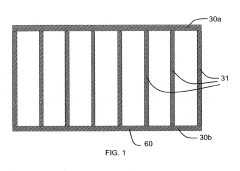
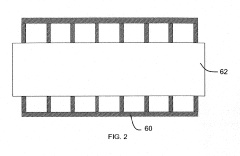
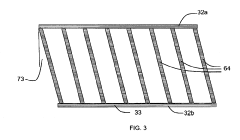
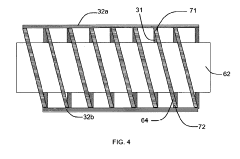
- A thermoelectric device utilizing a thermopile composed of multiple thermocouples connected in series, leveraging the Seebeck effect to generate high voltages (110V to 900V) from temperature differentials, combined with a control circuit and rechargeable batteries to power electric devices without direct fossil fuel use.
Precision treatment and sowing or planting method and device
PatentActiveUS20220287221A1
Innovation
- A device and method for selectively applying a dressing composition to plant propagation materials during sowing, using a sensor unit to determine environmental conditions and adapt the composition, and an application assembly that applies the dressing while the materials are in free fall, preventing contamination of the sowing device and allowing for precise application.


Environmental Impact and Sustainability Considerations
The integration of thermopile systems in precision agriculture represents a significant advancement toward more sustainable farming practices. These thermal sensing technologies enable farmers to optimize resource utilization through precise monitoring of crop and soil conditions, resulting in substantial reductions in water consumption—often by 20-30% compared to conventional irrigation methods. This conservation is particularly crucial in regions facing water scarcity and contributes meaningfully to global water preservation efforts.
Energy efficiency constitutes another key environmental benefit of thermopile-based agricultural systems. The inherently low power requirements of these sensors—typically operating on milliwatts rather than watts—allow for extended deployment periods using minimal energy resources. When coupled with renewable energy sources such as small solar panels, these systems can operate with a near-zero carbon footprint, aligning with agricultural sustainability goals.
The precision application of fertilizers and pesticides enabled by thermopile monitoring systems significantly reduces chemical runoff into watersheds. Studies indicate that targeted application methods guided by thermal sensing can decrease chemical usage by 15-25%, minimizing soil contamination and protecting local ecosystems from agricultural pollutants. This reduction directly contributes to healthier soil biology and improved groundwater quality in agricultural regions.
From a lifecycle perspective, thermopile sensors offer notable sustainability advantages. Their solid-state construction contains minimal hazardous materials compared to alternative sensing technologies, and their extended operational lifespan—often exceeding five years without replacement—reduces electronic waste generation. Many components can be recycled at end-of-life, further minimizing environmental impact.
Climate resilience represents an increasingly important consideration in agricultural technology assessment. Thermopile systems contribute positively by enabling farmers to adapt to changing climate conditions through early detection of heat stress, frost risk, and drought indicators. This adaptive capacity helps maintain agricultural productivity while reducing crop losses and associated resource waste during increasingly unpredictable weather patterns.
The broader environmental implications extend to biodiversity conservation, as precision agriculture reduces the need for expanding farmland into natural habitats. By optimizing yields on existing agricultural land through technologies like thermopile sensing, farmers can help mitigate habitat destruction while meeting growing food demands. This balance between productivity and conservation represents one of the most promising aspects of thermal sensing implementation in modern sustainable agriculture.
Energy efficiency constitutes another key environmental benefit of thermopile-based agricultural systems. The inherently low power requirements of these sensors—typically operating on milliwatts rather than watts—allow for extended deployment periods using minimal energy resources. When coupled with renewable energy sources such as small solar panels, these systems can operate with a near-zero carbon footprint, aligning with agricultural sustainability goals.
The precision application of fertilizers and pesticides enabled by thermopile monitoring systems significantly reduces chemical runoff into watersheds. Studies indicate that targeted application methods guided by thermal sensing can decrease chemical usage by 15-25%, minimizing soil contamination and protecting local ecosystems from agricultural pollutants. This reduction directly contributes to healthier soil biology and improved groundwater quality in agricultural regions.
From a lifecycle perspective, thermopile sensors offer notable sustainability advantages. Their solid-state construction contains minimal hazardous materials compared to alternative sensing technologies, and their extended operational lifespan—often exceeding five years without replacement—reduces electronic waste generation. Many components can be recycled at end-of-life, further minimizing environmental impact.
Climate resilience represents an increasingly important consideration in agricultural technology assessment. Thermopile systems contribute positively by enabling farmers to adapt to changing climate conditions through early detection of heat stress, frost risk, and drought indicators. This adaptive capacity helps maintain agricultural productivity while reducing crop losses and associated resource waste during increasingly unpredictable weather patterns.
The broader environmental implications extend to biodiversity conservation, as precision agriculture reduces the need for expanding farmland into natural habitats. By optimizing yields on existing agricultural land through technologies like thermopile sensing, farmers can help mitigate habitat destruction while meeting growing food demands. This balance between productivity and conservation represents one of the most promising aspects of thermal sensing implementation in modern sustainable agriculture.
Data Integration and IoT Connectivity Solutions
The integration of thermopile systems with IoT infrastructure represents a significant advancement in precision agriculture technology. These systems generate substantial amounts of thermal data that must be efficiently collected, processed, and analyzed to provide actionable insights for agricultural decision-making. Modern data integration frameworks enable seamless connectivity between thermopile sensors and central agricultural management systems through standardized communication protocols such as MQTT, CoAP, and HTTP/REST.
Edge computing plays a crucial role in thermopile data processing by performing initial analysis directly at the sensor level, reducing bandwidth requirements and enabling real-time response capabilities. This distributed architecture allows for filtering and aggregation of thermal readings before transmission to cloud platforms, addressing connectivity challenges common in rural agricultural settings.
Cloud-based integration platforms specifically designed for agricultural applications provide comprehensive data management solutions for thermopile systems. These platforms incorporate specialized APIs that facilitate bidirectional communication between field sensors and farm management software, enabling automated irrigation control, pest management, and crop monitoring based on thermal data inputs.
The implementation of digital twins for agricultural fields represents an emerging approach to thermopile data integration. These virtual replicas incorporate thermal mapping data alongside other environmental parameters to create comprehensive field models that support predictive analytics and scenario planning. Machine learning algorithms applied to these integrated datasets can identify patterns in thermal signatures that indicate plant stress, disease outbreaks, or irrigation inefficiencies.
Interoperability standards such as AgGateway's ADAPT framework and the Open Ag Data Alliance (OADA) specifications are increasingly important for thermopile system integration. These standards ensure that thermal data can be exchanged seamlessly between different agricultural technology platforms, preventing vendor lock-in and enabling farmers to utilize best-of-breed solutions across their operations.
Security considerations for thermopile data integration include encrypted data transmission, secure authentication mechanisms, and comprehensive access control systems. As agricultural operations become increasingly data-driven, protecting sensitive thermal mapping information from unauthorized access becomes paramount to maintaining competitive advantage and operational integrity.
Mobile connectivity solutions utilizing 5G, NB-IoT, and LoRaWAN technologies are extending the reach of thermopile systems to previously inaccessible agricultural areas. These low-power, long-range communication technologies enable continuous monitoring of remote fields while minimizing infrastructure requirements and operational costs.
Edge computing plays a crucial role in thermopile data processing by performing initial analysis directly at the sensor level, reducing bandwidth requirements and enabling real-time response capabilities. This distributed architecture allows for filtering and aggregation of thermal readings before transmission to cloud platforms, addressing connectivity challenges common in rural agricultural settings.
Cloud-based integration platforms specifically designed for agricultural applications provide comprehensive data management solutions for thermopile systems. These platforms incorporate specialized APIs that facilitate bidirectional communication between field sensors and farm management software, enabling automated irrigation control, pest management, and crop monitoring based on thermal data inputs.
The implementation of digital twins for agricultural fields represents an emerging approach to thermopile data integration. These virtual replicas incorporate thermal mapping data alongside other environmental parameters to create comprehensive field models that support predictive analytics and scenario planning. Machine learning algorithms applied to these integrated datasets can identify patterns in thermal signatures that indicate plant stress, disease outbreaks, or irrigation inefficiencies.
Interoperability standards such as AgGateway's ADAPT framework and the Open Ag Data Alliance (OADA) specifications are increasingly important for thermopile system integration. These standards ensure that thermal data can be exchanged seamlessly between different agricultural technology platforms, preventing vendor lock-in and enabling farmers to utilize best-of-breed solutions across their operations.
Security considerations for thermopile data integration include encrypted data transmission, secure authentication mechanisms, and comprehensive access control systems. As agricultural operations become increasingly data-driven, protecting sensitive thermal mapping information from unauthorized access becomes paramount to maintaining competitive advantage and operational integrity.
Mobile connectivity solutions utilizing 5G, NB-IoT, and LoRaWAN technologies are extending the reach of thermopile systems to previously inaccessible agricultural areas. These low-power, long-range communication technologies enable continuous monitoring of remote fields while minimizing infrastructure requirements and operational costs.
Unlock deeper insights with PatSnap Eureka Quick Research — get a full tech report to explore trends and direct your research. Try now!
Generate Your Research Report Instantly with AI Agent
Supercharge your innovation with PatSnap Eureka AI Agent Platform!