
Face aging image synthesis method based on cyclic conditional generative adversarial network
An image synthesis and conditional generation technology, applied in the field of computer vision, can solve the problems of lack of aging methods for aging images, failure to maintain identity consistency, and poor quality of aging image generation
Patent Information
- Authority / Receiving Office
- CN · China
- Current Assignee / Owner
- Publication Date
- 2020-10-20
Smart Images
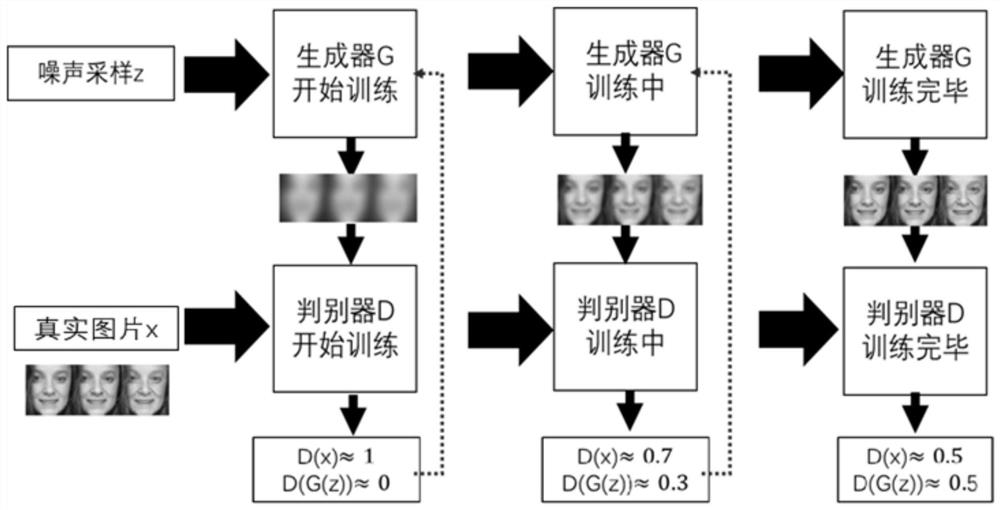
Figure 1 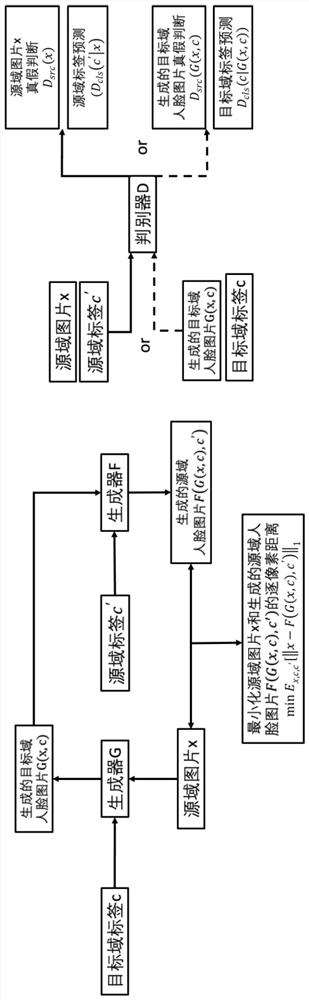
Figure 2 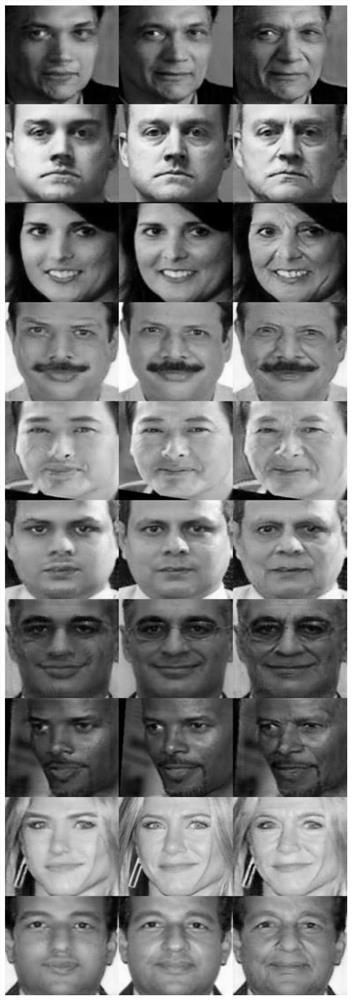
Figure 3
Abstract
Description
technical field
[0001] The invention belongs to the field of computer vision, and mainly relates to the problem of synthesizing human face aging images. It is mainly used in the detection of criminal cases and the film and television entertainment industry. Background technique
[0002] Face aging image synthesis is the use of computer vision related technologies to synthesize corresponding images of specified face images in different age groups on the basis of retaining the identity characteristics of the original face image. With the continuous breakthroughs in relevant theoretical research and the rapid development of the information technology industry, the research on face aging image synthesis is very extensive in public security criminal investigation, cross-aging face recognition, face data translation, and face data set expansion. Applications. In recent years, face aging image synthesis has been further developed based on the development of machine learning and d...
Examples
Embodiment Construction
[0061] This method is based on the cyclic condition to generate a face aging image synthesis method against the network, and its realization includes the following steps:
[0062] Step 1: Preprocess the dataset. Use the UTKFace (https: / / susanqq.github.io / UTKFace / ) face database for face alignment. The database picture first needs to calculate the position and size of the face in the image, which is represented by a square box. Secondly, use the box to cut out the face part from the whole image as the input for the subsequent steps. Then locate the coordinates of the feature points in the picture, here a positioning algorithm of 68 feature points is used. Finally, according to the located feature point coordinates, the geometric mean point of the face and the geometric center coordinates of the left and right eyes are calculated. Then, according to these information, calculate the parameters of the rotation, translation and scaling transformation that the image needs to perf...