
Method and system for session management wherein a client session identifier is used
a client session and identifier technology, applied in the field of client session management, can solve the problems of limit of access devices that necessarily have limited data communication capability, and achieve the effect of flexible use of mobile communication terminals
- Summary
- Abstract
- Description
- Claims
- Application Information
AI Technical Summary
Benefits of technology
Problems solved by technology
Method used
Image

Examples
Embodiment Construction
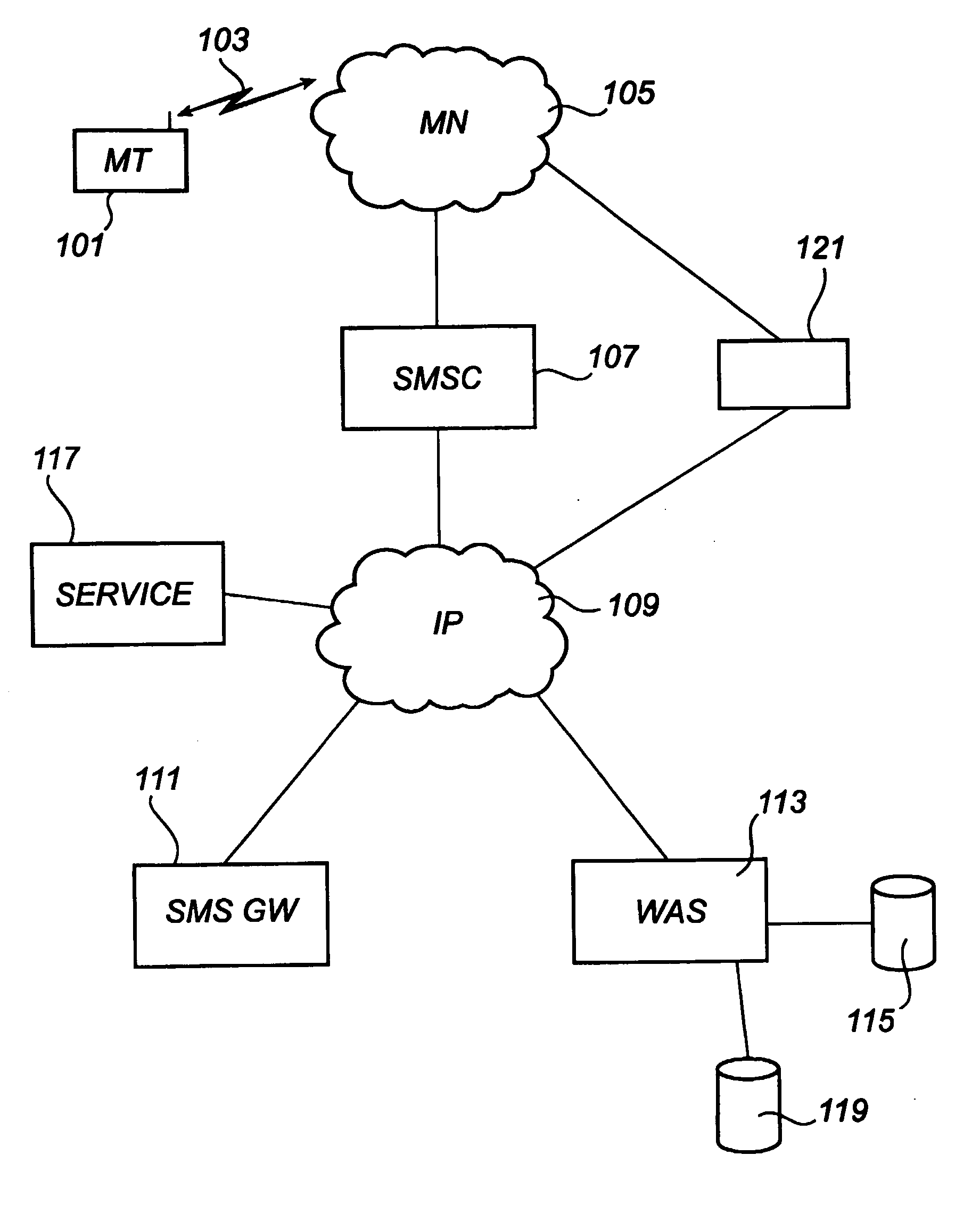
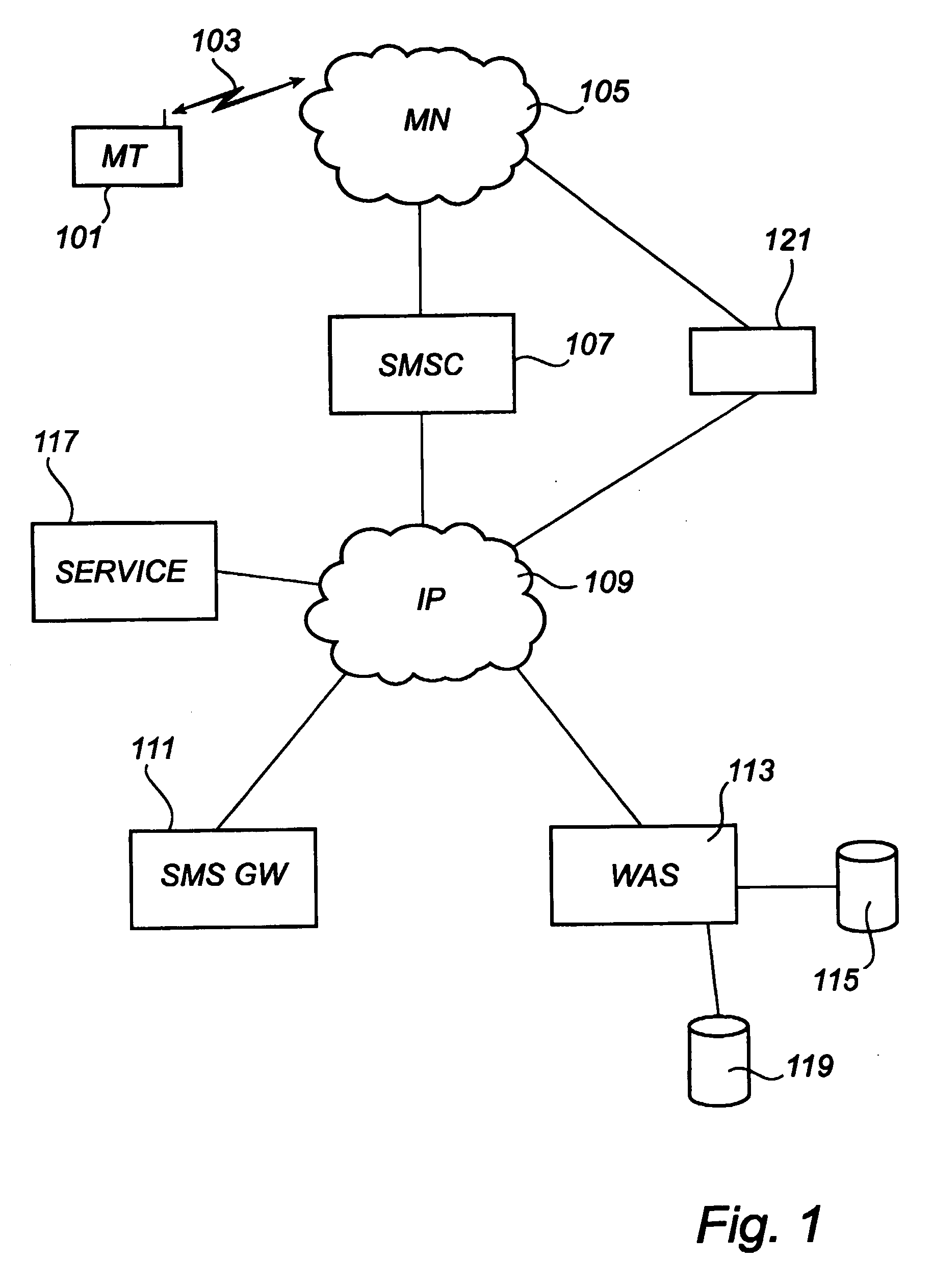
[0017] Referring initially to FIG. 1, a mobile client terminal 101 is via a radio interface 103 connected to a digital mobile communication network 105. The digital mobile communication network 105 may be of any kind known in the art, such as the very widely used GSM / GPRS system.
[0018] Connected to the mobile network 105 is a short message service centre 107 (SMSC). The SMSC 107 is capable of receiving text messages from the mobile terminal 101, and any other mobile terminal connected to the mobile network 105, and convey the messages to receivers in a packet switched data network 109, e.g. to an application server 113 as will be discussed further below. The short message service centre 107 is connected to the packet switched (Internet) network 109 and uses preferably the HTML, HTTP, and TCP / IP Internet network protocols. Short messages are transferred between the service centre 107 and mobile stations. The user submits to the service centre 107 a short message containing an identi...
PUM
 Login to View More
 Abstract
Description
Claims
Application Information
 Login to View More