
Semi-quantitative immunochromatographic device
a technology of immunochromatographic device and semi-quantitative analysis, which is applied in the direction of measurement device, instruments, scientific instruments, etc., can solve the problems of undesirable complexity of assay, lack of the capability of at least immediately quantifying the results of assay,
- Summary
- Abstract
- Description
- Claims
- Application Information
AI Technical Summary
Benefits of technology
Problems solved by technology
Method used
Image

Examples
example 1
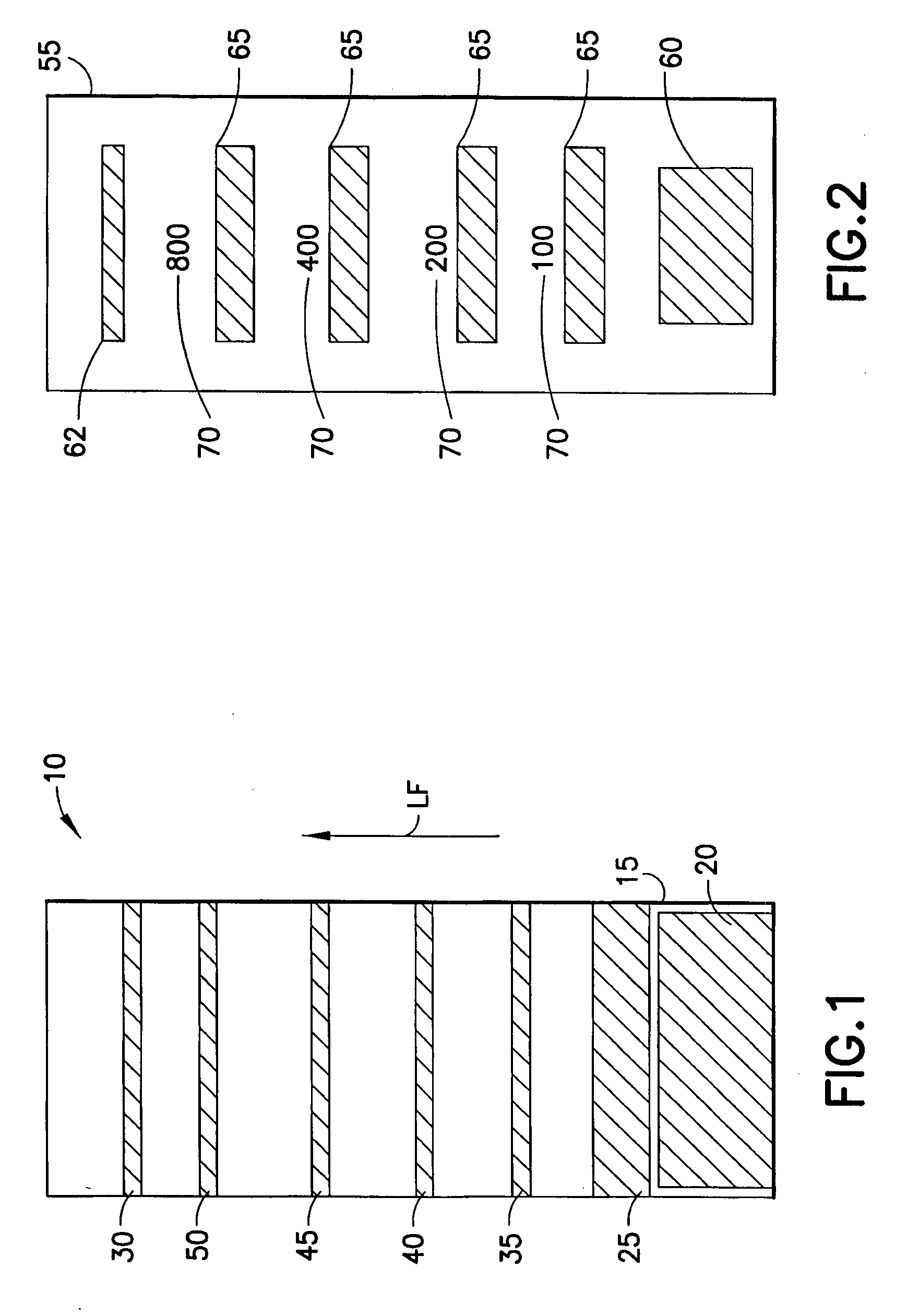
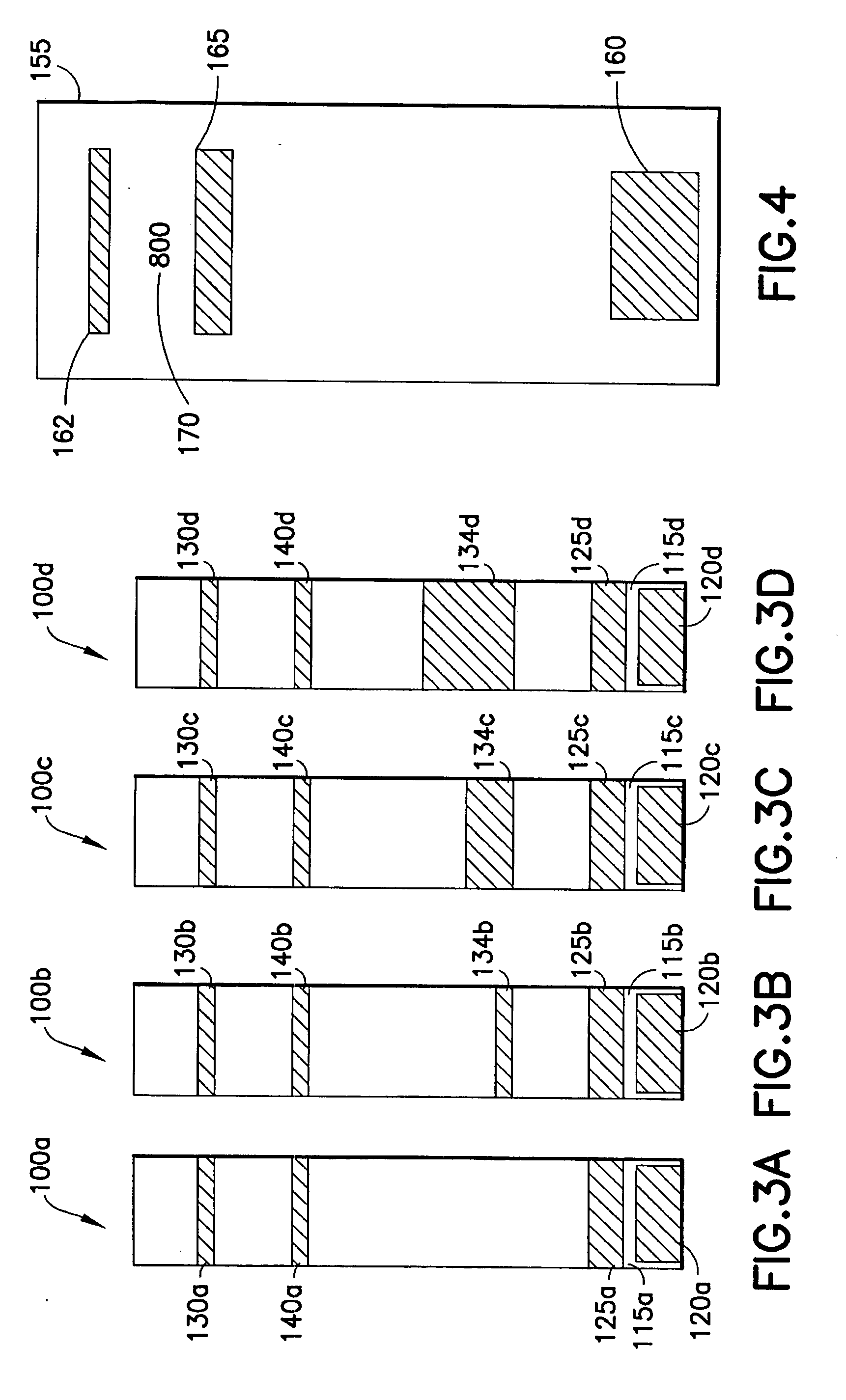
[0064] In this example, human blood can be tested for a semi-quantitative amount of CD4 lymphocytes. A drop of blood from the test subject is obtained by finger prick with lancet and applied to the area for receiving a biological sample on the lateral flow device. This is followed by adding two drops of a suitable buffer, such as phosphate buffered saline, to the receiving area in order to promote lateral flow. The device consists of a pad, for example rayon or glass fiber to receive the blood sample. A lysing agent is impregnated into the pad to lyse the blood cells. Also in this same pad is the detector antibody (monoclonal antibody specific to CD4 antigen) which is conjugated to colloidal gold. Underlying this pad is a strip of nitrocellulose, typically 5 mm wide and 30 mm in length. The pad is located at one extreme end of this strip. At the other extreme end of the strip, an absorbent pad is in contact with the strip to facilitate and maintain the capillary flow of liquid. Flui...
PUM
| Property | Measurement | Unit |
|---|---|---|
| length | aaaaa | aaaaa |
| length | aaaaa | aaaaa |
| area | aaaaa | aaaaa |
Abstract
Description
Claims
Application Information
 Login to View More