Inhibition of polo kinase by matrimony maintains G2 arrest in the meiotic cell cycle

a polo kinase and matrimony technology, applied in the field of modulating oocyte maturation, can solve the problem of less well-understood plo1 function

US20090123934A1Inactive Publication Date: 2009-05-14STOWERS INST FOR MEDICAL RES
1 Cites 0 Cited by

Patent Information

Authority / Receiving Office
US · United States
Patent Type
Applications(United States)
Current Assignee / Owner
Publication Date
2009-05-14
Estimated Expiration
Not applicable · inactive patent

Smart Images

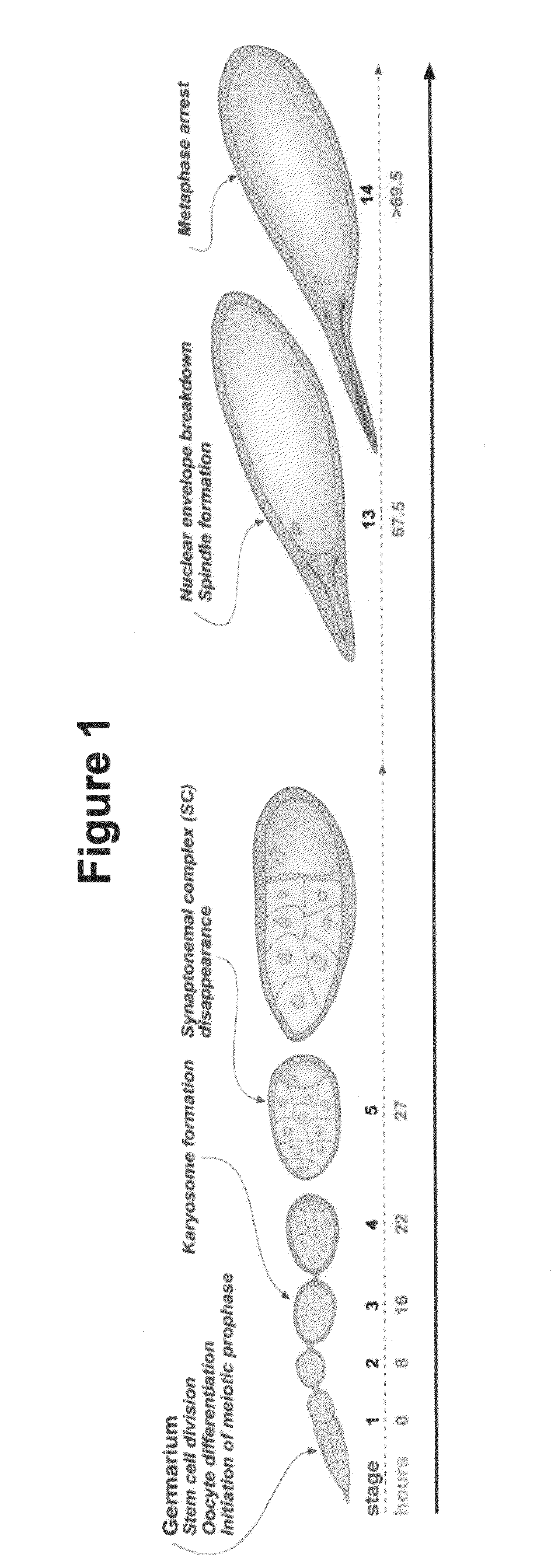
  • Figure 1
    Figure 1
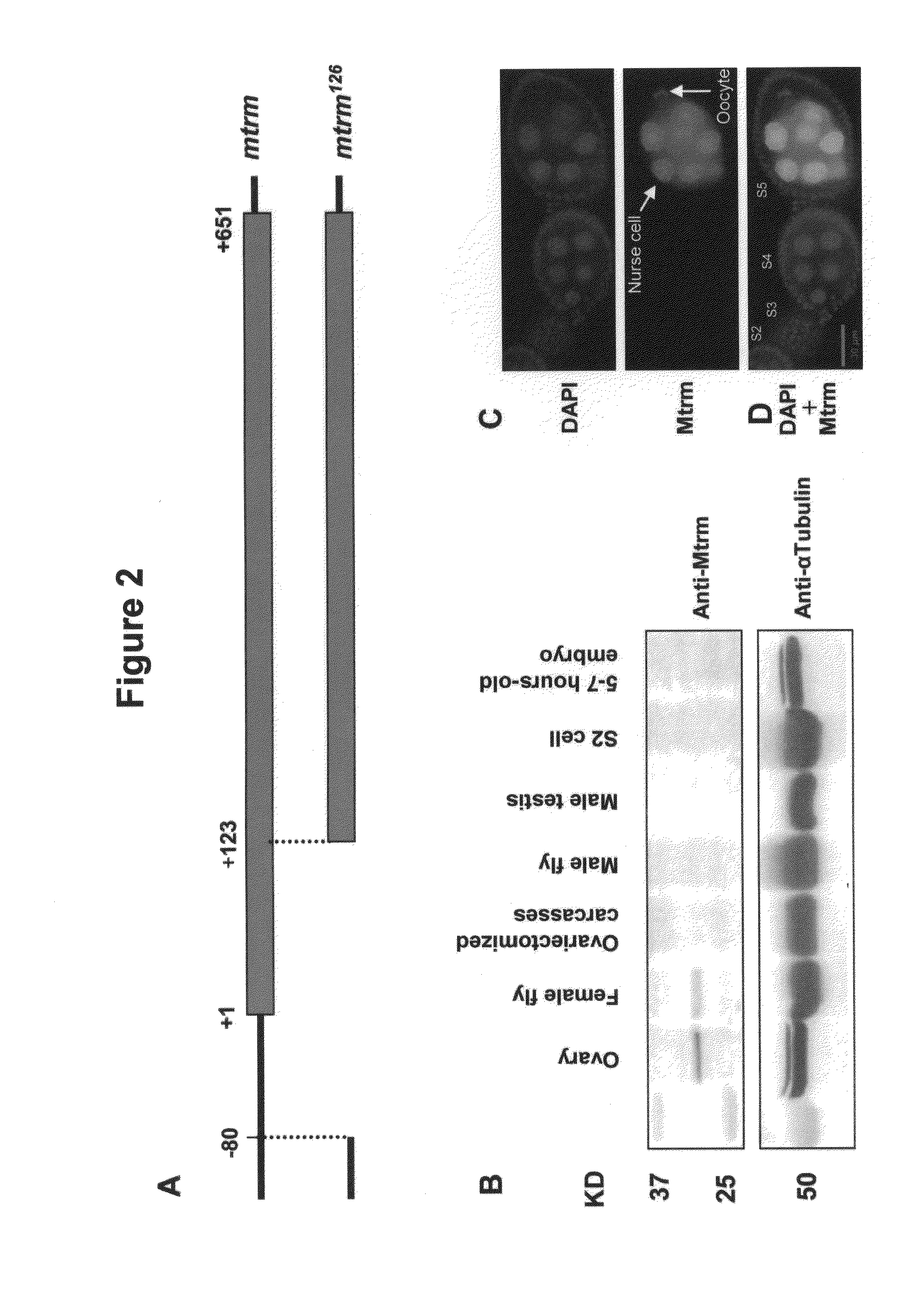
  • Figure 2
    Figure 2
  • Figure 3
    Figure 3
Patent Text Reader

Abstract

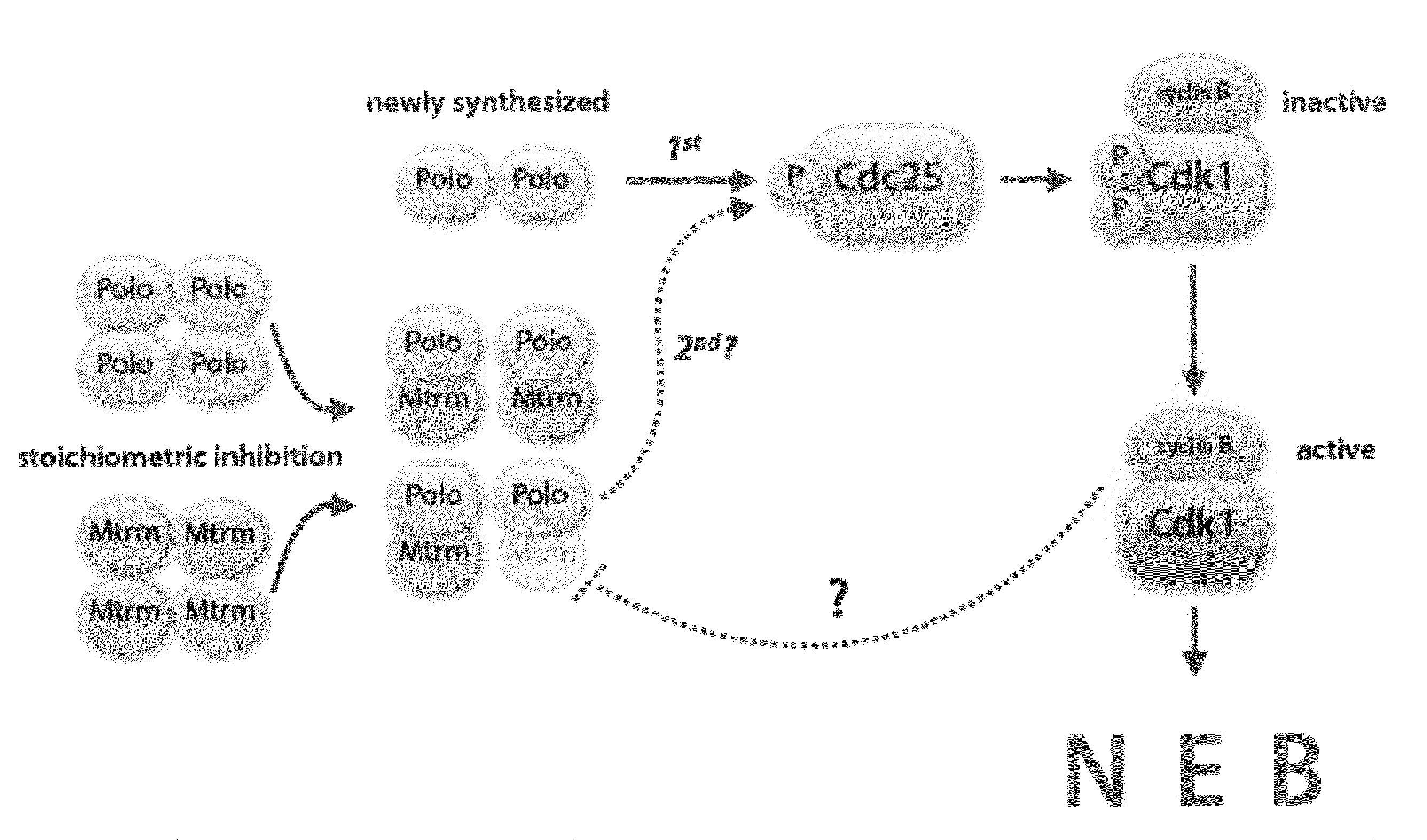
Matrimony (Mtrm) acts as a negative regulator of Polo kinase (Polo) during the later stages of G2 arrest. Indeed, both the repression of Polo expression until stage 11 and the inactivation of newly synthesized Polo by Mtrm until stage 13 play critical roles in maintaining and properly terminating G2 arrest. Our data suggest a model in which the eventual activation of Cdc25 by an excess of Polo at stage 13 triggers NEB and entry into prometaphase. In view of the foregoing, methods for modulating oocyte maturation are provided. More particularly, methods are provided for in vitro maturation of an oocyte. Further provided are methods for identifying functional orthologs of a Drosophila Matrimony polypeptide, as well as inhibitors thereof.
Need to check novelty before this filing date? Find Prior Art

Description

RELATED APPLICATIONS

[0001] This application is based upon and claims the benefit of priority from U.S. Provisional Application No. 60 / 999,447, filed Oct. 18, 2007, the entire contents of which are incorporated by reference as if recited in full herein.FIELD OF THE INVENTION

[0002] The present invention relates to methods for modulating oocyte maturation, including methods for in vitro maturation of an oocyte. The present invention also relates to methods for identifying functional orthologs of a Drosophila Matrimony polypeptide, as well as to methods for identifying inhibitors of such orthologs.BACKGROUND OF THE INVENTION

[0003] Many meiotic systems in animal females include a lengthy arrest in G2 that separates the end of pachytene from nuclear envelope breakdown (NEB). However, the mechanisms by which a meiotic cell can arrest for long periods of time (decades in human females) have remained a mystery. One can imagine that both the maintenance and the termination of this arrest might i...

Examples

examples

Drosophila Stocks

[0098]Throughout this study a w1118 stock served as our normal sequence X wild-type control, and for achiasmate X-chromosome studies, FM7 / yw was used as wild-type control. The GFP-polo stock was kindly provided by Adelaide Carpenter. The nanos-GAL4 driver was used to express UASP-driven transgenes (see below) in the ovary. All polo mutants, the P element insertion mutant, and deficiencies related to mtrm were acquired from the Bloomington Drosophila Stock Center.

Isolation and Characterization of a Null Allele of Mtrm

[0099]A P-element insertion mutant, KG08051, causing a mutation in the mtrm gene and exhibiting high levels of nondisjunction for achiasmate chromosomes [9] was obtained from the Bloomington Drosophila Stock Center. Although Harris et al. (2003) [9] positioned the insertion site for this transposon 90-bp upstream of the first ATG in the mtrm coding sequence, re-sequencing indicates that the true insertion site is in fact 80-bp upstream of the first ATG i...