
Palate-Free Upper Denture
a technology of upper dentures and palates, applied in the field of dentures, can solve the problems of loss of teeth, speech and eating impairment, and the use of full upper dentures with full artificial palates, and achieve the effects of enhancing retention on the gingiva, reducing pain, and reducing pain
- Summary
- Abstract
- Description
- Claims
- Application Information
AI Technical Summary
Benefits of technology
Problems solved by technology
Method used
Image

Examples
Embodiment Construction
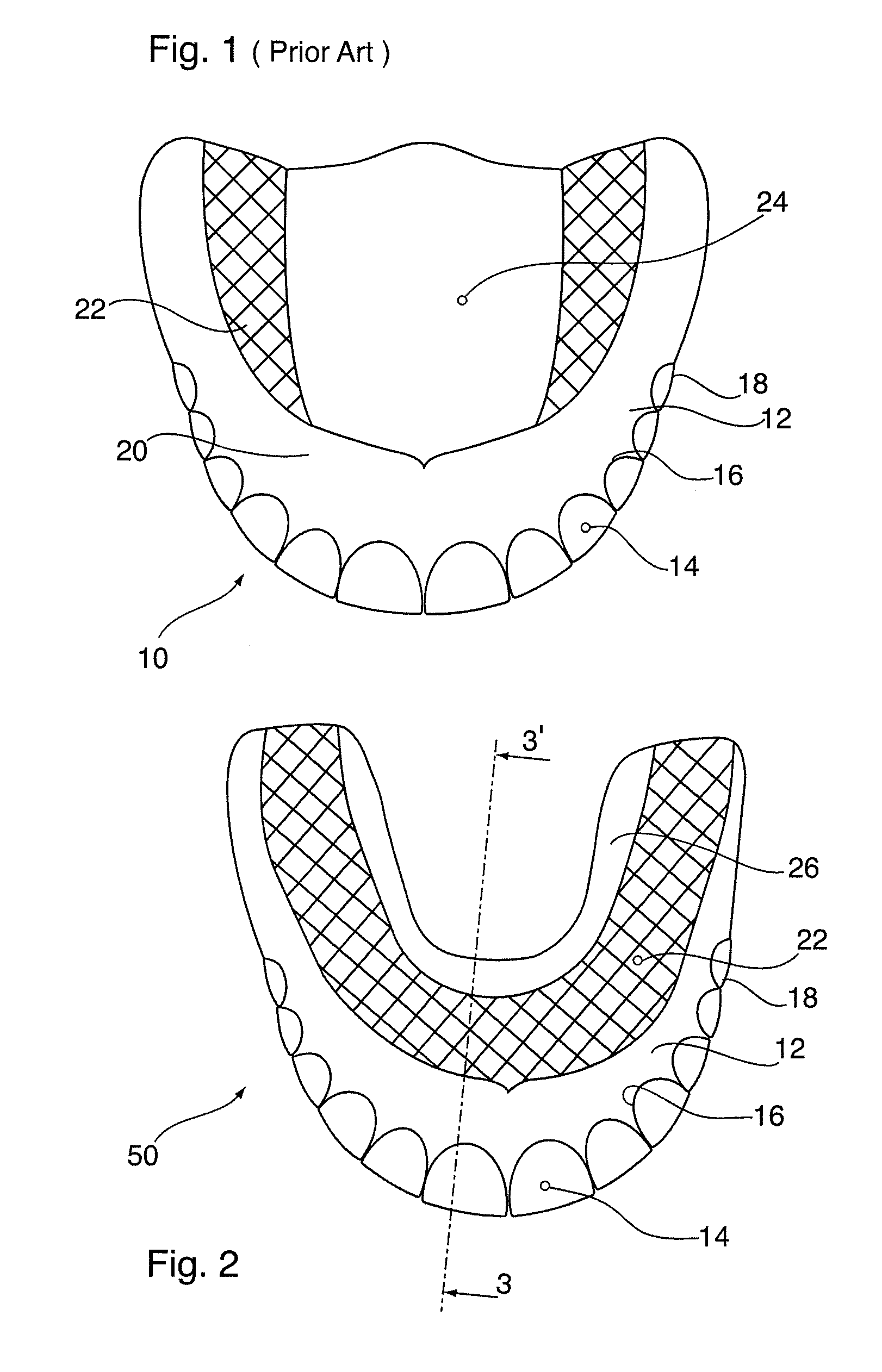
[0027]FIG. 1 shows generally as 10 an upper denture having an acrylic denture base 12 having a plurality of teeth 14 embedded therein at a lower portion 16 of base 12 and protruding from lower surface 18. Base 12 at its upper portion 20 has peripheral portion 22 defining a gingiva-receiving depression so shaped as to receive a complementary shaped portion of the gingiva of a wearer (not shown) in intimate abutment. Integrally formed with peripheral portion 22 is an artificial palate 24 of suitable shape and thickness as to abut the roof of the wearer's mouth in intimate engagement. Saliva in the wearer's mouth on installation of the denture causes a vacuum / suction between the surface of peripheral portion 22 and the mucous membranes of the gingiva on the gums and wearer's mouth. To enhance retention of the denture, a dental adhesive is applied to the gingiva prior to the installation of the denture thereon.
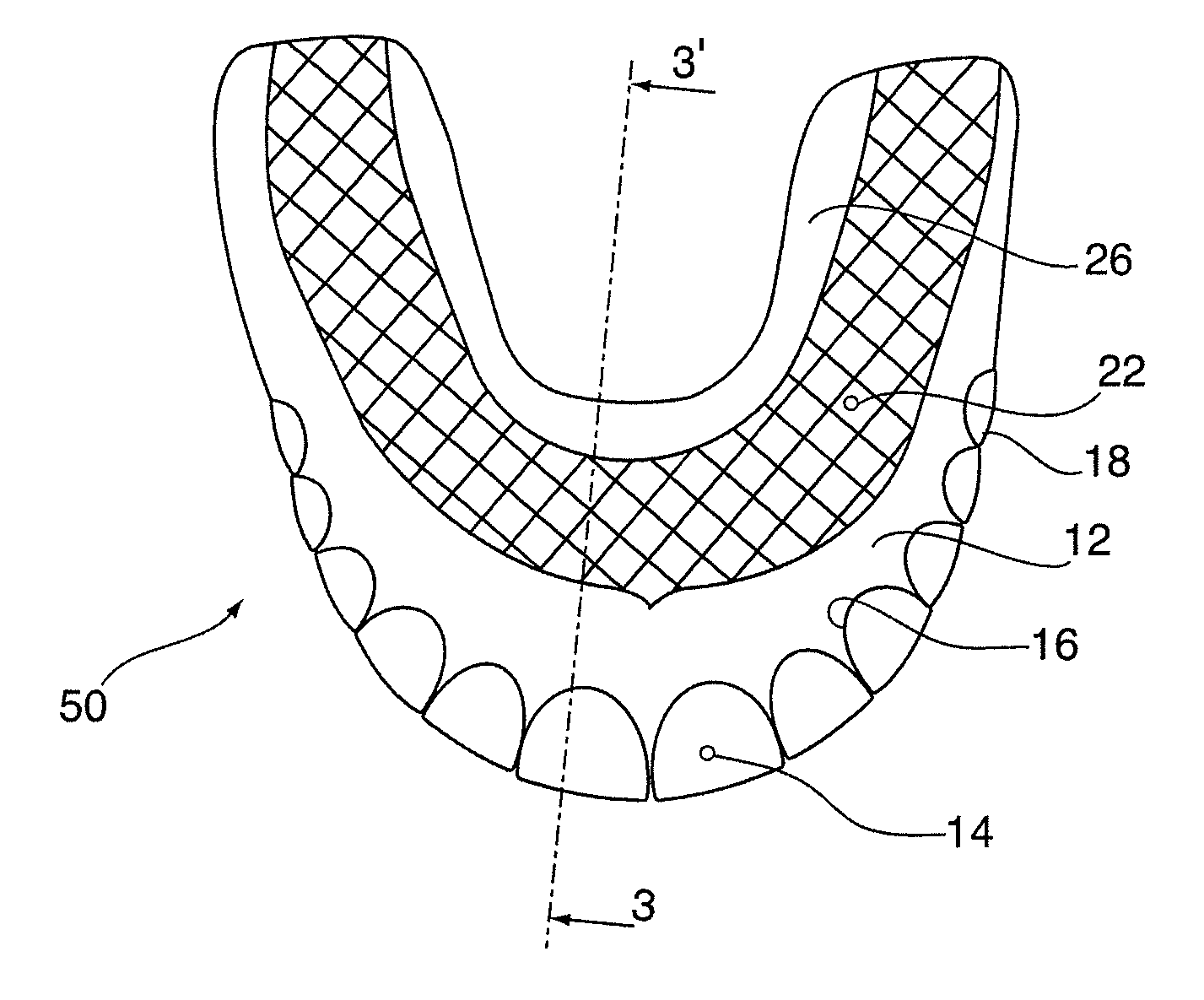
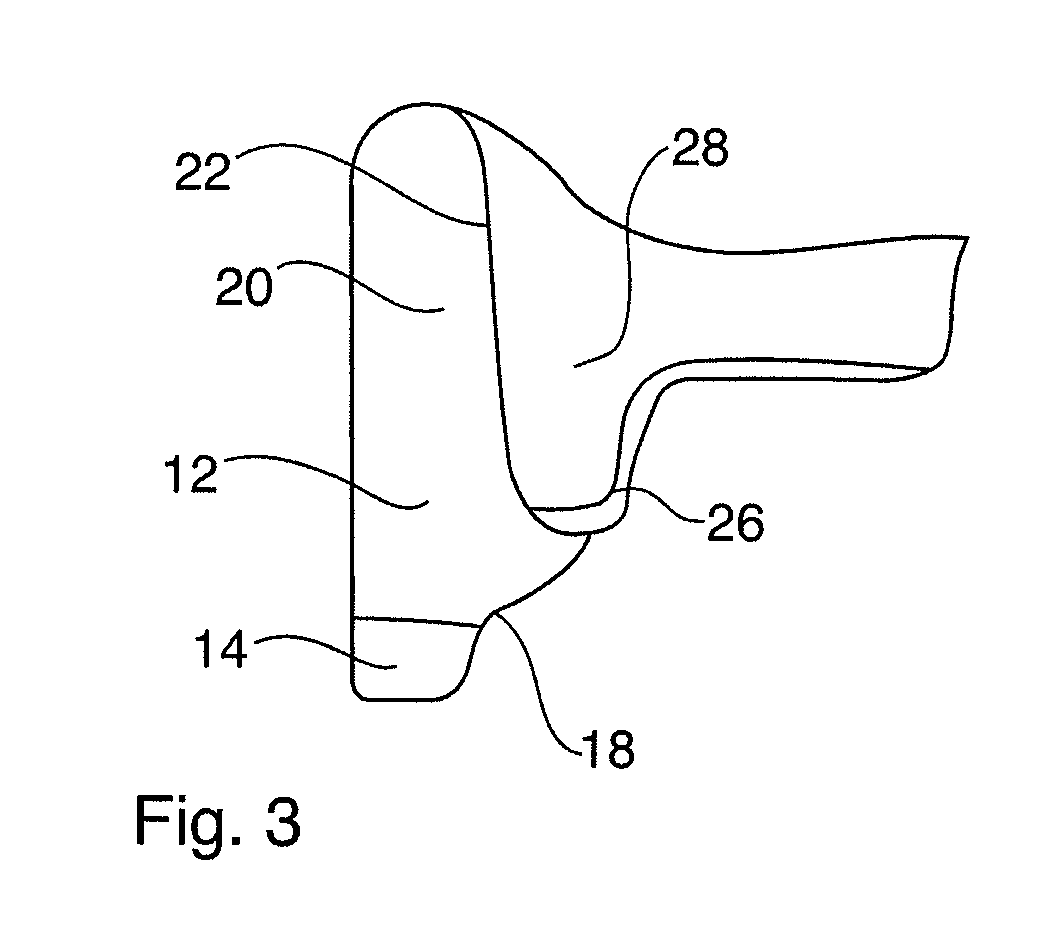
[0028]FIG. 2 shows generally as 50 a palate-free upper denture having denture...
PUM
 Login to View More
 Abstract
Description
Claims
Application Information
 Login to View More