Authorization process for high intensity medical interventions

a high-intensity medical intervention and authorization process technology, applied in the field of authorization process for high-intensity medical interventions, can solve the problems of reducing utilization, reducing utilization, and threatening evaluation with stick, so as to achieve the effect of improving utilization rate and public identification of poor performan

US20120290326A1Inactive Publication Date: 2012-11-15BERNSTEIN JOSEPH
7 Cites 2 Cited by

Patent Information

Authority / Receiving Office
US · United States
Patent Type
Applications(United States)
Current Assignee / Owner
Publication Date
2012-11-15
Estimated Expiration
Not applicable · inactive patent

Smart Images

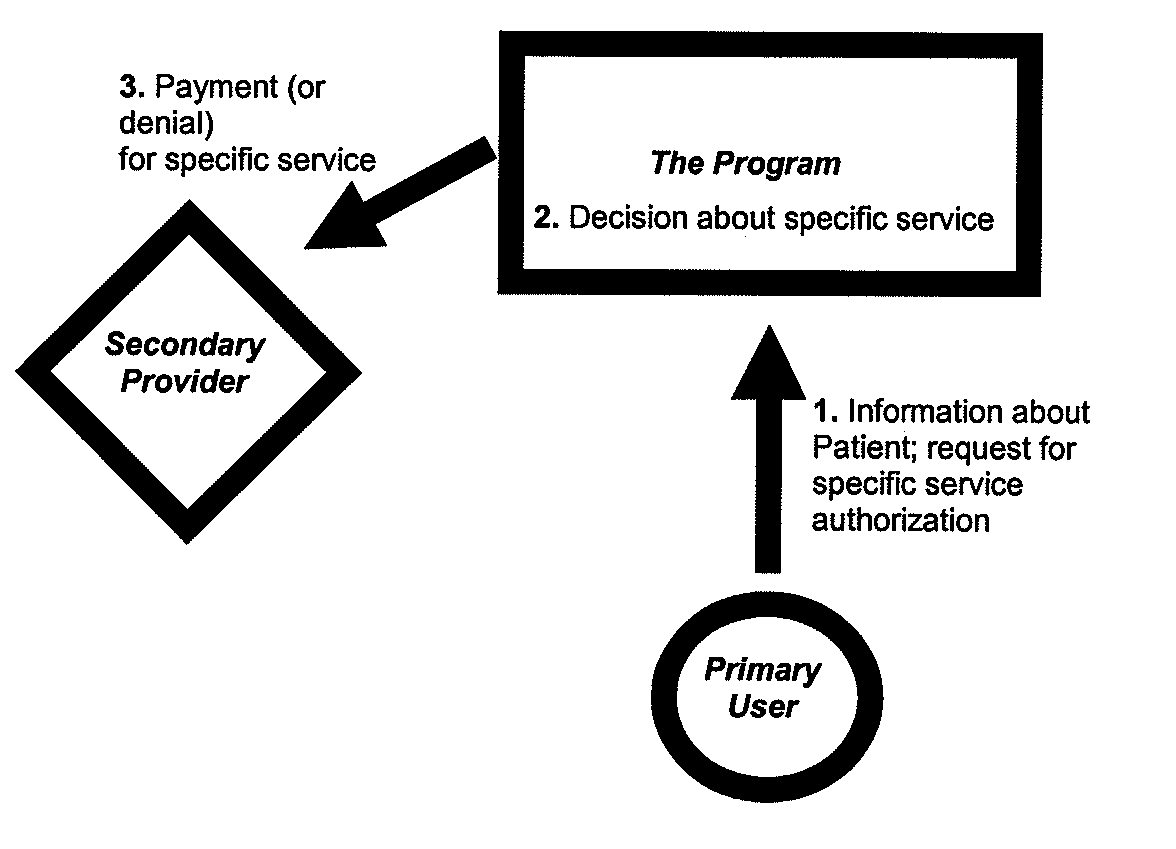
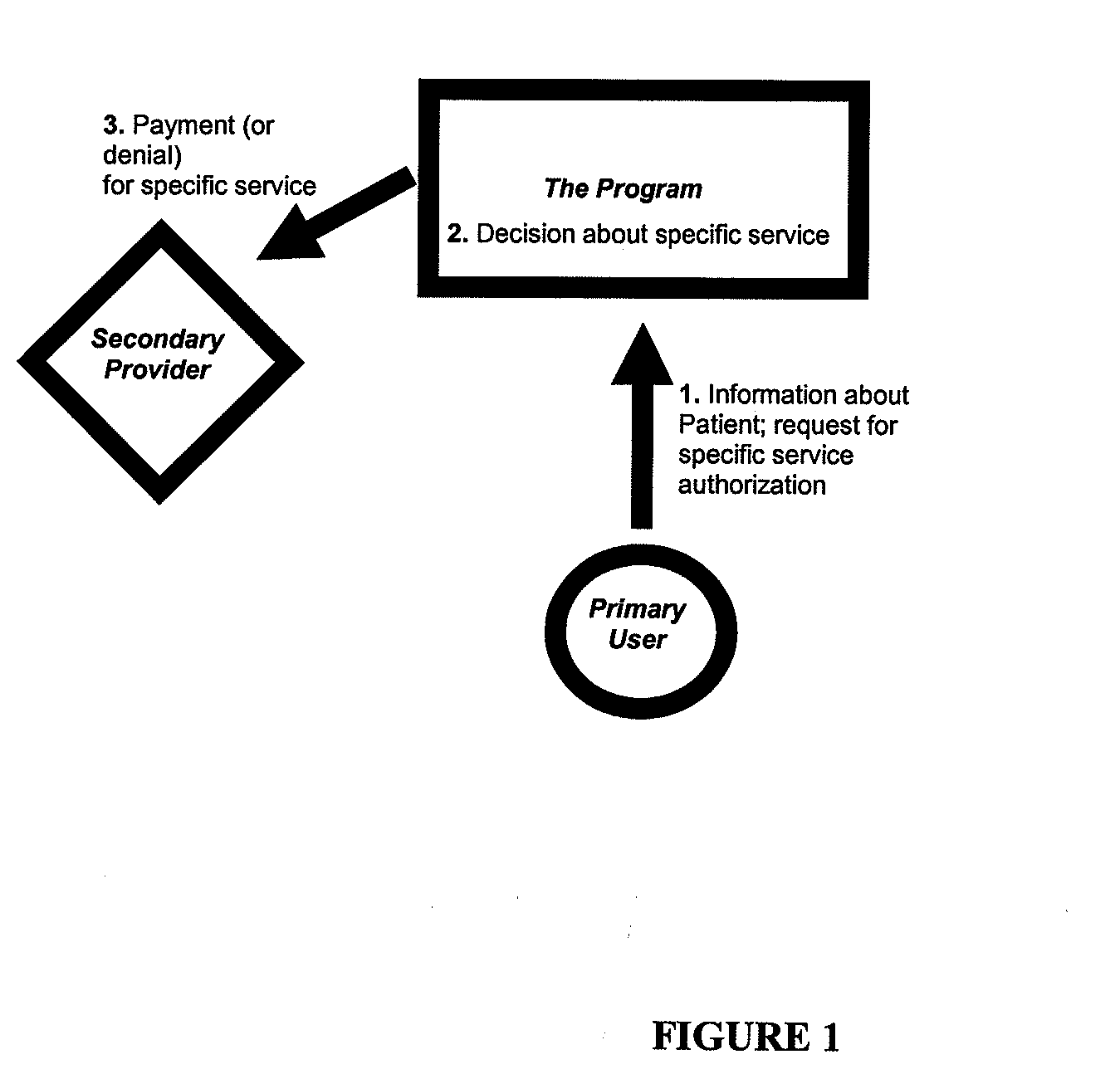
  • Figure 1
    Figure 1
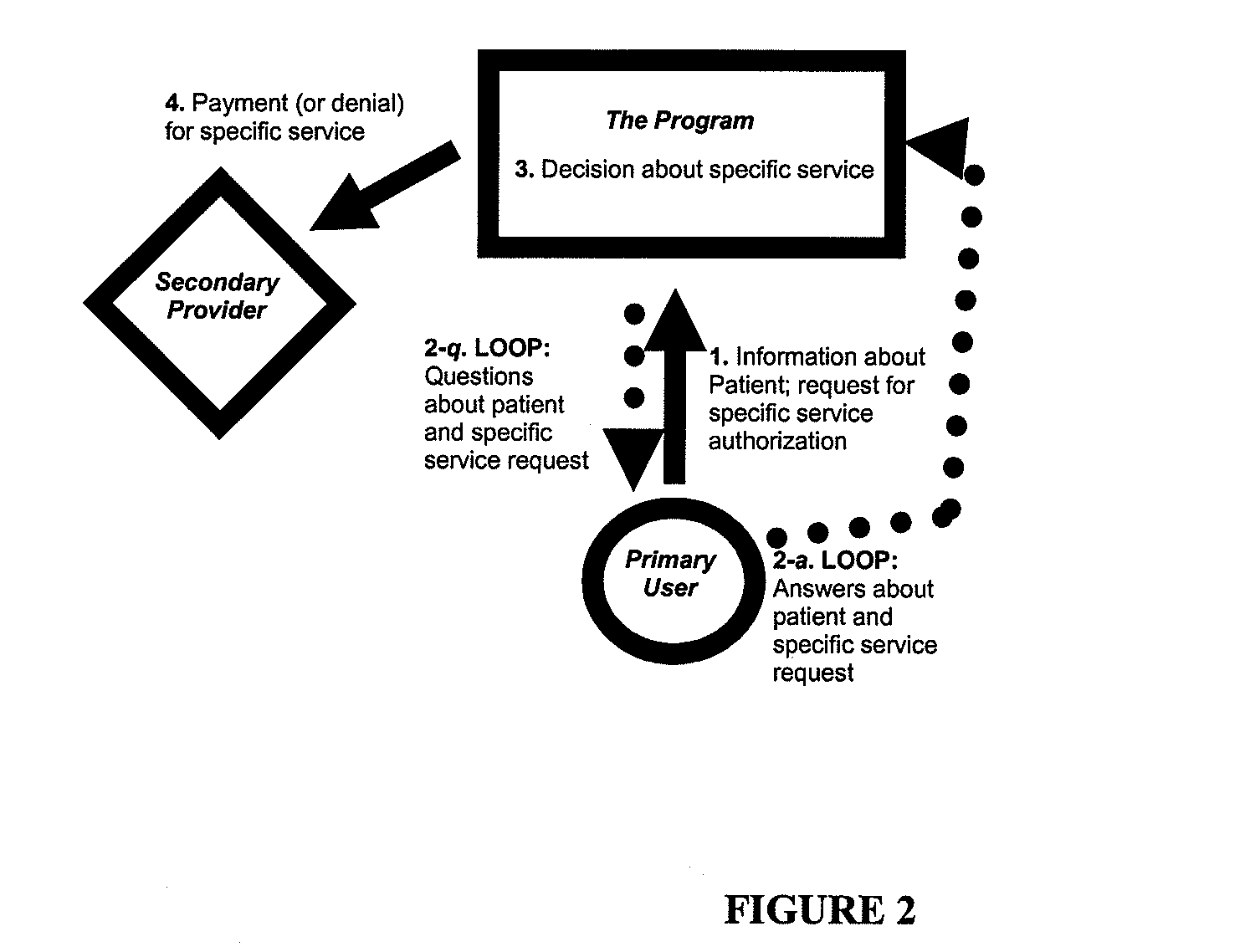
  • Figure 2
    Figure 2
  • Figure 3
    Figure 3
Patent Text Reader

Abstract

A process is provided for gaining third party authorization for a medical intervention for a patient. The process includes a dialogue between a user and a computer, facilitated by an algorithm in the computer. A user enters into the computer medical information about the patient and an authorization request for a medical intervention for the patient. The algorithm generates one or more questions responsive to the information and authorization request, directed to refining an assessment of whether the medical intervention is indicated. The user enters into the computer one or more answers responsive to the one or more questions. The algorithm generates feedback responsive to the one or more answers. The feedback instructs the user as to whether or not the medical intervention is indicated. The algorithm permits the user to withdraw the request throughout the process but ultimately grants the request if the user does not withdraw the request.
Need to check novelty before this filing date? Find Prior Art

Description

[0001] This application is a continuation of U.S. patent application Ser. No. 12 / 262,863, filed on Oct. 31, 2008.BACKGROUND OF THE INVENTION

[0002] The cost of health care in the United States has risen faster than the expansion of the economy overall for many years. This growth has significantly increased the pressure on third party payers, like HMO and Medicare, to limit the care provided by physicians to only that which is necessary.

[0003] It goes without saying that waste comprises even the smallest instances of needless consumption. Yet the attention of those attempting to limit waste is appropriately focused on the wasteful use of expensive and expansive modes of medical interventions, the diagnostics and therapeutics which have been designated “High Intensity Medicine.” High intensity medicine comprises diagnostics tests (e.g., magnetic resonance imaging or MRI), high cost pharmaceuticals (e.g., COX-2 inhibitors), and many types of medical procedures. Also within the rubric of hi...

Examples

Embodiment Construction

[0030]The present invention is directed to a method, system or process (henceforth referred to as “the program”) that screens requests for high intensity medical interventions, assesses their appropriateness and thereby reduces inappropriate utilization. In a preferred embodiment, the program engages a physician in a dialogue about a patient's health and, in so doing, provides a gate-keeping function for determining whether or not a particular medical test or intervention is appropriate (that is, “indicated”). If desired, the length and / or complexity of the dialogue can be regulated.

[0031]The present invention is not limited to any particular medical intervention and, instead, is directed to any type of intervention for which a studied decision regarding appropriateness can be made. Thus, the present invention includes interventions such as the referral of patients to specialists and non-physician professionals, elective surgical procedures and minimally invasive non-surgical proced...