
Apparel Tattoo Method
- Summary
- Abstract
- Description
- Claims
- Application Information
AI Technical Summary
Benefits of technology
Problems solved by technology
Method used
Image

Examples
Embodiment Construction
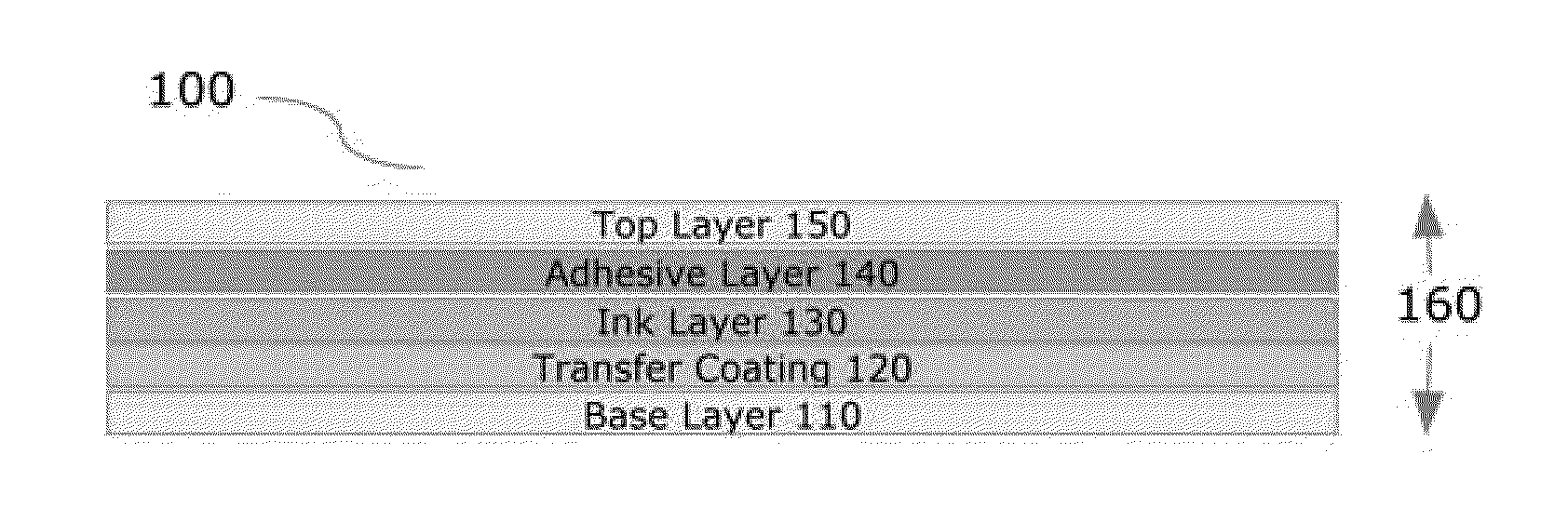
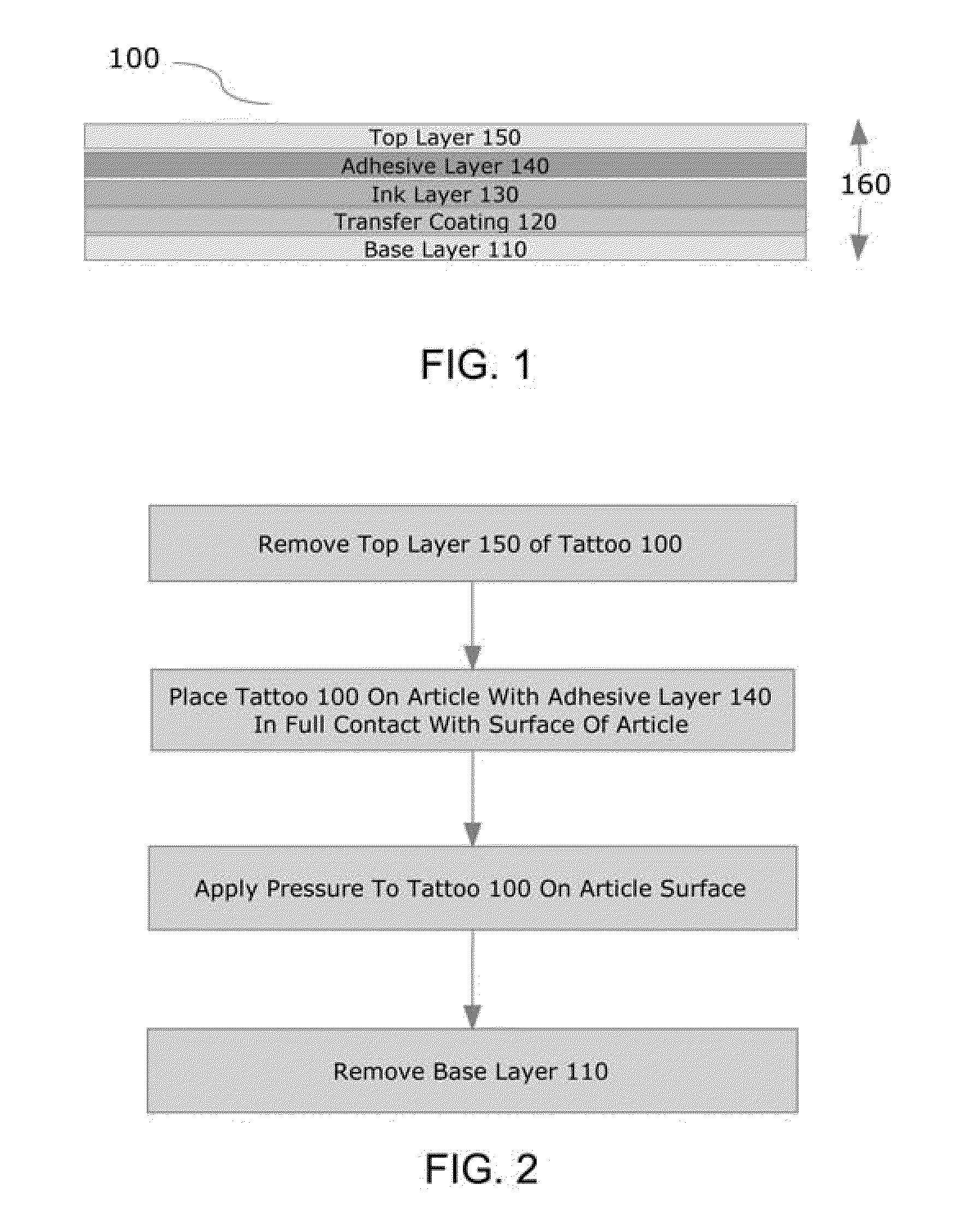
[0013]In a first preferred embodiment of the present invention a dry transfer tattoo is used to manually apply a permanent image, design, artwork, message, etc. . . . to non-washable shoes, apparel and accessories. Referring to FIG. 1, a tattoo 100 according to one embodiment of the present invention is comprised of a base layer 110; a transfer coating 120; an ink layer 130; an adhesive layer 140; and a top layer 150. The base layer 110 and the top layer 150 may be made of plastic film or of paper. The base layer 110 and the top layer 150 may also be different materials. For example, the base layer 110 may be paper and the top layer 150 may be plastic film. The material composition of layers 110, 120, 130, and 140 as well as the cumulative thickness 160 of tattoo 100 should be such that tattoo 100 with top layer 150 removed is thin and flexible enough so that it may be readily bent and be applied with full surface contact of adhesive layer 140 across a curved or contoured surface of...
PUM
 Login to View More
 Abstract
Description
Claims
Application Information
 Login to View More